🕓 2025/7/05
#tourist spot
150 years have passed since the day when the star-shaped fortress was engulfed in flames.
more
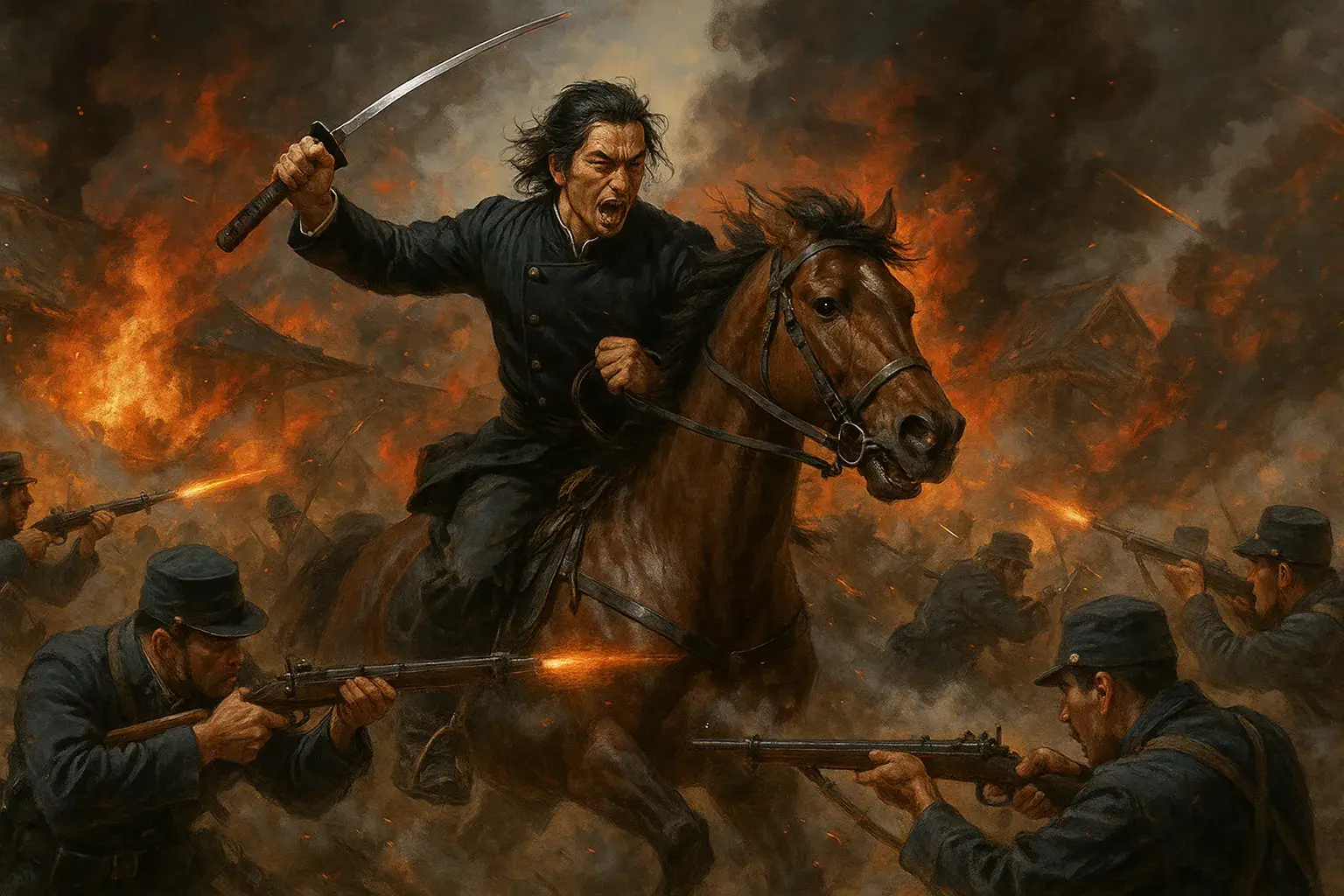
table of contents
Introduction
Riding the sea breeze across the Tsugaru Strait, five lights twinkle in the Hakodate sky – the star-shaped fortress Goryokaku. This is the setting of the “Ezo Republic”, which existed for only seven months, when former shogunate retainers and the Shinsengumi, chased by the new government, locked themselves up for their “last hope.” From the sound of gunfire echoing in Hakodate Bay to the current castle ruins where the cherry blossoms stand out, let us take you on a journey that takes you through 150 years in one go.
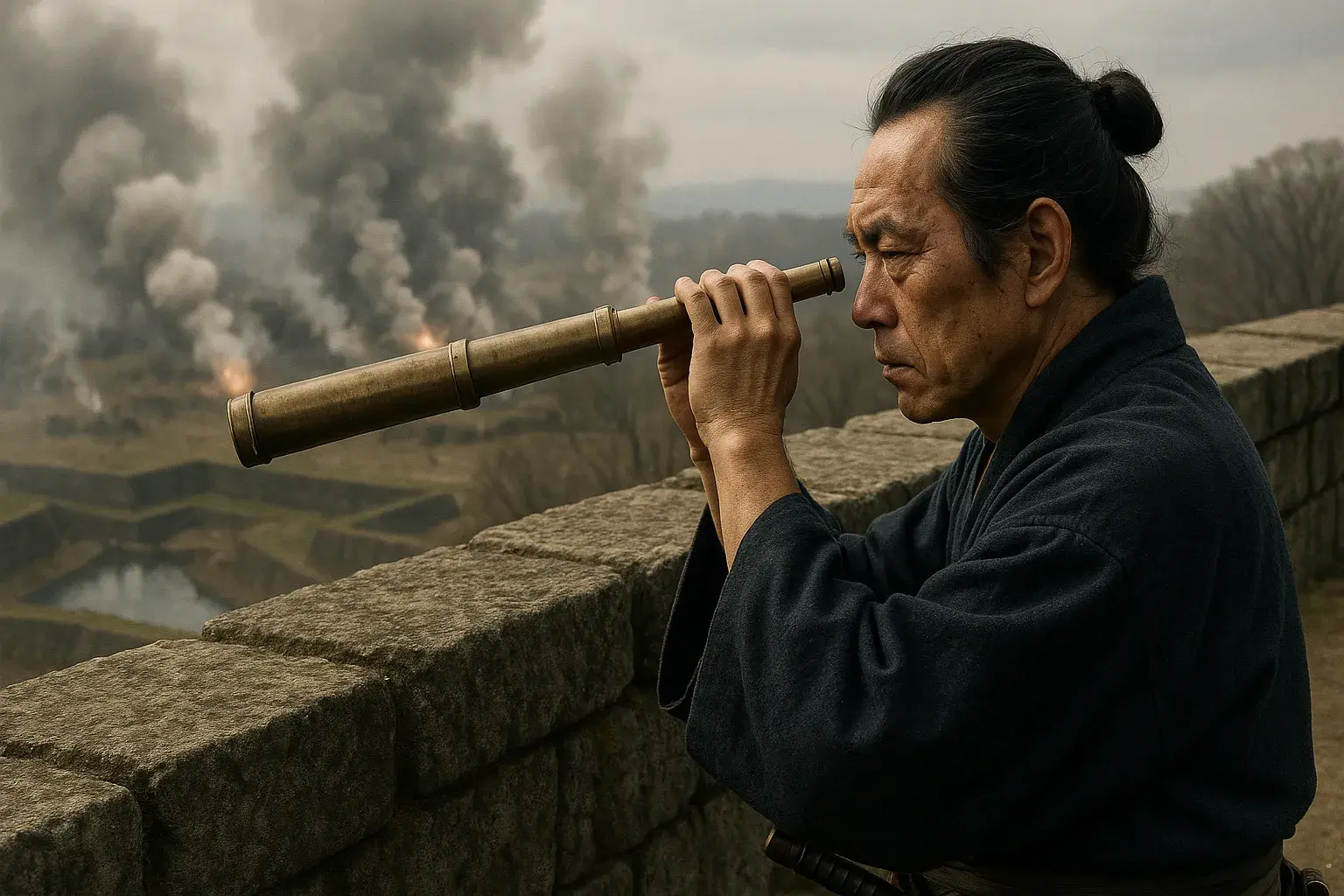
The visuals in each chapter use images generated by AI to help readers visualize the scene more clearly. Please use this as a supplementary reference only, as it may differ from the actual scenery.
- 1. The story of Goryokaku and Shinsengumi
- Chapter 1: “Another Japan” entrusted to the star-shaped fortress
- Chapter 2: To the North – Shinsengumi, Toshizo Hijikata, final bet
- Chapter 3: Bloody Hakodate War – Gunshots and Roars
- Chapter 4: Hijikata Scattered, the Star Fell – Eight Days Until Surrender
- Chapter 5: My last will is with the northern star – walking around Gochokaku
- 2. Chronology Digest
- 3. Behind the scenes of the redevelopment of the current Goryokaku and the restoration of the “Hakodate Magistrate Office”
- 4. 5 “Traces of Burning” that you can experience on-site
- Finally
1. The story of Goryokaku and Shinsengumi
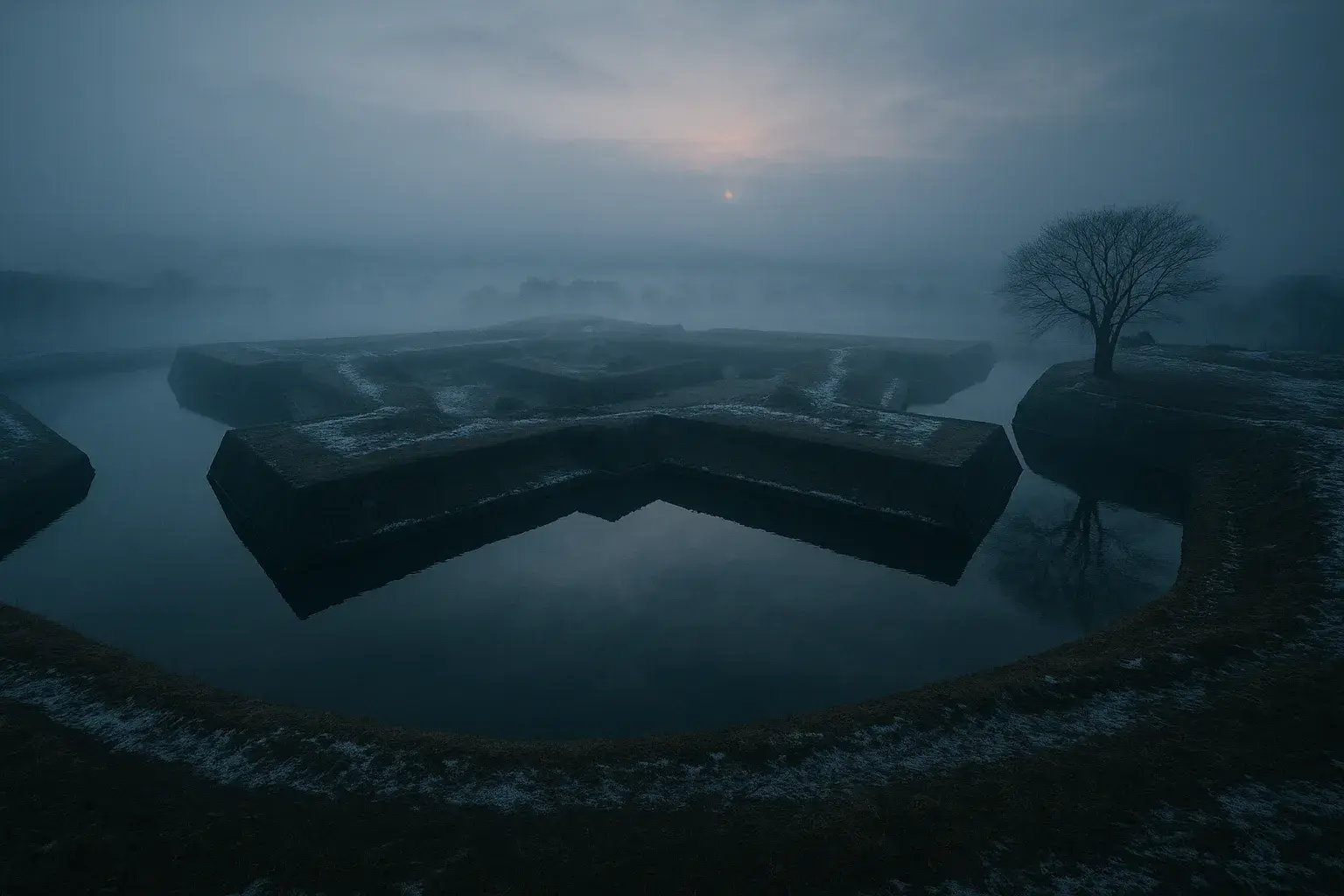
Hakodate in the fog, a castle reflecting the stars――
Before dawn, when the sea breeze from the Tsugaru Strait floated in, this area was once home to five ridgelines that cut through the northern sky. Goryokaku is a star-shaped fortress designed using French castle architecture and floating on a snowy plain. Inside, the “another Japan” dreamed of by the former Shogunate retainers was alive and well.
The Republic of Ezo advocated by Takeaki Enomoto, and the “last will” entrusted to him by Toshizo Hijikata, vice-commander of the Shinsengumi. Goryokaku was not just a defensive base, but the very hope that the collapsing shogunate staked on, or had to bet on, the future.
However, the star-shaped castle was soon enveloped in a hail of bullets, and the young samurai with their ideals were scattered in the sound of gunfire. Now, all that is reflected in the moat is the quiet sky. If you stand on the earthworks, the reverberations of the times surround you with a thin mist.
Why did they go to a frigid place to fight a battle with no chance of victory?
That question invites us to the story of “fire and frost” that lurks within the star-shaped fortress.
Chapter 1: “Another Japan” entrusted to the star-shaped fortress
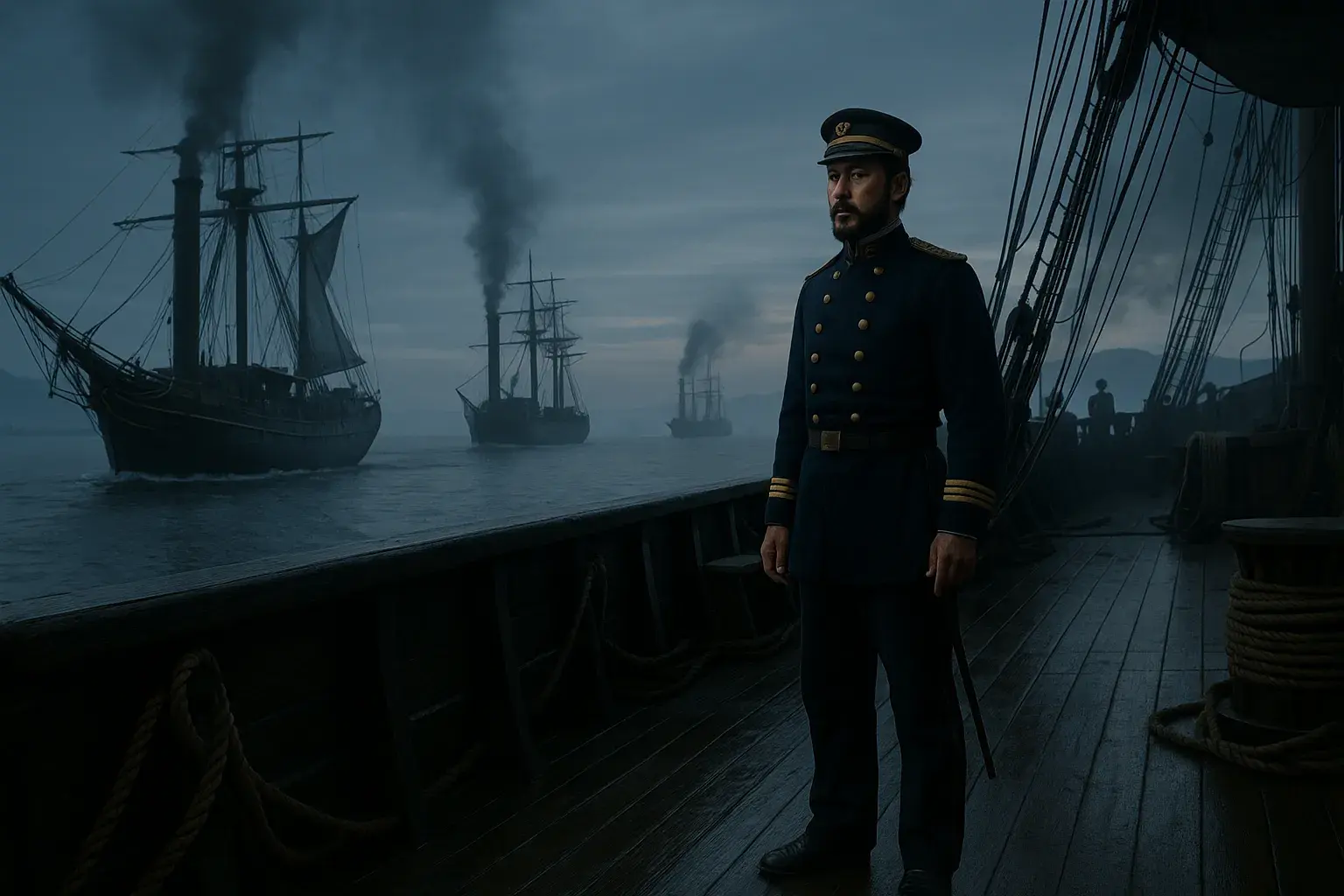
In October 1868, the former Shogunate fleet quietly left Edo Bay – eight ships in total.
The destination of the commander in chief, Takeaki Enomoto, standing on the deck was Ezo (Hokkaido), which was still an unexplored region. Enomoto chose Goryokaku, a state-of-the-art fortress designed using French castle architecture, as his base. The star-shaped moat and earthworks were a Western-style design to protect against cannon fire, and were completed only two years ago.
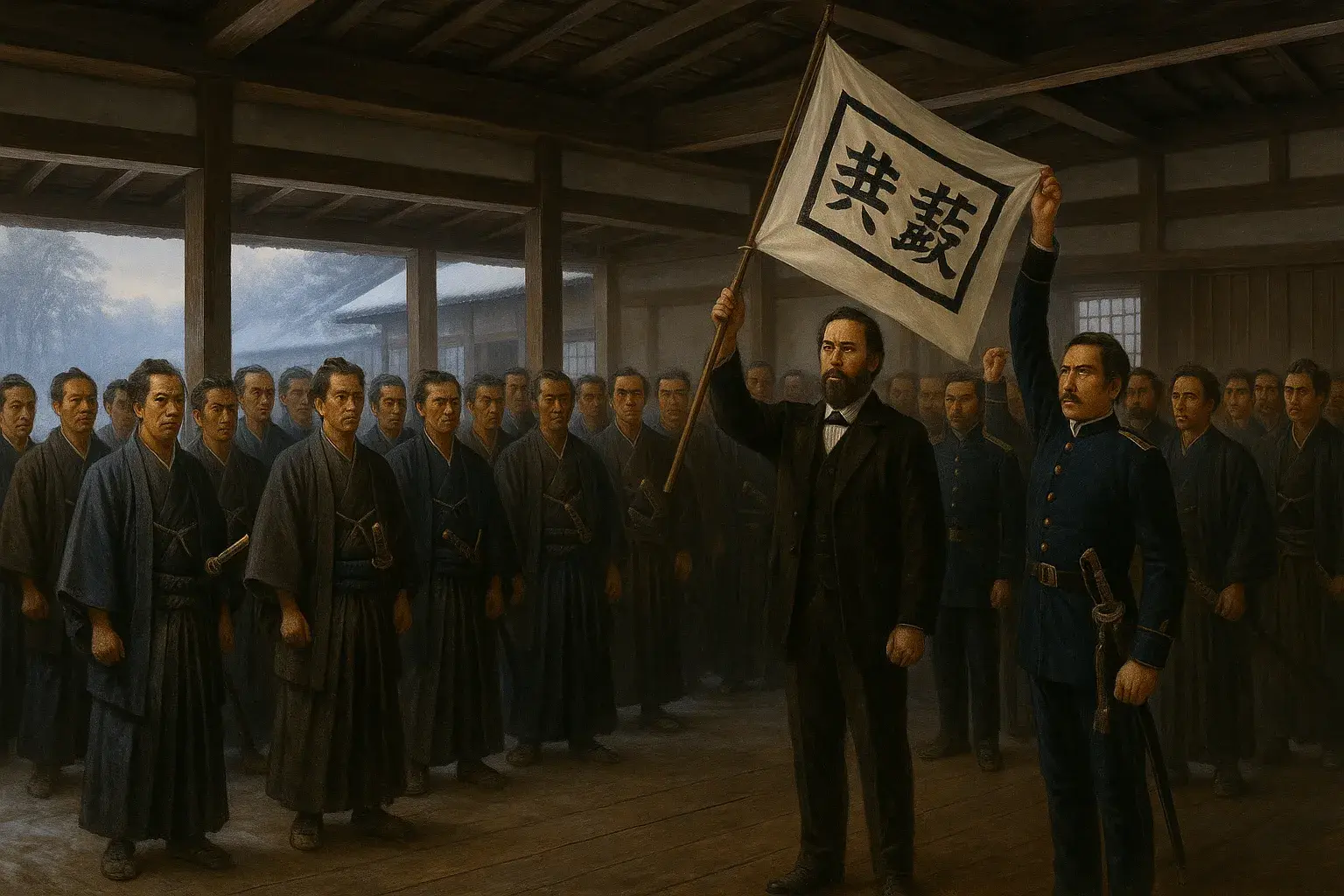
In December, Enomoto and others declared the “Republic of Ezo” here.
Enomoto is the president and Taro Matsudaira is the vice president. Moreover, although only members of the samurai class were elected as ministers, this was the moment when a nation that called itself a “republic” was born for the first time in Japanese history.
Even after the great tree known as the shogunate had fallen, they entrusted their last hope to the star-shaped fortress in the north to build their ideal country.
Chapter 2: To the North – Shinsengumi, Toshizo Hijikata, final bet
The Shogunate collapsed and the Shinsengumi survivors who fled from Edo had nowhere to go. Vice-commander Toshizo Hijikata was one of them – he was feared as the “demon vice-commander” during the city police in Kyoto, and fought in Toba-Fushimi and Koshu Katsunuma, but was always defeated.
Hijikata arrived at Goryokaku, where he met up with the former Shogunate fleet led by Takeaki Enomoto.
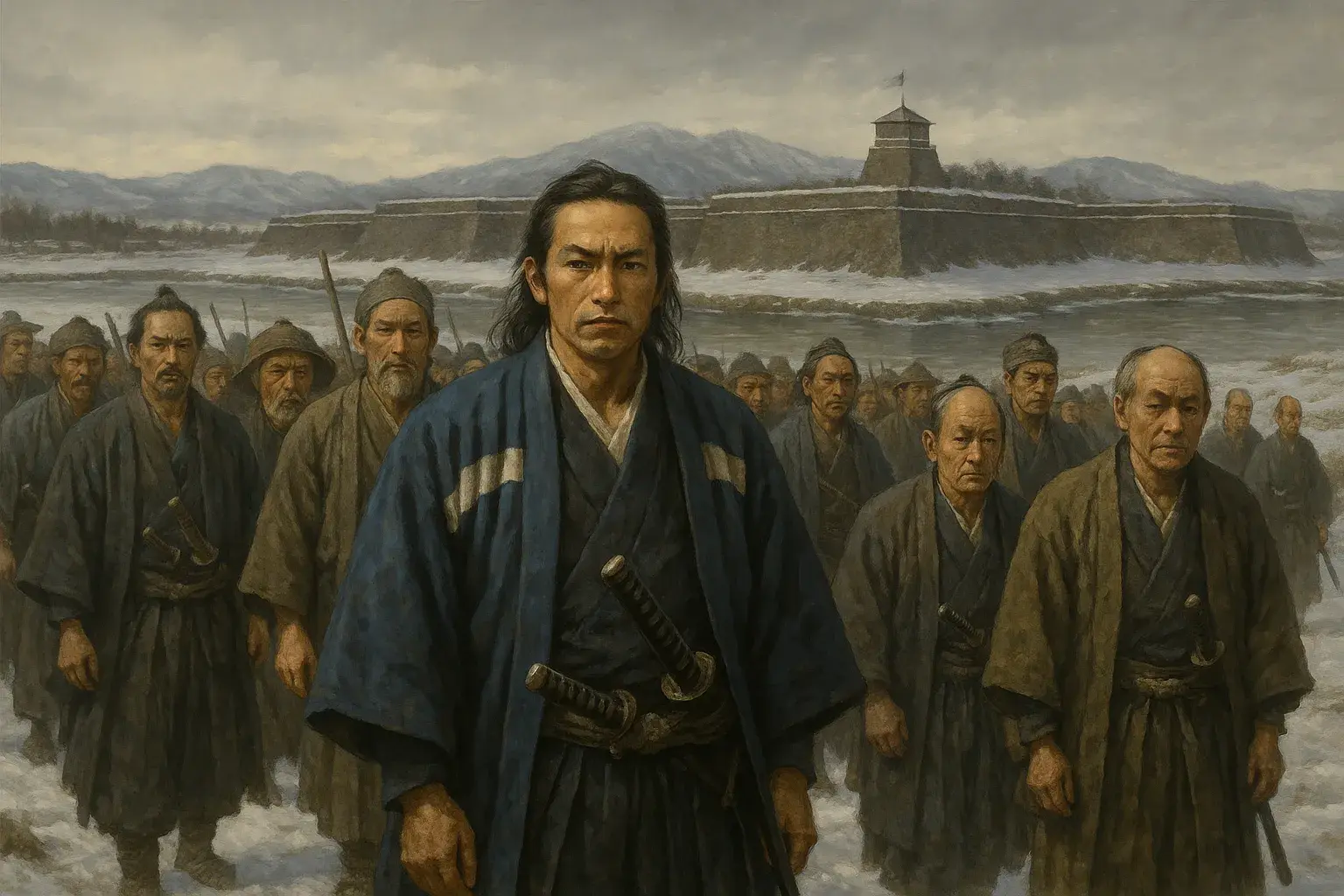
Hijikata was only 35 years old when he stood on the trench line surrounded by the moat and earthworks of the star-shaped fortress.
“This is the last place where we can really fight.”
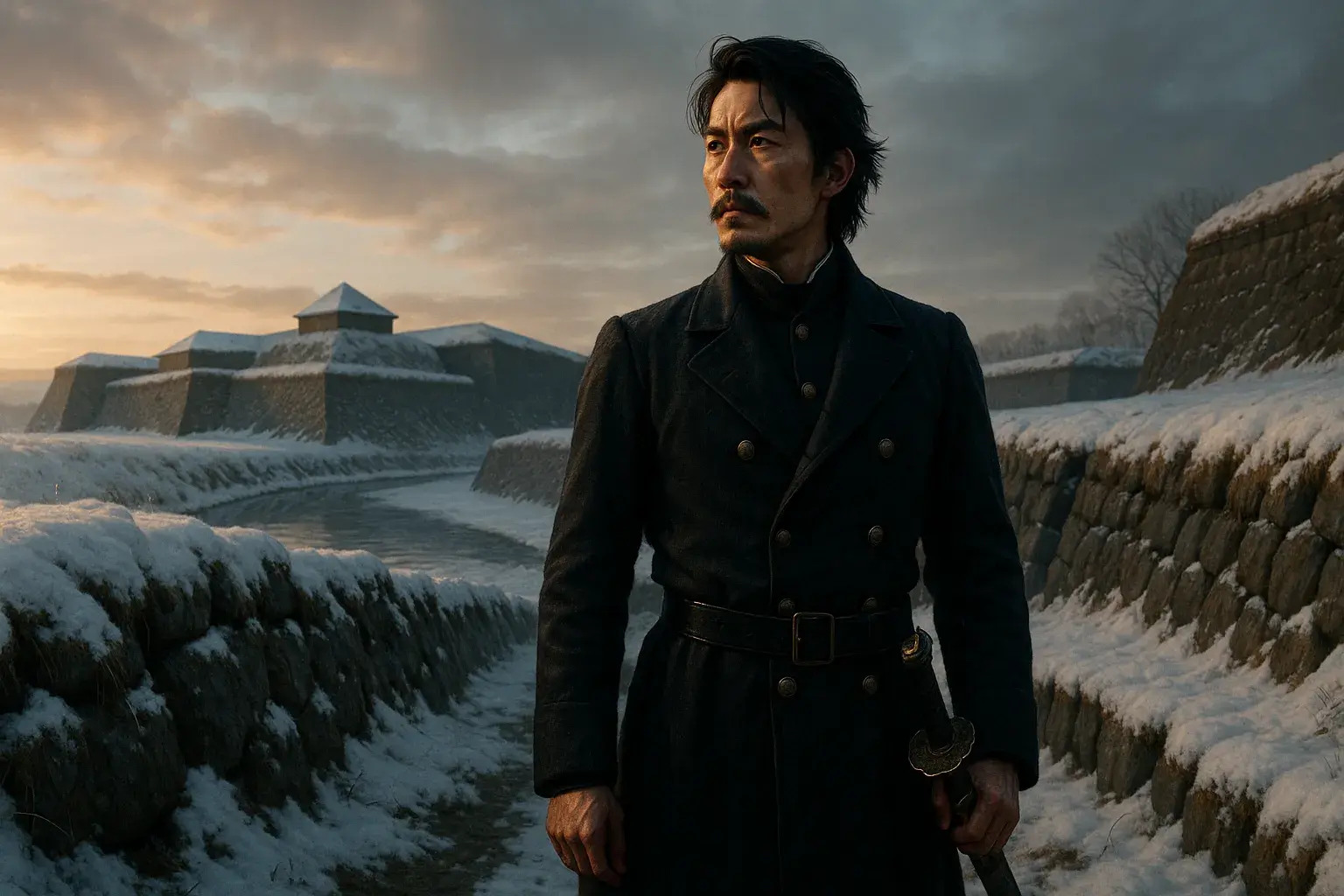
He knew best of all that his chances of winning were slim. Still, in order to protect his pride as a samurai, he chooses this northern end as the “stage for his counterattack.” Hijikata continued to raise the morale of his soldiers and stand at the forefront of the defense of Goryokaku until the day when warships of the new government gathered in the Tsugaru Strait and landed in Hakodate Bay.
Chapter 3: Bloody Hakodate War – Gunshots and Roars
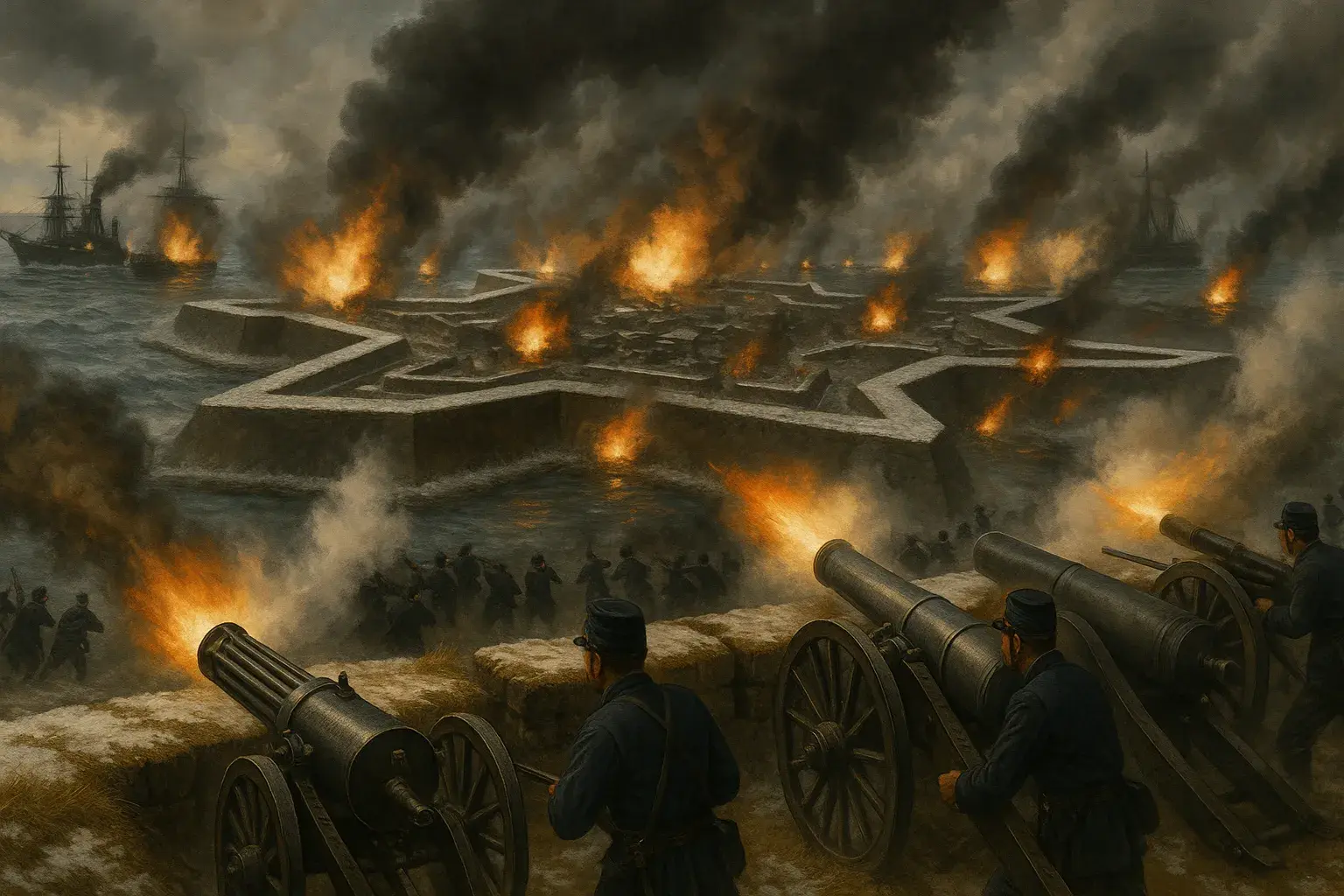
In April 1869, approximately 30,000 new government troops landed all at once in Hakodate Bay, where remnants of snow still hung in the air. What they brought with them were Gatling guns and Armstrong guns, which were rare in the former Shogunate army – the most powerful repeating weapons and high-performance guns at the time. As naval gunfire from the sea and artillery fire from land overlapped, the star-shaped fortress Goryokaku appeared to be trapped in a crossroads of fire.
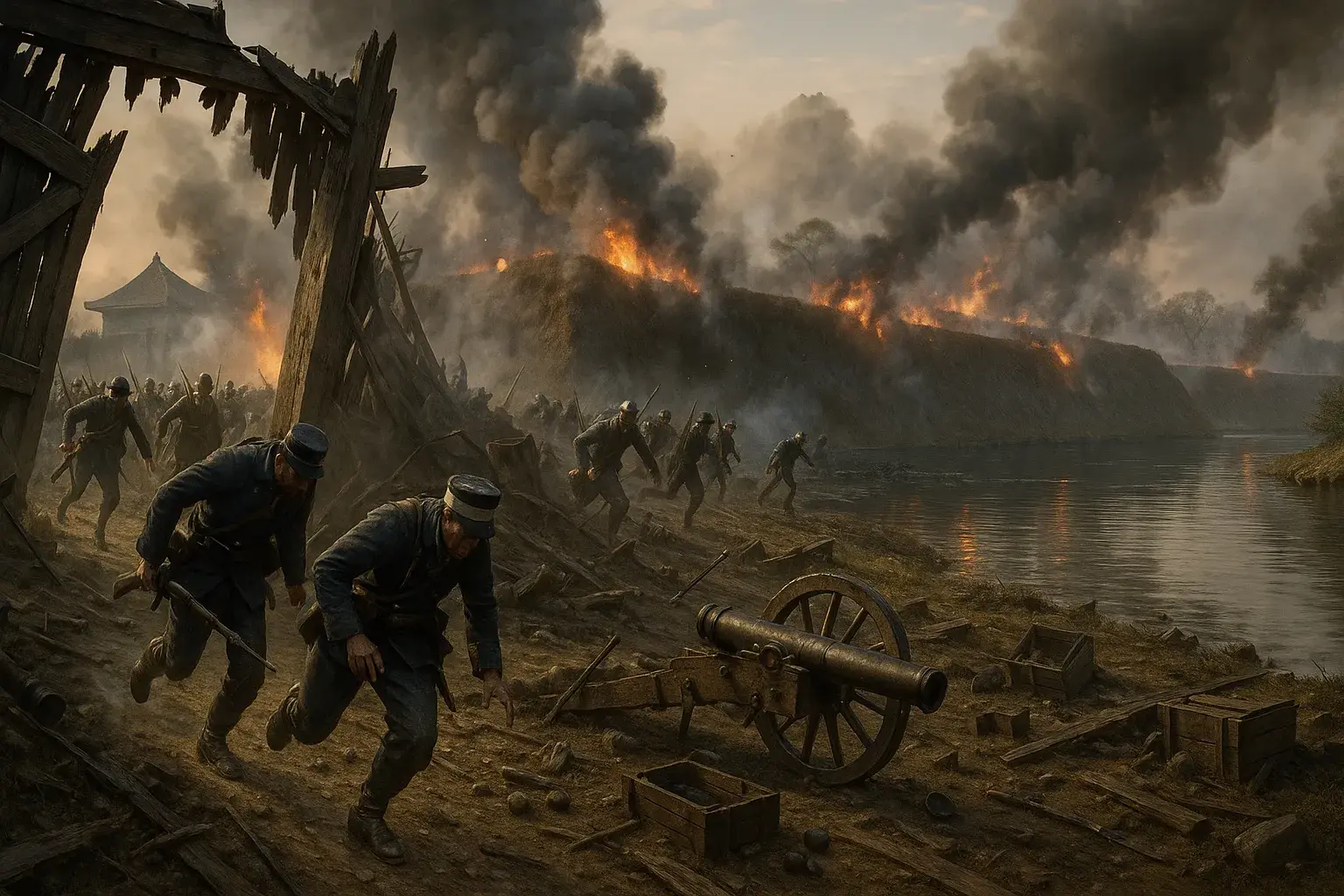
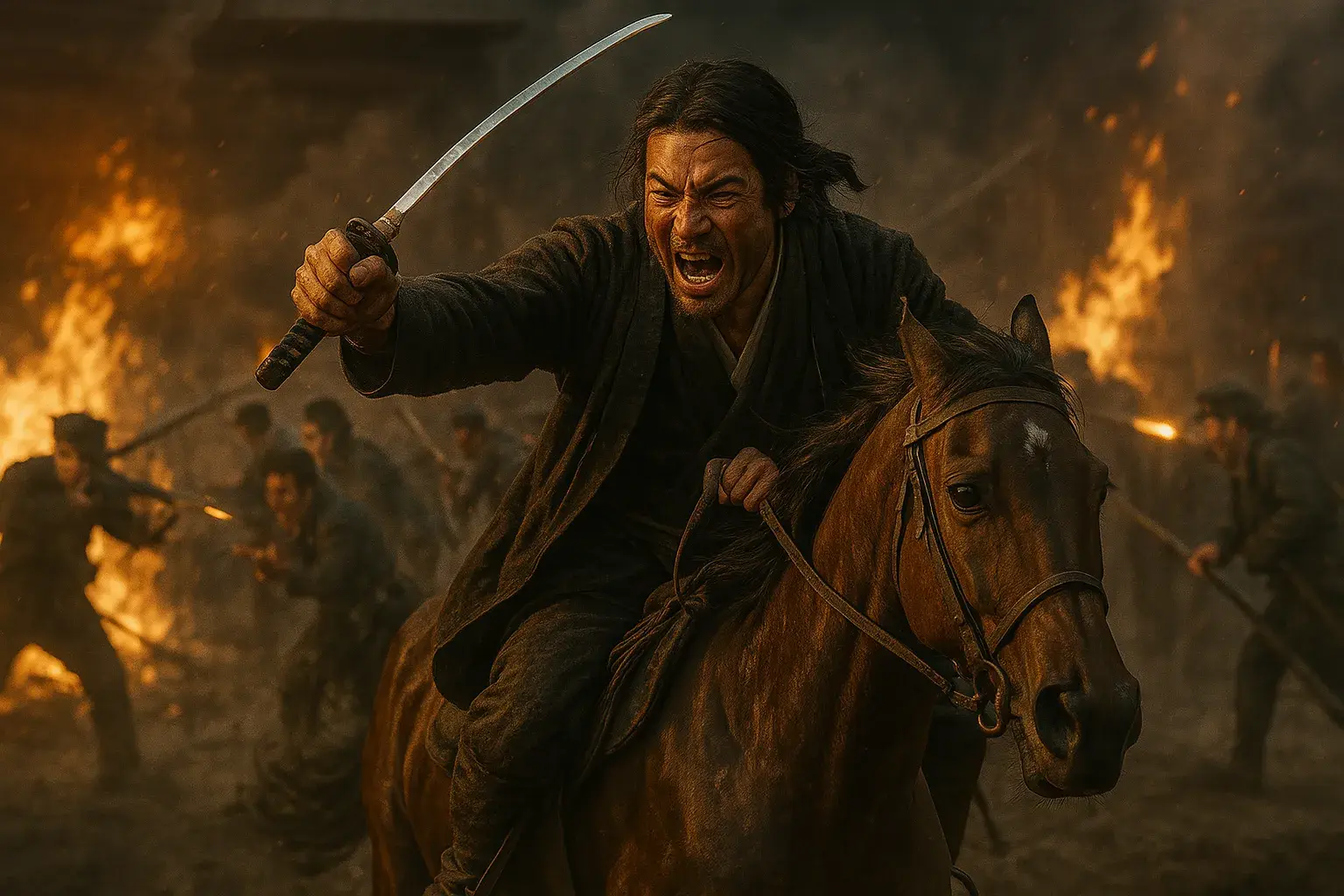
The infantry regiment led by Vice-Commander Toshizo Hijikata stood at the forefront amidst the gunfire smoke. Hijikata handed out the latest Snider rifles and led a counterattack using the wooden fence at the key point, the Ippongi Barrier, as a shield. In the early hours of May 11, Hijikata was shot in the thigh, but still mounted his horse and encouraged his soldiers, “Don’t back down, shoot back!” But the next moment, a bullet pierced his chest, knocking him off his horse.
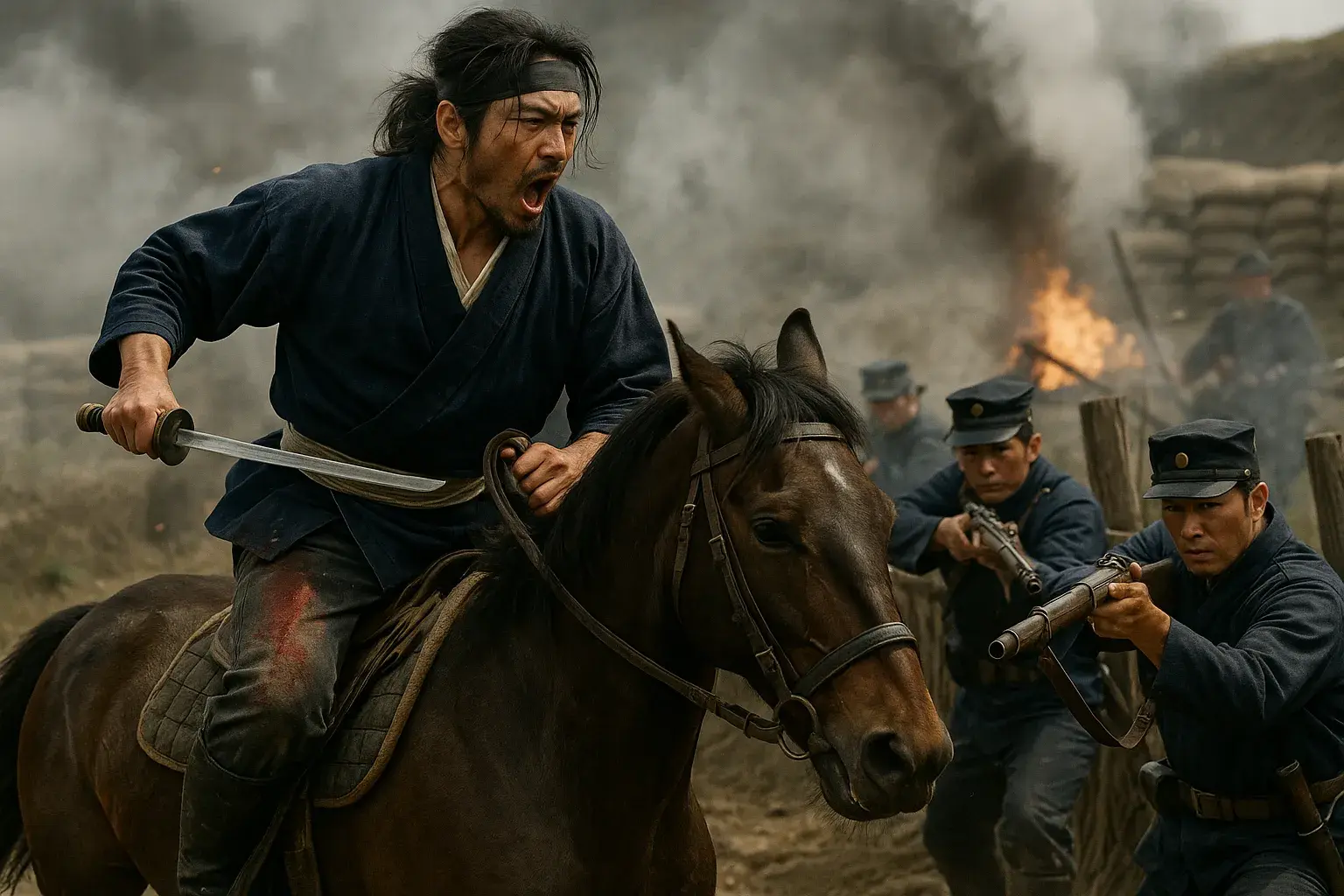
Toshizo Hijikata passed away at the age of 35. In the afternoon, the barrier was breached and the former shogunate army lost one position after another. Coincidentally, May 11th is still the day when the War Memorial Ceremony is held at Goryokaku Park. A white chrysanthemum is placed on the altar, and the reflection of the star-shaped moat on the surface of the water quietly tells the story of Hijikata’s final moments.
Chapter 4: Hijikata Scattered, the Star Fell – Eight Days Until Surrender
On May 11th, when Vice-Commander Toshizo Hijikata was killed in battle, it was the moment when the “last pillar” of the former Shogunate army broke.
For the next eight days, every time Takeaki Enomoto climbed the stone walls of Goryokaku and looked out over the front line through his telescope, he felt the smoke from the shelling getting closer and closer. Ammunition and food have run out, and while the sound of friendly fire is becoming increasingly sparse, only the new government’s cannonballs continue to pummel the star-shaped fortress.
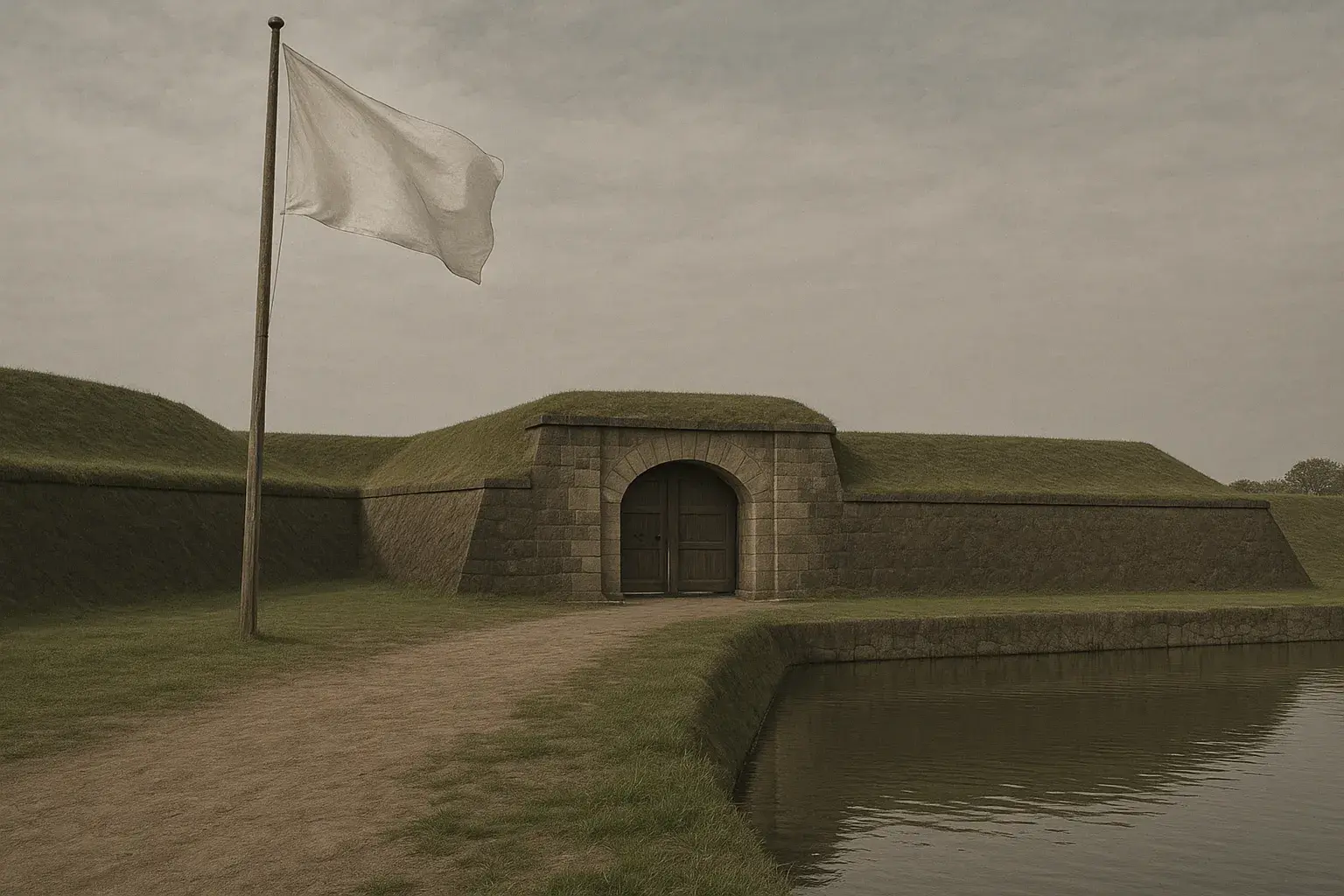
Early on the morning of May 18, Enomoto gathered his close friends and decided to surrender, saying, “We will leave this fortress for the future without involving the civilians.” In the early afternoon, a white flag was raised at the main gate of Goryokaku, and documents of surrender were handed over to the new government forces. The star-shaped earthworks and moat were surrendered with almost no damage, and the Hakodate War came to an end. The lifeline that the “Ezo Republic” carved into history lasted only six months.
However, Toshizo Hijikata’s final moments and his tenacity in defending the fortress were even written into the war stories of the enemy.
“Bushido is at its peak here.”
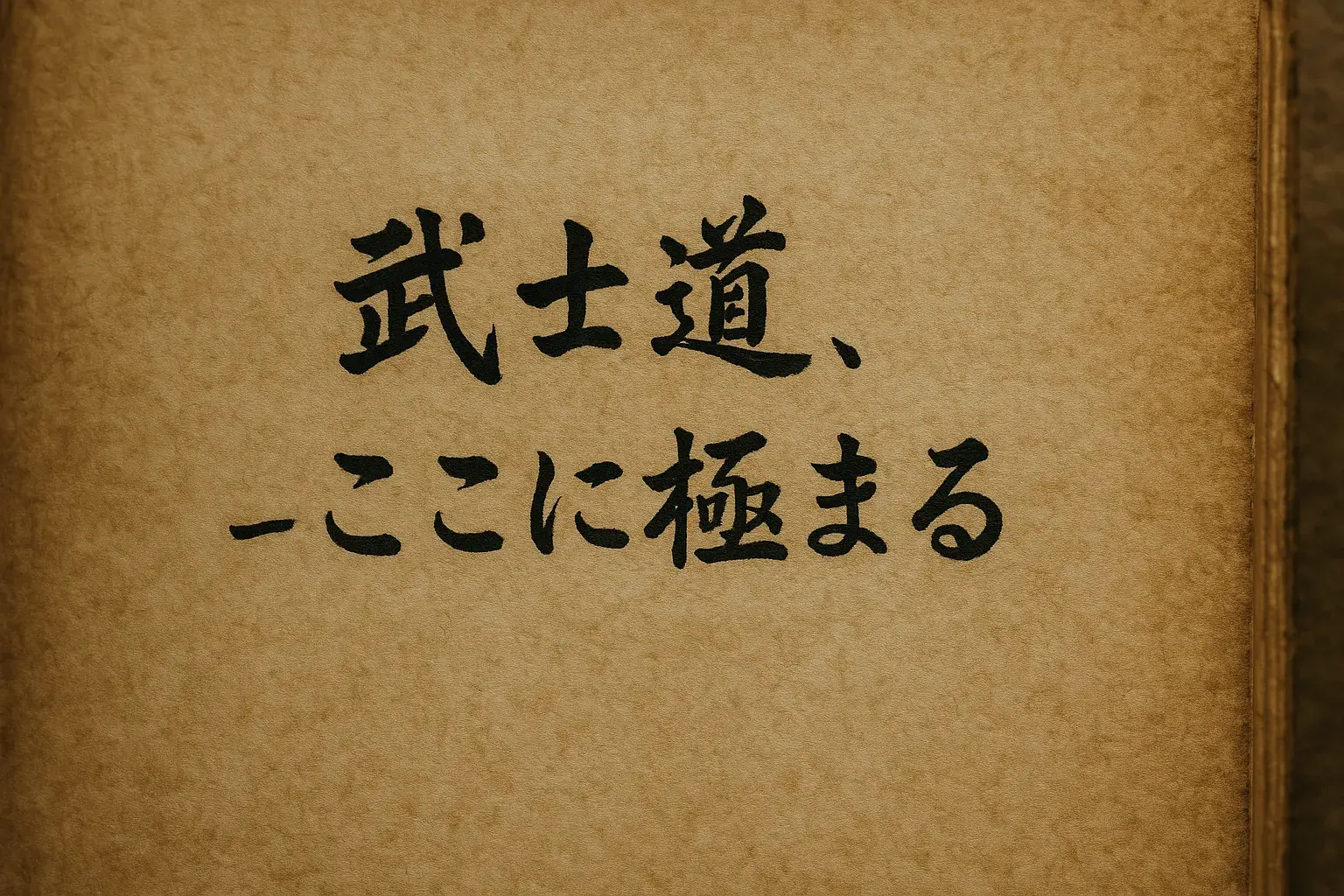
It is written as After the surrender, a new government army officer who inspected Goryokaku found blood stains on the collapsed fence and wrote in his diary, “This is the spirit of a warrior.”
The star-shaped castle has fallen. However, what was burnt out in the midst of all this has been passed down with respect that transcends friend and foe, and even today, the lingering echoes of the fire still hang silently in the sky of Hakodate.
Chapter 5: My last will is with the northern star – walking around Gochokaku
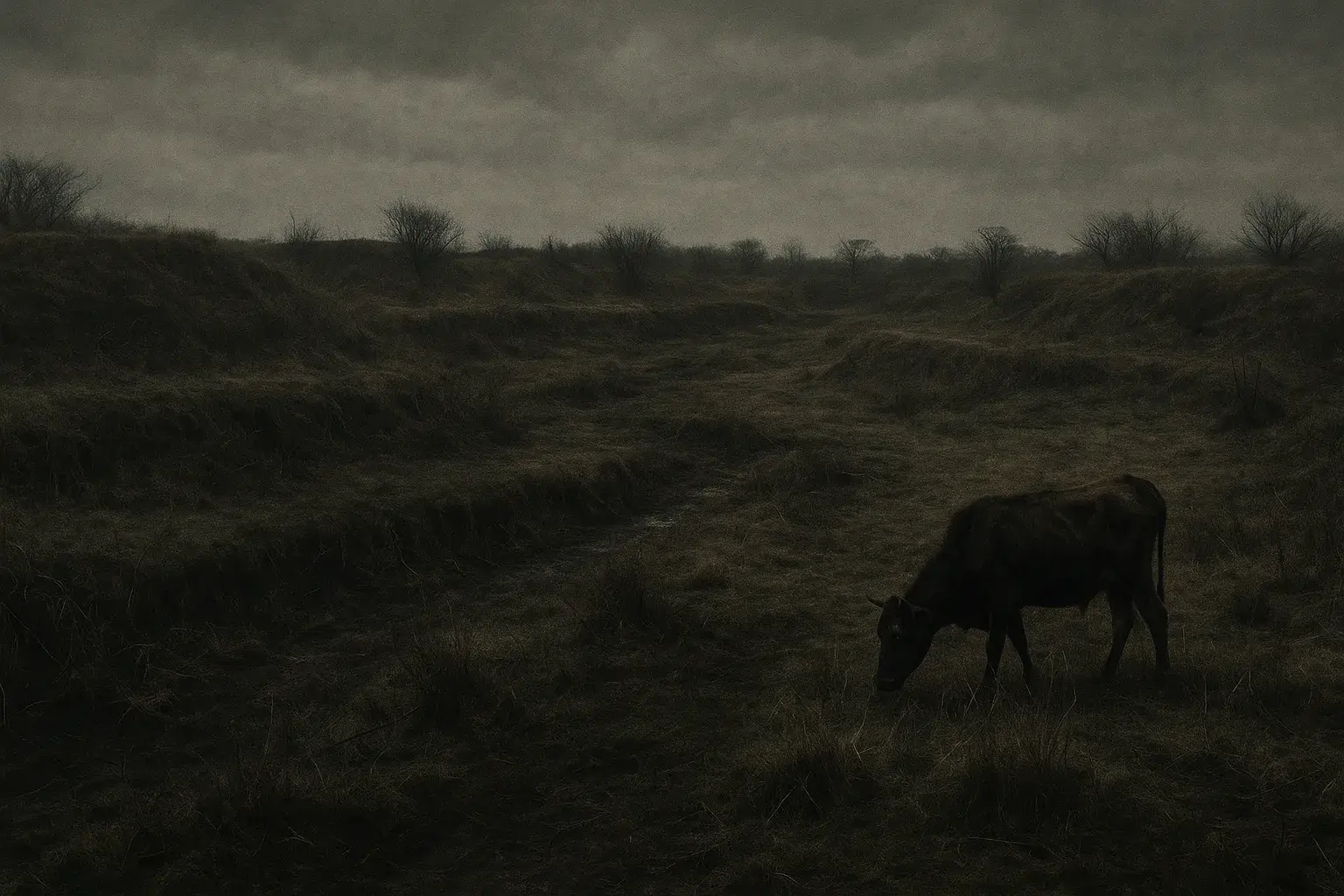
After the Hakodate War ended, Goryokaku remained a wasteland for a long time, with only cows grazing on the banks.
However, in the 1950s, local citizens expressed a desire to preserve the star-shaped castle for the future, and development began to transform it into a park. Eventually, the moat was dredged, cherry blossoms were planted, and the star’s outline became clear again.
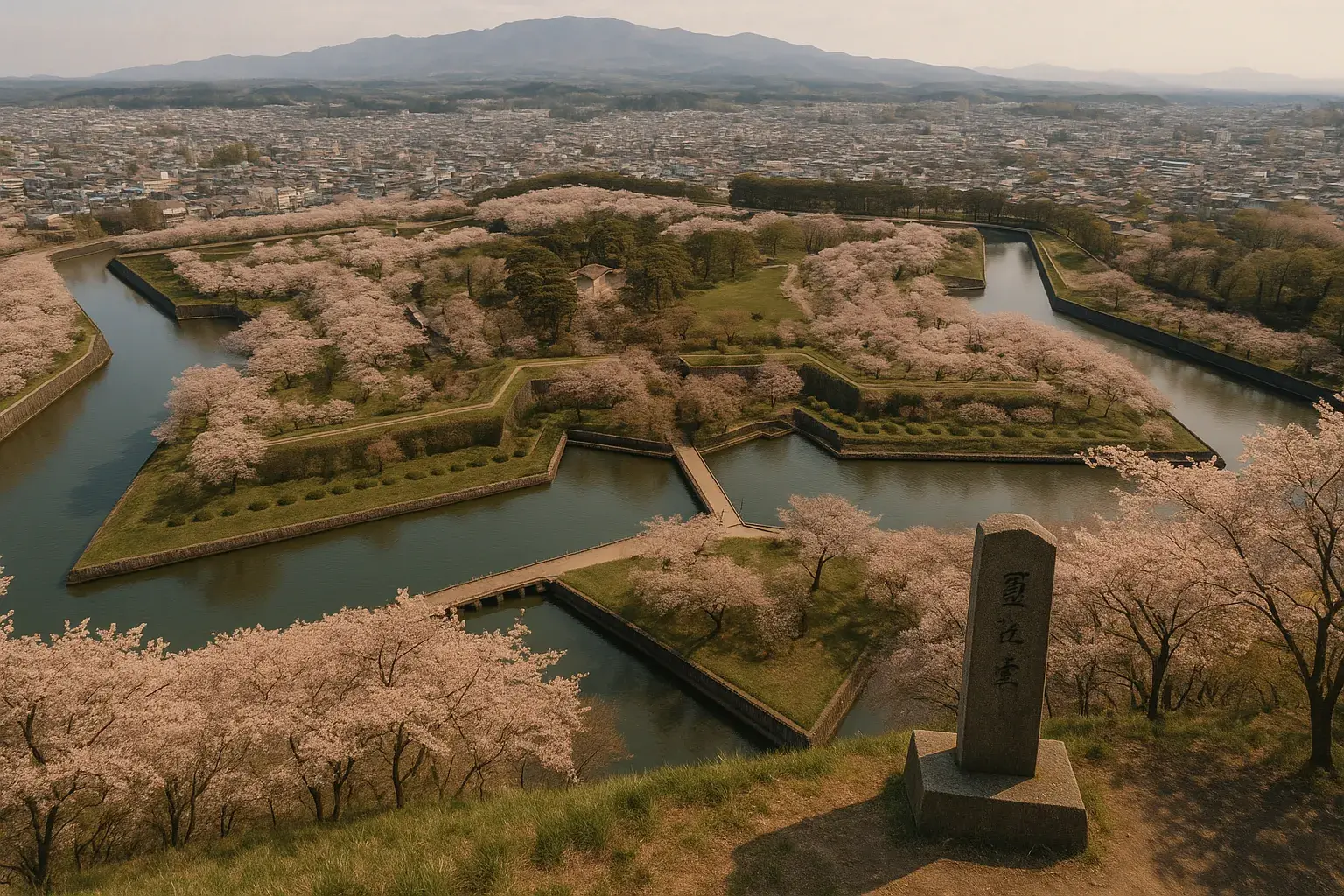
In 2010, the Hakodate Magistrate’s Office, located at the center of the fortress, was restored using original drawings and traditional construction methods. The white walls and tiled roof stand out against the star-shaped earthworks, and it is said to be a place where you can walk through the same old government office space. Inside, there is a Shinsengumi corner, where replica haori and Hijikata’s sword (reproduction) are on display.
Let’s go up to Goryokaku Tower, which stands at the southern end of the park. The star shape seen from the observatory looks like a giant military flag. While admiring the moat, which changes its appearance with the seasons – cherry blossom color in spring, deep green in summer, pure white in winter – I suddenly turned my attention towards the Ippongi Gate and saw a small, glowing stone monument marking the spot where Toshizo Hijikata fell.
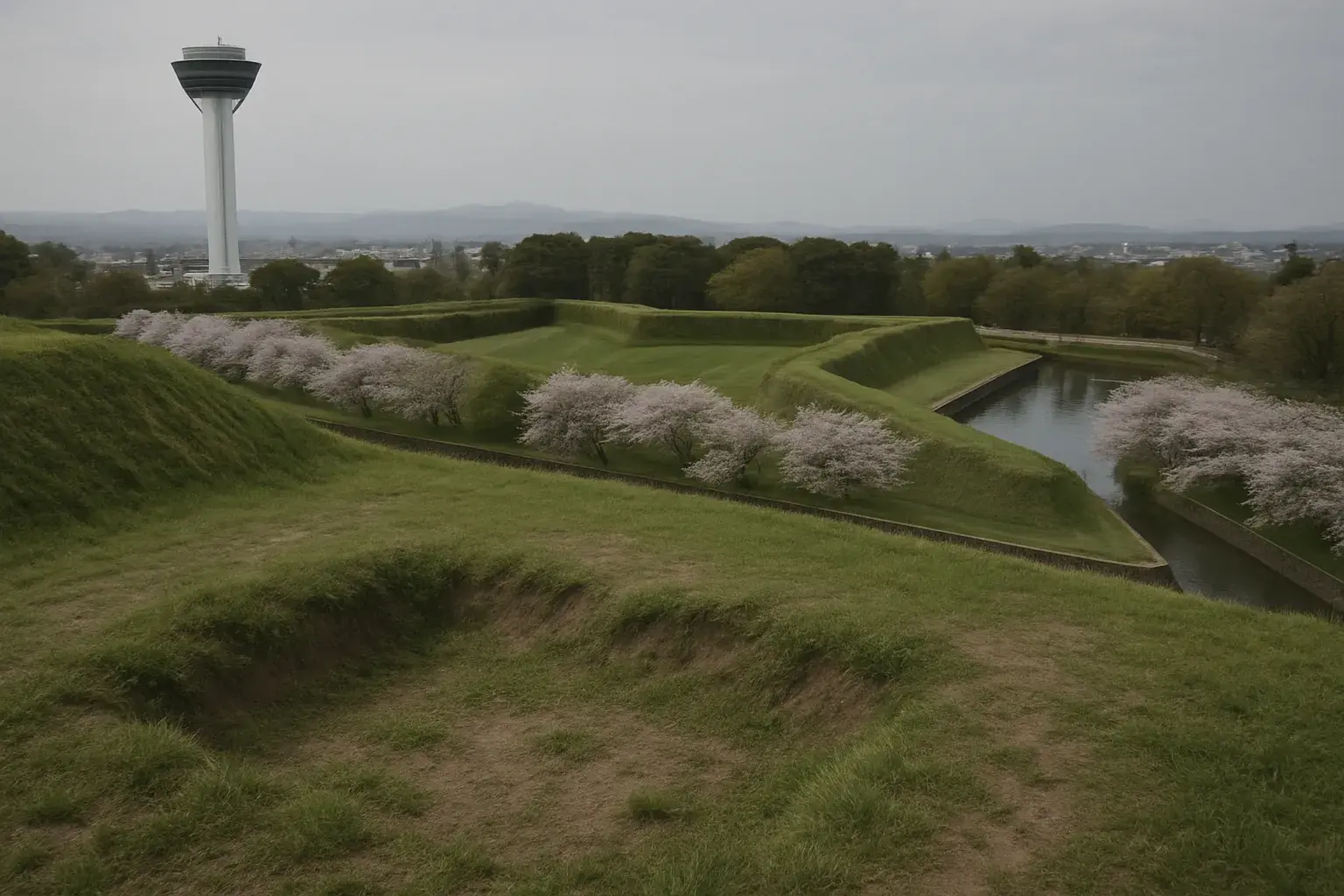
Walking along the earthworks, you can see that the dents in the dirt left here and there are gun emplacements. When you touch it with your finger, it’s as if you can hear distant gunshots coming from the other side of the damp wind.
How do you receive the dreams of those who died for their ideals?
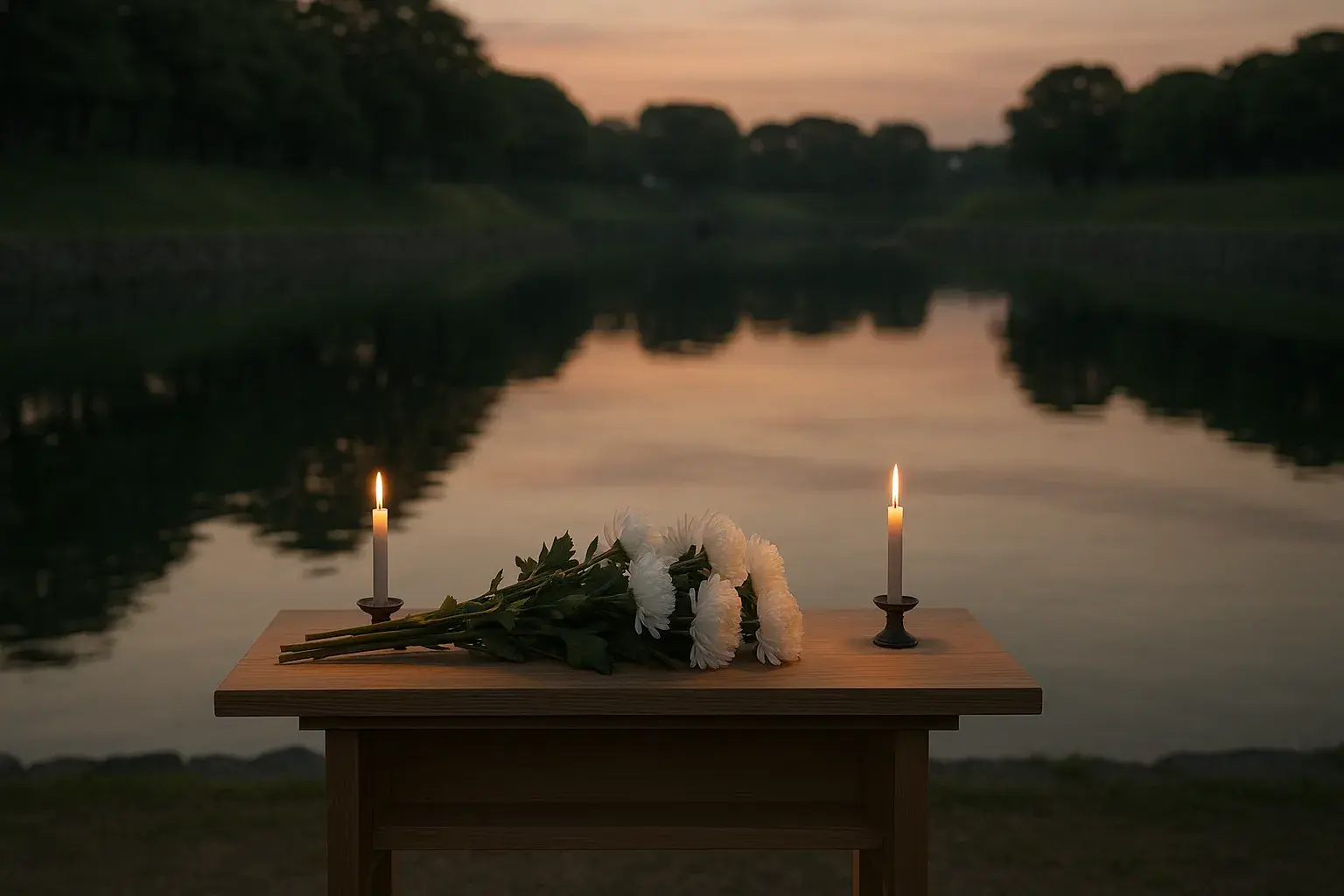
The star-shaped castle gently poses a question to each visitor. Hijikata’s determination, Enomoto’s ideals, the landscape that the citizens have preserved – all of these things quietly pile up in my heart as I stand at Goryokaku. The twinkling stars in the northern sky and the ridgeline of the fortress continue to reflect the wishes of the “last samurai.”
2. Chronology Digest
From the northward march of the shogunate’s fleet to the collapse of the Republic and the transformation of the star-shaped fortress into a park, the 150 years of Goryokaku are a microcosm of Japan’s transition from the era of samurai to a modern nation.
The reverberations of the Ezo Republic, which was destroyed in just seven months, quietly faded away, leaving behind the stone walls, but in the Showa period, citizens wanted to preserve the star-shaped castle for the future, and progress was made to turn it into a park. After the war, it was protected as a special historic site, and in 2010, the Hakodate Magistrate’s Office was restored and reborn as a “living historical space.”
3. Behind the scenes of the redevelopment of the current Goryokaku and the restoration of the “Hakodate Magistrate Office”
More than a century after the gunfire at the end of the Edo period faded away, only the empty space where the Hakodate Magistrate’s Office once stood remained in the center of Goryokaku, which was buried under grass. “We want to restore the heart of history in the center of the star.”
At the end of the 1990s, this idea took shape through the cooperation of citizens’ movements and the government, and in the 2000s, a full-scale restoration project began. However, the only clues are old photographs and worn drawings that reveal the outline of the lost building.The restoration work truly began with “filling in the puzzle.”
-
“Puzzle restoration” of drawings and old photographs—reconstruction of blueprints
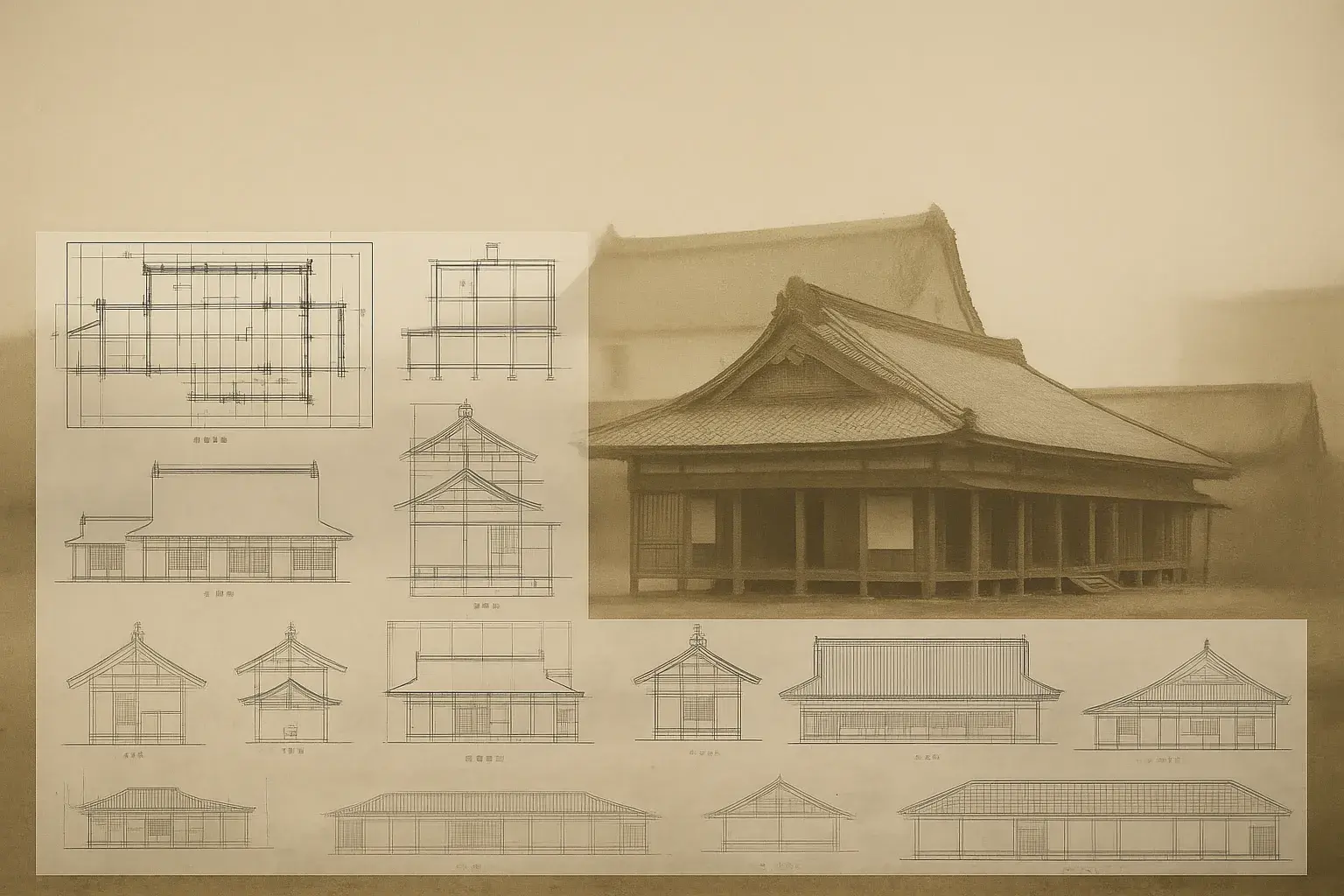
The restoration project began with the work of overlapping the remaining scattered materials – two glass plate photographs taken in the first year of the Meiji era, the “Illustrated Map of the Government Office” from the Bunkyu era, and a survey map from the period of the Development Commission – to determine the dimensions between the pillars and the slope of the roof. The 12 detailed drawings reconstructed on CAD became a “full-scale template” that showed the dimensions of each piece of wood and tile, making it possible to begin construction in 2006.
-
Floor plans told by the remains: Excavation surveys from 2003 to 2006
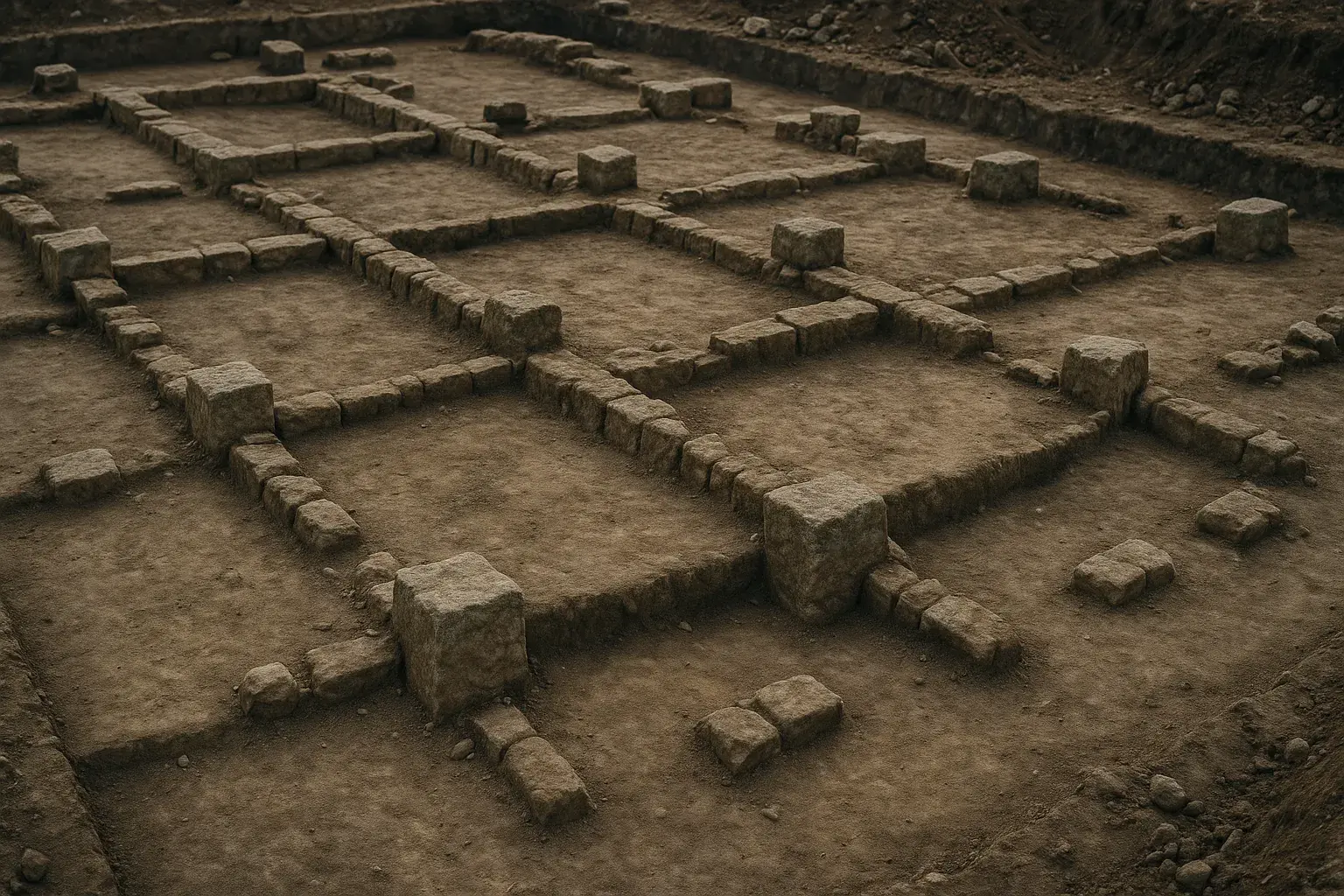
During three years of excavations within Goryokaku, 159 foundation stones for the main building, 72 foundation stones for the drum turret, and two well ruins were found in approximately their original locations. Minié bullets and pottery fragments fired during the war have also been unearthed, and the room layout and movement lines have been corroborated with actual measurement data. The drawings for five reports were directly transcribed into construction drawings as a “site manual” for the site supervision team. -
Materials and Craftsmen – Commitment to Southern Hokkaido materials and traditional construction methods
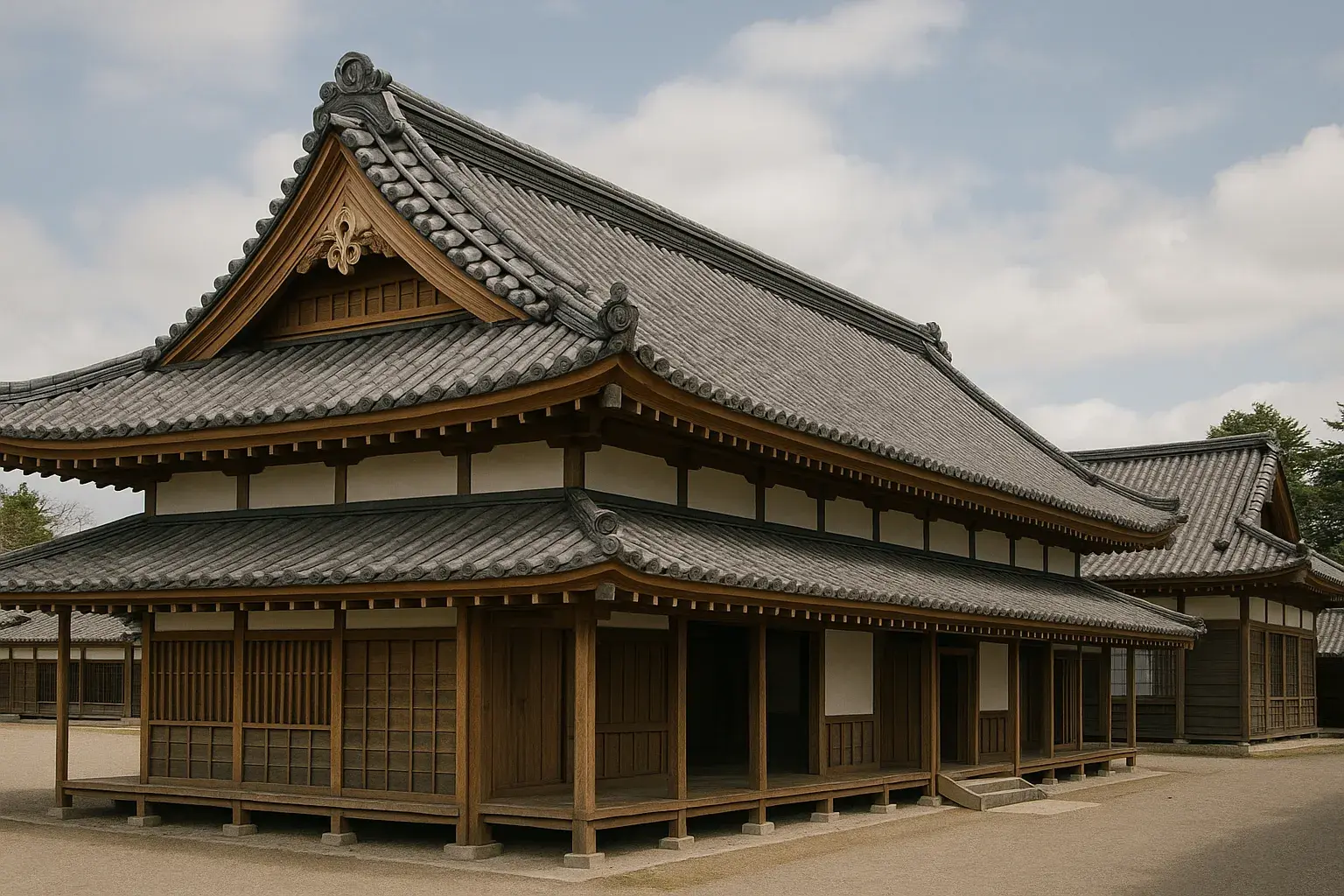
The structural materials are Southern Hokkaido cedar and Ezo pine, and the roof is made of Aomori Hiba shingles. Rather than using pre-cut machines, 70 shrine carpenters from all over the country recreated the Oikake Obotsugi and Komibo by hand. The walls are painted with Tosa plaster and the tiles are made of the same lead tiles used in the Edo period, faithfully reproducing the exterior as it was when the port first opened. -
Process and schedule: 4-year plan to create the center of a star shape
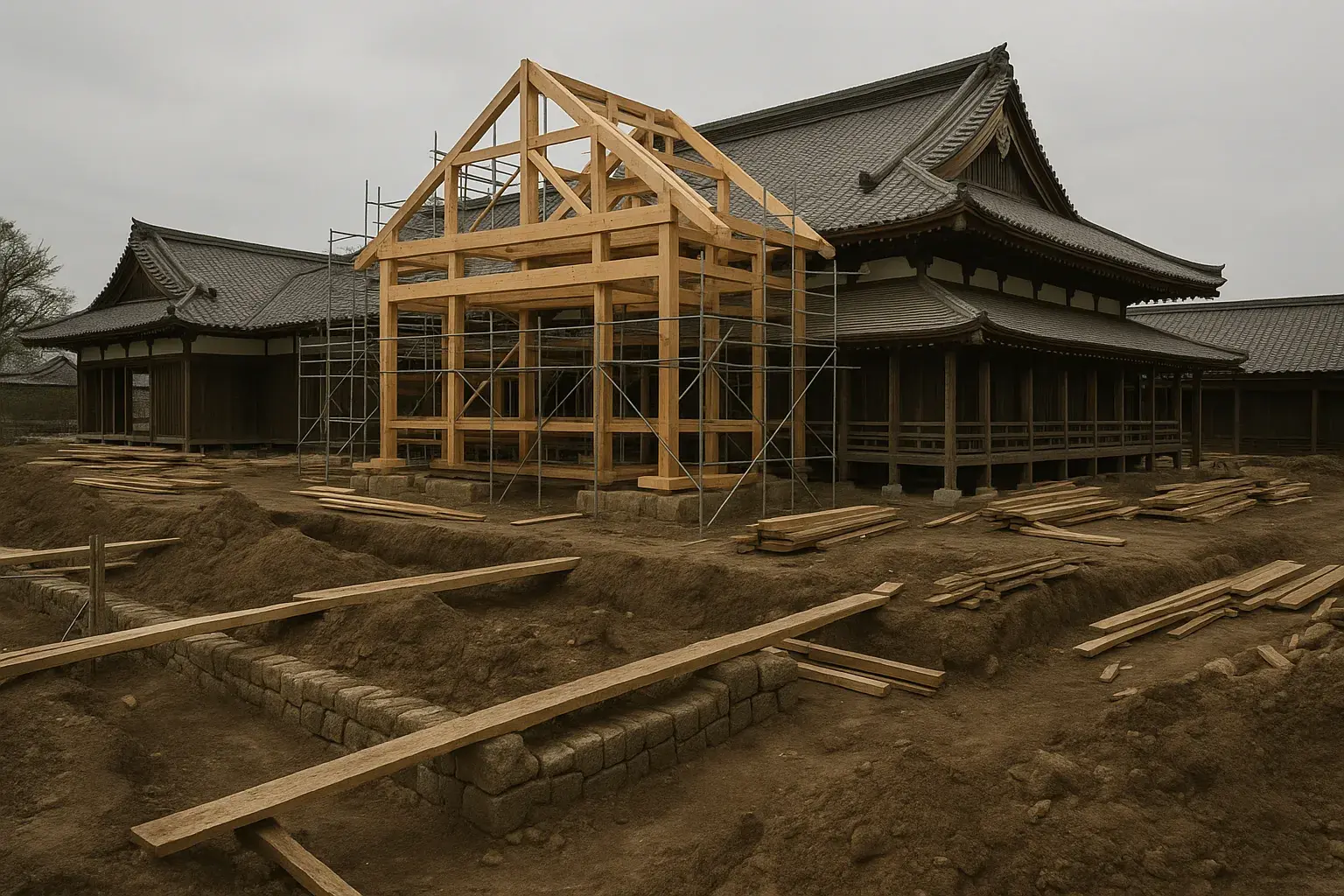
Foundation construction in 2006, construction in 2008, and completion in 2010. Approximately 1,800 pieces of lumber were used on a total floor area of 979 square meters, and an earthquake-resistant construction procedure was adopted in which the building was built from the inner core to the outer shell in the order of stone wall reinforcement, main building, row house, and drum turret. Excavation continued during construction, and the found foundation stones were compared to the drawings to the centimeter level and then reinstalled. -
Special historic sites and modern regulations: The conflict between preservation and safety
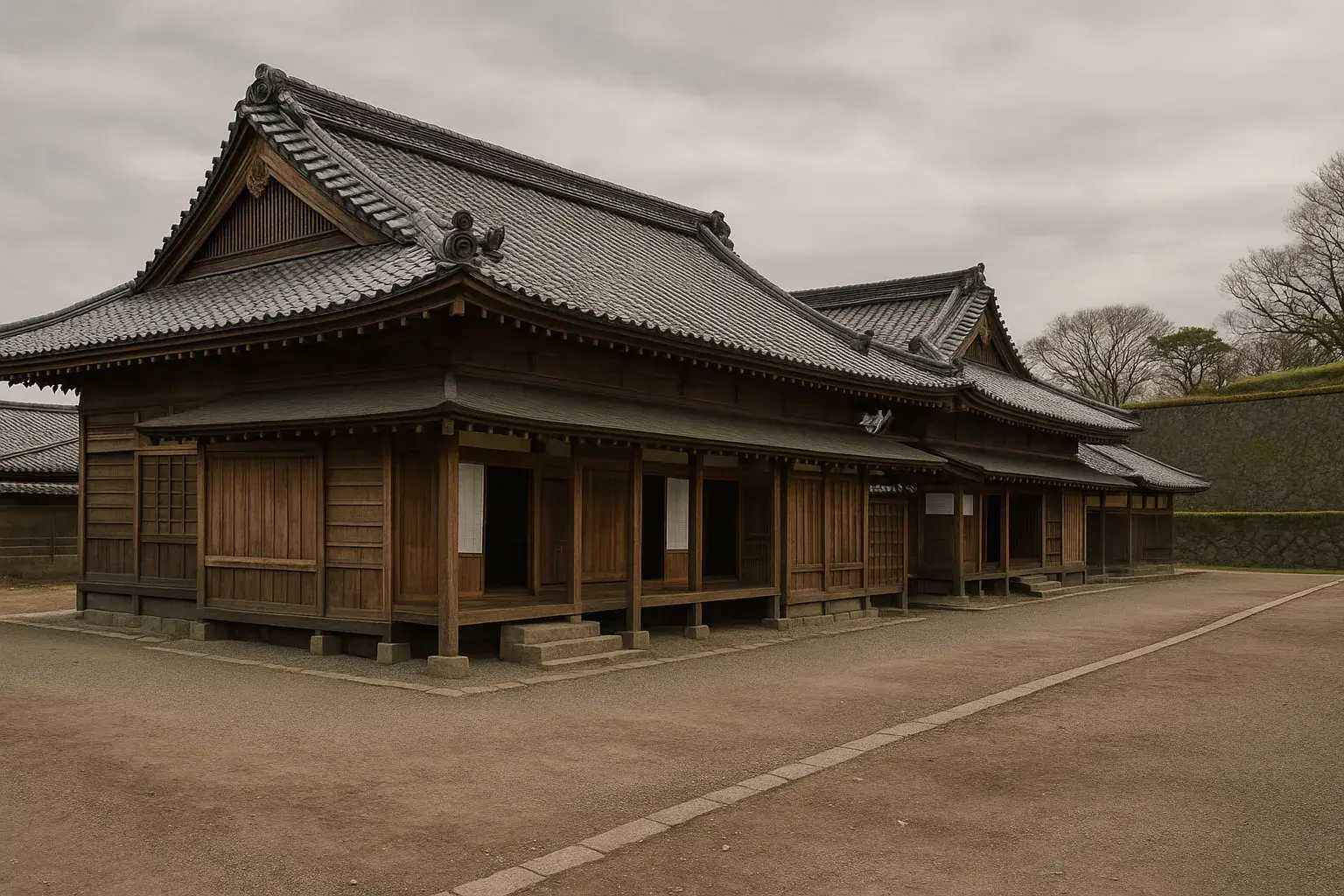
The Goryokaku ruins were built in 1952.special historic siteDesignation. Foundation excavation was restricted to a depth of 30 cm or less in the presence of the Agency for Cultural Affairs and the Hokkaido Board of Education, and the use of concrete pressure plates was also prohibited. Meanwhile, according to the Fire Service Act, indoor fire hydrants and sprinklers have been hidden in “out of sight” locations, meeting the latest disaster prevention standards without compromising the traditional architectural appearance.
It has been over 150 years since the gunshots of the end of the Edo period passed away. Walking through the star-shaped fortress, you will see each important point. “Living proof” of the Hakodate War still remains. By visiting the five spots below, you can relive history from the same perspective as Hijikata Toshizo and the former Shogunate army saw.
| Experience points | Highlights |
|---|---|
| ① Goryokaku Tower Observation Deck | A panoramic view of the star-shaped fortress from directly above. In the atrium on the first floor, there is a bronze statue of Toshizo Hijikata and a chronology of the war. |
| ② Inside Hakodate Magistrate’s Office | Restored in 2010. Panels and reproductions of swords from the Shinsengumi and the former Shogunate army are displayed next to the entrance, and beams with bullet holes from the time have been preserved. |
| ③ Hijikata Toshizo’s final monument | 15 minutes walk from Hakodate Station. A memorial service is held every year on May 11th in front of the stone monument, and bouquets of flowers are never ending. |
| ④ Earthworks and gun emplacements on the long slope | The long slope is a gentle slope that continues on the outside of the star-shaped ridge. On the slope of the earthwork, there remains the hollow of a gun emplacement where a 24-pounder gun was placed. |
| ⑤ Shiryokaku (Gongen Daiba) | A secondary fortress that protected the Demon Gate of Goryokaku. The stone torii gate is still dotted with bullet holes, and the earthworks remain in their original form. |
Finally
The story carved into Goryokaku is not a tragedy that ends in defeat, nor is it simply the origin of a tourist attraction. The sky reflected in the star-shaped moat still quietly reflects the “Japan that could have been” called the Republic of Ezo, handing over to us the ideals and pride of the young samurai who were scattered there.
“Is there any point in fighting when you know you can’t win?” – The conflict that Toshizo Hijikata had in his heart is a question that resonates with us today, when we are faced with the waves of change, even though we live in a different era. When you stand on the star-shaped earthworks, you realize that you have been invited not as a “spectator” but as an “inheritor” to a piece of history.
If you visit Hakodate, don’t be satisfied with just the bird’s-eye view from the tower; be sure to walk on the earthworks, touch the hollow of the gun emplacement, and step on the floorboards of the magistrate’s office.
Along with the smell of the sea carried by the wind, the sound of distant gunfire should make your chest tremble faintly.
The star-shaped castle speaks.
“How will you receive the “last star” of those with ideals and connect it to the future?”
The answer to that question may lie in the image of yourself reflected in the moat.
![[Otaru Canal x Sake] Enjoy local sake on a sake brewery tour! A trip to enjoy Otaru and sake](https://article.bespes-jt.com/wp-content/uploads/hubfs/0d67a3de464aa2fa6fb0bb0f0cc49eff.jpg)