
🕓 2024/9/30
#Shrines
A Detailed Guide to the History and Overview of Izumo Taisha
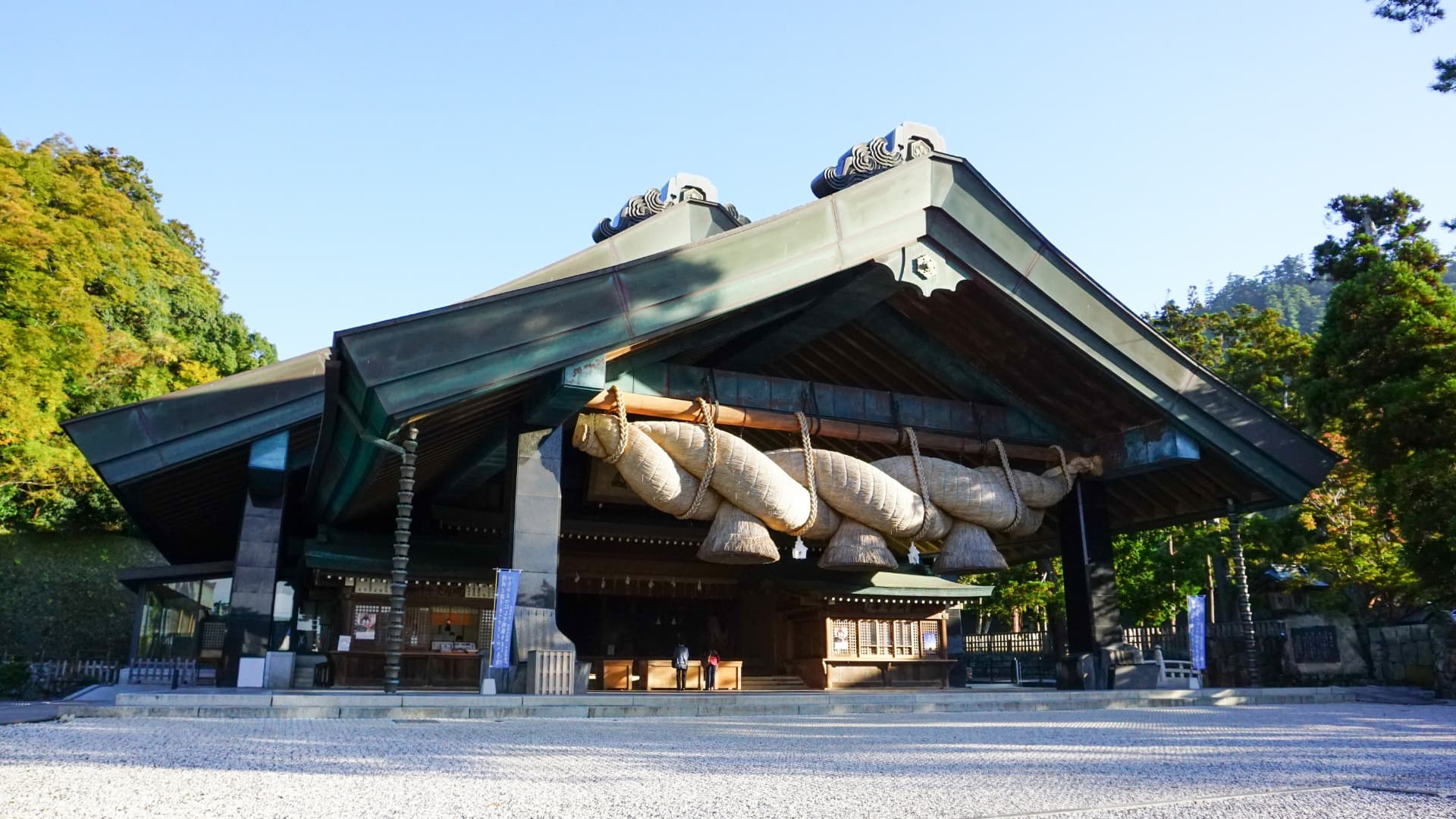
Table of Contents
Introduction
Izumo Taisha is nationally renowned as a shrine that plays a particularly important role in Japanese mythology. Enshrining Okuninushi no Okami, revered as the god of matchmaking, this shrine is a sacred site visited by many worshippers seeking blessings for romantic connections and nation-building. Its history dates back to the Kojiki and Nihon Shoki, and it is believed to have existed since before the 7th century, with its grand architecture and mythological stories continuing to captivate visitors today.
This article provides a detailed guide to the history and highlights of Izumo Taisha.
Overview of Izumo Taisha
Izumo Taisha (Izumo Grand Shrine) is one of the oldest shrines in Japan, deeply connected to myths and history as an important sacred site. Located in Izumo City, Shimane Prefecture, it enshrines Okuninushi no Okami, known as the god of matchmaking and nation-building. As a central figure in the Japanese myths of “Kuniyuzuri” (the transfer of the land) and “en-musubi” (matchmaking), many worshippers visit to pray for romantic fortune, family harmony, and business prosperity.
While the exact founding date is unknown, it is believed to have existed before the 7th century based on references in the Kojiki and Nihon Shoki. The shrine was once said to have been a magnificent structure reaching approximately 48 meters in height, and today the main hall still stands at 24 meters, representing one of Japan’s largest shrine buildings. The main hall, rebuilt in 1744, features the “Taisha-zukuri” architectural style, the oldest shrine architecture style in Japan. Characterized by thick pillars and steeply pitched roofs, this style is widely recognized as the prototype of shrine architecture.
Every October (Kamiari-zuki in the old lunar calendar), deities from all over Japan are said to gather here for a divine council (kamihakari). This event is known as the Kamiari-sai (Festival of the Gathering of the Gods), a special festival where all the gods of Japan convene. During this period, only the Izumo region calls the month “Kamiari-zuki” (the month with gods), while the rest of Japan refers to it as “Kannazuki” (the month without gods). This further reinforces Izumo Taisha’s deep-rooted faith as the “Sacred Land of Matchmaking.”
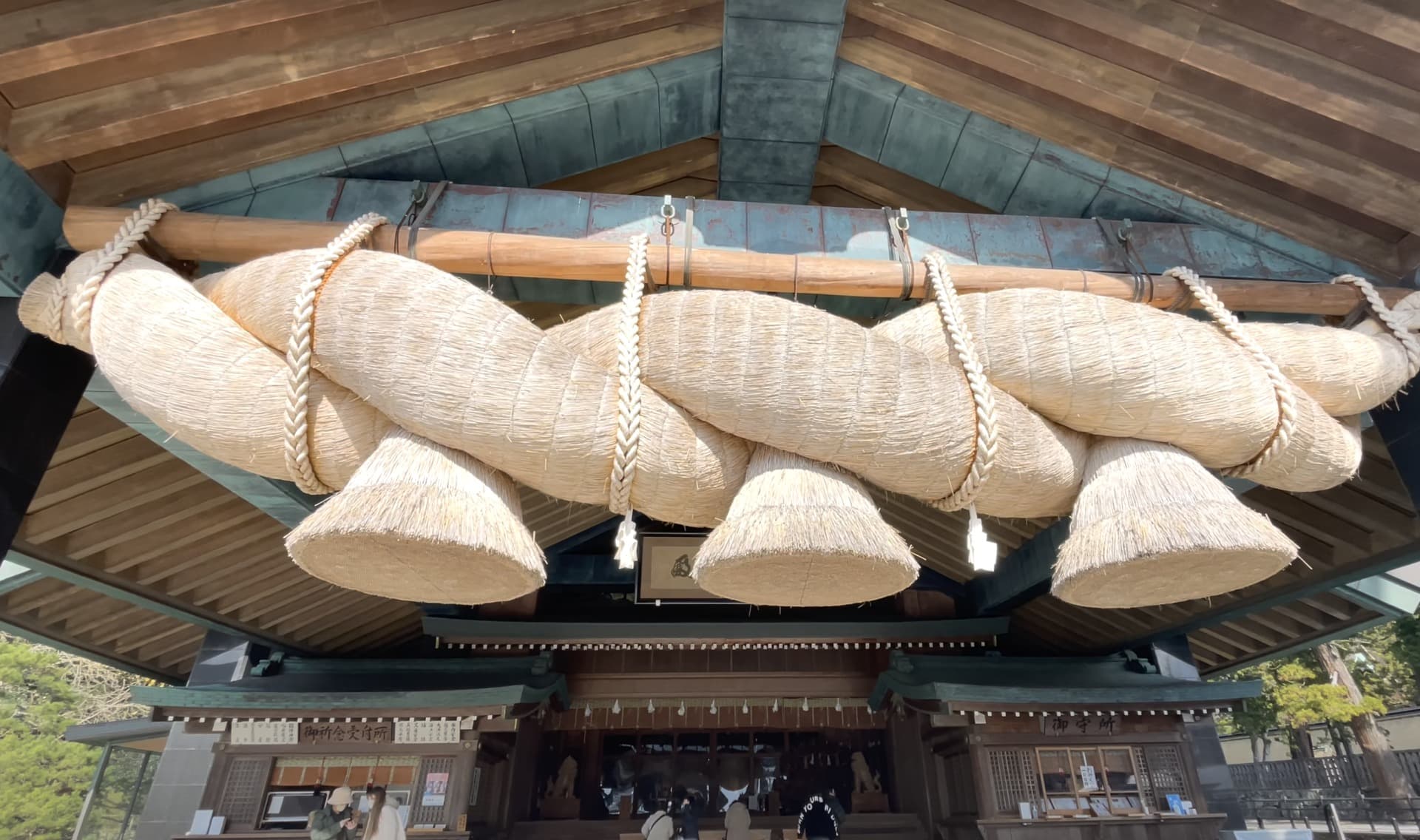
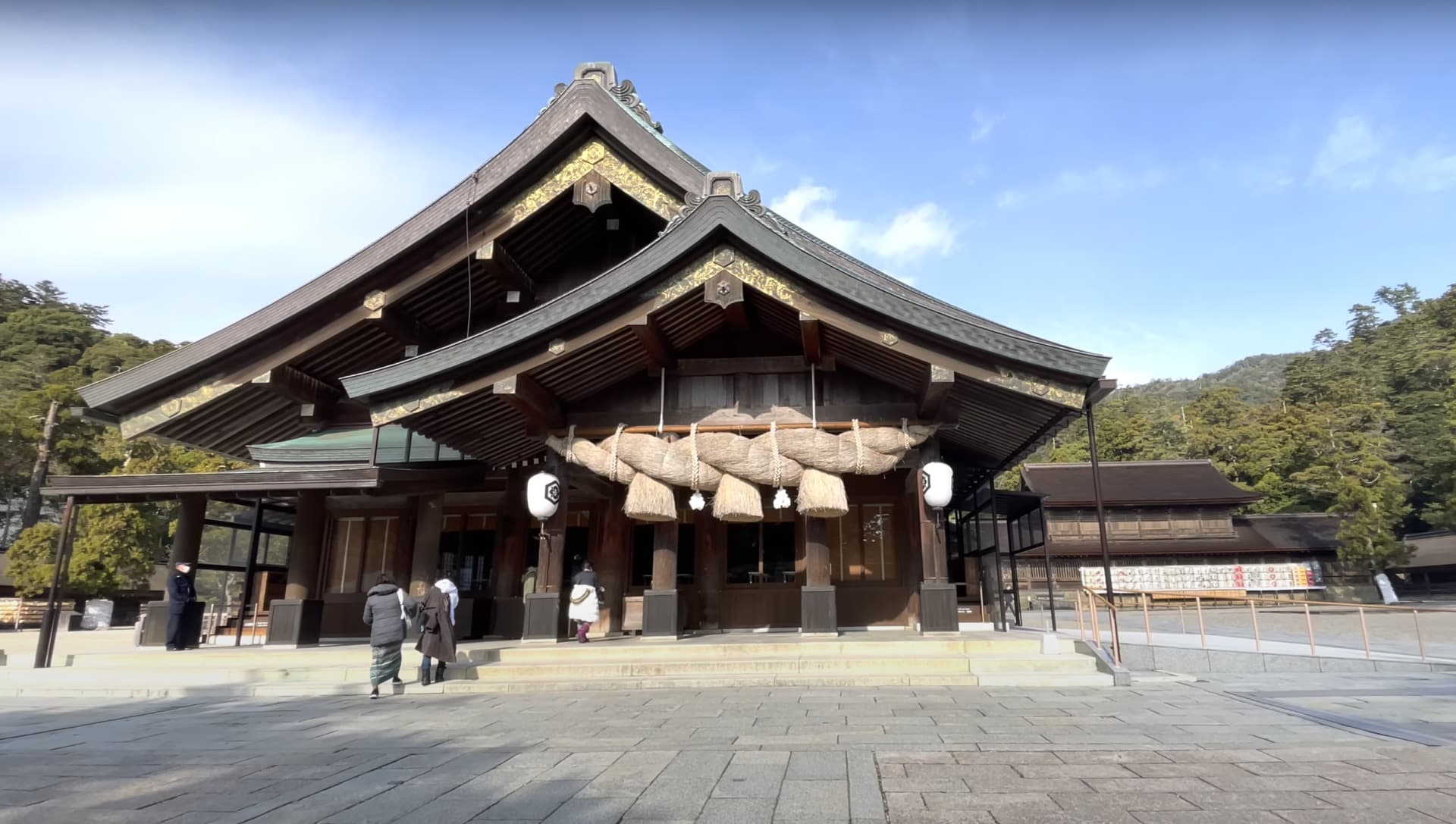
The main hall is designated as an Important Cultural Property of Japan, and its majestic appearance overwhelms visitors. In front of the main hall stands the “Haiden” (worship hall), which features a massive shimenawa (sacred rope) measuring 13.5 meters long and weighing approximately 5 tons, emphasizing the sanctity of the space. The Kagura-den (sacred dance hall) for traditional bugaku performances and the Jukusha (lodging halls for visiting deities) are also among the many attractions worth visiting.
History of Izumo Taisha
Izumo Taisha is located in Izumo City, Shimane Prefecture, and enshrines Okuninushi no Okami, widely revered as the god of matchmaking and nation-building. Historically, the following major events have been recorded.
1. Founding and Legends (Unknown – Before the 7th Century)
 *Illustrative image
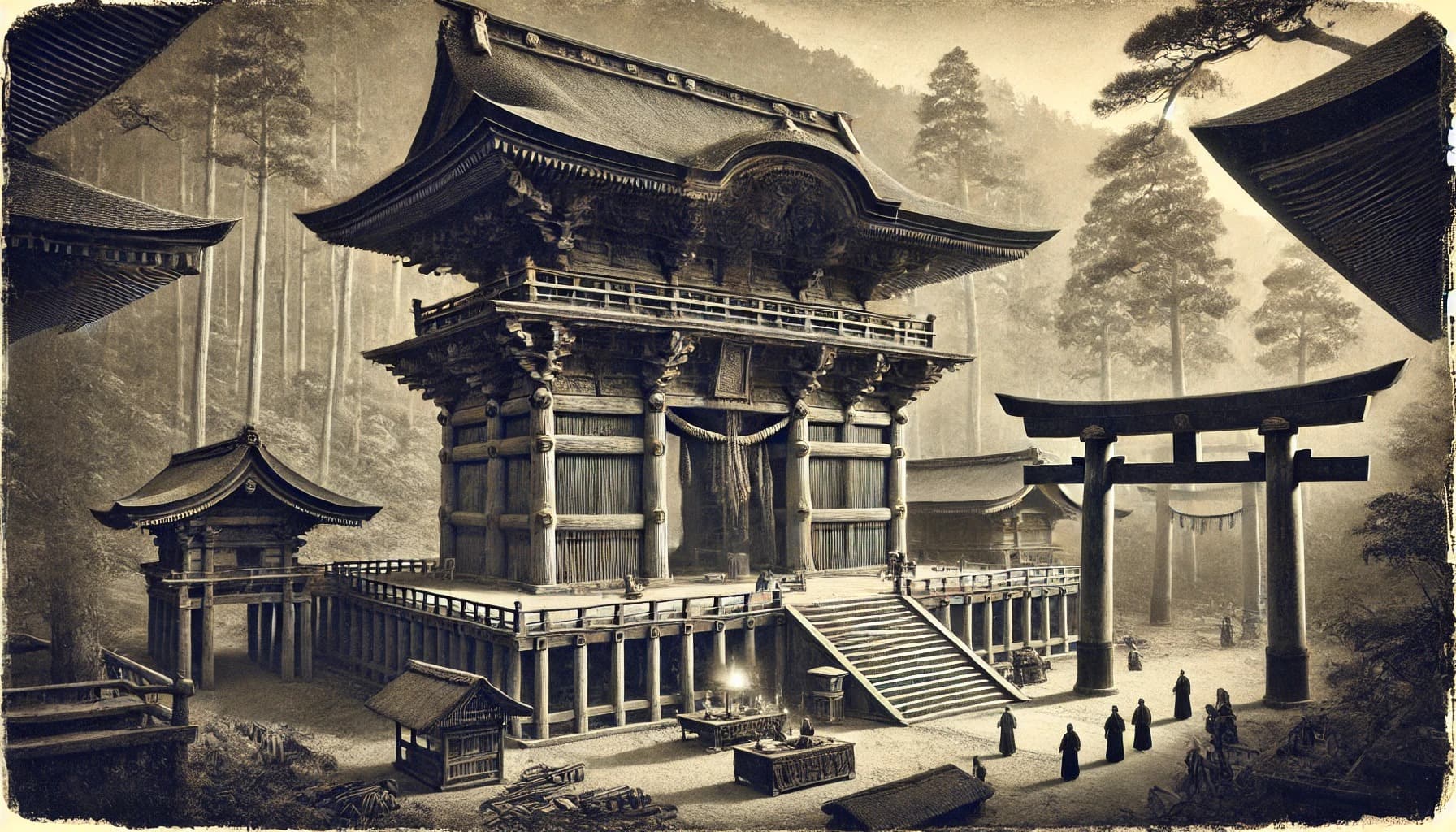
While no precise records remain of Izumo Taisha’s founding date, it appears in the Kojiki and Nihon Shoki, Japan’s oldest historical texts. According to these, Okuninushi no Okami built the nation and performed the “Kuniyuzuri” (transfer of the land) ceremony in Izumo. From this legend, Izumo Taisha has been revered since ancient times as the god of matchmaking and nation-building.
Additionally, a massive pillar (consisting of three bundled cedar trunks) discovered during excavations around the year 2000 supports the existence of the ancient grand structure.
2. Around 950 – The Oldest Records
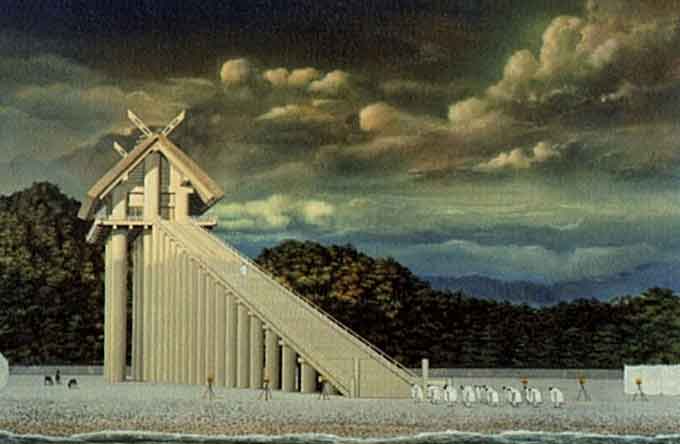
Izumo Taisha first appears in written records during the Heian period, around the year 950. At that time, the shrine’s main hall was recorded as reaching a height of 48 meters, making it the tallest wooden structure in Japan. The building’s height was believed to reflect the Shinto worldview that the gods dwell above humans.
Evidence from excavated pillars confirms the high probability that this massive building actually existed.
3. 1744 – Reconstruction of the Main Hall
 *Illustrative image
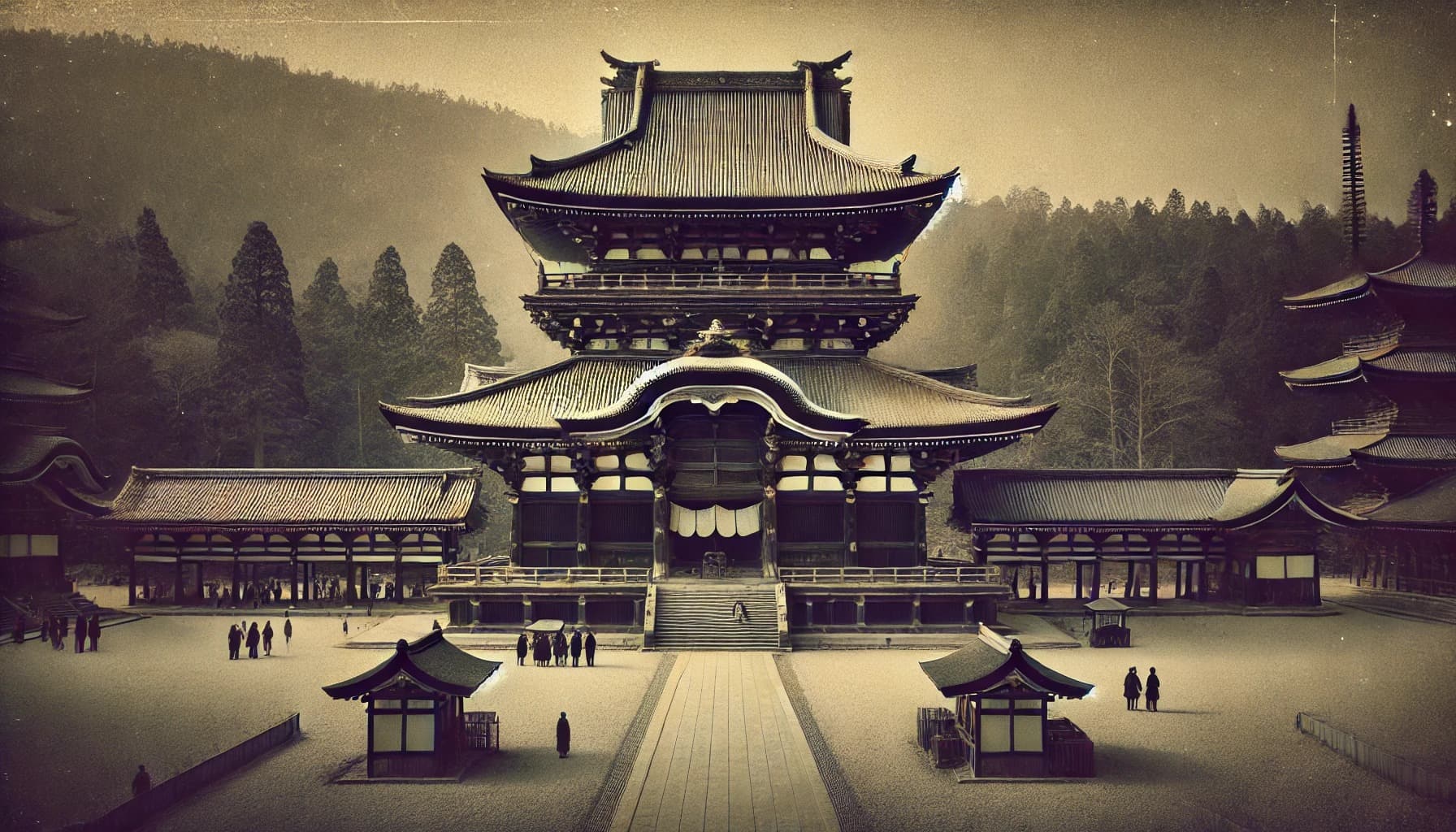
In 1744, the current main hall was rebuilt in the “Taisha-zukuri” style, the oldest shrine architectural style in Japan. Although the building height was reduced to 24 meters in this reconstruction, its grand structure remains intact and is designated as an Important Cultural Property. After this rebuilding, Izumo Taisha established itself as a major pilgrimage destination in Japan, attracting worshippers from across the country.
4. 1881 – Reconstruction of the Shinmon Gate
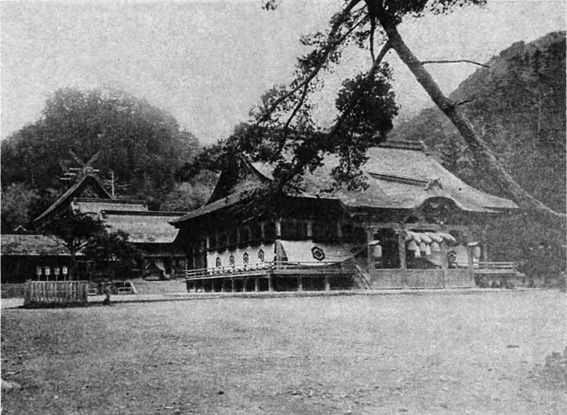
In 1881 (Meiji 14), the iconic Shinmon (Sacred Gate) of Izumo Taisha was rebuilt. The Shinmon is an important gate through which visitors pass when entering the shrine grounds, located at the center of Izumo Taisha. This reconstruction was carried out to align with the new era following the Meiji Restoration, symbolizing the continuation of Izumo Taisha’s faith into modern times.
The Shinmon serves as a symbolic entrance to the sacred space, leaving a strong impression on worshippers with its impressive construction. Through this reconstruction, Izumo Taisha came to welcome even more visitors, and the gate remains a beloved landmark to this day.
5. 2013 – The Heisei Grand Relocation (Sengu)
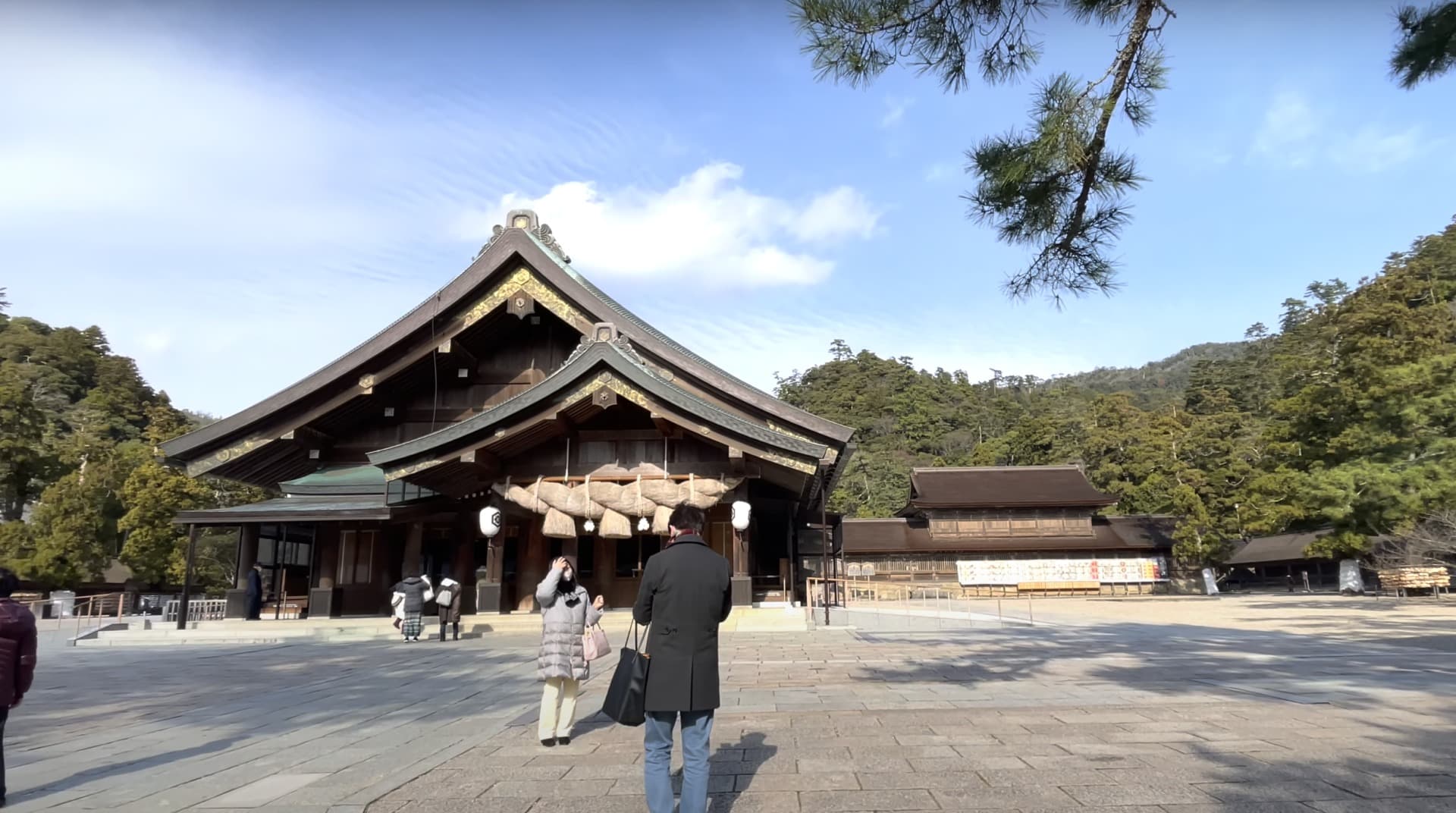
At Izumo Taisha, a “Grand Relocation” (sengu) is performed every 60 years to restore the main hall and key buildings. The Heisei Grand Relocation took place from 2008 to 2013, and after five years of major restoration, Okuninushi no Okami was returned to the main hall in May 2013. During this ceremony, a sacred ritual was performed to transfer the divine spirit from the old building to the new one, receiving renewed divine power.
Through the relocation, Izumo Taisha regained new beauty and sanctity for modern-day worshippers.
Highlights of Izumo Taisha
With its grand architecture and historical significance, Izumo Taisha offers many highlights. Here are the must-see spots when visiting the shrine.
■ Main Hall (Honden)
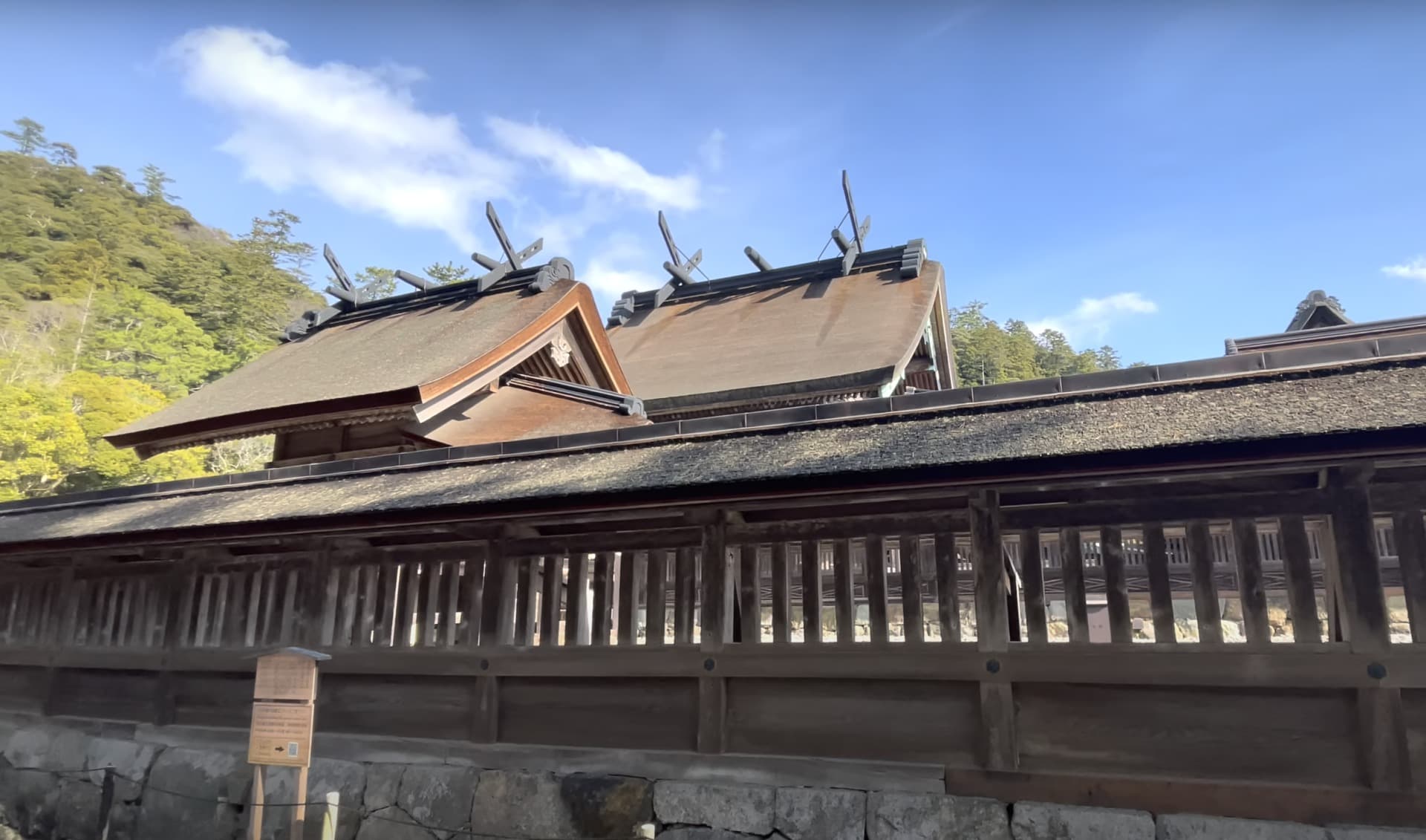
The main hall of Izumo Taisha was rebuilt in 1744 and is designated as an Important Cultural Property. It employs the “Taisha-zukuri” style, the oldest shrine architecture in Japan, standing 24 meters tall — among the tallest shrine buildings in the country. It was once said to have reached 48 meters, showcasing the remarkable engineering skills of ancient Japan.
The main hall is enclosed by double fences, and while general visitors can only approach the outer fence, the magnificent structure can be admired from beyond.
■ Kagura-den (Sacred Dance Hall)
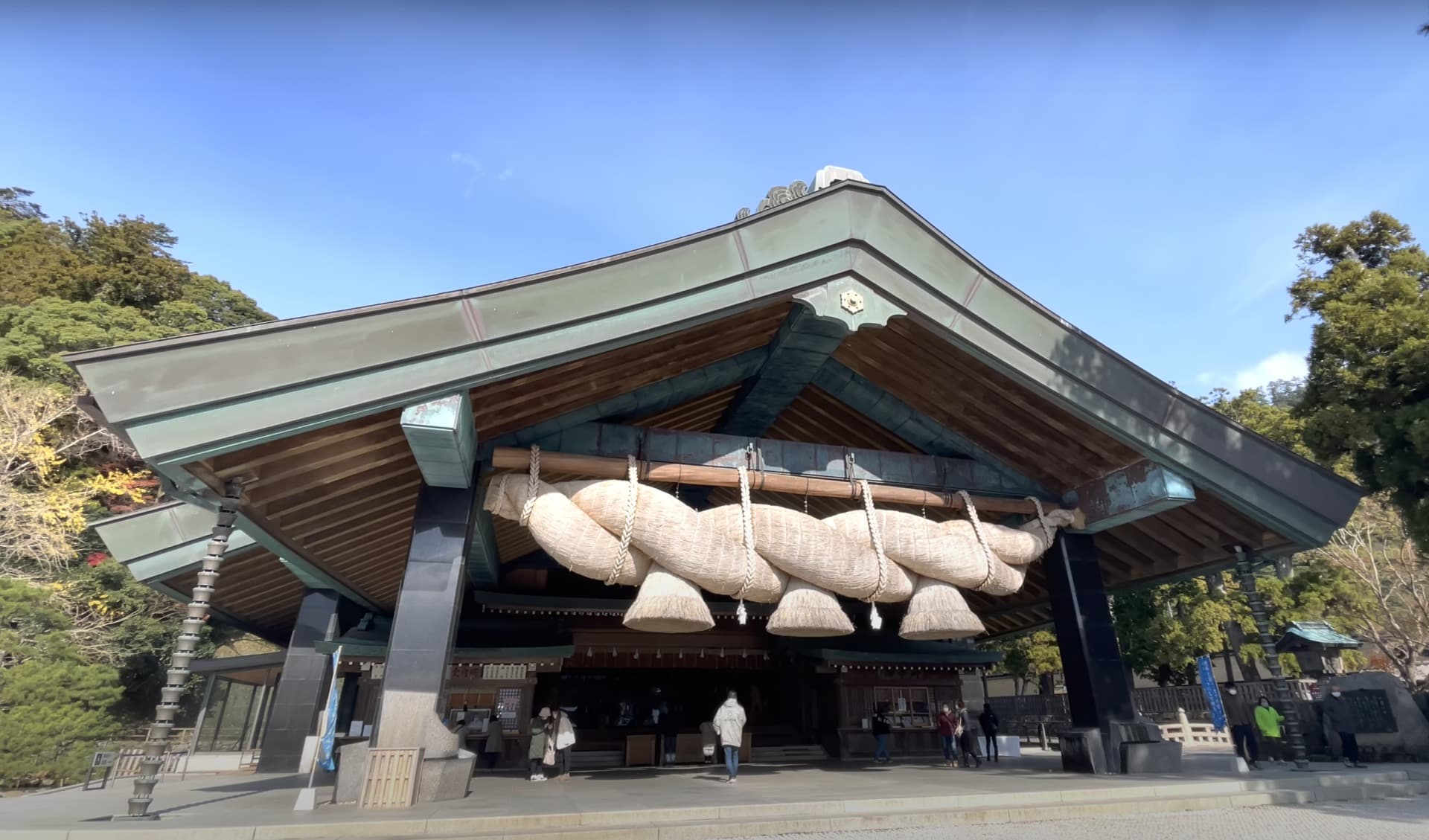
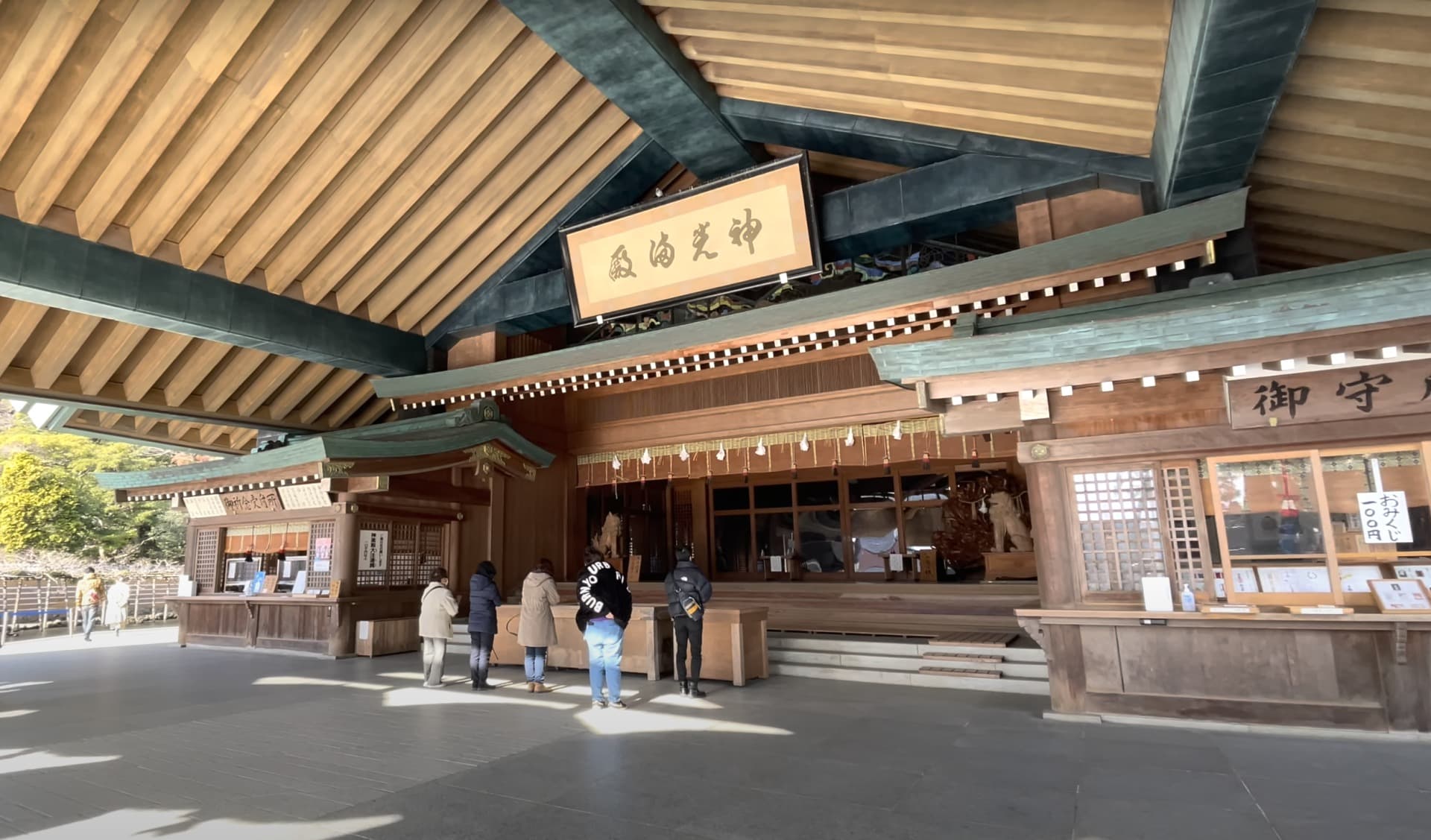
The Kagura-den was rebuilt in 1981 and is a large structure housing Japan’s largest shimenawa (sacred rope). The rope measures 13.5 meters in length and weighs approximately 5 tons, creating an overwhelming presence. This shimenawa is believed to hold sacred energy, and worshippers believe it confers especially powerful blessings.
Traditional kagura dances are performed here, and the hall is also used for sacred rituals and wedding ceremonies.
■ Haiden and the Four Torii Gates
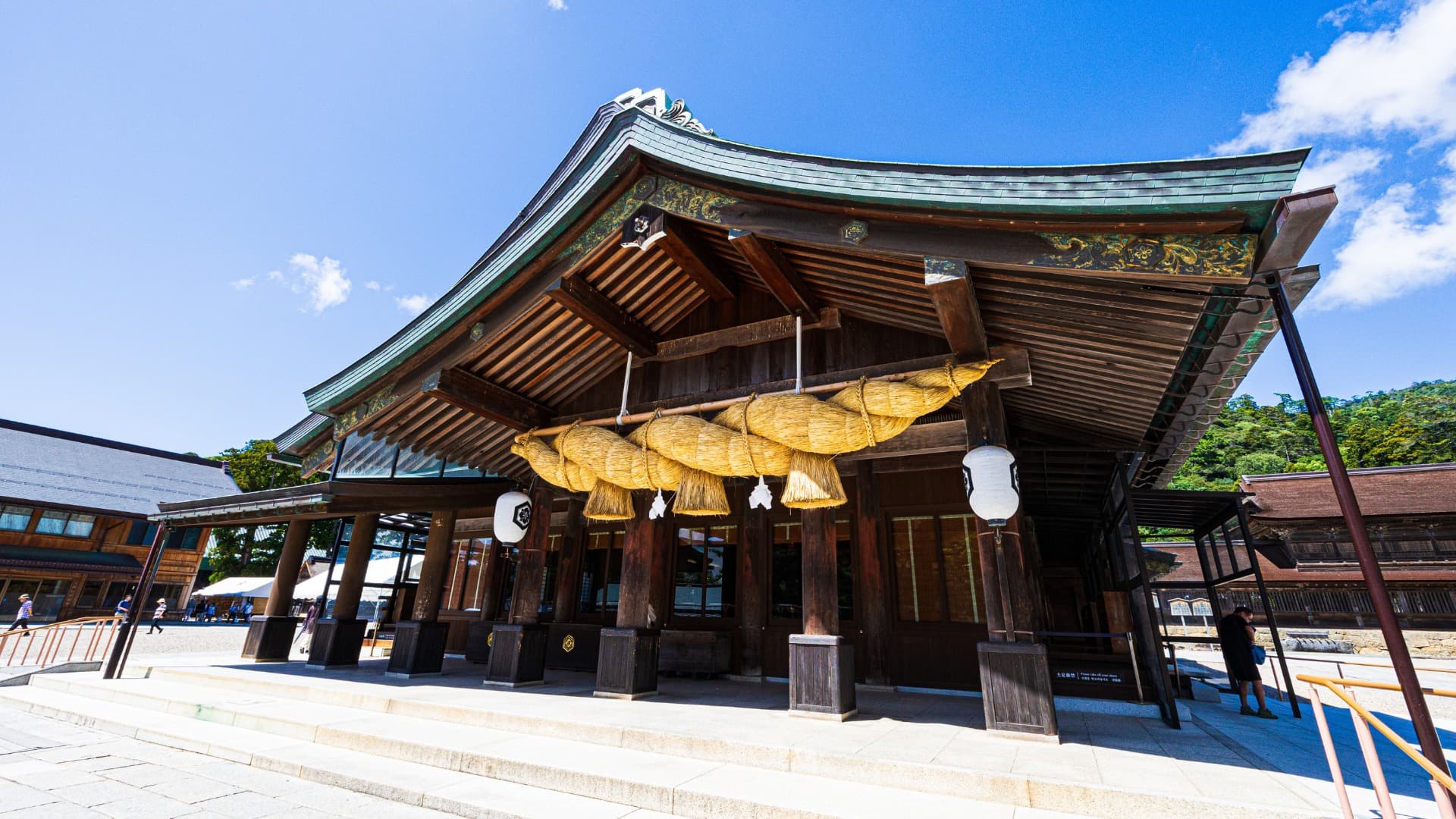
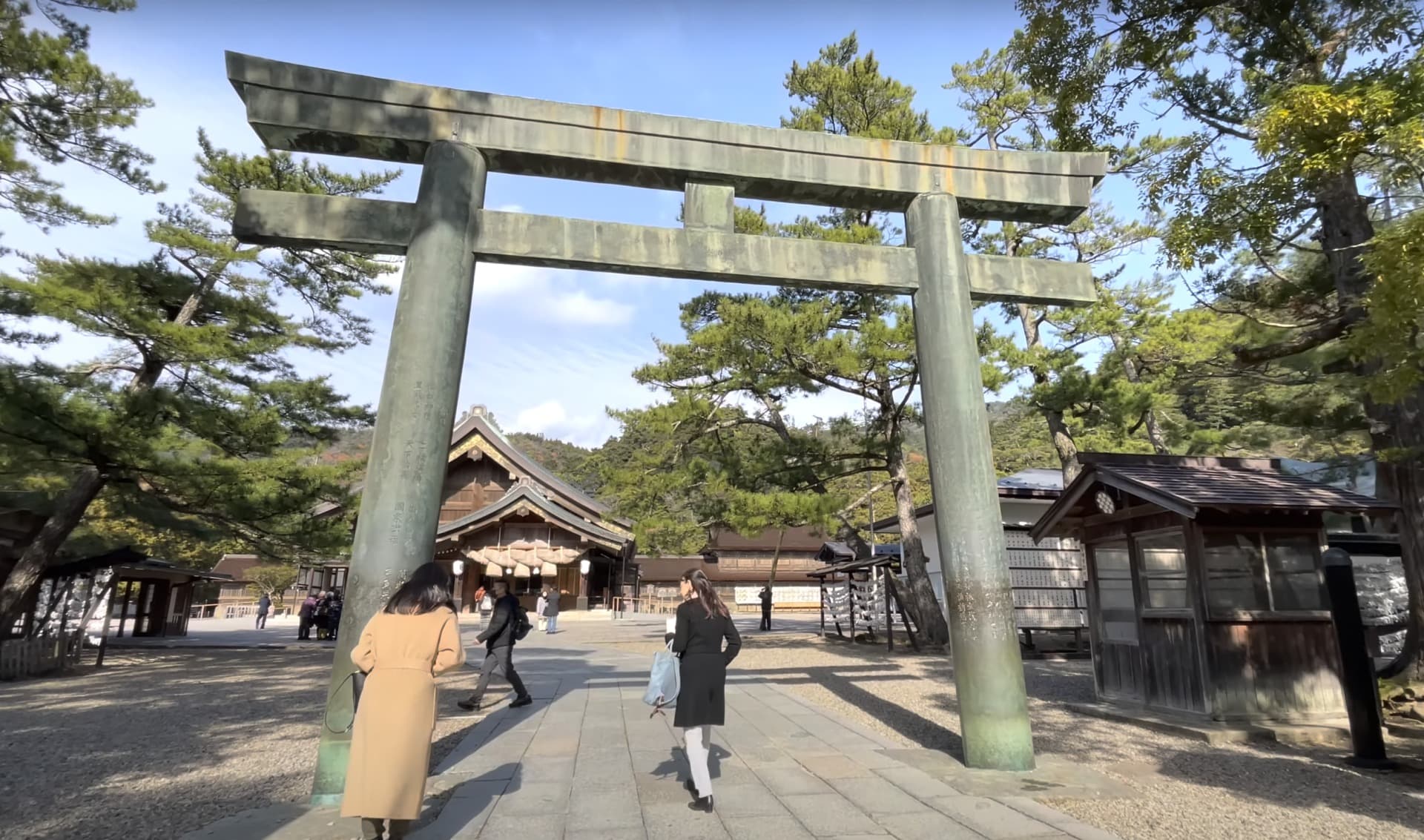
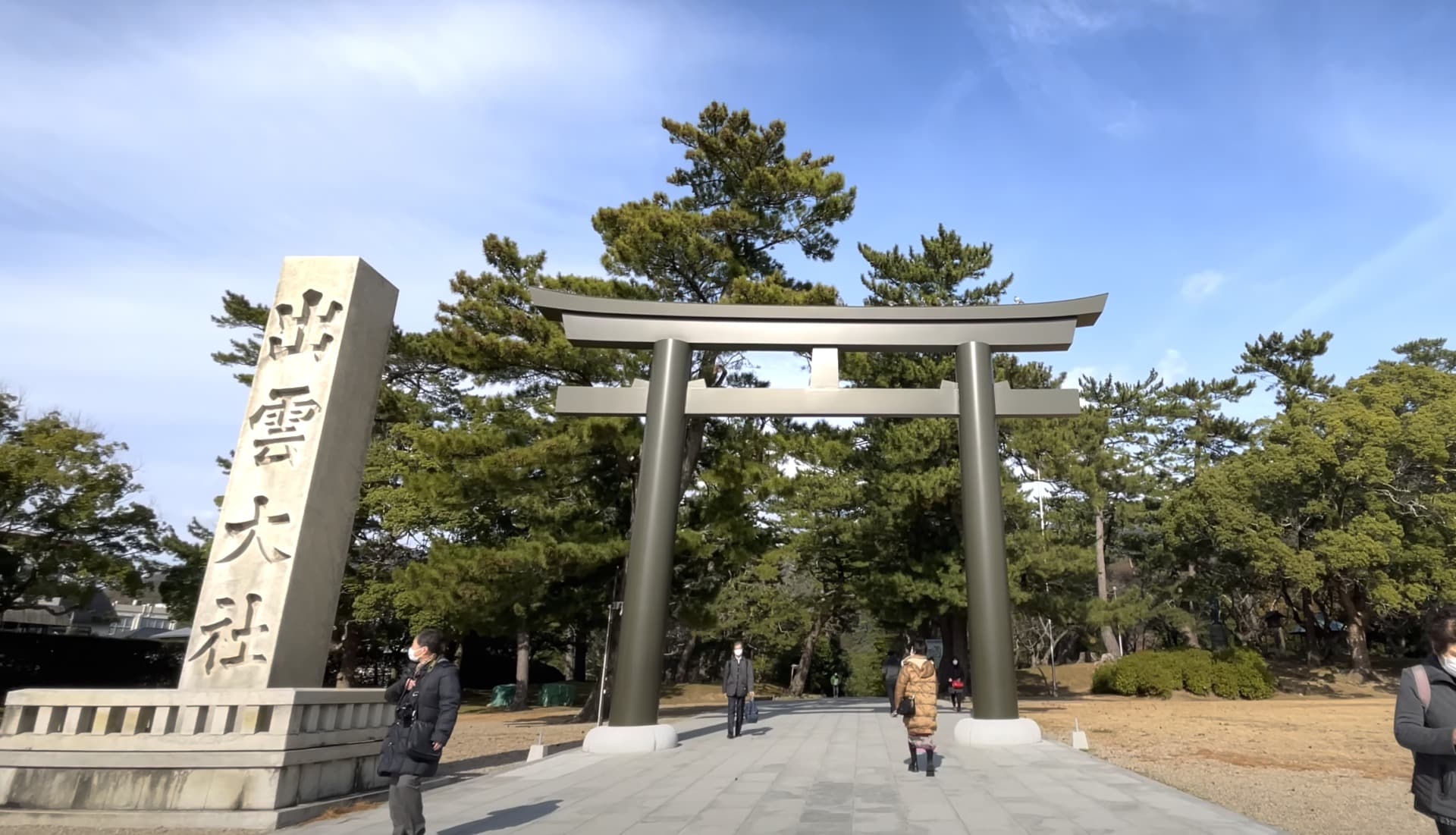
Izumo Taisha has four torii gates. The most famous is the “Second Torii” on the south side, distinguished by its unique metal design. Passing through the torii gates leads worshippers into the sacred space, along the approach to the magnificent Haiden (worship hall).
The Haiden serves as the place where worshippers offer their prayers. The approach, lined with torii gates and pine trees, has a quiet and serene atmosphere, providing a sacred experience for all who visit.
■ Musubi no Goshinzo (Statue of Divine Matchmaking)
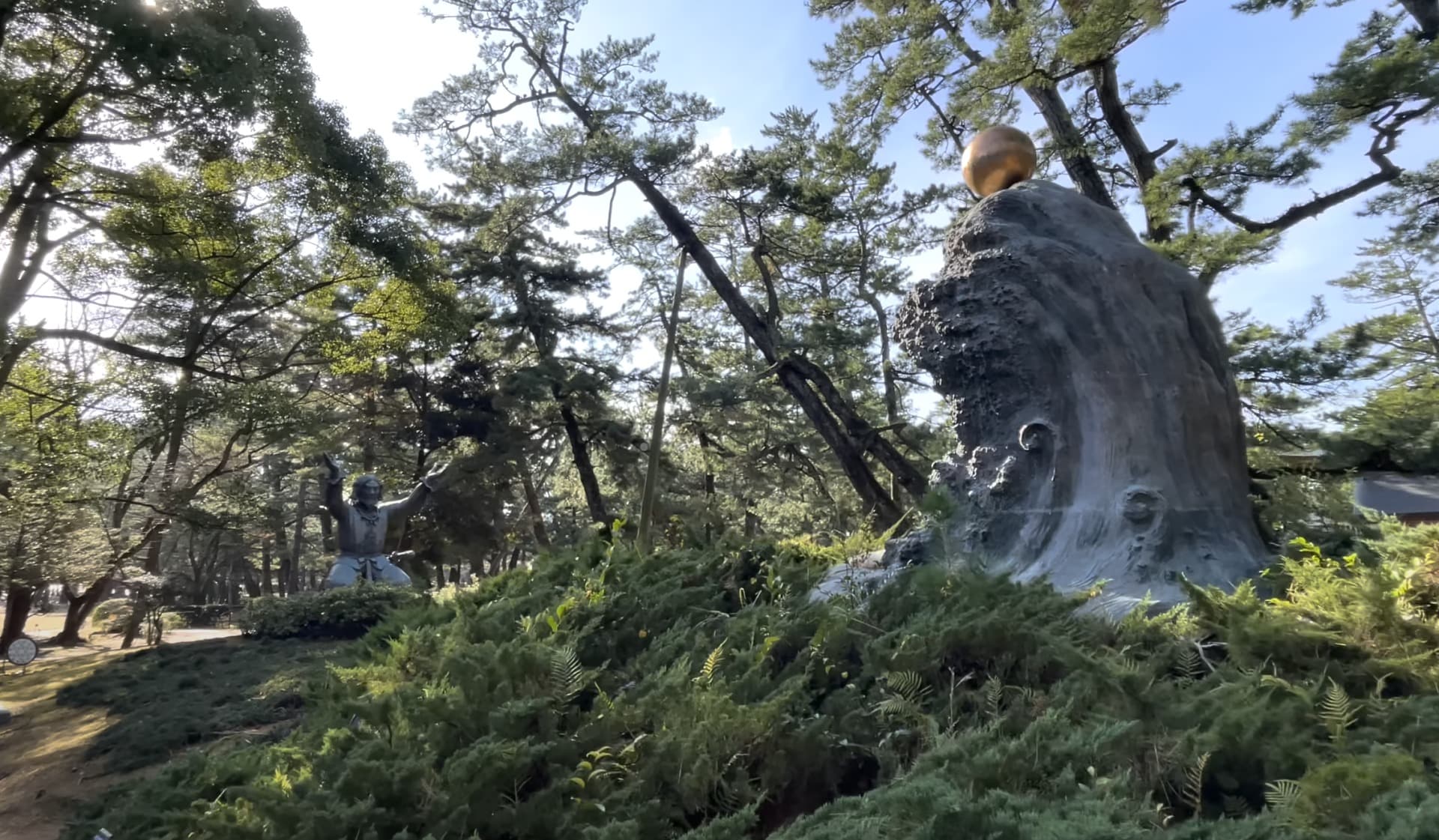
The Musubi no Goshinzo is one of the iconic statues of Izumo Taisha, depicting the moment when Okuninushi no Okami received the power to become the god of matchmaking. Based on mythological scenes, this statue symbolizes the instant the great deity became the god of en-musubi. Worshippers pray before this statue for matchmaking and family prosperity. The statue, depicting Okuninushi no Okami bathed in divine light, is known as a spot where one can feel the power of the gods.
■ Shinmon-dori Street
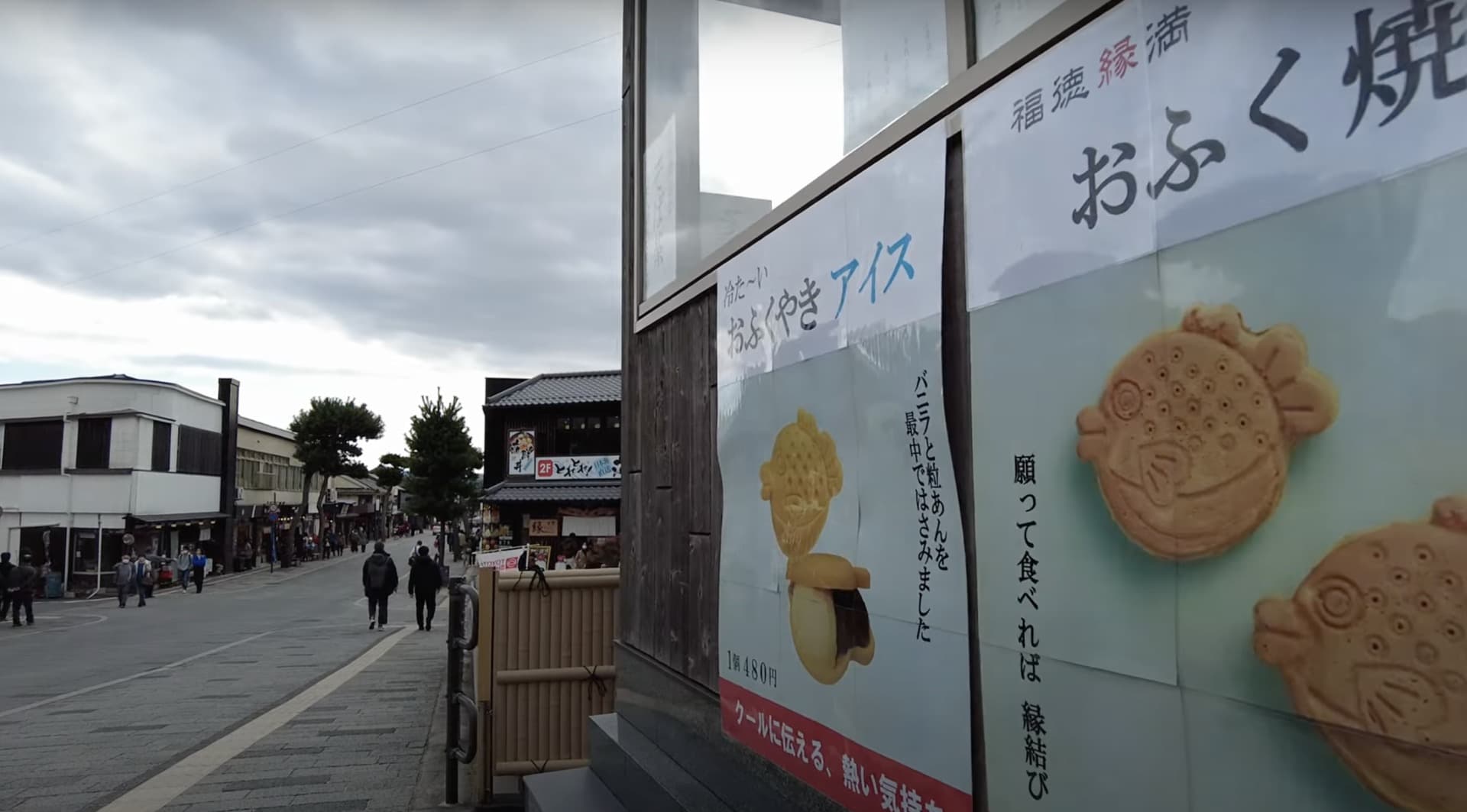
Shinmon-dori is the approach to Izumo Taisha, a lively street stretching approximately 700 meters. The street is lined with shops selling local specialties and souvenirs, as well as restaurants offering famous Izumo soba and zenzai (sweet red bean soup). Since Izumo Taisha is widely revered as the shrine of “matchmaking,” many goods and souvenirs related to en-musubi are also available. Visitors can stop by before or after worship to enjoy local flavors and purchase memorable gifts.
■ Shimane Museum of Ancient Izumo
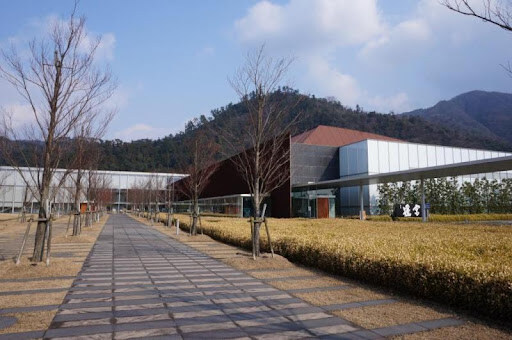
Located near Izumo Taisha, the Shimane Museum of Ancient Izumo offers visitors a chance to explore the history and culture of ancient Izumo. The museum displays excavated bronze artifacts and weapons, as well as nationally designated Important Cultural Properties. Particularly noteworthy are the 1/10 scale model recreating the former appearance of Izumo Taisha and the three massive pillars known as “Uzubashira”.
These pillars were crucial structural elements that once supported the 48-meter-tall Izumo Taisha. Visiting the museum provides a deeper understanding of Izumo Taisha, ancient Japanese religious beliefs, and their historical context.
■ Inasa no Hama Beach
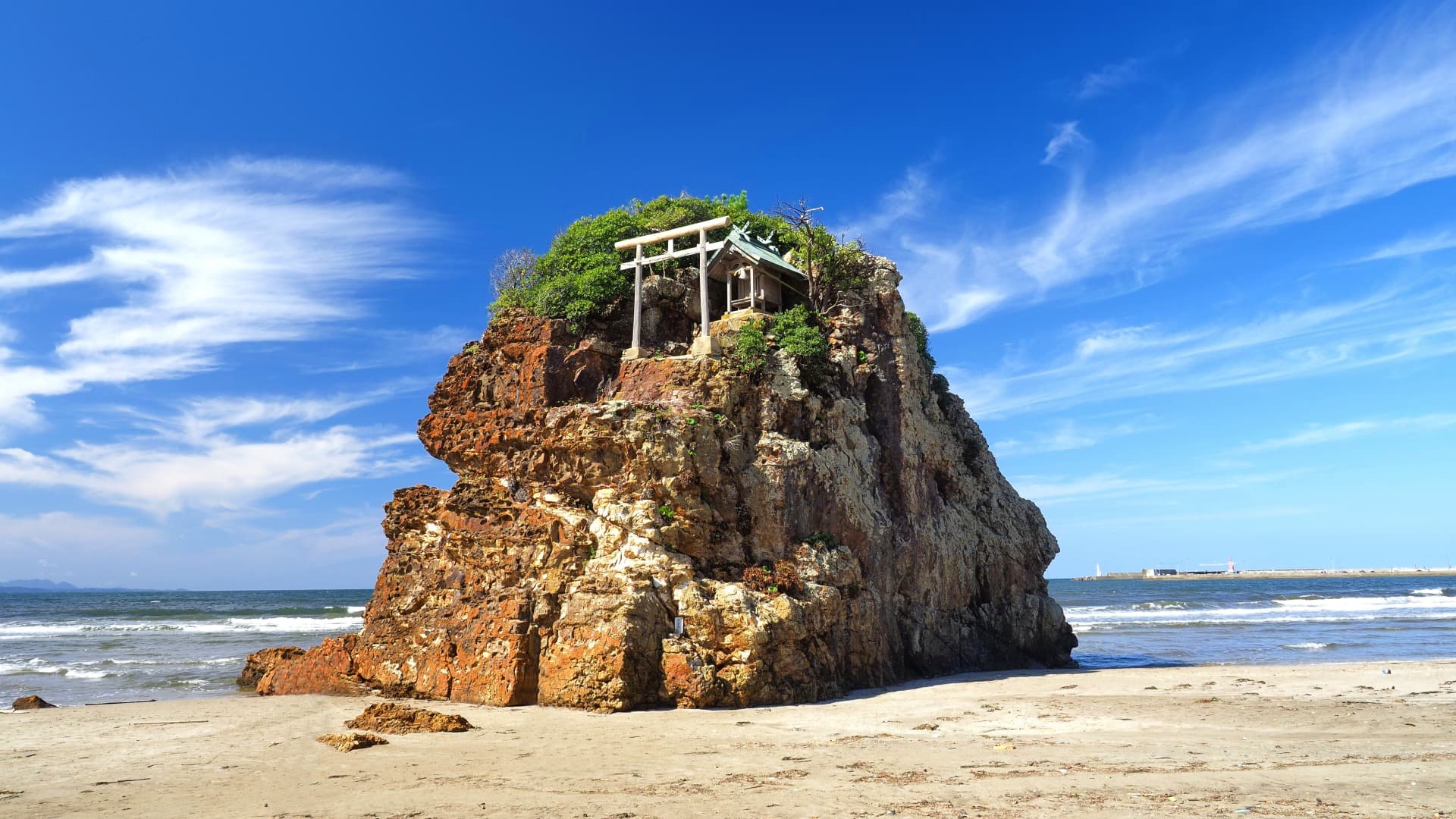
Inasa no Hama is a sacred beach located about one kilometer west of Izumo Taisha. During the annual Kamiari-sai, the deities from across the country are said to arrive here.
This beach is also famous as the setting for the “Kuniyuzuri” (transfer of the land) myth, in which Okuninushi no Okami ceded the nation to a messenger of Amaterasu Omikami. The beautiful sunsets over the beach are also a highlight, making it a beloved sacred spot for worshippers and tourists alike.
Summary
Izumo Taisha is a shrine that deeply reflects Japan’s ancient myths and history, and its magnificent architecture and rich culture continue to inspire many people today. As a sacred land of matchmaking and the host of the annual Kamiari-sai where deities from across the country gather, Izumo Taisha remains an indispensable presence in Japanese Shinto belief.
Each visit offers a sense of the shrine’s sacred atmosphere, and experiencing the history and culture of Izumo Taisha can feel like a purification of the soul. We encourage you to visit Izumo Taisha and unravel its remarkable history for yourself.