🕓 2025/9/14
#Culture
A Detailed Guide to Japanese Armor (Kacchu)
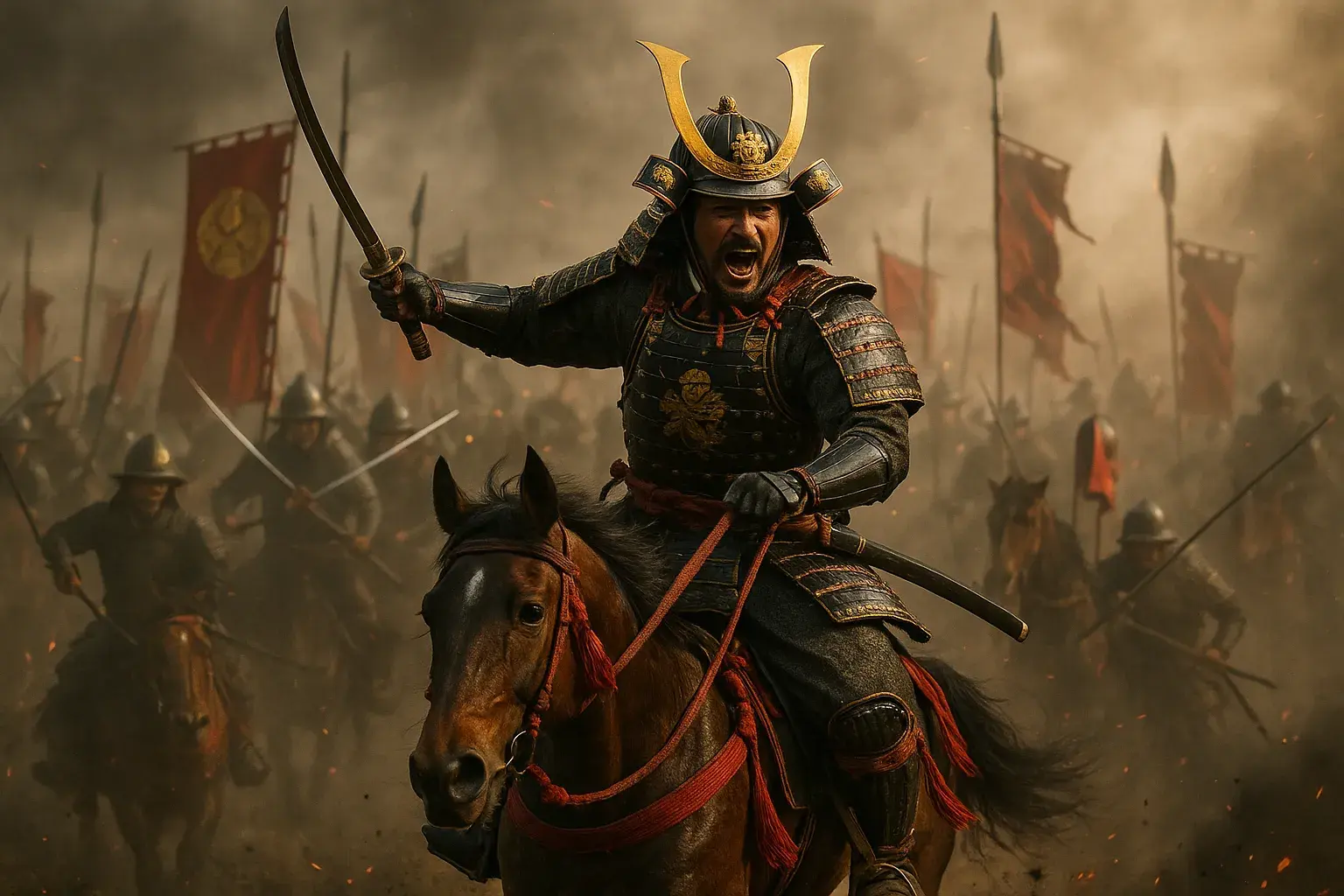
The magnificent and beautiful “kacchu” (armor) worn by warlords of the Sengoku period (Warring States era). Surely you have been captivated by the sight at least once. Trying on armor is far more than just cosplay. By feeling the substantial weight and wearing a helmet that narrows your field of vision, you can experience a special sensation — as if reaching across time to touch the resolve and soul of the samurai warriors.
In this article, we cover everything from the fundamentals of armor to an era-by-era explanation of how armor evolved alongside advances in military tactics, as well as recommended armor experience spots across the nation where you can truly become a samurai. With all the information you need to make your armor experience perfect, once you have read this article, you will have found the ideal experience for you and be fully prepared to create an unforgettable memory. Now, let us set out on a journey to don the soul of the samurai.
Table of Contents
- 1. What Is Kacchu? More Than Just Armor — The Soul of the Samurai
- 2. Where to Experience and Feel Armor Up Close
- 3. History of Armor | Types and Features by Era
- 4. Anatomy of Armor | Names and Functions of Each Part
- 5. Summary
- What Is Kacchu? More Than Just Armor — The Soul of the Samurai
- Where to Experience and Feel Armor Up Close
- Don Authentic Armor and Enjoy a Full-Scale Samurai Experience at “Shogun Studio Japan”
- History of Armor | Types and Features by Era
- 1. Ancient Origins (Yayoi and Kofun Periods): Tanko and Keiko
- 2. Heian to Kamakura Periods: The “O-yoroi” Born from Mounted Archery and the Infantry “Do-maru”
- 3. Nanbokucho to Muromachi Periods: The Shift to Group Warfare and the Emergence of the “Haramaki”
- 4. Sengoku Period: The Arrival of Firearms and the Perfection of “Tosei-gusoku”
- 5. Edo Period: “Decorative Armor” in an Era of Peace
- Anatomy of Armor | Names and Functions of Each Part
- Summary
- Frequently Asked Questions
- Related Articles
What Is Kacchu? More Than Just Armor — The Soul of the Samurai
When most people hear the word “kacchu” (armor), they likely picture a piece of protective “armor” used in battle. However, Japanese armor carries a much deeper meaning and value beyond that. Here, we explain everything from the basic definition of armor to its cultural and artistic significance.
■ Basic Definition and Role of Kacchu
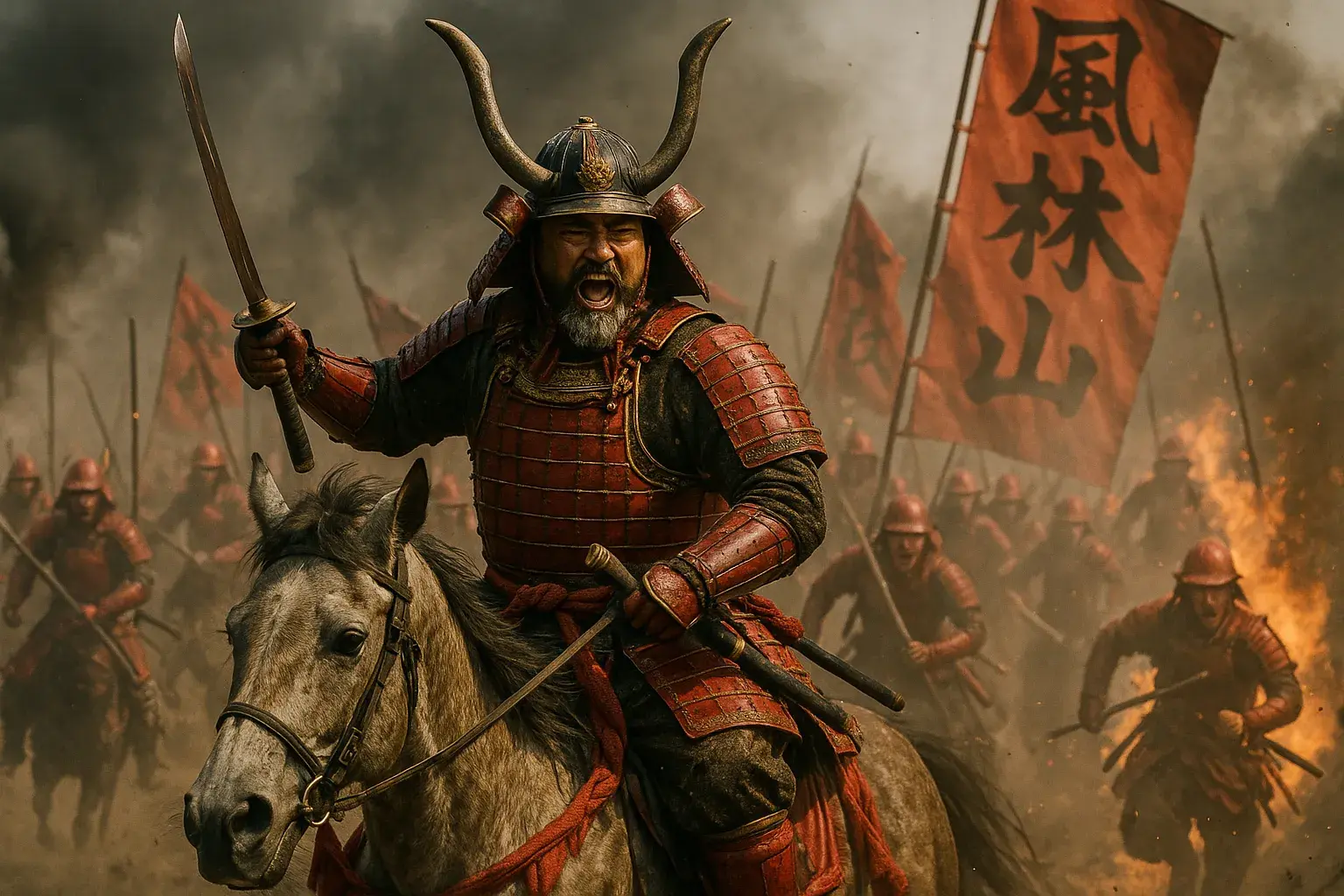
Kacchu is a general term for traditional Japanese military equipment combining “yoroi” (body armor) that primarily protects the torso and “kabuto” (helmet) that protects the head. It is traditional Japanese defensive gear that samurai wore to protect themselves on battlefields where swords, spears, and arrows flew.
A related term is “gusoku,” which originally means “fully equipped” or “completely provided.” From the mid-Muromachi period onward, the word “gusoku” came to refer to a complete set of armor that included not just the helmet and torso armor, but also “kote” (arm guards) and “suneate” (shin guards) that protected the entire body.
■ Cultural and Artistic Value Beyond Protection
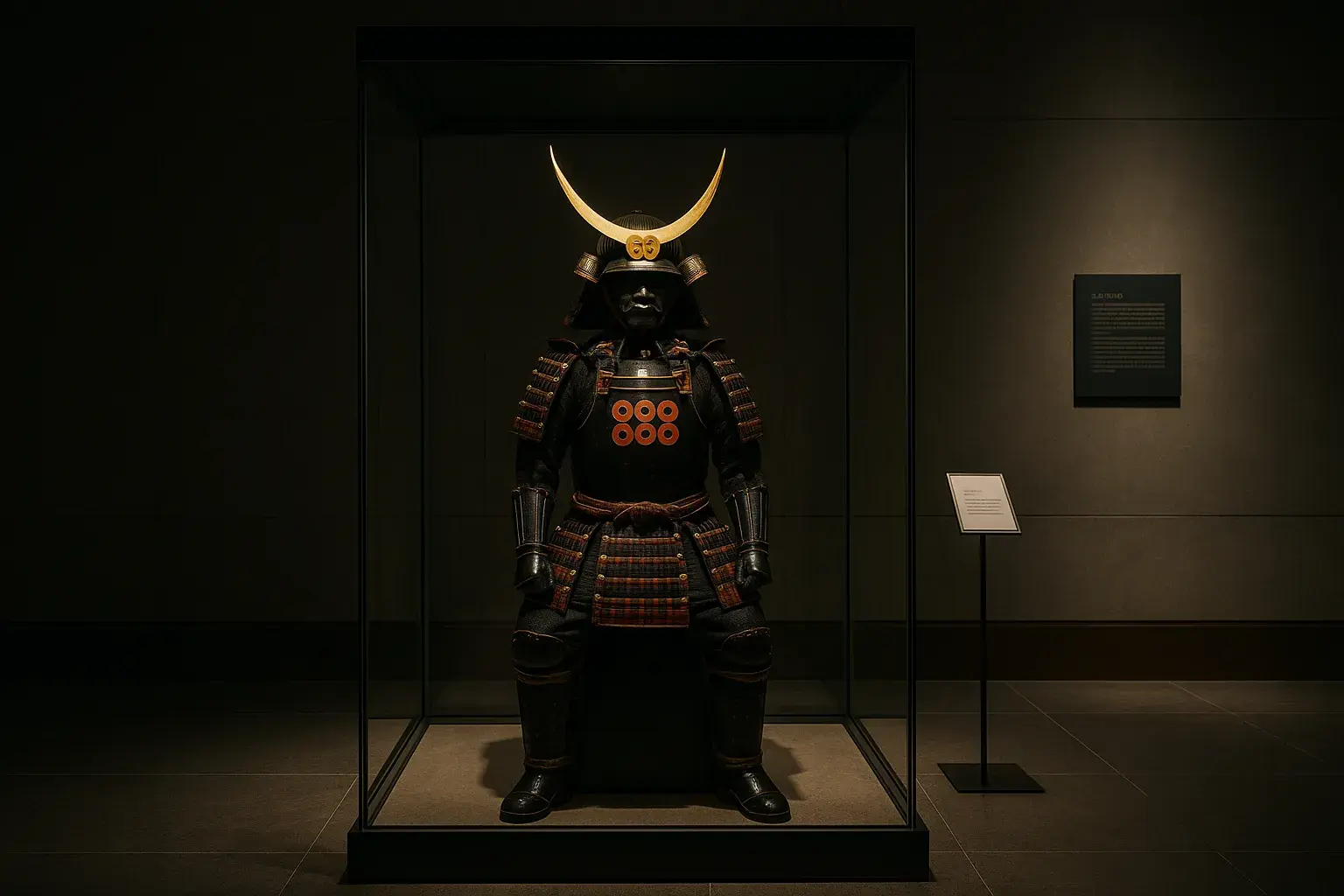
What makes Japanese armor truly remarkable is that its role extended far beyond mere physical defense. Armor served as an important symbol expressing the wearer’s social status, clan affiliation, and personal aesthetic sensibility.
For example, the “maedate” (crest) displayed on the front of the helmet and the rivets decorating the helmet bowl indicated the warrior’s lineage and rank. Additionally, the colorful silk braiding called “odoshige” used to lace together the small iron or leather plates (kozane) gave the entire armor a brilliant elegance, producing an artistry unmatched anywhere in the world. These intricate decorations and metalworking techniques elevated armor from mere military equipment to the realm of fine art.
Furthermore, for samurai, armor served as ceremonial attire worn on the extraordinary “hare” occasion of battle, and at times carried the meaning of “death garments” to adorn one’s final moments. By incorporating motifs of the deities they worshipped or images of animals and plants symbolizing bravery, warriors imbued their armor with their personal beliefs, resolve, and prayers for victory on the battlefield. In this way, armor was truly the embodiment of “the soul of the samurai,” combining practical function with the symbolic expression of the wearer’s spirit.
Where to Experience and Feel Armor Up Close
Don Authentic Armor and Enjoy a Full-Scale Samurai Experience at “Shogun Studio Japan”
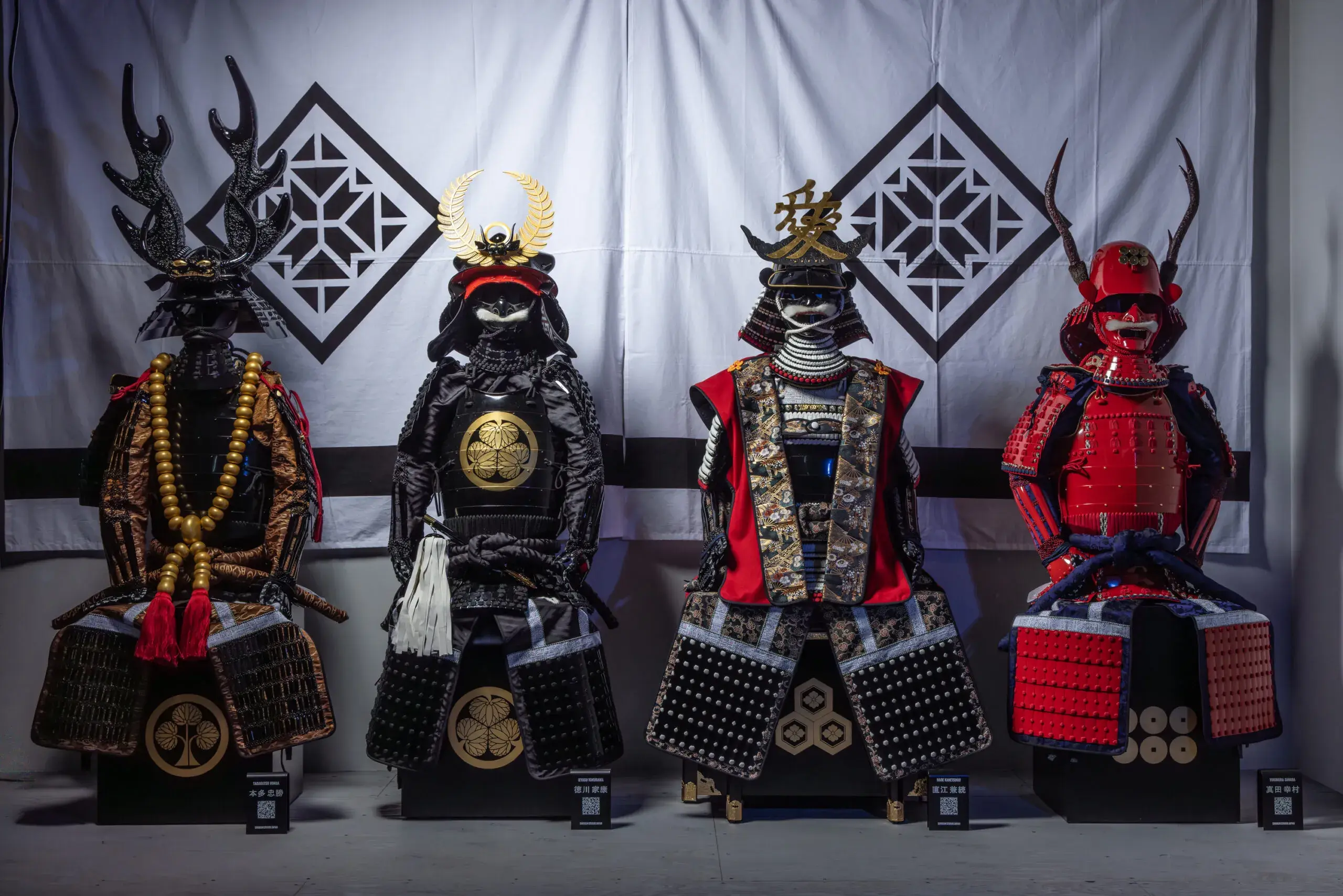
- What Is “Shogun Studio Japan”?
On August 5, 2025, a new style of entertainment facility called “Shogun Studio Japan” opened in Kyoto’s historic and atmospheric Arashiyama district. This studio offers the experience of being dressed in authentic armor — the very kind worn by warlords of the Sengoku period.
By combining traditional Japanese armor culture with cutting-edge technology, the studio aims to provide an immersive Sengoku-era experience. It is designed to be enjoyed by a wide range of visitors, from history enthusiasts to travelers seeking to connect with Japanese culture and those looking for a truly unique memory.

- Features of “Shogun Studio Japan”
1. Authentic Armor Experience:
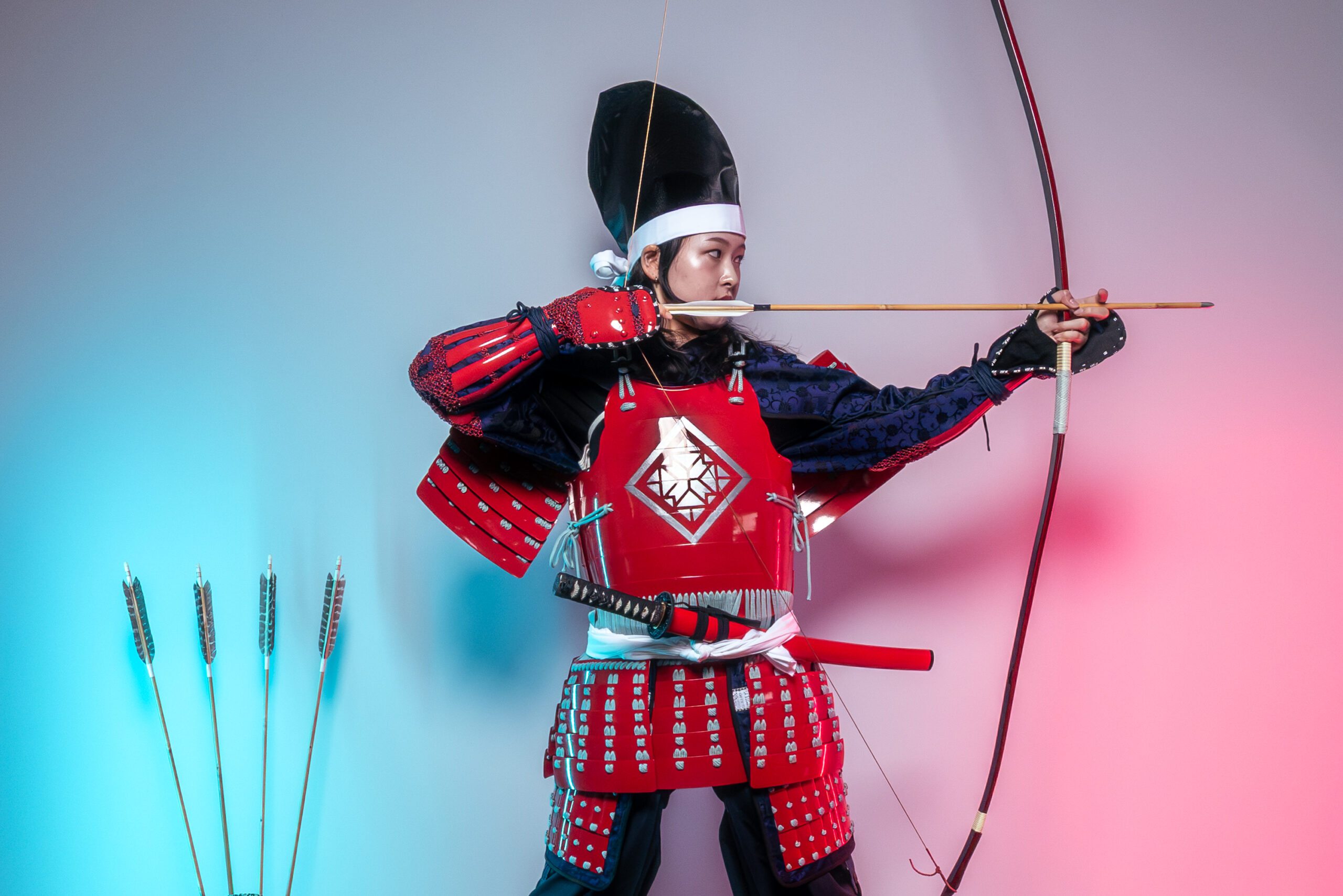
The studio offers a diverse lineup ranging from faithful reproductions of armor worn by historically famous Sengoku warlords to creative original armor designed by cutting-edge armor designers.
Experienced staff explain the meaning and background of each individual component while dressing you, allowing visitors to feel the historical and cultural depth embodied in the armor. The substantial weight and meticulous craftsmanship attest to its authenticity.
2. A Futuristic Sengoku Experience with Cutting-Edge Technology:
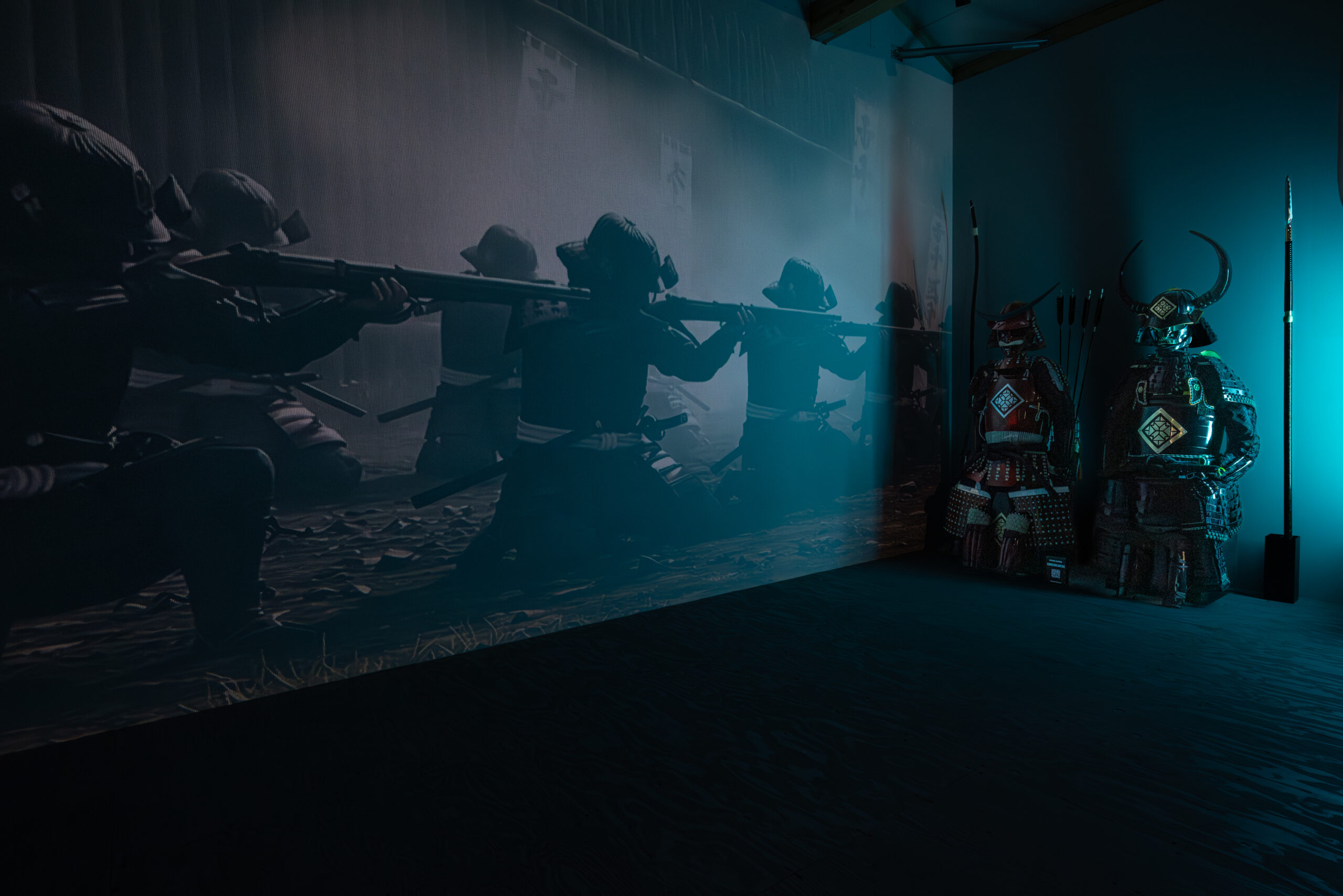
After being dressed in armor, visitors can enjoy a professional movie shoot by video creators. Using projection mapping technology that covers the walls and floor, the studio creates a futuristic space enveloped in light and sound, making you feel as if you have been transported back to the Sengoku era.
An original samurai movie starring you is filmed in various scenarios, such as amidst blazing flames or swirling cherry blossom petals. The completed video can be transferred to your smartphone and taken home.
3. Convenient Location:
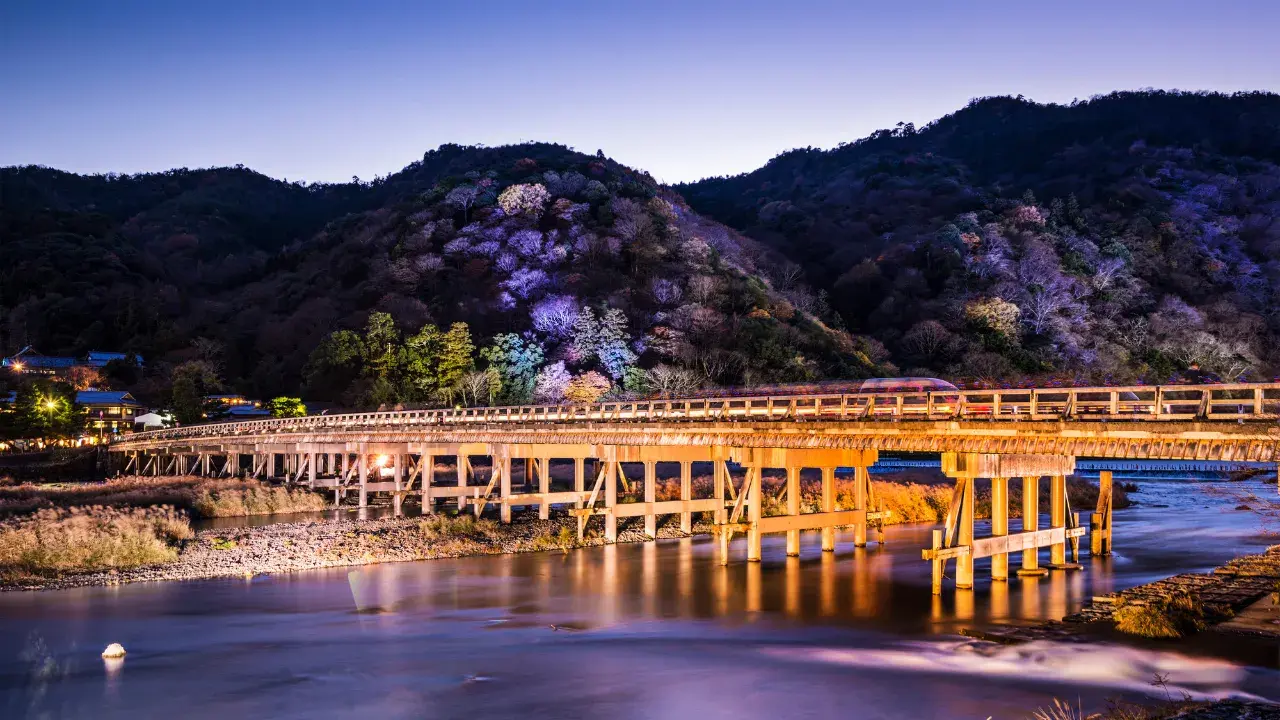
The studio is situated in the Saga Tenryuji area, one of Kyoto’s premier tourist destinations known for the Togetsukyo Bridge and the Bamboo Grove Path. With nearby attractions including the World Heritage Site Tenryuji Temple, it is easy to incorporate into a Kyoto sightseeing itinerary. Open from 10:00 AM to 6:00 PM, the studio offers visitors a special time to explore the depths of Japanese history during their Arashiyama stroll.
History of Armor | Types and Features by Era
The history of Japanese armor is essentially the history of warfare in Japan. As the weapons used on the battlefield changed and fighting methods evolved, armor dramatically transformed its form as well. Here, let us look at how armor evolved from ancient times through the Edo period.
1. Ancient Origins (Yayoi and Kofun Periods): Tanko and Keiko
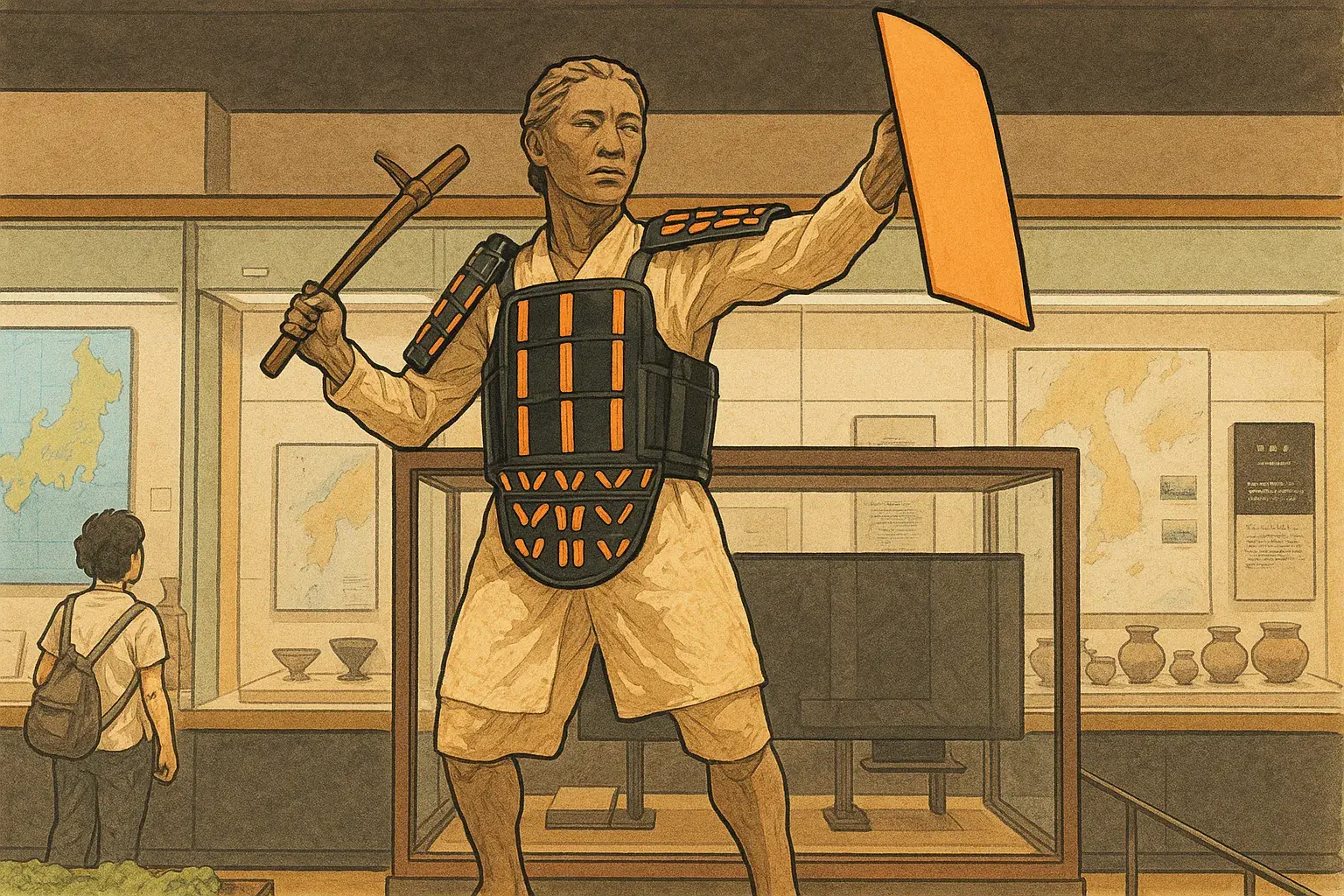
The history of armor in Japan is ancient, with parts of wooden armor discovered at archaeological sites from the Yayoi period. As Japan entered the Kofun period, metalworking technology advanced and iron armor appeared. The representative armor types of this era were “tanko” (short armor) and “keiko” (lamellar armor).
Tanko was a relatively rigid type of armor made by riveting iron plates together to cover the torso. Keiko, on the other hand, was more flexible armor made by lacing together small iron plates with leather cords. These served as prototypes for armor in later periods, and it has been confirmed that they already included parts to protect the shoulders, arms, and legs.
2. Heian to Kamakura Periods: The “O-yoroi” Born from Mounted Archery and the Infantry “Do-maru”
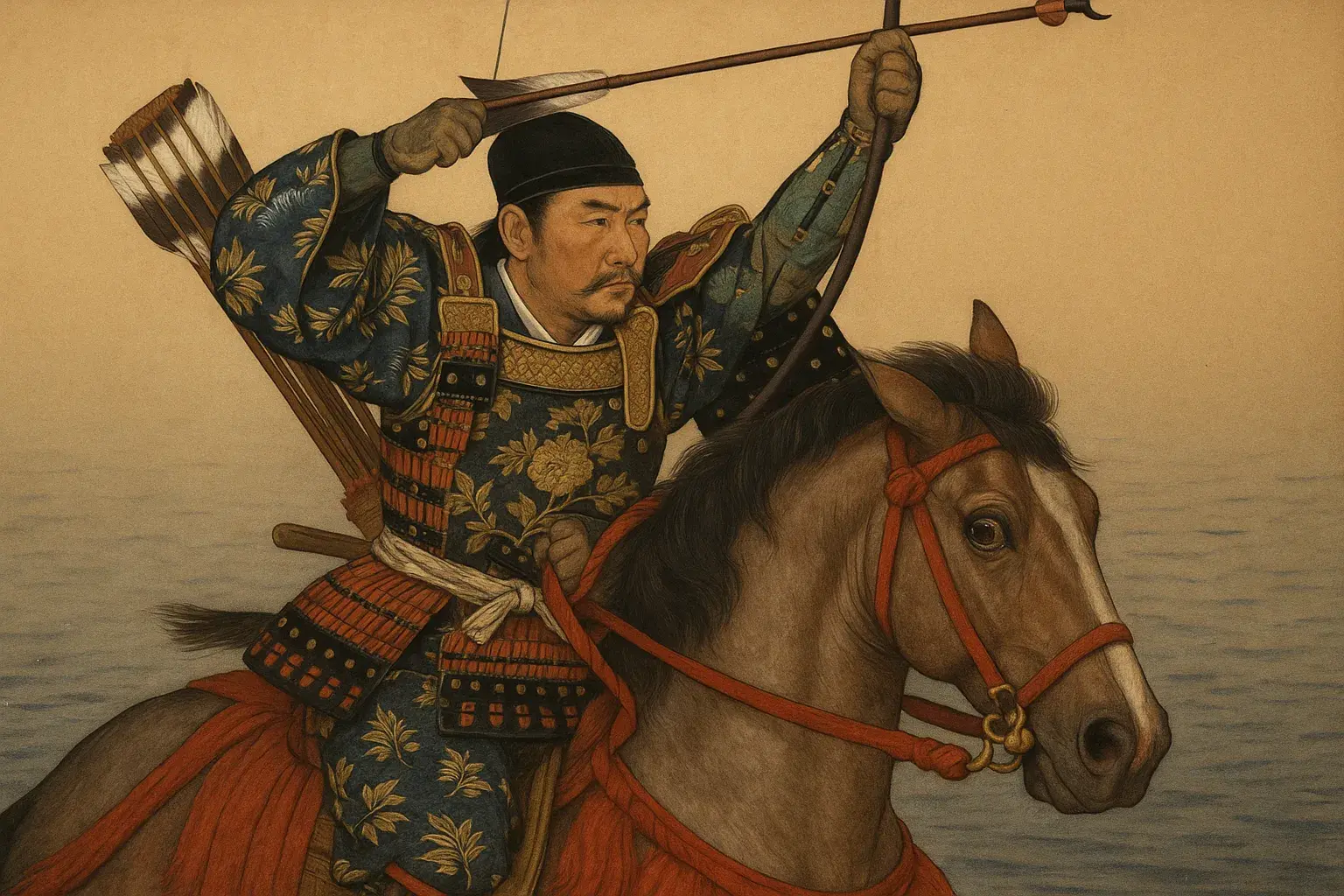
In the mid-Heian period, the warrior class rose to prominence, and armor specifically designed for their primary fighting style — “kishasen” (mounted archery combat), fighting on horseback while shooting bows — was born. This was the “o-yoroi” (great armor), which became synonymous with Japanese armor.
The o-yoroi features numerous design elements to facilitate bow handling on horseback while protecting the wearer from enemy arrows. For example, the “o-sode” (large shoulder guards) served as shields, and the chest was covered with smooth deer leather to prevent the bowstring from catching (tsurubashiri). Its elaborate and heavy structure was also a symbol of authority for high-ranking warriors.
Meanwhile, lower-ranking warriors who fought on foot wore the lighter and more mobile “do-maru.” The do-maru had a body-hugging structure that allowed easy footwork. While initially a simple, light piece of equipment, it later became the mainstream type of armor.
3. Nanbokucho to Muromachi Periods: The Shift to Group Warfare and the Emergence of the “Haramaki”
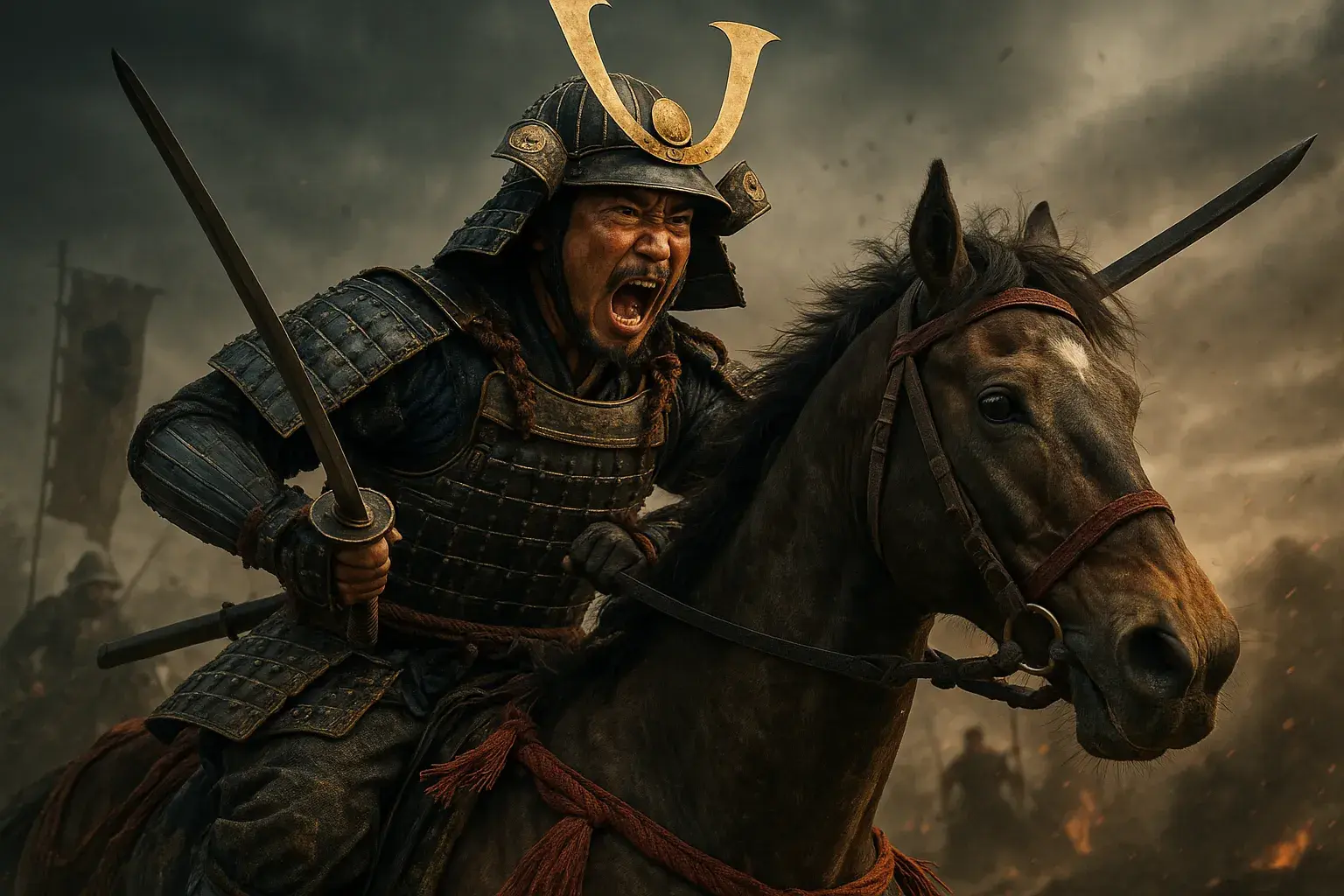
Triggered by the Mongol invasions in the late Kamakura period, Japanese warfare shifted from individual mounted combat to larger-scale group infantry battles. As battlefields increasingly involved complex terrain such as mountainous regions, armor required even greater mobility.
In response, the more mobile do-maru came to be used by upper-class warriors as well. Then the “haramaki” appeared — a further simplified and lighter version of the do-maru. The haramaki was characterized by being fastened at the back, and while initially the back was left exposed, a “seita” (back plate) was later added to protect this gap. This back plate was sometimes mockingly called the “okubyoita” (coward’s plate), as it was associated with showing one’s back to the enemy.
4. Sengoku Period: The Arrival of Firearms and the Perfection of “Tosei-gusoku”
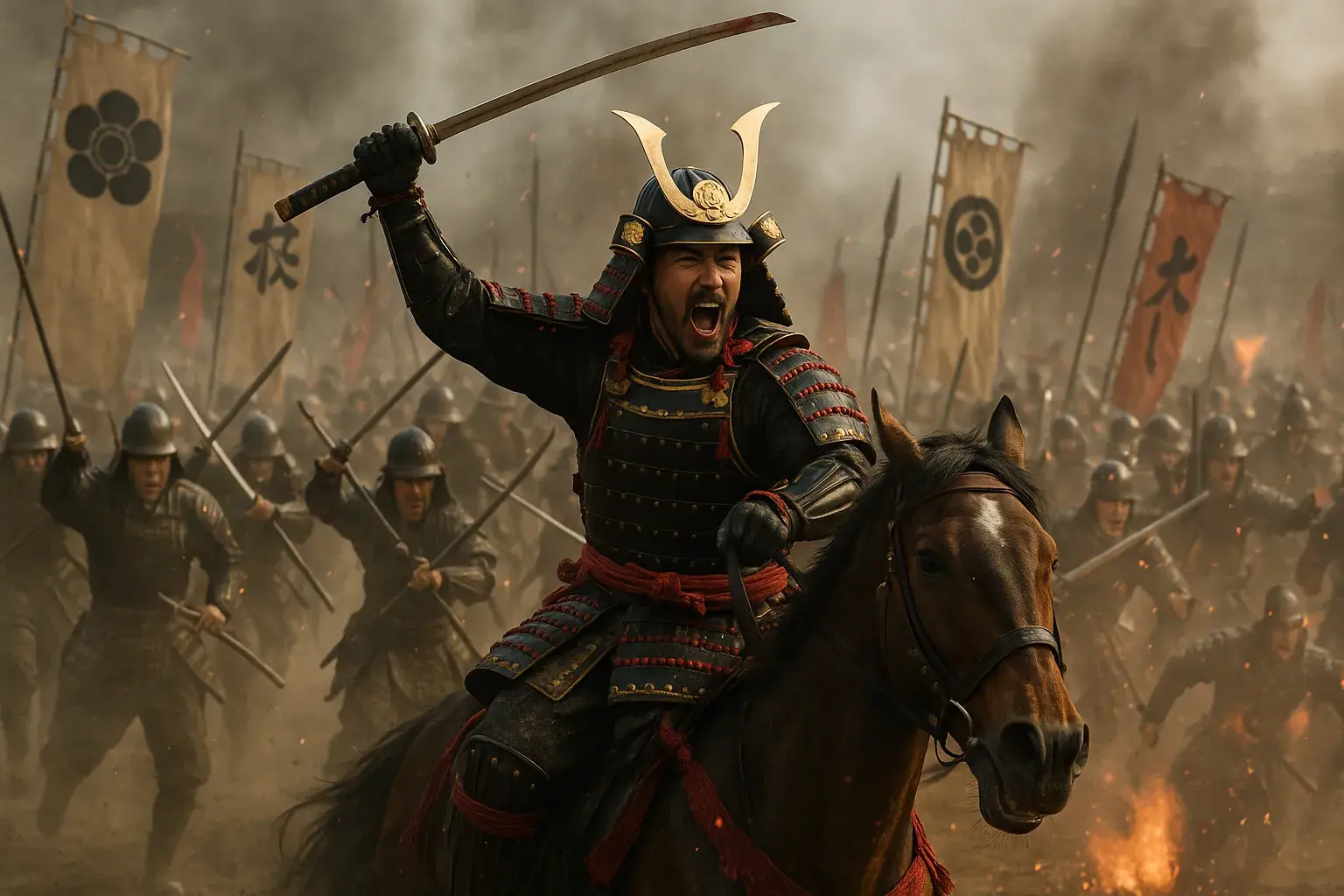
At the end of the Muromachi period, the introduction of “teppo” (firearms) from Portugal brought another major turning point in Japanese warfare. Conventional armor could not stop bullets, and new armor that was both stronger and adaptable to group spear combat was needed. This is how the “tosei-gusoku” (modern armor) was born.
“Tosei” means “modern style,” and true to its name, this armor incorporated the latest technology of the era. Rather than lacing small plates together with cord, it used large iron plates (itazane) for greater defensive strength, with a rounded form designed to deflect bullets (hidan keishi). While covering the entire body without gaps, each component was improved for ease of movement, and it is considered the completed form of Japanese armor.
Through the Nanban trade, European armor was also introduced to Japan, and “Nanban-do gusoku” (European-style armor) was favored by some forward-thinking warlords.
5. Edo Period: “Decorative Armor” in an Era of Peace
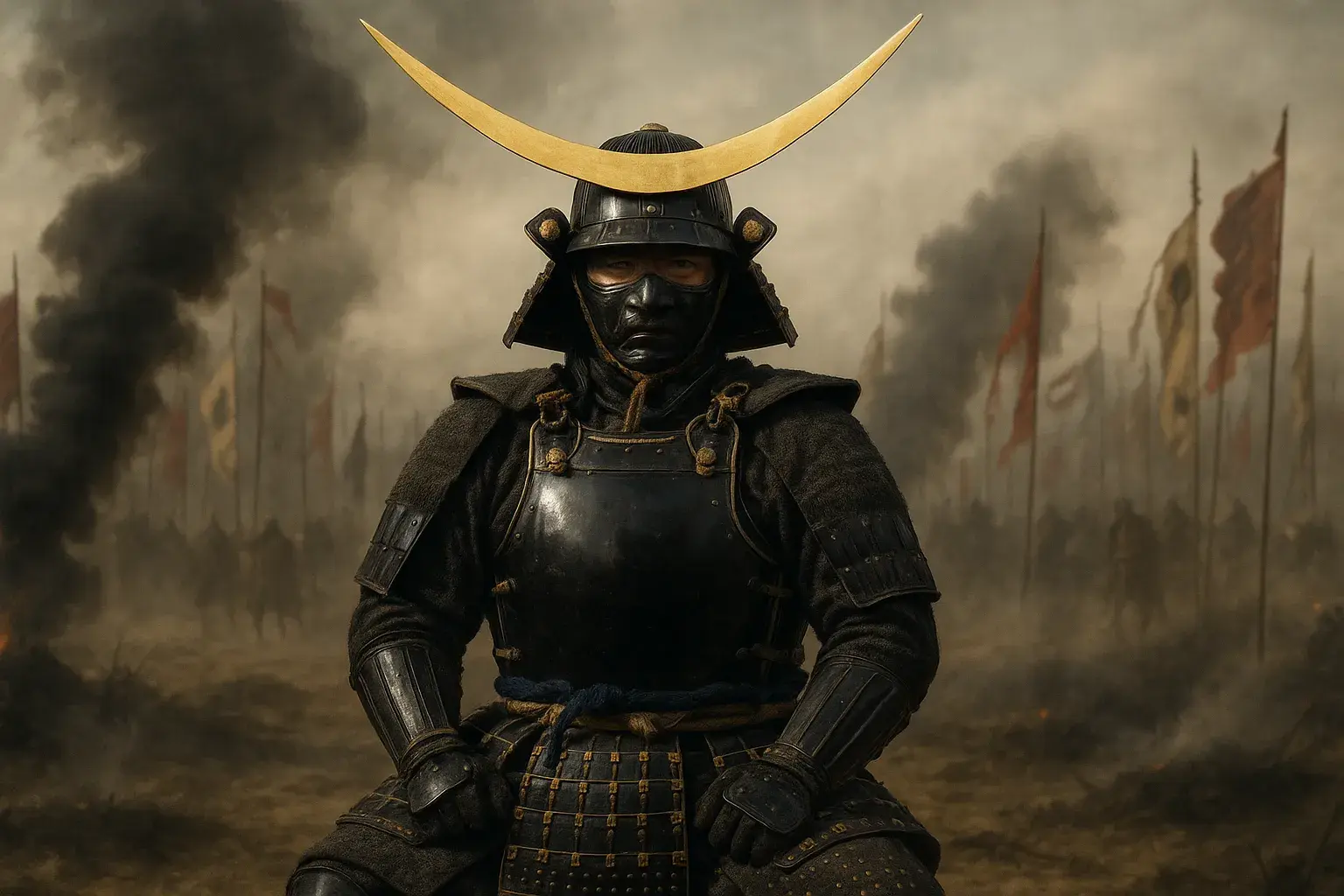
With the end of the long period of warfare and the arrival of the peaceful Edo period, the practical role of armor was lost. Instead, armor took on a stronger character as symbolic “kazari kacchu” (decorative armor) to demonstrate the authority and status of samurai families.
During this era, decoration took precedence over practicality, and numerous revivalist armor pieces modeled on past styles, as well as extremely ornate armor, were produced. Particularly notable were armorers of the “Myochin school,” known for their exquisite technique of hammering out dragons and deities from a single iron plate, and armor further evolved as fine art.
Anatomy of Armor | Names and Functions of Each Part
Armor is composed of many parts, each with its own name and function. Here, we provide a detailed explanation of the major components, divided into “head,” “torso,” “arms and shoulders,” and “lower body.”
■ The “Kabuto” (Helmet) – The Face of the Warrior
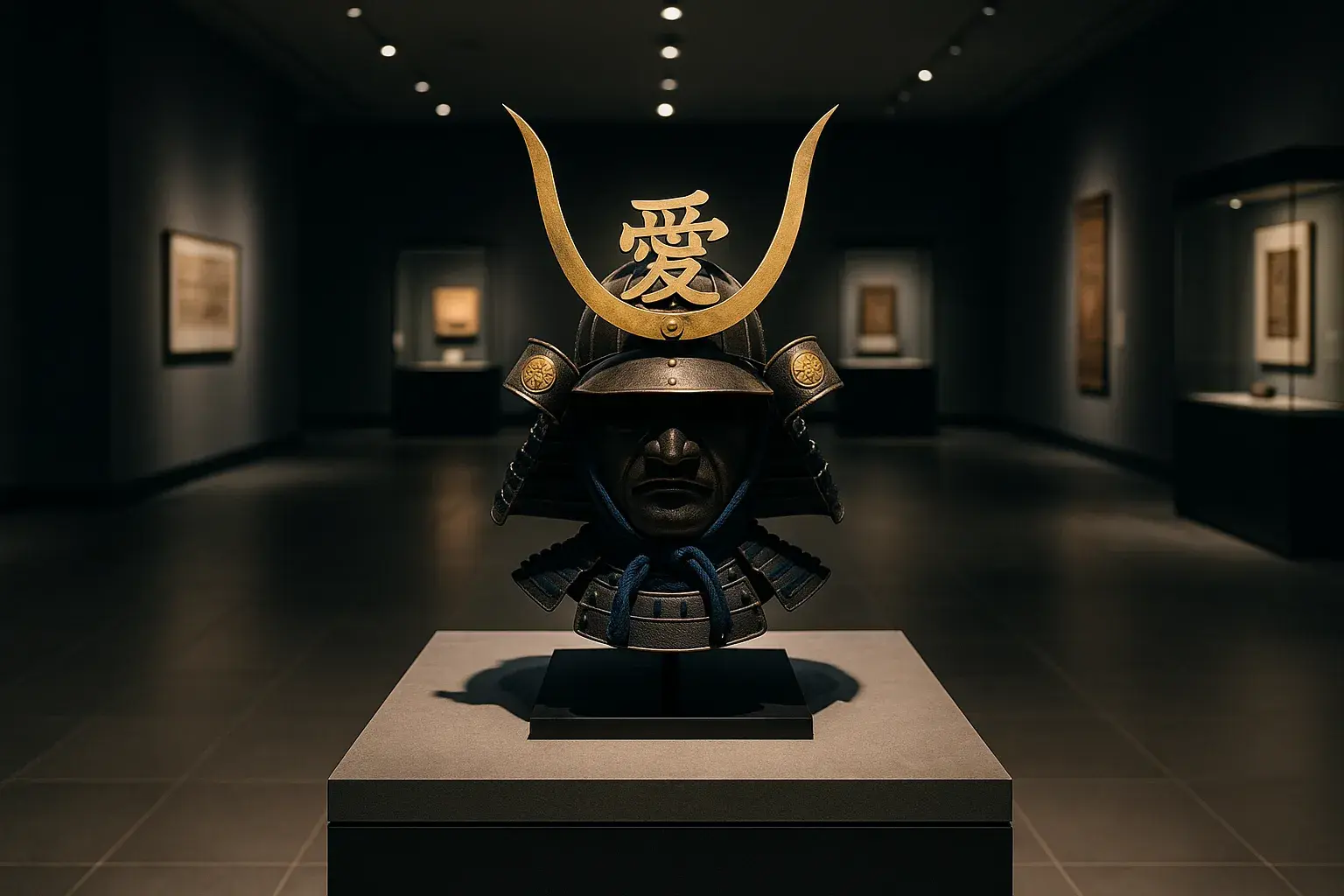
The kabuto (helmet) was both the most critical piece of protective equipment for the head and the “face” used to identify friend from foe on the battlefield and to assert one’s presence.
Hachi (Bowl): The main body of the helmet that directly covers the head.
Shikoro (Neck Guard): Attached to the bottom of the bowl, this part protects the back of the head and neck. It played a vital role in defending the nape from arrows.
Fukigaeshi (Turn-backs): Located at the front left and right of the shikoro, these are sections folded outward to protect the sides of the face. Originally serving the practical purpose of deflecting arrows, they became smaller over time and took on a more decorative role, often displaying family crests.
Maedate (Front Crest): An ornamental piece attached to the front of the helmet. The horn-like “kuwagata” crests are well known, but during the Sengoku period, warlords created a wide variety of maedate designs reflecting their personal beliefs and faith. Naoe Kanetsugu’s maedate featuring the character for “love” is particularly famous.
■ The “Do” (Torso Armor) – The Core of Defense
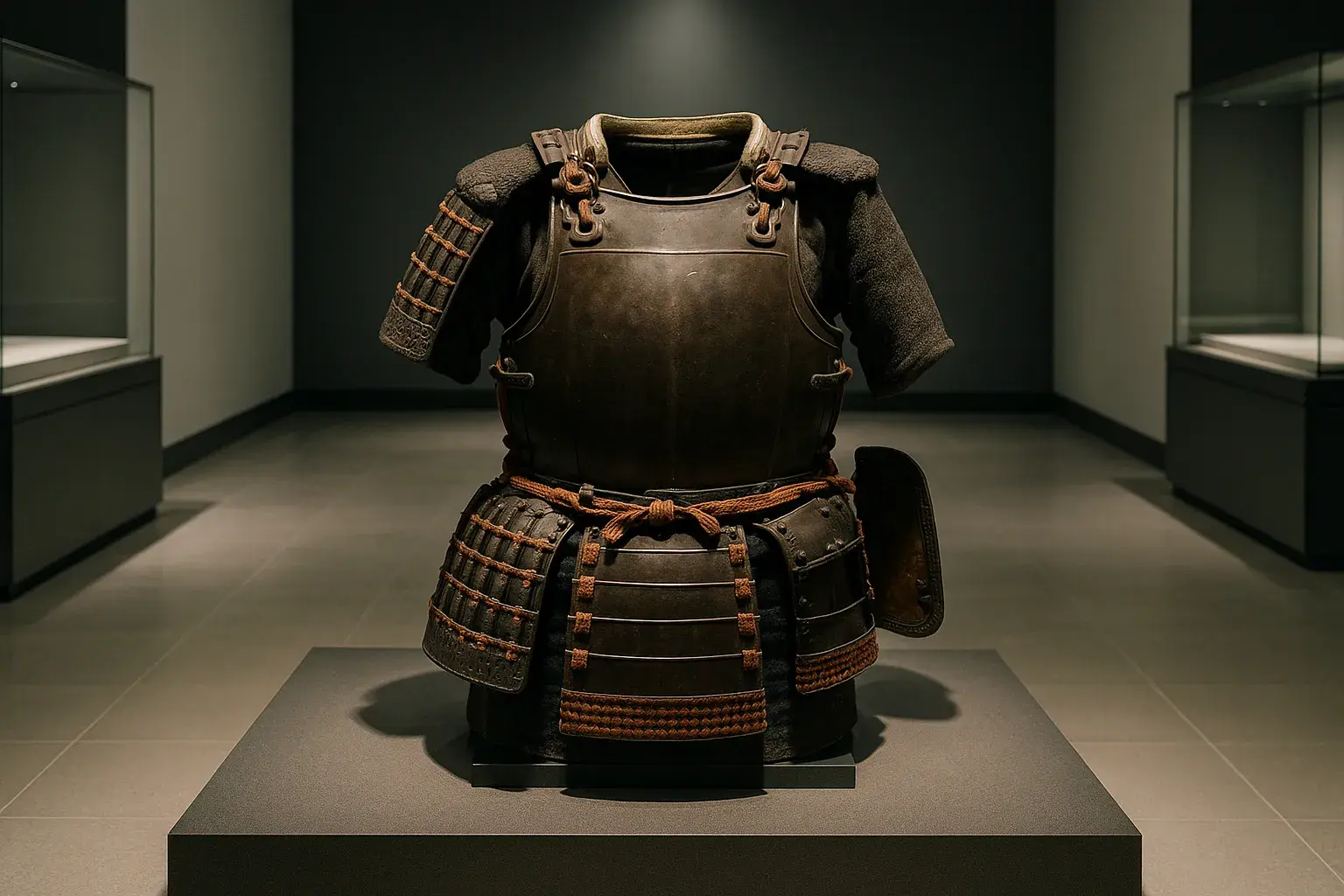
The do (torso armor) protects the torso, where vital organs such as the heart are concentrated, making it the central component of the armor. Its structure changed significantly over the ages.
Kozane (Small Scales) and Itazane (Large Plates): Early armor was made by lacing together thousands of small plates called “kozane,” made of leather or iron, with cord. However, with the advent of firearms, armor transitioned to using larger iron plates called “itazane” for greater defensive capability.
Waidate (Side Shield): A component unique to o-yoroi, this was an independent piece of armor that protected the right side of the torso. When putting on o-yoroi, this waidate was donned first.
Tsurubashiri (Bowstring Runner): Painted leather (egawa) applied to the front of the o-yoroi torso. This was a design feature to prevent the bowstring from catching on the small scales when shooting a bow on horseback.
■ The “Sode” (Shoulder Guards) and “Kote” (Arm Guards)
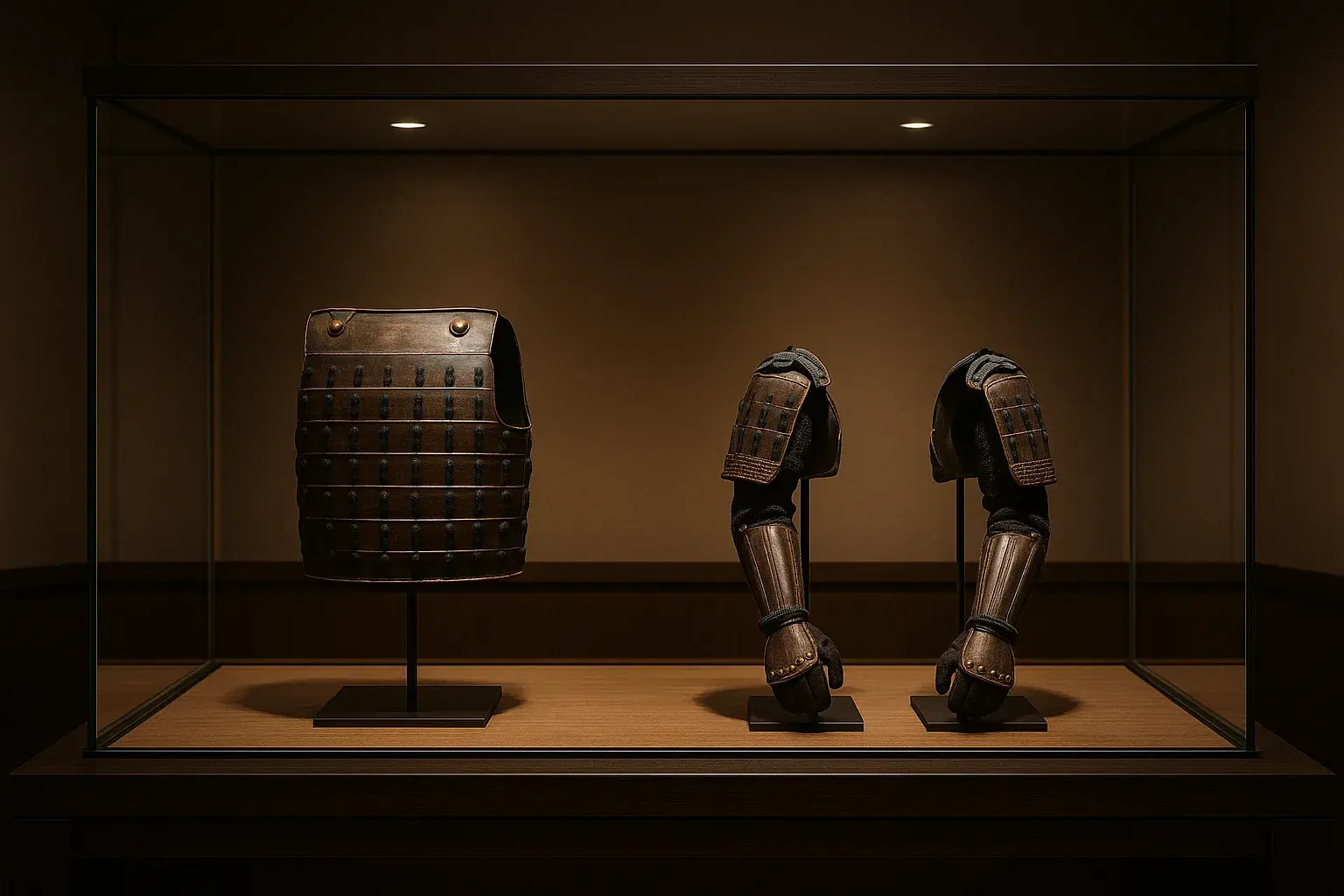
Balancing the defense and mobility of the arms and shoulders was a key challenge in armor design.
O-sode (Large Shoulder Guards): Large, square shoulder guards attached to the o-yoroi. These were not merely shoulder protection but also served as “shields” that could block enemy arrows when the wearer twisted their body on horseback.
Tosei-sode (Modern Shoulder Guards) and Kote (Arm Guards): As group close-quarters combat became dominant, free arm movement became more important. Thus, in tosei-gusoku, the shoulder guards were made smaller, and instead, tubular arm guards called “kote” that covered the entire arm were developed. This allowed warriors to maintain defensive protection while freely wielding spears and swords.
■ Lower Body Protection: “Kusazuri,” “Haidate,” and “Suneate”
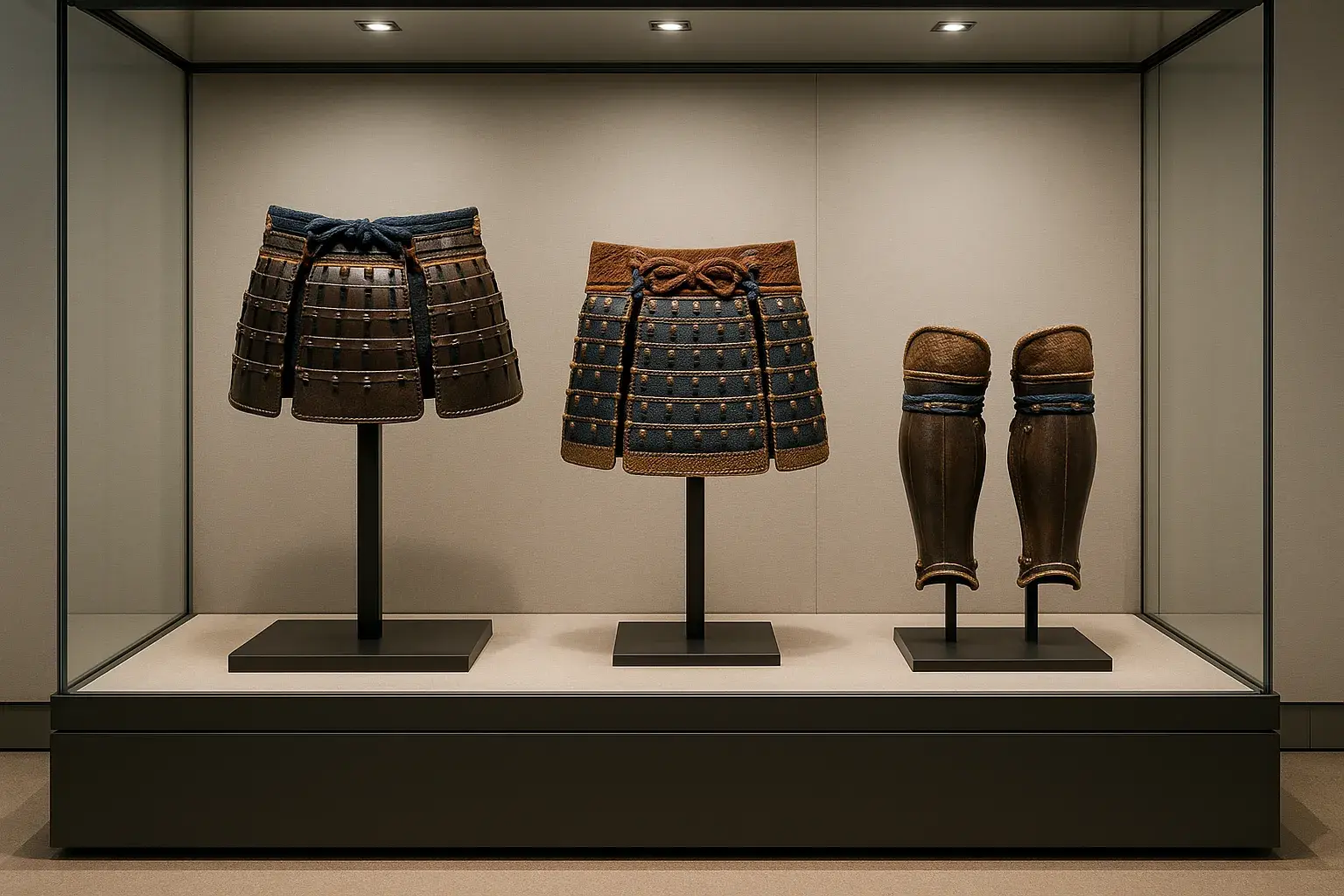
Lower body defense was especially important for maintaining mobility during foot combat.
Kusazuri (Skirt Guard): Skirt-like sections hanging from the bottom of the torso armor that protect the waist to upper thighs. In o-yoroi, this consisted of 4 panels, but in do-maru and haramaki, it was divided into 7-8 panels for easier leg movement.
Haidate (Thigh Guards): Apron-shaped protective gear covering from the thighs to the knees, areas the kusazuri alone could not fully protect. They became widely used as combat intensified from the Nanbokucho period onward.
Suneate (Shin Guards): Protective gear covering the shins from the knee to the ankle. While these existed since ancient times, by the era of tosei-gusoku they became a standard part of the full armor set.
| Feature | O-yoroi | Do-maru | Tosei-gusoku |
| Primary Users | Upper-class warriors (mounted) | Lower to upper-class warriors (foot soldiers) | Warriors of all ranks |
| Primary Tactics | Mounted archery (single combat) | Foot combat (group warfare) | Foot combat (firearms and spear group warfare) |
| Torso Opening | Right side (covered by waidate) | Right side | Right side (opens with hinges) |
| Kusazuri Panels | 4 panels | 7-8 panels | Varies (typically 5-7 panels) |
| Waidate | Yes | No | No |
| Shoulder Guard Type | O-sode (large, used as shield) | Ko-sode (small) | Tosei-sode (even smaller, functional) |
Summary
In this article, we have comprehensively covered everything from the fundamentals of armor to its rich history, the roles of each component, and recommended experience spots across the nation — all to help you enjoy your armor experience to the fullest.
We hope you now understand that armor was far more than a mere mass of iron. It was a witness to history reflecting the military tactics of each era, and a work of art imbued with the samurai spirit. The story of evolution from the ancient “tanko” to the mounted warrior’s “o-yoroi” and finally to the “tosei-gusoku” adapted for the age of firearms is the story of Japanese history itself.
In the modern age, we are fortunate to have the opportunity to actually wear this “soul of the samurai.” The substantial weight, the restricted view through the helmet, and the sound of armor plates rubbing together — all of these will transport you hundreds of years back to the world of the Sengoku era.
History does not exist only behind the glass cases of museums. Please use this article as a reference to find the perfect place for you, and spend a day wearing the soul of the samurai. Surely, an unforgettable story of your very own will begin.
Frequently Asked Questions
Related Articles
Here are some recommended articles related to this one.
- Why Did Edo Castle Lose Its Tower? | The Truth Behind the “Castle Without a Keep” at the Imperial Palace
- 3 Handpicked Hotels in Tokyo (Must-Stay Luxury Hotels)
- About Sensoji Temple | A Detailed Guide to Its History and Recommended Spots
- About Meiji Jingu | Detailed history and overview
- About Meiji Jingu | Detailed history and overview