- Introduction
- Overview of Asakusa Shrine
- History of Asakusa Shrine
- Period 1: The Era of Empress Suiko (628 CE) — The Founding of Sensoji and the Shrine’s Origins
- Period 2: The Medieval to Azuchi-Momoyama Period (Kamakura–1603) — Gaining Devotion as “Sanja Gongen”
- Period 3: The Edo Period (1603–1868) — Shrine Hall Construction under Tokugawa Iemitsu and Asakusa as the Center of Edo Culture
- Period 4: The Meiji to Taisho Eras (1868–1926) — The Separation of Shinto and Buddhism, and the Renaming to “Asakusa Shrine”
- Period 5: The Showa Era to the Present — Revival of the Sanja Festival and the Role as “Guardian of Asakusa”
- Highlights & Recommended Spots
- 1. Worship Hall & Main Hall — Important Cultural Properties and Masterpieces of Early Edo Architecture
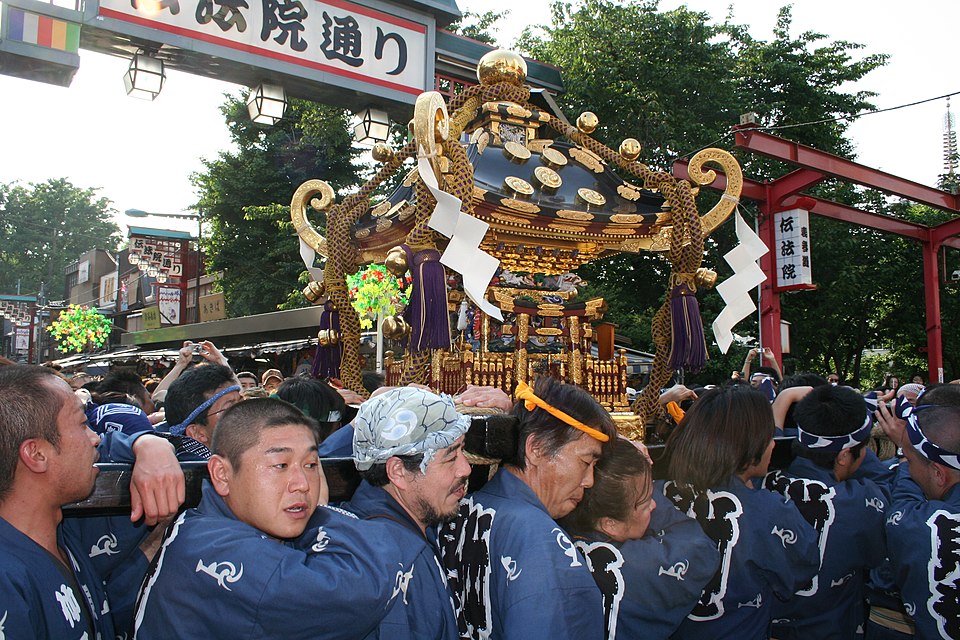
- 2. The Sanja Festival — Tokyo’s Largest Shrine Festival, Where the Spirit of Edo Is Reborn for Three Days
- 3. Hikan Inari Shrine — A Power Spot within Asakusa Shrine’s Grounds
- 4. Nitenmon Gate — An Important Cultural Property from the Kan’ei Era
- 5. Omikuji and Goshuin — Taking Home a Piece of Asakusa’s Blessings
- Nearby Sightseeing Spots
- Access
Introduction
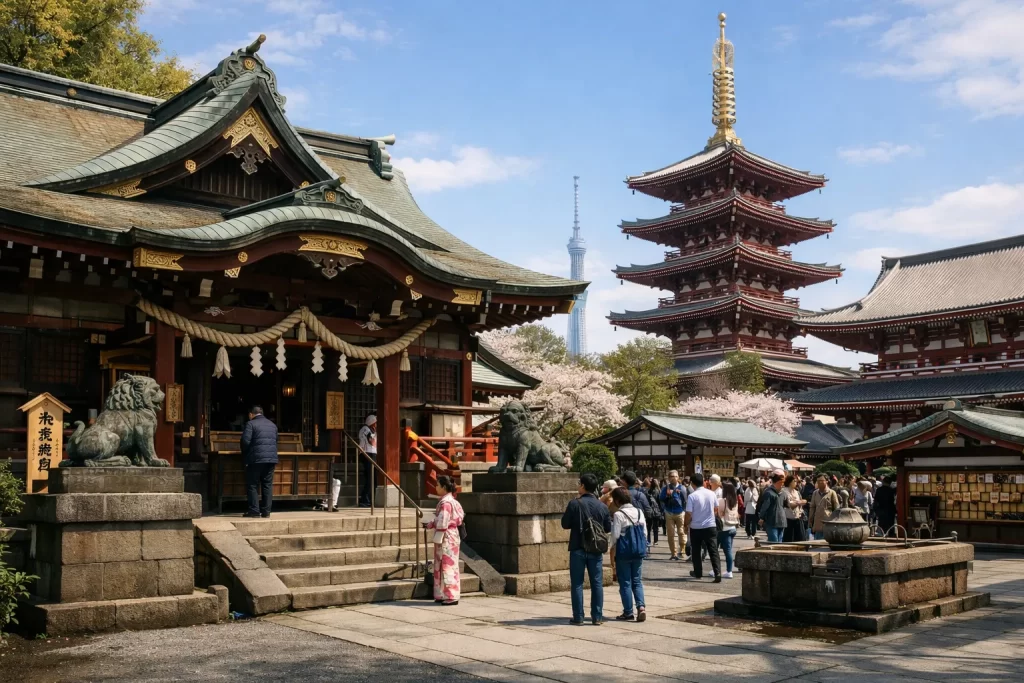
In a quiet corner of Sensoji Temple’s vast grounds, away from the bustling crowds of tourists, stands a shrine enveloped in tranquility. This is Asakusa Shrine. Its vermilion-lacquered halls and intricately carved worship hall possess a grandeur that rivals even the great structures of neighboring Sensoji Temple. As you step into the shrine grounds, you can sense the quiet presence of the gods who have watched over Asakusa for 1,400 years.
Asakusa Shrine, affectionately known as “Sanja-sama” (Shrine of the Three Gods), is home to the Sanja Festival held every May — one of the largest festivals in Tokyo. On the final day of the Sanja Festival, nearly 2 million people — mikoshi (portable shrine) bearers and spectators combined — converge on Asakusa, as Edo traditions and raw energy explode over three thrilling days. The festival is counted among the “Three Great Festivals of Edo” and has been designated a Tokyo Metropolitan Intangible Folk Cultural Property, predating the UNESCO Intangible Cultural Heritage listing of Japan’s “Yama, Hoko, and Yatai” float festivals.
Overview of Asakusa Shrine
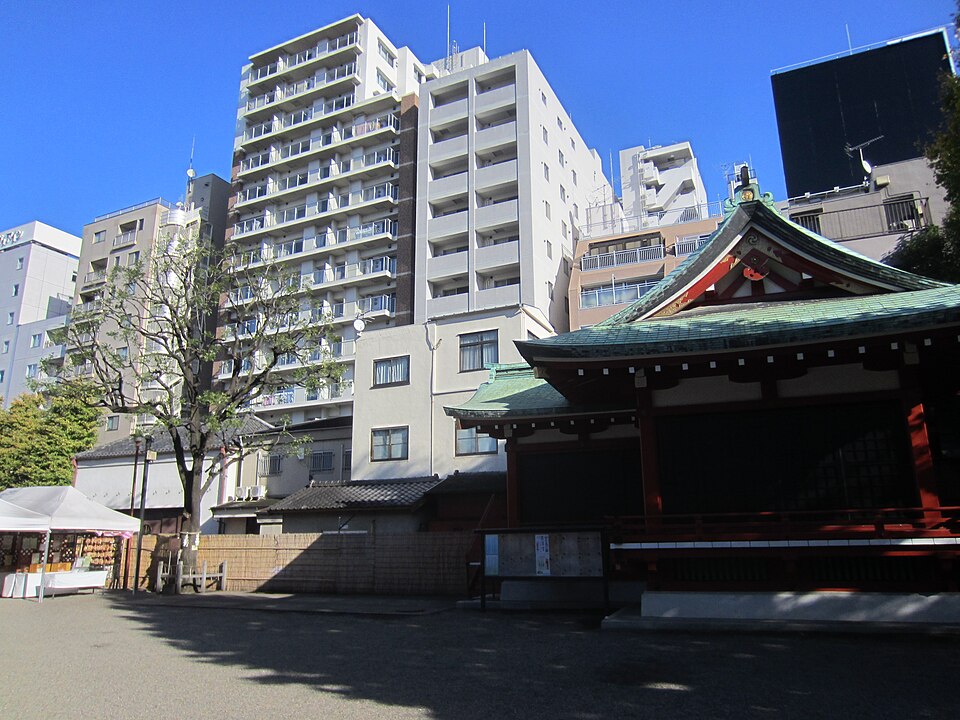
Asakusa Shrine is a Shinto shrine located in Asakusa, Taito City, Tokyo. Its official name is “Asakusa Jinja” (Asakusa Shrine). Situated on the east side of the Sensoji Temple grounds, it is widely known by its nickname “Sanja-sama” (Shrine of the Three Gods).
| Official Name | Asakusa Shrine (Asakusa Jinja) |
|---|---|
| Address | 2-3-1 Asakusa, Taito City, Tokyo |
| Enshrined Deities | Hajino Matsuchi no Mikoto, Hinokuma Hamanari no Mikoto, Hinokuma Takenari no Mikoto |
| Shrine Rank | Former Prefectural Shrine / Beppyo Shrine |
| Founded | Year 36 of Empress Suiko’s reign (628 CE), with the current hall built in 1642 (Kan’ei 19) |
| Visiting Hours | Grounds open at all times (Amulet office approx. 9:00–17:00) |
| Admission | Free |
| Closed | Open year-round |
| Phone | 03-3844-1575 |
*Please check the Asakusa Shrine official website for the latest visiting hours.
Asakusa Shrine enshrines three deities — all historical figures. Hinokuma Hamanari and Takenari were brothers and fishermen who pulled the sacred image of Kannon (the bodhisattva of compassion) from the Sumida River, which would become Sensoji Temple’s principal deity. Hajino Matsuchi was the local village leader who recognized the statue’s sacred nature and urged them to venerate it. The name “Sanja” (Three Shrines) derives from these three enshrined deities.
The current shrine buildings were constructed in 1642 (Kan’ei 19) by order of Tokugawa Iemitsu, the third Tokugawa shogun, and are designated as Important Cultural Properties of Japan. The shrine grounds cover approximately 4,000 square meters. Approximately one million people visit annually, with visitor numbers surging dramatically during the Sanja Festival period. While adjacent to Sensoji Temple, this shrine maintains its own distinct faith and culture, making it indispensable to any discussion of Asakusa’s history and popular culture.
History of Asakusa Shrine
Period 1: The Era of Empress Suiko (628 CE) — The Founding of Sensoji and the Shrine’s Origins
The origins of Asakusa Shrine are inseparably linked to the founding legend of Sensoji Temple.
Hajino Matsuchi immediately recognized the statue’s sacred nature.
The shrine was not originally established as a formal “shrine” from the outset.
Period 2: The Medieval to Azuchi-Momoyama Period (Kamakura–1603) — Gaining Devotion as “Sanja Gongen”
During the medieval period, the Kannon Hall (Sensoji) and the shrine honoring the three founders came to be worshipped as a unified sacred site known as “Sanja Gongen” (Three Shrine Avatar).
From the Muromachi period through the Sengoku (Warring States) era, warriors of the Kanto region also paid reverence to Asakusa’s Kannon and Sanja Gongen.
During this era, Sanja Gongen was especially revered as a guardian deity by fishermen, boatmen, and others who worked on the water, drawing deep devotion from those who traveled the Sumida River.
Period 3: The Edo Period (1603–1868) — Shrine Hall Construction under Tokugawa Iemitsu and Asakusa as the Center of Edo Culture
The greatest turning point in Asakusa Shrine’s history came during the reign of the third Tokugawa shogun, Iemitsu.
Iemitsu’s special interest in Sanja Gongen was tied to the Tokugawa clan’s religious policies.
Throughout the Edo period, Asakusa developed as the epicenter of commoner culture in Edo.
Period 4: The Meiji to Taisho Eras (1868–1926) — The Separation of Shinto and Buddhism, and the Renaming to “Asakusa Shrine”
The Meiji Restoration brought sweeping changes to Asakusa Shrine.
In 1868, the shrine was renamed “Asakusa Jinja” (Asakusa Shrine).
From the Meiji through the Taisho eras, Asakusa thrived as “Japan’s Broadway.” Asakusa Opera, moving pictures (early cinema), and variety halls made the district a vibrant hub of modern mass entertainment, and Asakusa Shrine remained at the cultural heart of it all.
Period 5: The Showa Era to the Present — Revival of the Sanja Festival and the Role as “Guardian of Asakusa”
During the Tokyo Air Raids of 1945, many structures in Asakusa — including Sensoji’s five-story pagoda and main hall — were destroyed by fire.
In 1947, the Sanja Festival — suspended during the war — was revived, rekindling the people of Asakusa’s passion for the festival.
Today, Asakusa Shrine welcomes approximately one million visitors per year, many of whom naturally wander over from neighboring Sensoji Temple.
Highlights & Recommended Spots
Although its grounds are not expansive, Asakusa Shrine is rich with historical treasures and significance condensed into a compact space.
1. Worship Hall & Main Hall — Important Cultural Properties and Masterpieces of Early Edo Architecture
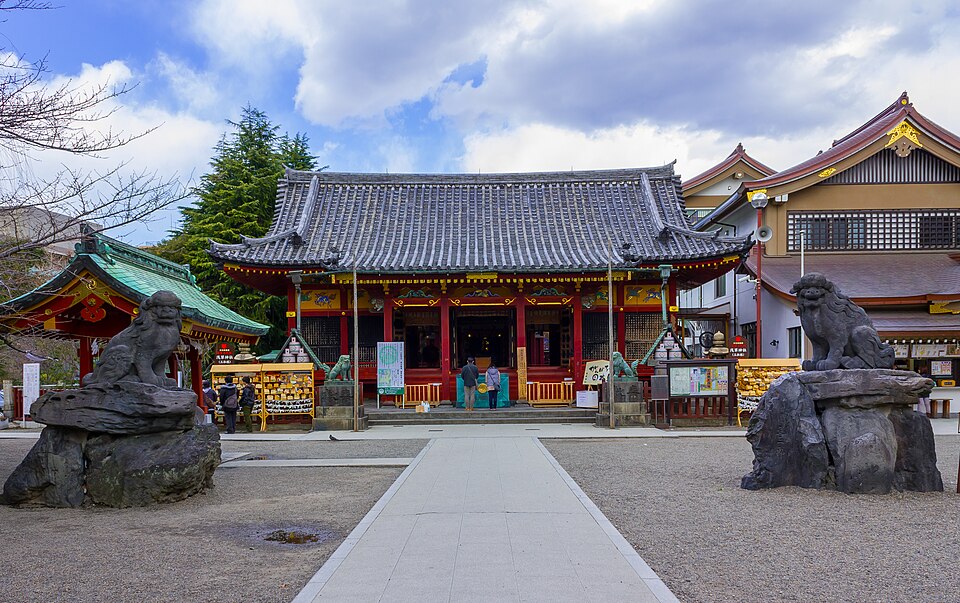
The worship hall (haiden) and main hall (honden) of Asakusa Shrine were built in 1642 (Kan’ei 19) by order of the third Tokugawa shogun, Iemitsu, and are designated as Important Cultural Properties of Japan.
The carvings adorning the hall are exquisite, with richly polychrome sculptures of animals and plants placed throughout.
Having survived both the Tokyo Air Raids and the Great Kanto Earthquake, these buildings hold a special mystique as “structures that endured two great ordeals.” The fact that these halls alone were preserved while the rest of Asakusa was repeatedly reduced to ashes has only deepened the faith of those who believe in the power of the enshrined deities.
2. The Sanja Festival — Tokyo’s Largest Shrine Festival, Where the Spirit of Edo Is Reborn for Three Days
The Sanja Festival (Sanja Matsuri) of Asakusa Shrine is an annual grand festival held on the third Friday, Saturday, and Sunday of May.
The festival’s greatest spectacle is the “Mikoshi Rengo Togyo” (United Mikoshi Procession), featuring the shrine’s three main mikoshi (honsha mikoshi) and approximately 100 neighborhood mikoshi owned by the 44 local community associations (chonaikai) of Asakusa.
The Sanja Festival is also known for its rough-and-tumble character.
3. Hikan Inari Shrine — A Power Spot within Asakusa Shrine’s Grounds
Hikan Inari Shrine, located at the southern edge of Asakusa Shrine’s grounds, is a small shrine established during the Ansei era (1855–1860) of the late Edo period.
“Hikan” was a type of government appointment in the Edo period, carrying connotations of “career advancement and employment.” According to legend, a person who prayed here for help finding work had their wish fulfilled, and from then on, the shrine became known for its blessings related to employment, career advancement, and business success.
The rows of miniature red torii gates in front of the shrine, modeled after the famous Senbon Torii of Fushimi Inari Grand Shrine, are offerings from worshippers.
4. Nitenmon Gate — An Important Cultural Property from the Kan’ei Era
Standing on the east side of Asakusa Shrine, Nitenmon Gate is a mountain gate built in 1643 (Kan’ei 20) and designated as an Important Cultural Property of Japan.
During the Edo period, this gate functioned as the eastern entrance to Sensoji Temple.
Standing in front of Nitenmon Gate and looking back, you are treated to a quintessentially Asakusa vista stretching toward Nakamise-dori and Sensoji Temple.
5. Omikuji and Goshuin — Taking Home a Piece of Asakusa’s Blessings
At the shrine’s amulet office (juyosho), visitors can receive charms and goshuin (shrine seal stamps) unique to the shrine.
The shrine’s omikuji (fortune slips) are known as “Sanja Mikuji” and can be drawn from vermilion omikuji boxes placed throughout the grounds.
After visiting Asakusa Shrine, be sure to also visit adjacent Sensoji Temple.
Nearby Sightseeing Spots
The Asakusa area where Asakusa Shrine is located is the zone where Tokyo’s shitamachi (old downtown) culture is most vividly preserved.
1. Sensoji Temple — Tokyo’s Oldest Temple and a World-Famous Landmark
Located right next to Asakusa Shrine, Sensoji Temple is said to have been founded in 628 CE, making it Tokyo’s oldest temple.
Sensoji shares the same origin story with Asakusa Shrine — both are connected to the sacred statue of Kannon pulled from the river — and visiting both offers a complete picture of Asakusa’s history.
2. Hoppy Street & Nakamise-dori — Shitamachi Street Food and Souvenirs
Within a 5- to 10-minute walk from Asakusa Shrine, you will find some of Tokyo’s best shitamachi (old downtown) dining areas.
Nakamise-dori is a shopping street stretching approximately 250 meters along the approach to Sensoji Temple, with 88 shops in a row.
3. Sumida Park & Tokyo Skytree — Expanding Your Asakusa Sightseeing
Within a 10-minute walk east of Asakusa Shrine toward the Sumida River, you will find Sumida Park and the gateway to Tokyo Skytree.
Gazing at the Sumida River with the knowledge that this is the very waterway from which Sensoji’s sacred Kannon statue was pulled, one can imagine the scene 1,400 years ago when two fisherman brothers cast their net.
Access
Asakusa Shrine is accessible via three rail lines: Tokyo Metro, Toei Subway, and Tobu Railway. The Asakusa area is a terminal zone where major transportation routes converge, providing convenient access from all parts of Tokyo.
By Train
The most common route is a 5-minute walk from Asakusa Station on the Tokyo Metro Ginza Line (Exit 1). Asakusa Station on the Toei Asakusa Line (Exit A4) is also about a 7-minute walk away. From Asakusa Station on the Tobu Skytree Line, it is approximately an 8-minute walk. All routes pass through Sensoji’s Nakamise-dori shopping street, making them ideal for combining sightseeing with your shrine visit.
By Bus
If using Toei Bus services, the nearest stops are “Asakusa Ni-chome” or “Kaminarimon.” Sightseeing buses and Toei buses from Ueno Station and Tokyo Station areas stop here.
By Car / Parking
From the Shuto Expressway, it is approximately 5 minutes from the Komagata Exit or about 10 minutes from the Mukojima Exit. While there are several coin-operated parking lots in the Asakusa area, the surrounding roads become very congested during the Sanja Festival, New Year’s, and other peak periods. Using public transportation is strongly recommended.
As Part of a Sightseeing Route
Asakusa Shrine forms the heart of the “Asakusa Half-Day Course” together with Sensoji Temple and Nakamise-dori. Combining this with Ameyoko (Ueno) or Tsukiji for a shitamachi gourmet sightseeing course is also a popular option.
Conclusion
Asakusa Shrine enshrines the three individuals who in 628 CE pulled Sensoji Temple’s principal deity from the Sumida River, making it the very origin point of Asakusa’s history. From the Important Cultural Property shrine buildings constructed under Tokugawa Iemitsu, to the Sanja Festival where the spirit of Edo comes alive, to the Hikan Inari Shrine within its grounds — there is no shortage of things to see.
By visiting Asakusa Shrine together with adjacent Sensoji Temple, you can experience 1,400 years of Asakusa’s history in a single day. This place, where shitamachi energy and the weight of history coexist, offers a truly special experience within Tokyo sightseeing. Even outside the Sanja Festival period, the quiet grounds carry the atmosphere of old Tokyo — a visit well worth making.