- Introduction
- Overview of Atsuta Shrine
- History of Atsuta Shrine
- 1. Ancient Times: The Legend of the Kusanagi Sword—Yamato Takeru and Miyasuhime
- 2. Ancient to Heian Period: National Veneration—Second Only to Ise
- 3. Sengoku Period: Oda Nobunaga and the Battle of Okehazama
- 4. Edo Period: Miya-juku on the Tokaido and “Miya-no-Watashi”
- 5. Modern Era: Recovery from War Damage to the Present
- Highlights and Recommended Spots
- 1. Hongu (Main Shrine)—One of Japan’s Most Sacred Sites Housing the Imperial Regalia
- 2. Nobunaga Wall—Conveying the Victory at Okehazama to the Present
- 3. Great Camphor Tree—The Giant Symbolizing the Forest of Atsuta
- 4. Treasure Hall—A National Treasure Sword Collection
- 5. Betsugu Hakken-gu and Shimizu-sha—Hidden Power Spots
- Nearby Attractions
- Access
- Summary
- Frequently Asked Questions
Introduction
In a lush green forest just minutes from the heart of Nagoya stands a shrine indispensable to the story of Japan’s history. This is Atsuta Shrine. Enshrining the Kusanagi no Mitsurugi—one of the Three Imperial Regalia—this shrine boasts approximately 1,900 years of history and stands as one of Japan’s most prestigious shrines, second only to Ise Grand Shrine in veneration.
The grounds span approximately 190,000 square meters (about 4 Tokyo Domes), and the “Atsuta-no-Mori” (Forest of Atsuta)—home to some 6,000 trees—creates an otherworldly space of deep forest in the heart of the great city of Nagoya. Walking along the approach where giant camphor trees filter dappled sunlight and only the sound of footsteps on gravel echoes, you can feel with your entire being that this land has been protected as a sacred site for over a thousand years.
Approximately 6.5 million worshippers visit annually, with about 2.3 million coming during the first three days of the New Year alone, making it the largest shrine in the Chubu region. It is also famous as the place where Oda Nobunaga prayed for victory before the Battle of Okehazama, making it a must-visit for history enthusiasts. This article provides a comprehensive guide to Atsuta Shrine, tracing its history from founding to the present, covering must-see highlights, nearby attractions, and access information.
Overview of Atsuta Shrine
Atsuta Shrine is located in Atsuta-ku, Nagoya, Aichi Prefecture, and has been revered since ancient times as the guardian deity of Miya-juku on the Tokaido road. The principal deity is Atsuta Okami, which represents Amaterasu Omikami enshrined through the Kusanagi Sword as her divine spirit.
| Official Name | Atsuta Jingu |
|---|---|
| Location | 1-1-1 Jingu, Atsuta-ku, Nagoya, Aichi |
| Principal Deity | Atsuta Okami (Amaterasu Omikami via the Kusanagi Sword) |
| Associated Deities | Amaterasu Omikami, Susanoo-no-Mikoto, Yamato Takeru, Miyasuhime-no-Mikoto, Takeinadane-no-Mikoto |
| Shrine Rank | Former Kanpei-taisha, Beppyo Shrine, Chokusai-sha |
| Founded | Traditionally 113 AD (Emperor Keiko Year 43) |
| Visiting Hours | Grounds open freely (Treasure Hall 9:00–16:30) |
| Admission | Grounds free (Treasure Hall: Adults ¥300) |
| Closed | Open year-round (Treasure Hall closed last Wed of month & Dec 25–31) |
*Please check the official Atsuta Shrine website for the latest visiting information.
The Kusanagi Sword enshrined at Atsuta Shrine is one of the Three Imperial Regalia (Yata Mirror, Kusanagi Sword, Yasakani Jewel) passed down through the Imperial Family. The Three Imperial Regalia symbolize the legitimacy of the Emperor, and as the shrine housing one of them, Atsuta Shrine holds a special place for the Imperial Household. Designated as a chokusai-sha (shrine where imperial envoys conduct ceremonies), an imperial messenger attends the Atsuta Festival on June 5th each year.
The grounds contain the Hongu (main shrine), the Betsugu Hakken-gu, and a total of 45 subordinate shrines. The “Forest of Atsuta,” dotted with camphor trees over a thousand years old, also serves as an oasis for Nagoya residents. With approximately 6.5 million annual visitors, it is one of Japan’s greatest shrines, drawing worshippers from across the nation.
History of Atsuta Shrine
1. Ancient Times: The Legend of the Kusanagi Sword—Yamato Takeru and Miyasuhime
The origins of Atsuta Shrine are deeply rooted in Japanese mythology. According to the Kojiki and Nihon Shoki, when Susanoo-no-Mikoto slew the eight-headed serpent Yamata-no-Orochi in Izumo, a divine sword appeared from the serpent’s tail—the Ame-no-Murakumo-no-Tsurugi. This sword was presented to Amaterasu Omikami, then bestowed upon Ninigi-no-Mikoto during the heavenly descent, and thereafter passed down through the Imperial line.
During Emperor Keiko’s reign, Prince Yamato Takeru received this sword from Ise Grand Shrine for his eastern campaign. When enemies set fire to the fields around him in Suruga Province (present-day Shizuoka), Yamato Takeru used the sword to cut down the grass and escape, giving the sword its name “Kusanagi” (Grass-Cutter). This location is traditionally identified as modern-day Yaizu.
After completing his eastern campaign, Yamato Takeru left the Kusanagi Sword with Princess Miyasuhime of the Owari clan and departed to subdue the deity of Mount Ibuki. However, having gone without the sword, he was defeated by the deity and died of illness at Nobono in Ise Province. Miyasuhime built a shrine to enshrine the entrusted sword—this is said to be the origin of Atsuta Shrine, traditionally dated to 113 AD.
2. Ancient to Heian Period: National Veneration—Second Only to Ise
As the shrine housing the Kusanagi Sword, Atsuta Shrine received fervent veneration from the imperial court since ancient times. Listed as a Myojin-taisha in the Engishiki, it served as the ichinomiya (first-ranked shrine) of Owari Province, hosting national ceremonies. The relationship between Ise Grand Shrine, which enshrines Amaterasu Omikami herself, and Atsuta Shrine, which houses her divine spirit in the form of the Kusanagi Sword, led to Atsuta being known as “second in veneration to Ise” and later called the “Eastern Jingu.”
In 668, a Silla monk named Dogyo stole the Kusanagi Sword and attempted to take it to the Korean kingdom of Silla. Dogyo was captured in Namba (Osaka), and the sword was temporarily kept at the imperial palace before being returned to Atsuta Shrine in 686. This “Kusanagi Sword Theft Incident” illustrates just how important the Three Imperial Regalia were.
During the Heian period, Atsuta Shrine was recorded in the Engishiki as “Atsuta-sha” and received imperial offerings several times a year. Located at a strategic point on the Tokaido road, it also played an important role as a place where travelers between the capital and the eastern provinces prayed for safe journeys.
3. Sengoku Period: Oda Nobunaga and the Battle of Okehazama
One of the most dramatic events in Atsuta Shrine’s history occurred on the eve of the Battle of Okehazama in 1560. When Imagawa Yoshimoto invaded Owari with an army of approximately 25,000, Oda Nobunaga led a force of only about 2,000 men to Atsuta Shrine to pray for victory.
According to tradition, when Nobunaga prayed at Atsuta Shrine, a white dove flew up from the direction of the main hall. Nobunaga took this as an auspicious sign. He then launched a surprise attack, slaying Imagawa Yoshimoto and achieving a great victory that changed the course of Japanese history. In gratitude, Nobunaga donated a tsukiji-bei (earthen wall) known as the “Nobunaga Wall” to Atsuta Shrine. This wall still stands within the grounds today and is counted among Japan’s Three Great Tsukiji Walls.
Beyond Nobunaga, Toyotomi Hideyoshi also donated tsukiji walls and Tokugawa Ieyasu undertook shrine construction—the fact that all three great unifiers revered Atsuta Shrine speaks eloquently to its prestige.
4. Edo Period: Miya-juku on the Tokaido and “Miya-no-Watashi”
During the Edo period, Atsuta flourished as Miya-juku, the 41st of the 53 stations on the Tokaido road. “Miya” refers to Atsuta Shrine—the station’s very name derives from the shrine. Miya-juku was the largest station on the Tokaido, with 248 inns, and was connected to Kuwana-juku by a sea route known as “Shichiri no Watashi” (Seven-Ri Crossing).
Daimyo on sankin-kotai (alternate attendance) journeys along the Tokaido invariably visited Atsuta Shrine to pray for travel safety. Stopping at Atsuta Shrine en route to Ise Grand Shrine was also a standard practice. Throughout the Edo period, Atsuta Shrine thus strengthened its character as the “deity of traffic safety.”
During the Genroku era (1688–1704), major shrine renovations were carried out under the generous patronage of the Edo shogunate. The poet Matsuo Basho also visited Atsuta, leaving the haiku: “Leaving Atsuta, dusk gently paling—a traveler’s heart.”
5. Modern Era: Recovery from War Damage to the Present
After the Meiji Restoration, Atsuta Shrine was ranked as a Kanpei-taisha and officially adopted the “Jingu” title. In 1893, a major undertaking converted the shrine buildings from the Owari style to the Shinmei style, the same as Ise Grand Shrine, establishing the foundation of its current architectural style.
However, in the Nagoya air raids of March 1945, Atsuta Shrine suffered devastating damage with most of the grounds burned. The main hall, worship hall, and many buildings were destroyed, but the Kusanagi Sword had been evacuated beforehand and was safe. The main hall was rebuilt in 1955, and restoration of the grounds has continued since then.
Today, Atsuta Shrine welcomes approximately 6.5 million visitors annually as the largest shrine in the Chubu region, continuing to serve as the center of regional faith. About 2.3 million visit during the first three days of the New Year, consistently ranking among Japan’s top 10 most-visited shrines. In 2013, the shrine celebrated 1,900 years since its founding, and major repairs to the main hall were carried out as commemorative works. The “Forest of Atsuta” is an irreplaceable green oasis for Nagoya citizens, where people strolling and jogging can be seen daily.
Highlights and Recommended Spots
Here are the must-see highlights at Atsuta Shrine. The vast grounds are dotted with historical and natural attractions.
1. Hongu (Main Shrine)—One of Japan’s Most Sacred Sites Housing the Imperial Regalia
The Hongu of Atsuta Shrine is one of the most sacred places in Japan, enshrining the Kusanagi Sword. The shrine buildings are constructed in the “Shinmei-zukuri” style, the same as Ise Grand Shrine, characterized by the simple beauty of unfinished cypress wood. A dignified atmosphere befitting a shrine housing the Imperial Regalia pervades the space.
Standing before the Hongu, what first strikes you is its solemnity. The main hall, enclosed by tall fences, cannot be directly viewed by ordinary worshippers, but bringing your hands together in prayer before the worship hall, the weight of 1,900 years of history is quietly conveyed. The worship etiquette follows the standard “two bows, two claps, one bow.”
The deep green of the “Forest of Atsuta” surrounding the Hongu creates a quietness that makes you forget you are in the middle of a city. Early mornings, with fewer visitors, are especially ideal for savoring the solemn atmosphere of the sacred grounds.
2. Nobunaga Wall—Conveying the Victory at Okehazama to the Present
The “Nobunaga Wall” remaining on the south side of the Hongu is a tsukiji earthen wall donated by Oda Nobunaga as a token of gratitude to Atsuta Shrine after his victory at the Battle of Okehazama in 1560. Built from earth and lime hardened with oil and layered with tiles in a distinctive structure, approximately 120 meters of the original wall survives today.
The Nobunaga Wall is counted among “Japan’s Three Great Tsukiji Walls” alongside the Great Wall of Nishinomiya Shrine and the Taiko Wall of Sanjusangendo. That a wall from approximately 460 years ago has survived nearly in its original form is remarkable in itself, and it is a precious historic site where you can witness firsthand the turning point in Japanese history that was Nobunaga’s victory at Okehazama.
An information panel before the wall explains the course of the Battle of Okehazama and Nobunaga’s reverence for Atsuta Shrine. A must-see spot for history enthusiasts.
3. Great Camphor Tree—The Giant Symbolizing the Forest of Atsuta
Several camphor trees over a thousand years old stand within Atsuta Shrine’s grounds, the largest being the “Okusu” (Great Camphor) in front of the Hongu. Approximately 1,000 years old with a trunk circumference of about 7 meters, this giant tree is traditionally said to have been planted by Kobo Daishi (Kukai) and symbolizes the Forest of Atsuta.
Legend holds that a white snake lives in the trunk of the Great Camphor, and the snake is revered as a divine messenger. You may notice eggs placed at the base of the trunk—these are offerings to the white snake. Standing before the Great Camphor and looking up, you are overwhelmed by the life force of a being that has survived for a millennium.
Approximately 6,000 trees thrive within Atsuta Shrine’s grounds, and this “Forest of Atsuta” maintains an astonishingly deep forest atmosphere despite being in central Nagoya. Beyond camphor trees, numerous ginkgo, cherry, and maple trees offer natural beauty through all four seasons.
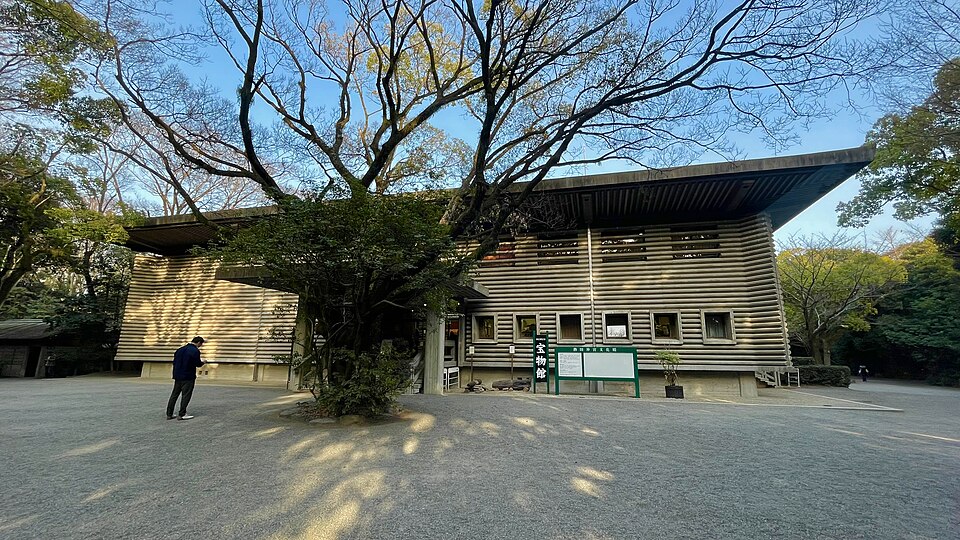
4. Treasure Hall—A National Treasure Sword Collection
Atsuta Shrine’s Treasure Hall boasts a collection of approximately 6,000 items including National Treasures and Important Cultural Properties, with an especially rich collection of swords befitting the shrine of the Kusanagi Sword. Beyond swords, a wide variety of cultural properties including mirrors, ancient documents, paintings, and ceramics are on display.
The highlight of the permanent exhibition is the sword collection. Featuring masterpieces such as the “Short Sword, signed Rai Kunitsuna” (National Treasure), it is a sacred place for sword enthusiasts. In recent years, the popularity of the game “Touken Ranbu” has brought an increase in young sword fans, boosting visitor numbers to the Treasure Hall.
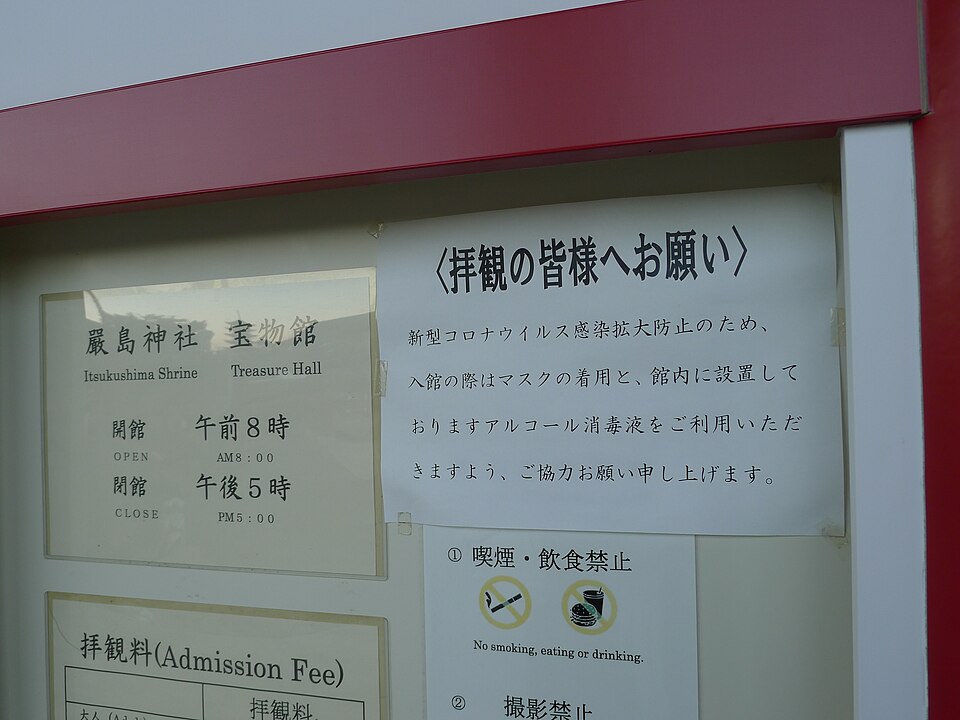
Admission is ¥300 for adults, with a visit taking approximately 30 to 40 minutes. Exhibition content rotates regularly, offering new discoveries with each visit. The Kusanagi Sword itself, as a sacred object, is enshrined deep within and is not open to public viewing.
5. Betsugu Hakken-gu and Shimizu-sha—Hidden Power Spots
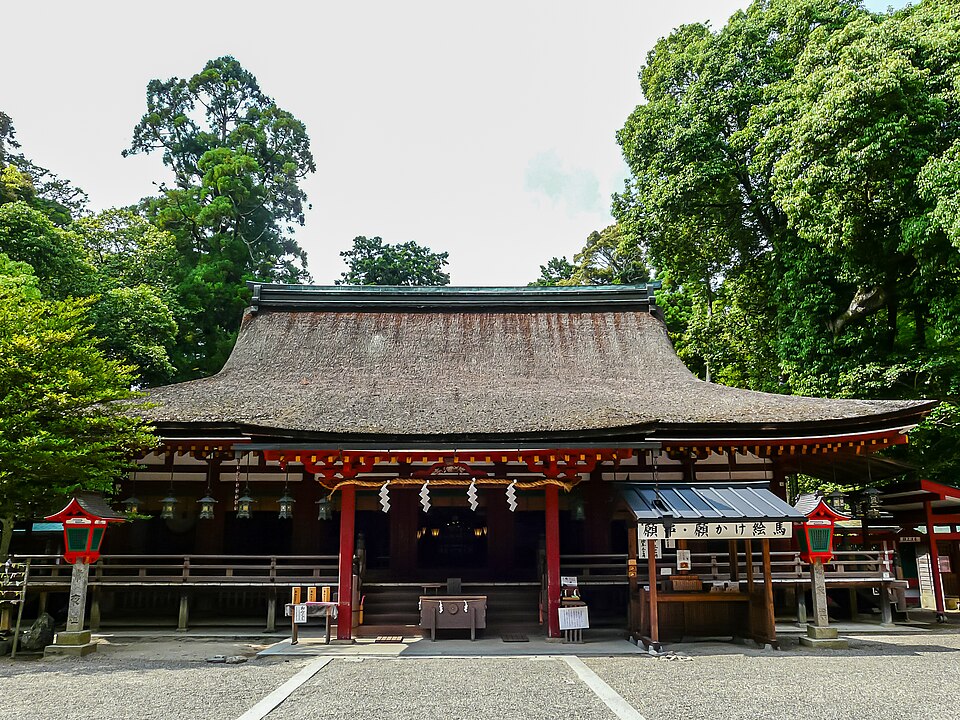
The Betsugu Hakken-gu on the east side of the Hongu has shrine buildings in the same Shinmei style as the main shrine and enshrines Atsuta Okami. Founded in 708 by imperial decree of Empress Genmei, this shrine holds a rank second only to the Hongu, and the saying “If you visit Atsuta, also visit Hakken-gu” has been passed down through the ages. With fewer visitors than the Hongu, it is a peaceful hidden spot for quiet worship.
Near Hakken-gu, Shimizu-sha is known as a hidden power spot of Atsuta Shrine. Its deity is Mizuhanome-no-Kami (goddess of water), and spring water flowing behind the shrine moistens a stone said to be “the tombstone of Yang Guifei.” Legend has it that washing your skin with this water will give you beautiful skin, making it especially popular with female visitors.
Atsuta Shrine’s vast grounds contain 45 sub-shrines, so visiting all of them takes over 2 hours. If you have time, venture off the main approach to discover small shrines tucked away in quieter corners. These secluded ancient shrines possess a silence and mystique unique to the Forest of Atsuta.
Nearby Attractions
Nagoya Castle—Golden Shachihoko and the Castle Tower
About 20 minutes by Nagoya Municipal Subway from Atsuta Shrine, Nagoya Castle was built by Tokugawa Ieyasu as the crowning achievement of national unification. The golden shachihoko (dolphin-fish ornaments) atop the castle tower are widely known as Nagoya’s symbol. The Honmaru Palace reconstruction completed in 2018 faithfully recreates the magnificent screen paintings of the Momoyama era and is a must-see.
While Atsuta Shrine represents the stage of Nobunaga’s Battle of Okehazama, Nagoya Castle symbolizes Ieyasu’s national unification—visiting both lets you experience the beginning and end of the Sengoku period.
Atsuta Horaiken—Birthplace of Nagoya’s Famous Hitsumabushi
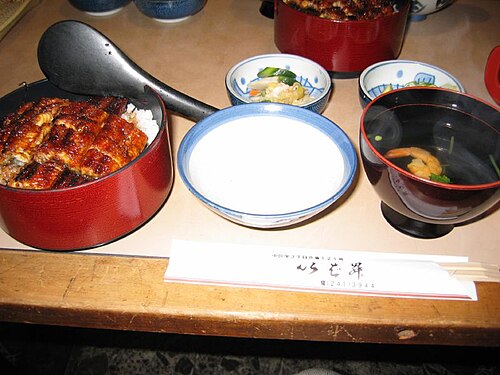
“Atsuta Horaiken,” with its main branch in front of Atsuta Shrine, is the birthplace of Nagoya’s signature dish “hitsumabushi.” Founded in 1873, this long-established restaurant serves charcoal-grilled eel enjoyed in three ways: “as is,” “with condiments,” and “with dashi broth”—a quintessential Nagoya gourmet experience.
Enjoying hitsumabushi after visiting Atsuta Shrine is the golden course for Nagoya sightseeing. The main branch is about a 5-minute walk from Atsuta Shrine’s south gate, but as a hugely popular restaurant, waiting times of 1 to 2 hours are common. Arriving before opening or using the Matsuzakaya Nagoya branch is also recommended.
Miya-no-Watashi Ruins—Feel the History of the Tokaido
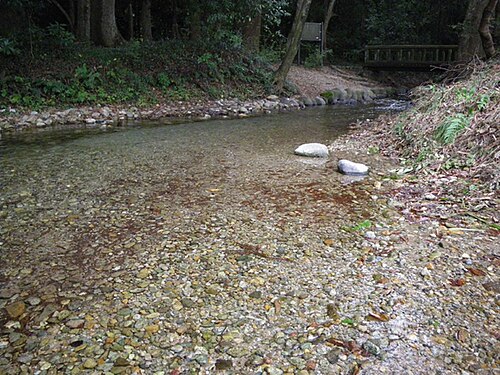
About a 10-minute walk south from Atsuta Shrine, “Miya-no-Watashi Park” marks the site of the former “Shichiri no Watashi” landing dock on the Tokaido road. The approximately 27-kilometer sea route between Miya-juku (Atsuta) and Kuwana-juku (Mie Prefecture) was the only sea passage on the Tokaido.
Now maintained as a park with reconstructed permanent lanterns and a time bell, the view toward Nagoya Port from here lets you imagine the scenery travelers once saw while waiting for their boats. It is a worthwhile stop for understanding Atsuta Shrine’s role as a “deity of traffic safety.”
Access
By Train
- Nagoya Municipal Subway Meijo Line: About 7-minute walk from Atsuta Jingu Temma-cho Station
- Nagoya Municipal Subway Meijo Line: About 7-minute walk from Atsuta Jingu Nishi Station
- Meitetsu Nagoya Main Line: About 3-minute walk from Jingu-mae Station (most recommended)
- JR Tokaido Main Line: About 8-minute walk from Atsuta Station
By Bus
- Nagoya City Bus “Jingu Higashimon” stop, immediate access
- About 20 minutes by bus from Nagoya Station
By Car
- About 5 minutes from Hotta Exit on Nagoya Expressway Route 3
- About 20 minutes from Nagoya IC on the Higashi-Meihan Expressway
- Atsuta Shrine East Gate parking (free, approximately 300 spaces), West Gate parking (free, approximately 40 spaces)
Recommended Access Route
Meitetsu Jingu-mae Station is the most convenient, just about 3 minutes on foot to Atsuta Shrine’s east gate. Only about 6 minutes from Nagoya Station on the Meitetsu Nagoya Main Line, it is extremely close and can be easily visited between other Nagoya sightseeing activities. When visiting Nagoya by Shinkansen, simply transferring to the Meitetsu line at Nagoya Station provides easy access.
Summary
Enshrining the Kusanagi Sword—one of the Three Imperial Regalia—Atsuta Shrine is one of Japan’s most prestigious shrines with approximately 1,900 years of history. The Nobunaga Wall from the Battle of Okehazama, thousand-year-old Great Camphor trees, and a National Treasure sword collection—the essence of Japanese history and culture is concentrated in this shrine.
Enjoy Nagoya’s famous hitsumabushi at Horaiken before the shrine gates, combine with Nagoya Castle, and you have the ultimate Nagoya sightseeing plan covering the city’s history and cuisine in one day. In the silence embraced by the deep green of the “Forest of Atsuta,” come touch 1,900 years of prayers.