- Introduction
- Overview of Bitchu Matsuyama Castle
- History of Bitchu Matsuyama Castle
- Construction in the Kamakura Period and the Bitchu Rebellion (13th-14th Century)
- Renovation into an Early Modern Castle — Kobori Masakazu and Mizunoya Katsutaka (17th Century)
- Yamada Hokoku’s Domain Reforms and the End of the Edo Period (19th Century)
- Revival from Neglect — Rediscovery as a “Castle in the Sky” (20th-21st Century)
- Highlights and Recommended Spots
- Access Information
- Conclusion
- Frequently Asked Questions
Introduction
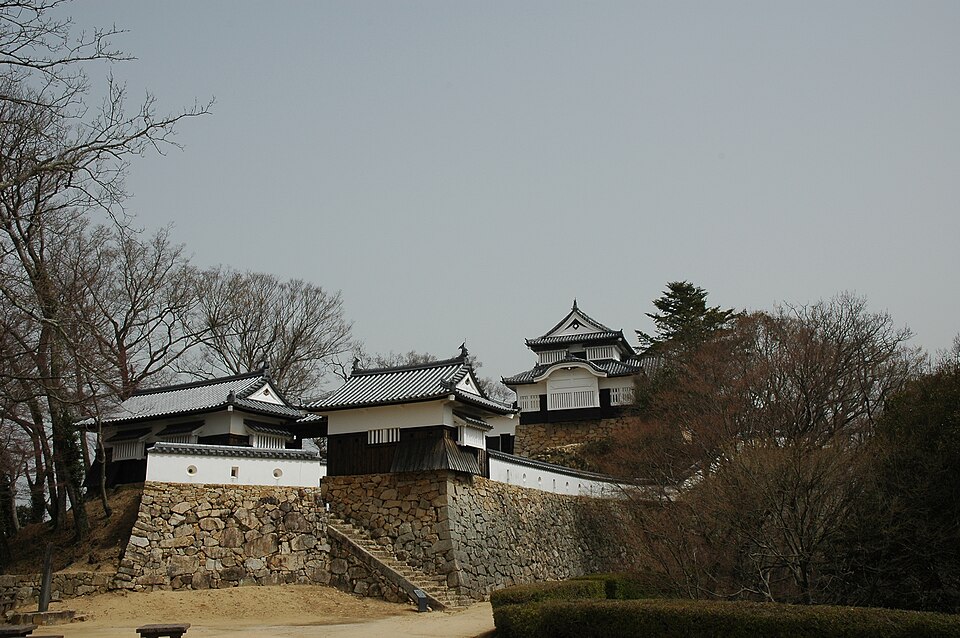
Bitchu Matsuyama Castle stands on Komatsu-yama (about 430 m), one of the peaks of Mount Gagyu in Takahashi City, Okayama Prefecture. It is one of the 12 castles in Japan whose original keep survives, and the only one of them that is a mountain castle. On some early mornings from autumn to early spring it is wrapped in a sea of clouds, which is why it is also called the “castle in the sky.”
The keep itself is a small two-story building. Visitors have to climb a mountain path from the parking area to reach it, and the bedrock and stone walls along the way are part of what there is to see.
Overview of Bitchu Matsuyama Castle
| Official Name | Bitchu Matsuyama Castle |
|---|---|
| Alternate Name | Takahashi Castle |
| Location | 1 Uchisange, Takahashi City, Okayama Prefecture |
| Castle Type | Mountain castle with connected baileys (renkaku-shiki yamajiro) |
| Year Built | 1240 (En’o 2) |
| Tower | Original surviving tower (two-story, Nationally Designated Important Cultural Property) |
| Elevation | Approximately 430 meters (near the tower) |
| Admission | 500 yen for adults, 200 yen for elementary and junior high school students (as of September 2026) |
| Opening Hours | April-September: 9:00-17:30 / October-March: 9:00-16:30 (closed December 29 – January 3) |
Mount Gagyu (about 480 m) has four peaks, from north to south: Omatsu-yama, Tenjin-no-maru, Komatsu-yama and Mae-yama. A fort was first built on Omatsu-yama in the Kamakura period, and the center of the castle later moved to Komatsu-yama. What is called Bitchu Matsuyama Castle today is the area around the keep on the summit of Komatsu-yama. The castle site is a National Historic Site, and the keep, the two-story turret and part of the earthen wall east of the San-no-Hira turret are designated Important Cultural Properties.
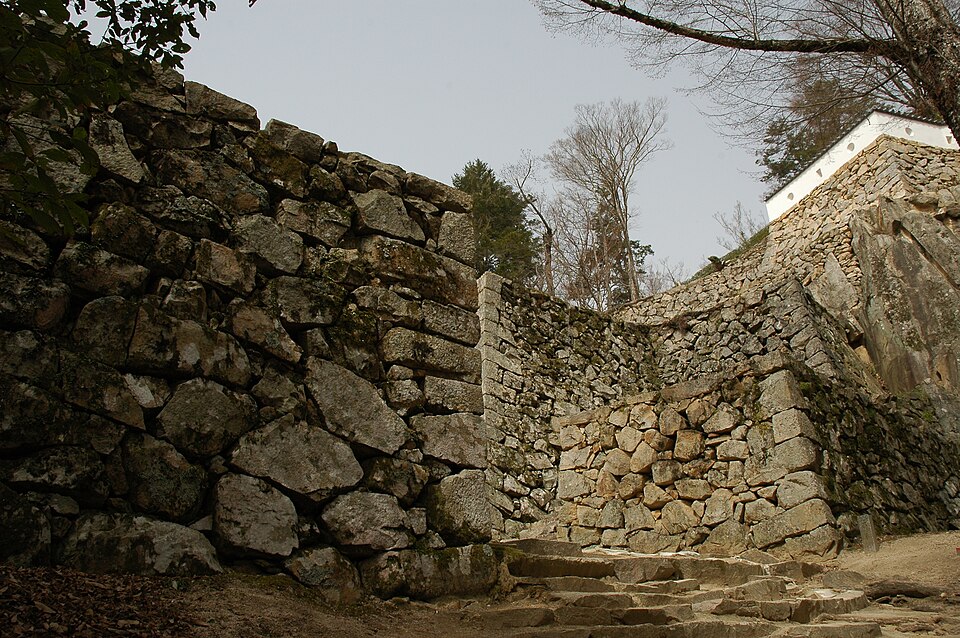
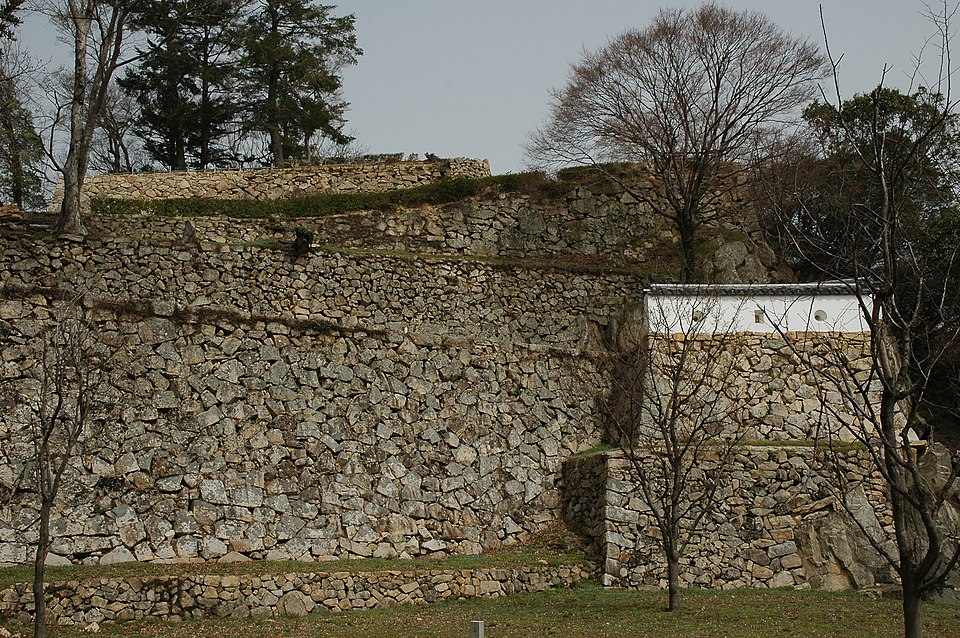
Mount Gagyu is made of hard granite, and the castle’s defining feature is the way huge natural boulders were built directly into the stone walls. The foundations of the keep and the two-story turret also sit on bedrock. Compared with other Japanese castles, it shows clearly how the terrain itself was made part of the fortress.
History of Bitchu Matsuyama Castle
Construction in the Kamakura Period and the Bitchu Rebellion (13th-14th Century)
In 1240, Akiba Saburo Shigenobu, appointed jito (steward) of Ukan-go (today’s Ukan-cho in Takahashi), built a fort on Omatsu-yama. The center of the castle later shifted to the Komatsu-yama peak, and its layout changed as lords came and went.
During the Bitchu Rebellion that broke out in 1574, the lord Mimura Motochika turned Mount Gagyu into a vast fortress with as many as 21 forts around it, but the castle is said to have fallen to a Mori siege that starved out the defenders. In 1575 Mori Terumoto became lord, and the castle served as a base for the Mori clan’s push to the east.
Renovation into an Early Modern Castle — Kobori Masakazu and Mizunoya Katsutaka (17th Century)
After the Battle of Sekigahara in 1600, Kobori Masatsugu and his son Masakazu (Enshu) were sent as magistrates of Bitchu Province and are said to have begun work on the lord’s residence at the foot of the mountain (Onekoya) and on the castle above. Enshu, also known as a garden designer, used Raikyuji Temple as his temporary residence in place of the ruined castle and created its garden, now a National Place of Scenic Beauty.
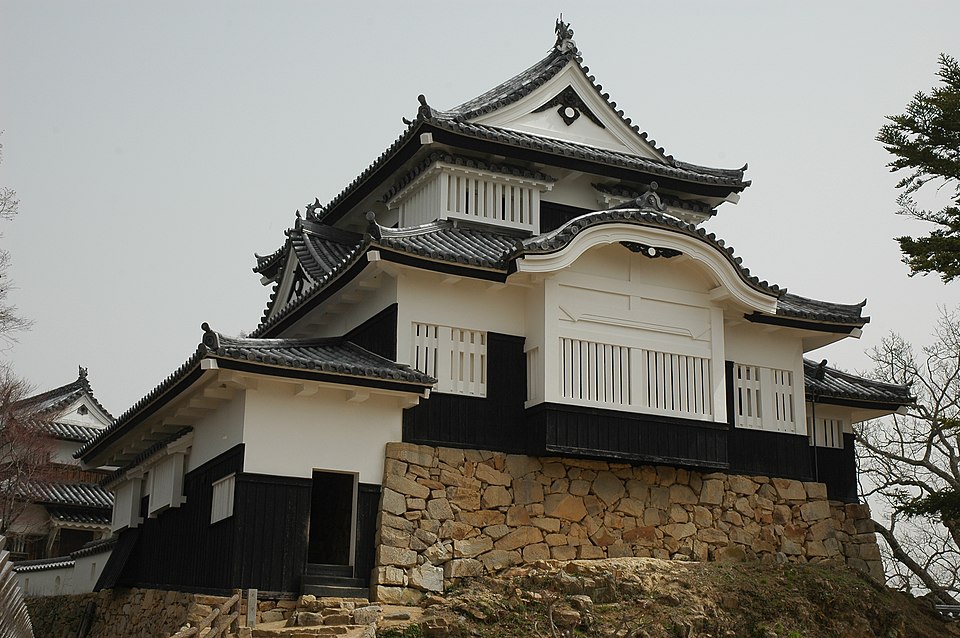
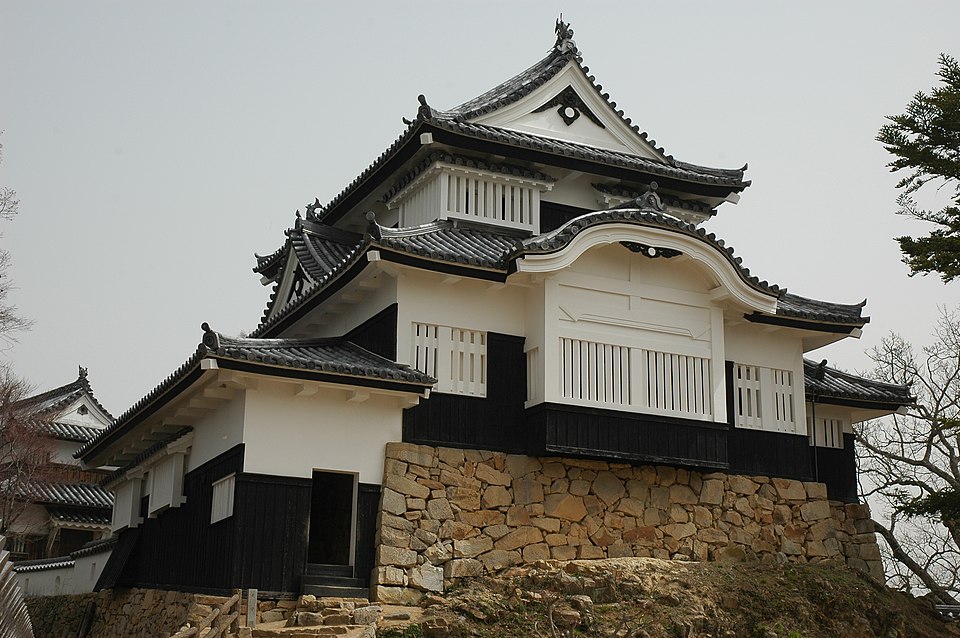
Mizunoya Katsutaka became lord in 1642, and his son Katsumune carried out a major rebuilding from 1681 to 1683. The keep, the two-story turret and the Ote-mon gate were built at this time, completing the castle. The keep, two-story turret and earthen wall that survive as Important Cultural Properties all date from this rebuilding.
Yamada Hokoku’s Domain Reforms and the End of the Edo Period (19th Century)
Yamada Hokoku, a Confucian scholar who served the late-Edo lord Itakura Katsukiyo, was entrusted with reforming the Bitchu Matsuyama Domain, which was close to financial collapse. In 1850 the domain owed 100,000 ryo. Through frugality from samurai to commoners, debt restructuring, industrial promotion and a reissue of domain paper money, Hokoku is said to have cleared the debt in about seven years and left savings of 100,000 ryo. Hokoku Station on the JR Hakubi Line is named after him.
Because Itakura Katsukiyo had served as a roju (senior councilor) of the shogunate, the domain was branded an enemy of the court when the Boshin War began in 1868. Hokoku and others chose to avoid fighting and surrendered the castle without bloodshed, which also saved the castle itself.
Revival from Neglect — Rediscovery as a “Castle in the Sky” (20th-21st Century)
Under the castle abolition order of 1873, the Onekoya residence at the foot of the mountain was demolished. The keep, turrets and gates on the summit were left alone because they were so hard to reach, and so survived, but they went unmaintained for decades and came close to collapse.
In the early Showa era, local residents formed the Takahashi Hoshokai preservation society, and in the “Showa restoration” of 1939 the keep was dismantled and repaired and the earthen walls were mended; local schoolchildren are said to have carried about 20,000 roof tiles up to the summit. In 1941 the keep, the two-story turret and part of the earthen wall received national designation (they are now Important Cultural Properties).
In 1997 the South and East Gates of the main bailey, the Udegi Gate, the Roji Gate, the Fifth and Sixth Hira turrets and earthen walls were reconstructed, and in 2003 the keep underwent conservation repairs.
A cat that settled at the castle after the western Japan floods of July 2018 was welcomed as “Cat Castle Lord Sanjuro” on December 16 that year and has since become the face of the castle.
Highlights and Recommended Spots
- Keep (two stories, Important Cultural Property): an irori hearth and the shozoku-no-ma on the first floor, the gosha-dan shrine on the second
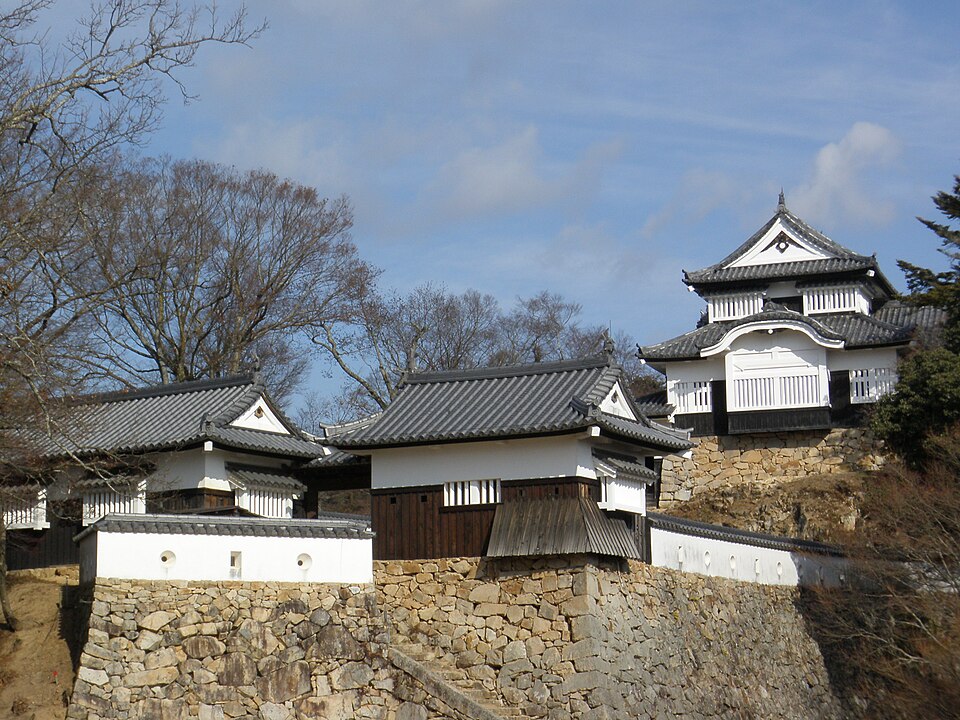
- Two-story turret (Important Cultural Property): guards the rear of the keep, built on a natural boulder
- Earthen wall east of the San-no-Hira turret (Important Cultural Property): an original wall with arrow and gun loopholes
- Bedrock and stone walls beside the Ote-mon gate ruins: rock and walls rising more than 10 m
- Sea of clouds observation deck: clouds can form on early mornings from late September to early April
The Original Surviving Tower
The keep is a two-story timber building with a tiled roof. The first floor has an irori hearth (about 180 cm by 90 cm), unusual in a castle keep, and the shozoku-no-ma, the room where the lord’s family would live during a siege. Stones were packed under its floor to leave no gap for intruders.
On the second floor survives the gosha-dan shrine that Mizunoya Katsumune installed during the 1683 rebuilding, where three sacred swords and ten deities including Amaterasu were enshrined. Look also for the adze and spear-plane marks on the old timber framing, and the lattice “warrior windows” that are hard to see into from outside.
The Climbing Path from the Main Gate Ruins to the Main Bailey
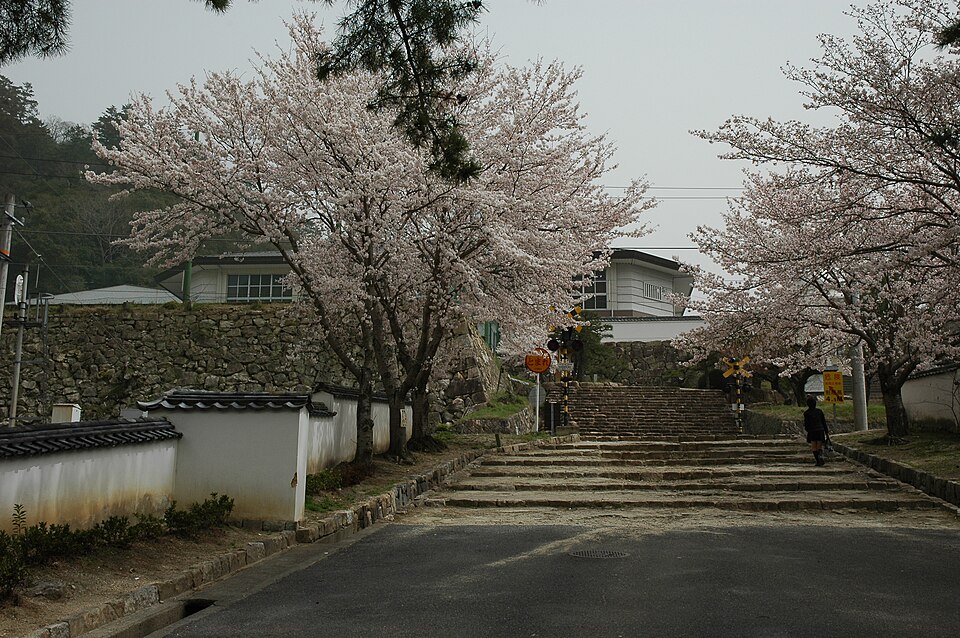
From the Fuigo Pass parking area to the keep is about 700 m, roughly 20 minutes on foot along a mountain path. Beside the Ote-mon gate ruins, huge natural boulders incorporated into the stone walls rise more than 10 m, considered the castle’s most distinctive sight.
Two-Story Turret and Earthen Walls
The two-story turret stands behind (north of) the keep on a natural boulder that serves as its base. It guarded the rear of the keep, and its two entrances, north and south, lead to the back of the keep and the rear bailey. The earthen wall east of the San-no-Hira turret has square loopholes for arrows and round ones for guns, and served as the model when the other walls were reconstructed in 1997.
Sea of Clouds Observation Deck
To see the castle above the clouds, go to the observation deck on a different peak from Mount Gagyu. You can drive almost to the deck; there is space for about four cars near it, and a larger car park about 200 m further on at the end of the road. From October to March, a reservation-only shared sightseeing taxi runs from the station (3,000 yen round trip); walking takes about three hours (12 km) and is not recommended. Snow can settle from December to February.
The Castle Town of Takahashi
The castle town below preserves the Ishibiya-cho samurai quarter, where samurai residences line the street for about 250 m, the Raikyuji Temple garden attributed to Kobori Enshu, and the townscape along the Konya River. A combined ticket (1,000 yen) covers the castle, the samurai residences and Raikyuji.
Access Information
By Train
The nearest station is “Bitchu-Takahashi Station” on the JR Hakubi Line. From Okayama Station, it takes approximately 35 minutes by the limited express “Yakumo” or about 50 minutes by local train. From Bitchu-Takahashi Station, a shared sightseeing taxi (reservation required) takes about 10 minutes to Fuigo Pass parking area, and from there it is about a 20-minute walk to the tower. Note that the castle shuttle bus (tojo seiri bus) does not depart from the station; it runs between Shiromi-bashi Park (Shiro-machi Station) and Fuigo Pass on scheduled operating days (check the official website for the schedule).
By Car
From the “Kayo IC” on the Okayama Expressway, it takes about 20 minutes to reach the Fuigo Pass parking area (14 spaces). On days when the shuttle bus runs, private cars cannot drive between Shiromi-bashi Park and Fuigo Pass, so park at Shiro-machi Station (110 spaces) and take the shuttle bus. Since September 2026 the Fuigo Pass parking area charges a fee (1,000 yen for standard and light cars, 500 yen for motorcycles, cash only).
Recommended Access Method
Seeing the sea of clouds means reaching the observation deck early in the morning, so a car or taxi is the practical choice. For the castle alone, JR plus a taxi works smoothly. The climbing path is a steep mountain trail, so wear good walking shoes and bring drinks.
Conclusion
Bitchu Matsuyama Castle is the only mountain castle with an original keep, and its keep, two-story turret and part of its earthen wall remain as they were built in the 1680s. For the sea of clouds, go to the observation deck early in the morning; for the castle itself, walk up from Fuigo Pass. Comparing it with original keeps on flat land or hills, such as Matsumoto Castle and Hikone Castle, shows clearly how a mountain castle was built differently.