
🕓 2025/4/15
#Sake
A Fukuoka Journey: Enriching the Spirit at Dazaifu Tenmangu and Savoring Local Sake
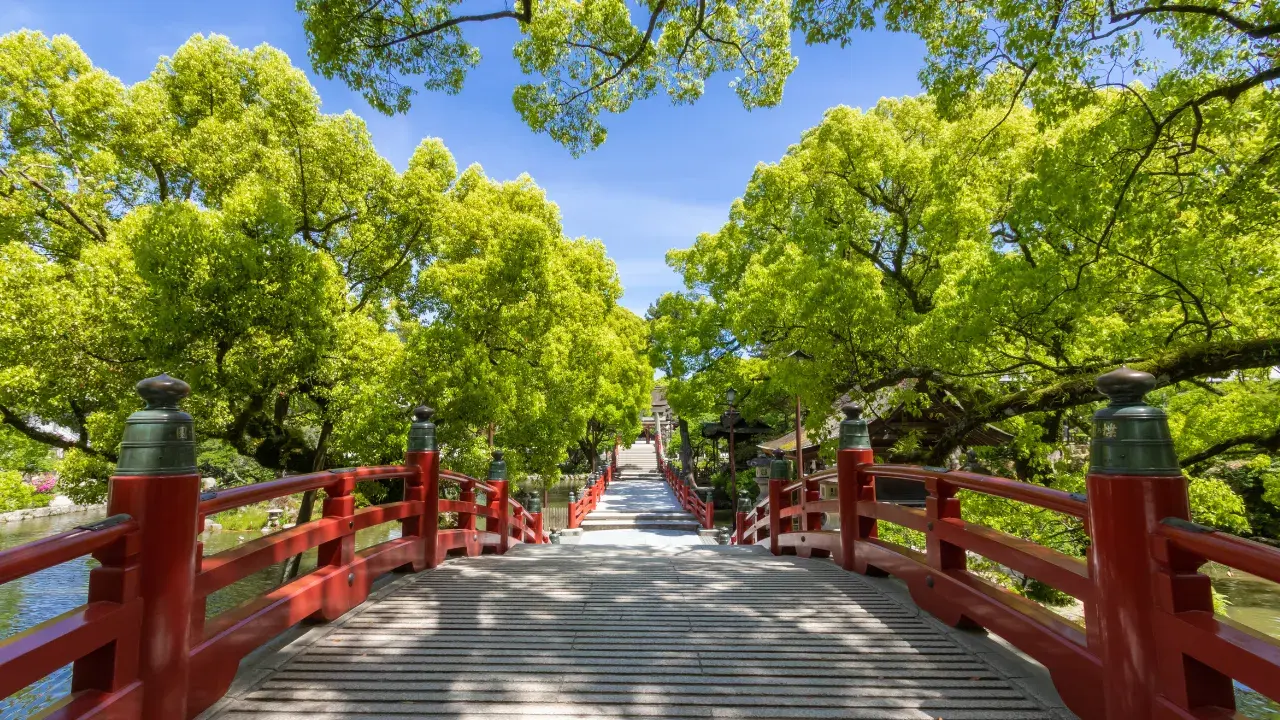
Table of Contents
- Recommended Sake Breweries Near Dazaifu Tenmangu
- Recommended Sake Selection Near Dazaifu Tenmangu
- History and Highlights of Dazaifu Tenmangu
- Model Course: Touring Dazaifu Tenmangu and Sake Breweries
Introduction
Dazaifu Tenmangu enshrines Sugawara no Michizane, the deity of learning. This land, where history and culture thrive, is filled with the sacred atmosphere of shrine grounds fragrant with plum blossoms, a temporary hall, and the harmony of beautiful nature and tradition. Meanwhile, Fukuoka has long been known as a sake-producing region, blessed with the pure waters of the Chikugo River and abundant rice, with distinctive local sake being brewed at breweries throughout the area.
In this article, we introduce the highlights and history of Dazaifu Tenmangu, along with charming sake breweries you can visit nearby, and a model course for enjoying both sightseeing and fine sake. Why not embark on a journey where the depth of history meets the richness of flavor – a trip of wisdom and fine sake?
Recommended Sake Breweries Near Dazaifu Tenmangu
Sacred grounds of Fukuoka’s local sake, worth visiting on a trip from Dazaifu Tenmangu
The area surrounding Dazaifu Tenmangu, supported by abundant water sources and fertile land, has long been a thriving sake-producing region. Particularly in Chikushino City, Kurume City, and western Fukuoka City, sake breweries rooted in the local climate and history are scattered about, continuing to brew distinctive local sake to this day.
Here, we have carefully selected recommended breweries accessible by public transportation from Dazaifu, each packed with charm. We clearly introduce each brewery’s characteristics, access information, and availability of tours and tastings.
1. Ohga Shuzo | Tasting the Tradition of “Tamadeizumi” at Fukuoka’s Oldest Brewery
 Source: https://www.ohga.jp
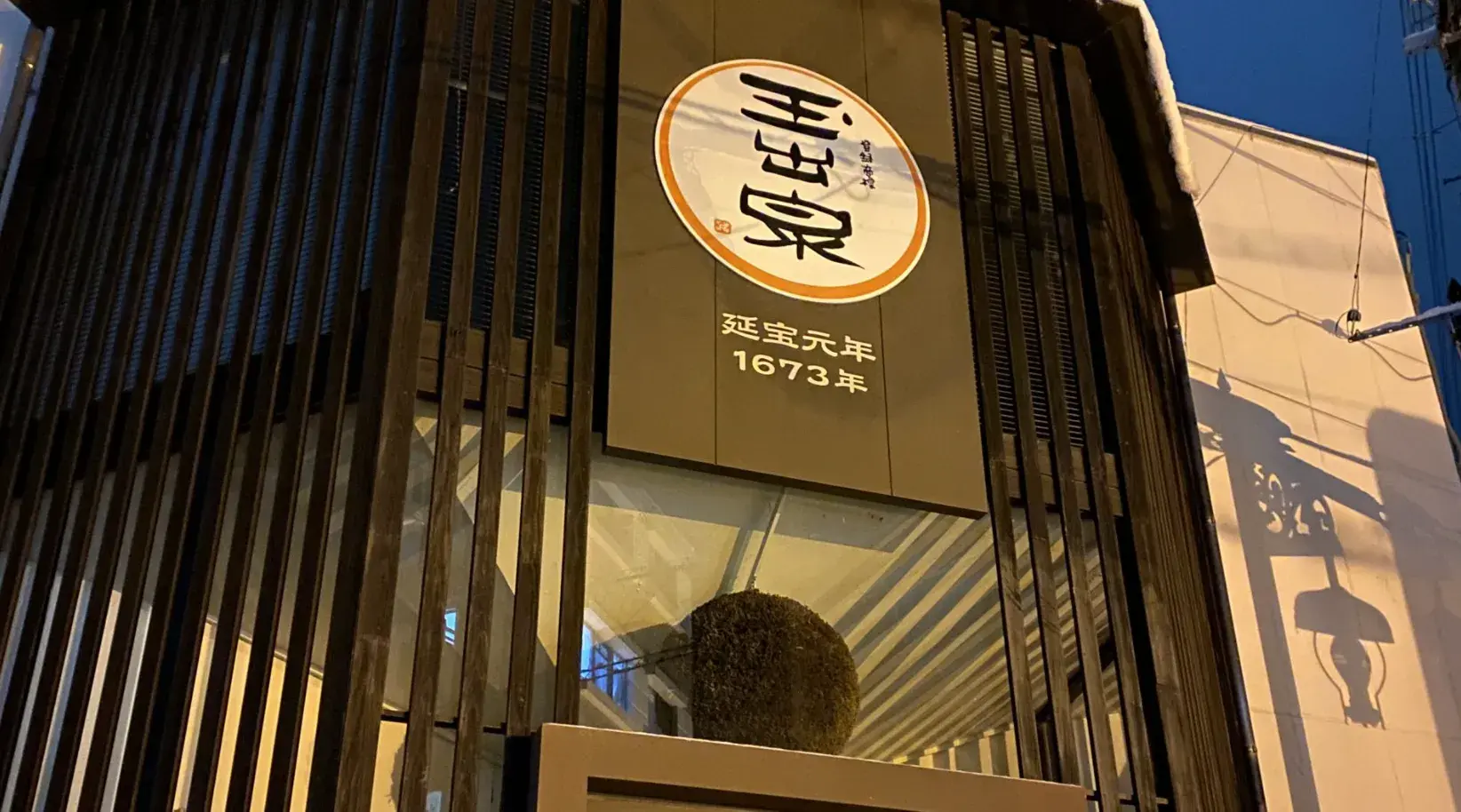
Founded in Enpo 1 (1673), “Ohga Shuzo” boasts the oldest history in Fukuoka Prefecture. Located near the Futsukaichi hot spring district in Chikushino City, they have continued handcrafted sake brewing using underground water from nearby Mount Homan for over 350 years.
Their flagship brands “Tamadeizumi” and “Kanko no Sake” are beloved local favorites. Limited-edition sake can be purchased at the direct sales shop, and it is conveniently accessible, just one train station from Dazaifu Tenmangu.
| Item | Details |
|---|---|
| Official Name | Ohga Shuzo Co., Ltd. |
| Year Founded | 1673 (Enpo 1) |
| Main Brands | Tamadeizumi, Ohga, Chikushino, Kanko no Sake |
| Tours | Limited to events (usually not available) |
| Tastings | Generally not available (paid tastings during events) |
| Direct Sales | Available (Hours: 10:00-17:00) |
| Access | Nishitetsu Dazaifu Stn. → Alight at Nishitetsu Futsukaichi Stn., about 5 min. walk |
2. Yamaguchi Shuzojo | The Long-established Kurume Brewery Where “Niwa no Uguisu” Resounds
 Source: https://www.niwanouguisu.com
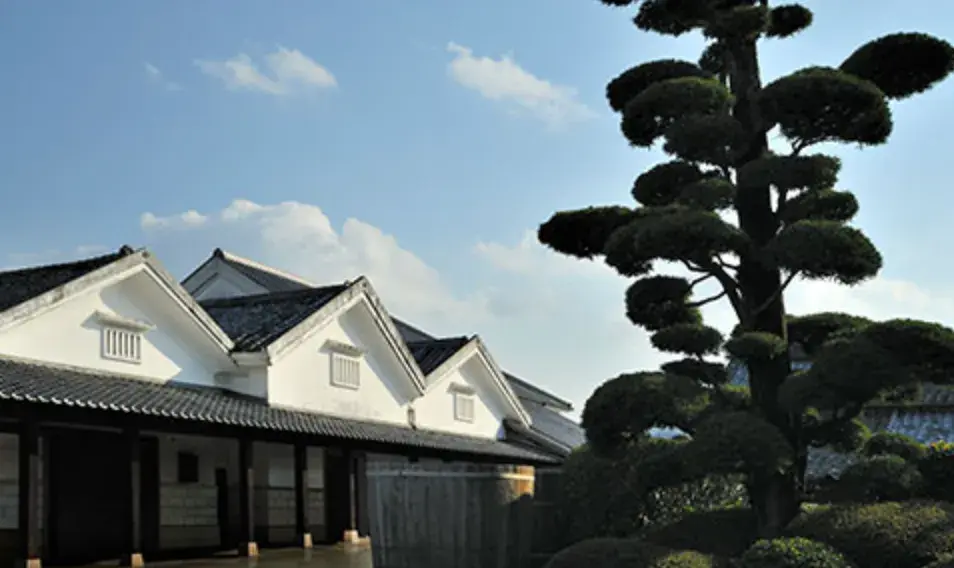
Founded in Tenpo 3 (1832). “Yamaguchi Shuzojo,” with its brewery in Kitano-machi, Kurume City, is a renowned sake maker known nationwide for the fine sake “Niwa no Uguisu” (Garden Warbler). The name derives from a warbler that visited the brewery garden, a story that evokes coexistence with nature.
High-quality water from the Chikugo River system is used for brewing, with Yamada Nishiki and Yume Ikkon as sake rice. At the adjoining “uguisubar 1020,” visitors can purchase sake and check limited-edition products.
| Item | Details |
|---|---|
| Official Name | Yamaguchi Shuzojo |
| Year Founded | 1832 (Tenpo 3) |
| Main Brands | Niwa no Uguisu, Uguisu Label, Uguisu Toro |
| Tours | Not available (no brewery tours offered) |
| Tastings | Not available (retail sales only) |
| Direct Sales | Available (Hours: 9:00-17:00, closed Sun/holidays) |
| Access | About 4 min. walk from “Kitano Stn.” on the Nishitetsu Amagi Line |
3. Hamaji Shuzo | A Multi-faceted Brewery Where You Can Also Enjoy Craft Beer
 Source: https://www.suginoya.co.jp
“Hamaji Shuzo,” located in Motooka, Nishi-ku, Fukuoka City, is a progressive brewery that, despite being a long-established brewery founded in Meiji 3 (1870), offers a diverse range of products including sake, craft beer, and liqueurs. Known by the “Suginoya” brand, it is popular among tourists.
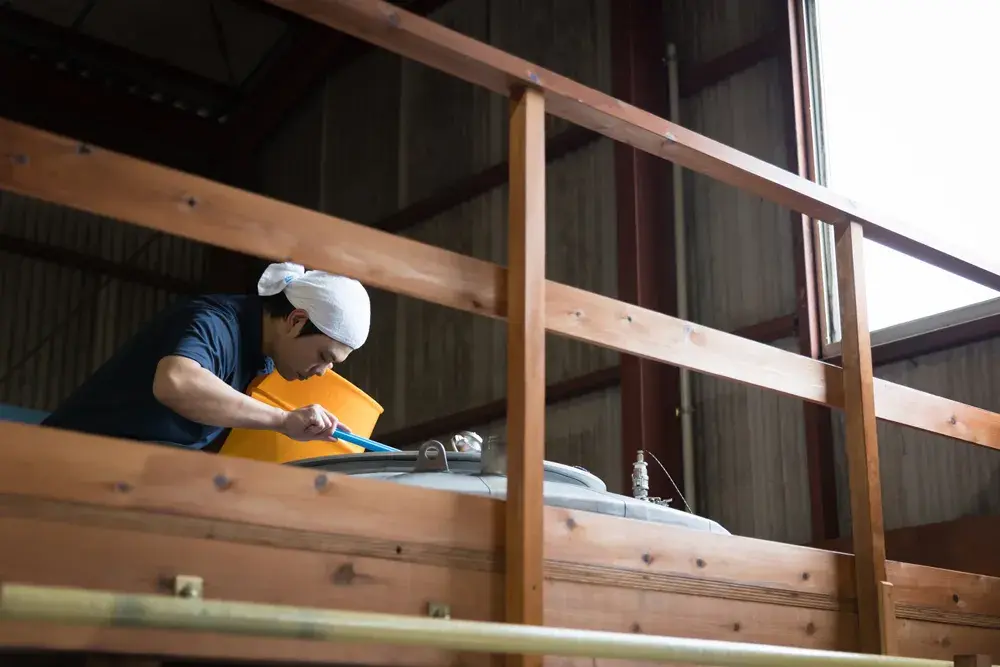
The premises include a direct sales shop, cafe, bakery, and restaurant, and the ability to casually enjoy tours and tastings is a major attraction. While access from Dazaifu takes some time, it is well worth the visit.
| Item | Details |
|---|---|
| Official Name | Hamaji Shuzo Co., Ltd. |
| Year Founded | 1870 (Meiji 3) |
| Main Brands | Suginoya (sake, beer, plum wine, etc.) |
| Tours | Available (no reservation required, during business hours) |
| Tastings | Available (free / many varieties) |
| Direct Sales | Available (Hours: 10:00-17:00, closed Wednesdays) |
| Access | About 90 min. by subway and bus transfer, alight at “Motooka” (Showa Bus) |
Recommended Sake Selection Near Dazaifu Tenmangu
Fukuoka local sake to enjoy alongside your Dazaifu Tenmangu sightseeing. Sake produced through the blessings of the Chikugo River water, excellent sake rice such as Yamada Nishiki and Yume Ikkon, and the skills of traditional toji brewmasters – its appeal lies in the breadth and depth of flavor.
Here, we carefully select and introduce particularly recommended local sake that can be purchased or enjoyed around Dazaifu. We include information useful for your culinary travel experience, such as flavor characteristics and food pairings.
1. Tamadeizumi | Ohga Shuzo
This is the representative brand of “Ohga Shuzo,” the most accessible long-established brewery from Dazaifu, crafted by a brewery boasting one of Fukuoka’s oldest histories, founded in Enpo 1 (1673). Using underground water from Mount Homan in Chikushino City and carefully brewed by traditional handwork, the sake features a gentle flavor rooted in the local community.
「玉出泉」は特別Junmaiや本醸造タイプを中心に展開され、やわらかく穏やかな口当たりと、クセのない後味の良さから、幅広い料理と合わせやすいと定評があります。観光ついでに立ち寄れるDirect Salesでの購入も可能で、まさに“太宰府観光と地酒体験”を両立できる一本です。
| Item | Details |
|---|---|
| Type | Tokubetsu Junmai / Honjozo, etc. |
| Flavor | Soft and gentle mouthfeel, clean finish |
| Serving Style | Versatile from chilled to lukewarm |
| Food Pairings | Salt-grilled sea bream, dashimaki egg, chikuzen-ni stew, etc. |
| Where to Buy/Drink | Ohga Shuzo direct sales shop (near Futsukaichi Station) |
2. Niwa no Uguisu | Yamaguchi Shuzojo
“Niwa no Uguisu,” brewed by Yamaguchi Shuzojo (founded in Tenpo 3, 1832), is a nationally popular brand representative of Fukuoka. With its refined label design, it is also well-loved by women and sake beginners.
Flavorは、爽やかな吟醸香と、米の旨味・酸味のバランスが取れた“フルーティーで飲みやすい”スタイル。代表作の「Junmai Ginjo」や「鶯とろ(梅酒)」は全国のコンテストでも受賞歴があり、幅広い食事と好相性。博多や天神の酒店・角打ちでは比較的手に入りやすく、地元の味をカジュアルに楽しみたい方にぴったりの1本です。
| Item | Details |
|---|---|
| Type | Junmai Ginjo / Tokubetsu Junmai / Plum Wine “Uguisu Toro,” etc. |
| Flavor | Fruity and elegant, with soft acidity |
| Serving Style | Best served chilled to enjoy the aroma |
| Food Pairings | Sesame mackerel, tempura, hot tofu, Japanese-style sweets |
| Where to Buy/Drink | Sake shops in Tenjin/Hakata, kaku-uchi “Sakesho Sugawara,” etc. |
3. Tanaka 65 | Shiraito Shuzo
「田中六五」は、糸島の地で育った山田錦を100%使用し、地元の自然の恵みをそのままボトルに詰め込んだかのような、透明感とキレのあるJunmaiです。製造元である白糸酒造は、明治35年創業の老舗で、昔ながらの“ハネ木しぼり”という伝統製法を守る希少な蔵元としても知られています。
ネーミングは「田んぼの中」+精米歩合65%=“田中六五”。食事の邪魔をしないスッとした飲み口と程よい酸味、米の輪郭が感じられるFlavorは「食中酒の理想形」とも称され、日本酒ファンからも熱烈な支持を集めています。
| Item | Details |
|---|---|
| Type | Junmai |
| Flavor | Crisp and dry, with pleasant rice umami |
| Serving Style | Chilled to room temperature |
| Food Pairings | Sashimi, salt-grilled dishes, Hakata ramen, yakitori, etc. |
| Where to Buy/Drink | Available at sake shops and sake bars in Fukuoka City |
4. Kitaya Gokujo | Kitaya
The pinnacle daiginjo sake crafted by Kitaya, a prestigious brewery representing Fukuoka Prefecture, which has the distinction of winning Champion Sake at the IWC (International Wine Challenge). Its gorgeous aroma and silky-smooth texture are impressive, continuing to captivate sake fans both domestically and internationally.
“Gokujo Kitaya” is polished to 35% from Yamada Nishiki rice, featuring delicate yet rich aromas along with an elegant sweetness and crisp finish. It is ideal for pairing with special meals or as a gift, and can be purchased at specialty shops in Fukuoka City such as Sakesho Sugawara and Sumiyoshi Shuhan.
| Item | Details |
|---|---|
| Type | Daiginjo / Junmai Ginjo |
| Flavor | Fruity and smooth, richly aromatic |
| Serving Style | Well chilled, in a glass |
| Food Pairings | Mizutaki (chicken hotpot), also great paired with Western cuisine |
| Where to Buy/Drink | Sakesho Sugawara, Sumiyoshi Shuhan, etc. |
5. Mii no Kotobuki +14 Extra Dry | Mii no Kotobuki
An extra-dry junmai ginjo sake crafted by “Mii no Kotobuki,” rooted in the Chikugo Plain of Fukuoka. As the sake meter value of “+14” tells, its appeal lies in its crisp dryness and sharp drinking character, pairing exceptionally well with richly flavored dishes and hot pot cuisine.
ただ辛いだけではなく、米の旨味をしっかりと残した味設計で、飲み飽きせず、酒好きから熱烈に支持される一本。居酒屋や日本酒バーでは「辛口を飲みたい」と伝えれば、この銘柄が勧められることも多く、福岡の“知る人ぞ知る”一本として注目されています。
| Item | Details |
|---|---|
| Type | Junmai Ginjo |
| Flavor | Sharp and crisp, dry and refreshing |
| Serving Style | Good chilled or at lukewarm temperature |
| Food Pairings | Motsunabe (offal hotpot), yakitori (with sauce), mentaiko dishes, etc. |
| Where to Buy/Drink | Izakayas and sake shops in Fukuoka City (including kaku-uchi) |
History and Highlights of Dazaifu Tenmangu
A sacred land of learning that has received people’s prayers for over a thousand years
Dazaifu Tenmangu, enshrined in Dazaifu City, Fukuoka Prefecture, is the head shrine of approximately 12,000 Tenmangu shrines across the nation. It enshrines “Sugawara no Michizane,” known as a Heian-period scholar and politician, and has long been worshipped as the deity of learning. The shrine grounds feature numerous attractions where history and legend come alive, and with nature to enjoy in every season, many worshippers visit throughout the year.
・Sugawara no Michizane and the Beginning of Tenjin Worship
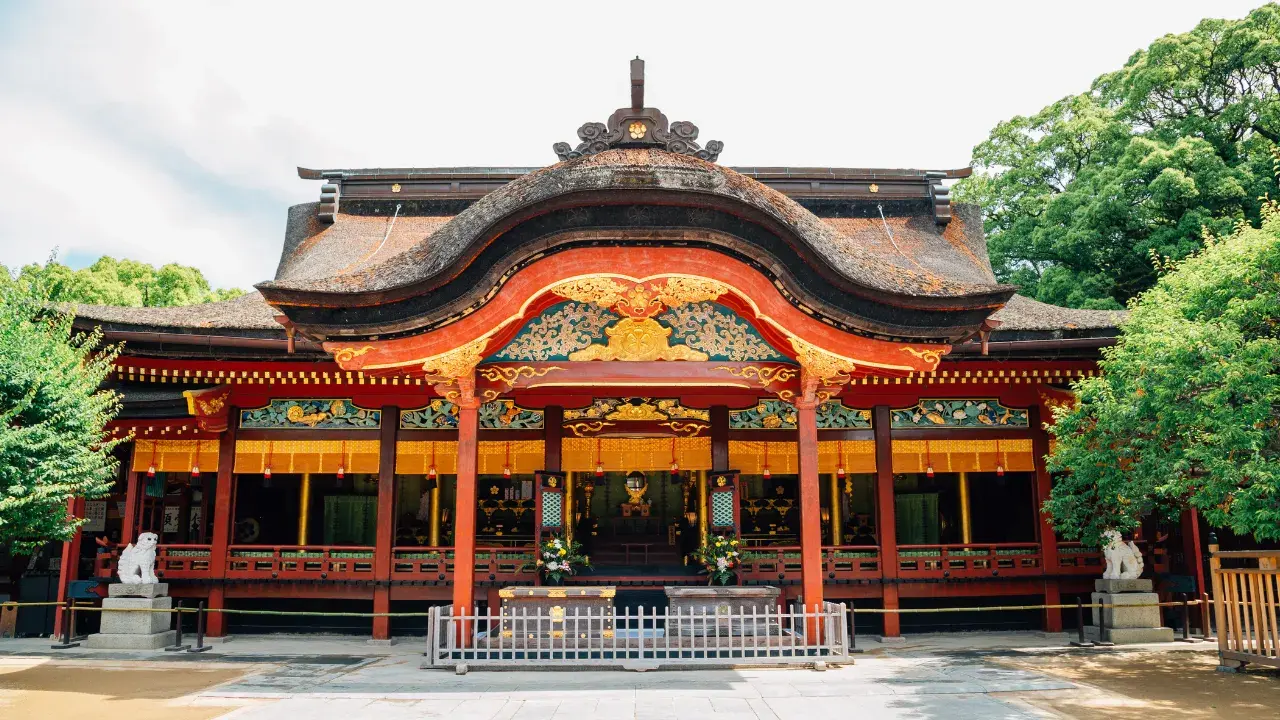
Sugawara no Michizane was a Heian-period literary figure of outstanding knowledge and character, highly regarded in both scholarship and politics, but was falsely accused and exiled to Dazaifu due to political strife. He passed away in this land in 903. Subsequently, disasters and epidemics occurred one after another in the capital, and as these were feared to be Michizane’s curse, he came to be enshrined as a deity to pacify his spirit – this is considered the origin of Tenjin worship.
In Engi 5 (905), a memorial shrine was built over the burial site, and in 919, a shrine hall was constructed by imperial decree. This was the beginning of Dazaifu Tenmangu.
・The Legend of the Flying Plum and the Sacred Tree
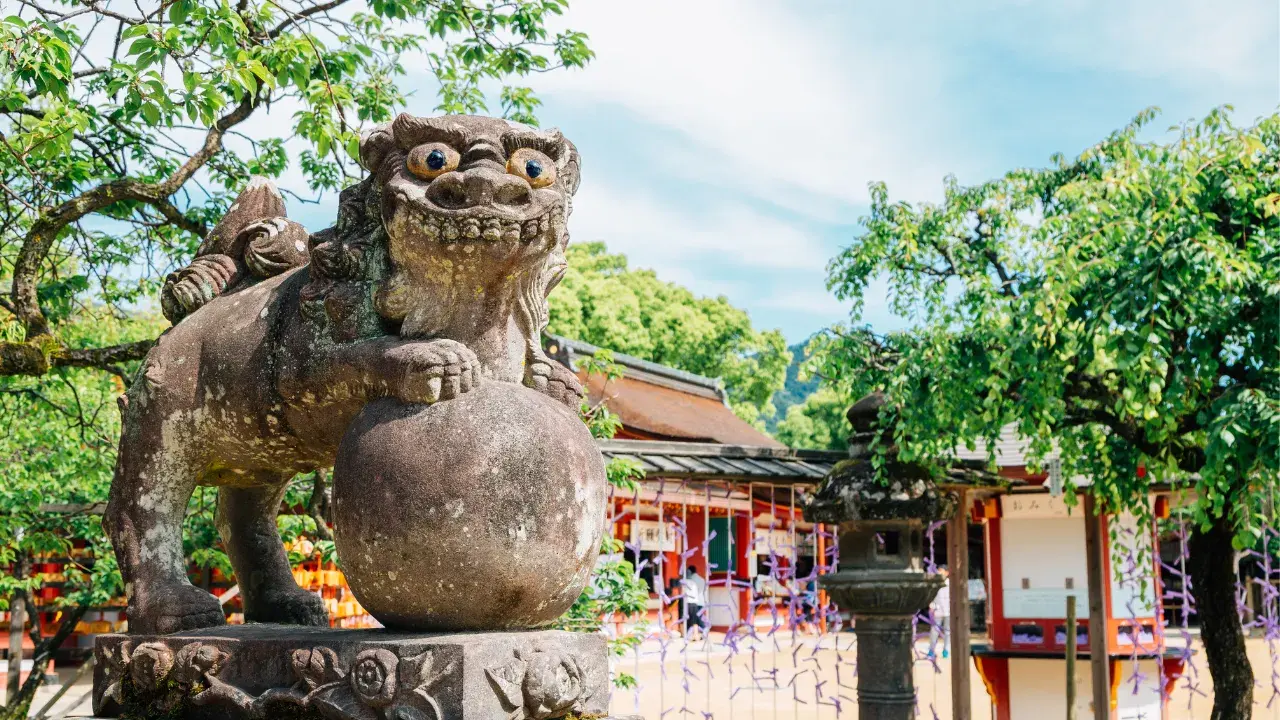
The “Legend of the Flying Plum” tells how a plum tree in Kyoto flew overnight to Dazaifu in response to the poem Michizane composed upon his exile: “When the east wind blows, send me your fragrance, plum blossoms; though your master is gone, do not forget the spring.” This plum tree still stands beside the main hall as a sacred tree, continuing to bloom magnificently.
・The Momoyama-style Main Hall and the “Temporary Hall” Connecting to the Future
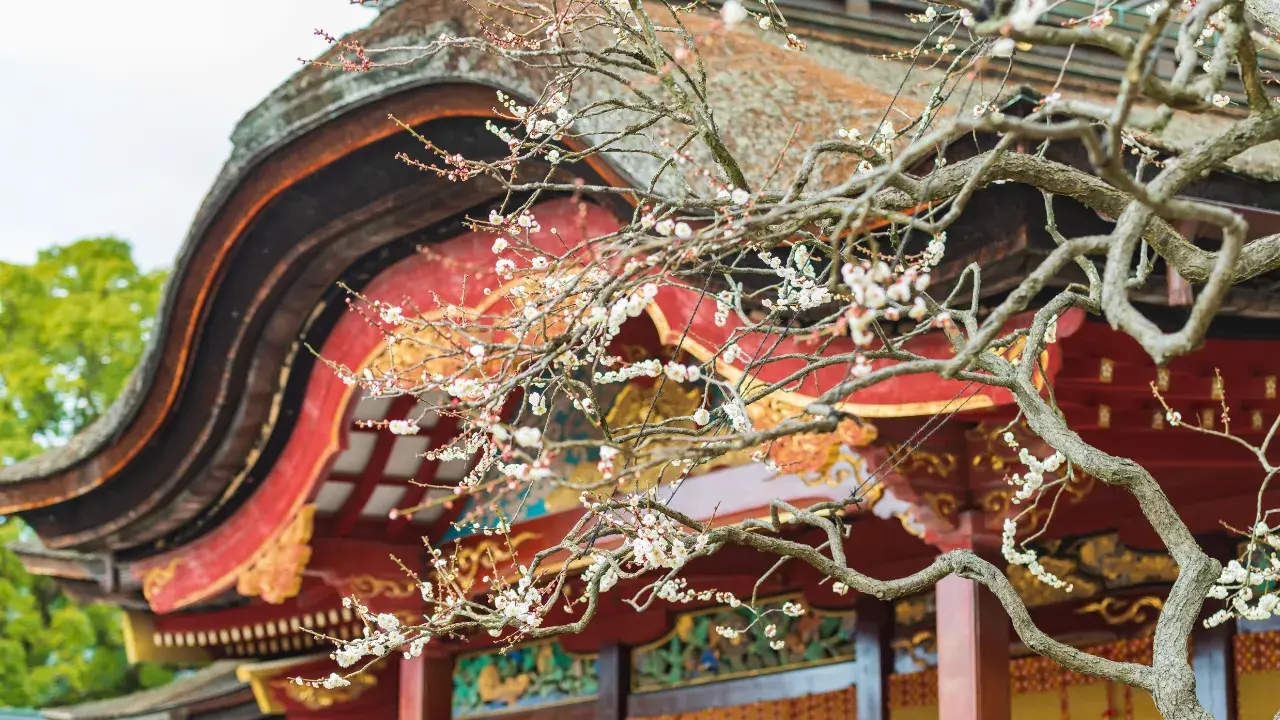
The current main hall was reconstructed in Tensho 19 (1591) by the Sengoku-era warlord Kobayakawa Takakage. It is designated as a nationally Important Cultural Property and is known for its magnificent Momoyama-style shrine architecture.
Since 2023, a major renovation – the first in 124 years – has been underway, and a limited-timespecial temporary hallhas appeared on the grounds. Designed by architect Sou Fujimoto and fashion designer Mame Kurogouchi, this art-like structure has become a topic of conversation as a unique worship space that fuses tradition and modernity.
・Main Highlights
| Name | Description |
|---|---|
| Shinjiike Pond and Taiko-bashi | The three bridges over the pond represent “past, present, and future,” and crossing them is said to purify body and mind. |
| Sacred Ox Statues | Ox statues scattered throughout the grounds. Rubbing their heads is said to bestow wisdom, making them popular with exam students. |
| Tower Gate (Romon) | A two-story gate reconstructed during the Taisho era. Its majestic structure welcoming worshippers is impressive. |
| Nature Through the Seasons | 6,000 plum trees (February), 30,000 irises (early summer), autumn foliage, and more – the scenery through all four seasons is a major attraction. |

![[Samurai residence in Kakunodate x Sake] Enjoy local sake on a sake brewery tour! A trip to enjoy Kakunodate and sake](https://article.bespes-jt.com/wp-content/uploads/hubfs/5a08e56095285b6be5596baecd4bc393.jpg)