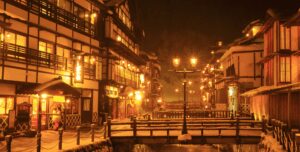
- Walking Through Red Brick Chimneys and White-Walled Corridors — A Journey Conquering All Seven Breweries on Saijo’s “Sake Brewery Street”
- What is the Sake of Saijo, the Sake Capital?
- Recommended Sake Breweries of Saijo
- 1. Kamotsuru Sake Brewing Co., Ltd. | Pioneer of Daiginjo
- 2. Fukubijin Sake Brewing Co., Ltd. | “Saijo Sake Brewing School” That Trained Master Brewers
- 3. Hakubotan Sake Brewing Co., Ltd. | The Oldest Brewery in Saijo, Beloved by Literary Figures
- 4. Saijo Tsuru Brewing Co., Ltd. | A National Registered Tangible Cultural Property Brewery Brewing as One Team
- 5. Kirei Sake Brewing Co., Ltd. | Perfecting Dry Sake in Hiroshima’s Terroir
- Recommended Sake Selection from Saijo
- 1. Kamotsuru (Daiginjo Tokusei Gold Kamotsuru) | Saijo Honmachi, Higashihiroshima
- 2. Fukubijin (Fukubijin Junmai Ginjo) | Saijo Honmachi, Higashihiroshima
- 3. Hakubotan (Hakubotan Junmai Ginjo) | Saijo Honmachi, Higashihiroshima
- 4. Saijo Tsuru (Junmai Daiginjo Genshu Shinzui) | Saijo Honmachi, Higashihiroshima
- 5. Kirei (Kirei Karakuchi Junmai Hachiju) | Saijo Honmachi, Higashihiroshima
- Model Courses for Touring Saijo and Its Sake Breweries
- Course 1 | Half-Day Course to Savor the Essence of the Sake Capital
- Course 2 | Seven-Brewery Tour & Gourmet Exploration Full-Day Course
- Summary
- Frequently Asked Questions
Walking Through Red Brick Chimneys and White-Walled Corridors — A Journey Conquering All Seven Breweries on Saijo’s “Sake Brewery Street”

Table of Contents
- What is the Sake of Saijo, the Sake Capital?
- Recommended Sake Breweries of Saijo
- Recommended Sake Selection from Saijo
- Model Courses for Touring Saijo and Its Sake Breweries
Introduction
Medium-hard water from the underground streams of Mt. Ryuo-zan and the basin’s cool climate. Add two Meiji-era innovations — the “soft water brewing method” established by Miura Senzaburo and the powered rice polishing machine invented by Satake Riichi — and you have what made Saijo in Hiroshima a sake town. On the south side of JR Saijo Station, seven breweries line roughly 1 km of “Sake Brewery Street,” with red brick chimneys and namako-walled storehouses.
This article covers which breweries allow visits and tastings, one signature sake from each, and half-day and full-day model courses.
What is the Sake of Saijo, the Sake Capital?
1 | What is the Sake of Saijo, the Sake Capital?

Saijo’s sake brewing rests on medium-hard water that wells up after passing through the granite layers of Mt. Ryuo-zan. Its minerals promote fermentation by the yeast, giving the sake a firm backbone.
Miura Senzaburo, called “the father of ginjo sake,” turned the handicap of soft water to his advantage: by fermenting the moromi slowly at low temperatures, his “soft water brewing method” produces fine-textured, aromatic sake. This is why Hiroshima sake is called gentle, aromatic “feminine sake,” in contrast to the powerful “masculine sake” of Nada.
The technical foundation for this brewing was Japan’s first powered rice polishing machine, invented by Satake Riichi in 1896. It made precise polishing possible, laying the groundwork for a clean flavor with few off-notes and a ginjo aroma.
2 | A Day on Foot Among Red Brick Chimneys and Namako Walls

Start by picking up the “Sake Brewery Street Walking Map” at the tourist information center at the station, then head for the cluster of red brick chimneys. The street lined with namako-walled storehouses is the old Saigoku Kaido, where feudal lords’ processions once passed.
In the morning, visit “Kamotsuru Sake Brewing,” a daiginjo pioneer, and “Hakubotan Sake Brewing,” the oldest brewery in Saijo. For lunch, a brewery-owned restaurant serves the local specialty “bishu-nabe,” a hot pot simmered in sake.
In the afternoon, you can rest at the Western-style cafe (open weekends and holidays only) of “Kamoizumi Sake Brewing,” a junmai pioneer, over coffee made with brewing water, then enjoy free tastings at dry-sake specialist “Kirei Sake Brewing” and visit “Saijo Tsuru Brewing,” whose buildings are nationally registered tangible cultural properties. See the model courses below for timings.
3 | The Sake Festival and the National Research Institute of Brewing

Every October, the “Sake Matsuri” draws hundreds of thousands of visitors from across Japan. At “Sake Hiroba,” a paid tasting venue, you can taste sake from all over the country, and each brewery holds its own events.
Higashihiroshima City is also home to the National Research Institute of Brewing, Japan’s national research institute for alcoholic beverages. In 2017, the “Saijo Sake Brewing Facilities” were selected as one of “Japan’s 20 Heritage Sites of the 20th Century.”
| Item | Details |
|---|---|
| Location | Saijo, Higashihiroshima City, Hiroshima Prefecture |
| Main Tourist Spots | Saijo Sake Brewery Street, Ochaya Honjin Ruins, Matsuo Shrine, Aki Kokubunji Temple Ruins |
| Sake Spots | Kamotsuru, Fukubijin, Hakubotan, Saijo Tsuru, Kirei, Kamoizumi, Sanyo Tsuru |
| Annual Events | April: “Kura-biraki” at each brewery / October: “Sake Matsuri” |

Recommended Sake Breweries of Saijo
Medium-hard water from Mt. Ryuo-zan, sake rice grown with the basin’s temperature swings, and the skills of Hiroshima master brewers who inherited the soft water brewing method: on this foundation, the seven breweries of Sake Brewery Street each make distinctly different sake. Here are five of them, with details on visits and tastings.
1. Kamotsuru Sake Brewing Co., Ltd. | Pioneer of Daiginjo
Founded in 1873. In 1958, ahead of the rest of the industry, it released the daiginjo “Tokusei Gold Kamotsuru.” It polishes Hiroshima-grown rice in-house and brews elegant, mellow sake with underground water from the Kamo mountain range. The visitor facility “Ichigo-Kura” has exhibits and a paid tasting bar, and its location near the station makes it a good starting point for a brewery tour.
| Item | Details |
|---|---|
| Official Name | Kamotsuru Sake Brewing Co., Ltd. |
| Year Founded | 1873 |
| Main Brands | Daiginjo Tokusei Gold Kamotsuru, Sokaku |
| Tours | Partially available (Ichigo-kura: no reservation needed; brewing facility: reservation required) |
| Tastings | Available (paid) |
| Direct Sales | 9-7 Saijo Honmachi, Higashihiroshima (Ichigo-kura) |
| Access | 3-minute walk from JR Sanyo Main Line Saijo Station |
2. Fukubijin Sake Brewing Co., Ltd. | “Saijo Sake Brewing School” That Trained Master Brewers
Established in 1917 through joint investment by sake brewers from western Japan. Master brewers from across the country came to learn its techniques, earning it the nickname “Saijo Sake Brewing School.” The sake is characterized by “a plump, rich flavor with a clean finish.” The “Ebisu-gura,” marked by the tallest red brick chimney on Sake Brewery Street, is free to visit, and you can drink the brewing water.
| Item | Details |
|---|---|
| Official Name | Fukubijin Sake Brewing Co., Ltd. |
| Year Founded | 1917 |
| Main Brands | Fukubijin, Saijo Sake Brewing School |
| Tours | Partially available (Ebisu-gura) |
| Tastings | Available: paid (tasting server; brewing water also available) |
| Direct Sales | 6-21 Saijo Honmachi, Higashihiroshima (Ebisu-gura) |
| Access | 4-minute walk from JR Sanyo Main Line Saijo Station |
3. Hakubotan Sake Brewing Co., Ltd. | The Oldest Brewery in Saijo, Beloved by Literary Figures
Founded in 1675, this is the oldest brewery in Saijo. Its tradition is a clean, slightly sweet (umakuchi) sake with a crisp finish, and it is known as a favorite of novelist Natsume Soseki and for labels designed by printmaker Munakata Shiko. At the headquarters exhibition room, you can taste sake while viewing Munakata Shiko’s works (closed on public holidays).
| Item | Details |
|---|---|
| Official Name | Hakubotan Sake Brewing Co., Ltd. |
| Year Founded | 1675 |
| Main Brands | Hakubotan, Geiyo Otokoyama |
| Tours | Partially available (headquarters exhibition room) |
| Tastings | Available (headquarters exhibition room) |
| Direct Sales | 15-5 Saijo Honmachi, Higashihiroshima |
| Access | 4-minute walk from JR Sanyo Main Line Saijo Station |
4. Saijo Tsuru Brewing Co., Ltd. | A National Registered Tangible Cultural Property Brewery Brewing as One Team
Founded in 1904. Its original brewery and main house are nationally registered tangible cultural properties. Under a “One Team” system in which all employees, including the owner and not just the master brewer, take part in every step of brewing, it continues to make sake that waits patiently for the moromi’s natural fermentation.
| Item | Details |
|---|---|
| Official Name | Saijo Tsuru Brewing Co., Ltd. |
| Year Founded | 1904 |
| Main Brands | Saijo Tsuru, Shinzui |
| Tours | Available (reservation required, paid tour) |
| Tastings | Available (paid) |
| Direct Sales | 9-17 Saijo Honmachi, Higashihiroshima |
| Access | 4-minute walk from JR Sanyo Main Line Saijo Station |
5. Kirei Sake Brewing Co., Ltd. | Perfecting Dry Sake in Hiroshima’s Terroir
Founded in the mid-Meiji era. In Hiroshima, where sweeter styles dominate, this brewery has consistently made clean, dry sake. The name comes from the longevity saying “Cranes live 1,000 years, turtles 10,000 years.” Slow, low-temperature fermentation gives a sharp finish free of off-flavors. Free tastings are available at the direct sales shop “Mannen-kamesha.”
| Item | Details |
|---|---|
| Official Name | Kirei Sake Brewing Co., Ltd. |
| Year Founded | Mid-Meiji era |
| Main Brands | Kirei |
| Tours | Not available |
| Tastings | Available (free) |
| Direct Sales | 8-18 Saijo Honmachi, Higashihiroshima (Mannen-kamesha) |
| Access | 5-minute walk from JR Sanyo Main Line Saijo Station |
Recommended Sake Selection from Saijo
Hiroshima Prefecture also grows sake rice such as “Hattan Nishiki” and “Senbon Nishiki.” Here is one bottle from each of the five breweries that shows its character.
1. Kamotsuru (Daiginjo Tokusei Gold Kamotsuru) | Saijo Honmachi, Higashihiroshima
Released in 1958, ahead of the industry, this daiginjo is made from carefully polished Hiroshima-grown sake rice, with an elegant aroma and mellow flavor. It contains cherry blossom petal-shaped gold leaf that floats in the cup and is often served at celebrations. It is also known for being served at a dinner during former President Obama’s visit to Japan.
| Item | Details |
|---|---|
| Category | Daiginjo (rice polishing ratio undisclosed) |
| Flavor Profile | Elegant aroma / mellow and smooth |
| Serving Style | Chilled: Excellent / Room temperature: Good |
| Food Pairing | Fried oysters, white fish meuniere, celebratory dishes |
| Where to Buy / Drink | Brewery direct shop, Furansuya restaurant, specialty stores nationwide |
2. Fukubijin (Fukubijin Junmai Ginjo) | Saijo Honmachi, Higashihiroshima
A bottle typical of the brewery nicknamed “Saijo Sake Brewing School.” It has the umami and fullness of rice with a clean, crisp finish you won’t tire of. It goes well with sweet-and-savory home-style dishes.
| Item | Details |
|---|---|
| Category | Junmai Ginjo (rice polishing ratio 60%) |
| Flavor Profile | Full rice umami / clean finish |
| Serving Style | Room temperature: Excellent / Lukewarm: Good |
| Food Pairing | Nikujaga (meat and potato stew), chicken teriyaki, braised pork belly |
| Where to Buy / Drink | Brewery direct shop, specialty stores nationwide |
3. Hakubotan (Hakubotan Junmai Ginjo) | Saijo Honmachi, Higashihiroshima
A traditional, slightly sweet (umakuchi) sake with a gentle aroma and the soft sweetness of rice spreading in the mouth. Pair it with Japanese dishes built on dashi.
| Item | Details |
|---|---|
| Category | Junmai Ginjo (rice polishing ratio undisclosed) |
| Flavor Profile | Gentle aroma / soft sweet |
| Serving Style | Room temperature: Excellent / Body temperature warm: Good |
| Food Pairing | Dashimaki tamago (rolled omelet), simmered dishes, grilled conger eel |
| Where to Buy / Drink | Brewery direct shop, specialty stores nationwide |
4. Saijo Tsuru (Junmai Daiginjo Genshu Shinzui) | Saijo Honmachi, Higashihiroshima
An undiluted junmai daiginjo genshu made from Hiroshima-grown “Senbon Nishiki” polished to 40%. Without added water, it has concentrated rice umami and a gorgeous aroma, and holds its own against rich dishes like roast beef and lean tuna.
| Item | Details |
|---|---|
| Category | Junmai Daiginjo Genshu (rice polishing ratio 40%) |
| Flavor Profile | Gorgeous aroma / concentrated umami and acidity |
| Serving Style | Chilled: Excellent / Room temperature: Good |
| Food Pairing | Roast beef, lean tuna sashimi, sake-steamed sea bream |
| Where to Buy / Drink | Brewery direct shop, online shop, specialty stores |
5. Kirei (Kirei Karakuchi Junmai Hachiju) | Saijo Honmachi, Higashihiroshima
Made from the table rice “Nakate Shinsenbon,” deliberately polished only to 80%, this dry sake keeps the rice’s umami while finishing crisply. It can be enjoyed chilled or hot and pairs easily with a wide range of Japanese dishes, from sashimi and sushi to hot pot.
| Item | Details |
|---|---|
| Category | Junmai (rice polishing ratio 80%) |
| Flavor Profile | Rice umami / sharp dry |
| Serving Style | Chilled: Excellent / Room temp: Excellent / Hot sake: Excellent |
| Food Pairing | Sashimi, sushi, hot pot, grilled fish |
| Where to Buy / Drink | Brewery direct shop, specialty stores nationwide |
Model Courses for Touring Saijo and Its Sake Breweries
All breweries are within walking distance of JR Saijo Station, so you can enjoy tastings without a car. Here are two courses: half-day and full-day.
Course 1 | Half-Day Course to Savor the Essence of the Sake Capital
🕒 Duration: approx. 4h | 🧭 Difficulty: Easy (mostly flat) | 🍶 Tastings: 3-4 breweries

A half-day course comparing dry and sweet sake at three breweries — Kamotsuru, Kirei, and Hakubotan — with the local bishu-nabe for lunch.
| Time | Spot & Experience |
|---|---|
| 10:00 | Start at JR Saijo Station. Pick up the “Town Walking Map” at the 2nd-floor tourist information center. |
| 10:15 | Arrive at Kamotsuru Sake Brewing. Learn about sake brewing history at viewing room “Ichigo-kura” and enjoy paid tastings at the Premium BAR. |
| 11:15 | Head to Kirei Sake Brewing. Free tasting of their famous dry junmai sake at direct sales shop “Mannen-kamesha.” |
| 11:45 | Head to Hakubotan Sake Brewing. Taste traditional sweet sake at Saijo’s oldest brewery. |
| 12:30 | Lunch at Furansuya. Enjoy the famous “Bishu-nabe Set Meal” at this Kamotsuru brewery-owned restaurant. |
| 13:45 | After-lunch coffee at Kugurimon Coffee. Coffee brewed with brewing water and sake sweets for a break. |
| 14:30 | Return to JR Saijo Station and disperse. |
Course 2 | Seven-Brewery Tour & Gourmet Exploration Full-Day Course
🕒 Duration: approx. 7h | 🧭 Difficulty: Moderate (longer walking distance) | 🍶 Tastings: 5-7 breweries

A full-day course visiting all seven breweries on Sake Brewery Street, with lunch at an old-house cafe down a back alley and dinner pairing kaiseki cuisine with sake at a kappo restaurant inside the Sanyotsuru brewery. Sanyotsuru’s shop and the restaurant are closed on Sundays (as of October 2026).
| Time | Spot & Experience |
|---|---|
| 09:30 | Start at JR Saijo Station. Head toward Kamoizumi Sake Brewing at the eastern end. |
| 09:45 | Arrive at Kamoizumi Sake Brewing. Visit the brewery of the junmai sake pioneer (brewery tour reservations suspended as of October 2026) and enjoy the retro atmosphere of “Shusenkan” (open weekends and holidays only). |
| 10:45 | Head to Fukubijin Sake Brewing. Visit “Ebisu-gura,” photograph the tallest chimney in the sake capital, and taste the brewing water. |
| 11:30 | Free tasting of dry junmai sake at Kirei Sake Brewing. |
| 12:00 | Lunch at Cafe Trecasa. Enjoy healthy “seiro-mushi” (steamed dish) at this back-alley traditional house cafe. |
| 13:30 | Head to Saijo Tsuru Brewing. Participate in the paid “Sake Brewery Story Experience Tour” (reservation required) at the nationally registered cultural property, or purchase limited-edition sake at the direct sales shop. |
| 14:30 | Taste traditional sweet sake at Hakubotan Sake Brewing. |
| 15:15 | Paid tasting of premium daiginjo at Kamotsuru’s “Ichigo-kura.” |
| 16:15 | Head to Sanyo Tsuru Sake Brewing at the western end. Enjoy paid tastings at the direct sales shop. |
| 17:30 | Dinner at Kubomachi Kappo Shinsuke. Enjoy authentic kaiseki cuisine paired with sake inside Sanyo Tsuru’s brewery. |
Summary
Seven breweries stand along about 1 km of street, and within a few minutes’ walk you can compare the daiginjo of Kamotsuru, the sweeter Hakubotan, and the dry Kirei — that is what makes Saijo interesting. Tasting availability and reservation requirements differ by brewery, so check each brewery’s latest information before you go.