
🕓 2024/12/23
#Gourmet
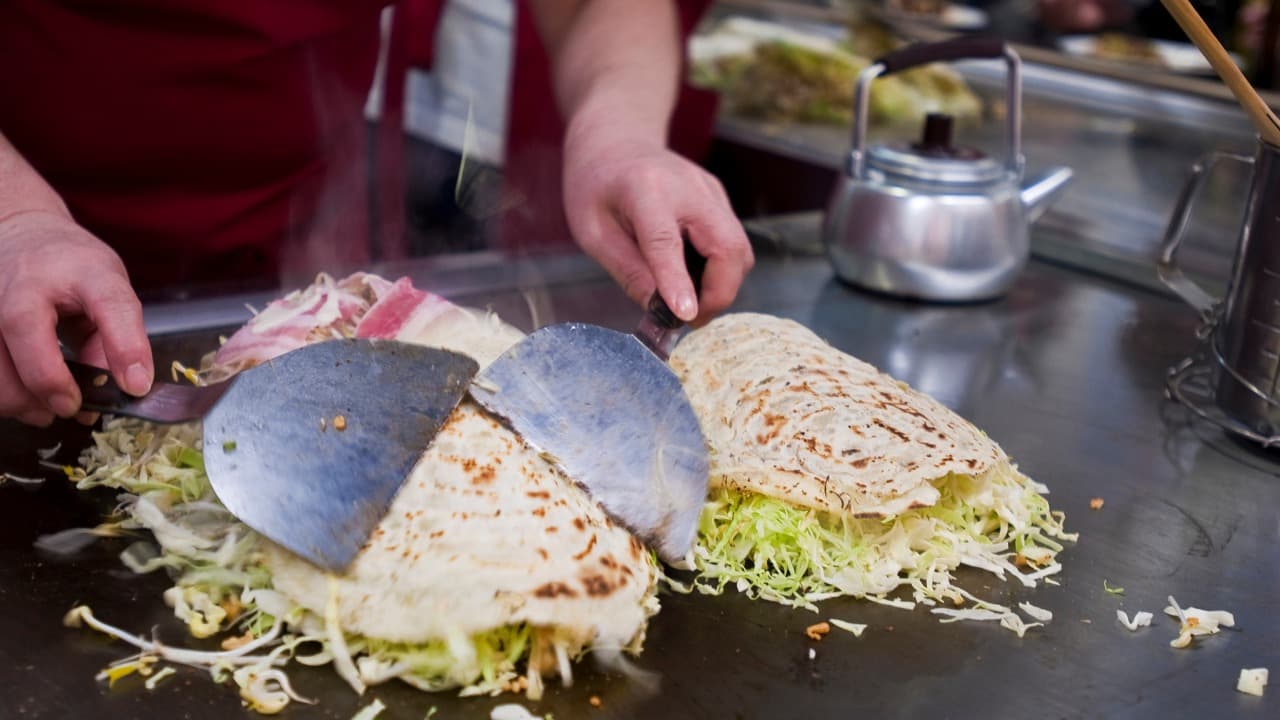
Table of Contents
About Hiroshima Prefecture’s Gourmet Cuisine
Hiroshima Prefecture is blessed with a rich natural environment and beautiful landscapes, and has developed a unique food culture that makes the most of fresh ingredients from the Seto Inland Sea, the Chugoku Mountains, and other natural resources. Thanks to its mild climate and bountiful sea, visitors can enjoy a diverse array of gourmet dishes centered on seafood.
In particular, “Onomichi Ramen,” “Hiroshima-style Okonomiyaki,” and “Shirunashi Tantanmen (Brothless Dan Dan Noodles)” are among the most popular gourmet dishes representing Hiroshima Prefecture. When visiting Hiroshima, be sure to savor these dishes and experience the region’s distinctive food culture.
Top 3 Must-Try Foods in Hiroshima Prefecture
Onomichi Ramen

● The Appeal of Onomichi Ramen
Onomichi Ramen is a local ramen originating from Onomichi City in Hiroshima Prefecture, characterized by its soy sauce-based broth, flat noodles, and distinctive style of floating minced pork back fat on the surface.
The broth is based on chicken stock, with dashi made from small fish caught in the Seto Inland Sea (particularly dried sardines) added to create a deep umami flavor and rich aroma. The minced pork back fat floating on the surface of the broth adds richness to the otherwise light soup, creating a unique taste. The noodles are primarily flat, medium-thin noodles that pair well with the broth and offer an enjoyable texture.
● The History of Onomichi Ramen
Onomichi Ramen has been beloved by locals and tourists for over 80 years. Its origins trace back to the early Showa period when a man named Zhang from Fujian Province, China, made noodles using green bamboo and sold them as “Chinese soba” from a street stall. After the war, Zhu Ajun began serving Chinese-style noodles from a street cart, later establishing a restaurant called “Shukaen.” In this way, Onomichi Ramen has developed through deep ties with local culture and history.
● Where to Eat Onomichi Ramen!!
- Restaurant: Tsutafuji
- Appeal:
Featuring the signature soy sauce-based broth of Onomichi Ramen, combined with chicken stock and seafood dashi, plus the back fat floating on the surface, Tsutafuji achieves a flavor that is light yet rich. Their Chinese-style soba features straight thin noodles topped with homemade chashu, menma, and green onions, served in a seafood-based soy sauce broth generously topped with back fat.
In 2018, the restaurant was featured in the Michelin Guide Hiroshima-Ehime, earning widespread recognition for its excellence. - Access: 15-minute walk from JR Onomichi Station
- Address: 2-10-17 Tsuchido, Onomichi, Hiroshima
- Google Maps: https://maps.app.goo.gl/97Y7bMFFRuLbtGCv6
Hiroshima-style Okonomiyaki
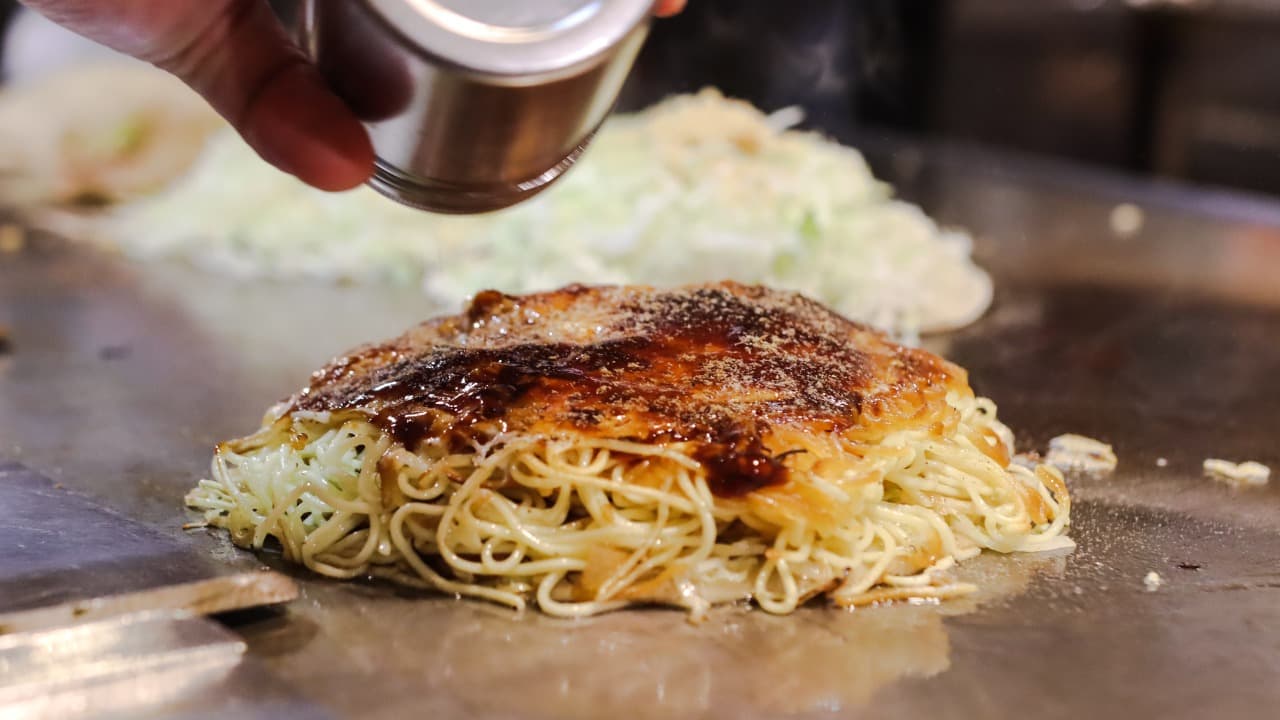
Source: Matsue Waraku Official Website
● The Appeal of Hiroshima-style Okonomiyaki
Hiroshima-style okonomiyaki is made by spreading a thin crepe-like batter of flour and water, then layering generous amounts of cabbage, bean sprouts, pork, and Chinese noodles (yakisoba) on top, and grilling everything together. Finally, an egg is added to bind everything together, creating a hearty yet well-balanced flavor. This layered structure brings out the flavor of each ingredient and allows diners to enjoy a variety of textures.
The special sweet sauce, aonori (green seaweed flakes), and katsuobushi (bonito flakes) drizzled on top further deepen the overall flavor and stimulate the appetite. The rich flavors that unfold with each bite, combined with the crispy exterior and fluffy interior, captivate countless people.
● The History of Hiroshima-style Okonomiyaki
The origin of Hiroshima-style okonomiyaki is said to be “issen yoshoku,” a simple dish from the pre-war era made by thinly cooking flour dissolved in water and topping it with green onions. During the post-war period of material shortages, it evolved as an easy-to-prepare meal, with ingredients such as cabbage, noodles, and pork being added until it approached its current form. Notably, Hiroshima had many steel factories, making iron griddles relatively easy to obtain, which is thought to have contributed to the proliferation of okonomiyaki restaurants.
During the 1950s, more restaurants began operating from converted residential spaces, and noodles and pork were added, furthering the spread of okonomiyaki. Later, around the time of the Hiroshima Carp’s championship victory in the late 1970s, okonomiyaki began appearing in guidebooks and gained nationwide recognition.
● Where to Eat Hiroshima-style Okonomiyaki!!
- Restaurant: Okonomiyaki Micchan Sohonten Hatchobori Main Store
- Appeal:
“Micchan Sohonten Hatchobori Main Store” is a long-established okonomiyaki restaurant representing Hiroshima, known as the originator of Hiroshima-style okonomiyaki, and continues to preserve its taste and tradition. Micchan Sohonten’s okonomiyaki features the traditional Hiroshima style of layering thin batter with generous cabbage, bean sprouts, pork, and yakisoba noodles, all bound together with an egg. The sweet special sauce that accompanies each bite spreads rich umami throughout your palate.
The spacious seating and relaxed atmosphere make it a welcoming space for families, tourists, and locals alike. The live experience of watching okonomiyaki being grilled right before your eyes on the iron griddle is another highlight. - Address: Churis Hatchobori 1F, 6-7 Hatchobori, Naka-ku, Hiroshima, Hiroshima Prefecture
- Access: 4-minute walk from Hatchobori Station
- Google Maps: https://maps.app.goo.gl/h2mw92U9ionnr3ra6
Shirunashi Tantanmen (Brothless Dan Dan Noodles)
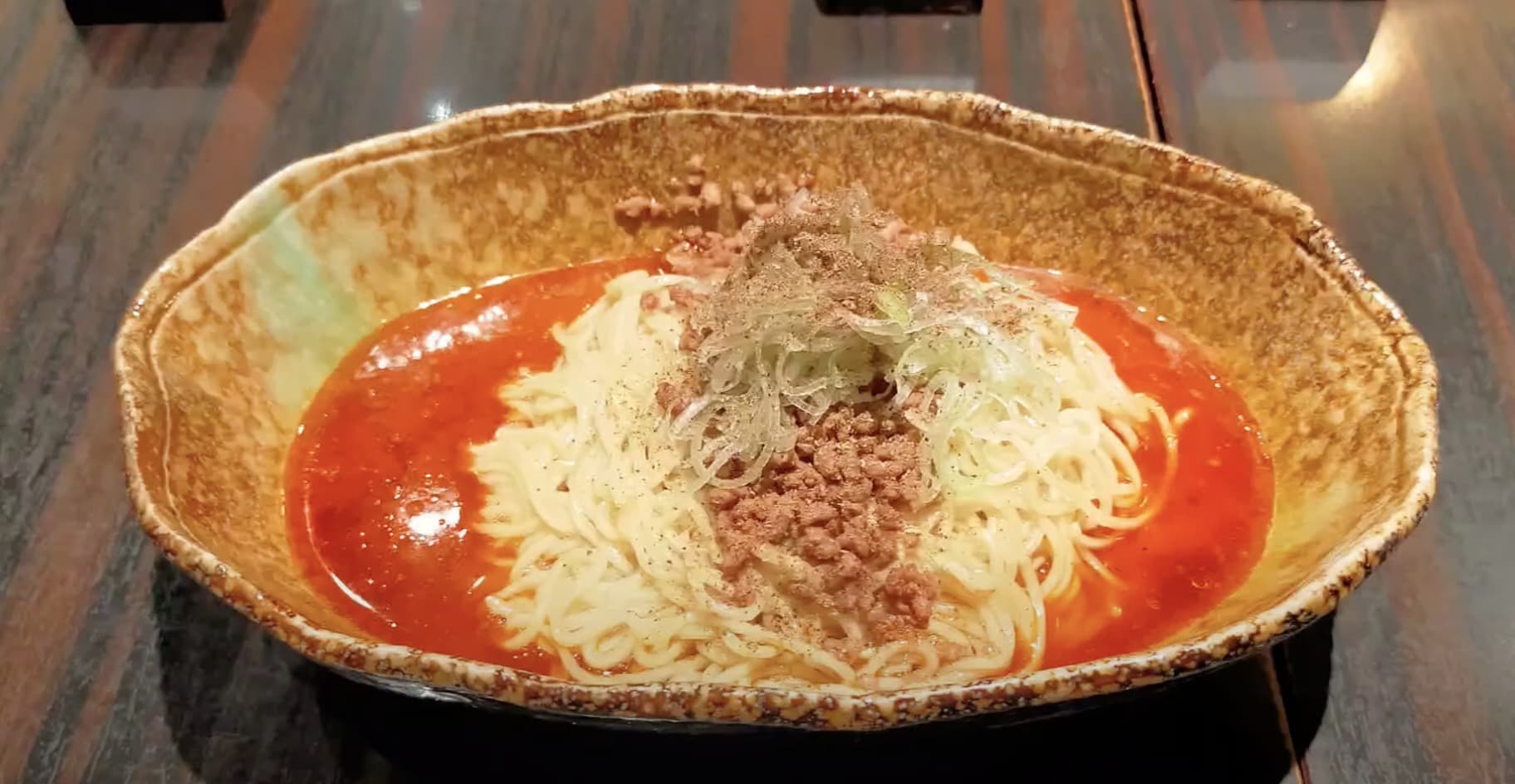
● The Appeal of Shirunashi Tantanmen
Hiroshima’s “Shirunashi Tantanmen” (brothless dan dan noodles) captivates many people with its distinctive flavor and stimulating spiciness. Its greatest feature lies in the deep taste created by the numbing spiciness of Sichuan pepper (huajiao) combined with the heat of chili peppers. The special sauce that coats the noodles offers an exquisite balance of spiciness and umami, earning a reputation as a dish that becomes addictive after just one taste. The addition of toppings such as soft-boiled egg and green onions allows diners to enjoy an even richer flavor experience.
When eating, it is customary to mix the noodles thoroughly about 20 to 30 times immediately after serving. This ensures that the noodles, sauce, and toppings are evenly combined, allowing you to savor the complex and profound flavors. Another popular way to enjoy the dish is “oi-meshi,” where you add rice to the remaining sauce at the bottom of the bowl after finishing the noodles.
● The History of Shirunashi Tantanmen
Shirunashi Tantanmen began attracting attention in Hiroshima in the early 2000s. “King Ken,” a long-established restaurant in Naka-ku, Hiroshima, is known as the pioneer of this dish. The style of coating noodles in a sauce rich with Sichuan pepper heat and fragrant sesame flavors quickly gained popularity among locals.
● Where to Eat Shirunashi Tantanmen!!
- Restaurant: Chuka Soba Kunimatsu
- Appeal:
“Shirunashi Tantanmen Kunimatsu” is a specialty restaurant originating from Hiroshima, captivating many fans with its distinctive taste and authentic style. The Nakamachi branch, located in Nakamachi, Naka-ku, Hiroshima, is beloved by both locals and tourists.
Kunimatsu’s shirunashi tantanmen features carefully selected spices and homemade noodles, with particular attention paid to the texture of the noodles and the chili oil-based sauce, delivering the authentic “Taste of Hiroshima.” The flavor combines the aroma and numbness of Sichuan pepper with the spiciness of chili oil in an exquisite balance, earning a reputation as a dish that becomes irresistible after just one taste. - Address: Shimizu Building 1F, 8-10 Hatchobori, Naka-ku, Hiroshima, Hiroshima Prefecture
- Access: 189m from Tatemachi Station
- Google Maps: https://maps.app.goo.gl/5Pz4f99VyBkiiUrc7