
Introduction
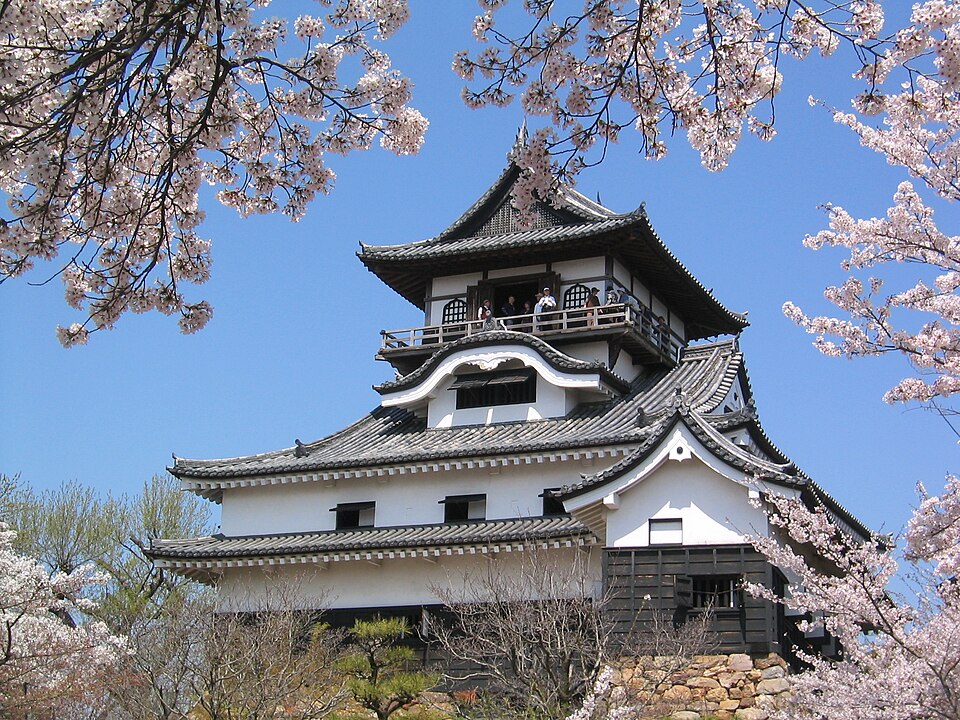
Inuyama Castle stands on Shiroyama hill on the south bank of the Kiso River in Inuyama City, Aichi Prefecture. It is said to have been built around 1537 (Tenbun 6) by Oda Nobuyasu, an uncle of Oda Nobunaga, and the official website describes its keep as “the oldest surviving keep in Japan.” The keep’s construction date is debated (see the history section).
The keep is one of the five castle keeps designated as National Treasures (Himeji, Matsumoto, Hikone, Matsue and Inuyama), and the castle is also known as “Hakutei-jo” (White Emperor Castle).
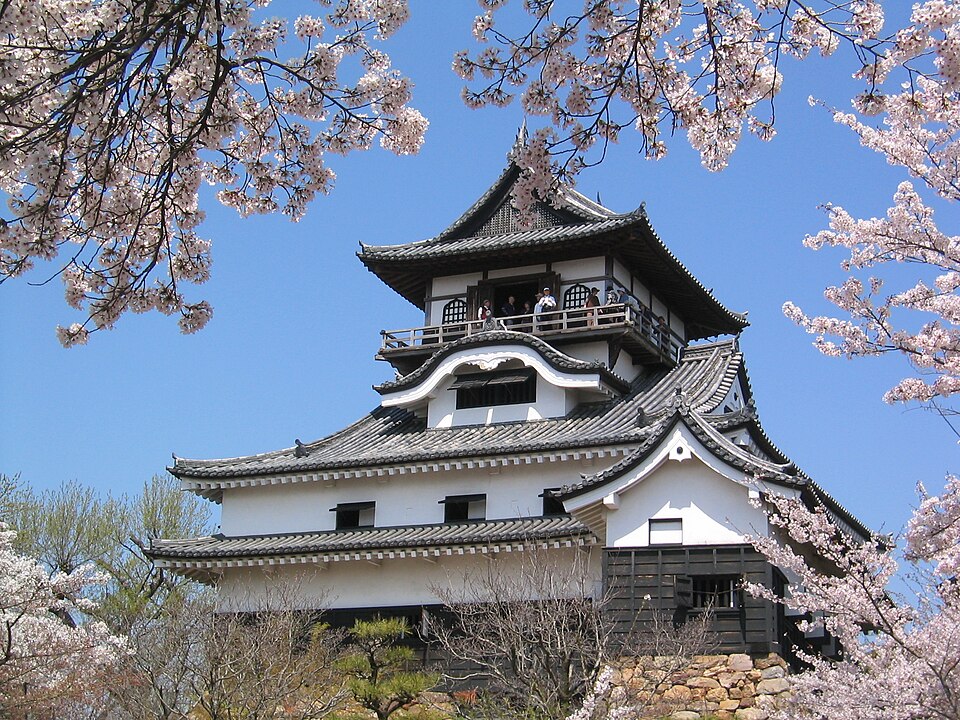
Overview of Inuyama Castle
| Official Name | Inuyama Castle (Inuyama-jo) |
|---|---|
| Alternate Name | Hakutei-jo (White Emperor Castle) |
| Location | 65-2 Inuyama Kitakoken, Inuyama City, Aichi Prefecture |
| Castle Type | Hilltop castle (hirayama-jiro) |
| Year Built | c. 1537 (Tenbun 6) |
| Keep | Original surviving keep (3 stories, 4 floors, 2 basement levels; National Treasure) |
| Opening Hours | 9:00–17:00 (last entry at 16:30) |
| Admission | General: 1,000 yen (as of September 2026) |
| Closed | December 29–31 |
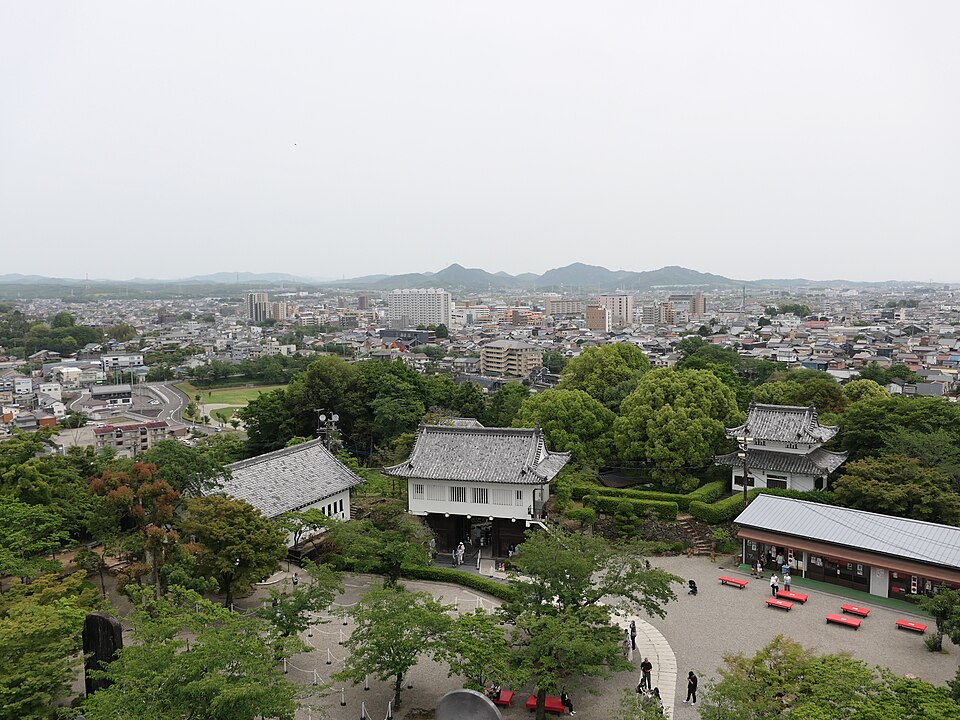
Shiroyama hill rises to about 85 meters above sea level (according to the Inuyama Castle Hakutei Bunko Foundation). Its back drops as a cliff to the Kiso River, and the enclosures and main approach were laid out on the southern slope — a “ushiro-kengo” castle protected from behind. The keep is about 24 meters tall including its 5-meter stone base. It is a watchtower-style keep with three roof tiers, four floors and two basement levels; because the third floor sits inside the hip-and-gable roof, it looks like three stories from outside. Only the keep survives among the old buildings, but the layout of the enclosures and the stone walls remain, and in 2018 the grounds were designated a National Historic Site as “Inuyama Castle Ruins.”
Until March 2004 it was the only privately owned castle in Japan; it is now owned by the Inuyama Castle Hakutei Bunko Foundation, to which the Naruse family donated it in April 2004.

History of Inuyama Castle
Construction by the Oda Clan and the Turmoil of the Sengoku Period (16th Century)
Inuyama Castle is said to have begun when Oda Nobuyasu moved his castle here from Kinoshita Castle. Surveys during the Showa-era restoration (1961–65) long suggested the keep started with two stories and was later enlarged, but recent tree-ring dating of its timbers has produced a theory that it was built around 1590 with its present three tiers and four floors from the start.
Because it controlled routes to the Nakasendo and Kiso Kaido and traffic on the Kiso River, the castle changed hands again and again throughout the Sengoku period.
When Nobuyasu’s son Nobukiyo defied Nobunaga, Nobunaga captured the castle in 1565, and in 1570 Ikeda Tsuneoki, Nobunaga’s foster brother, became its lord. In the Battle of Komaki and Nagakute in 1584, Tsuneoki, now on Hideyoshi’s side, crossed the Kiso River and seized the castle, and Hideyoshi entered it.
The Edo Period — Seat of the Naruse Family (17th–19th Century)
After the Battle of Sekigahara (1600), Ogasawara Yoshitsugu of Ieyasu’s side took over, and in 1617 Naruse Masanari, a senior retainer attached to the Owari Domain, received Inuyama Castle from Shogun Tokugawa Hidetada. The Naruse family then held the castle for nine generations until the end of the Edo period.
The keep is said to have taken its present form through renovations in Masanari’s time, and the cusped karahafu gables on the north and south sides of the third floor are also attributed to the Naruse family.
When domains were abolished in 1871, the castle passed to Aichi Prefecture and almost every building except the keep was torn down. Then the 1891 Nobi Earthquake left the keep half-destroyed.
A Privately Owned National Treasure — Inuyama Castle in the Modern Era (20th–21st Century)
In 1895 the prefecture gave the keep to the former lords, the Naruse family, on condition that they repair it, and the family and the people of Inuyama raised donations to restore it. The keep was designated a National Treasure in 1935 and re-designated under the Law for the Protection of Cultural Properties in 1952.
Highlights and Recommended Spots
Inside the National Treasure Keep
At the keep entrance you take off your shoes and carry them in a bag. You enter at the second basement level inside the stone base and climb steep stairs up to the fourth floor. On the first floor, four central rooms are surrounded by a musha-bashiri corridor, and weapon racks remain on the second floor.
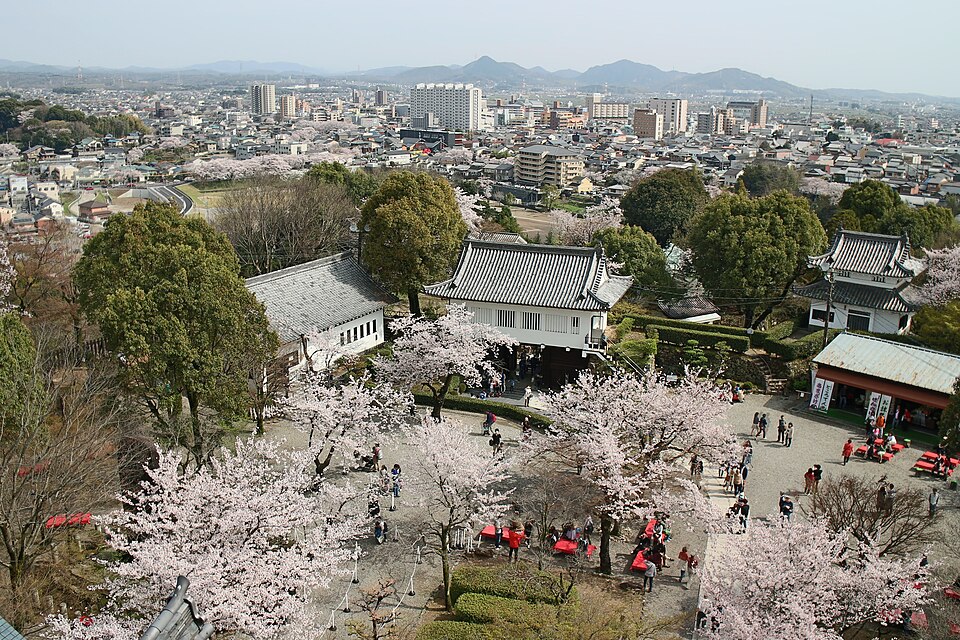
The fourth floor is a lookout ringed by a railing and an outdoor gallery (mawarien), from which you can see the Kiso River and the Nobi Plain. The railing is low, so take care if you are uneasy with heights.
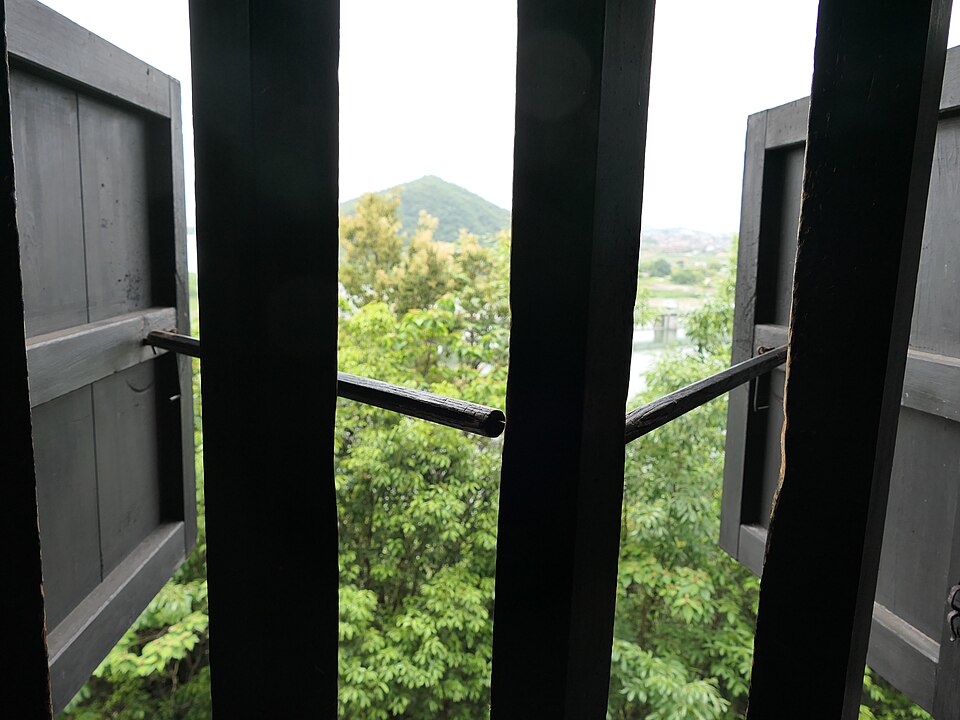
The Kiso River and Inuyama Castle in Harmony
The castle stands on the south bank of the Kiso River, and from Inuyama Bridge or the opposite bank in Kakamigahara you can photograph the keep rising above the river.
Kiso River cormorant fishing (ukai) runs from June 1 to October 15. According to the operator it is a 1,300-year-old fishing tradition; besides the evening sessions with the castle in the background, it also offers daytime cormorant fishing, which it says is held nowhere else in Japan.
The Castle Town of Inuyama
The castle town around Honmachi Street keeps its Edo-period street layout, lined with cafes and snack shops in converted machiya townhouses. Gohei-mochi and Inuyama genkotsu candy are local specialties.
- Honmachi Street — The main street of the castle town; a go-to spot for street food and cafe-hopping
- Donden-kan — A facility exhibiting the festival floats (yama) of the Inuyama Festival
- Castle and Town Museum — Introduces the history of Inuyama Castle and its castle town
- IMASEN Inuyama Karakuri Museum — See the mechanical puppet dolls of the Inuyama Festival up close
Inuyama Festival (UNESCO Intangible Cultural Heritage)
The Inuyama Festival is the festival of Haritsuna Shrine. It has been held since 1635 (Kan’ei 12), on the first Saturday of April and the following Sunday. Thirteen floats (yama) present karakuri puppet performances, and at night the lantern-lit floats (yoyama) parade through the castle town. The float event was designated a National Important Intangible Folk Cultural Property in 2006 and inscribed in 2016 on UNESCO’s Intangible Cultural Heritage list as one of the “Yama, Hoko, Yatai” float festivals.
Nearby Attractions
Atsuta Shrine
Atsuta Shrine in Atsuta Ward, Nagoya, enshrines the sacred sword Kusanagi no Tsurugi, one of the Three Imperial Regalia.
Nagoya Castle
Nagoya Castle is a flatland castle built on Tokugawa Ieyasu’s orders; the wall paintings of its reconstructed Honmaru Palace are the highlight. It makes an interesting contrast with Inuyama’s hilltop keep.
Access Information
By Train
The castle is about a 15-minute walk from Inuyama-Yuen Station or about 20 minutes from the west exit of Inuyama Station on the Meitetsu Inuyama Line. Inuyama Station is about 25 minutes from Meitetsu Nagoya Station.
By Car
About 25 minutes from Komaki IC on the Meishin Expressway. Paid parking, including Inuyama Castle Parking Lot No. 1, is available at the foot of the castle (check the official website for fees). The area gets congested during cherry blossom season and the Inuyama Festival.
Conclusion
Other National Treasure keeps are covered in our articles on Himeji Castle and Matsumoto Castle, and the basics of castles in our article on Japanese castle culture.


