- Introduction
- Overview of Myoshin-ji
- History of Myoshin-ji
- 1. Nanbokucho Period (1342): Emperor Hanazono’s Wish—From Imperial Villa to Zen Temple
- 2. Muromachi to Sengoku Period: Suppression and Revival—A Temple of Indomitable Zen Spirit
- 3. Azuchi-Momoyama to Early Edo: Warriors and Myoshin-ji—The Surge of Sub-Temples
- 4. Meiji to Showa: Waves of Modernization and Zen Culture’s Preservation
- 5. Modern Era: A Zen Training Center Open to the World
- Highlights and Recommended Spots
- 1. Dharma Hall Cloud Dragon Painting—Kano Tanyu’s “Dragon That Glares in All Eight Directions”
- 2. Taizo-in—Two Contrasting Garden Beauties
- 3. Akechi Bath—A Steam Bath Conveying Sengoku Tragedy
- 4. Buddha Hall and Sanmon—The Central Axis Distilling Zen Architecture
- 5. Zazen and Sutra-Copying—Touching the Heart of Zen
- Nearby Attractions
- Access
- Summary
- Frequently Asked Questions
Introduction
Walking through the quiet residential streets of Hanazono in Kyoto’s Ukyo Ward, the view suddenly opens up to reveal a vast temple complex of white walls and tiled roofs. This is Myoshin-ji—Japan’s largest Zen temple. Stepping inside the grounds, the sounds of cars and bustle fade away, replaced only by the crunch of your footsteps on gravel and the whisper of pine needles in the breeze—a true “other world” unfolds before you.
Myoshin-ji is the head temple of the Myoshin-ji branch of Rinzai Zen, the largest Zen Buddhist denomination in Japan with approximately 3,400 affiliated temples nationwide. Its grounds span approximately 330,000 square meters (about 7 Tokyo Domes), with 46 sub-temples lined up like a small town. No other Zen temple of this scale exists anywhere in the world. The “Cloud Dragon” painting on the Dharma Hall ceiling by Kano Tanyu is known as the “Dragon That Glares in All Eight Directions”—its expression appearing to change depending on your viewing angle—and has captivated visitors for over 360 years.
This article provides a comprehensive guide to Myoshin-ji, tracing its history from Emperor Hanazono’s imperial villa to the present, covering must-see highlights, nearby attractions, and access information. Let us share the full charm of this magnificent temple where the spirit of Zen lives on.
Overview of Myoshin-ji
Myoshin-ji is the head temple of the Myoshin-ji branch of Rinzai Zen Buddhism, located in Hanazono, Ukyo-ku, Kyoto. Its formal name is “Shobozan Myoshin Zenji.” The mountain name is “Shobozan,” the founding priest was Kanzan Egen (Muso Daishi), and the founder was Retired Emperor Hanazono.
| Official Name | Shobozan Myoshin Zenji |
|---|---|
| Location | 1 Hanazono Myoshinji-cho, Ukyo-ku, Kyoto |
| Sect | Head Temple, Myoshin-ji Branch of Rinzai Zen |
| Principal Image | Shaka Nyorai (Shakyamuni Buddha) |
| Founding Priest | Kanzan Egen (Muso Daishi) |
| Founder | Retired Emperor Hanazono |
| Established | 1342 (Ryakuo 5 / Ko’ei 1) |
| Visiting Hours | 9:10–15:40 (Dharma Hall & Akechi Bath tours) |
| Admission | Dharma Hall & Akechi Bath: Adults ¥700 / Taizo-in: Adults ¥600 |
| Closed | Dharma Hall closed on some event days |
| Phone | 075-463-3121 |
*Please check the official Myoshin-ji website for the latest visiting hours and fees.
Myoshin-ji is the head temple of the largest among the fourteen Rinzai Zen branches, with approximately 3,400 affiliated temples and about 7,000 registered monks nationwide. This represents over half of all Rinzai Zen temples, earning it the title of “the mainstream of Rinzai Zen.” Forty-six sub-temples dot the grounds, many housing National Treasures and Important Cultural Properties. Taizo-in, Keishun-in, and Daishin-in are open year-round, with additional sub-temples offering seasonal special openings.
One of Myoshin-ji’s defining characteristics is the austere spirit of Zen that pervades the entire grounds. Unlike the opulent splendor of Kinkaku-ji or the supreme Gozan prestige of Nanzen-ji, Myoshin-ji retains a strong sense of strictness as a “place of training.” Despite being conveniently located just a 5-minute walk from JR Sagano Line’s “Hanazono Station,” it remains relatively uncrowded—a hidden gem where you can quietly immerse yourself in the world of Zen.
History of Myoshin-ji
1. Nanbokucho Period (1342): Emperor Hanazono’s Wish—From Imperial Villa to Zen Temple
Myoshin-ji’s origins trace back to the turbulent Nanbokucho period. This site originally held the imperial villa “Hagiwaradono” of the 95th Emperor, Emperor Hanazono (1297–1348). After abdicating in 1318 as a Jimyoin-line emperor, Hanazono devoted himself deeply to scholarship and Buddhism, with particular interest in Zen. In his later years, he took the tonsure and became a retired emperor (hoo).
The decisive encounter that awakened Hanazono to Zen was with Shuho Myocho (Daito Kokushi) of Daitoku-ji. Deeply devoted to Myocho’s rigorous Zen, Hanazono invited Myocho’s recommended disciple Kanzan Egen (1277–1360) as founding priest and converted the villa into a Zen temple in 1342. This was the beginning of Myoshin-ji.
Founding priest Kanzan Egen is a legendary Zen monk said to have lived among farmers in Ibuka, Mino Province (present-day Gifu Prefecture). Even after enlightenment, he sought neither fame nor fortune, continuing Zen practice while leading oxen and tilling fields. Reluctantly answering Hanazono’s repeated invitations, he came to Kyoto to become Myoshin-ji’s founder, and his simple, strict Zen style has been inherited as the fundamental spirit of Myoshin-ji to this day. Hanazono bestowed the mountain name “Shobozan” and the temple name “Myoshin-ji”—”Myoshin” meaning “the Buddha’s heart is wondrous.”
2. Muromachi to Sengoku Period: Suppression and Revival—A Temple of Indomitable Zen Spirit
Myoshin-ji’s history was tumultuous from its very beginning. Founding priest Kanzan Egen passed away in 1360, and soon after, Myoshin-ji faced an existential crisis. In 1399, the third Muromachi shogun Ashikaga Yoshimitsu confiscated Myoshin-ji’s temple lands, citing involvement in the Ouchi Yoshihiro rebellion (Oei Rebellion). He further stripped the temple’s rank, effectively reducing Myoshin-ji to an abandoned state. In his policy of elevating his favored Shokoku-ji within the Gozan system, the non-Gozan Myoshin-ji became an easy target.
Yet Myoshin-ji’s monks never yielded. Through approximately 30 years of suppression, monks including Nippo Soshun and Giten Gensho kept the flame of dharma burning. In 1432, under the sixth shogun Ashikaga Yoshinori, temple lands were finally returned, and Myoshin-ji began its path to revival. This experience of suppression and revival forged the independent, indomitable spirit that defines Myoshin-ji.
During the Sengoku period, Myoshin-ji deepened its ties with warriors. The Hosokawa, Takeda, Oda, and other powerful clans successively built sub-temples, rapidly expanding the temple grounds. Notably, Myoshin-ji chose the path of “rinka” (independent Zen), distinctly separate from the shogunate-patronized “Gozan” temples. This stance of maintaining a pure training center without depending on political patronage resonated with many warriors.
3. Azuchi-Momoyama to Early Edo: Warriors and Myoshin-ji—The Surge of Sub-Temples
From the Azuchi-Momoyama through early Edo period, Myoshin-ji achieved dramatic growth. The monks of Kaisen Joki’s dharma lineage contributed most to this era’s expansion. Kaisen Joki was a high priest who received the devotion of Takeda Shingen. He met a tragic end in 1582 during Oda Nobunaga’s Koshu campaign at Erin-ji, famously declaring “Zen meditation need not seek mountains and water; when the mind is extinguished, fire itself becomes cool” before entering the flames.
His disciples scattered across the country, spreading the Myoshin-ji branch under the patronage of regional lords. Toyotomi Hideyoshi’s principal wife Kitanomandokoro (Nene) was also deeply connected to Myoshin-ji, involved in founding the sub-temple Tenkyuin. The “Akechi Bath” within the grounds was built by priest Misso, uncle of Akechi Mitsuhide, to pray for Mitsuhide’s soul after the Honno-ji Incident. This steam bath remains open as one of Myoshin-ji’s notable features.
In the Edo period, successive donations from Tokugawa Ieyasu and other shoguns and daimyo raised the number of sub-temples to over 60 at peak. In 1636, the Dharma Hall was rebuilt, and Kano Tanyu completed his “Cloud Dragon” ceiling painting after approximately 8 years of work. This ceiling painting, approximately 12 meters in diameter, has been preserved as Myoshin-ji’s greatest treasure. During this period, Myoshin-ji established itself as “the Rinzai among the Rinzai,” with affiliated temple numbers overwhelming all other Rinzai branches.
4. Meiji to Showa: Waves of Modernization and Zen Culture’s Preservation
The Meiji Restoration brought great trials to Myoshin-ji. The anti-Buddhist movement severely damaged temples nationwide. Myoshin-ji’s temple lands were confiscated and some sub-temples were abolished, but the main buildings were protected. This was possible because Myoshin-ji’s “rinka” tradition of self-sufficient operation through monks’ training and alms-gathering, rather than excessive dependence on political patronage, had been maintained.
From the Meiji era, Myoshin-ji also took on a role as a modern educational institution. In 1880, Hanazono Gakurin (predecessor of today’s Hanazono University) was established as a center for Zen education and research. Hanazono University remains near Myoshin-ji today, known as a world-class center of Zen studies.
During the Showa era and World War II, Myoshin-ji’s grounds fortunately escaped war damage. Kyoto being spared from air raids meant the Dharma Hall’s Cloud Dragon painting and many other cultural properties were safely preserved. In the postwar period, buildings including the Dharma Hall and Buddha Hall were designated Important Cultural Properties, and surveys and protection of sub-temple art continued.
5. Modern Era: A Zen Training Center Open to the World
Today’s Myoshin-ji continues as both the religious center overseeing approximately 3,400 affiliated temples as the head of Rinzai Zen’s largest branch, and as a base for sharing Zen culture with the world. Within the grounds, unsui (training monks) continue rigorous daily practice of zazen, samu (work practice), and takuhatsu (alms rounds)—Zen daily life unchanged for over 600 years.
Zen experience programs for the public include zazen and sutra-copying. The zazen sessions at sub-temple Taizo-in, where you can touch the Zen spirit while viewing beautiful gardens, are particularly popular. English-language support for international visitors is gradually being developed, with systems being established to welcome overseas Zen practitioners.
In recent years, preservation and restoration of cultural properties including the Dharma Hall’s Cloud Dragon painting continues. Each of the 46 sub-temples possesses distinctive gardens and artwork, and seasonal special openings offer opportunities to view normally closed cultural properties. Myoshin-ji takes pride in its identity as a “living training center” that conveys the essence of Zen rather than touristic glamour. Annual visitor numbers are trending upward, and Myoshin-ji has become an essential destination for travelers seeking “quiet Kyoto.”
Highlights and Recommended Spots
Here are the must-see spots at Myoshin-ji. Take your time exploring the many treasures scattered across the vast grounds.
1. Dharma Hall Cloud Dragon Painting—Kano Tanyu’s “Dragon That Glares in All Eight Directions”
The absolute must-see at Myoshin-ji is the “Cloud Dragon” painting on the Dharma Hall ceiling. This masterwork by the early Edo genius painter Kano Tanyu (1602–1674), completed over approximately 8 years, depicts a powerful dragon within a circle approximately 12 meters in diameter.
The painting’s most remarkable feature is the mysterious visual effect known as the “Dragon That Glares in All Eight Directions.” As you move through the Dharma Hall looking up at the dragon, its eyes appear to follow you. From the right, the left, or straight on—the dragon always seems to be watching you. This extraordinary technique results from Tanyu’s exceptional artistic skill and masterful use of perspective. Guides illuminate the ceiling with flashlights during the tour, allowing you to clearly observe the changing effects.
The Dharma Hall itself is impressive architecture. Built in 1636 and designated an Important Cultural Property, it preserves the solemn Zen-style construction. Inside, the principal Shaka Nyorai statue is enshrined, forming a magnificent religious space together with the ceiling’s Cloud Dragon. Visits are conducted as 20-minute guided tours, so plan to allow extra time.
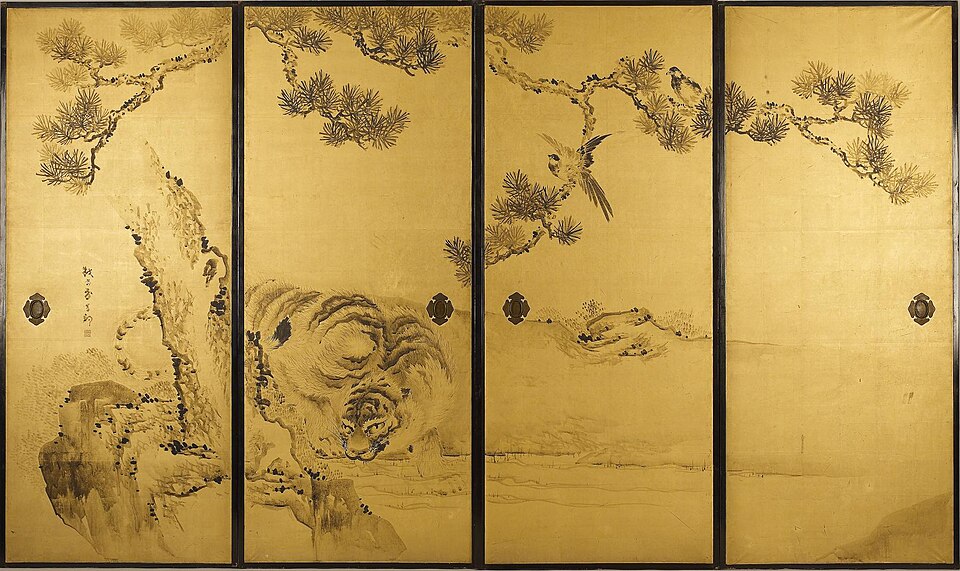
2. Taizo-in—Two Contrasting Garden Beauties
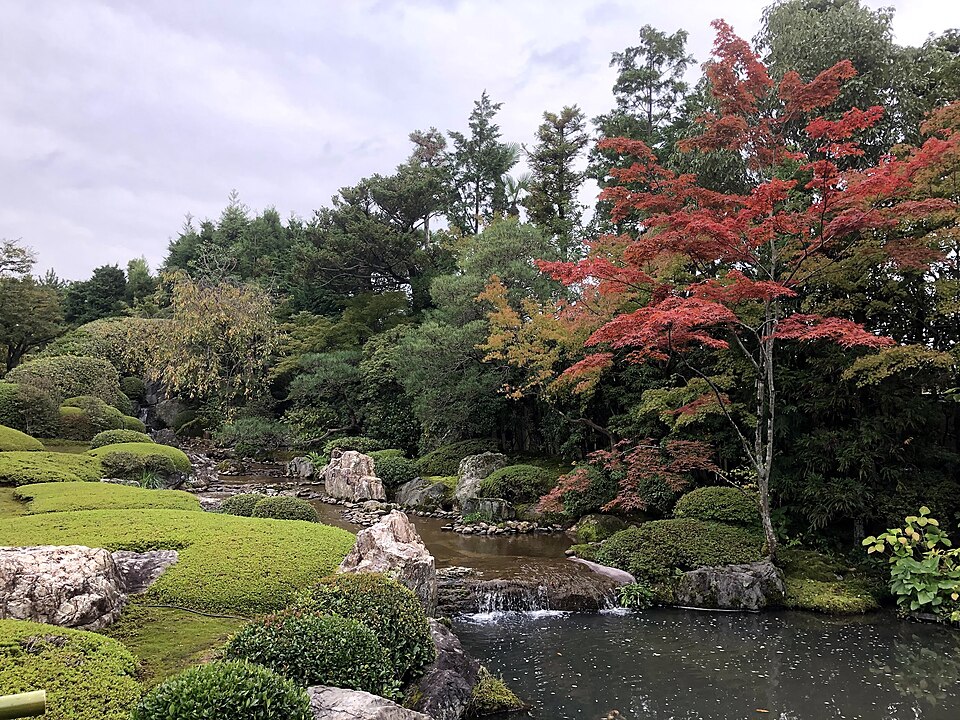
The most popular among Myoshin-ji’s 46 sub-temples is Taizo-in. Founded in 1404 with Muin Soin Zenji as founding priest, it is known for possessing two contrasting gardens.
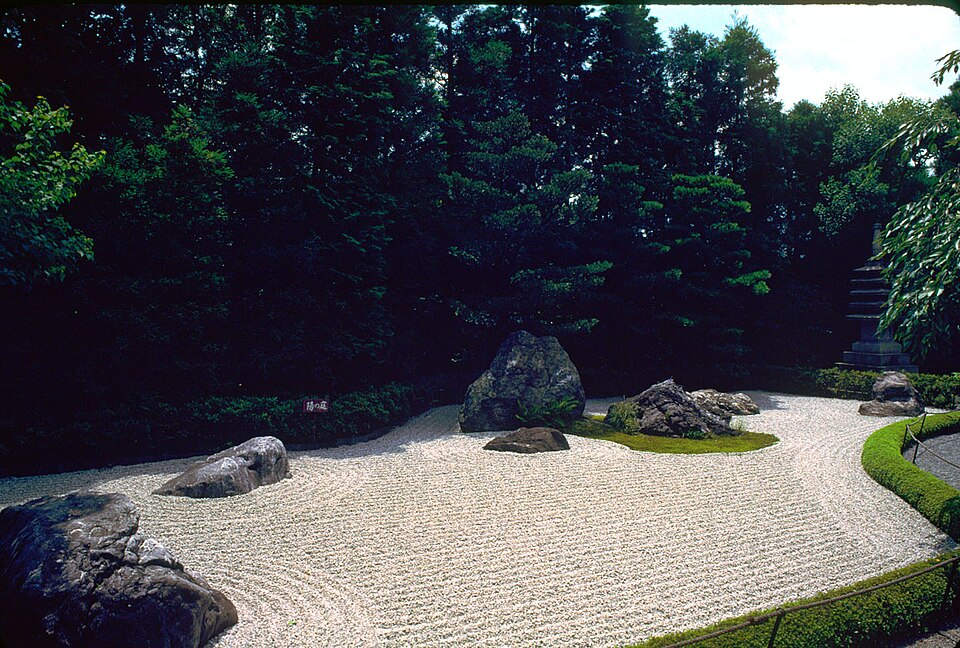
Near the entrance is the karesansui garden “Motonobu’s Garden,” attributed to the Muromachi-era painter-monk Kano Motonobu. Designated a National Historic Site and Place of Scenic Beauty, this garden expressing landscape through white sand and stone arrangements shows compositional beauty as if the Kano school’s painting style had been realized in three dimensions. Sitting on the Hojo veranda, contemplating the “ink painting without water” created by stones and sand in silence—this is meditation itself.
Deeper within the grounds spreads the pond-strolling garden “Yokoen.” Created in 1963 by Nakane Kinsaku, this garden features weeping cherries, maples, lotus, and wisteria adding seasonal color, showing a vibrancy contrasting with the karesansui’s stillness. The spring weeping cherry is particularly spectacular, with pale pink blossoms cascading like waterfalls from the branches. Taizo-in is highly regarded alongside Ryoan-ji’s rock garden as one of Kyoto’s premier Zen gardens.
3. Akechi Bath—A Steam Bath Conveying Sengoku Tragedy
Within Myoshin-ji’s grounds stands a rare historical structure from the Sengoku period—the “Akechi Bath.” This is a steam bath said to have been built by priest Misso, Akechi Mitsuhide’s uncle, to pray for Mitsuhide’s soul after his violent death following the Honno-ji Incident.
This bath differs entirely from modern baths—it’s a steam bath where steam is sent from beneath the floor, essentially a Japanese-style sauna. Inside is a dressing area called the “agari no ma,” offering a glimpse into monks’ bathing customs. In Zen temples, bathing was not merely hygiene but part of the training to purify body and spirit. The bathing ritual called “kaiyo” had detailed protocols and was to be performed in silence.
The Akechi Bath is included in the guided tour with the Dharma Hall’s Cloud Dragon. A uniquely Myoshin-ji spot where you can simultaneously learn about Sengoku drama and Zen training culture. A must for Mitsuhide fans and history enthusiasts.
4. Buddha Hall and Sanmon—The Central Axis Distilling Zen Architecture
Myoshin-ji’s grounds follow the classic “Seven-Hall” Zen temple layout with main buildings aligned on a straight north-south axis. From south to north: Sanmon, Buddha Hall, Dharma Hall, Shindo, and Great Hojo aligned in a row—a layout faithfully inheriting the Chinese Zen temple model.
The Sanmon, built in 1599 and designated an Important Cultural Property, is a majestic two-story gate approximately 16 meters tall, housing a Kannon Bodhisattva and Sixteen Arhats on the upper level. Normally closed, the upper level occasionally opens for special viewing. Through the Sanmon, the Buddha Hall appears ahead, rebuilt in 1827, housing the principal Shaka Nyorai statue.
Walking along this north-south axis, sub-temples line up neatly on both sides, creating the sensation of strolling through a Zen training “town.” Early mornings, walking through morning mist, the stone approaches and white-walled sub-temples create a magical scene. Did you know this temple layout is said to be based on feng shui principles, designed so “qi” flows from the southern Sanmon toward the northern Hojo? This central axis walk is where you most fully feel Myoshin-ji’s grandeur.
5. Zazen and Sutra-Copying—Touching the Heart of Zen
When visiting Myoshin-ji, we highly recommend trying zazen or sutra-copying. As the head temple of Rinzai Zen’s largest branch, Myoshin-ji offers Zen experience programs open to the public for an authentic encounter with the Zen world.
Zazen sessions at the main temple are held in the Great Hojo or dedicated zazen hall. Even beginners receive careful instruction in zazen etiquette. Cross your legs, straighten your spine, focus on your breath—even just 15 minutes of zazen, as daily thoughts dissolve and a mysterious stillness fills your heart, is an extraordinary experience. Those who wish may receive the keisaku (the stick struck on the shoulders), whose sharp sound and impact sweep away distraction in an instant.
At sub-temples Taizo-in and Daishin-in, sutra-copying while viewing gardens is also popular. Carefully copying the Heart Sutra character by character with ink and brush is truly “moving meditation.” At Taizo-in, you can stroll the garden after copying, savoring the lingering Zen atmosphere while enjoying beautiful scenery—a luxurious way to spend time. A Zen experience at Myoshin-ji delivers a deep sense of fulfillment that sightseeing alone cannot provide.
Nearby Attractions
1. Ryoan-ji—The World-Captivating Mystery of the Rock Garden
About a 10-minute walk north of Myoshin-ji is the UNESCO World Heritage-listed Ryoan-ji. Its Hojo rock garden, considered the supreme karesansui masterpiece, features 15 stones on white sand in a simple composition, yet is famously designed so that all 15 can never be seen simultaneously from any angle.
Myoshin-ji and Ryoan-ji share a close historical relationship. Ryoan-ji was originally founded as a sub-temple of Myoshin-ji and still belongs to the Rinzai Myoshin-ji branch. After exploring Myoshin-ji’s vast grounds, quietly meditating before Ryoan-ji’s rock garden makes an ideal course for deeply savoring the Zen world. Ryoan-ji’s Kyoyochi Pond area also shows beauty in all seasons, with early summer water lilies being particularly special.
2. Kinkaku-ji—The Golden Symbol of Kitayama Culture
About 1.5 kilometers northeast and 10 minutes by bus from Myoshin-ji is Kyoto’s iconic Kinkaku-ji (Rokuon-ji). Originating as Ashikaga Yoshimitsu’s Kitayama Villa, the gold-leaf-covered Shariden reflected in Kyokochi Pond is a landscape synonymous with Kyoto.
Myoshin-ji’s austere Zen beauty versus Kinkaku-ji’s magnificent Kitayama culture—visiting both on the same day reveals the multifaceted nature of Muromachi-era Kyoto culture. The “Kinukake-no-Michi” walking path connects Myoshin-ji, Ryoan-ji, and Kinkaku-ji, making it possible to visit all three in one day. This is one of Kyoto sightseeing’s “Golden Routes” that we highly recommend.
3. Arashiyama—Where Nature and Culture Merge in Western Kyoto
Just one JR Sagano Line station (about 5 minutes) from Myoshin-ji, Arashiyama is one of Kyoto’s premier tourist areas, famous for the Togetsukyo Bridge and bamboo grove. The view of Arashiyama from the bridge over the Katsura River has been loved by aristocrats since the Heian period, with spring cherry blossoms and autumn foliage offering breathtaking beauty.
Visiting Arashiyama after Myoshin-ji’s Zen experiences offers a luxurious Kyoto day—transitioning from Zen stillness to nature’s grandeur. The bamboo grove’s rustling sounds complement the Zen afterglow from Myoshin-ji. With Tenryu-ji and Nonomiya Shrine among Arashiyama’s attractions, it’s ideal for a full day exploring western Kyoto.
Access
By Train
The most convenient access is the JR Sagano Line (San’in Main Line). Get off at JR “Hanazono Station,” about 5 minutes walk to Myoshin-ji’s south main gate. From Kyoto Station to Hanazono Station is about 10 minutes, ¥200. The Keifuku Electric Railway Kitano Line (Randen) “Myoshinji Station” also provides access in about 3 minutes on foot. Convenient when coming from the Arashiyama direction.
By Bus
Kyoto City Bus Route 26 (from Kyoto Station) to “Myoshinji Kitamonmae” or “Myoshinji-mae” bus stop, about 30-40 minutes. Routes 91 and 93 also provide access. Buses may be crowded depending on season and time, so allow extra time.
By Car
About 30 minutes from “Kyoto-Minami IC” on the Meishin Expressway. Myoshin-ji has free visitor parking, but spaces are limited and may fill up during foliage season and weekends. Nearby coin parking is also available, but public transportation is recommended.
Recommended Access Route
JR Sagano Line from Kyoto Station is most recommended—about 10 minutes, ¥200, with a flat walk from Hanazono Station to Myoshin-ji. If extending to Arashiyama after visiting, the next station on the same JR line (Saga-Arashiyama) makes for an efficient sightseeing route.
Summary
Myoshin-ji is Japan’s largest Zen temple with approximately 680 years of history beginning as Emperor Hanazono’s imperial villa. With 46 sub-temples lining the vast grounds, the Dharma Hall’s Cloud Dragon painting by Kano Tanyu, Taizo-in’s two magnificent gardens, and the Akechi Bath conveying Sengoku history—highlights are endless. This temple, still maintaining its “rinka” Zen spirit of never yielding to power and its strictness as a training center, projects a unique presence amid Kyoto’s splendor.
Combining Myoshin-ji with Ryoan-ji and Kinkaku-ji offers a deeper taste of Kyoto’s Zen culture. For a quiet, profound Zen world different from the famous crowded temples, please visit Myoshin-ji.