🕓 2024/1/13
#Culture
A Detailed Guide to Making Your Own T-Shirts
more

Table of Contents
- Introduction
- Methods for Making Your Own T-Shirts
- Challenges of DIY T-Shirt Making
- Steps for DIY T-Shirt Production
- What is OEM?
- Summary
- Introduction
- Methods for Making Your Own T-Shirts
- Challenges of DIY T-Shirt Making
- 1. Technical Limitations of Design
- 2. Availability and Cost of Materials and Equipment
- 3. Quality Control
- 4. Steps for DIY T-Shirt Production
- Step 1: Decide on the Design
- Step 2: Select Materials and Method
- Step 3: Prototype Production
- Step 4: Full-Scale Production
- Step 5: Quality Inspection and Finishing
- 5. What is OEM?
- Frequently Asked Questions
Introduction
DIY T-shirts have great potential not only for events, groups, and personal hobbies, but also as a new business idea. For those who dream of starting their own brand, making T-shirts can be the first step. Use this guide to step into the world of DIY T-shirt production and begin your journey of turning ideas into reality.
Methods for Making Your Own T-Shirts
There are many methods for making your own T-shirts, and each technique has its own unique characteristics, required skills, and materials. From beginners to professionals, everyone can find a method that suits them and create original T-shirts. Below, we introduce popular DIY T-shirt production methods.
1. Screen Printing
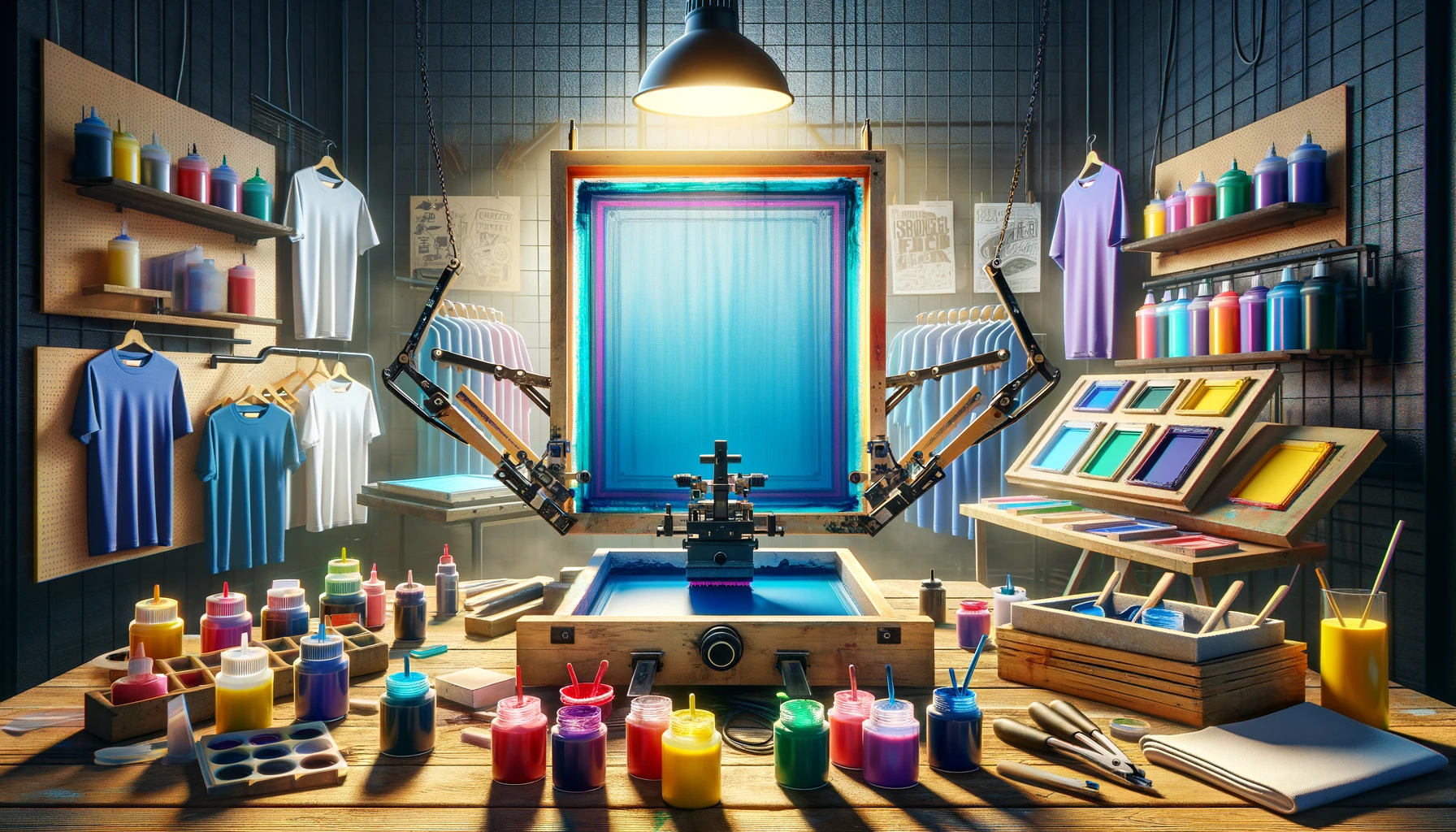 Features: Screen printing is one of the most popular methods for T-shirt production. Applying printmaking techniques, this method achieves excellent durability and vivid colors.
What you need: Screen, ink, exposure unit (or sunlight), squeegee.
Best for: Intermediate to advanced users. Certain skills and equipment are required, but it is also suitable for mass production.
2. Direct-to-Garment (DTG) Printing
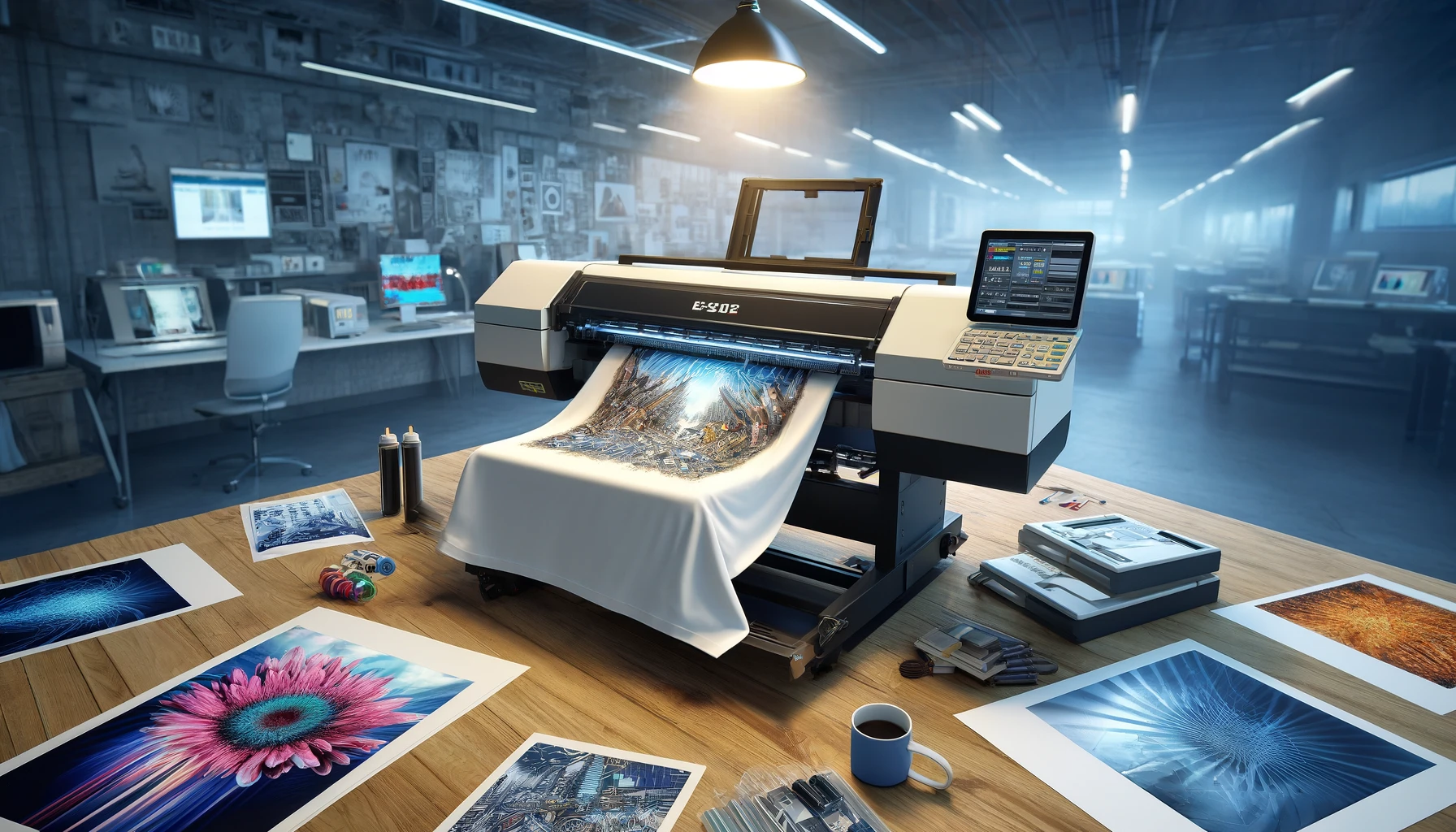 Features: DTG printing is a method of inkjet printing directly onto T-shirts. It can reproduce complex designs, photographs, and fine details.
What you need: DTG printer.
Best for: Beginners to professionals. Expensive equipment is required, but operation is relatively simple.
3. Heat Press Transfer
 Features: A design is printed on special paper and transferred to the T-shirt using a high-temperature press machine. Suitable for personal use and small-scale commercial production.
What you need: Heat press machine, transfer paper, inkjet printer.
Best for: Easy for beginners to handle, ideal for small-lot production.
4. Tie-Dye
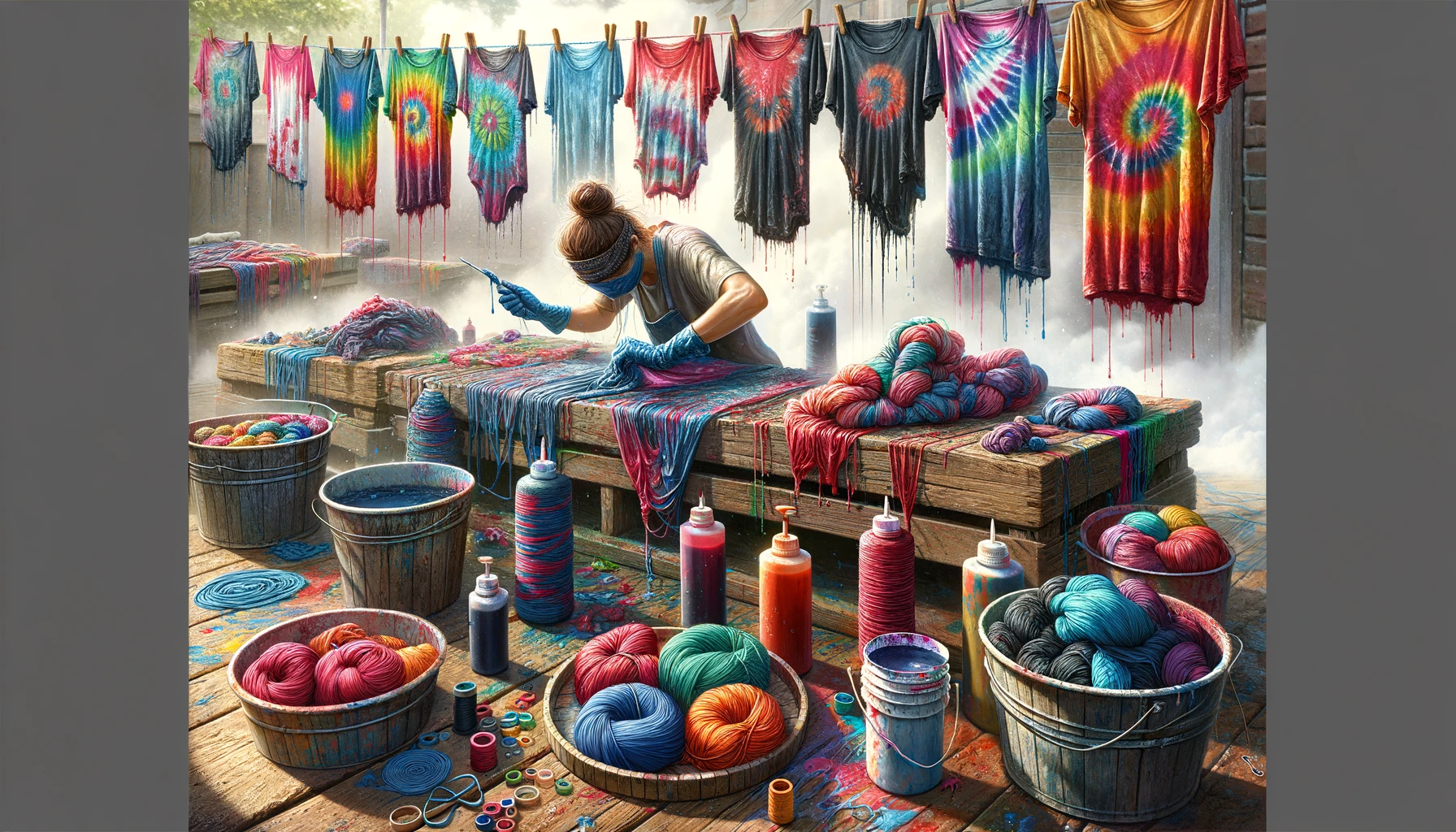 Features: A traditional hand-dyeing technique characterized by unique and personalized designs. Depending on color combinations and binding methods, you can enjoy endless variations.
What you need: Dyes, rubber bands, plastic covers, gloves.
Best for: All skill levels. No special equipment is needed, but dyeing requires space and time.
5. Iron-On Transfer
 Features: A simple method of transferring a design printed on a home printer onto a T-shirt using an iron. Perfect for last-minute events or gifts.
What you need: Iron-on transfer paper, inkjet printer, iron.
Best for: Beginners. No special skills or equipment needed, and you can easily try it at home.
Each method has its own advantages and disadvantages, so please choose the optimal method based on the type of T-shirt you want to make, the quantity, your budget, and the equipment available.
Challenges of DIY T-Shirt Making
The process of making your own T-shirts is both a creative joy and one that comes with several challenges. The path to success is not easy, and beginners in particular may face unexpected obstacles. In this section, we explain common difficulties in DIY T-shirt production and approaches for dealing with them.
1. Technical Limitations of Design
- Problem: Especially with traditional techniques like screen printing and tie-dye, there are technical limitations on design. It may be difficult to reproduce fine details or color gradients.
- Solution: It is important to understand the limitations of your chosen production method at the initial design stage and create designs that are suitable for those constraints.
2. Availability and Cost of Materials and Equipment
- Problem: High-quality printing may require specialized materials and equipment, and their availability and cost can become barriers.
- Solution: Consider choosing cost-effective materials, or explore options such as rental and group purchasing.
3. Quality Control
- Problem: When producing at home or in a small-scale environment, maintaining consistent quality can be difficult. Mass-producing T-shirts of uniform quality is particularly challenging.
- Solution: Conduct test production in small lots and gradually improve the production process. Seek professional advice if necessary.
4. Steps for DIY T-Shirt Production
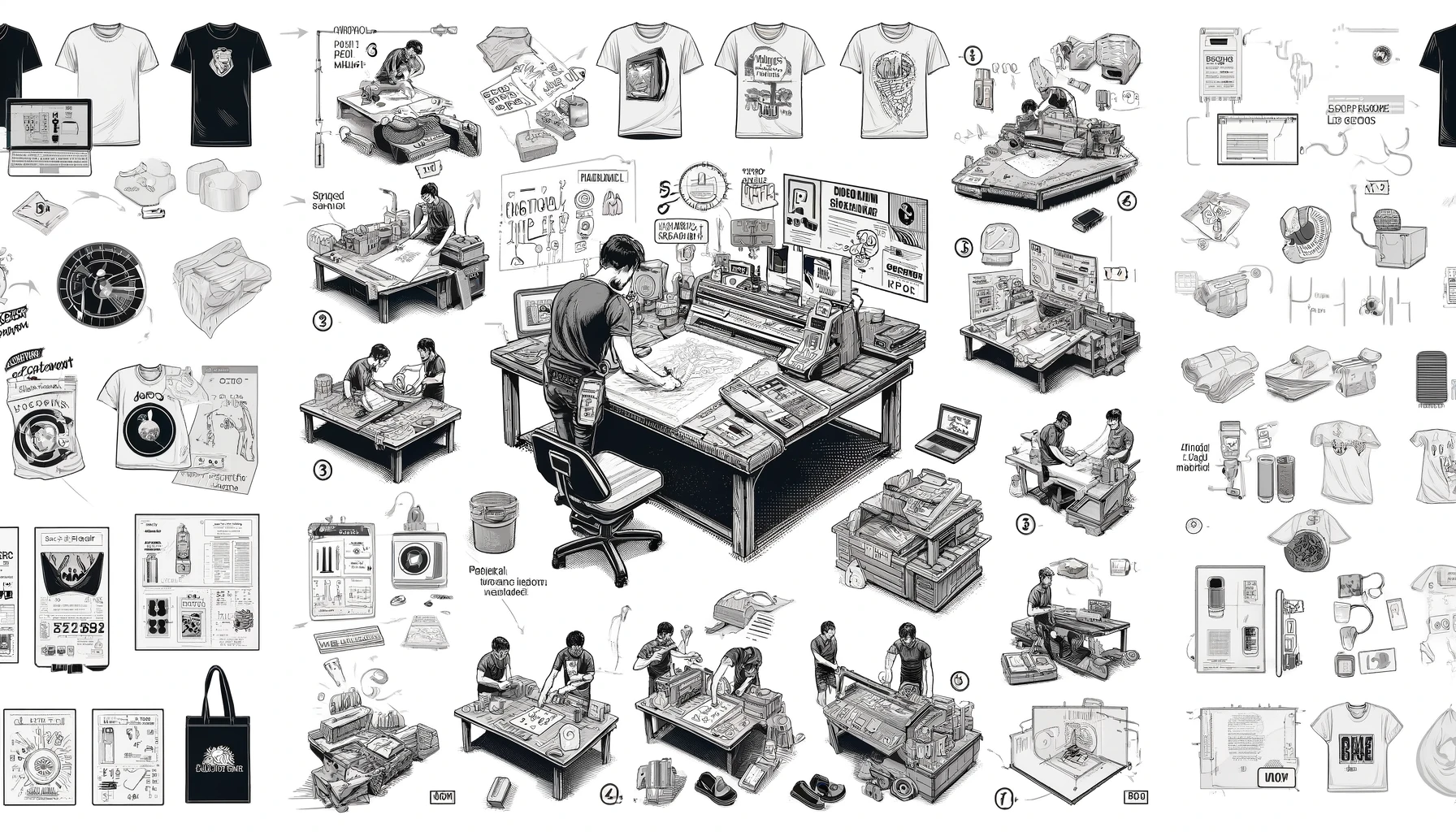 Following a systematic set of steps is key to success when making your own T-shirts. Here, we outline the general process from ideation to the finished product. These steps are fundamentally the same regardless of the T-shirt production method you choose.
Step 1: Decide on the Design
Content: Decide on the design for your DIY T-shirt. At this stage, consider specific visuals, colors, and layout.
Tools: Design software (Adobe Illustrator, Photoshop, etc.) and hand-drawn sketches.
Key point: The design should be tailored to the T-shirt’s purpose and target audience.
Step 2: Select Materials and Method
Content: Based on the design, select the production method (screen printing, DTG, heat press transfer, etc.) and necessary materials (ink, transfer paper, T-shirt fabric, etc.).
Considerations: Production quantity, budget, finished product quality, available equipment.
Step 3: Prototype Production
Content: Create the first sample using actual materials and methods. Through this process, make necessary adjustments to the design and method.
Importance: This stage allows you to test ideas in a form close to the actual product and identify problems early.
Step 4: Full-Scale Production
Content: After testing and adjusting the prototype, move to full-scale production. At this stage, mass production can also be considered.
Caution: Ensure thorough quality control and aim for consistent finishing.
Step 5: Quality Inspection and Finishing
Content: Perform quality checks on all produced T-shirts and carry out finishing work as needed (attaching tags, folding, etc.).
Importance: Essential for ensuring the quality of the final product and enhancing customer satisfaction.
5. What is OEM?
OEM stands for “Original Equipment Manufacturer,” meaning the original equipment manufacturer. This term refers to a business model in which a company that designs and develops a specific product outsources the manufacturing process to another company. The contracted manufacturer produces the product according to the original company’s specifications, and the final product is sold under the original company’s brand name.
【Benefits of OEM in T-Shirt Production】
Cost Reduction : By outsourcing production to manufacturers with facilities suitable for mass production, you can reduce equipment investment and operating costs.
High Quality : Specialized manufacturers have extensive experience and know-how in quality control, and can guarantee consistently high-quality products.
Efficient Production : Since manufacturing partners have optimized production processes, they can deliver products within short lead times.
Flexible Production System: Production volume can be easily adjusted according to market demand, accommodating everything from small-lot to mass production.
【How to Utilize OEM in T-Shirt Production】
When utilizing OEM for T-shirt production, you first need to clearly define the product’s design and specifications. Then, select an appropriate manufacturing partner based on criteria such as product quality, production capacity, and cost performance. When entering a manufacturing outsourcing contract, it is important to clearly define key terms including quality standards, delivery timelines, pricing, and intellectual property rights.
6. Summary
Through the DIY T-shirt production process, we have covered a series of steps from design decisions to material selection, production method selection, and final product quality inspection. DIY T-shirt making is an excellent way to express creativity and create personalized items. From screen printing to DTG printing, heat press transfer, and traditional methods like tie-dye, you can use various techniques to create your own original T-shirts.
We also delved into the use of OEM in T-shirt production. OEM offers significant advantages in terms of cost reduction, efficient production, and consistent quality assurance, especially when mass production and high-quality products are required. If you have a brand and design but wish to avoid the complexity and burden of the manufacturing process, building a cooperative relationship with a reliable manufacturing partner is the key to success.