
🕓 2024/4/27
#Culture
A Detailed Guide to the History and Overview of the Sanja Festival
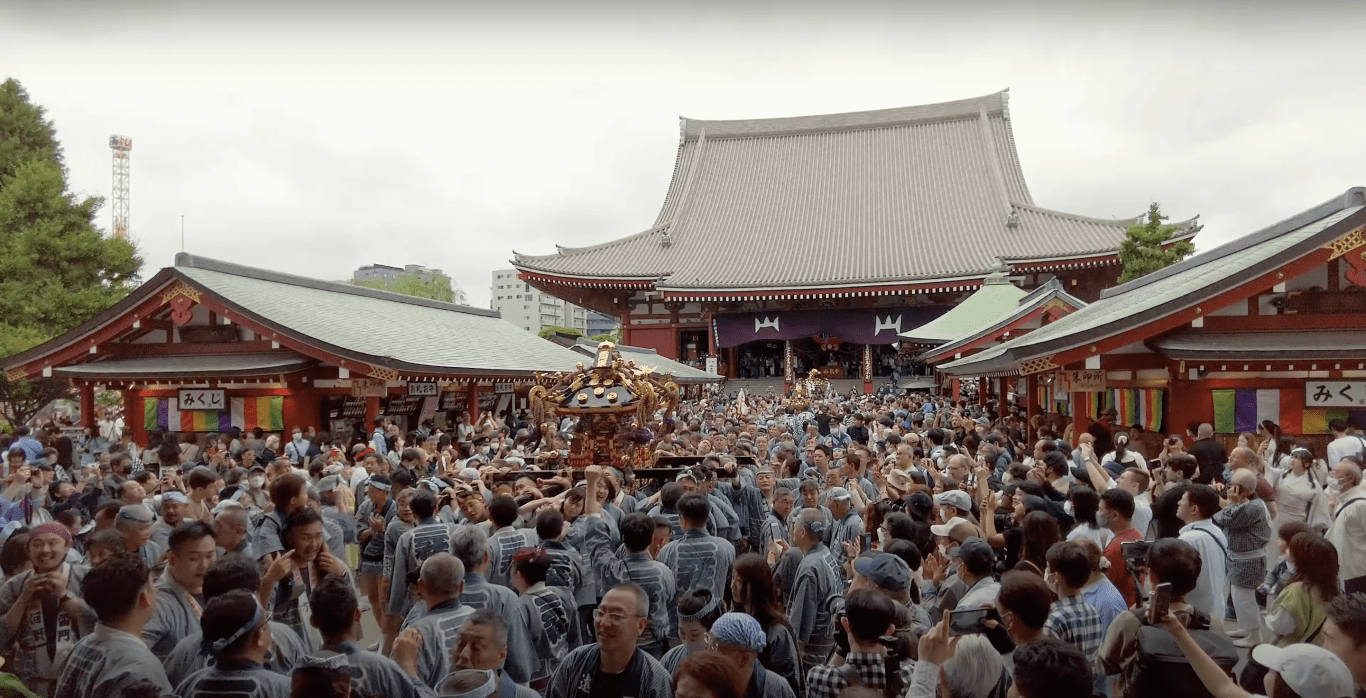
Table of Contents
- Overview of the Sanja Festival
- History of the Sanja Festival
- Highlights of the Sanja Festival
- Costumes That Enliven the Sanja Festival
Introduction
The Sanja Festival is one of the most famous festivals in Japan, held every May in Asakusa, Tokyo. With a history spanning approximately 700 years, this festival is an important event centered around Asakusa Shrine to celebrate and pass on the region’s faith and traditions. Many tourists from both within Japan and abroad visit, and throughout the festival period, the entire Asakusa area overflows with energy.
In this article, we provide a detailed introduction to the charm of the Sanja Festival, covering its overview, history, and highlights. Whether you are visiting the Sanja Festival for the first time or have attended many times, you will gain new discoveries and deeper understanding through this article. Please fully enjoy the grand atmosphere and traditional ceremonies of the Sanja Festival.
- Overview of the Sanja Festival
- History of the Sanja Festival
- Highlights of the Sanja Festival
- Day One Features the “Grand Procession” and “Binzasara Mai” DanceThe main highlights of the first day are the “Grand Procession” and the “Binzasara Mai” sacred dance. The Grand Procession features people dressed in splendid costumes, accompanied by festival music carts (ohayashi yatai), tobi-gashira (firemen chiefs) chanting traditional songs, and geisha performing traditional dances, as they parade from Asakusa Shrine through Kaminarimon Gate and Nakamise-dori Street. This announces the opening of the Sanja Festival. The procession begins at 13:00 and arrives at Asakusa Shrine. The “Binzasara Mai” is a type of dengaku (ritual agricultural dance) performed to pray for an abundant harvest and has been designated as an Intangible Cultural Property of Tokyo. After the Grand Procession returns to Asakusa Shrine, this dance is performed at the worship hall to pray for business prosperity and the prosperity of descendants. This traditional dance is an important ceremony that marks the beginning of the Sanja Festival.
- ◽️ Day Two
- Day Two: Experience the Mikoshi Fever at the “Neighborhood Mikoshi United Procession”The highlight of the second day is the “Neighborhood Mikoshi United Procession” (Chonaikai Mikoshi Rengo Togyo), held from noon. In this event, approximately 100 neighborhood mikoshi from Asakusa Shrine’s parish areas gather together, and after each one receives a blessing, they head out into the streets of Asakusa. The moment they pass through Nakamise-dori and Kaminarimon Gate is a perfect photo opportunity. However, it is extremely crowded, so arriving early is recommended. Of particular note is the “Tamafuri,” the vigorous shaking of the mikoshi up, down, left, and right. Tamafuri is performed to pray for an abundant harvest and good health, and the Sanja Festival’s Tamafuri is famous for its intensity. If you want to feel the festival’s fever, make sure not to miss this event.
- ◽️ Final Day
- The Excitement Peaks at the Final Day’s “Main Shrine Mikoshi Neighborhood Procession”The highlight of the third day is undoubtedly the “Honsha Mikoshi Kakuncho Togyo” (Main Shrine Mikoshi Neighborhood Procession). The neighborhoods of Asakusa are divided into three areas — South, West, and East — and the three mikoshi of “Ichinomiya,” “Ninomiya,” and “Sannomiya” each parade through their respective districts. The excitement of the Sanja Festival reaches its peak during this procession. You can follow the mikoshi as they travel through each neighborhood and view them from various points. The key to enjoying it is to check the procession route in advance and choose your preferred viewing spot. The main shrine mikoshi depart Asakusa Shrine at 6:00 AM and return between 18:00 and 19:00 after traveling through each neighborhood. Additionally, neighborhood mikoshi from the second day can also be seen on Kaminarimon-dori and Umamichi-dori, making this day an excellent opportunity to enjoy both types of mikoshi.
- The Sanja Festival is a festival packed with highlights and powerful events over three days. Be sure to check each day’s schedule and locations, and enjoy the festival to the fullest.
- Costumes That Enliven the Sanja Festival
- Summary
- Frequently Asked Questions
Overview of the Sanja Festival
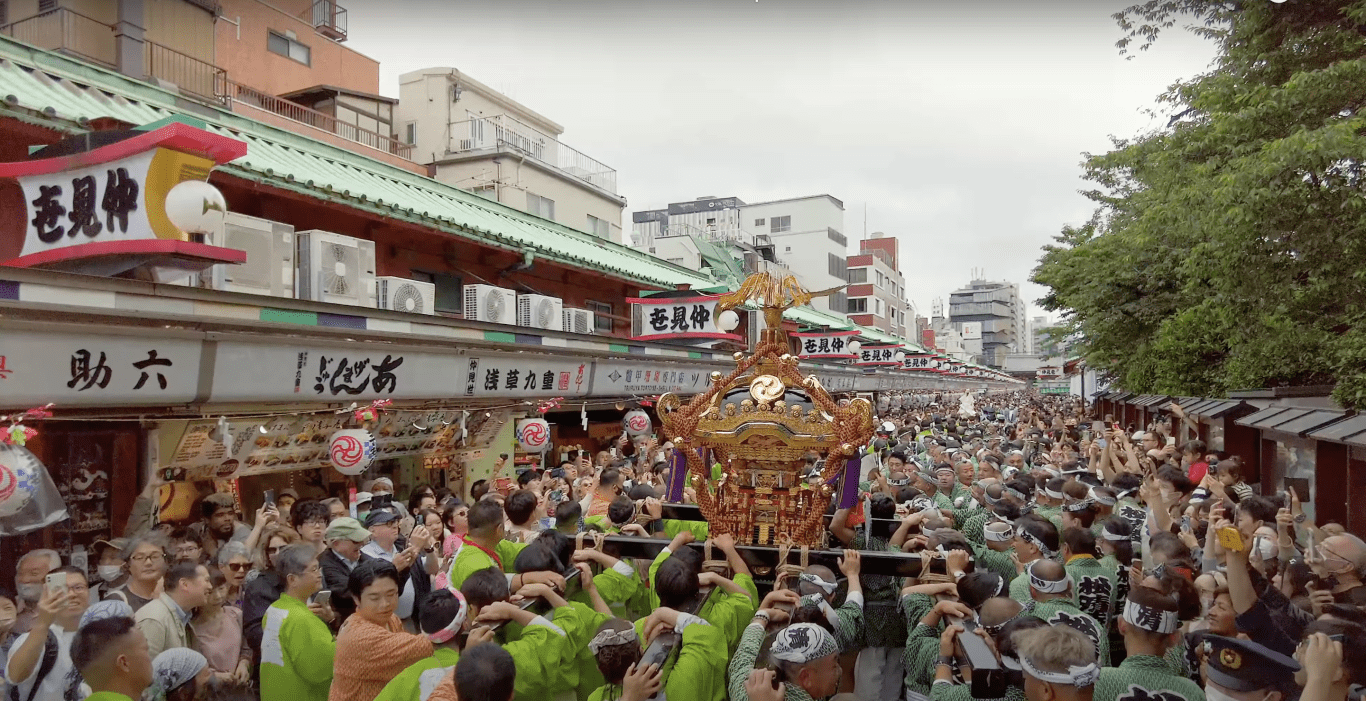
The Sanja Festival is the annual grand festival of Asakusa Shrine, held every May in Asakusa, Tokyo. This festival has approximately 700 years of history and is one of Japan’s most representative traditional festivals. During the Sanja Festival, the streets of Asakusa come alive with excitement, and many tourists visit.
The main event is the “Mikoshi Parade,” where three mikoshi (portable shrines) of Asakusa Shrine — Ichinomiya, Ninomiya, and Sannomiya — are carried through the neighborhoods. Each mikoshi enshrines a different deity, and during the festival, they are paraded through the streets. This spectacle is incredibly powerful and captivates all who watch.
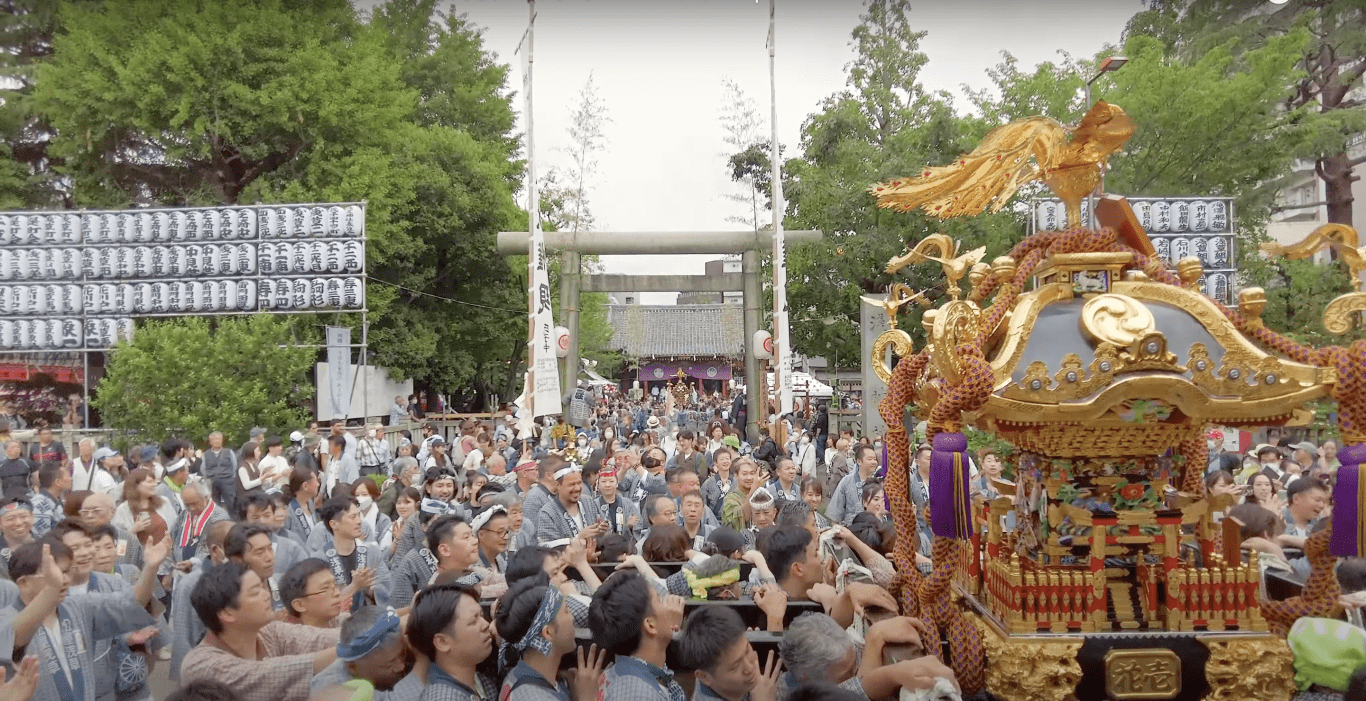
The festival takes place over three days. On the first day, the “Grand Procession” and “Binzasara Mai” dance are performed, with participants dressed in Edo-period costumes parading through the streets. On the second day, approximately 100 neighborhood mikoshi join together in a united procession, and all of Asakusa is enveloped in the festival’s fervor. On the final day, the main shrine mikoshi parade through each neighborhood in the “Honsha Mikoshi Togyo,” bringing the festival to its climax.
The festival deepens the bonds of the community while serving as an important event to pass on the traditions and culture of Asakusa to the next generation. It also provides tourists with a precious opportunity to experience traditional Japanese culture.
History of the Sanja Festival

The Sanja Festival is the annual grand festival of Asakusa Shrine held every May in Asakusa, Tokyo, boasting a history of over 700 years. Its origins trace back to a “boat festival” held in 1312. At that time, the festival was held on March 17 and 18, and is rooted in the discovery of the Kannon statue enshrined at Senso-ji Temple by the brothers Hinokuma no Hamanari and Takenari.
◽️ Edo Period
During the Edo period, the festival was held as one united event with Senso-ji Temple and was also known as the “Kannon Festival” or “Asakusa Festival.” During this period, decorative festival floats (dashi) were the centerpiece, and each neighborhood competed to create the most elaborate procession. The current format of carrying the main shrine’s mikoshi began during the Meiji era.
◽️ Pre-War Period
Before the war, Asakusa Shrine had seven mikoshi, including three donated by Tokugawa Iemitsu, but they were destroyed in the fires of war. The current mikoshi were donated by parishioners in 1950 and 1953. The divine spirits of Haji no Matsuchi no Mikoto are enshrined in Ichinomiya, Hinokuma no Hamanari no Mikoto in Ninomiya, and Hinokuma no Takenari no Mikoto in Sannomiya, and they are paraded through the neighborhoods.
The Sanja Festival is an important event that has carried on the region’s faith and traditions to the present day. Even today, many tourists visit during the festival period, and the entire Asakusa area buzzes with excitement.
Highlights of the Sanja Festival
◽️ Day One
Day One Features the “Grand Procession” and “Binzasara Mai” DanceThe main highlights of the first day are the “Grand Procession” and the “Binzasara Mai” sacred dance. The Grand Procession features people dressed in splendid costumes, accompanied by festival music carts (ohayashi yatai), tobi-gashira (firemen chiefs) chanting traditional songs, and geisha performing traditional dances, as they parade from Asakusa Shrine through Kaminarimon Gate and Nakamise-dori Street. This announces the opening of the Sanja Festival. The procession begins at 13:00 and arrives at Asakusa Shrine. The “Binzasara Mai” is a type of dengaku (ritual agricultural dance) performed to pray for an abundant harvest and has been designated as an Intangible Cultural Property of Tokyo. After the Grand Procession returns to Asakusa Shrine, this dance is performed at the worship hall to pray for business prosperity and the prosperity of descendants. This traditional dance is an important ceremony that marks the beginning of the Sanja Festival.
◽️ Day Two
Day Two: Experience the Mikoshi Fever at the “Neighborhood Mikoshi United Procession”The highlight of the second day is the “Neighborhood Mikoshi United Procession” (Chonaikai Mikoshi Rengo Togyo), held from noon. In this event, approximately 100 neighborhood mikoshi from Asakusa Shrine’s parish areas gather together, and after each one receives a blessing, they head out into the streets of Asakusa. The moment they pass through Nakamise-dori and Kaminarimon Gate is a perfect photo opportunity. However, it is extremely crowded, so arriving early is recommended. Of particular note is the “Tamafuri,” the vigorous shaking of the mikoshi up, down, left, and right. Tamafuri is performed to pray for an abundant harvest and good health, and the Sanja Festival’s Tamafuri is famous for its intensity. If you want to feel the festival’s fever, make sure not to miss this event.
◽️ Final Day
The Excitement Peaks at the Final Day’s “Main Shrine Mikoshi Neighborhood Procession”The highlight of the third day is undoubtedly the “Honsha Mikoshi Kakuncho Togyo” (Main Shrine Mikoshi Neighborhood Procession). The neighborhoods of Asakusa are divided into three areas — South, West, and East — and the three mikoshi of “Ichinomiya,” “Ninomiya,” and “Sannomiya” each parade through their respective districts. The excitement of the Sanja Festival reaches its peak during this procession. You can follow the mikoshi as they travel through each neighborhood and view them from various points. The key to enjoying it is to check the procession route in advance and choose your preferred viewing spot. The main shrine mikoshi depart Asakusa Shrine at 6:00 AM and return between 18:00 and 19:00 after traveling through each neighborhood. Additionally, neighborhood mikoshi from the second day can also be seen on Kaminarimon-dori and Umamichi-dori, making this day an excellent opportunity to enjoy both types of mikoshi.
The Sanja Festival is a festival packed with highlights and powerful events over three days. Be sure to check each day’s schedule and locations, and enjoy the festival to the fullest.
Costumes That Enliven the Sanja Festival
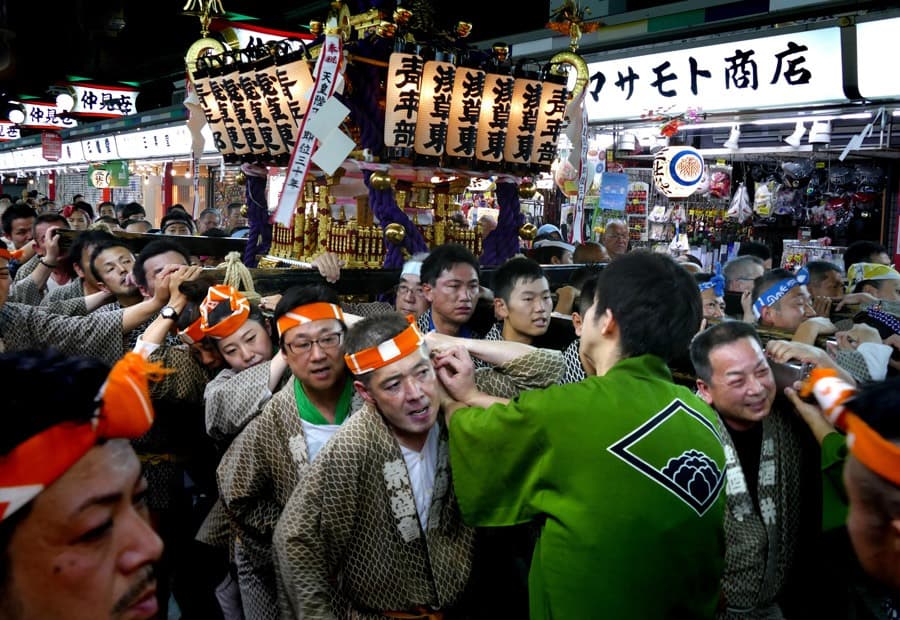
The Sanja Festival is a celebration rich in traditional Japanese culture, and the costumes worn by participants play a major role in fueling the excitement. Here, we introduce the representative costumes and accessories that color the Sanja Festival.
◽️ Happi Coats and Hanten

One of the most important costumes of the Sanja Festival is the “happi” coat or “hanten” jacket. These festival coats are iconic garments of the celebration, ranging from casual to formal styles. They are especially essential when carrying the mikoshi. Each neighborhood association or team has its own unique design, enhancing the sense of unity during the festival. These are dyed using traditional techniques by skilled artisans, creating a stylish and refined atmosphere.
◽️ Dabo Shirts, Dabo Pants, Koikuchi Shirts, and Momohiki
Often worn together with happi coats and hanten jackets are “dabo shirts” and “koikuchi shirts,” as well as “dabo pants” and “momohiki” (close-fitting trousers). These garments combine ease of movement with traditional style and are highly practical for festival activities. They are especially suitable for carrying mikoshi or performing dances.
◽️ Harakake (Belly Apron)
The harakake has its origins in the apron worn by Edo-period artisans. It is often worn together with koikuchi shirts and momohiki, and because it combines ease of movement with durability, it is also valued as attire for carrying the mikoshi.
◽️ Accessories Such as Obi Belts and Tenugui Towels
Essential for completing the festival outfit are accessories such as “obi” belts and “tenugui” hand towels. Tenugui are used for wiping sweat or as headbands, serving as practical items throughout the festival. For footwear, tabi (split-toed socks) or jikatabi (ground-soled tabi) are worn to complete the traditional look. Kinchaku pouches are also useful for keeping small items together and are used as part of the festival attire.
These costumes and accessories preserve the tradition and atmosphere of the Sanja Festival while providing participants with comfort and ease of movement. When attending the Sanja Festival, be sure to prepare these items and enjoy the festival atmosphere.
Summary
The Sanja Festival is an extremely captivating celebration where Japanese tradition and modern vitality come together. The entire Asakusa area is enveloped in excitement, creating an unforgettable experience for both participants and tourists. This festival plays an important role in strengthening community bonds while sharing the splendor of Japanese culture with the world.
Through this article, we have provided a detailed introduction to the overview, history, highlights, and costumes of the Sanja Festival. Whether you are visiting for the first time or have attended many times, we hope this information will help you enjoy the festival to the fullest. By experiencing the grand atmosphere and traditional ceremonies of the Sanja Festival and engaging with the culture and history of Asakusa, you are sure to gain new discoveries and inspiration.
Next May, please visit Asakusa and experience the charm of the Sanja Festival for yourself.