A Detailed Guide to the History and Overview of Takeda Castle
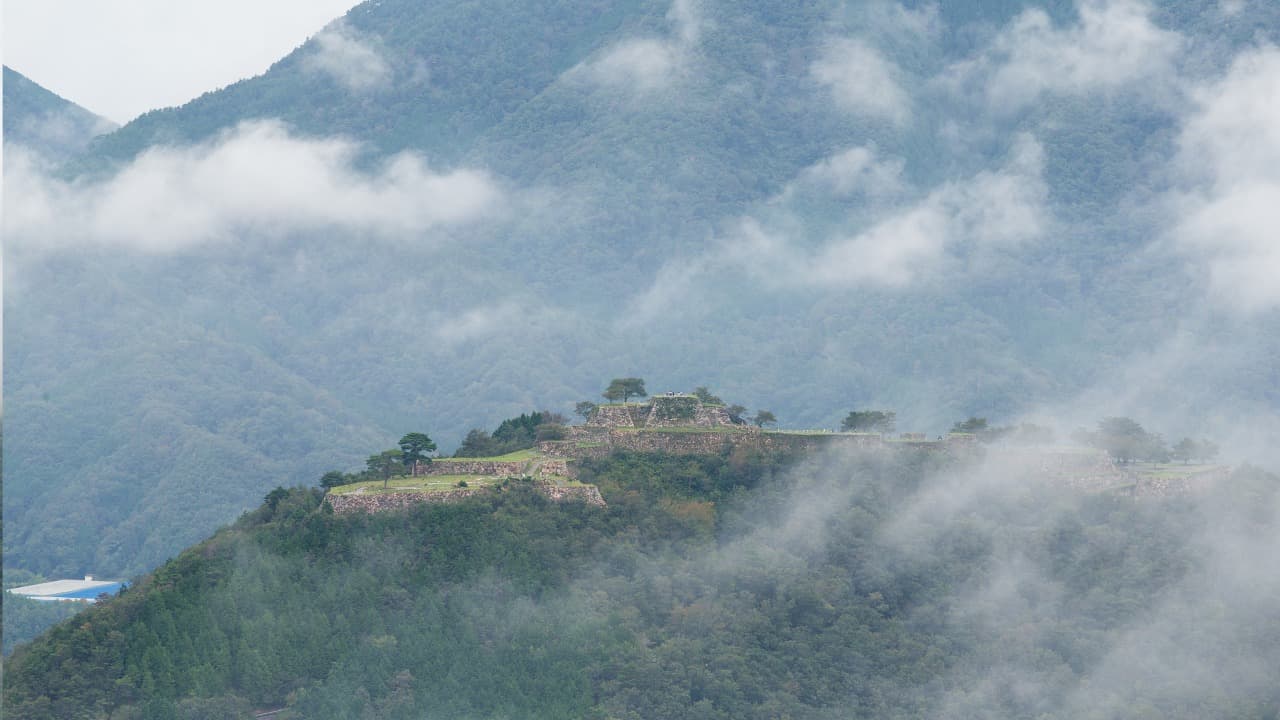
Table of Contents
- Overview of Takeda Castle
- History of Takeda Castle
- Takeda Castle Highlights
Introduction
Takeda Castle Ruins is a mountain castle site in Asago City, Hyogo Prefecture, where only the stone walls remain on the summit of Mount Kojo (353.7 meters). Its appearance above a sea of clouds has earned it the name “Castle in the Sky.”
Overview of Takeda Castle
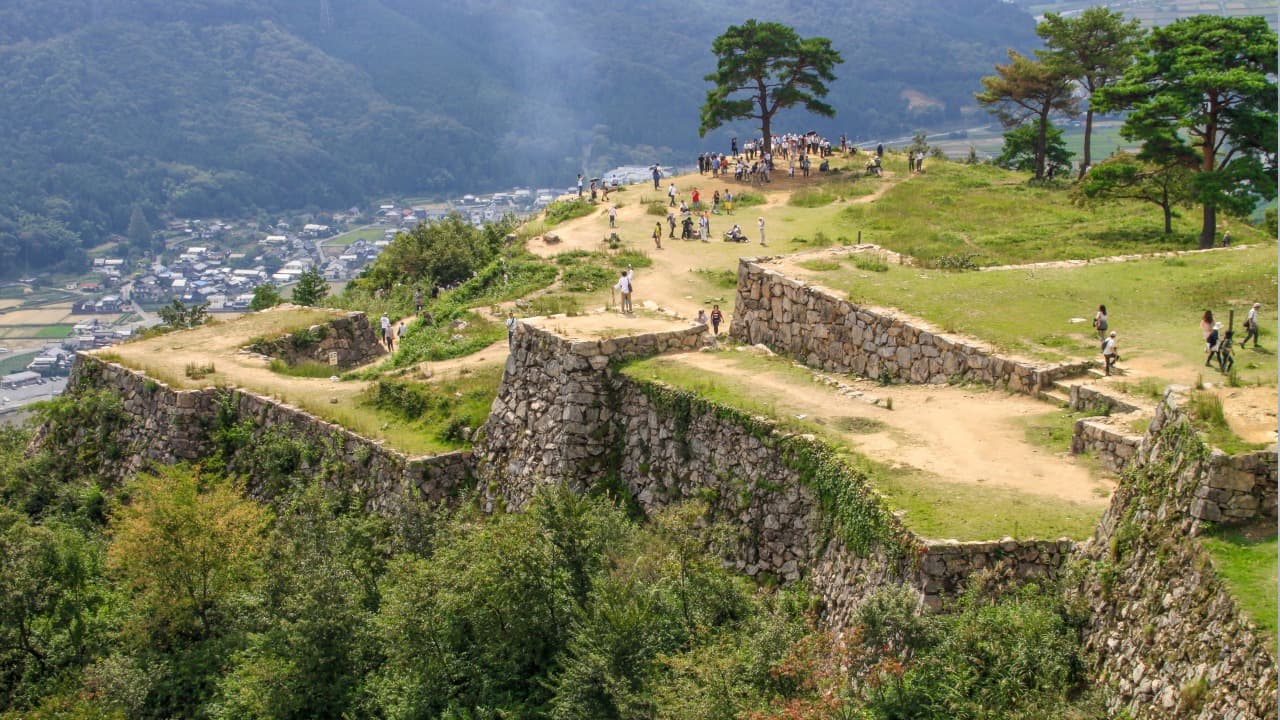
No buildings survive, but the original stone walls remain in their original form. The summit rises about 250 meters above the town of Takeda at its foot, and when a sea of clouds forms, the walls seem to float above it, which is why the site is also called “Japan’s Machu Picchu.”
According to local tradition, it was built around 1443 (the Kakitsu era) by the Otagaki clan on the orders of Yamana Sozen (Mochitoyo), the shugo (provincial governor) of Tajima, and it was abandoned after the Battle of Sekigahara in 1600 (Keicho 5).
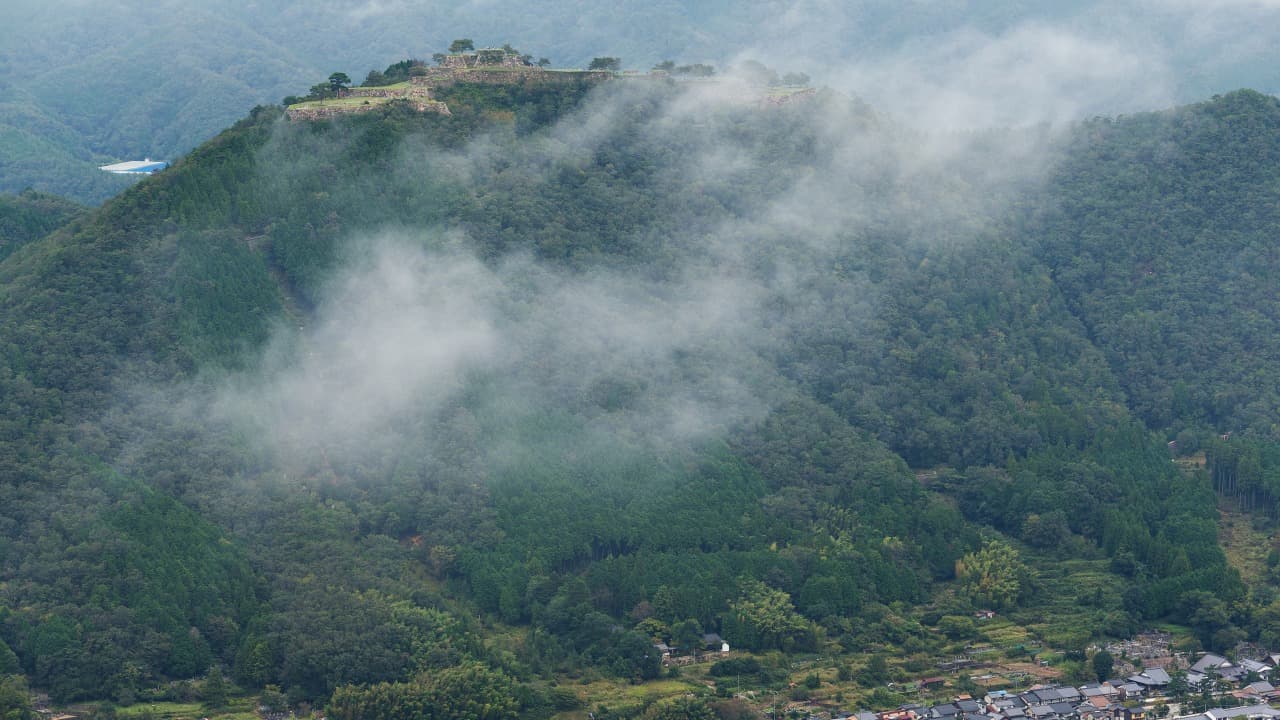
The present stone walls are thought to date from the time of Akamatsu Hirohide, who became lord in 1585. The site was designated a National Historic Site in 1943 (Showa 18).
The sea of clouds is most likely in late autumn, when the temperature difference between day and night grows, and it appears in the early morning. It depends on the weather, however, and on some days it does not form at all.
History of Takeda Castle
1. Construction and Early History (15th Century)
According to local tradition, Yamana Mochitoyo (later Sozen) began building the castle in 1431 (Eikyo 3), and it was completed in 1443 (Kakitsu 3) with Otagaki Mitsukage as its first lord. The Otagaki, senior retainers of the Yamana, then held the castle for seven generations.
2. The Sengoku Period and Takeda Castle’s Strategic Importance (16th Century)
In 1577 (Tensho 5), having subdued Harima, Hashiba Hideyoshi sent his younger brother Hidenaga to attack Tajima, and the following year placed Hidenaga in Takeda Castle. Hideyoshi’s invasion of Tajima in 1580 (Tensho 8) ended Otagaki rule, and the castle passed through these lords:
- c. 1443-1580: the Otagaki clan (seven generations)
- 1580-1585: Kuwayama Shigeharu (10,000 koku)
- 1585-1600: Akamatsu Hirohide (Saimura Masahiro; 20,000 koku, later 22,000)
3. Abandonment and Subsequent Fate (17th Century) 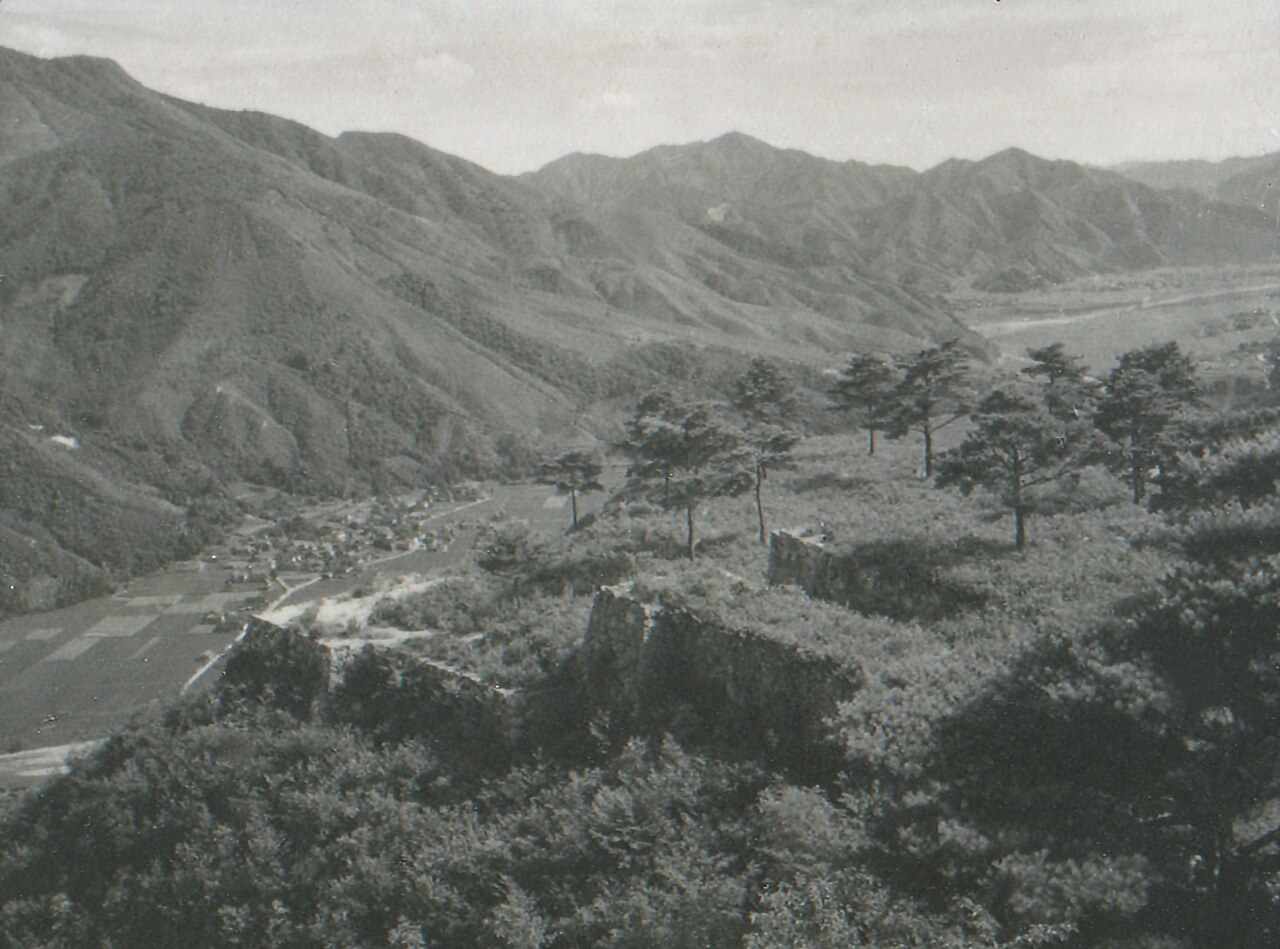
At the Battle of Sekigahara in 1600 (Keicho 5), Hirohide sided with the Western Army and attacked Tanabe Castle in Tango. After the defeat he joined the Eastern Army’s attack on Tottori Castle, but was blamed for setting fire to the castle town and forced to commit suicide at Shinkyoji Temple in Tottori, and Takeda Castle was abandoned. From 1615 (Genna 1) the area came under the Ikuno magistrate’s office.
4. Preservation in the Modern Era (20th Century to Today) 
The site became the property of the Takeda town office in 1939 (Showa 14), was designated a National Historic Site in 1943 (Showa 18), and received an additional designation in 2009 (Heisei 21).
Highlights of Takeda Castle
■ Castle Keep Foundation 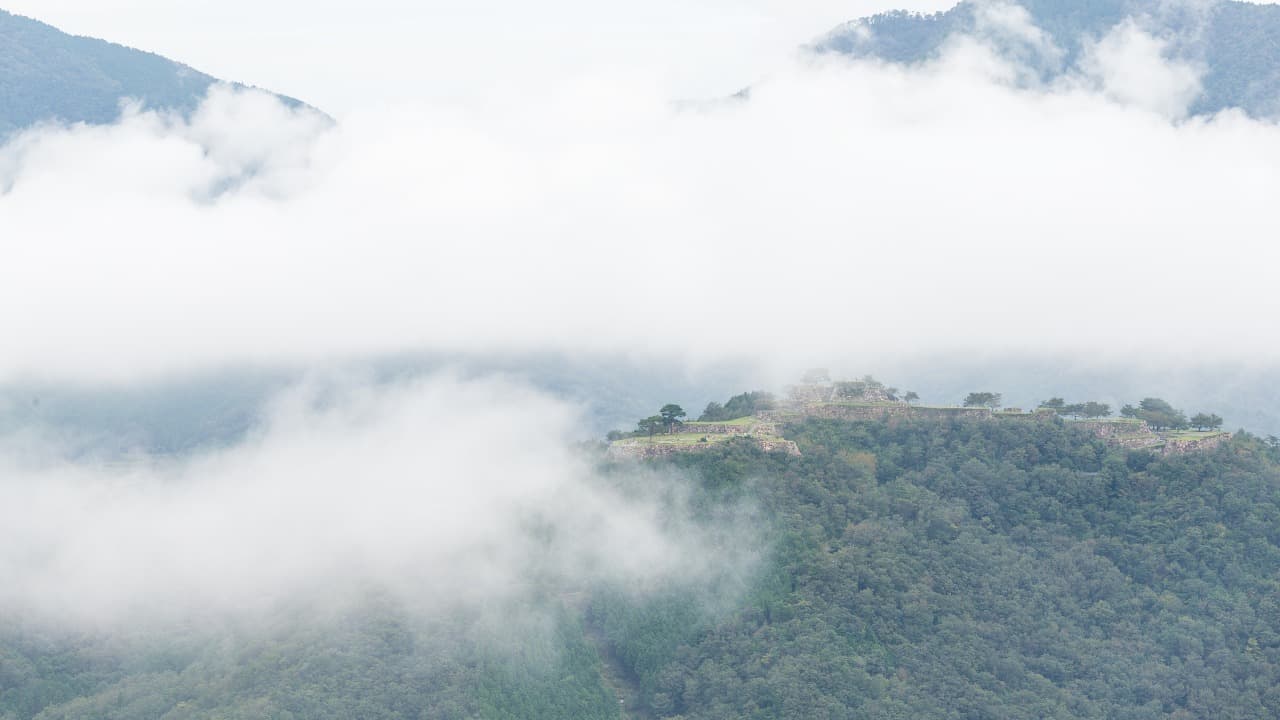
The heart of the castle and its highest point is the Tenshudai (keep foundation); its corners are built in the sangi-zumi interlocking style. From here you look down on the Minami-Senjo stretching to the south and out over the town of Takeda and the surrounding mountains. Inside the ruins, visitors follow a set one-way route, and a visit takes about 30 to 60 minutes.
■ Minami-Senjo (South Thousand-Mat)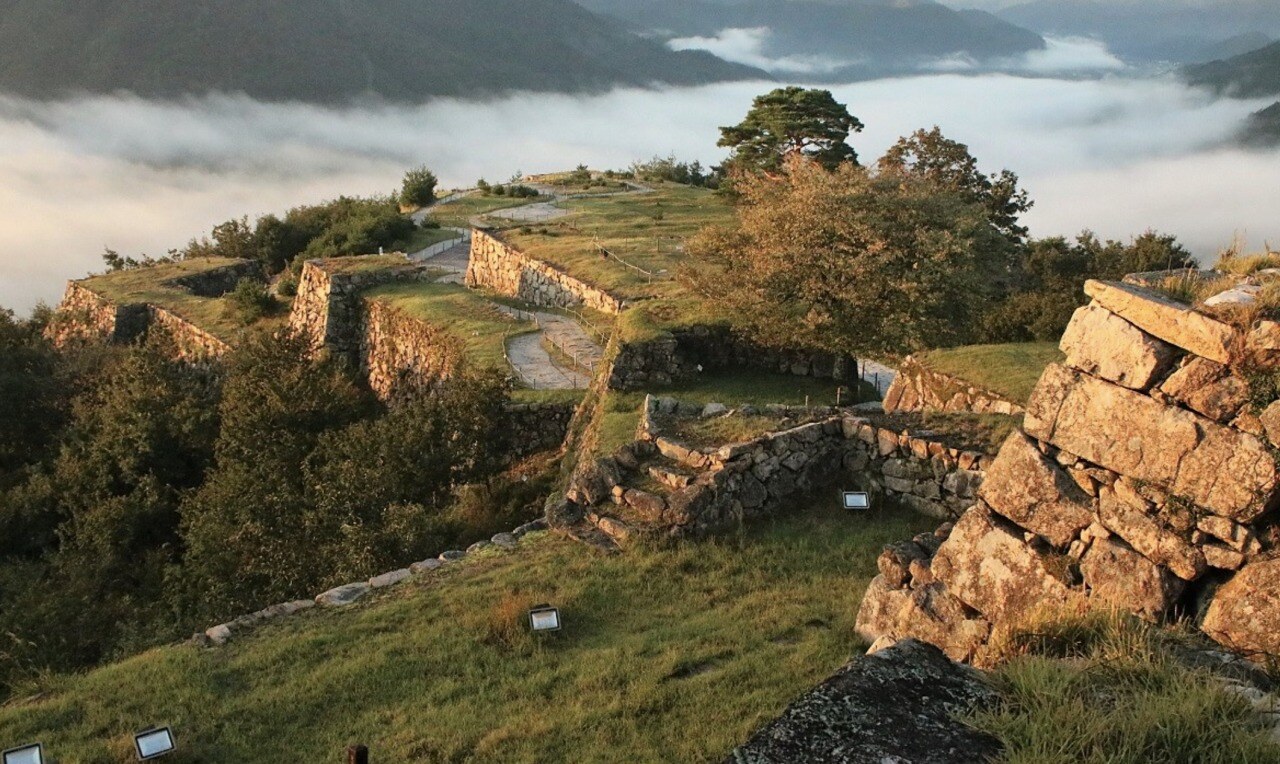
This enclosure stretches south of the keep foundation, with stone walls running to its tip. Its walls include a yokoya design, built to let defenders strike attackers from the side. The walls of Takeda Castle are nozura-zumi, fitted from natural stones of various sizes, and are said to have been built by the Ano-shu stonemasons of Omi.
■ Ritsuunkyo 
The classic place to view the ruins from outside is Ritsuunkyo, on the slopes of Mount Asago. From across the valley it takes in the whole of the ruins floating above the sea of clouds.
Summary
If you are after the sea of clouds, climb in the early morning in late autumn. On weekends and holidays in the cloud season, the Yamashiro no Sato parking lot closest to the ruins can fill up by around 2-3 AM, so walking from JR Takeda Station or using a trail from the parking lots along the national highway is the reliable option (as of September 2026).