- Introduction
- History of Tsurugaoka Hachimangu
- Highlights of Tsurugaoka Hachimangu
- 1. Hongu (Upper Shrine)—The Heart of Tsurugaoka Hachimangu, Dedicated to the Hachiman Deities
- 2. Maiden—The Lower Worship Hall Where Shizuka Gozen’s Dance Is Remembered
- 3. Genpei Ponds—Ponds That Reflect the Fates of the Genji and Heike
- 4. Great Stone Stairway and Great Ginkgo—An Approach Overlooking Kamakura and a Sacred Tree Reborn
- 5. Kamakura Museum of National Treasures—Home to the Cultural Properties of Kamakura’s Temples and Shrines
- Nearby Attractions
- Access
- Summary
- Frequently Asked Questions
Introduction
Walk north from JR Kamakura Station along Wakamiya Oji, and the avenue ends at Tsurugaoka Hachimangu. Ever since Minamoto no Yoritomo moved the shrine to this site in 1180 (Jisho 4), the town of Kamakura has been laid out with the shrine as its starting point.
The grounds hold the Hongu (Upper Shrine) and Wakamiya (Lower Shrine), both National Important Cultural Properties, the Maiden stage linked to the legend of Shizuka Gozen’s dance, the Genpei Ponds, and the Great Ginkgo that has regrown after falling. This article covers the shrine’s history, the main sights within the grounds, nearby attractions, and how to get there.
History of Tsurugaoka Hachimangu
The origins of Tsurugaoka Hachimangu go back to 1063 (Kohei 6), when Minamoto no Yoriyoshi, an ancestor of Minamoto no Yoritomo, ceremonially invited a divided spirit of Iwashimizu Hachimangu in Kyoto to the shore of Yuigahama and enshrined it as the guardian deity of the Minamoto clan. This original shrine still stands today in the Zaimokuza area as Yui Wakamiya.
In 1180 (Jisho 4), after establishing his base in Kamakura, Yoritomo moved the shrine to its present site, revering it as the guardian deity of the shogunate and of eastern Japan. Wakamiya Oji, the roughly 2 km approach running from Yuigahama to the shrine, is said to have been built under Yoritomo’s direction, partly as a prayer for a safe delivery for his wife, Hojo Masako. When fire destroyed the shrine buildings in 1191 (Kenkyu 2), Yoritomo had the slope of Mt. Daijin cut away to build the Hongu (Upper Shrine) halfway up, with the Wakamiya (Lower Shrine) at its foot, creating the upper-and-lower layout that remains today.
Although fires struck again in later centuries, the shrine was rebuilt repeatedly thanks to the devotion of those in power, including the reconstruction carried out by Tokugawa Hidetada in 1624 (Kan’ei 1). The Hojo-e ritual begun by Yoritomo lives on as the Annual Grand Festival held every September 14–16, and on the 16th the Yabusame (horseback archery) ritual is performed.
Highlights of Tsurugaoka Hachimangu
The gates are open 6:00–20:00 year-round (as of September 2026). These are the five main spots in the grounds.
1. Hongu (Upper Shrine)—The Heart of Tsurugaoka Hachimangu, Dedicated to the Hachiman Deities
At the top of the Great Stone Stairway, halfway up Mt. Daijin, stands the Hongu (Upper Shrine), the central sanctuary of Tsurugaoka Hachimangu, which enshrines three deities: Emperor Ojin, Himegami, and Empress Jingu.
The current buildings were rebuilt in 1828 (Bunsei 11) by the 11th shogun, Tokugawa Ienari, after the main hall burned down in a fire in 1821 (Bunsei 4). They are built in the gongen-zukuri style, in which the main hall, offering hall, and worship hall are joined together. The Hongu’s main hall, offering hall, worship hall, and corridors were designated National Important Cultural Properties in July 1996 (Heisei 8), together with the Wakamiya, built in 1624 (Kan’ei 1). The Treasure Hall, in the western corridor of the Hongu, displays historical documents and sacred treasures related to the shrine.
2. Maiden—The Lower Worship Hall Where Shizuka Gozen’s Dance Is Remembered
The Maiden (dance stage) in the grounds is also known as the Shimo-Haiden (Lower Worship Hall). It stands on the site of the former Wakamiya corridor, where Shizuka Gozen, the beloved of Yoritomo’s younger brother Yoshitsune, is said to have danced out of longing for Yoshitsune.
Yoritomo was enraged by her dance, but his wife, Hojo Masako, is said to have intervened and saved Shizuka Gozen. Today the stage is used for festivals and ceremonies, and also for weddings.
3. Genpei Ponds—Ponds That Reflect the Fates of the Genji and Heike
The Genpei Ponds were created on the orders of Minamoto no Yoritomo by Oba Kageyoshi and the monk Ryosen, among others. The Genji Pond, with three islands expressing the wish for “birth” (prosperity), faces the Heike Pond, whose four islands symbolize “death” (decline).
On an island in the Genji Pond stands the Hataage Benzaiten Shrine. The current building was restored in 1980 (Showa 55), the 800th anniversary of the shrine’s founding, based on an old drawing from the Bunsei era. In reference to Yoritomo’s raising of his banner, many visitors make wishes on the two-striped Genji flags. Behind the shrine is the Masako Stone, a stone for praying for marital harmony. Cherry blossoms color the ponds in spring and red and white lotus flowers in summer.
4. Great Stone Stairway and Great Ginkgo—An Approach Overlooking Kamakura and a Sacred Tree Reborn
The Great Stone Stairway leading up to the Hongu is the large main stairway of the shrine, and from the top you can look out over Kamakura. According to the shrine, on clear days with crisp air you may even see the Pacific Ocean and Izu Oshima Island.
Beside this stairway once stood the Great Ginkgo, the shrine’s sacred tree. It was blown down by strong winds before dawn on March 10, 2010 (Heisei 22), but its root suckers grew into a young “child” ginkgo, which continues to grow alongside the “parent” ginkgo transplanted next to it. Part of the fallen trunk can be seen up close in the Cafe & Shop of the Kamakura Bunkakan Tsurugaoka Museum in the shrine grounds.
5. Kamakura Museum of National Treasures—Home to the Cultural Properties of Kamakura’s Temples and Shrines
The Kamakura Museum of National Treasures, in the grounds of Tsurugaoka Hachimangu, opened in 1928 (Showa 3) after many local cultural properties were lost in the Great Kanto Earthquake. It stores and displays Buddhist statues, paintings, crafts, and other works entrusted to it by temples and shrines in Kamakura.
In the permanent gallery you can see the area’s Buddhist sculptures without glass cases, and the special exhibition gallery hosts about six exhibitions a year. Admission is 400–1,000 yen for adults (varies by exhibition; as of September 2026). Note that the museum is temporarily closed for renovation from May 19 to October 23, 2026, and is scheduled to reopen on October 24 with the special exhibition “700 Years of Zuisenji.”
Nearby Attractions
Great Buddha of Kamakura (Kotoku-in)—The Open-Air Amida Buddha
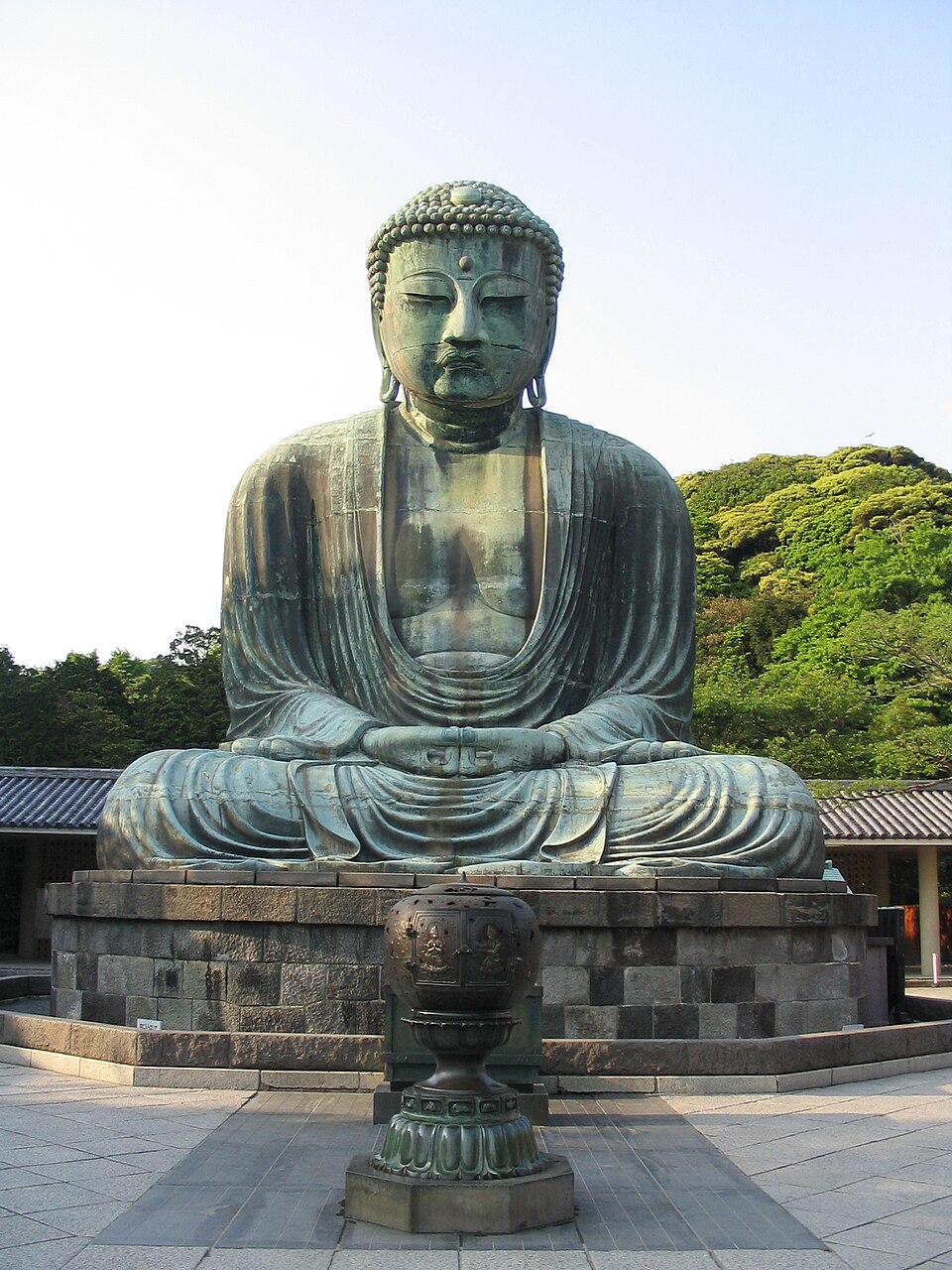
The Great Buddha of Kamakura (Kotoku-in) is about a 7-minute walk from Hase Station on the Enoden, or right by the “Daibutsu-mae” bus stop, reached by bus from Kamakura Station’s East Exit. This bronze seated Amida Buddha, a National Treasure, is about 11.3 meters tall and weighs about 121 tons; its construction is said to have begun around 1252 (Kencho 4).
It once sat inside a Great Buddha Hall, but the hall is said to have been destroyed by storms and by the great earthquake and tsunami of 1498 (Meio 7), and since then the statue has sat in the open air.
Komachi-dori—Food Strolling After Your Visit
Komachi-dori runs parallel to Wakamiya Oji from Kamakura Station’s East Exit to near Tsurugaoka Hachimangu, lined with restaurants and souvenir shops. Along with street food such as shirasu (whitebait) dishes, Japanese sweets, and rice crackers, you’ll find general-goods shops and stores selling Kamakura-bori lacquerware. It gets especially crowded on weekends.
Hokoku-ji (The Bamboo Temple)—A Bamboo Garden and Tea House
Hokoku-ji, a Rinzai Zen temple of the Kencho-ji school founded in 1334 (Kenmu 1), is known as the “Bamboo Temple.” About 2,000 bamboo stalks grow in the bamboo garden behind the main hall, a calm contrast to the bustle of the Hachimangu. Admission is 400 yen for high school students and older.
At the Kyukoan tea house in the bamboo garden, you can enjoy matcha (with dry sweets, 600 yen) while looking out over the bamboo. From Kamakura Station’s East Exit, take a Keikyu bus for about 12 minutes to “Jomyoji,” then walk 3 minutes.
Access
By Train
- JR Yokosuka Line / Shonan-Shinjuku Line: About 10 minutes on foot from the East Exit of Kamakura Station
- Enoshima Electric Railway (Enoden): About 10 minutes on foot from Kamakura Station
- From JR Tokyo Station: About 60 minutes to Kamakura Station on the Yokosuka Line
- From JR Yokohama Station: About 25 minutes to Kamakura Station on the Yokosuka Line
By Bus
- Get off at “Kamakura Hachimangu” (Enoden Bus) or “Daigaku-mae” (Keikyu Bus)
- Buses to various destinations depart from the bus terminal at the East Exit of Kamakura Station
By Car
- About 5 km from the Asahina IC on the Yokohama-Yokosuka Road
- Parking for worshippers is available (40 standard cars, 9:00–19:30, 600 yen for the first hour, then 300 yen per 30 minutes)
- *Roads in the area get congested on weekends, holidays, and during cherry blossom season, so public transportation is recommended
Recommended Route
Leave Kamakura Station by the East Exit and head north along Wakamiya Oji: at the Second Torii begins the Dankazura, a raised path that continues to the shrine and is lined with cherry trees in spring. On the way back, return to Kamakura Station via Komachi-dori for street food and souvenirs.
Summary
The Important Cultural Property buildings of the Hongu and Wakamiya, the Maiden with its Shizuka Gozen legend, the Genpei Ponds, and the regrown Great Ginkgo are all within the grounds of Tsurugaoka Hachimangu. Combine them with the Great Buddha of Kamakura, Komachi-dori, and Hokoku-ji for a full day in Kamakura.