
🕓 2026/2/20
#Tourist Destinations
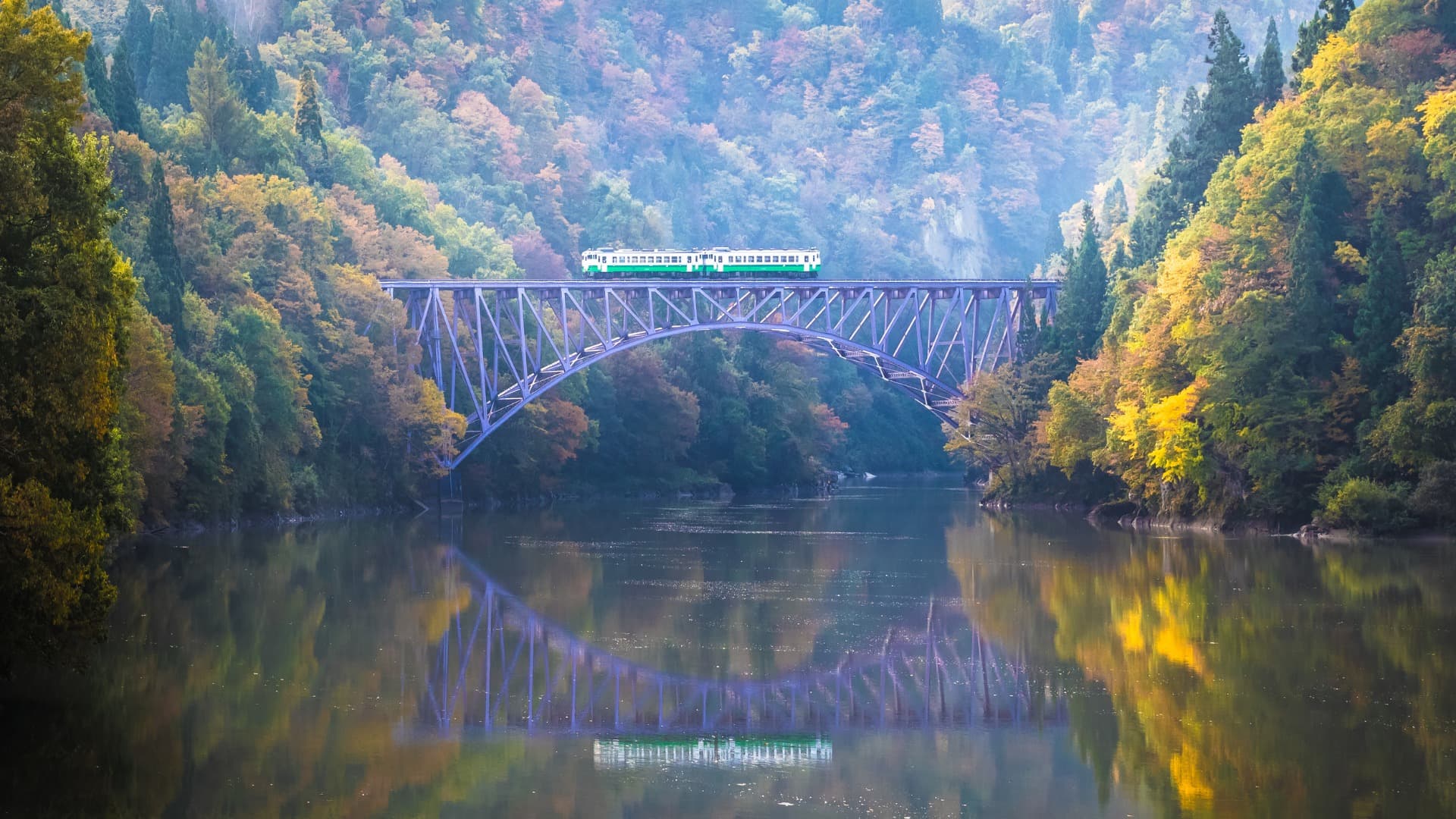
Table of Contents
- Ouchi-juku | An Edo-Era Post Town with Thatched-Roof Houses
- Tsuruga Castle | The White Fortress That Survived the Boshin War
- Tadami Line | One of Japan’s Most Scenic Local Railways
- Top 3 Must-Visit Tourist Spots in Fukushima Prefecture
- ー What is Fukushima Prefecture? ー
- Ouchi-juku | An Edo-Era Post Town with Thatched-Roof Houses
Top 3 Must-Visit Tourist Spots in Fukushima Prefecture
ー What is Fukushima Prefecture? ー
Fukushima Prefecture is located in the southern part of the Tohoku region of Japan, with Fukushima City serving as its capital. The area boasts a rich natural environment and historical background, with deeply rooted cultures and traditions.
The historic buildings of Aizu-Wakamatsu, the magnificent natural landscapes of Mount Bandai, traditional crafts, and delicious local ingredients captivate all who visit. The area also has connections to the famous feudal lord Date Masamune, making it a fascinating destination for history enthusiasts.
In 2011, Fukushima suffered severe damage from the Great East Japan Earthquake, particularly from the prolonged effects of the nuclear power plant accident. While this disaster was a harsh trial for the prefecture, community bonds were strengthened, and efforts toward reconstruction continue to this day.
Ouchi-juku | An Edo-Era Post Town with Thatched-Roof Houses


● Highlights of Ouchi-juku
Ouchi-juku is a post town located in Shimogo Town, Minami-Aizu District, Fukushima Prefecture, that richly preserves the atmosphere of the Edo period. Approximately 400 years ago, it thrived as a post town along the Aizu-Nishi Kaido highway connecting Aizu and Nikko. Today, more than 30 thatched-roof houses still stand in a row, conveying the essence of that era. In 1981, it was designated as an Important Preservation District for Groups of Traditional Buildings.
Cherry blossoms in spring, fresh greenery in summer, autumn foliage, and snowy landscapes in winter — the town reveals a different face with each visit. In winter, the thatched roofs covered in snow create a fantastical atmosphere that captivates many visitors. The local specialty “negi soba” is also a famous Ouchi-juku delicacy. This unique dish is eaten using a long green onion as chopsticks.
Ouchi-juku is one of Fukushima Prefecture’s premier tourist destinations, where visitors can enjoy historic streetscapes, natural beauty, traditional culture, and local cuisine. It offers a special experience, as if stepping back in time to the Edo period.
● History of Ouchi-juku

The history of Ouchi-juku dates back to the early Edo period. When the Edo shogunate, under the orders of Tokugawa Ieyasu, proceeded with developing highways connecting Tohoku and Edo, the Aizu-Nishi Kaido was established. Ouchi-juku was one of the post towns along this highway, serving as a base for accommodation and rest for feudal lords on sankin-kotai processions, merchants, and travelers.
Throughout the Edo period, Ouchi-juku flourished, and at its peak, more than 100 thatched-roof houses lined the streets. The town’s residents not only provided food and lodging to travelers but also engaged in farming, horse care, and cargo transportation. The post town also had a “kuchidome-bansho,” a checkpoint-like facility that verified travel permits and prevented the entry of suspicious individuals and criminals.
As modernization progressed, thatched-roof houses gradually disappeared and were replaced by concrete structures. To preserve the landscape of Ouchi-juku, local residents and government began conservation efforts, and in 1981, it was designated as an “Important Preservation District for Groups of Traditional Buildings,” receiving national protection.
● Access to Ouchi-juku
- Address: Oaza Ouchi, Shimogo Town, Minami-Aizu District, Fukushima Prefecture
- Transportation: Approximately 1 hour by car from Aizu-Wakamatsu Station
- Google Maps: Google Maps for Ouchi-juku


● Highlights of Tsuruga Castle
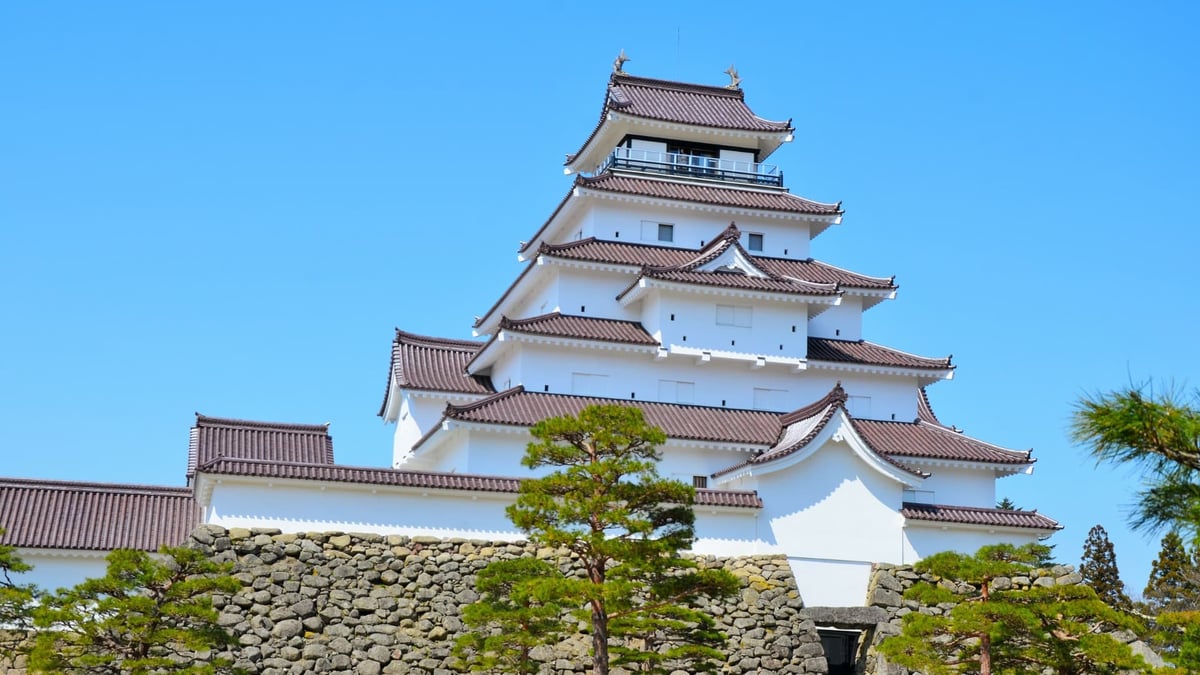
Tsuruga Castle is the iconic castle of Aizu-Wakamatsu City, Fukushima Prefecture, known for its beautiful red-tiled keep and rich history. It was renowned as an “impregnable fortress” during the Boshin War and has been selected as one of Japan’s Top 100 Castles. The keep stands 36.5 meters tall, with a beautiful exterior featuring the contrast of white walls and red tiles.
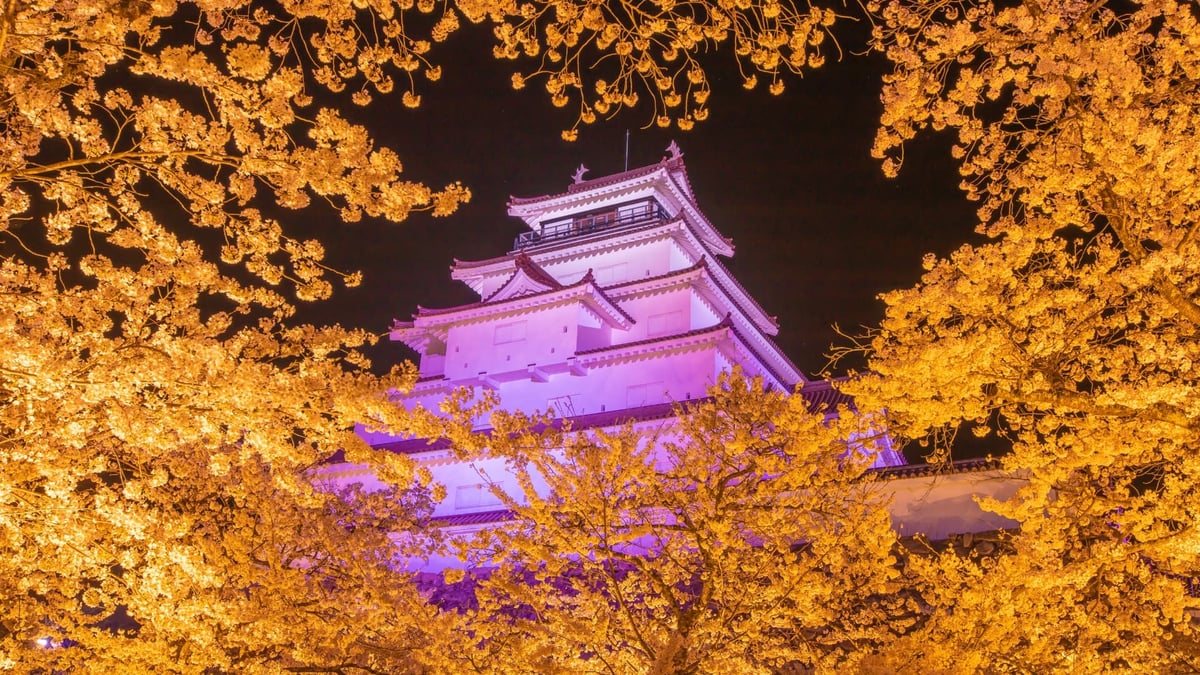
The park grounds feature approximately 1,000 Somei Yoshino cherry trees, earning it a place among the “Top 100 Cherry Blossom Viewing Spots in Japan.” In spring, the combination of cherry blossoms in full bloom and the red-tiled keep creates a breathtaking view, and nighttime illuminations offer a fantastical atmosphere.
The Tsuruga Castle grounds cover a vast area of approximately 69,000 tsubo (about 228,000 square meters), with the keep and teahouses reconstructed around the main citadel. Of particular note is the teahouse “Rinkaku,” associated with Shoan, the son of the legendary tea master Sen no Rikyu, which holds great historical value and conveys Japan’s tea culture to visitors.
● History of Tsuruga Castle

Its history dates back approximately 630 years. In 1384, Ashina Naomori built what was originally called “Kurokawa Castle” as the Higashi-Kurokawa Residence. Later, in 1589, Date Masamune took control of the area, but the following year, Gamo Ujisato entered the castle by order of Toyotomi Hideyoshi. Ujisato rebuilt the castle with a seven-story keep, renamed it “Tsuruga Castle,” and devoted efforts to developing the castle town.
During the Edo period, the keep was rebuilt to five stories after earthquake damage, forming the basis of its current appearance. During the Boshin War at the end of the Edo period, the castle endured a siege of approximately one month against the forces of the new government, earning its reputation as an “impregnable fortress.”
However, in 1874 (Meiji 7), the keep was demolished by government order, and for a long time afterward, only the stone walls remained. The current keep was reconstructed in 1965 through citizen donations and other contributions.
● Access to Tsuruga Castle
- Address: 1-1 Otemachi, Aizu-Wakamatsu City, Fukushima Prefecture
- Transportation: Approximately 20 minutes on foot or by bus from Aizu-Wakamatsu Station
- Google Maps: Google Maps for Tsuruga Castle
Tadami Line | One of Japan’s Most Scenic Local Railways


● Highlights of the Tadami Line
The Tadami Line is a local railway spanning approximately 135.2 km from Aizu-Wakamatsu Station in Fukushima Prefecture to Koide Station in Niigata Prefecture, known for its beautiful scenery throughout the four seasons. The First Tadami River Bridge, which spans the Tadami River, is particularly famous as a scenic spot where you can see the “water mirror” effect of the landscape reflected on the river surface and the mystical sight of river mist enveloping the bridge.
From fresh greenery in spring, deep green in summer, autumn foliage, to snowy landscapes in winter, visitors can enjoy different scenery with each season. During the autumn foliage season in particular, many tourists and photography enthusiasts visit, and extra trains are sometimes operated.
From Michi-no-Eki Oze Kaido Mishima-juku, a 15-minute climb along a walking trail leads to a viewing spot overlooking the First Tadami River Bridge, attracting many visitors from both Japan and abroad.
● History of the Tadami Line
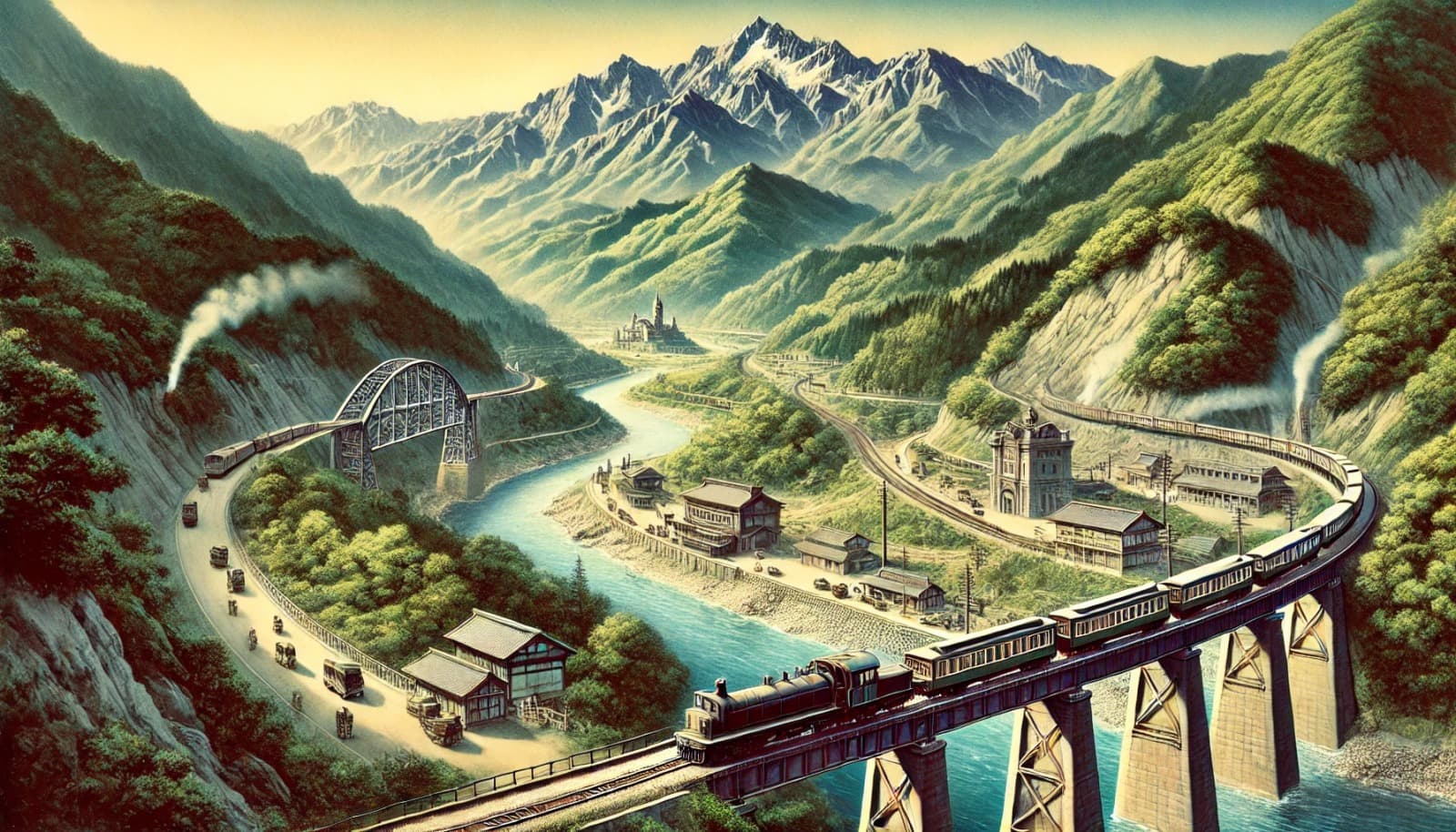
The history begins in 1926, when the section between Aizu-Wakamatsu Station and Aizu-Bange Station (21.6 km) opened as the Aizu Line. Later, the section from Koide Station to Oshirakawa Station (26.0 km) on the Niigata Prefecture side opened as the Tadami Line. At this point, the lines existed as separate routes on the Fukushima and Niigata sides.
In 1963, the Electric Power Development Company transferred the private railway that had been used for the construction of the Tagokura Dam, and the section from Aizu-Kawaguchi Station to Tadami Station (27.6 km) was extended. Then, in 1971, the section from Tadami Station to Oshirakawa Station (20.8 km) opened, connecting the Fukushima and Niigata sides as a single line, completing the entire Tadami Line.
However, in 2011, the Niigata-Fukushima heavy rain disaster damaged the section between Aizu-Kawaguchi Station and Tadami Station, suspending service. This section remained unrestored for a long time, with substitute bus service operating. Thanks to the strong requests and efforts of local municipalities and residents, full-line service was eventually resumed.
● Access to the Tadami Line
The JR Tadami Line is a 135.2 km line connecting Aizu-Wakamatsu Station in Fukushima Prefecture and Koide Station in Niigata Prefecture. The areas along the line are known as one of Japan’s heaviest snowfall regions. In particular, National Route 252, which runs parallel to the Tadami Line, is closed during winter at the Rokujurigoe section on the Fukushima-Niigata border, making the Tadami Line an important means of winter transportation.
From Tokyo to Aizu-Wakamatsu:
- By train: Take the Tohoku Shinkansen from Tokyo Station to Koriyama Station (approximately 80 minutes), then transfer to the Ban’etsu West Line to Aizu-Wakamatsu Station (approximately 80 minutes).
- By car: From Kawaguchi JCT, take the Tohoku Expressway to Koriyama JCT, then the Ban’etsu Expressway to Aizu-Wakamatsu IC, and continue via National Routes 49 and 118 to Aizu-Wakamatsu city center.
- Note: National Route 252 winter closure: The Rokujurigoe section of National Route 252 is typically closed from early December until the following spring.
■ Related Articles