
🕓 2025/1/29
#Culture
A Detailed Guide to the History and Recommended Spots of Ginkaku-ji
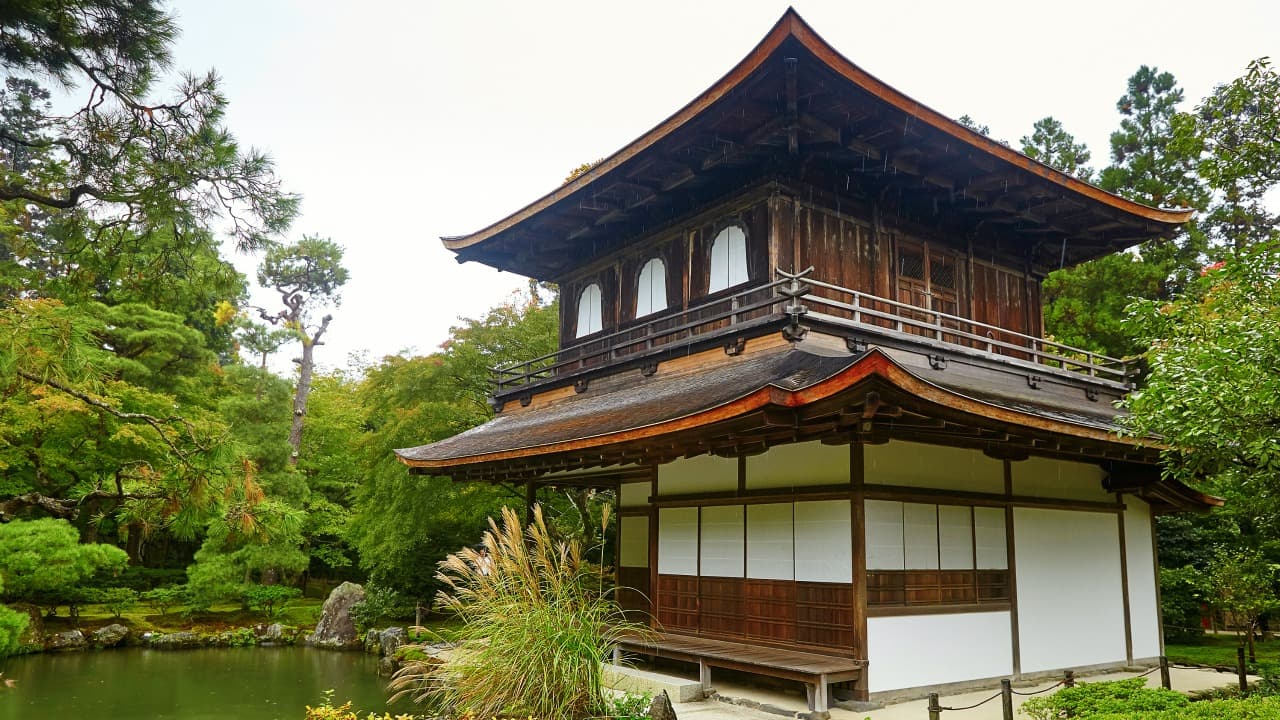
Table of Contents
Introduction
Ginkaku-ji is a temple of the Rinzai Shokoku-ji school located in Sakyo Ward, Kyoto, whose beautiful architecture and gardens symbolize “Higashiyama Culture.” Its official name is “Jisho-ji,” and it originates from the mountain villa “Higashiyama-den” built by Ashikaga Yoshimasa during the Muromachi period. Ginkaku-ji is centered around the National Treasure Kannon-den (Silver Pavilion) and Togudo, with gardens designated as Special Places of Scenic Beauty creating a harmonious and beautiful landscape.
This page provides a detailed introduction to the history and major highlights of Ginkaku-ji. Along with the beautiful scenery of the four seasons, we will fully introduce the charms of Ginkaku-ji.
Overview of Ginkaku-ji
Ginkaku-ji is a temple of the Rinzai Shokoku-ji school located in Ginkaku-ji-cho, Sakyo Ward, Kyoto. Officially known as “Jisho-ji,” it originates from the mountain villa “Higashiyama-den” built by Ashikaga Yoshimasa, the 8th Shogun of the Muromachi Shogunate. Ginkaku-ji boasts a beautiful landscape centered on the National Treasure Kannon-den (Silver Pavilion), with gardens and other buildings in harmony.
This temple was built as a mountain villa for Yoshimasa’s retirement, and after his death, it was converted into a Zen temple. Like other temples in Kyoto, Ginkaku-ji is a building of high historical and cultural value. Particularly famous are the “Togudo,” which was Yoshimasa’s personal Buddhist hall, and the “Kannon-den (Silver Pavilion),” which symbolizes Ginkaku-ji. The Kannon-den is a two-story wooden structure modeled after the Shariden (Relic Hall) of Kinkaku-ji (Rokuon-ji), which was built by Yoshimasa’s grandfather, Ashikaga Yoshimitsu.
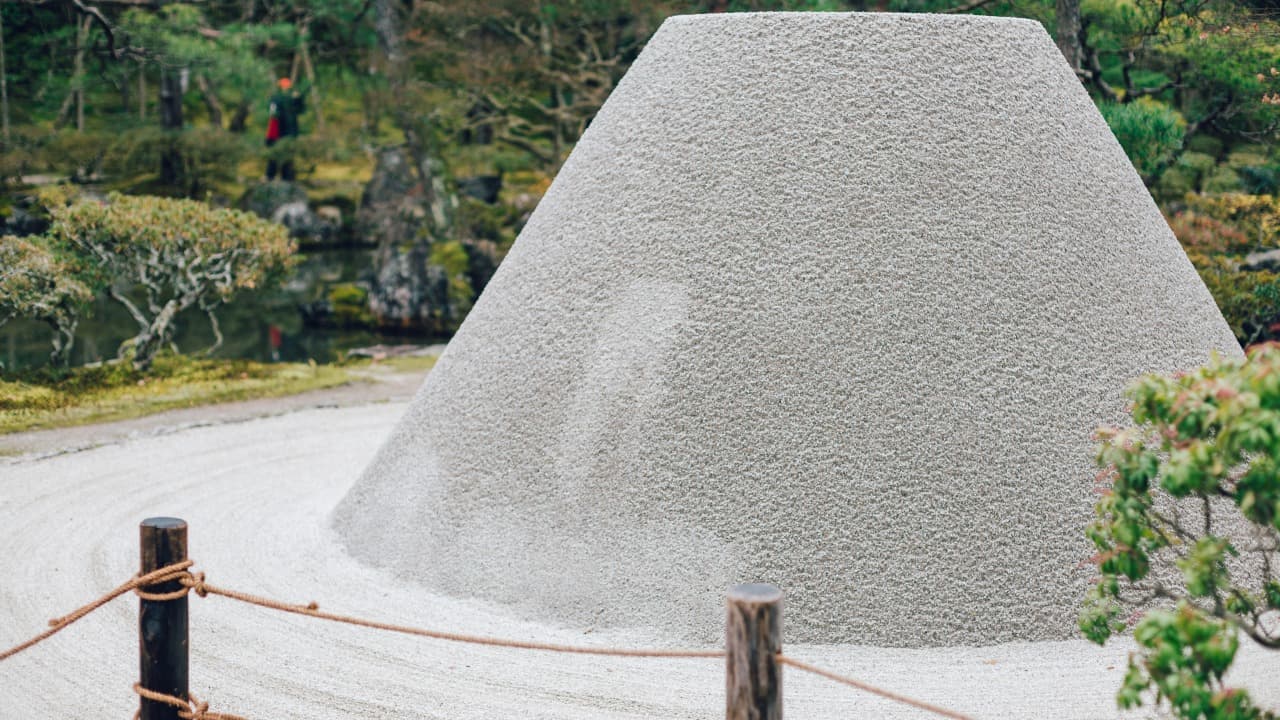
The gardens are designated as a Special Place of Scenic Beauty and Special Historic Site, characterized by features such as Ginshadan (a white sand garden) and Kogetsudai (a truncated cone-shaped sand mound). These gardens were designed for moon viewing, expressing Ashikaga Yoshimasa’s Pure Land faith and the concept of Horai (Mount Penglai). The entire garden is designed as a stroll-type pond garden, providing visitors with beautiful scenery throughout the four seasons. The “Ginshadan,” made of white sand, and the “Kogetsudai,” a Mount Fuji-shaped sand mound, are particularly famous.
Ginkaku-ji normally has areas that are closed to the public, but special openings are held twice a year in spring and autumn. During these periods, visitors can appreciate the beautiful interior decorations and fusuma paintings that are not normally visible. We recommend timing your visit to coincide with these special openings.
History of Ginkaku-ji
Ginkaku-ji (official name: Jisho-ji) is a temple of the Rinzai Shokoku-ji school located in Sakyo Ward, Kyoto, with a history dating back to the Muromachi period. Below, we introduce the major historical events by category.
1. Ashikaga Yoshimasa and the Founding of Ginkaku-ji (1436-1490)
 *Illustrative image
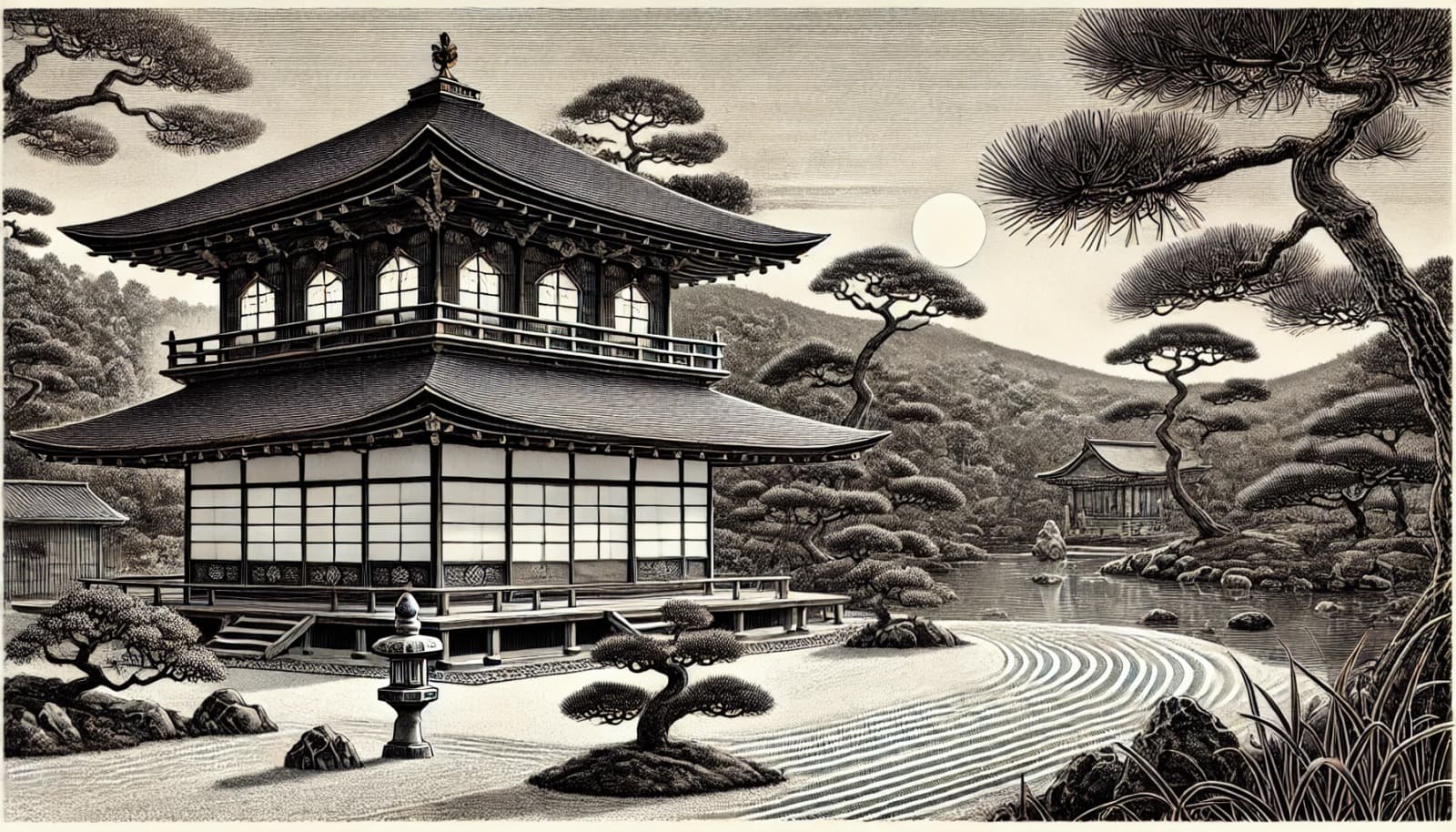
Ginkaku-ji (official name: Jisho-ji) was founded by Ashikaga Yoshimasa (1436-1490), the 8th Shogun of the Muromachi Shogunate. After retiring from the position of Shogun, Yoshimasa decided to seclude himself in the Higashiyama area to escape the devastation of Kyoto caused by the Onin War. In 1482, he began constructing the Higashiyama Mountain Villa, later known as Ginkaku-ji, and devoted himself to cultural activities such as tea ceremony, painting, and garden art. These activities are known as “Higashiyama Culture,” which strongly reflects Yoshimasa’s personal aesthetic.
Ginkaku-ji was designed as a building embodying the aesthetic of “wabi-sabi” that Yoshimasa idealized, characterized by its understated exterior beauty. In contrast to the lavish gold leaf of Kinkaku-ji built by Yoshimasa’s grandfather Ashikaga Yoshimitsu, the simple exterior without silver leaf is symbolic.
2. Completion of Higashiyama Villa and Its Aftermath (1482-1490)
 *Illustrative image
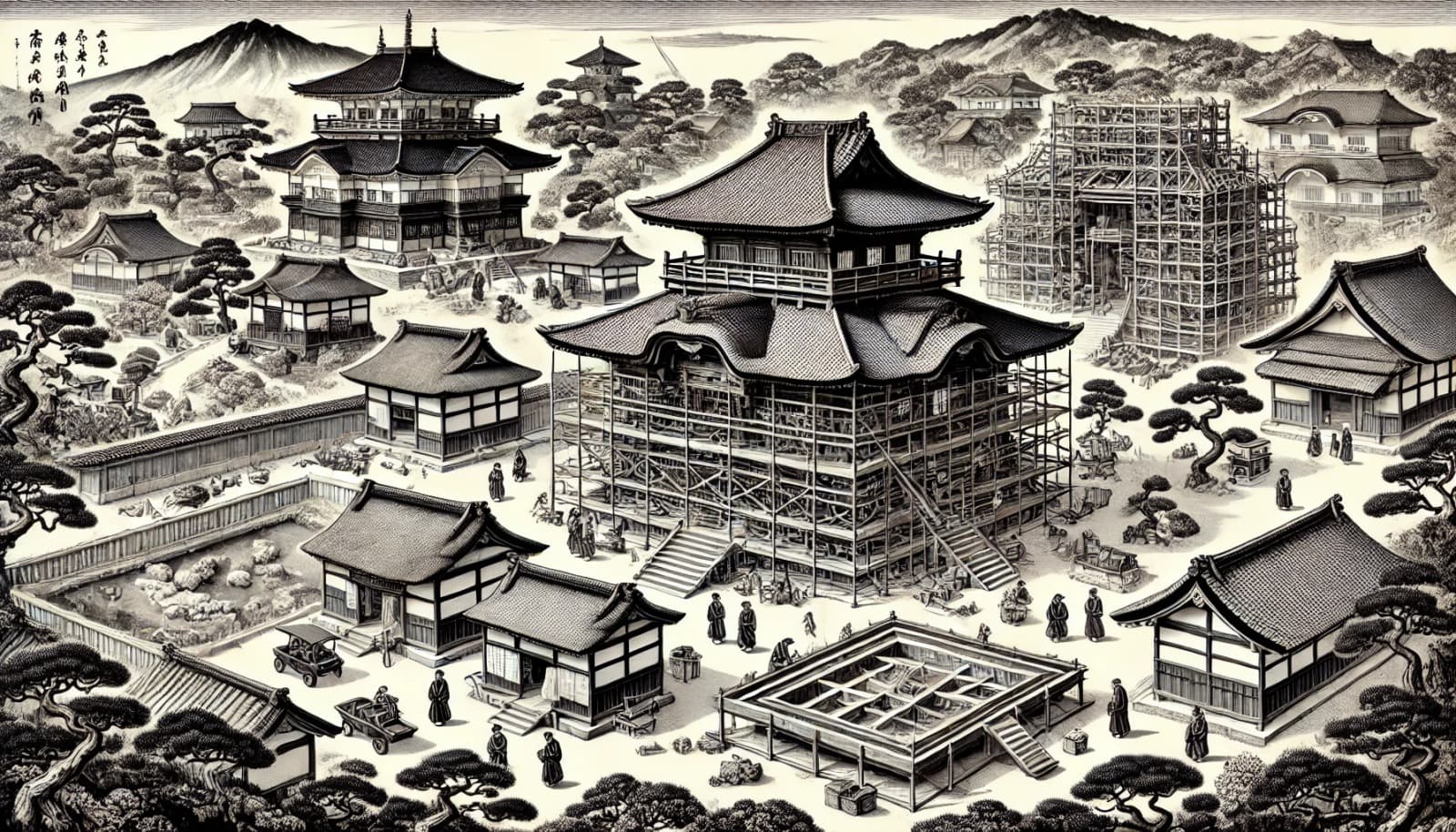
The Higashiyama Mountain Villa (later Ginkaku-ji) was begun by Ashikaga Yoshimasa in 1482. In 1485, Saishi-an was completed, and the following year, the Togudo, Yoshimasa’s personal Buddhist hall, was constructed. The Togudo is a shoin-style building containing a four-and-a-half tatami tea room called “Dojinsai,” used as a place for Yoshimasa’s daily meditation and cultural activities. In 1489, the pillar-raising ceremony for the Ginkaku (Kannon-den) took place, but Yoshimasa passed away the following year without seeing its completion.
In 1490, after Yoshimasa’s death, Ginkaku-ji was completed and renamed “Jisho-ji” as a Zen temple. This name derives from Yoshimasa’s posthumous name “Jishoin-den” and was intended for the repose of his soul.
3. The Sengoku Period and Beyond (1549~)
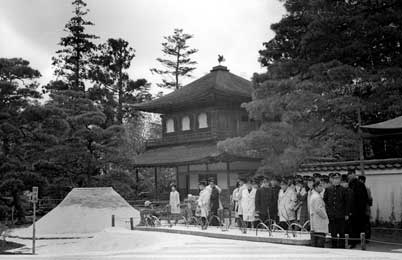
During the Sengoku (Warring States) period, the 12th Muromachi Shogun Ashikaga Yoshiharu built Nakao Castle on the mountain behind Jisho-ji together with Ashikaga Yoshiteru. This castle is believed to have been built in 1549, but the following year it was burned in an attack by Miyoshi Nagayoshi and abandoned after a short period. At the end of the Sengoku period, the former Imperial Regent Konoe Sakihisa used Ginkaku-ji as a villa.
Through the relationship with his brother Yozan Zuiki, the 6th head of Jisho-ji, this conversion to a villa progressed. After Konoe Sakihisa’s death, the site was revived as a sub-temple of Shokoku-ji.
4. Modern Restoration and World Heritage Registration (1868-1994)
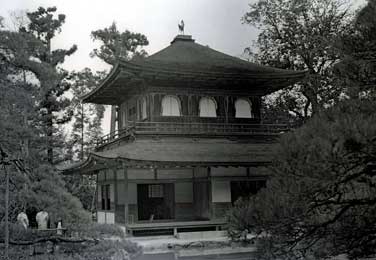
After the Meiji Restoration, Ginkaku-ji fell into a state of disrepair due to the separation of Shinto and Buddhism and the anti-Buddhist movement, but was subsequently restored through dedicated efforts. In 1951, the Silver Pavilion and Togudo were designated as National Treasures, and in 1952, the gardens were designated as a Special Historic Site and Special Place of Scenic Beauty. These designations officially recognized the cultural value and beauty of Ginkaku-ji. Furthermore, in 1994, it was registered as a UNESCO World Heritage Site as part of the “Historic Monuments of Ancient Kyoto.”
In 2007, a scientific survey was conducted by the Nara National Research Institute for Cultural Properties, which confirmed that silver leaf was never applied to the exterior walls of the Silver Pavilion. This revealed that the name “Silver Pavilion” came into use only from the Edo period onward, and that silver leaf was not used when the building was originally constructed.
Recommended Spots at Ginkaku-ji
Ginkaku-ji is a beautiful place where architecture symbolizing Higashiyama Culture harmonizes with its gardens. Below is a detailed introduction to the major highlights.
■ Kannon-den (Silver Pavilion)
The Kannon-den, the symbol of Ginkaku-ji, is designated as a National Treasure. This two-story structure has its first floor called “Shinku-den” and its second floor called “Choon-kaku,” featuring a design that fuses Zen Buddhist and shoin-zukuri styles. Notably, the exterior walls are coated with black lacquer, and the understated beauty without silver leaf is its hallmark. The Kannon-den was built by Ashikaga Yoshimasa for his retirement life, reflecting his religious views and aesthetic sensibilities.
■ Togudo (Dojinsai)
The Togudo is another National Treasure-designated building constructed by Yoshimasa, built in 1486. This building contains a four-and-a-half tatami tea room called “Dojinsai” and is considered the prototype of shoin-zukuri architecture. Inside the Togudo, an Amida Nyorai (Amitabha Buddha) statue is enshrined as Yoshimasa’s guardian deity, reflecting his Pure Land Buddhist faith. This space is usually closed to the public but can be viewed during special opening periods.
■ Ginshadan and Kogetsudai
The garden is designed as a stroll-type pond garden centered on Kinkyochi pond and is designated as a Special Place of Scenic Beauty and Special Historic Site. Within the garden, features such as Hakutsuru-jima (White Crane Island) and Ouchi-ishi (Ouchi Stone) are placed, expressing Ashikaga Yoshimasa’s Pure Land faith and Horai (Mount Penglai) concept. The Ginshadan and Kogetsudai, in particular, are white sand gardens said to have been designed to reflect moonlight, offering visitors a unique landscape.
■ Kinkyochi Pond
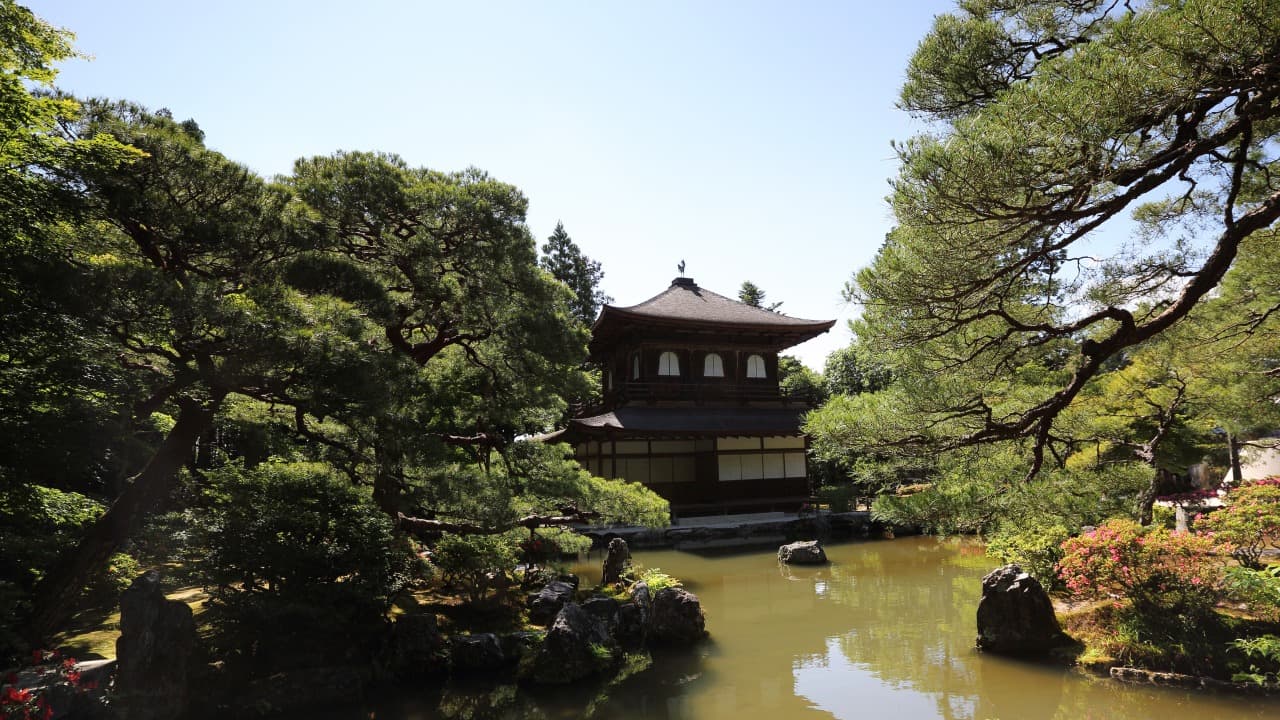
Kinkyochi (Brocade Mirror Pond) is the central garden of Ginkaku-ji, designed as a stroll-type pond garden. The pond’s name derives from the way it mirrors the Silver Pavilion (Kannon-den) like a brocade mirror. Within the pond are “Hakutsuru-jima” (White Crane Island) and “Ouchi-ishi” (Ouchi Stone), which express Ashikaga Yoshimasa’s Pure Land faith and Horai (Mount Penglai) concept. The reflection of the Silver Pavilion on the pond’s surface is particularly beautiful after rain or on windless days, captivating visitors.
■ Observation Point
At the back of the garden, there is an observation point offering panoramic views of the entire Ginkaku-ji temple and the Kyoto cityscape. Autumn foliage and winter snow scenes are particularly beautiful, making it a popular photography spot. The view from this observation point is a precious vantage where you can see the entirety of Ginkaku-ji and simultaneously appreciate the beautiful nature and history of Kyoto.
Summary
Through highlights such as the Kannon-den, Togudo, and Kinkyochi Pond, Ginkaku-ji allows visitors to experience the spirit of “wabi-sabi” and the aesthetic sensibility of Ashikaga Yoshimasa. The seasonal scenery of the gardens reveals different expressions with each visit.
When visiting Kyoto, please take your time to savor the history and culture of Ginkaku-ji and let its serene atmosphere soothe your soul.