- Introduction
- Overview of Hakone Shrine
- History of Hakone Shrine
- 1. Nara Period (757): Founding by Mangan Shonin—A Sacred Site of Mountain Worship
- 2. Kamakura Period: Minamoto no Yoritomo’s Devotion—Becoming the Warriors’ Guardian
- 3. Sengoku to Edo Period: The Hakone Checkpoint and Tokugawa Ieyasu’s Protection
- 4. Meiji Era: Separation of Shinto and Buddhism and Transformation to “Hakone Shrine”
- 5. Modern Era: The Power Spot Boom and Global Popularity
- Highlights and Recommended Spots
- 1. The Peace Torii—Hakone’s Symbol Floating on Lake Ashi
- 2. Cedar-Lined Approach—A Sacred Space Created by 800-Year-Old Giants
- 3. Kuzuryu Shrine (New Shrine)—Sacred Site for Romantic Relationships
- 4. Treasure Hall—Housing Hakone Shrine’s Greatest Treasures
- 5. Lake Ashi and Hakone Shrine Through the Seasons—Spectacular Views Year-Round
- Nearby Attractions
- Access
- Summary
- Frequently Asked Questions
Introduction
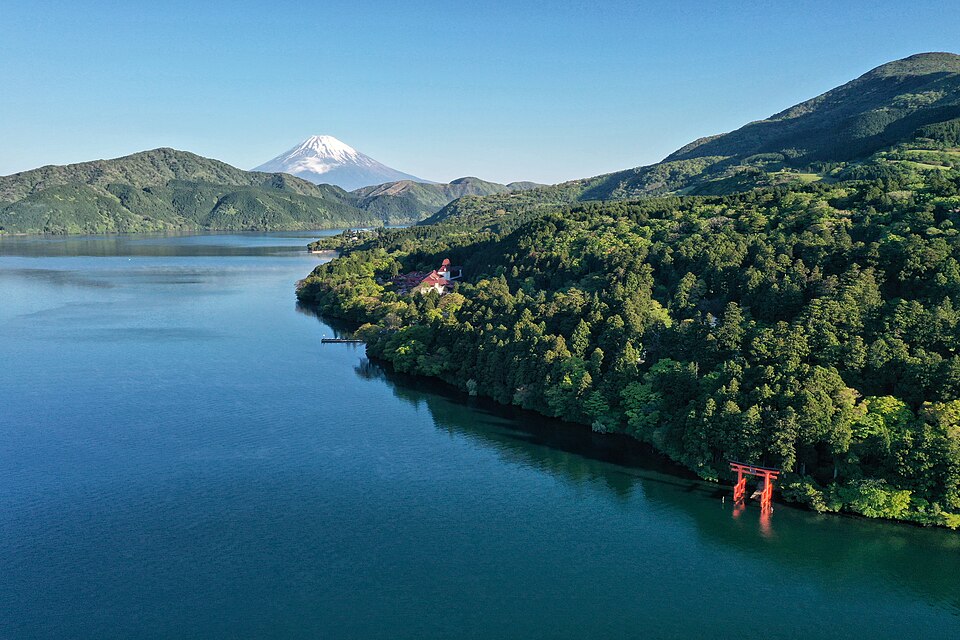
Nestled deep in the forests of Hakone, on the shores of Lake Ashi, stands Hakone Shrine. Many visitors have been moved by the solemn beauty of the cedar-lined approach and captivated by the magical sight of the vermilion “Peace Torii” standing at the lakeside. This torii gate, appearing to rise from the water’s surface, has become a world-renowned photo spot through social media, representing Hakone’s most iconic scenery.
Hakone Shrine is one of the Kanto region’s premier power spots, with approximately 1,260 years of history. Founded in 757 (Tenpyo Hoji 1) by the ascetic priest Mangan Shonin, it has been deeply revered by warriors including Minamoto no Yoritomo and Tokugawa Ieyasu. The saying “He who has Hakone at his back shall rule the land” speaks to the shrine’s important position in samurai society.
Today, approximately 2 million visitors come annually seeking blessings for romantic relationships, good fortune, and traffic safety. The shrine is also nationally famous as a New Year tradition, with the Hakone Ekiden relay race’s outbound finish and return start points located nearby. This article provides a comprehensive guide to Hakone Shrine, tracing its history from founding to the present day, covering must-see highlights, nearby attractions, and access information.
Overview of Hakone Shrine
Hakone Shrine is located in Moto-Hakone, Hakone-machi, Ashigarashimo-gun, Kanagawa Prefecture, on the slopes of Mount Hakone beside Lake Ashi. Its former name was “Hakone Gongen,” and it flourished as a syncretic Shinto-Buddhist mountain ascetic training ground until the Meiji-era separation of Shinto and Buddhism.
| Official Name | Hakone Shrine |
|---|---|
| Location | 80-1 Moto-Hakone, Hakone-machi, Ashigarashimo-gun, Kanagawa |
| Enshrined Deity | Hakone Okami (Ninigi-no-Mikoto, Konohanasakuya-hime, Hikohohodemi-no-Mikoto) |
| Shrine Rank | Former Kokuhei Shosha, Beppyo Shrine |
| Founded | 757 (Tenpyo Hoji 1) |
| Visiting Hours | Grounds open freely (Treasure Hall 9:00–16:00) |
| Admission | Grounds free (Treasure Hall: Adults ¥500) |
| Closed | Open year-round |
*Please check the official Hakone Shrine website for the latest visiting information.
The enshrined deity “Hakone Okami” is a collective name for three deities: Ninigi-no-Mikoto, Konohanasakuya-hime-no-Mikoto, and Hikohohodemi-no-Mikoto. As these deities appear in the myth of the descent of the heavenly grandchild, the shrine is believed to offer blessings for national peace, good fortune, and romantic relationships.
The grounds extend from the shores of Lake Ashi up the slopes of Mount Hakone, and the approach lined with cedar trees estimated to be 800 to 1,000 years old exudes an atmosphere befitting a sacred precinct. Within the grounds also sits a new shrine of Kuzuryu Shrine, popular especially among young women as a deity of romantic relationships.
History of Hakone Shrine
1. Nara Period (757): Founding by Mangan Shonin—A Sacred Site of Mountain Worship
The Hakone area was an object of mountain worship long before the shrine’s founding. Mount Hakone is an active volcano, and the fumaroles of Owakudani and the sulfur-scented hot spring areas were seen by ancient people as a mystical “mountain where gods dwell.” Lake Ashi, a caldera lake formed by volcanic eruption, was also believed to be home to a dragon deity.
In 757, the mountain ascetic Mangan Shonin is said to have climbed Mount Hakone, and after rigorous training, received an oracle from Hakone Okami and established the shrine. Legend also holds that Mangan Shonin subdued the nine-headed dragon (Kuzuryu) that had been ravaging Lake Ashi and enshrined it as the lake’s guardian deity. This nine-headed dragon legend became the origin of today’s Kuzuryu Shrine.
The original Hakone Gongen developed as a syncretic Shinto-Buddhist mountain ascetic training ground. It served as a base for yamabushi (mountain ascetics) who trained in the harsh natural environment of Mount Hakone, and also as a place of faith where travelers along the Tokaido road prayed for safe passage. Hakone Pass was a critical transportation hub connecting east and west, and Hakone Gongen provided spiritual support for those crossing the pass.
2. Kamakura Period: Minamoto no Yoritomo’s Devotion—Becoming the Warriors’ Guardian
Hakone Shrine gained nationwide fame during the Kamakura period. Minamoto no Yoritomo deeply revered Hakone Gongen, and is said to have prayed for victory there before his uprising in 1180. Particularly famous is the story of Yoritomo being sheltered by the betto (head priest) of Hakone Gongen after his defeat at the Battle of Ishibashiyama, narrowly escaping death.
Never forgetting this debt of gratitude, after establishing the Kamakura shogunate, Yoritomo donated many lands and commissioned the construction of shrine buildings. The “Nisho Moude” (pilgrimage to two shrines)—visiting Izusan Gongen and Hakone Gongen—became an established annual event of the Kamakura shogunate, an important ceremony where the shogun himself would make the pilgrimage.
Throughout the Kamakura period, Hakone Gongen received fervent protection from the warrior class, giving rise to the saying “He who has Hakone at his back shall rule the land.” For warriors, receiving the blessing of Hakone Gongen, which commanded the strategic Tokaido road, symbolized their ambition to unify the nation.
3. Sengoku to Edo Period: The Hakone Checkpoint and Tokugawa Ieyasu’s Protection
During the Sengoku period, Hakone Gongen received protection from the Later Hojo clan, but temporarily declined after the Siege of Odawara by Toyotomi Hideyoshi in 1590. In the Edo period, however, Tokugawa Ieyasu generously patronized Hakone Gongen and carried out large-scale reconstruction of the shrine buildings.
In 1619, the Hakone Checkpoint was established, making Hakone the Tokaido’s greatest barrier. Known for its strict enforcement of “incoming guns, outgoing women,” the checkpoint was located near Hakone Gongen, and travelers passing through would customarily pray at the shrine for safe travels. This strengthened Hakone Gongen’s character as the “deity of traffic safety.”
During the Edo period, Hakone Gongen was also a major temple complex with many monk quarters. Many halls dotted the mountainside, bustling as both a mountain ascetic training ground and as lodgings for Tokaido travelers. Daimyo on their sankin-kotai (alternate attendance) journeys also invariably visited Hakone Gongen, and throughout the Edo period, its authority remained unshakeable.
4. Meiji Era: Separation of Shinto and Buddhism and Transformation to “Hakone Shrine”
The 1868 Separation of Shinto and Buddhism decree forced a major transformation on Hakone Gongen, which had prospered through syncretic Shinto-Buddhism for approximately 1,100 years. The Buddhist-inflected name “Hakone Gongen” was abolished and renamed “Hakone Shrine.” Buddhist facilities within the grounds were removed and Buddhist statues transferred to other temples. Many monk quarters also disappeared, and Hakone’s character as a sacred site of mountain asceticism was profoundly altered.
However, from the Meiji era onward, Hakone gained new appeal. From 1878, Hakone’s hot springs began attracting attention as a foreign resort area, and by the late Meiji period, its popularity as a day-trip destination from Tokyo grew. Hakone Shrine also saw increasing visitors alongside the growth in tourism, becoming known for blessings of traffic safety and good fortune.
In 1952, the “Peace Torii” was erected on the surface of Lake Ashi to commemorate the enactment of the San Francisco Peace Treaty. This vermilion torii standing on the water was built with prayers for postwar peace and has become the most famous landmark symbolizing modern Hakone Shrine.
5. Modern Era: The Power Spot Boom and Global Popularity
Since the Heisei era, Hakone Shrine has gained explosive popularity as “one of the Kanto region’s premier power spots.” During the late 2000s power spot boom in particular, Hakone Shrine and Kuzuryu Shrine were featured in magazines and on television as “sacred sites for romantic relationships,” leading to a surge in young female visitors.
The Peace Torii has become globally known through Instagram and other social media, becoming a must-visit spot for international tourists as a “Torii in the lake.” The torii reflected in the quiet morning lake surface is particularly magical, and many photographers arrive before dawn to capture the scene. On clear days, Mount Fuji may be visible beyond the torii, creating a landscape that crystallizes the beauty of Japan.
During the annual Hakone Ekiden relay race on January 2–3, the outbound finish and return start points are located very near Lake Ashi, making Hakone Shrine a watchful presence over the runners’ efforts and part of the New Year tradition. Welcoming approximately 2 million visitors annually, Hakone Shrine continues to evolve from an ancient sacred site of mountain worship to a modern power spot.
Highlights and Recommended Spots
Here are the must-see highlights at Hakone Shrine. From lakeside spectacular views to sacred spaces deep in the forest, a diverse range of attractions awaits.
1. The Peace Torii—Hakone’s Symbol Floating on Lake Ashi
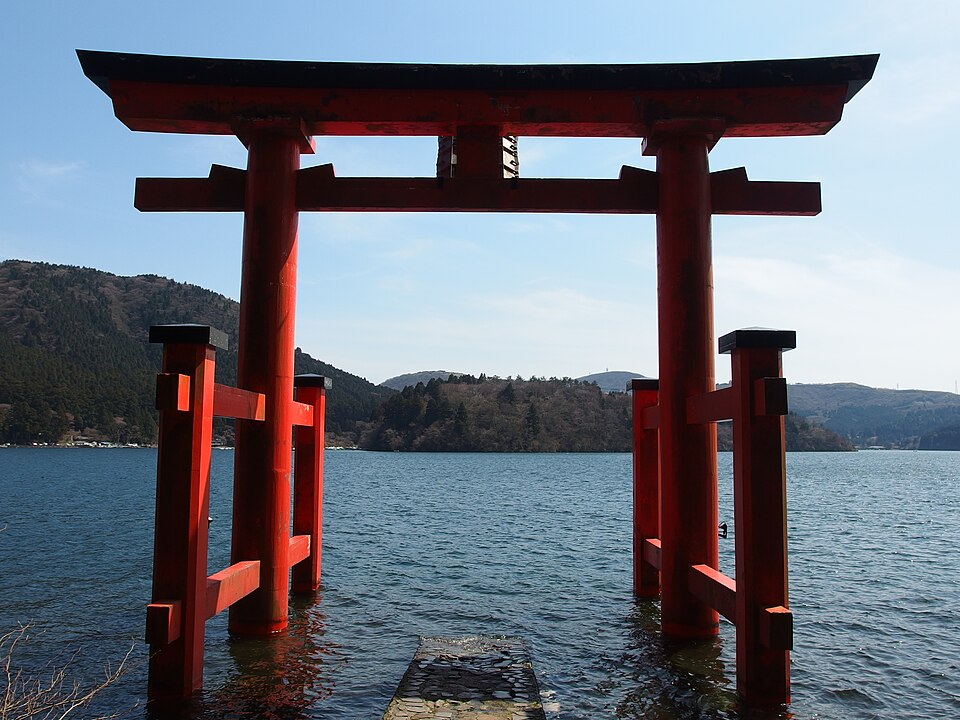
The most famous spot at Hakone Shrine is the “Peace Torii” standing at the shore of Lake Ashi. Erected in 1952 to commemorate the San Francisco Peace Treaty and the Crown Prince’s investiture, this vermilion ryobu-style torii stands approximately 7.3 meters tall and appears to rise directly from the lake surface.
The torii’s plaque bears the characters for “Peace,” embodying prayers for Japan’s postwar peace. On clear days, you can see Lake Ashi and Mount Fuji beyond the torii, creating a landscape that distills the beauty of Japan. This view has been widely featured in domestic and international travel guides and on social media, enchanting travelers worldwide as “one of Japan’s most beautiful torii gates.”
The best time for photography is early morning. While long queues form in front of the torii during the day, arriving between 7:00 and 8:00 AM allows relatively uncrowded conditions to photograph the torii reflected in the calm lake. Foggy mornings create an even more magical atmosphere, making it a favorite scenario for photographers.
2. Cedar-Lined Approach—A Sacred Space Created by 800-Year-Old Giants
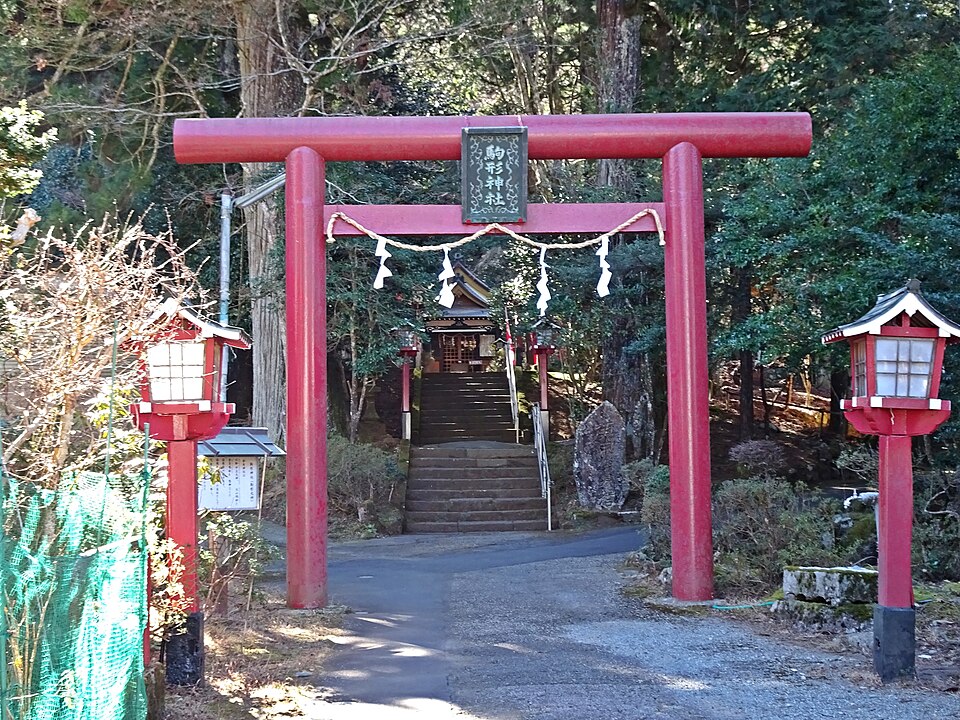
Hakone Shrine’s approach is a solemn space with giant cedar trees estimated to be 800 to 1,000 years old towering on both sides. These approximately 90 cedar giants reaching over 30 meters in height create an atmosphere of a “sacred precinct” removed from the secular world the moment you set foot on the path.
The stone steps of the approach total 89, with the fourth and fifth torii gates standing along the way as you climb through dense groves. The moss-covered stone steps and giant cedars create a scene that feels like stepping back a thousand years in time. On rainy days, water droplets from the trees and the deepened green of the moss add a mysterious beauty different from sunny days.
Among the cedars, the “Yatate no Sugi” (Arrow-Standing Cedar) deserves special attention. This giant cedar, estimated to be approximately 1,200 years old, is said to be where warriors once offered arrows praying for victory, and it is now known as a power spot. Its trunk circumference measures approximately 6 meters, and its life force is overwhelming.
3. Kuzuryu Shrine (New Shrine)—Sacred Site for Romantic Relationships
Within Hakone Shrine’s grounds sits the new shrine of Kuzuryu Shrine. The main shrine is deep in the forest on the shores of Lake Ashi, and due to difficult access, the new shrine was established within Hakone Shrine’s grounds in 2000. The enshrined deity Kuzuryu Okami is the dragon god of Lake Ashi subdued by Mangan Shonin, believed to offer blessings for romantic relationships, financial fortune, and business prosperity.
It is especially popular as a power spot for “romantic relationships,” and sacred water called “Ryujin-sui” springs forth within the grounds. Washing money with this water is said to boost financial fortune, and carrying it home in a bottle is said to improve romantic fortune. Kuzuryu Shrine’s “en-musubi omamori” (relationship charm) consistently ranks among Hakone Shrine’s most popular charms.
On the 13th of each month, a monthly festival is held at the main shrine, and a special “monthly festival worship boat” operates across Lake Ashi. Visitors from across Japan come seeking romantic blessings, enjoying a mystical worship experience on the lake.
4. Treasure Hall—Housing Hakone Shrine’s Greatest Treasures
Hakone Shrine’s Treasure Hall houses and displays approximately 200 cultural artifacts including swords, armor, and ancient documents donated by warriors such as Minamoto no Yoritomo and Tokugawa Ieyasu. Particularly noteworthy are the “Seated Statue of Mangan Shonin” (Important Cultural Property) and a sword said to have been donated by Yoritomo.
From the second floor of the Treasure Hall, views of Lake Ashi extend before you, allowing you to enjoy both the exhibitions and the scenery. Encountering these precious items that tell the story of Hakone Shrine’s 1,260-year history will help you appreciate how deeply this shrine has been revered. Admission is ¥500 for adults, with a visit taking approximately 30 minutes.
5. Lake Ashi and Hakone Shrine Through the Seasons—Spectacular Views Year-Round
Hakone Shrine shows a different face with each season, offering impressive scenery whenever you visit. Spring (April–May) brings cherry blossoms and azaleas along the approach, creating beautiful contrast with the green of the cedar avenue. Summer (July–August) offers the refreshing breezes of Lake Ashi, and during the “Lake Festival,” lanterns are set afloat on the lake in a magical display.
Autumn (late October–mid November) is foliage season, when the maples around Lake Ashi turn red. The combination of the Peace Torii and autumn leaves is exceptionally beautiful. Winter (December–February) often brings clear skies making Mount Fuji clearly visible, offering the chance to witness the spectacular scene of the Peace Torii with snow-capped Mount Fuji behind it.
Hakone sits at approximately 700 meters elevation, making it 5–6 degrees cooler than Tokyo. Be sure to dress warmly, especially in winter. Mornings often bring fog, and the approach shrouded in mist takes on a mystical atmosphere.
Nearby Attractions
Hakone Checkpoint—Experience the Edo-Period Gateway
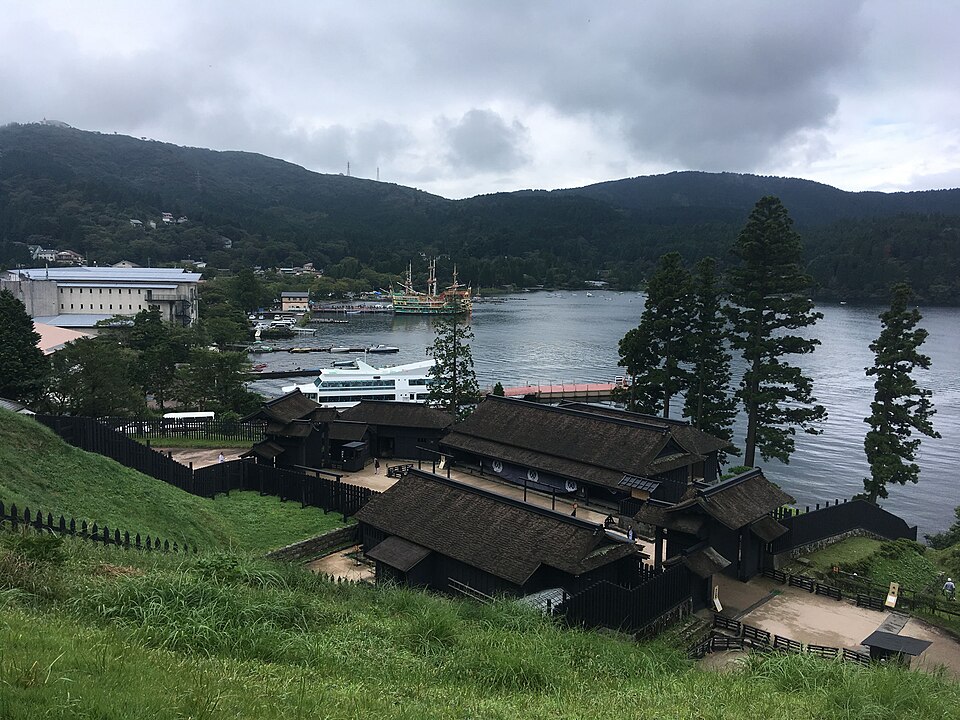
About a 15-minute walk from Hakone Shrine, the Hakone Checkpoint is a fully restored recreation of the checkpoint that served as the Tokaido’s greatest barrier during the Edo period. Established in 1619 and known for its strict enforcement of “incoming guns, outgoing women,” this checkpoint is essential to understanding Hakone’s history.
The restored buildings—including the main guardhouse, rest quarters, and foot soldier guardhouse—feature exhibits recreating the checkpoint inspections of the era. The museum displays actual travel permits and explains how the checkpoint worked, allowing visitors of all ages to experience history in an engaging way. The observation deck also offers wonderful views of Lake Ashi, making it a perfect addition to your Hakone Shrine visit.
Owakudani—The Power of Hakone’s Volcano
About 40 minutes from Hakone Shrine by bus and Hakone Ropeway, Owakudani is a popular spot where you can see the fumaroles of Hakone volcano up close. White steam still rising from eruption traces approximately 3,000 years old is a powerful reminder that Hakone is an active volcano. The famous “black eggs” (eggs boiled in sulfurous hot springs, turning the shell black) are said to “add 7 years to your life with each egg,” making them a classic Owakudani treat.
On clear days, you can enjoy spectacular views of Mount Fuji from Owakudani. The aerial journey on the Hakone Ropeway is also wonderful, offering a panorama of Lake Ashi, Mount Fuji, and the steam of Owakudani—a highlight of Hakone sightseeing.
Hakone Hot Springs—One of Japan’s Premier Hot Spring Destinations
Hakone is one of Japan’s most renowned hot spring areas, with over 20 hot spring zones including Hakone-Yumoto, Gora, Sengokuhara, and Lake Ashi areas. Enjoying hot springs before or after visiting Hakone Shrine is the quintessential Hakone travel experience. Many facilities offer day-trip bathing, and soothing tired muscles from your shrine visit in a hot spring is the ultimate luxury.
Hakone-Yumoto is the gateway to Hakone, with day-trip hot spring facilities abundant around the station. The Gora area features art museums (Pola Museum of Art, Hakone Museum of Art, etc.), offering a sophisticated Hakone trip combining art and hot springs.
Access
By Train and Bus
- Odakyu Line: From Hakone-Yumoto Station, take Hakone Tozan Bus bound for “Moto-Hakone-ko” for about 40 minutes, get off at “Moto-Hakone,” about 10-minute walk
- JR Tokaido Line: From Odawara Station, Hakone Tozan Bus for about 50 minutes
- From Shinjuku: Odakyu Romancecar to Hakone-Yumoto Station about 85 minutes → Bus about 40 minutes
By Car
- About 30 minutes from Gotemba IC on the Tomei Expressway (via Hakone Skyline)
- About 40 minutes from Hakone-guchi IC on the Odawara-Atsugi Road
- Hakone Shrine visitor parking available (free, approximately 50 spaces)
By Lake Ashi Sightseeing Boat
- Taking the Hakone Pirate Ship across Lake Ashi from Hakone-machi Port or Moto-Hakone Port is also popular
- About 25 minutes from Togendai Port to Moto-Hakone Port
- Viewing the Peace Torii from the boat is also recommended
Recommended Access Route
The smoothest route is taking the Odakyu Romancecar from Shinjuku to Hakone-Yumoto Station, then the Hakone Tozan Bus to Moto-Hakone. Purchasing the Hakone Free Pass (from ¥6,100 round-trip from Shinjuku) provides unlimited rides on the mountain railway, cable car, ropeway, pirate ship, and buses in the Hakone area—excellent value. Following the “Hakone Golden Course” (Hakone-Yumoto → Gora → Owakudani → Togendai → Lake Ashi → Moto-Hakone) lets you efficiently cover all of Hakone’s major spots.
Summary
With over 1,260 years of history, Hakone Shrine is one of the Kanto region’s premier power spots, brimming with highlights including the Peace Torii floating on Lake Ashi, the cedar-lined approach with 800-year-old giants, and Kuzuryu Shrine for romantic blessings. Come experience for yourself the power of this shrine that even Minamoto no Yoritomo and Tokugawa Ieyasu revered as a place to “rule the land.”
Combined with Hakone’s hot springs, the natural grandeur of Owakudani, and a Lake Ashi cruise, you have the makings of a fulfilling Hakone trip. Hakone Shrine, showing different beauty with each season, is one of Japan’s finest spiritual spots that offers new discoveries with every visit.