- Introduction
- Overview of Kencho-ji
- History of Kencho-ji
- Highlights and Recommended Spots
- 1. Sanmon (Main Gate) — The Entrance to a Zen Temple and Symbol of “Tenka Zenrin”
- 2. Butsuden and the National Treasure Temple Bell — A Grand Relocated Structure Connecting Edo and Kamakura
- 3. Hojo and Garden — A Karesansui Born from Chinese Zen Aesthetics
- 4. Hansobo Daigongen — Kamakura’s Best Panoramic Views and a Power Spot for Good Fortune
- 5. Sub-Temples and Zazen Experience — Encountering Living Zen Culture
- Nearby Sightseeing Spots
- Access Information
Introduction
Kencho-ji stands near the northern edge of Kamakura, close to the entrance of the Tenen Hiking Course. The moment you pass through its main gate, you are enveloped by a deep green tunnel created by towering cedar trees and crisp, pure air. The profound stillness that pervades every corner of the grounds tells you that this is no mere tourist attraction, but a living Zen training monastery that continues to function to this day.
Kencho-ji was founded in 1253 (Kencho 5) by Hojo Tokiyori, the fifth regent of the Kamakura shogunate, making it Japan’s first full-fledged Zen training monastery. Its founding abbot was Rankei Doryu (Lanxi Daolong), a renowned monk invited from Song Dynasty China. More than 770 years after its founding, Kencho-ji remains a “living Zen temple,” serving as the head temple of the Rinzai sect’s Kencho-ji school, where monks continue to devote themselves to Zen practice. Ranked first among the Kamakura Gozan (Five Great Zen Temples of Kamakura), this celebrated temple is a cornerstone of Japan’s Zen culture, drawing a constant stream of visitors and researchers from Japan and abroad.
The temple grounds span approximately 45,000 tsubo (about 150,000 square meters). The magnificent vista of Zen temple buildings arranged in a straight line — from the Somon (Outer Gate), Sanmon (Main Gate), Butsuden (Buddha Hall), Hatto (Dharma Hall), to the Hojo (Abbot’s Quarters) — is a time capsule preserving medieval Zen culture for the modern age. The temple houses numerous National Treasures and Important Cultural Properties, and the Hansobo shrine, known as the temple’s guardian deity, is also one of Kamakura’s most popular viewpoints.
In this article, we carefully trace the history of Kencho-ji from its founding to the present day, while providing detailed introductions to must-see highlights such as the National Treasure temple bell and the 750-year-old byakushin (Chinese juniper) trees. We also include access information and nearby sightseeing spots to help you plan your trip to Kamakura.

Overview of Kencho-ji
Kencho-ji is the head temple of the Rinzai sect’s Kencho-ji school, located in Yamanouchi, Kamakura, Kanagawa Prefecture, and is renowned as “Japan’s first Zen temple.” Its formal name is “Kofukusan Kencho Kokoku Zenji.”
| Official Name | Kofukusan Kencho Kokoku Zenji |
|---|---|
| Address | 8 Yamanouchi, Kamakura, Kanagawa Prefecture |
| Sect | Rinzai sect, Kencho-ji school (Head Temple) |
| Mountain Name | Kofukusan |
| Founded | 1253 (Kencho 5) |
| Founding Abbot | Rankei Doryu (Daikaku Zenji) |
| Patron | Hojo Tokiyori (5th Regent of the Kamakura Shogunate) |
| Visiting Hours | 8:30 AM – 4:30 PM (Last admission at 4:00 PM) |
| Admission Fee | Adults: 500 yen, Elementary/Junior High Students: 200 yen |
| Closed | Open year-round |
| Phone Number | 0467-22-0981 |
*Please check the official Kencho-ji website for the latest visiting hours and admission fees.
As the foremost of the “Kamakura Gozan” (Five Great Zen Temples of Kamakura), Kencho-ji was the center of Japanese Zen culture from the Kamakura period through the Muromachi period. The Kamakura Gozan was a ranking system for Zen temples established by the Kamakura shogunate, with Kencho-ji ranked first and Engaku-ji ranked second. This system was modeled after the Five Mountains system of China (Song and Yuan dynasties), reflecting the shogunate’s deliberate effort to embrace Zen culture.
Kencho-ji by the numbers: the temple grounds cover approximately 150,000 square meters, with 10 sub-temples (tacchu). At its founding, the complex boasted 49 sub-temples and a full seven-hall garan (temple compound), but repeated fires destroyed much of it. The temple holds numerous National Treasures and Important Cultural Properties; the National Treasure temple bell (cast in 1255, Kencho 7) is sometimes called one of Japan’s Three Great Bells. Seven byakushin (Chinese juniper) trees estimated to be over 750 years old still stand on the grounds — living cultural assets said to have been grown from seeds that the founding abbot Rankei Doryu brought from China.
History of Kencho-ji
Period 1 — The Founding (1253)
In the mid-13th century, when Kencho-ji was born, Kamakura was experiencing one of the most dynamic periods of spiritual and cultural innovation in Japanese history. About 60 years had passed since Minamoto no Yoritomo established the Kamakura shogunate, and the warrior government had solidified its foundations. During this era, Hojo Tokiyori (1227-1263), who stood at the center of power, became deeply drawn to Zen as he sought a spiritual anchor for the warrior class.
Tokiyori’s encounter with Zen came through his meeting with Rankei Doryu (1213-1278), a distinguished monk from Song Dynasty China who arrived in Japan around 1240 (Ninji 1). Born in Sichuan Province, Rankei was a Zen monk trained in China’s most advanced Zen traditions, and his vast knowledge and noble character deeply captivated Tokiyori. Taking Rankei as his master, Tokiyori devoted himself to Zen practice and resolved to establish a Zen temple in Kamakura.
In 1253 (Kencho 5), Tokiyori opened a grand Zen training monastery on the site where Kencho-ji stands today. The land had previously been home to a temple called “Shinpei-ji” and is also said to have contained an execution ground. It is believed the site was chosen as fitting for Zen’s philosophy of seeking enlightenment that transcends life and death, while also pacifying the spirits of executed prisoners. For its establishment, Tokiyori received support from the state, and the temple name “Kencho Kokoku Zenji” was bestowed by Retired Emperor Go-Saga.
As the founding abbot, Rankei Doryu transmitted a pure style of Zen practice to Japanese monks. At the time, the Japanese Buddhist world was a mixture of esoteric Buddhism, nenbutsu (Pure Land) chanting, and Zen, but Rankei rejected all compromise and established a monastery dedicated exclusively to Zen practice. This is why it is called “Japan’s first Zen temple.” Under Rankei’s strict yet compassionate guidance, Kencho-ji developed rapidly, growing within a few years of its founding into a great temple with 49 sub-temples and a full seven-hall compound.
Seven byakushin (Chinese juniper) trees, believed to have been planted at the time of founding, still remain on the grounds today. These trees are said to have been grown from seeds that Rankei brought from China and are over 700 years old. Designated as Natural Monuments of Kanagawa Prefecture, they are living witnesses that have endured from the temple’s founding over 760 years ago to the present day.
Period 2 — Growth and Prosperity (Mid to Late Kamakura Period)
Within just a few decades of its founding, Kencho-ji established its reputation as one of East Asia’s premier Zen training centers. The keys to this growth were the exceptional leadership of its founding abbot Rankei Doryu and the generous patronage of the Hojo Tokuso house (the main Hojo lineage).
After Hojo Tokiyori passed away at the young age of 37 in 1263 (Kocho 3), patronage of Kencho-ji continued. Rankei Doryu was temporarily exiled to Izu in 1261 (Kocho 1) on suspicion of being a Mongol spy, but was quickly pardoned and returned to Kencho-ji. In 1267 (Bun’ei 4), Hojo Nagatoki (Tokimune’s father) and the 8th regent Hojo Tokimune became deeply devoted followers, driving further development of the temple. After Rankei passed away in 1278 (Koan 1), Emperor Go-Daigo posthumously bestowed upon him the title “Daikaku Zenji,” giving national recognition to Rankei’s contributions to Zen.
Mugaku Sogen (Wuxue Zuyuan, 1226-1286) became the second head priest. Also a distinguished monk invited from Song China, Mugaku is known for giving the 8th regent Hojo Tokimune the koan “Namu.” During the crisis of the Mongol invasions (Genko), Tokimune deepened his Zen practice under Mugaku and is said to have attained the state of “munan” (fearlessness). Kencho-ji transcended its role as a mere religious institution, functioning as the spiritual backbone of the Kamakura shogunate.
During Kencho-ji’s golden age, many monks came from China (Song and Yuan dynasties) and the Korean Peninsula, studying and training alongside Japanese monks. Kamakura became an international hub for Zen cultural exchange in East Asia, with Kencho-ji at its center. The Zen culture nurtured during this era became the wellspring for many later aspects of Japanese culture, including ink wash painting, karesansui (dry landscape gardens), the tea ceremony, and Noh theater. Kencho-ji truly served as a “cradle of Japanese culture.” While ancient temples such as Todai-ji (Nara) and Horyu-ji (Ikaruga) represent pre-Zen Japanese Buddhism, Kencho-ji holds a special place for having rooted the new Buddhist current of “Zen” in warrior society.
Period 3 — Turning Points and Trials (Muromachi to Sengoku Period)
The greatest turning point for Kencho-ji was the fall of the Kamakura shogunate in 1333 (Genko 3). Having flourished under the protection of the Hojo clan, Kencho-ji was buffeted by the turbulent times of Emperor Go-Daigo’s Kenmu Restoration and the subsequent establishment of the Muromachi shogunate by Ashikaga Takauji.
The Muromachi shogunate established a Five Mountains system in Kyoto, placing the “Kyoto Gozan” above the “Kamakura Gozan.” This forced a relative decline in Kencho-ji’s status, though it maintained its prestige as the foremost of the Kamakura Gozan. The Ashikaga brothers, Takauji and Tadayoshi, continued to protect Kencho-ji, and distinguished Chinese emigre monks and talented Japanese monks continued to serve as head priests.
However, the great fire of 1373 (Oan 6) dealt a devastating blow to Kencho-ji. This fire destroyed many of the temple halls that had stood since its founding. Furthermore, the Eikyo Rebellion of 1438 (Eikyo 10) and the Kyotoku Disturbance of 1451 (Hotoku 3) turned Kamakura into a battlefield. Kencho-ji was repeatedly exposed to the fires of war, losing the vast majority of its original grand temple complex.
As the Sengoku (Warring States) period began, Hojo Soun (Ise Sozui) advanced into Sagami (from 1491), and the Later Hojo clan came to control Kamakura. The Later Hojo clan also valued Zen and continued a degree of patronage toward Kencho-ji, but the nationwide warfare greatly diminished the temple’s influence. The number of sub-temples, once 49, plummeted, and the temple’s function as a Zen training center was inevitably curtailed. By the late 16th century, much of the original magnificent seven-hall compound lay in ruins.
Yet even through these trials, Kencho-ji’s dharma flame never went out. Though reduced in scale, the tradition of the Zen training center was passed down without interruption, as a small number of monks continued to sit in zazen meditation amid the dilapidated halls. The state of Kencho-ji during this era can be said to embody the very spirit of Zen — preserving what is essential even in the face of adversity.
Period 4 — Revival and Restoration (Edo Period)
A major contributor to Kencho-ji’s revival was Takuan Soho (1573-1645), an early Edo-period Zen monk, along with the distinguished monks who followed him. However, it was Mansetsu Sekigin, who became the 20th head priest in 1665 (Kanbun 5), and his successors who achieved the temple’s full-scale restoration.
In the Edo period, the Tokugawa shogunate enacted “Temple Regulations” to control religious institutions and organized the hierarchical relationships between head temples and branch temples by sect. This formally established Kencho-ji as the head temple of the Rinzai sect’s Kencho-ji school, with branch temples across the country under its umbrella. The shogunate granted the temple shuinchi (revenue-producing land), providing a stable economic foundation upon which the reconstruction of temple buildings progressed.
The most important reconstruction project was the relocation of the current Butsuden (Buddha Hall). The present Kencho-ji Butsuden was originally the mausoleum of Tokugawa Hidetada’s wife (Sugenin) at Zojo-ji temple in Minato, Tokyo. Relocated in 1668 (Kanbun 8), this massive undertaking of transporting building materials from Tokyo to Kamakura was made possible only through the broad support of the shogunate, feudal lords, and common people. This Butsuden is currently designated as an Important Cultural Property of Japan.
The Hatto (Dharma Hall) was also rebuilt in 1675 (Enpo 3). Standing approximately 30 meters tall, this building remains the largest wooden structure in Kamakura. On the ceiling of the Hatto, a “Cloud Dragon” painting was completed in 2003 by the artist Koizumi Junsaku to commemorate the 750th anniversary of the temple’s founding. The overwhelmingly grand dragon gazes down upon visitors from above.
From the mid to late Edo period, Kencho-ji gradually regained its former prestige. Along with the maintenance of the temple grounds, the Hansobo guardian shrine was also developed, attracting popular devotion as a deity of good fortune and protection from fire. An anecdote survives that during the Meiji era, a foreign engineer from the Yokosuka Naval District who was involved in developing Verny Park (Yokosuka) visited Kencho-ji and was deeply moved by the depth of Japan’s Zen culture.
Period 5 — The Modern Era (Meiji to Present)
The storm of the Meiji Restoration (1868), with its separation of Shinto and Buddhism (shinbutsu bunri) and the anti-Buddhist movement (haibutsu kishaku), also affected Kencho-ji. However, although the grounds contained Shinto-like elements (the Hansobo), Kencho-ji had maintained a consistent identity as a purely Zen Buddhist temple since the Edo period, so the impact of the anti-Buddhist movement was relatively minor. Nonetheless, some Buddhist statues and religious furnishings were removed, and the transition to modern temple management proceeded.
From the Meiji era onward, Kencho-ji became actively involved in the international dissemination of Zen. In the early 20th century, thinkers such as D.T. Suzuki (1870-1966) introduced Zen to the world in English, and Kencho-ji served as one of the bases for this outreach. After World War II, many researchers and practitioners from America and Europe visited Kencho-ji, accelerating the internationalization of Zen.
Today, Kencho-ji continues to function as a training monastery. In the ordination hall deep within the grounds, monks undergo rigorous training, while a zazen meditation session open to the public is held every Sunday morning at 6:00 AM (free of charge). This zazen session requires no reservation and attracts many participants from Japan and abroad throughout the year.
In 1993 (Heisei 5), the Kencho-ji grounds were reassessed as part of Kamakura’s cultural landscape and positioned as a core asset in the World Heritage candidacy of “Kamakura, Home of the Samurai” (the application was withdrawn in 2013, but the temple’s cultural value remains unchanged). In 2023, Kencho-ji celebrated the 770th anniversary of its founding with various commemorative events. With approximately 700,000 visitors annually, it continues to convey Japan’s Zen culture to the modern world as one of Kamakura’s premier cultural and tourism destinations.
Highlights and Recommended Spots
Kencho-ji’s grounds are so vast that a single visit is not enough to see everything. From National Treasures and Important Cultural Properties that tell the story of over 750 years of history to the breathtaking views from Hansobo, here are five carefully selected spots you should not miss.
1. Sanmon (Main Gate) — The Entrance to a Zen Temple and Symbol of “Tenka Zenrin”
The first thing that catches your eye upon entering the Kencho-ji grounds is the massive Sanmon (Main Gate) standing beyond the Somon (Outer Gate). The current Sanmon was rebuilt in 1814 (Bunka 11) using donations collected from lay followers. Standing approximately 30 meters tall and 27 meters wide, this wooden two-story gate takes its name from “Sangedatsumon” (Gate of the Three Liberations), symbolizing the three states of liberation in Zen — emptiness (ku), formlessness (muso), and desirelessness (mugan) — and serves as the formal entrance to a Zen temple.
The Sanmon bears a plaque inscribed with the characters “Kofukusan.” This calligraphy is traditionally attributed to Fujiwara no Yukinari, a celebrated calligrapher of the Kamakura period, though it is actually the work of a later master calligrapher. The upper story of the Sanmon houses a statue of Shakyamuni and sixteen Rakan (Arhat) figures, which are normally closed to the public but can be viewed during special openings.
Be sure to pause and look up before passing through the Sanmon. The thickness of the pillars, the way the beams are joined, the curve of the roof — the rigorous aesthetic of Zen architecture lives in every detail. During an early morning visit, you can see the roof of the Butsuden and the tops of the byakushin trees beyond the Sanmon, with a profound silence hanging in the clear air. It is said that training monks bow deeply when passing through the Sanmon, and standing before its majestic presence, you will understand why.
Along the approach from the Sanmon to the Butsuden stand the byakushin trees mentioned earlier. Estimated to be over 750 years old, these trees are characterized by their distinctive twisted forms and remain green even in winter. The legend that “Rankei Doryu brought seeds from China and planted them” symbolizes the deep connection between Japanese and Chinese Zen culture. Designated as Natural Monuments of Kanagawa Prefecture, these are a must-see when visiting Kencho-ji.
2. Butsuden and the National Treasure Temple Bell — A Grand Relocated Structure Connecting Edo and Kamakura
Passing through the Sanmon and continuing along the approach, the Hatto appears on your left and the Butsuden (Buddha Hall) straight ahead. The current Butsuden was relocated in 1668 (Kanbun 8) from Zojo-ji temple in Shiba, Tokyo. Originally built as the mausoleum of Sugenin (Lady Oe), wife of Tokugawa Hidetada, it was relocated as part of the Kencho-ji restoration. Designated as an Important Cultural Property of Japan, it is an extremely valuable example of early Edo-period Zen Buddhist hall architecture.
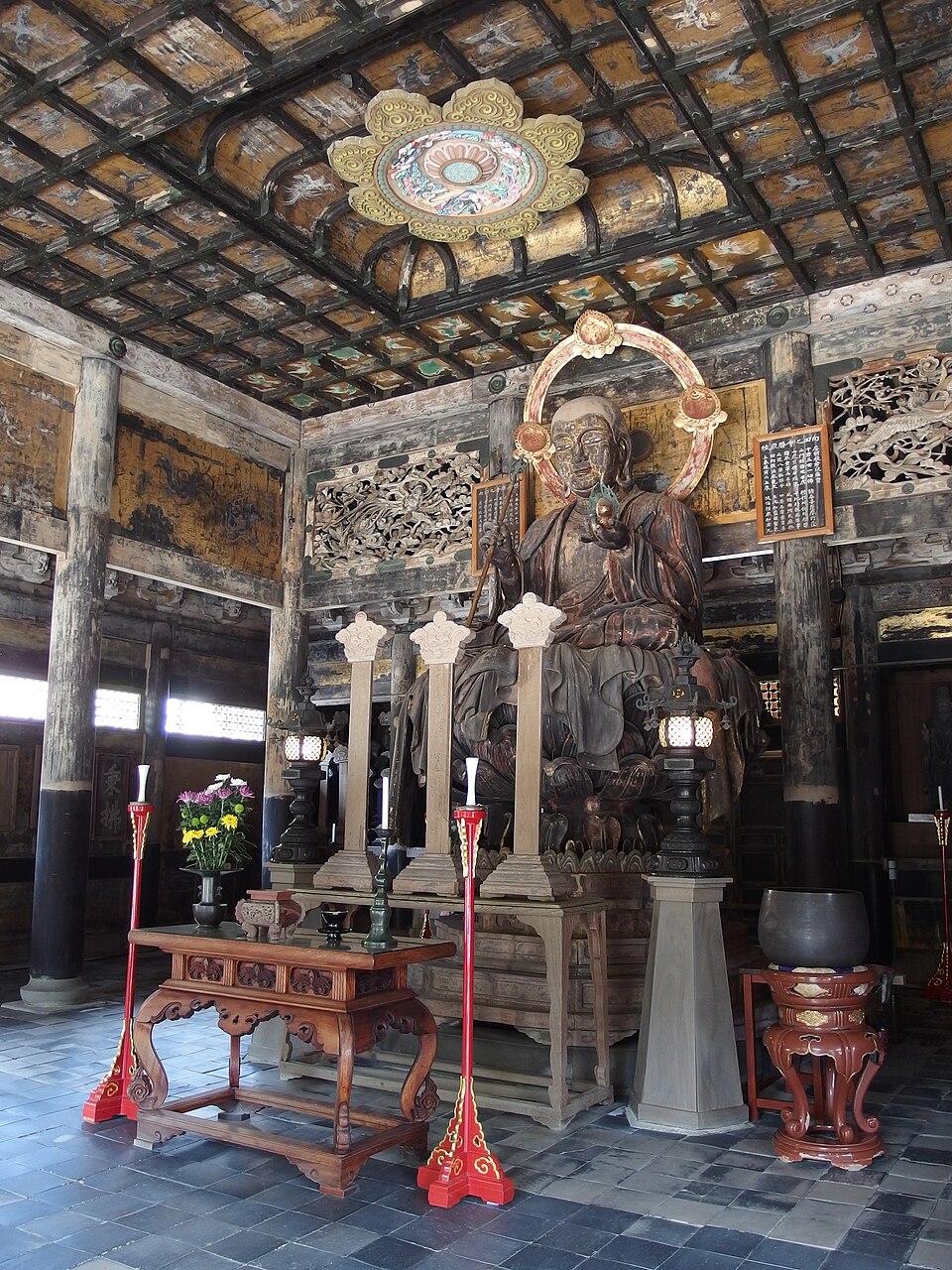
Inside the Butsuden is enshrined the principal image, a seated Jizo Bosatsu (Important Cultural Property) approximately 2.4 meters tall. Jizo Bosatsu is unusual as the principal deity of a Zen temple. This is because the site where Kencho-ji was built had previously been the grounds of “Shinpei-ji,” where Jizo worship was popular. Behind the main image stand countless small Jizo statues known as the “Thousand Jizo,” evoking the distinctive spiritual atmosphere of Kencho-ji, which stands at the boundary between life and death.
On the north side of the Butsuden is a bell tower housing the National Treasure temple bell. Cast in 1255 (Kencho 7), this bell stands 160 centimeters tall and weighs approximately 2 tons. It bears inscriptions recording its exact casting date and the name of the caster (Mononobe no Suemitsu), making it a masterpiece that conveys the finest craftsmanship of the Kamakura period. Sometimes counted as one of “Japan’s Three Great Bells” (alongside the bells of Byodo-in and Jingo-ji), its clear tone has resonated across the temple grounds unchanged since the founding. During the New Year’s Eve bell-ringing ceremony, visitors are also allowed to ring the bell.
Proceeding beyond the Butsuden, you reach the Hatto (Dharma Hall). Rebuilt in 1675 (Enpo 3), this building stands approximately 30 meters tall, making it the largest wooden structure in Kamakura. On the ceiling of the Hatto, the “Cloud Dragon” painting stretches across the hall — a work that Japanese painter Koizumi Junsaku spent over two years creating to commemorate the 750th anniversary in 2003. Painted within a circle approximately 2.4 meters in diameter, the dragon’s expression changes depending on the viewing angle, leaving visitors in awe. The Hatto is used for Buddhist ceremonies but is open for viewing during visiting hours.
3. Hojo and Garden — A Karesansui Born from Chinese Zen Aesthetics
The Hojo (Abbot’s Quarters), located at the innermost part of Kencho-ji, has served as both the head priest’s residence and a public reception space. The current Hojo was relocated in 1814 (Bunka 11) from Hanju Sanmai-in in Kyoto. The garden in front of the Hojo is one of the quietest spaces at Kencho-ji and is designated as a National Place of Scenic Beauty.
The Hojo garden is attributed to Muso Soseki (1275-1351), a representative Zen monk and garden designer of the Kamakura and Muromachi periods who also designed the gardens at Saiho-ji (Moss Temple) and Tenryu-ji in Kyoto. The karesansui (dry landscape) garden with its white sand, moss, and massive stone arrangements is said to express the Zen concept of “nothingness” (mu) in spatial form. The contrast of blazing autumn foliage against white sand is especially spectacular during the fall season, attracting many photographers.
Sitting on the veranda of the Hojo and gazing at the garden, the noise of the city feels like a distant world. The Karamon (Chinese-style gate) at the back of the garden was, like the Butsuden, relocated from Zojo-ji, and its intricate carvings showcase the sophisticated craftsmanship of the early Edo period. The combination of the Hojo and Karamon symbolizes the distinctive aesthetic of Kencho-ji, where the simplicity of Zen intersects with the formality of warrior culture.
On the east side of the Hojo is a building called the “Tokugetsuro” (Moon-Viewing Pavilion), used for Zen tea ceremonies (charei). The “Treasure Hall,” which exhibits the temple’s treasures, is also located near the Hojo and displays a diverse collection of cultural assets dating from the Kamakura period, including paintings, documents, and ceremonial objects.
4. Hansobo Daigongen — Kamakura’s Best Panoramic Views and a Power Spot for Good Fortune
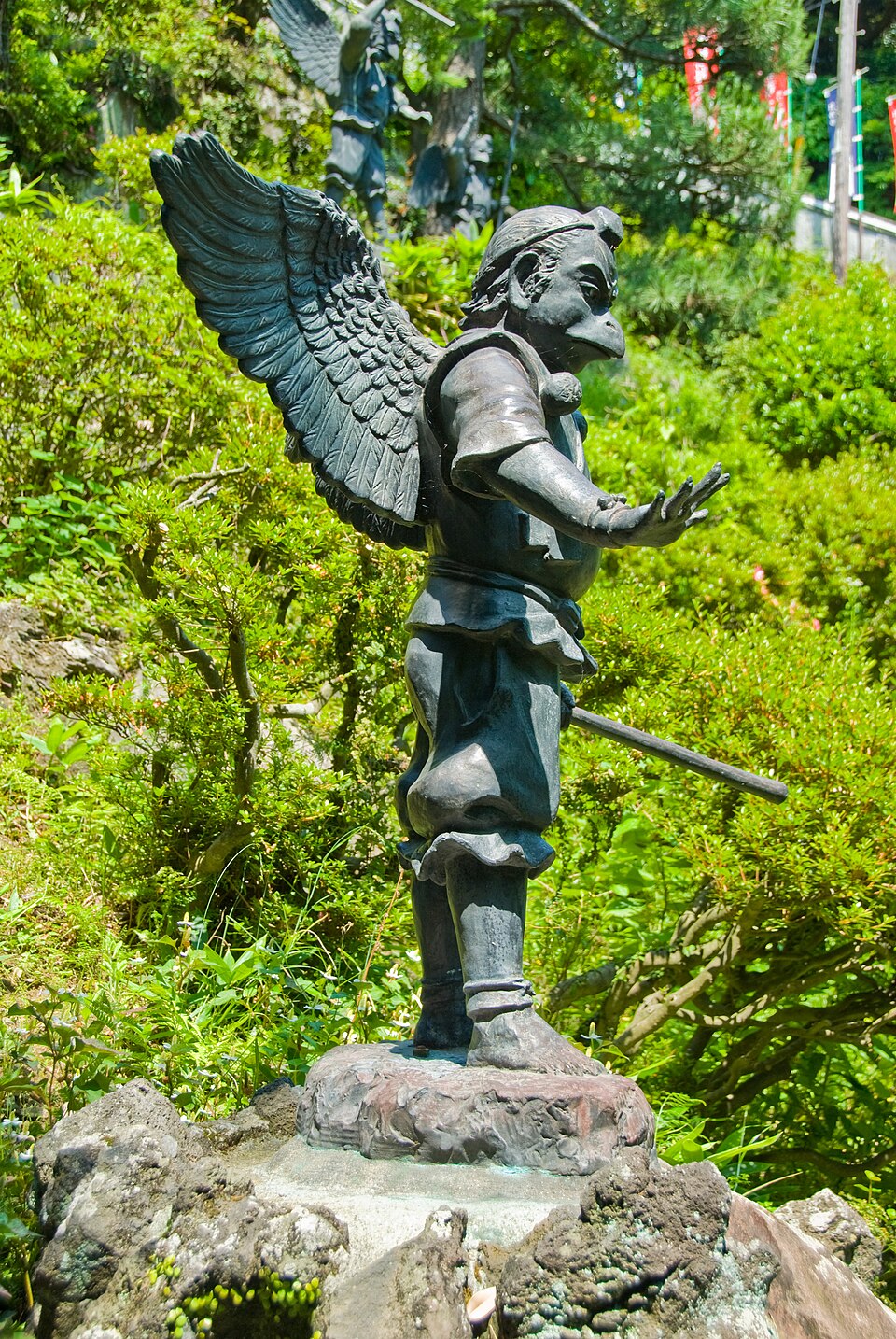
About 10 to 15 minutes up the mountain path from the Hojo, you will find the Hansobo. Its formal name is “Kencho-ji Hansobo Daigongen,” a syncretic Shinto-Buddhist sacred site established as the guardian shrine of Kencho-ji in 1890 (Meiji 23). The distinctive atmosphere created by stone statues of tengu (mythical long-nosed mountain spirits) gives this site a character found at no other Zen temple.
Along the approach to Hansobo stand more than a dozen tengu statues of various sizes. Long-nosed tengu and crow tengu are placed alternately, watching over visitors. Tengu are regarded as guardians of Buddhist law and have long been worshipped as protectors against evil forces that might obstruct spiritual practice. Worshippers seeking good fortune, protection from fire, and prosperity come from across Japan, and the Hansobo Grand Festival held at Kencho-ji in February draws especially large crowds.
The greatest appeal of Hansobo is the view. The panorama of Mt. Fuji, Sagami Bay, and the Miura Peninsula from the shrine grounds is considered the finest in all of Kamakura. On a clear morning, the spectacular scene unfolds with snow-capped Mt. Fuji as a backdrop, the Kamakura cityscape below, and the blue sea stretching out beyond. It is also popular as a photogenic spot for social media, and many visitors come especially during the New Year’s sunrise season.
Continuing along the mountain path from Hansobo, you can connect to the Tenen Hiking Course. This approximately 6-kilometer trail runs from Kencho-ji toward Kamakuragu Shrine and Zuisen-ji, making it a popular route for enjoying Kamakura’s nature and history. For those with confidence in their stamina, a route descending from Hansobo via the Tenen peak to the Kamakuragu side is also recommended.
5. Sub-Temples and Zazen Experience — Encountering Living Zen Culture
Scattered throughout the Kencho-ji grounds are 10 sub-temples (tacchu). Sub-temples are small temples built to protect the graves of distinguished monks within a larger temple, and each possesses its own unique culture and history. Among them, Ryuho-in, Shinwa-in, and Myoko-in feature distinctive gardens and Buddhist statues, offering visitors a chance to experience the Zen worldview in a quieter setting different from the main temple grounds.
One of Kencho-ji’s most distinctive features is its zazen experience programs open to the general public. The “Sunday Zazen Session” held every Sunday morning at 6:00 AM requires no reservation, is free of charge, and attracts numerous participants from Japan and abroad throughout the year. After approximately 30 minutes of zazen meditation, the head priest delivers a dharma talk. In the early morning hours when tourists have yet to arrive, sitting quietly amid the sound of wind through the byakushin treetops and the distant tolling of bells brings a profound stillness that cannot be found in daily life.
Kencho-ji also accepts reservations for “Zazen Experience Programs (individual and group)” on an ongoing basis. Advance booking is required, but participants can experience authentic zazen in the same training hall actually used by practicing monks. The experience includes the keisaku (a flat wooden stick used to tap the shoulders to correct posture), offering a genuine taste of Zen training. These programs are also utilized for corporate training and school retreats, with several thousand participants per year.
Additionally, Kencho-ji holds an annual event in November inspired by “Kencho-jiru” (Kencho-ji soup). The prevailing theory is that the word “kenchinjiru” (a classic Japanese vegetable soup) derives from “the soup of Kencho-ji.” It originated as a shojin ryori (Buddhist vegetarian cuisine) in which training monks cooked crumbled tofu together with vegetables such as daikon radish, burdock root, and taro. At the autumn event held each year, this Kencho-ji soup is served to visitors, drawing large crowds.
Nearby Sightseeing Spots
Kencho-ji is located in the heart of Kamakura’s sightseeing area, surrounded by historically and culturally significant spots. Here are three recommended places to visit along with Kencho-ji.
1. Tsurugaoka Hachimangu — The Heart of Kamakura, Guardian Deity of the Warriors
A 10-minute walk south from Kencho-ji brings you to Tsurugaoka Hachimangu, Kamakura’s largest shrine. Founded by Minamoto no Yoriyoshi in 1063 (Kohei 6) and relocated to its current site by Minamoto no Yoritomo in 1180 (Jisho 4), it is the most iconic shrine of Kamakura. With approximately 8 million visitors per year, it is one of the premier shrines in the Kanto region, featuring highlights such as the Dankazura approach along Wakamiya Oji, the Genpei Ponds, the great stone steps, and the Main Hall (Important Cultural Property).
While Kencho-ji served as a place for Zen (spiritual discipline), Tsurugaoka Hachimangu was a place of prayer for warriors (victory and martial fortune). The shoguns of the Kamakura shogunate revered both sites in combination, and visiting both gives you a complete picture of the spiritual world of Kamakura’s warriors. The shrine is also beautiful throughout the seasons — cherry blossoms in spring, lotus flowers in summer, and autumn foliage in fall.
2. Engaku-ji — Second of the Kamakura Gozan, a Zen Temple Founded by Hojo Tokimune
A 15-minute walk northeast from Kencho-ji brings you to Engaku-ji. Founded in 1282 (Koan 5) by Hojo Tokimune to memorialize those who perished in the Mongol invasions, this Zen temple holds the second rank among the Kamakura Gozan. Its founding abbot was Mugaku Sogen — the same distinguished monk who served as the second head priest of Kencho-ji.
Engaku-ji is a celebrated temple that houses the National Treasure Shariden (Relic Hall in Shozoku-in), and the tranquility created by the ancient trees and moss gardens on its grounds is exceptional. It also appears in Natsume Soseki’s novel “The Gate” and Kawabata Yasunari’s novel “Snow Country,” making it known as a Zen temple with connections to modern literature. Its excellent access — located directly in front of JR Yokosuka Line Kita-Kamakura Station — is another attraction, and a “Zen temple tour” combining Kencho-ji and Engaku-ji is a classic Kamakura sightseeing route.
3. Hase-dera — A Paradise Garden and the Temple of the Eleven-Headed Kannon
Located about 15 minutes from Kamakura Station by bus or the Enoden train line, Hase-dera is popular as a “temple of flowers and gardens,” offering a striking contrast to Kencho-ji. Traditionally said to have been founded in 721 (Nara period), its principal image — a wooden standing statue of the Eleven-Headed Kannon (approximately 9.18 meters tall) — is one of the largest wooden Buddhist statues in Japan.
Flowers bloom throughout the seasons on the Hase-dera grounds, and during the hydrangea season in June, it ranks among Kamakura’s most popular spots. The elevated grounds also offer sweeping views of Yuigahama Beach and Sagami Bay, with spectacular scenery on clear days. The austere Zen aesthetic of Kencho-ji and the vibrant flowers and Buddhist statues of Hase-dera together symbolize the diversity of Kamakura Buddhism, making both well worth visiting.
Access Information
The most convenient way to reach Kencho-ji is by combining train and bus.
By Train
The most popular route is a 15-minute walk from JR Yokosuka Line Kita-Kamakura Station. Engaku-ji is located right next to the station, and from there you head south along the Kamakura Kaido road for about 15 minutes to reach the Somon (Outer Gate) of Kencho-ji. Along the way, you can also stop at other Zen temples such as Meigetsuin (famous for its hydrangeas), making this an ideal route for a Zen temple tour.
If walking from JR Kamakura Station (East Exit), the journey takes about 30 minutes. Head north along Wakamiya Oji, pass Tsurugaoka Hachimangu, and continue straight to reach Kencho-ji. This route is recommended if you plan to visit Tsurugaoka Hachimangu as well.
By Bus
From JR Kamakura Station East Exit, take an Enoshima Electric Railway bus bound for “Ofuna” or “Kamakura Reien Seimonmae” and get off at the “Kencho-ji” bus stop. The ride takes approximately 10 to 15 minutes and costs about 200 yen.
By Car / Parking
From the Shuto Expressway/Yokohama-Yokosuka Road, take the “Asahina IC” exit (approximately 15 minutes). Roads in Kamakura are narrow, and traffic congestion is severe on weekends and holidays, so public transportation is strongly recommended. There are paid parking lots near Kencho-ji, but spaces are limited.
Best Season to Visit
Kencho-ji can be visited year-round, but it is especially beautiful during the cherry blossom and fresh green byakushin season in spring (March-April) and the autumn foliage season in November. If you plan to join the Sunday morning zazen session (starting at 6:00 AM), you can enjoy the grounds in the refreshing early hours with few other tourists. To avoid crowds, weekday mornings around 9:00 AM are recommended.
Summary
Kencho-ji is a celebrated Kamakura temple with over 770 years of history as Japan’s first full-fledged Zen training monastery. The temple compound layout embodying the unchanging spirit of Zen since its founding, the National Treasure temple bell, the towering byakushin trees over 750 years old, and its continuing role as a living monastery where monks practice Zen — all of these elements come together to form Kencho-ji’s unparalleled appeal.
While it is a popular staple of Kamakura sightseeing, joining an early morning zazen session offers an experience of “Zen daily life” entirely different from that of an ordinary tourist. Whether you seek to immerse yourself deeply in history and culture or simply desire a quiet escape from the everyday, Kencho-ji will not disappoint. When you visit Kamakura, be sure to pass through the Sanmon gate and walk among the fragrant byakushin trees. For those who wish to deepen their understanding of Zen, we also recommend visiting Enryaku-ji on Mt. Hiei (head temple of the Tendai sect) and Kinkaku-ji (Kyoto), which has deep connections to Zen culture.