What is Togei (Japanese Pottery)?
Togei — Japanese pottery and ceramics — is the craft of shaping clay and firing it at high temperatures to create vessels and sculptural works. Japan holds one of the world’s longest continuous ceramic traditions, stretching back over 16,000 years to the Jomon period.
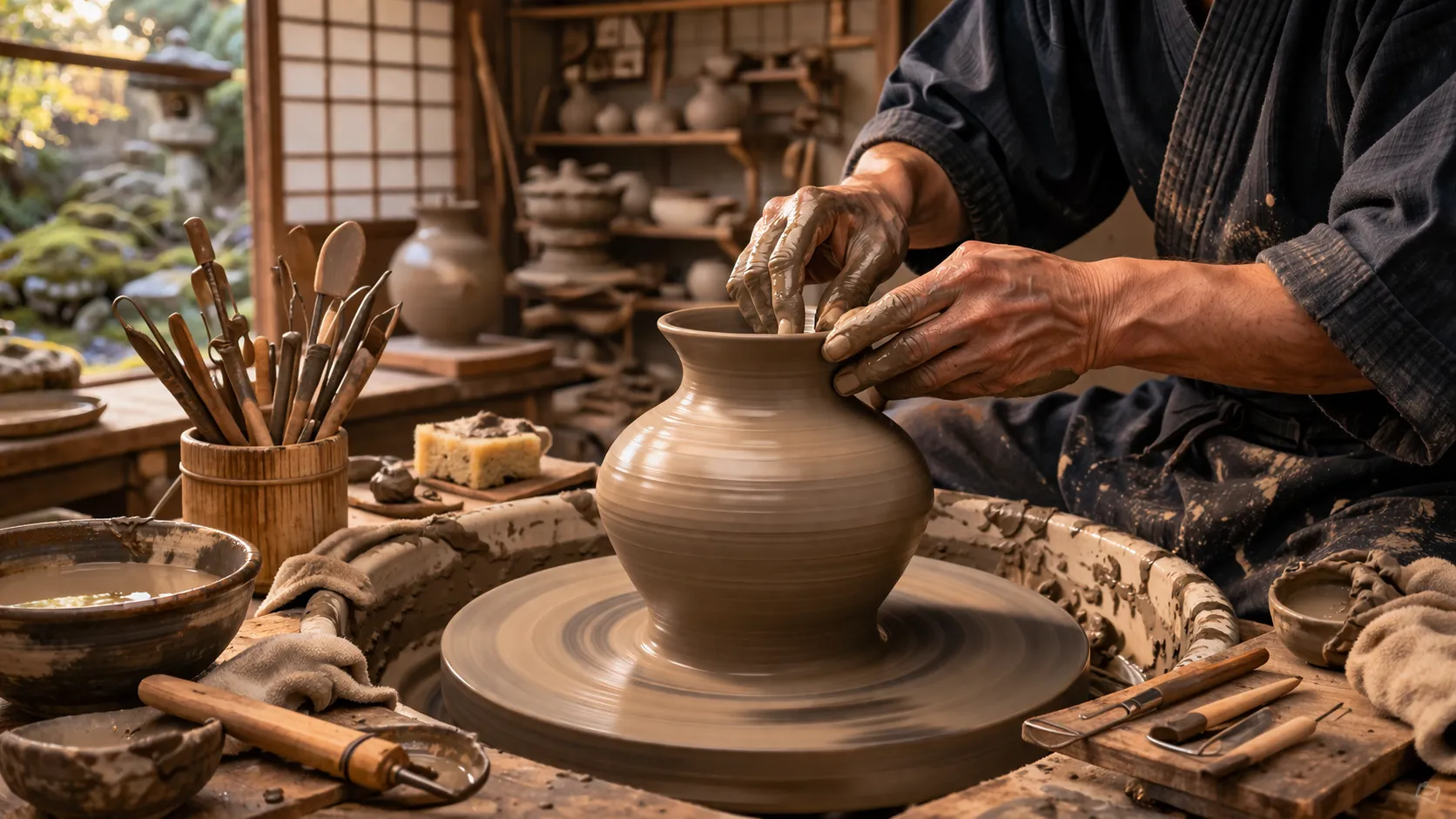
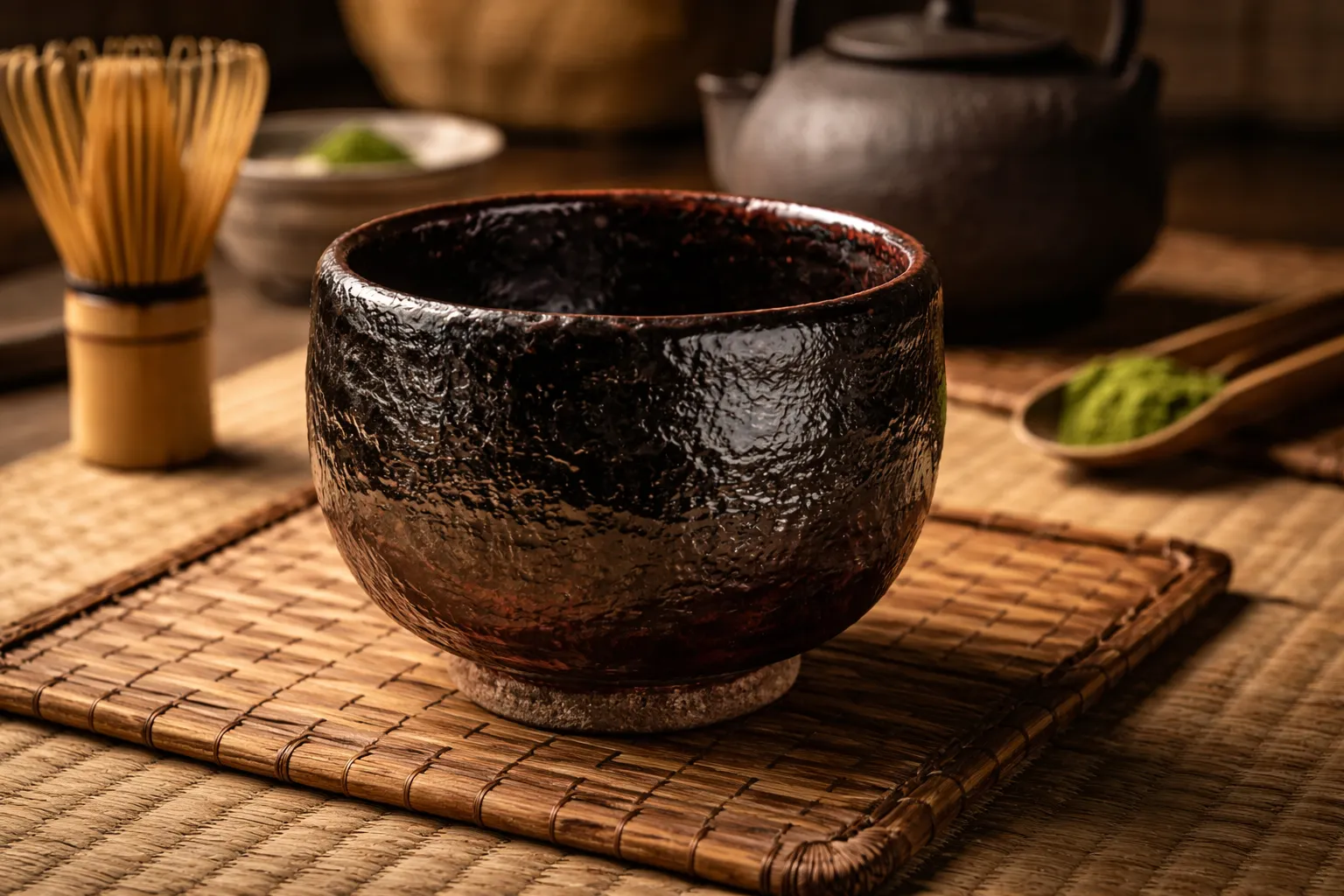
What sets Japanese ceramics apart is the inseparable bond between utility and art. Even a single tea bowl embodies the maker’s aesthetic: its weight in the hand, the warmth of the clay, the color and texture of the glaze, the feel of the rim against the lip. When Sen no Rikyu pursued “wabi” in the tea ceremony, he chose Chojiro’s raku tea bowls as the ideal vessel — an example of the deeply Japanese idea that a used object is itself a work of art. Distinctive production regions across Japan, each with unique clay, glazes, and firing methods, produce an astonishing variety of ceramic styles.
History of Japanese Ceramics
Jomon to Kofun: From the World’s Oldest Pottery to Haniwa
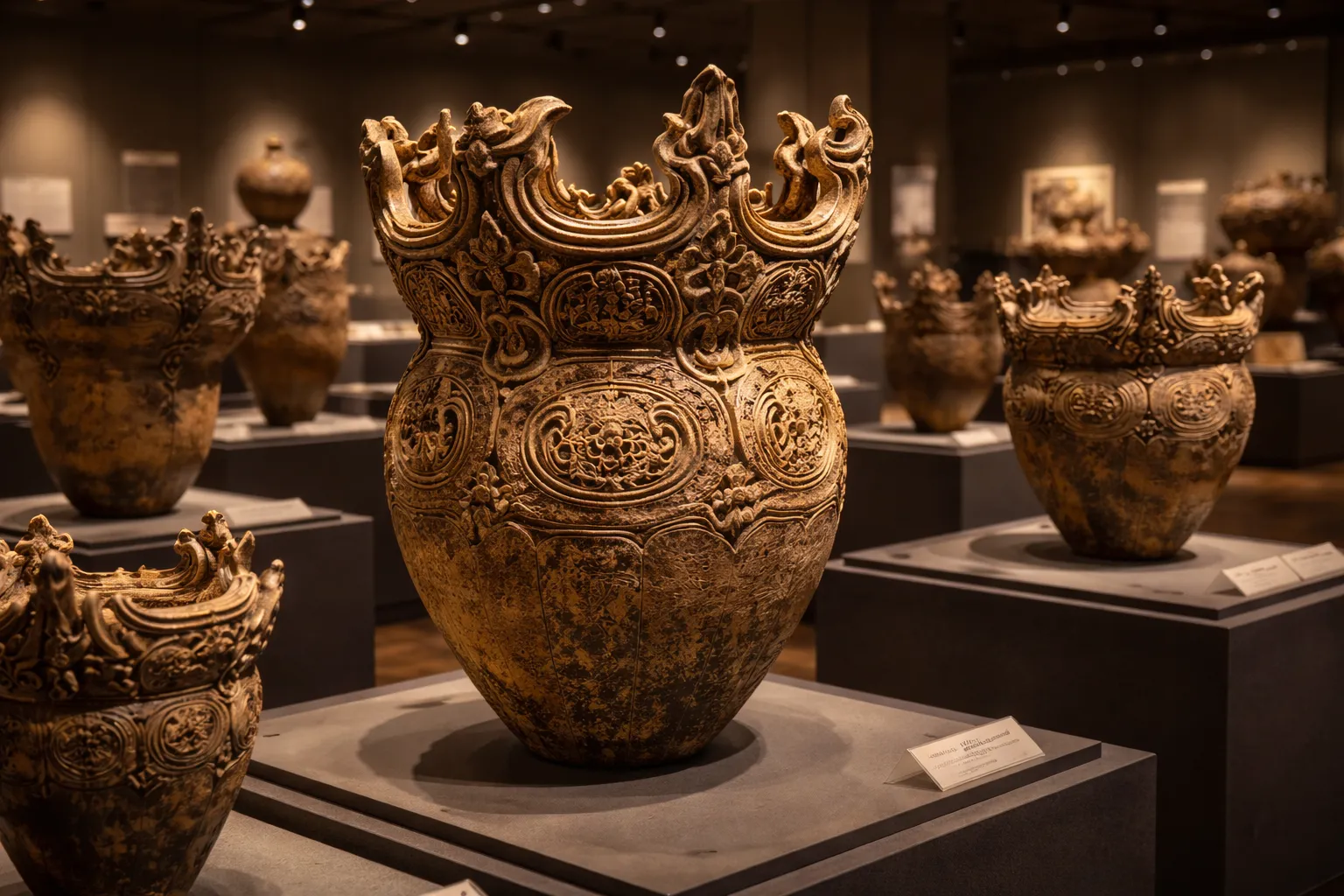
Japan’s ceramic history begins with Jomon pottery, dating to approximately 16,500 years ago — among the oldest fired pottery in the world. Fragments discovered at the Odai Yamamoto site in Aomori Prefecture established this remarkable timeline. Jomon pottery is characterized by cord-marked decoration and was primarily used for cooking, though flamboyant forms like the flame-style vessels demonstrate a striking artistic impulse. During the Kofun period, clay “haniwa” figures — humans, animals, houses — were placed around burial mounds as funerary offerings.
Nara to Heian: Continental Techniques and Glazed Ware
In the Nara period, Chinese Tang Dynasty influence brought glazed ceramics to Japan. “Nara Sansai” (Nara three-color ware), using green, brown, and white glazes, is the most representative example. During the Heian period, ash-glazed pottery emerged, and firing techniques evolved from reduction to oxidation firing.
Medieval Period: The Six Ancient Kilns
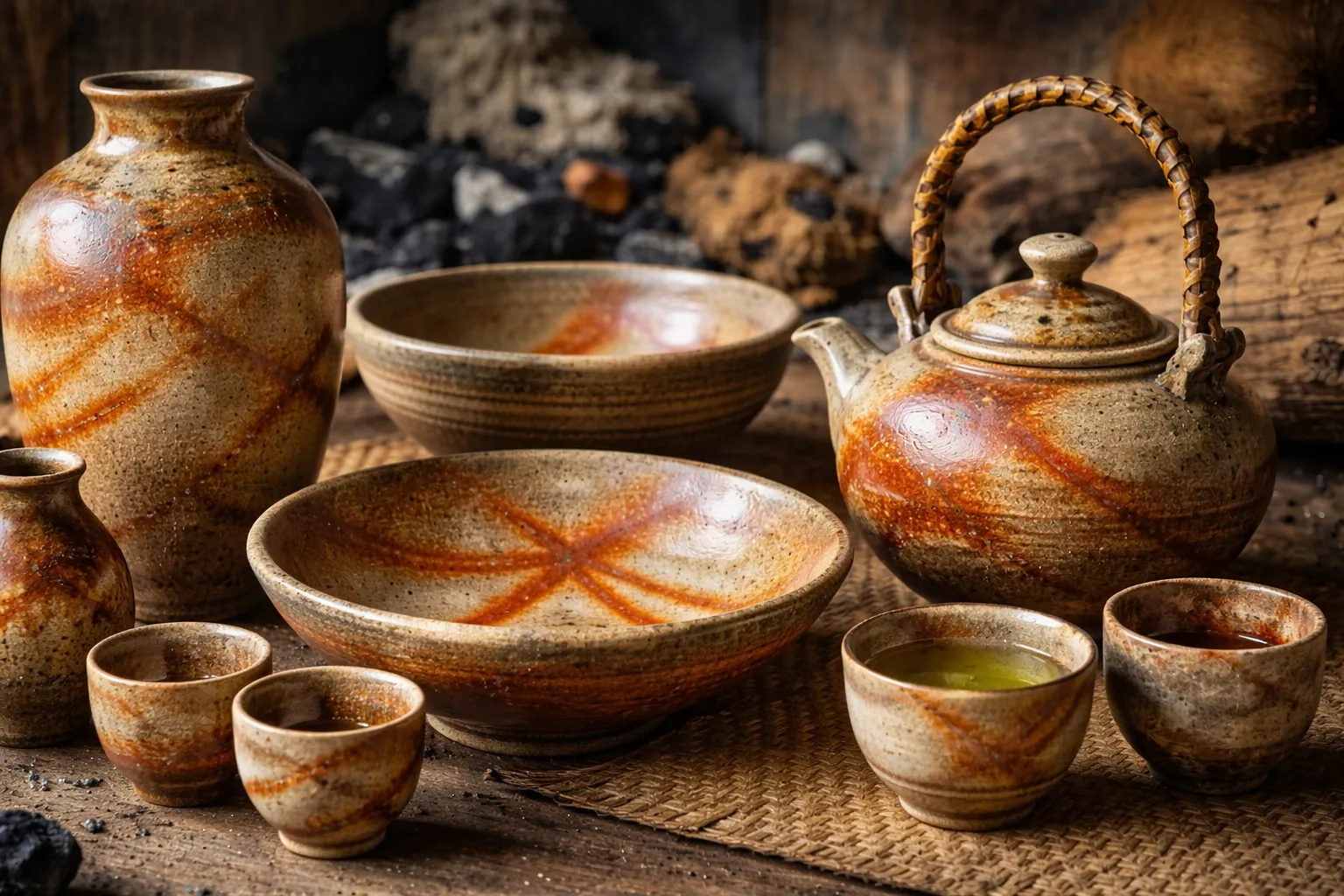
From the Kamakura through Muromachi periods, the “Rokkoyō” (Six Ancient Kilns) — Seto, Tokoname, Shigaraki, Echizen, Tanba, and Bizen — became Japan’s ceramic heartland. While Seto produced glazed ware, the other five specialized in unglazed, high-fired “yakishime” pottery, prized for its raw clay texture and the natural effects of flame. The beauty of this era’s ceramics lies in “yō no bi” — beauty born through use.
Azuchi-Momoyama: The Golden Age of Tea Ceramics
The rise of the tea ceremony revolutionized Japanese ceramics. Under Rikyu’s “wabi-cha” philosophy, distinctive tea wares — Seto-guro, Shino, Oribe — emerged in rapid succession. In Kyoto, Chojiro, first generation of the Raku family, created hand-molded tea bowls without a wheel — “raku-yaki” — whose quiet, austere beauty perfectly embodied the tea aesthetic. Meanwhile, Korean potters brought to Japan during Toyotomi Hideyoshi’s Korean campaigns introduced porcelain production to Kyushu.
Edo to Modern: Porcelain, Export, and Evolution
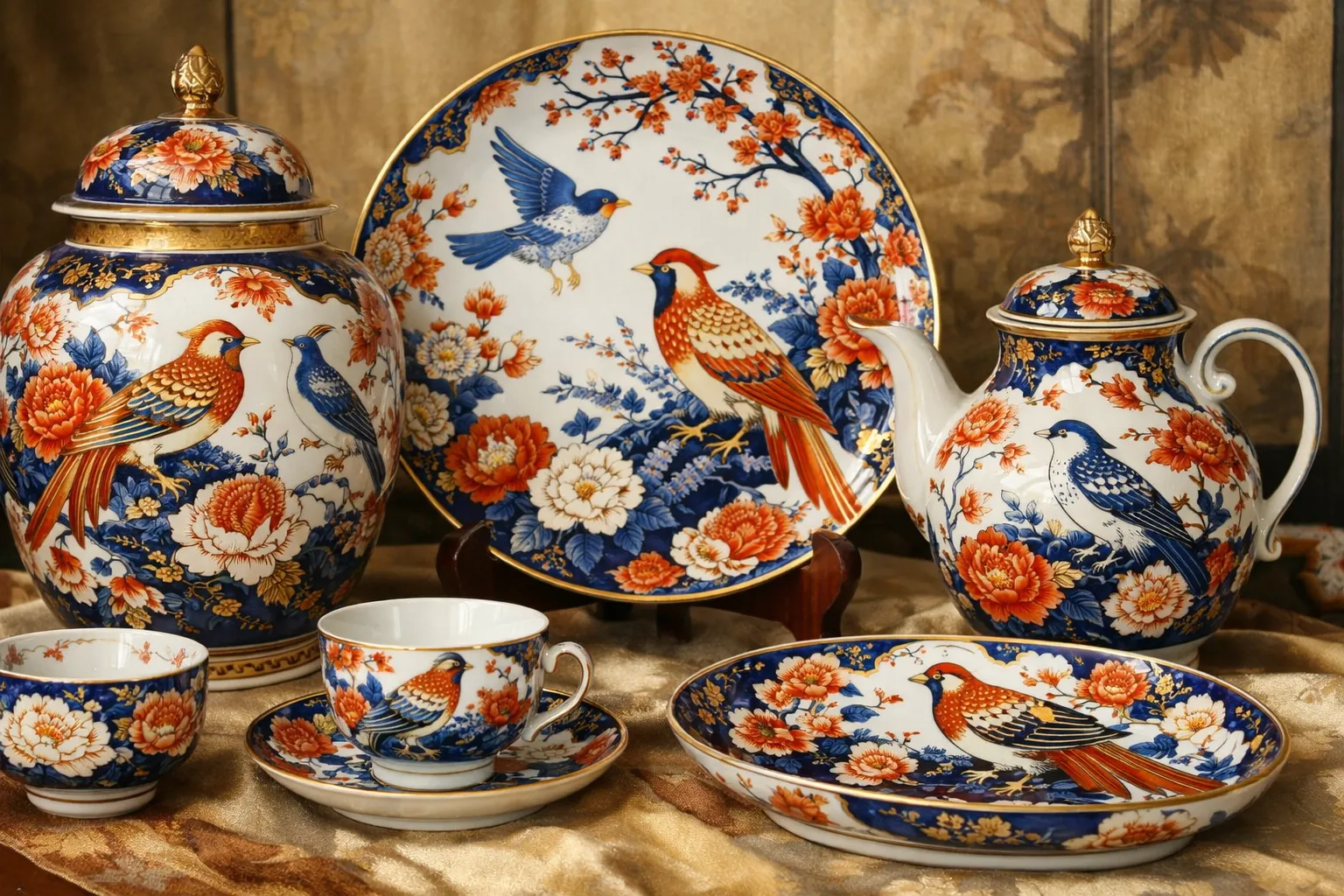
In the early 17th century, Japan’s first porcelain was fired in Arita, Saga Prefecture. “Imari” ware — white porcelain painted with vivid red, gold, and green overglaze enamels — was exported to Europe through the Dutch East India Company, profoundly influencing Western ceramics including Meissen. In Kyoto, artist-potters like Ogata Kenzan and Nonomura Ninsei pushed ceramics into the realm of fine art. The Meiji era brought industrial modernization under the guidance of German engineer Gottfried Wagener.
Representative Japanese Ceramics
Arita / Imari Ware (Saga)
Japan’s premier porcelain, known for delicate, colorful painted designs on white porcelain. Styles range from blue-and-white “sometsuke” to vibrant “iro-e” overglaze painting and contemporary designs.
Bizen Ware (Okayama)
The quintessential unglazed, high-fired “yakishime” pottery. Bizen’s earthy, powerful texture comes from clay and flame alone — no two pieces are alike, as variations in kiln position create unique fire marks.
Shigaraki Ware (Shiga)
Warm, rough-textured pottery nationally recognized for its tanuki (raccoon dog) figurines. Shigaraki excels at large-scale works including umbrella stands, planters, and contemporary art pieces.
Kutani Ware (Ishikawa)
Porcelain distinguished by the bold “Kutani Five Colors” — red, yellow, green, purple, and dark blue. The combination of dramatic composition and fine brushwork has earned Kutani international acclaim.
Raku Ware (Kyoto)
Tea bowls created without a wheel, shaped entirely by hand under the guidance of Sen no Rikyu. Each piece is individually removed from the kiln while still glowing — a unique firing method that produces bowls of quiet, profound character.
Basic Ceramic Process
Clay Preparation and Shaping
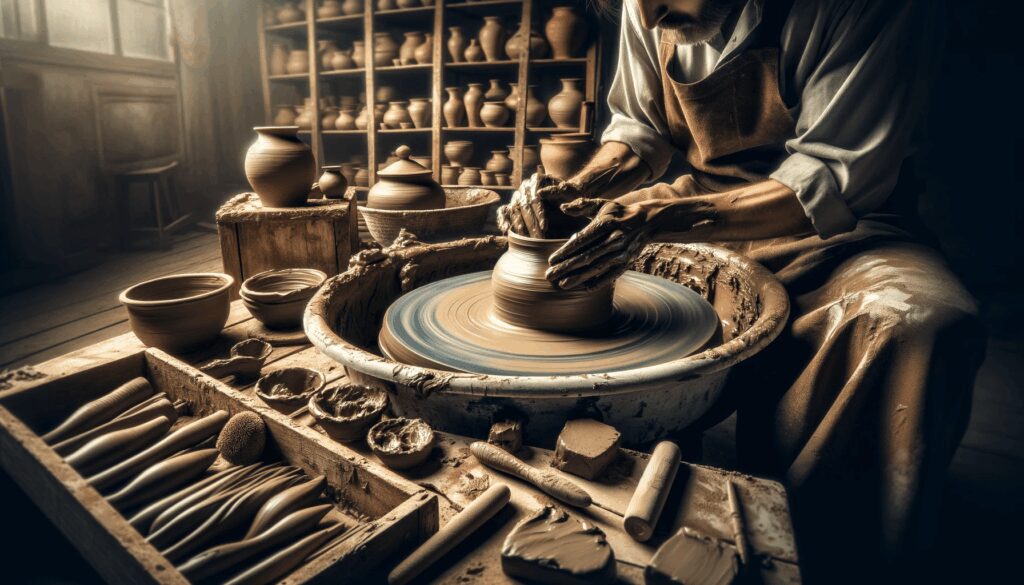
Ceramics begins with preparing the clay — kneading it to uniform consistency in a technique called “kiku-neri” (chrysanthemum kneading). Shaping methods include the potter’s wheel (rokuro), hand-building (te-bineri), and slab construction (tatara).
Drying, Bisque Firing, and Glazing
Shaped works are thoroughly dried, then bisque-fired at roughly 800°C. Glaze is then applied to determine color and surface quality. Glaze types — ash, iron, copper, shino — are numerous, and even the same glaze produces entirely different results depending on firing conditions.
Final Firing
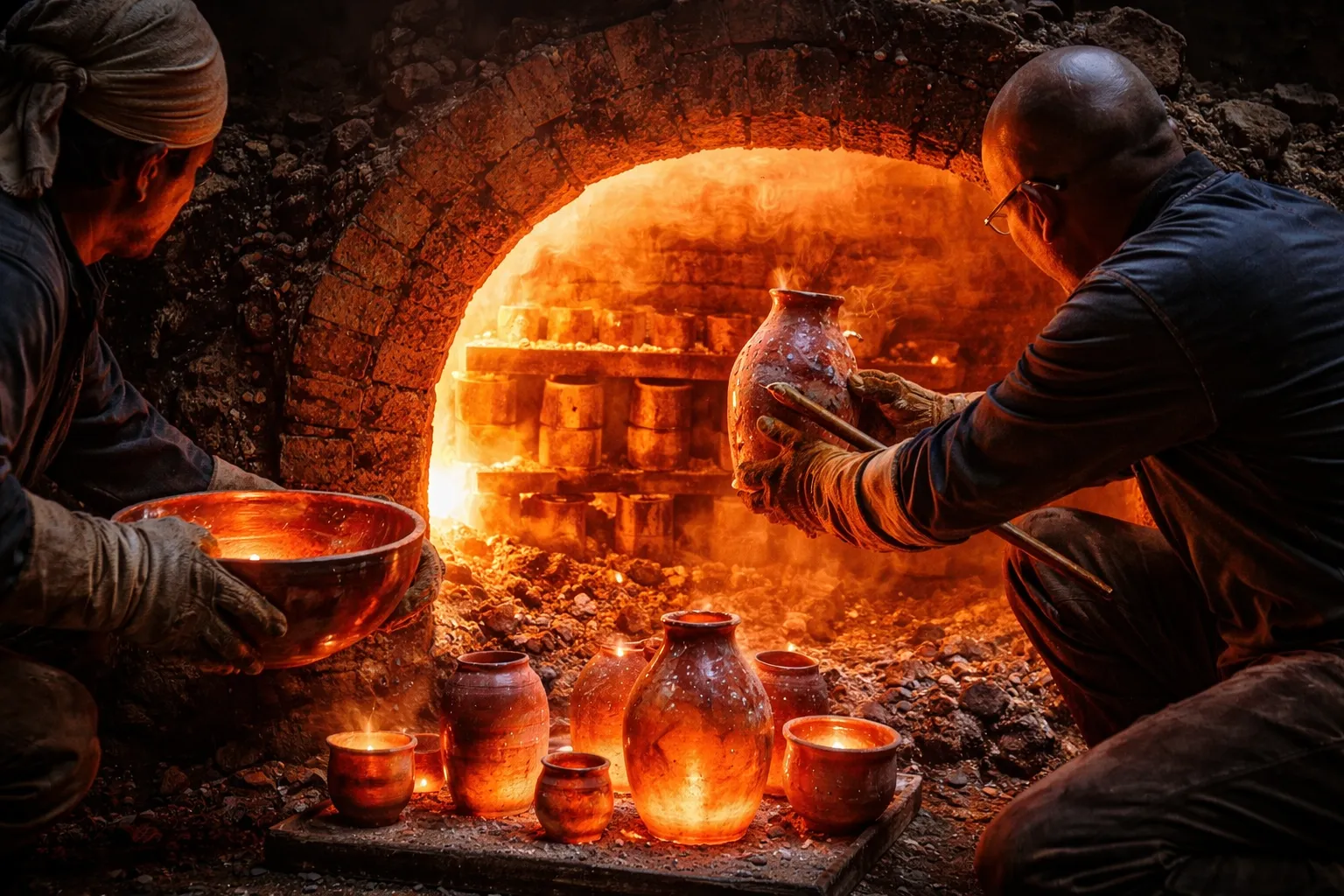
Glazed works are fired at 1,200–1,300°C. Temperature, oxygen levels, and flame patterns inside the kiln determine the final appearance. The moment of opening the kiln is the most suspenseful instant for any potter — unexpected “yōhen” (kiln-accident effects) sometimes produce masterpieces, and this unpredictability is part of ceramics’ enduring fascination.
Where to Experience Togei
Production Region Workshops
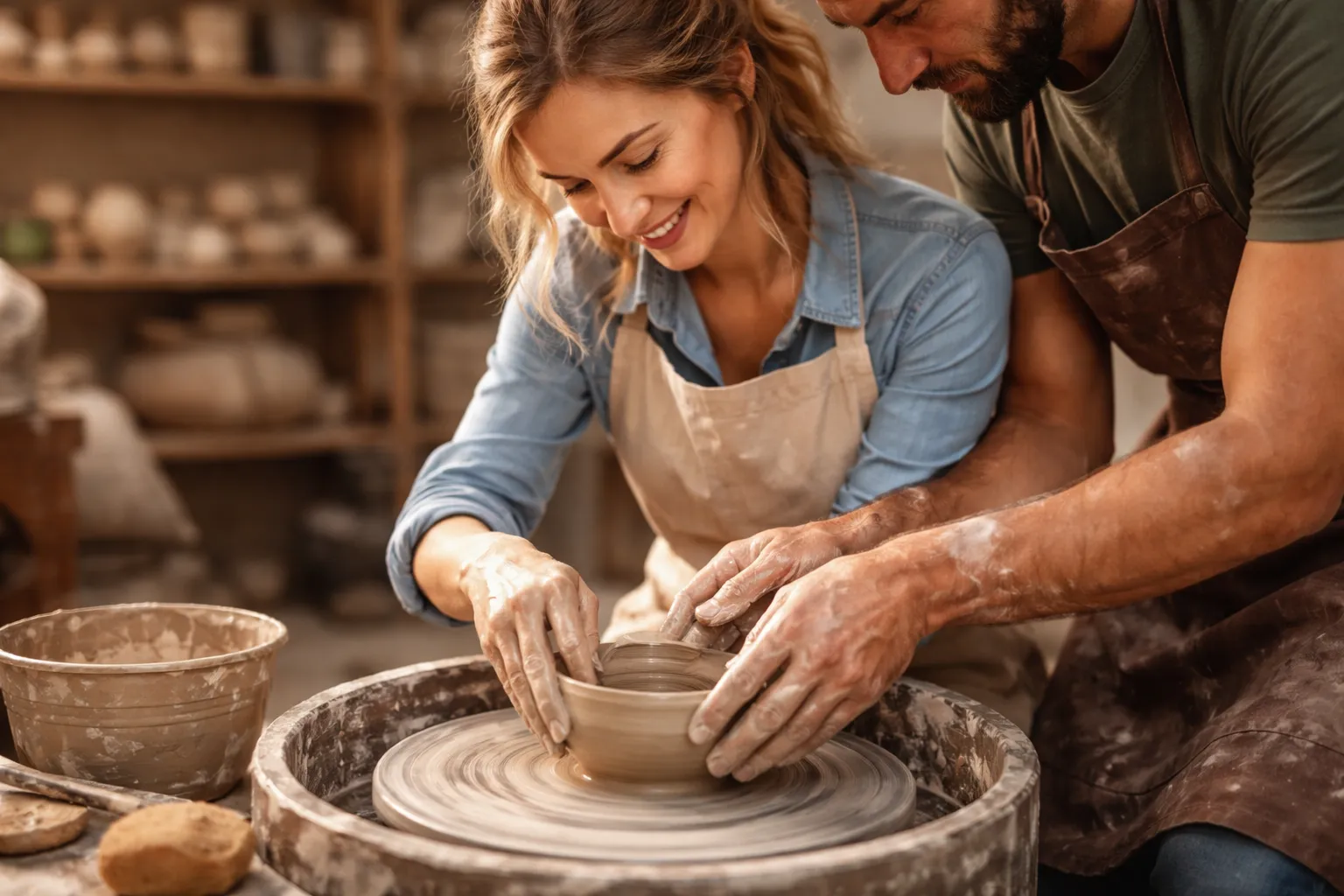
Arita, Bizen, Shigaraki, Kutani, and other production areas host numerous kilns offering tours and hands-on pottery experiences. Wheel-throwing and hand-building sessions let visitors create their own pieces to take home (firing typically takes 1–2 months, with finished works shipped afterward).
Urban Pottery Studios
Tokyo, Osaka, and Kyoto all have pottery studios offering beginner-friendly one-day workshops — typically 2–3 hours covering shaping through painting.
Pottery Fairs and Kiln Markets
Seasonal pottery fairs across Japan offer the chance to buy directly from makers. The Arita Pottery Fair, held annually during Golden Week, attracts roughly 1.2 million visitors and offers Arita ware at special prices.
Summary
Japanese ceramics encompasses over 16,000 years of dialogue between earth and fire — from Jomon cooking vessels to wabi tea bowls, from Imari export porcelain to contemporary art ceramics. Visiting a kiln, shaping clay on the wheel with your own hands, and marveling at the transformations wrought by glaze and flame is the most direct way to touch the spirit of Japanese craftsmanship.