
🕓 2024/11/17
#Hot Springs
A Detailed Guide to the History and Overview of Nozawa Onsen
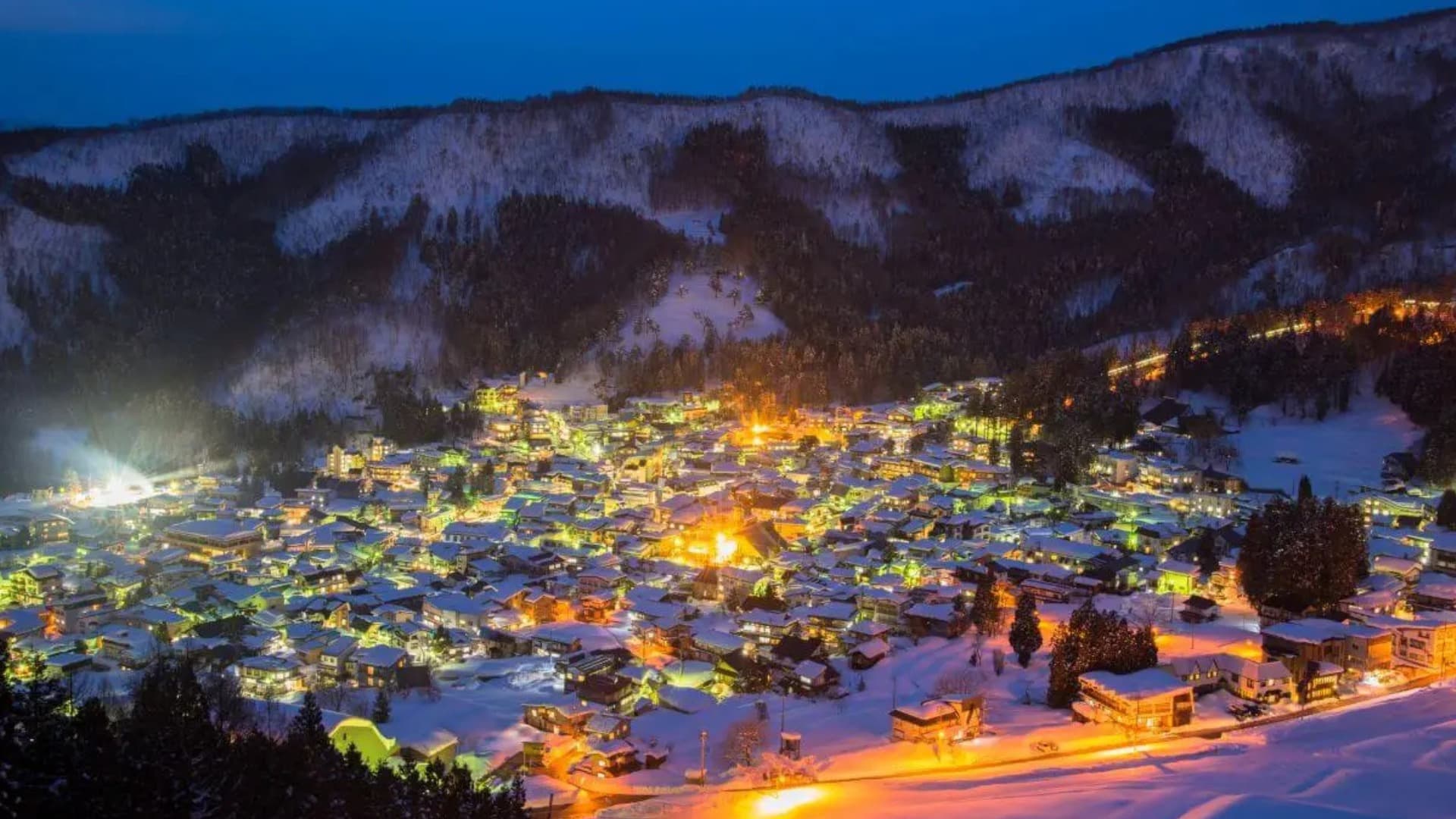
Table of Contents
- Overview of Nozawa Onsen
- History of Nozawa Onsen
- Recommended Hot Springs at Nozawa Onsen
- Highlights of Nozawa Onsen
Introduction
Nozawa Onsen, located in the northern part of Nagano Prefecture, Japan, is a historic hot spring town where rich nature and traditional culture harmoniously coexist. With its long history as a hot spring resort, its abundant water supply and diverse spring qualities have attracted visitors since ancient times, earning the affection of countless bathers who came for therapeutic purposes.
Beyond hot springs, the area also boasts a ski resort and winter festivals, offering different charms throughout all four seasons. In this article, we provide a detailed introduction to the history, recommended hot springs, and notable attractions of Nozawa Onsen, offering information to enrich your visit.
Overview of Nozawa Onsen
Nozawa Onsen is a historic hot spring town located in Nozawa Onsen Village, Shimotakai District, in the northern part of Nagano Prefecture. Spread across the foothills of Mount Kenashi at an elevation of 1,650 meters, it is known for its abundant water supply and diverse spring qualities.
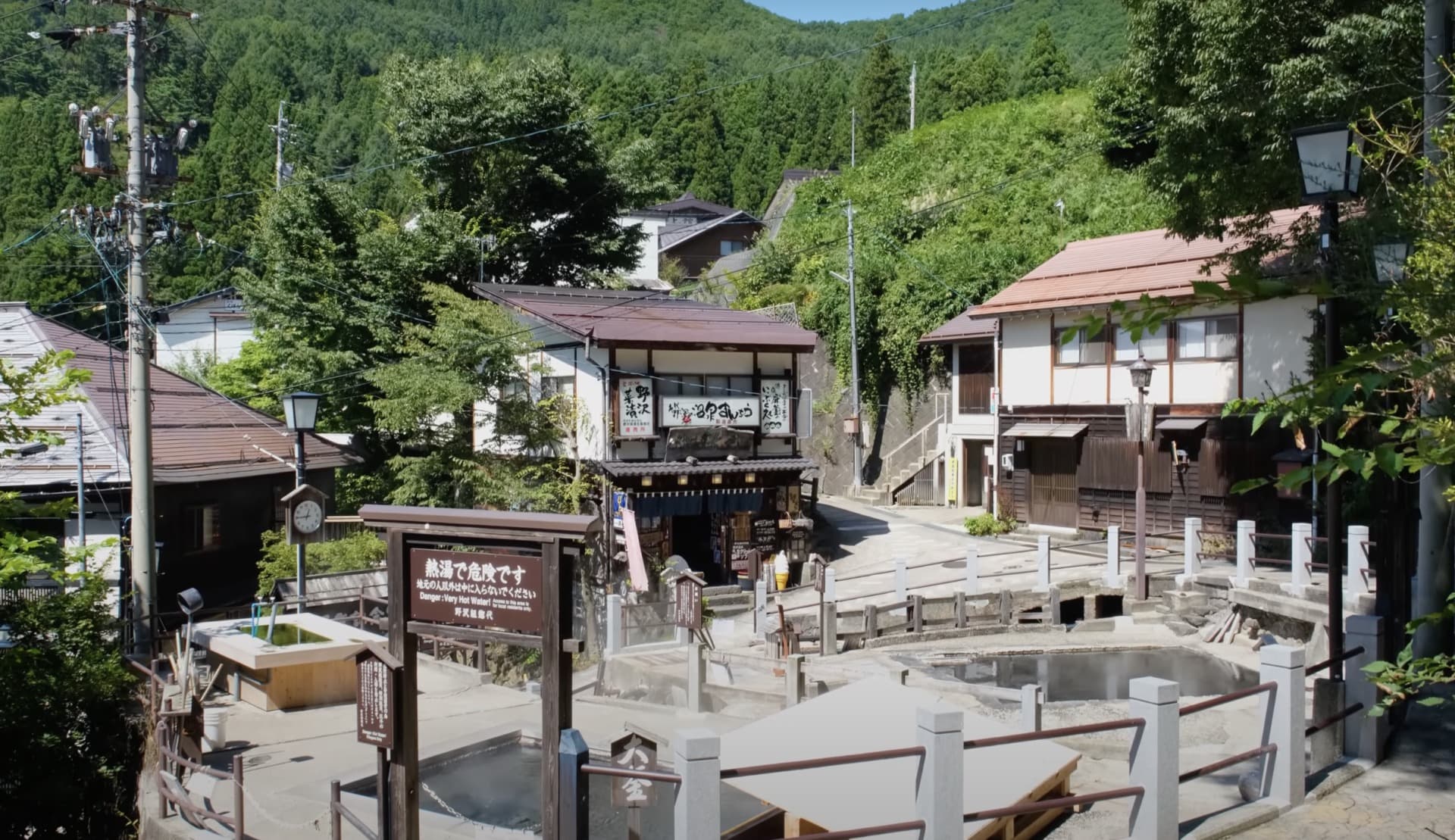
There are several theories about its founding: one attributes the discovery to the monk Gyoki during the Nara period, another to mountain ascetics, and yet another to a hunter who tracked a wounded bear to a hot spring. During the Edo period, the Matsudaira clan, lords of the Iiyama domain, developed it as a bathing resort and opened it to the general public, attracting many visitors for therapeutic bathing.
The village has over 30 hot spring sources, boasting a flow rate of approximately 1,700 liters per minute. The water quality is mildly alkaline, with temperatures ranging widely from 42 to 90 degrees Celsius, offering various therapeutic benefits.
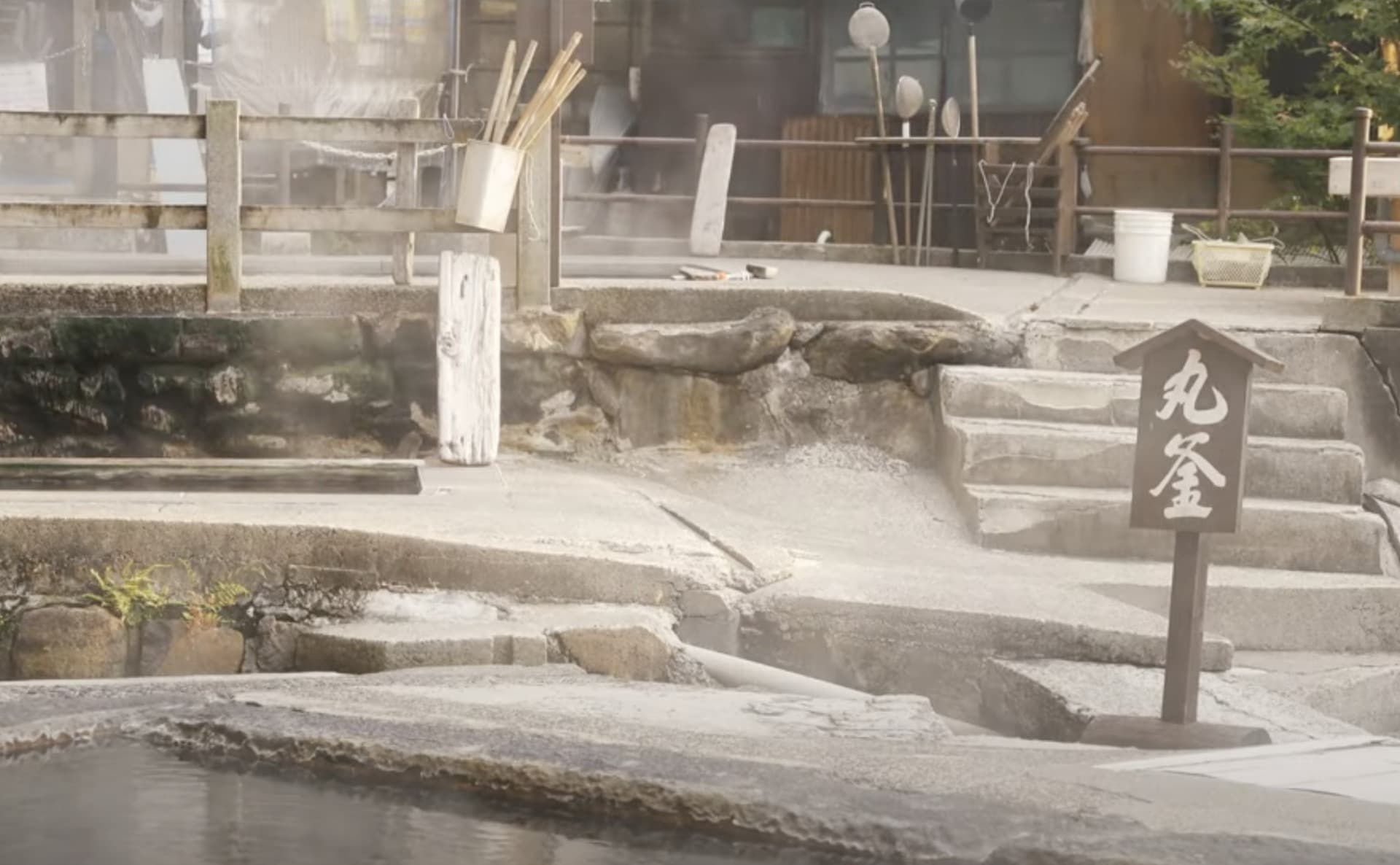
A distinctive cultural feature of Nozawa Onsen is its 13 soto-yu (public outdoor bathhouses). These bathhouses are managed by local organizations called “Yu-nakama” (hot spring associations) and are open to tourists as well. Each bathhouse is free to use, with a custom of placing a small donation. Ogama is a hot spring source where water gushes out at nearly 100 degrees Celsius. Locals use it to boil vegetables and eggs as part of their daily life. While tourists are not permitted to enter the area, viewing is allowed, offering a glimpse into local living culture.
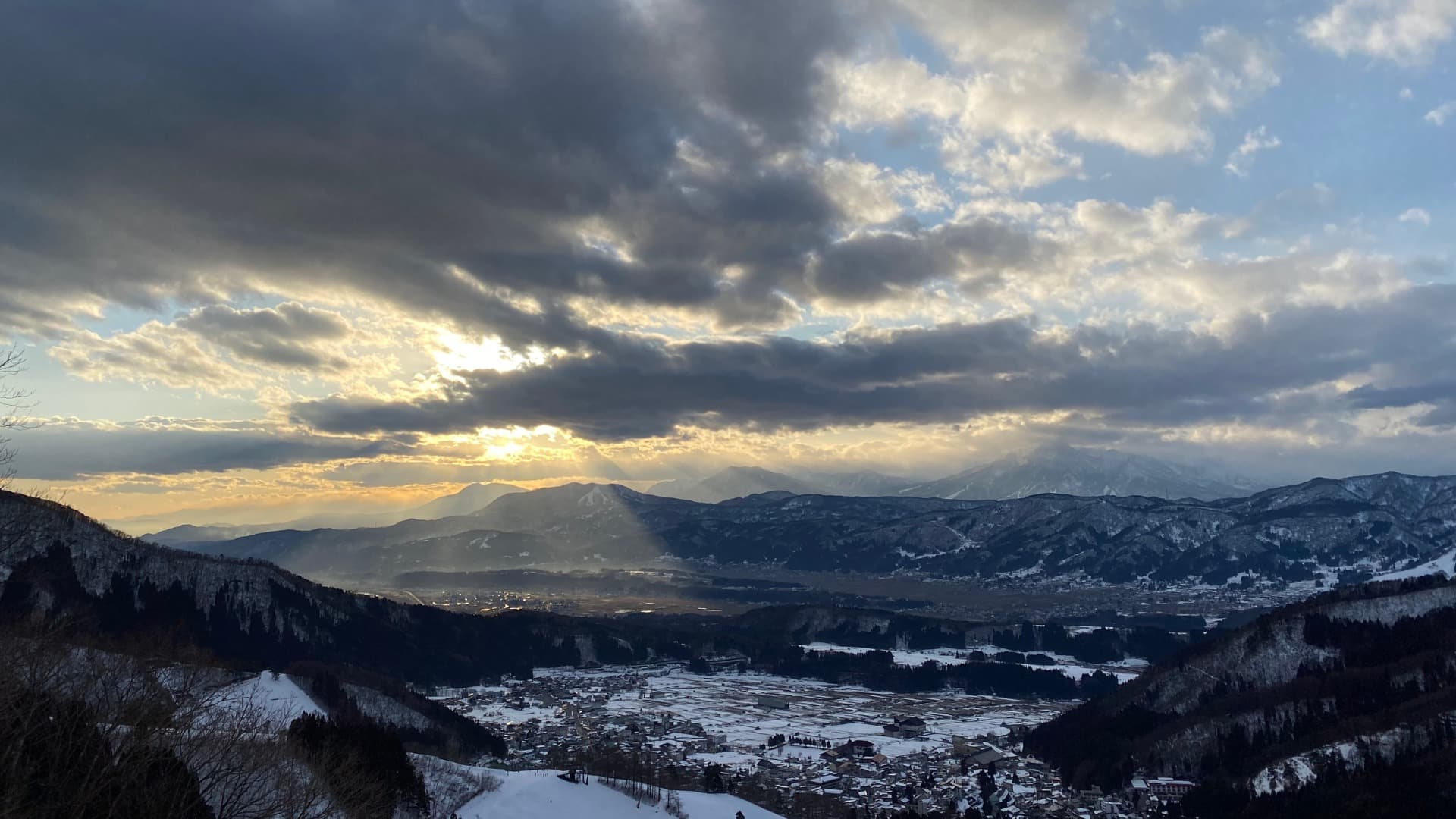
Nozawa Onsen is famous not only for its hot springs but also as a ski resort. The Nozawa Onsen Ski Resort is one of the largest in Japan and attracts many skiers during winter. Additionally, the “Dosojin Matsuri” (Fire Festival) held every January 15 is designated as a National Important Intangible Folk Cultural Property and draws many tourists.
History of Nozawa Onsen
Nozawa Onsen is a historic hot spring town located in Nozawa Onsen Village, Shimotakai District, in the northern part of Nagano Prefecture. Its origins date back to the Nara period, and it has undergone many historical events to reach its present form. Below, we summarize the major events in chronological order.
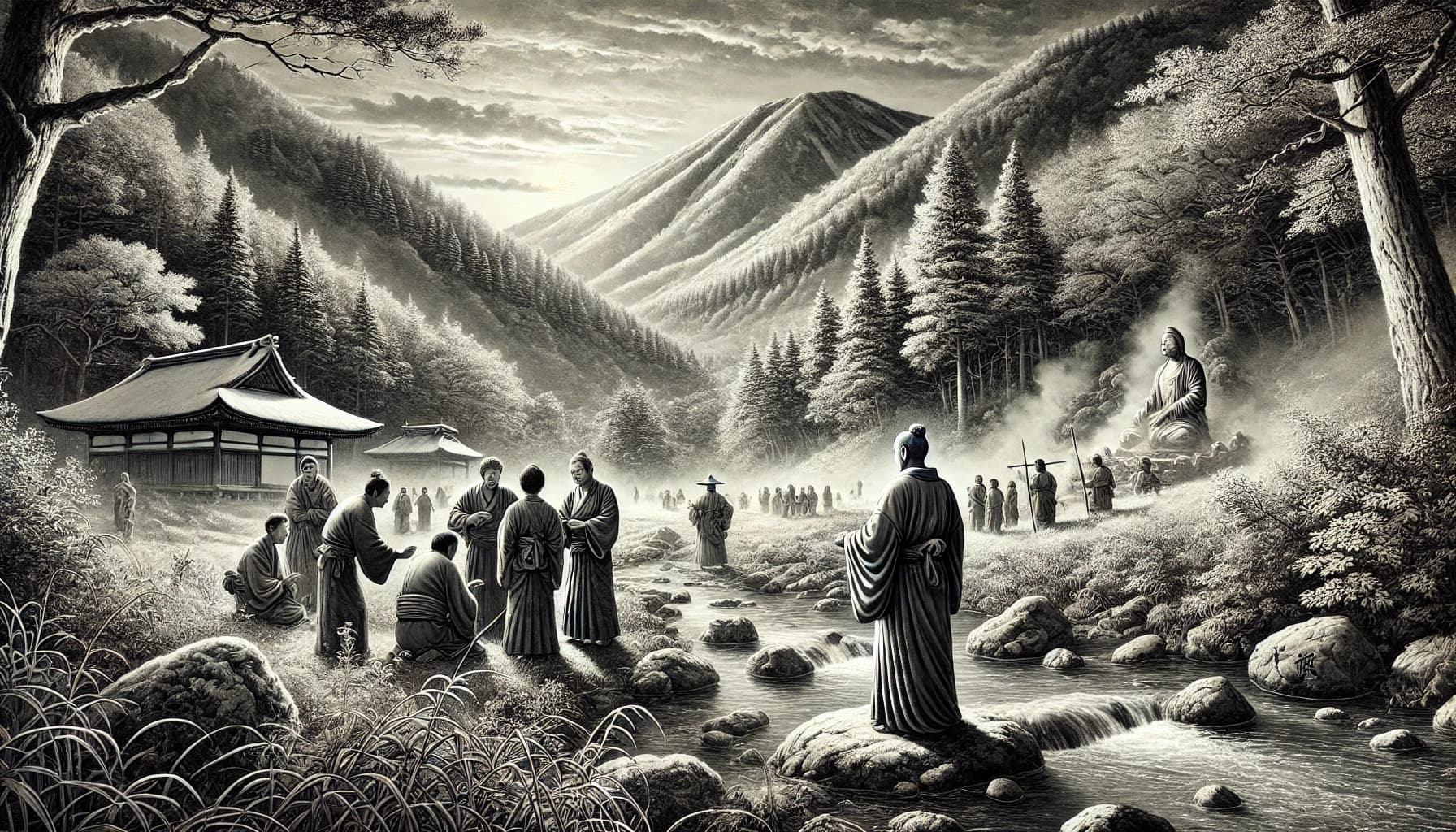
1. Nara Period (around 724): Discovery by the Monk Gyoki
 *Illustrative image
According to legend, during the reign of Emperor Shomu in the Nara period (724-748), the monk Gyoki visited this area and discovered the hot springs. This is considered the origin of Nozawa Onsen. In the mid-Kamakura period, in the year Bun’ei 9 (1272), it first appeared in historical documents as “Yuyama Village.” From this time, its history as a hot spring town began to be recorded.
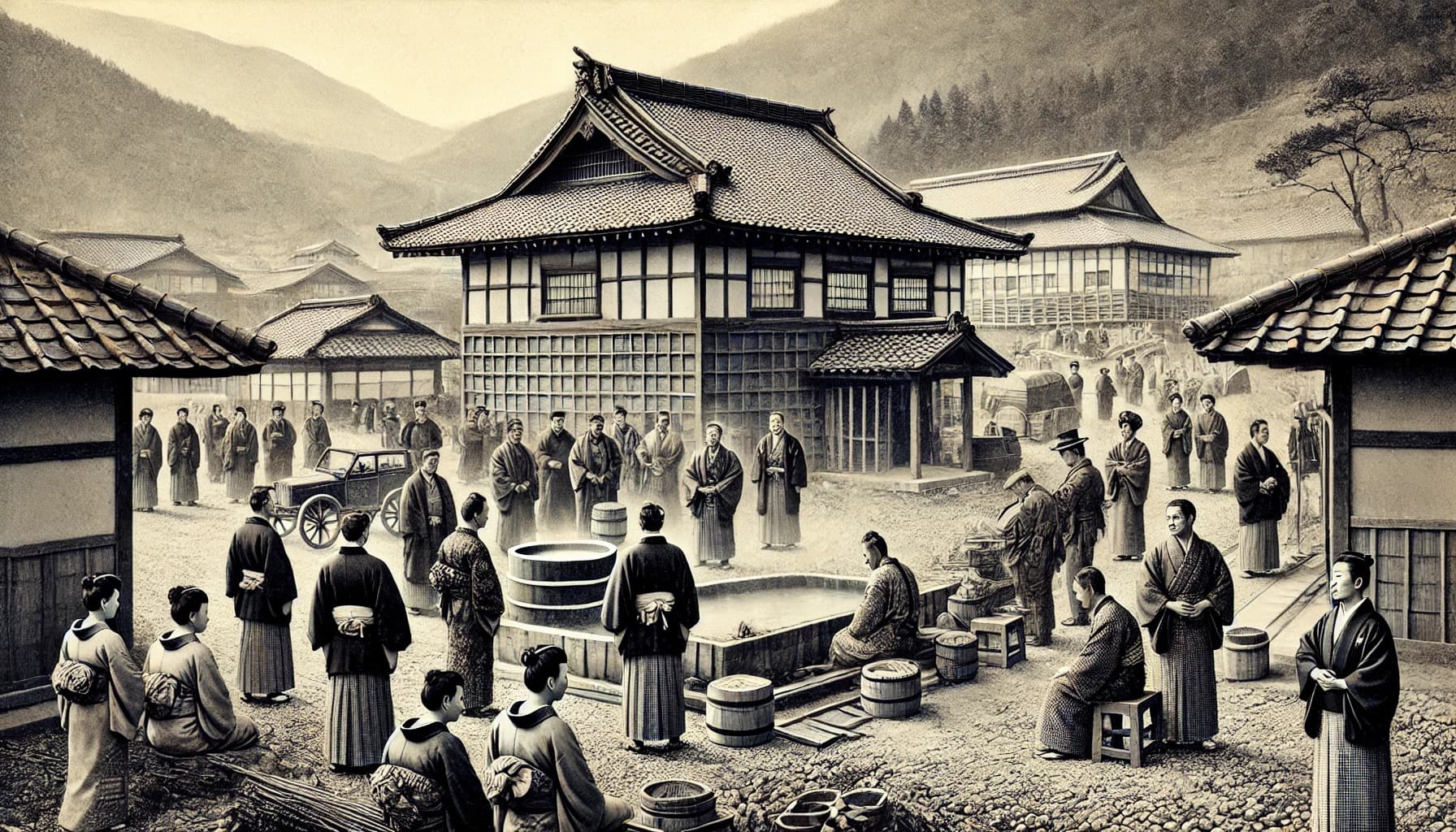
2. Early Edo Period (1624-1837): Development by the Iiyama Domain Lord
 *Illustrative image
During the early Edo period’s Kan’ei era (1624-1643), Matsudaira Tadatomo, lord of the Iiyama domain, dispatched magistrates to develop bathhouses and lodgings. He built a villa for the domain lord’s personal use and also permitted the general public to bathe, leading to many visitors coming from the surrounding areas for therapeutic bathing.
In the year Tempo 8 (1837), records show that 24 therapeutic bathing inns existed as imperial domain (tenryo) property. During this period, development as a hot spring town progressed, and many people came for therapeutic bathing.
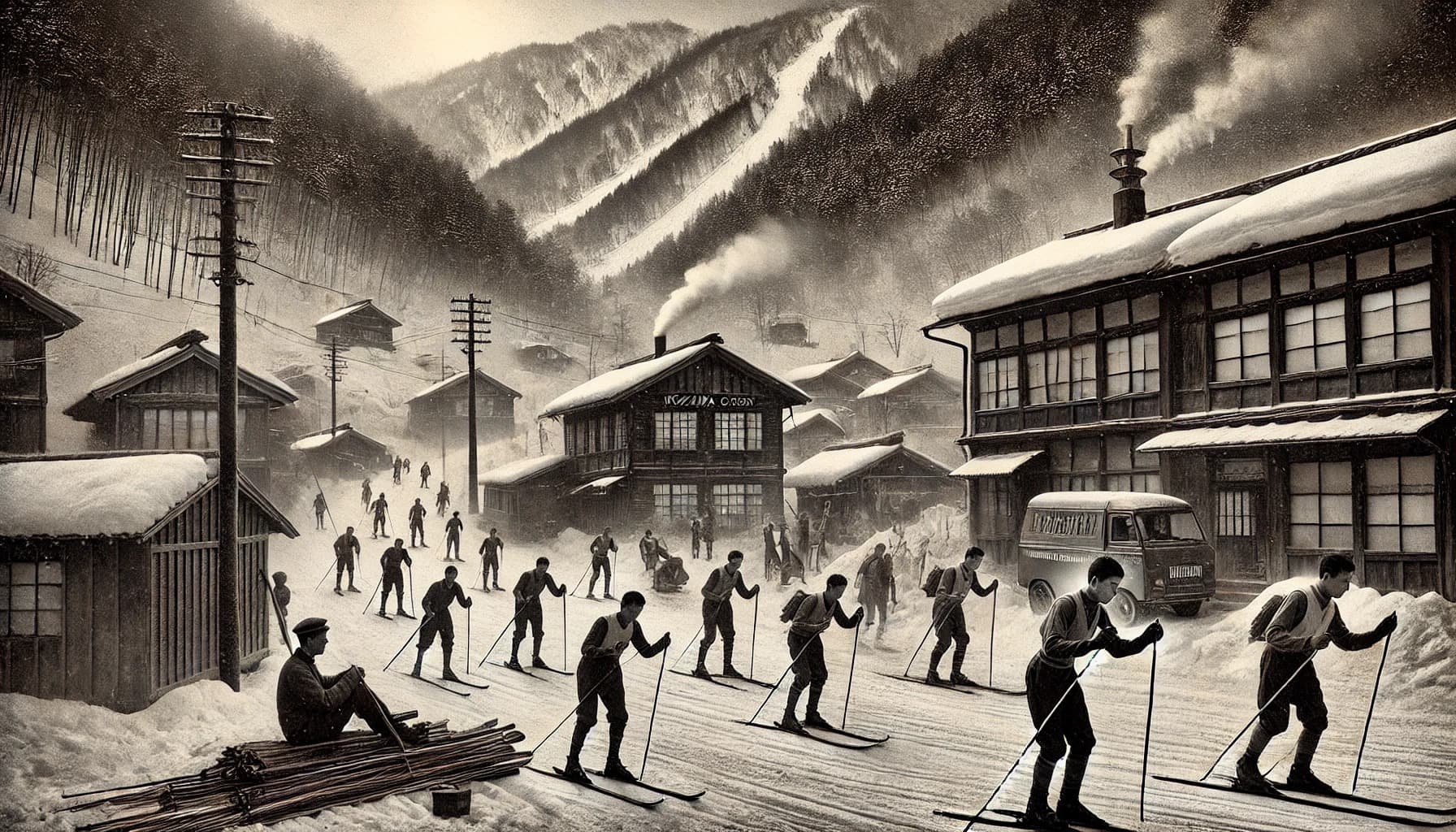
3. Meiji Period (1868-1912): Introduction of Ski Culture
 *Illustrative image
In the late Meiji period, ski culture was introduced to Nozawa Onsen. In 1912 (Meiji 45), a village native who was a student at Iiyama Junior High School skied for the first time, and in 1923 (Taisho 12), the Nozawa Onsen Ski Club was established, initiating efforts to develop the ski slopes and attract skiers, thus beginning the village’s development centered on hot springs and skiing.
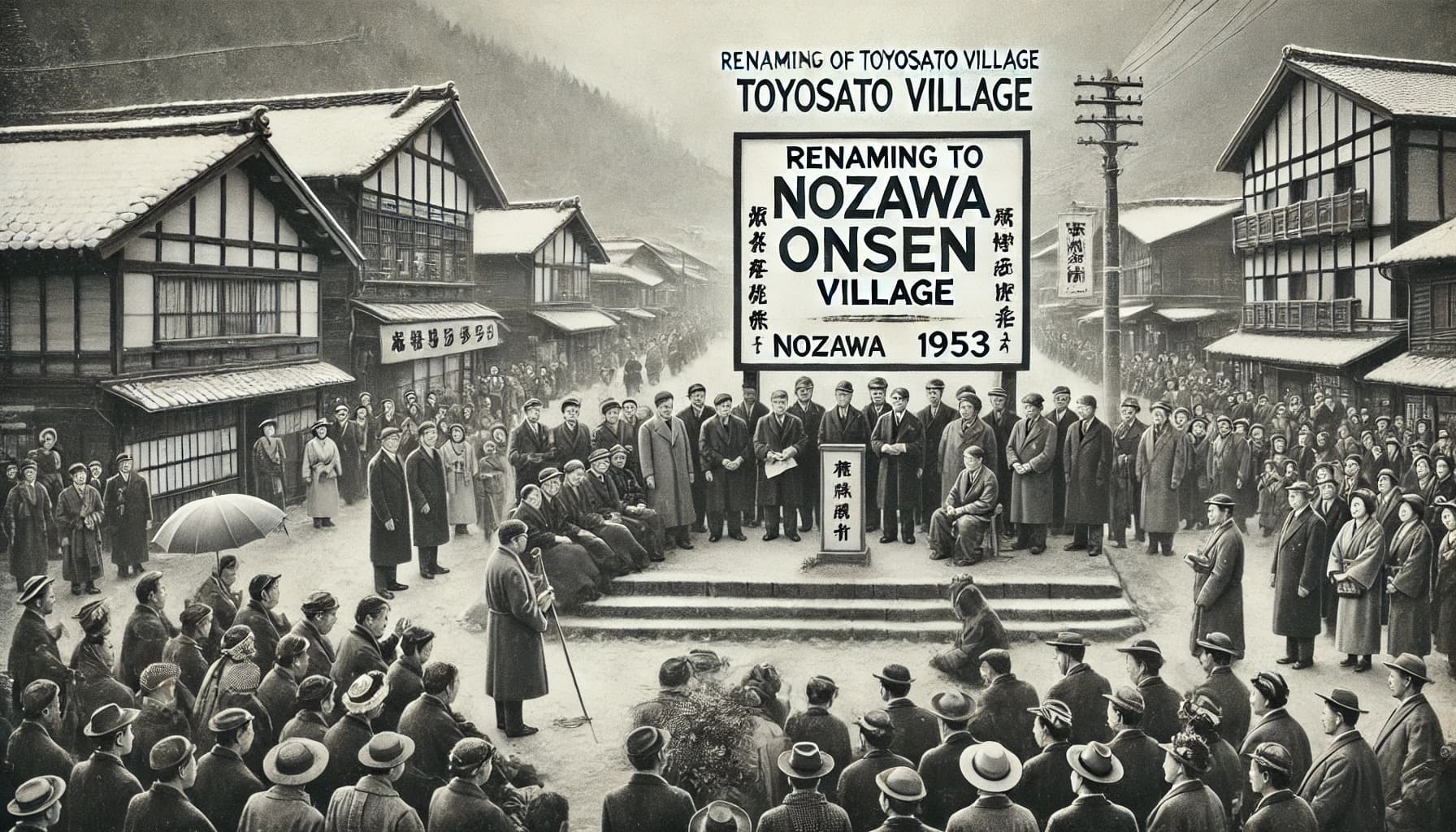
4. Showa Period (1953): Village Name Change
 *Illustrative image
On August 18, 1953 (Showa 28), the village name was changed from “Toyosato Village” to “Nozawa Onsen Village.” This further elevated its recognition as a hot spring resort. On September 30, 1956 (Showa 31), it merged with Ichikawa Village, and Nozawa Onsen Village was newly established. This expanded the village’s scale and generated expectations for further development.
5. Heisei Period (1998): Hosting the Nagano Olympics
 *Illustrative image
In 1998 (Heisei 10), Nozawa Onsen Ski Resort was selected as one of the venues for the Nagano Olympics, spreading the name of Nozawa Onsen worldwide. Along with this, the Joshinetsu Expressway’s Toyota-Iiyama IC and the Hokuriku Shinkansen extending to Iiyama City were completed, dramatically improving access to the Tokyo metropolitan area and Nagoya region, enhancing both living conditions and business opportunities.
Recommended Hot Springs at Nozawa Onsen
Nozawa Onsen is a historic hot spring town in northern Nagano Prefecture, known for its abundant water supply and diverse spring qualities. In particular, its 13 soto-yu (public bathhouses) are freely open to visitors, providing a variety of hot spring experiences. Below, we introduce some especially recommended bathhouses.
■ O-yu (Grand Bath)
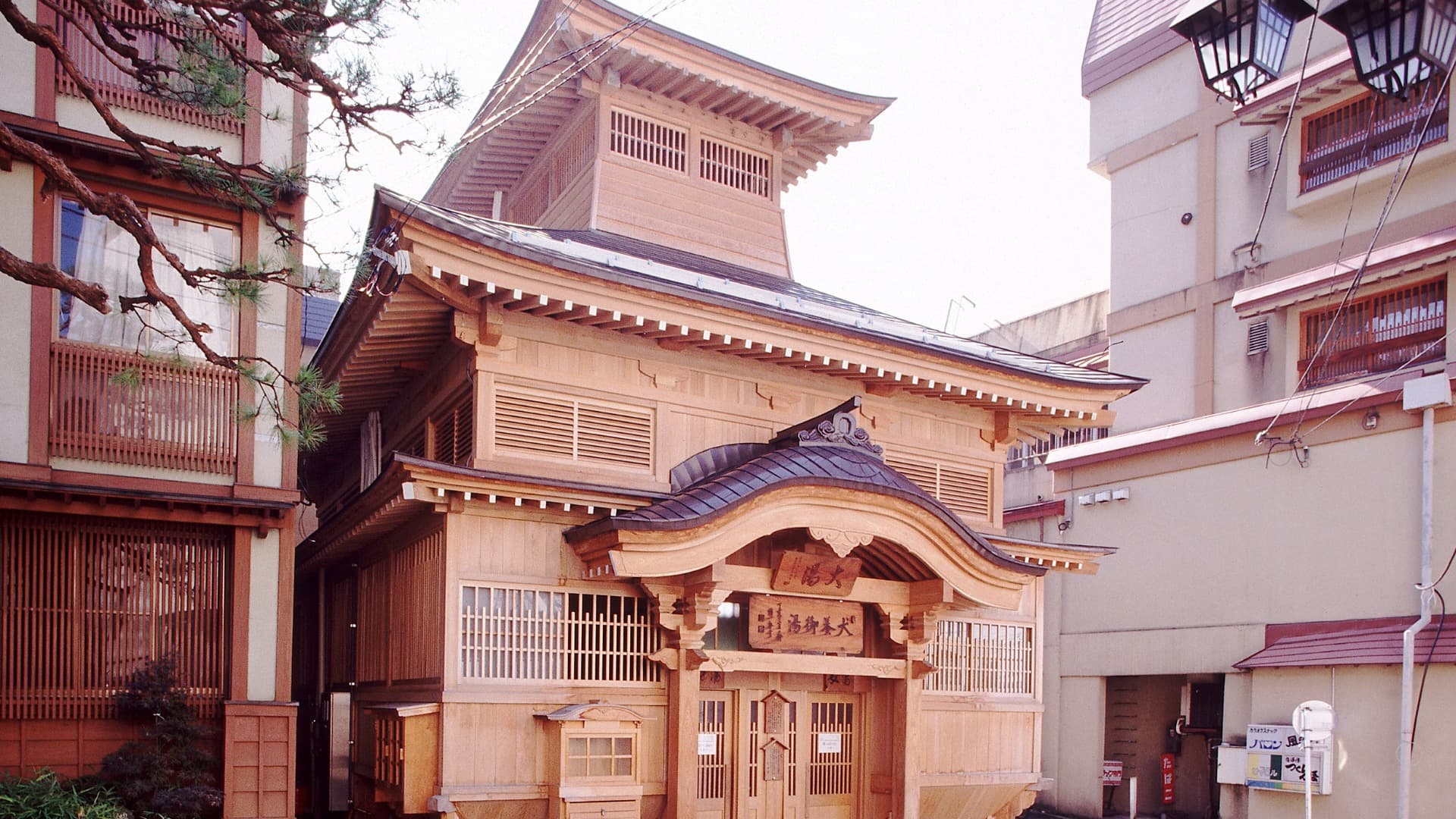
O-yu is the most iconic public bathhouse of Nozawa Onsen, featuring traditional bathhouse architecture that preserves the atmosphere of the Edo period. Located in the center of the Nozawa Onsen hot spring district, it is conveniently accessible even for first-time visitors. The building is a historic wooden structure that exudes both dignity and warmth, with its beautiful exterior particularly eye-catching.
The water quality is simple sulfur spring, with a distinctive sulfur scent that is said to enhance relaxation. This hot spring is believed to be effective for gastrointestinal disorders, rheumatism, gynecological conditions, and stroke. The water temperature is slightly high, providing a thorough warming effect, making it especially recommended for those with poor circulation or anyone wanting to warm up from their core.
■ Kumano-tearai-yu (Bear’s Paw Wash Bath)
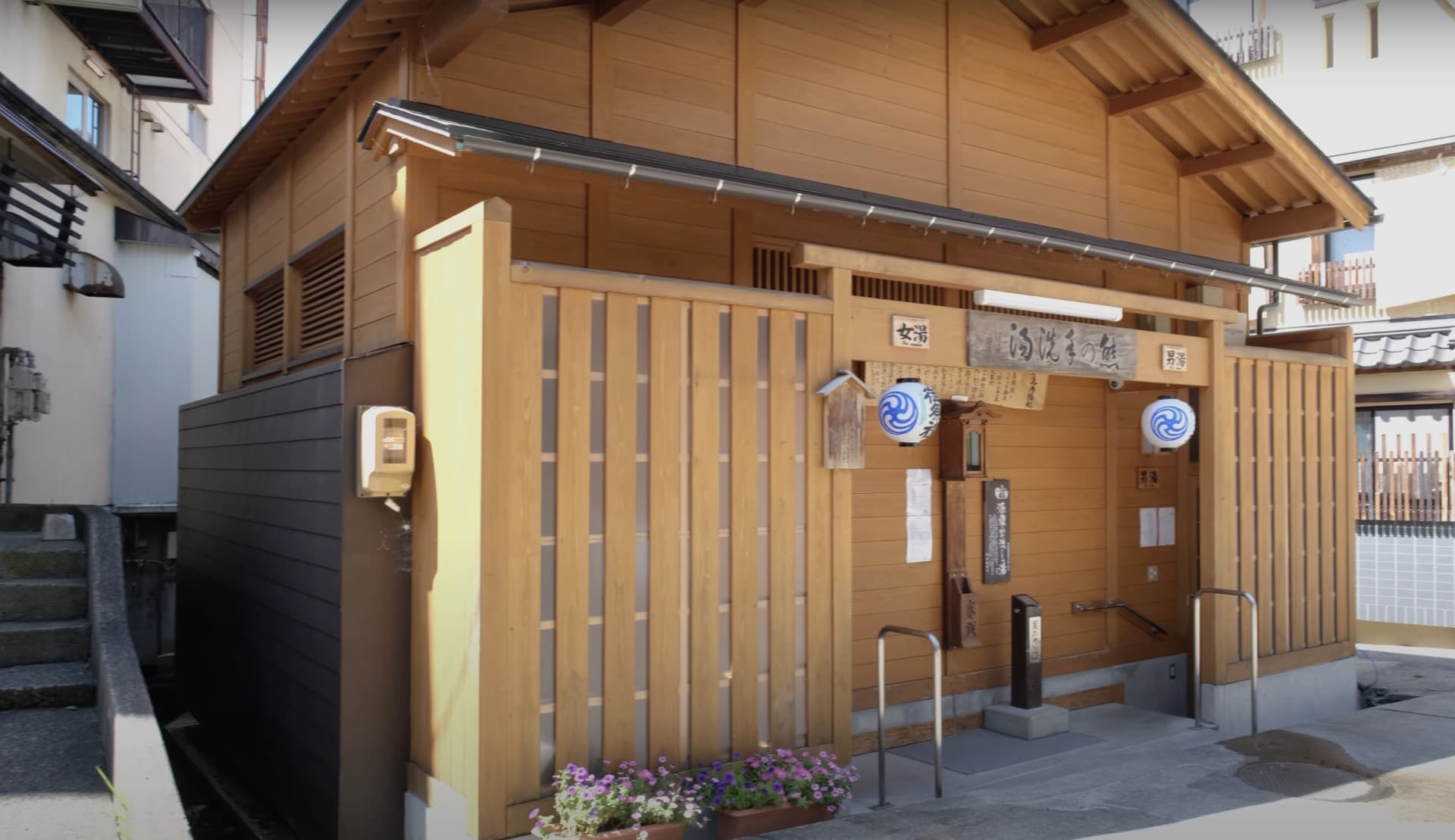
Kumano-tearai-yu is considered the birthplace of Nozawa Onsen and is one of the public bathhouses deeply beloved by locals. Its name comes from a legend that a bear with an injured paw healed its wound in this spring, and it has been cherished by people since ancient times. The bathhouse itself is relatively compact with a simple yet tranquil design, allowing for a leisurely bathing experience.
The water quality is gypsum-containing sodium chloride-sulfur spring, said to be effective for skin conditions, burns, and cuts. Soaking in the water gives a sensation of softening skin. The bathhouse interior is quiet, with warm light filling the space, providing a soothing healing experience for visitors.
■ Kawara-yu (Riverbed Bath)
Kawara-yu derives its name from having originally been located in a hollow along a mountain stream’s riverbed, and is one of the popular bathhouses in Nozawa Onsen. The bathing area is spacious with a comfortably relaxed atmosphere, and its relatively mild water temperature makes it ideal for extended soaking.
The water quality is gypsum-containing sodium chloride-sulfur spring, said to be particularly effective for skin conditions. Kawara-yu is ideal for those who want to slowly warm their bodies while relaxing. Combined with the gentle water quality, bathers can experience silky-smooth skin after soaking. The entire bathhouse is enveloped in a relaxed atmosphere, making it perfect for forgetting everyday hustle and simply unwinding.
■ Matsuba-yu (Pine Needle Bath)
Matsuba-yu is located in the center of Nozawa Onsen within the Matsuba minshuku (guesthouse) district, and is a public bathhouse beloved by locals. Its name is said to derive from an archery range (matoba) that once existed here, which was later corrupted to “matsuba.”
It is a two-story wooden building with a clean and well-maintained bathhouse. The first floor has a laundry bath, and the second floor houses the bathing area, serving as a gathering place for both locals and tourists. The water quality is gypsum-containing sodium chloride-sulfur spring, fed from the Ogama source, and is said to be effective for skin conditions, rheumatism, gynecological disorders, and lead/mercury poisoning. The water temperature is moderate, making it easy for beginners to enter, perfect for those wanting a casual hot spring experience.
■ Nakao-no-yu
Nakao-no-yu boasts the largest wooden bathhouse architecture among Nozawa Onsen’s public baths, located in a residential area slightly away from the center of the hot spring district. Its spacious bathing area features two pools — a hot bath and a lukewarm bath — allowing visitors to choose their preferred water temperature.
Like Matsuba-yu, the water quality is gypsum-containing sodium chloride-sulfur spring, fed from the Ogama source, and is said to be effective for skin conditions, rheumatism, gynecological disorders, and lead/mercury poisoning. The water temperature is slightly high, allowing for thorough warming from the core, making it particularly suitable for those with poor circulation or anyone wanting to warm up deeply.
【 Tips for Bathhouse Hopping 】
Hours of operation:
Operating hours vary by bathhouse, but they are generally open from early morning until evening. We recommend checking the latest information before visiting.
Bathing etiquette:
The public baths are communal facilities also used by local residents. Please observe proper etiquette such as rinsing your body before entering the bath and maintaining quiet behavior inside the bathhouse.
Changing areas:
The public baths at Nozawa Onsen generally do not have spacious changing rooms; they tend to be compact and simple in design. For a more comfortable experience, avoid bringing valuables or large bags, and visit as lightly equipped as possible.
Donations:
The public baths are free to use, but donation boxes are provided for maintenance and management. It is good practice to contribute a small amount at the box placed at the entrance.
Highlights of Nozawa Onsen
Nozawa Onsen is a historic hot spring town in the northern part of Nagano Prefecture, with a variety of attractions that captivate visitors. Below, we introduce the major spots that are particularly worth visiting.
■ Ogama (The Cauldrons)
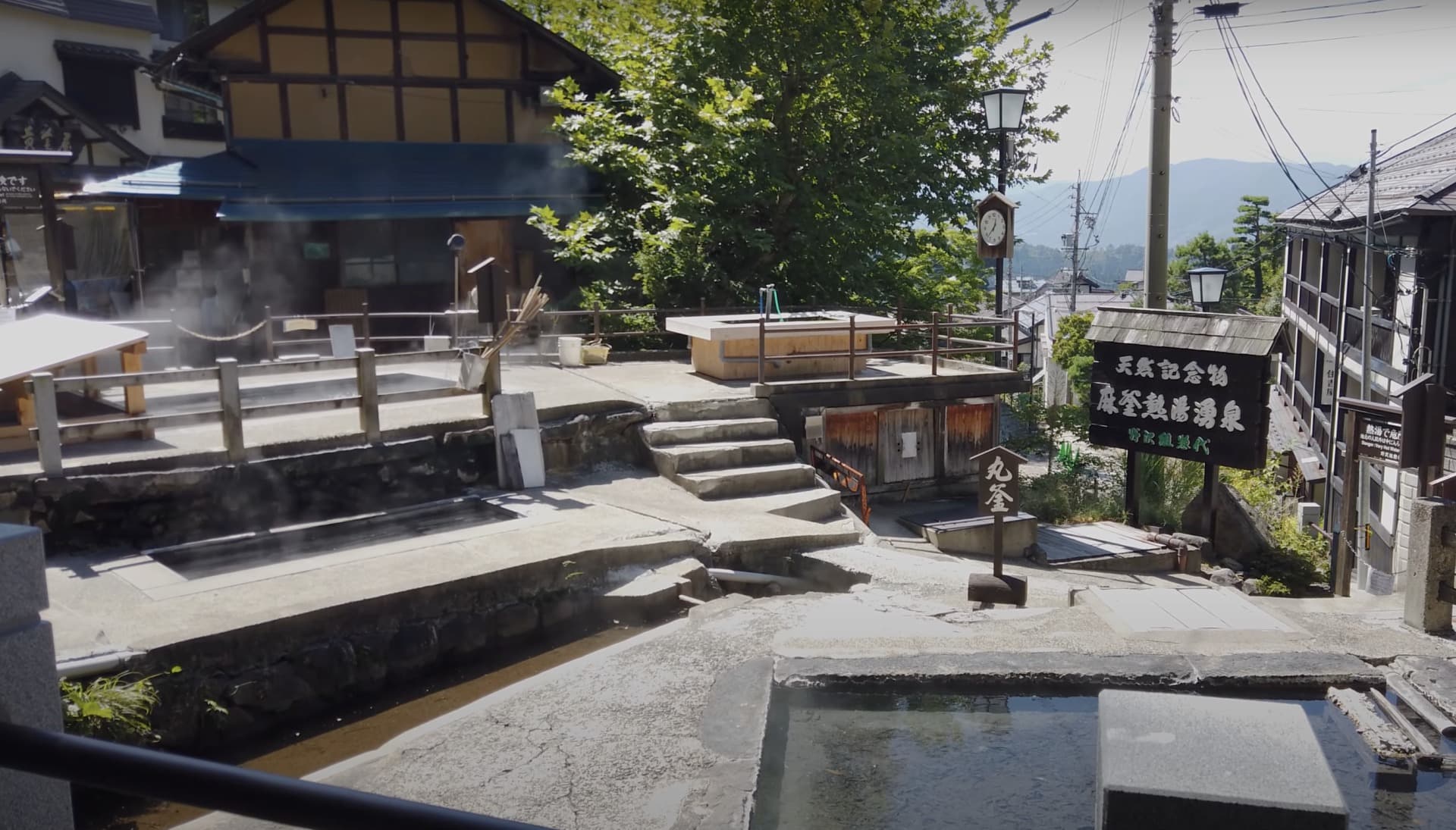
Ogama is one of the iconic hot spring sources of Nozawa Onsen, where water gushes out at approximately 90 degrees Celsius. This source consists of five pools called “O-gama” (large cauldron), “Maru-gama” (round cauldron), “Yude-gama” (boiling cauldron), “Takenoshi-gama” (bamboo stretching cauldron), and “Shimo-gama” (lower cauldron), each with different temperatures and uses. Local people use them to boil vegetables and mountain herbs, and to soak akebi vine to soften its bark as part of their daily life. The name Ogama derives from the practice of soaking hemp in these pools to make the bark easier to peel.
Currently, Ogama is designated as a National Natural Monument. While tourists are not permitted to enter, viewing is possible, offering a glimpse into the local living culture.
■ Nozawa Onsen Ski Resort
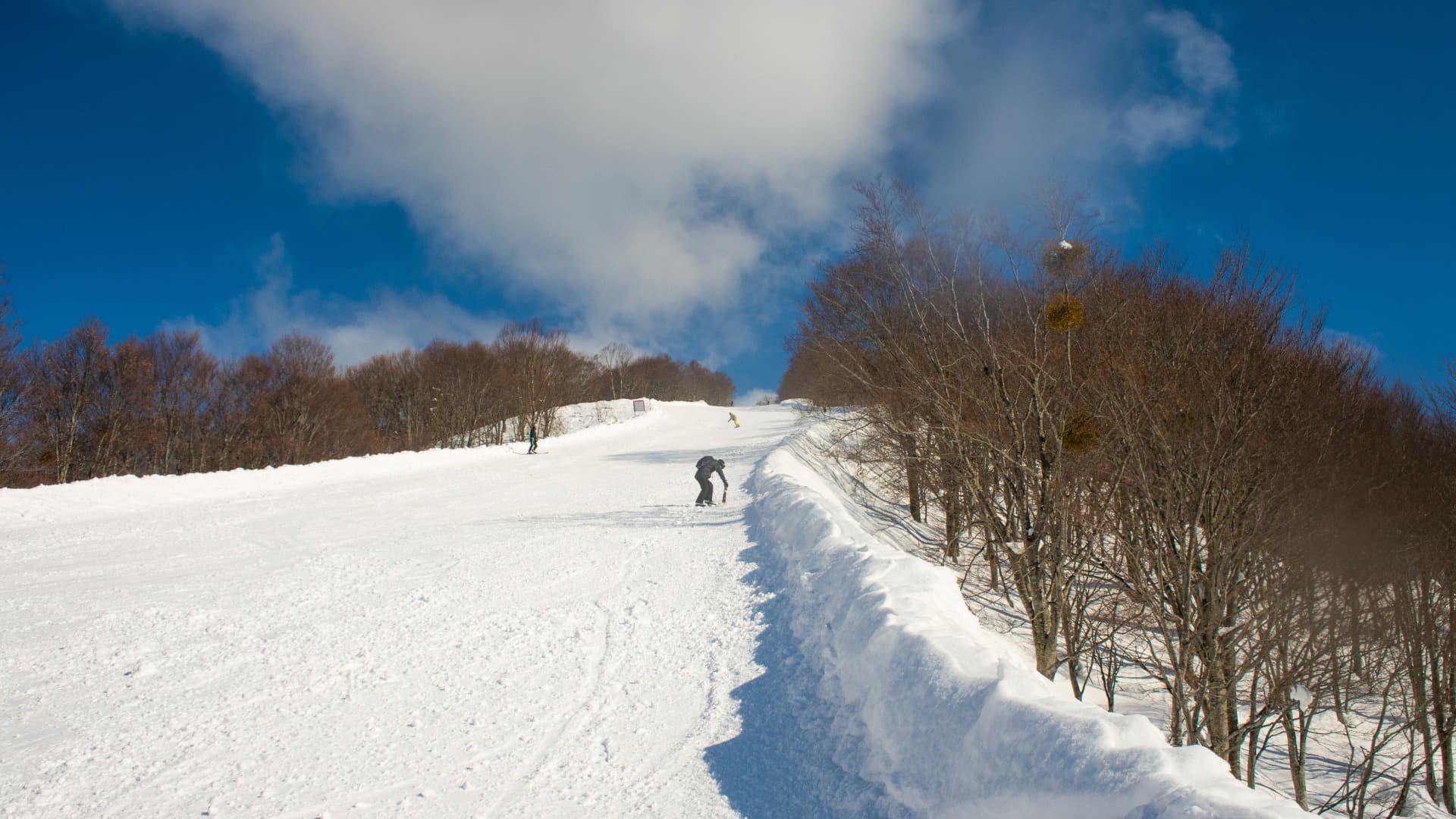
Nozawa Onsen Ski Resort is one of Japan’s largest ski resorts, offering a diverse range of courses enjoyable by beginners to advanced skiers. Boasting a total area of 297 hectares, an elevation difference of 1,085 meters, and a maximum run length of 10 km, approximately 40% of its 44 courses are designed for beginners. It is also known for its exceptional powder snow, and the resort bustles with many skiers during winter.
The resort is well-equipped with facilities including rental shops and restaurants, making it suitable for families and groups.
■ Japan Ski Museum
The Japan Ski Museum is a ski-specialized museum located at the base of the Isemiya slope, housing an extensive collection of materials gathered from around the world. The museum displays the history of skiing from its origins to the present in six sections, including the history of skiing in Japan, as well as ski-related materials from Austria, China, Mongolia, and materials from the Nagano Winter Olympics and Paralympics.
■ Dosojin Matsuri (Fire Festival)
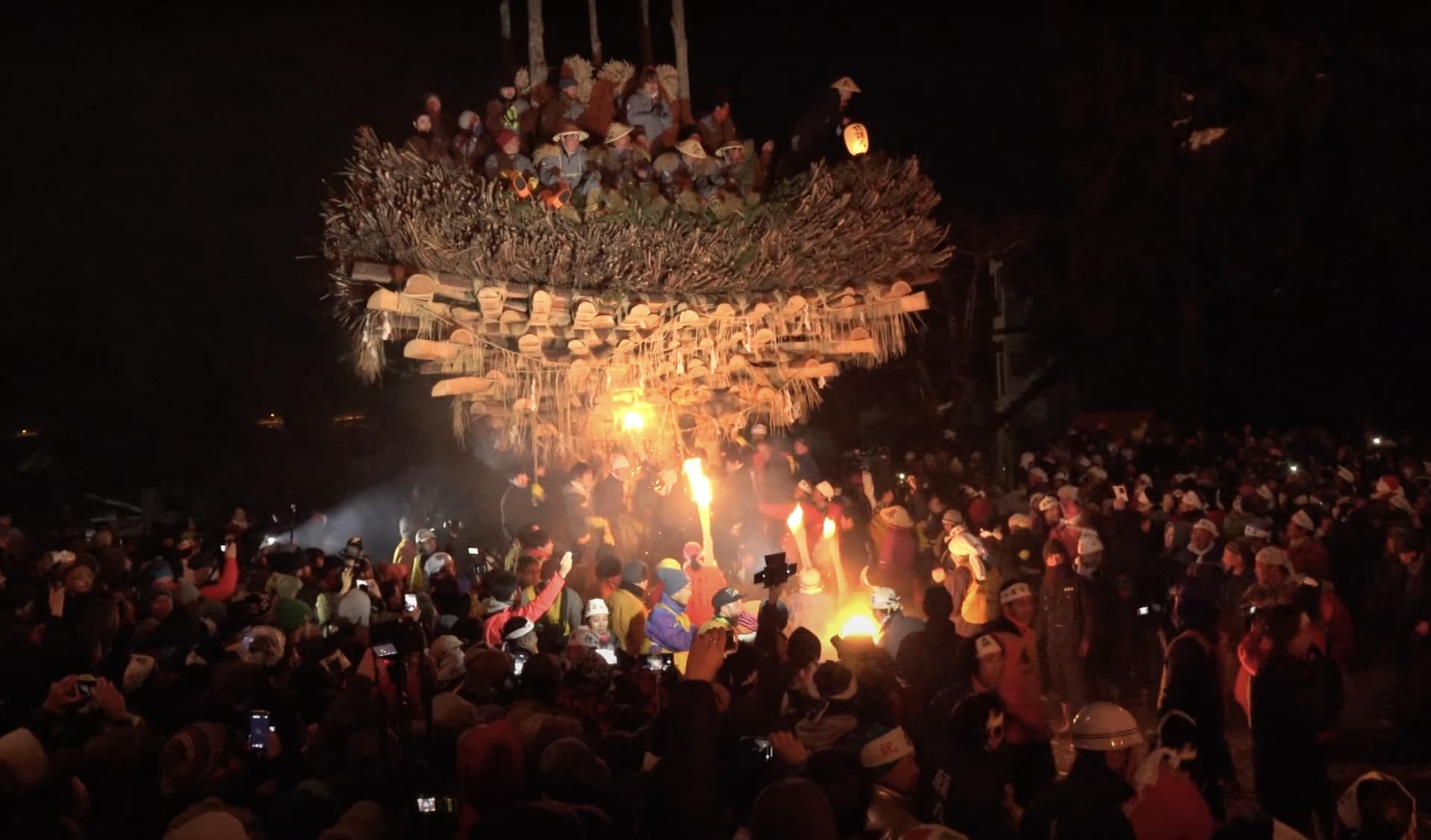
The “Dosojin Matsuri,” held every January 15, is designated as a National Important Intangible Folk Cultural Property and attracts many tourists. This festival is a prayer for protection from illness and a bountiful harvest, featuring a spectacular event in which a shrine structure approximately 18 meters tall is set ablaze.
At the climax of the festival, men in their “yakudoshi” (unlucky years) defend the shrine structure while other participants carrying torches try to set it ablaze, creating a dramatic battle. This powerful spectacle captivates many spectators.
■ Oborozukiyo no Yakata (Hazy Moon Museum)
“Oborozukiyo no Yakata” is a memorial museum dedicated to Tatsuyuki Takano, the lyricist behind famous songs such as “Furusato” (Hometown) and “Oborozukiyo” (Hazy Moon). Visitors can learn about his life and works. The museum displays his handwritten manuscripts and personal belongings, making it a must-visit spot for literature enthusiasts. Special exhibitions, planned events, and concerts are also held, offering visitors a variety of cultural experiences.
■ Yuzawa Shrine
Yuzawa Shrine is a shrine revered as the guardian deity of snow sports, attracting many visitors who come to pray for safety while skiing and snowboarding. From the shrine grounds, visitors can enjoy a panoramic view of the Nozawa Onsen townscape, with beautiful scenery throughout all four seasons. In winter, the snow-covered landscape and the shrine’s solemn atmosphere harmonize beautifully, captivating all who visit.
Conclusion
Nozawa Onsen is a captivating destination backed by a long history of hot spring culture and blessed with abundant nature, offering visitors a truly special experience. From the soto-yu bathhouse hopping in the hot spring district, to observing local living culture at Ogama, to skiing and the spectacular Dosojin fire festival, there is a wealth of diverse experiences to be had.
Step away from everyday life, surrender yourself to the historic hot springs, and savor the charming atmosphere that is unique to Nozawa Onsen. We hope that the experiences here will become priceless memories for each and every visitor.