
🕓 2025/1/3
#Tourist Destination
A Detailed Guide to the History and Overview of the Sagano Romantic Train

Table of Contents
- What Is the Sagano Romantic Train?
- History of the Sagano Romantic Train
- How to Enjoy the Sagano Romantic Train
- Recommended Model Courses
Introduction
The Sagano Romantic Train is a sightseeing train that runs from Arashiyama in Kyoto to Kameoka, offering breathtaking views of the Hozu River Gorge along the way. This train combines the beauty of nature across all four seasons, a retro atmosphere, and rich tourist spots along the route to offer a new way to enjoy Kyoto sightseeing.
In this article, we provide a detailed introduction to the basic information and history of the Sagano Romantic Train, how to enjoy the ride and surrounding tourist spots, and recommended model courses. Please use this as a reference for planning a trip to fully enjoy the nature and culture of Kyoto.
What Is the Sagano Romantic Train?
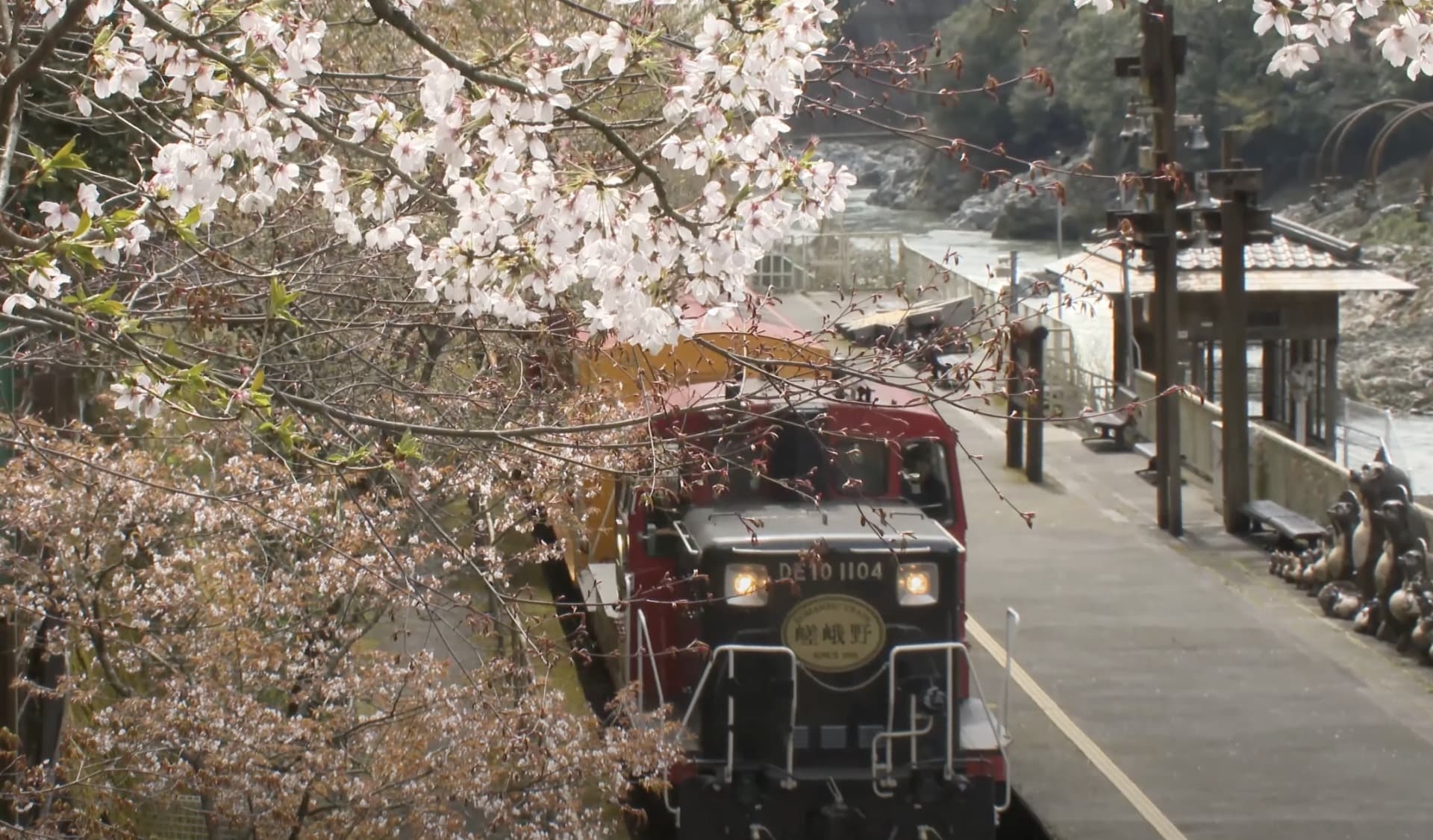
The Sagano Romantic Train is a sightseeing train connecting Saga-Arashiyama in Kyoto to Kameoka over approximately 7.3 km, known for the beautiful natural scenery along the Hozu River. This route utilizes former tracks that fell out of use following the double-tracking of the JR Sanin Main Line, offering a one-way journey of about 25 minutes.
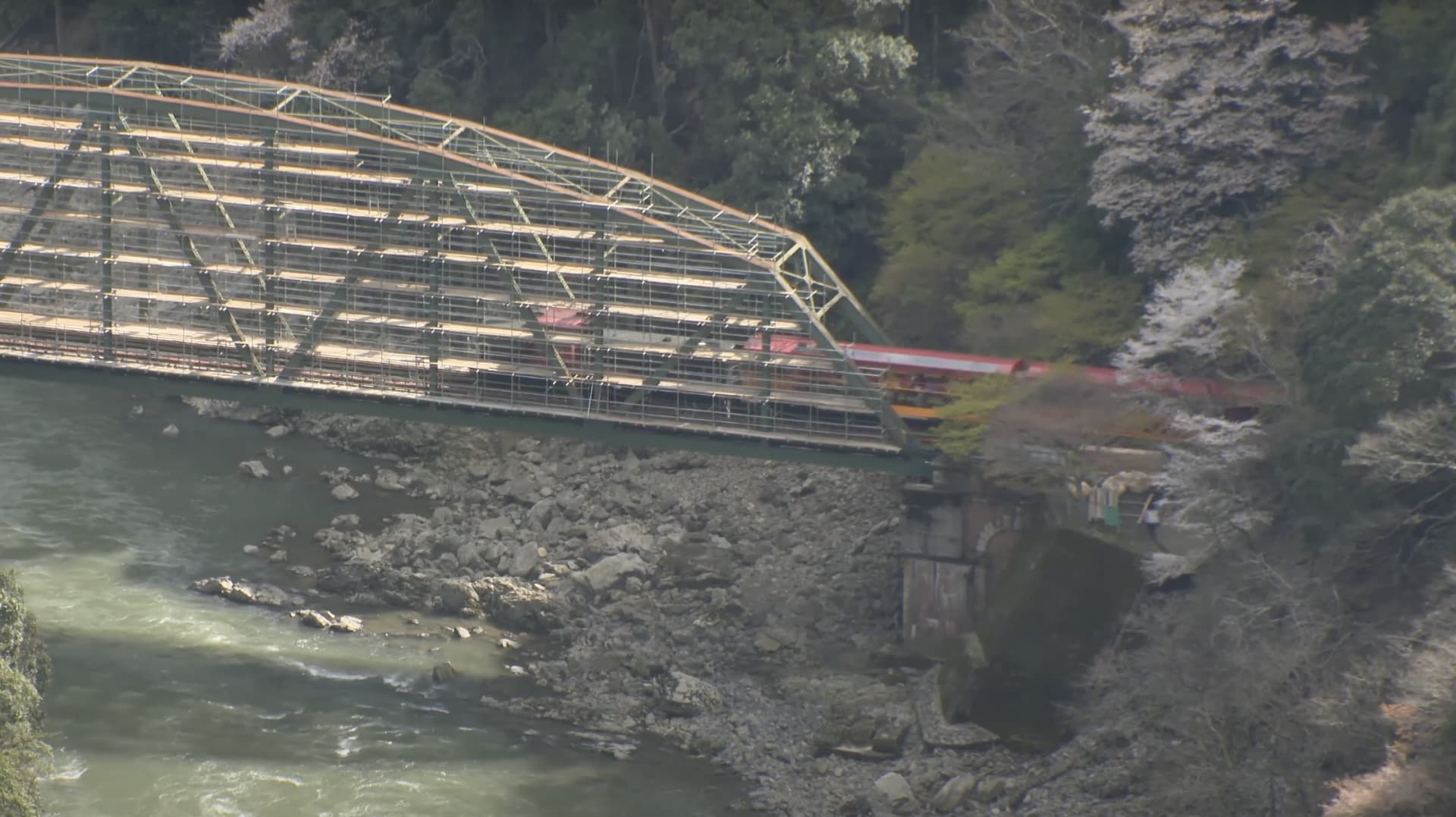
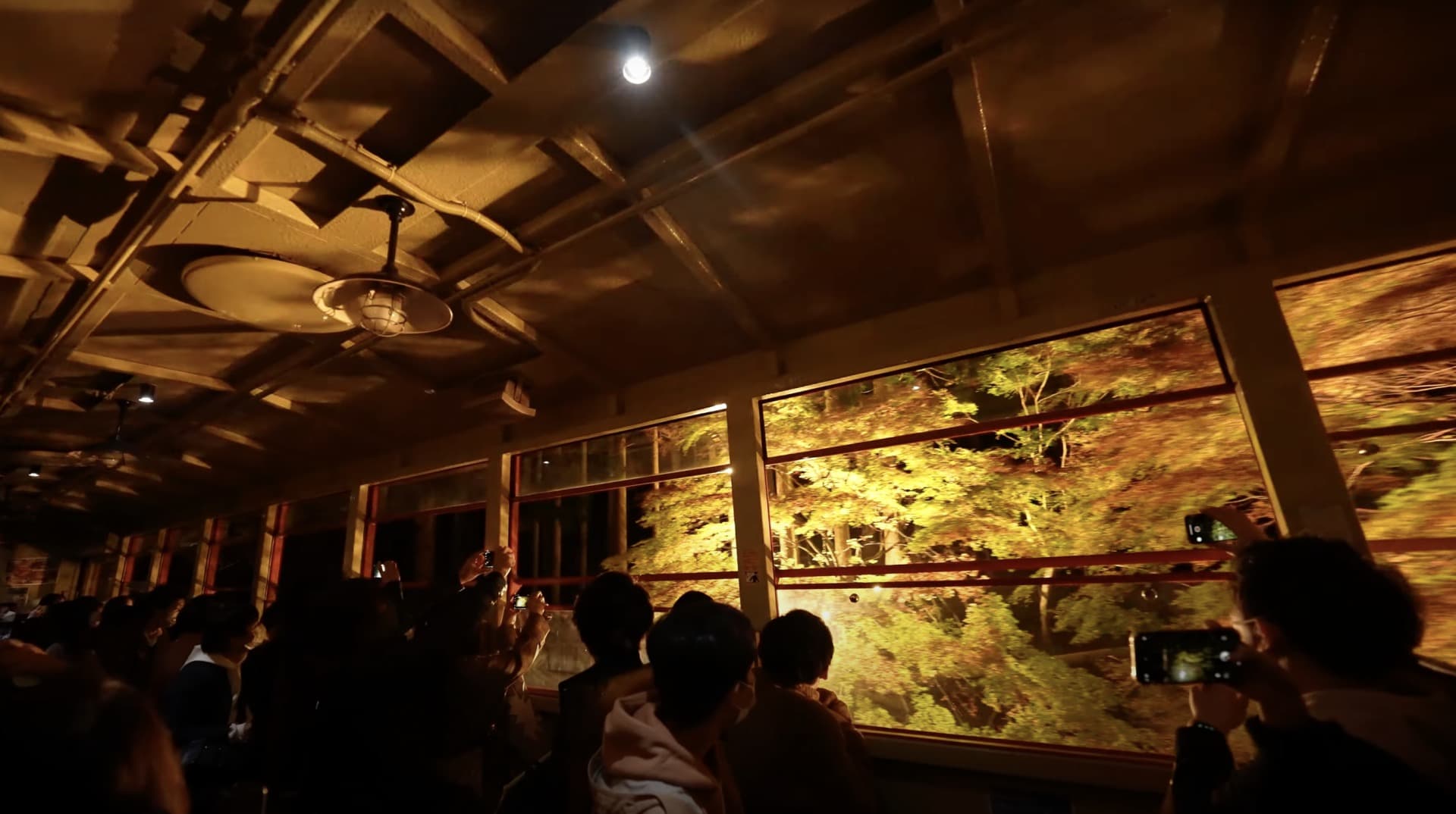
The train is pulled by a diesel locomotive and consists of 5 passenger cars. Car No. 5, called “The Rich,” is an open-air car without window glass, allowing passengers to directly feel the wind, light, and sounds for an exhilarating riding experience. The interior features wooden chairs and bare light bulbs, creating a retro atmosphere.
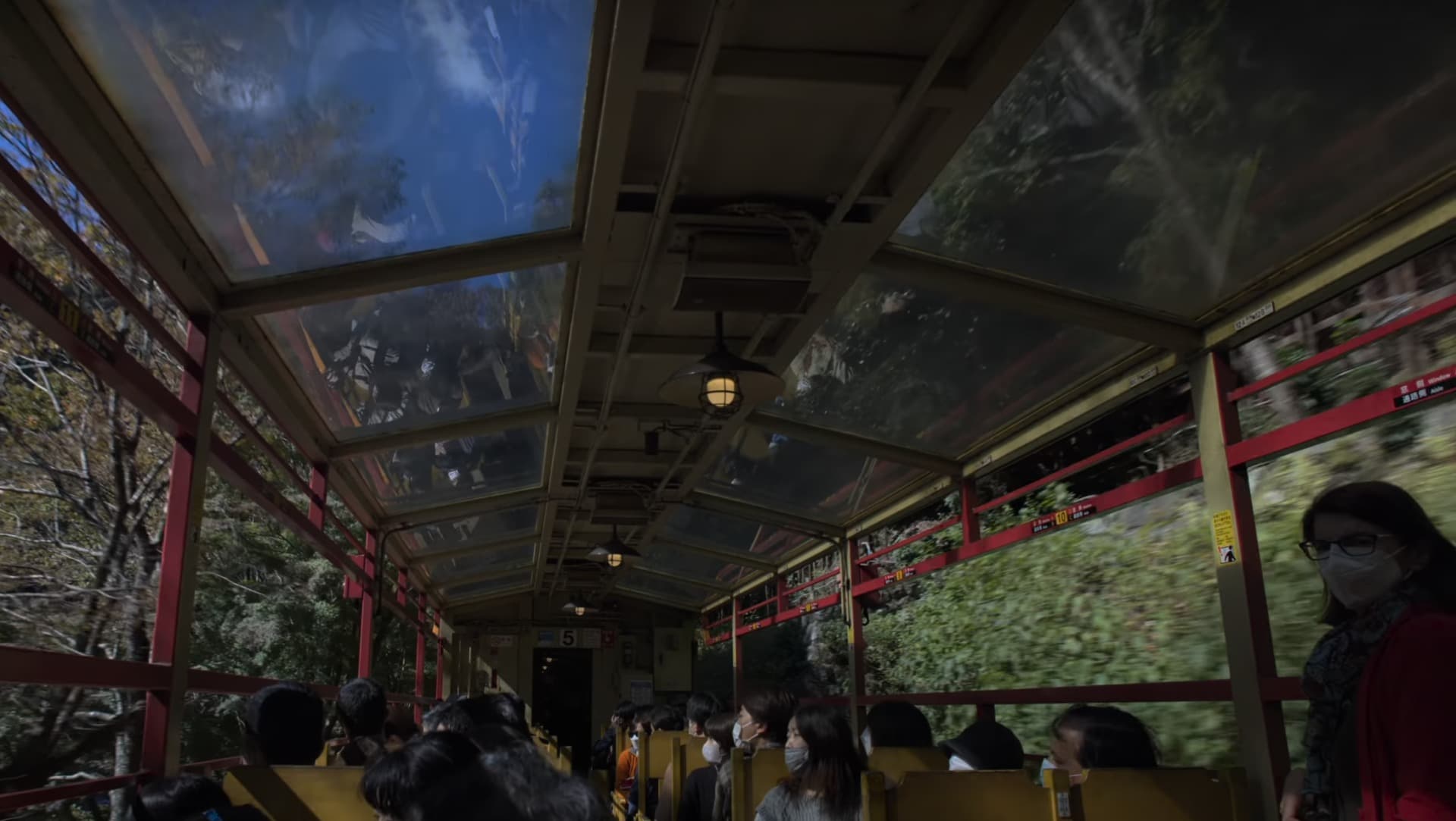
The charm lies in the seasonal scenery: cherry blossoms in spring, fresh greenery in summer, autumn foliage in fall, and snowy landscapes in winter. During cherry blossom season, the blossoms along the tracks envelop the train like a tunnel, and illumination events are held along the route to coincide with peak viewing times. The operating period runs from March through December, with approximately 8 round trips per day as standard. During the autumn foliage season, special trains may also run to enjoy illuminated scenery along the route.
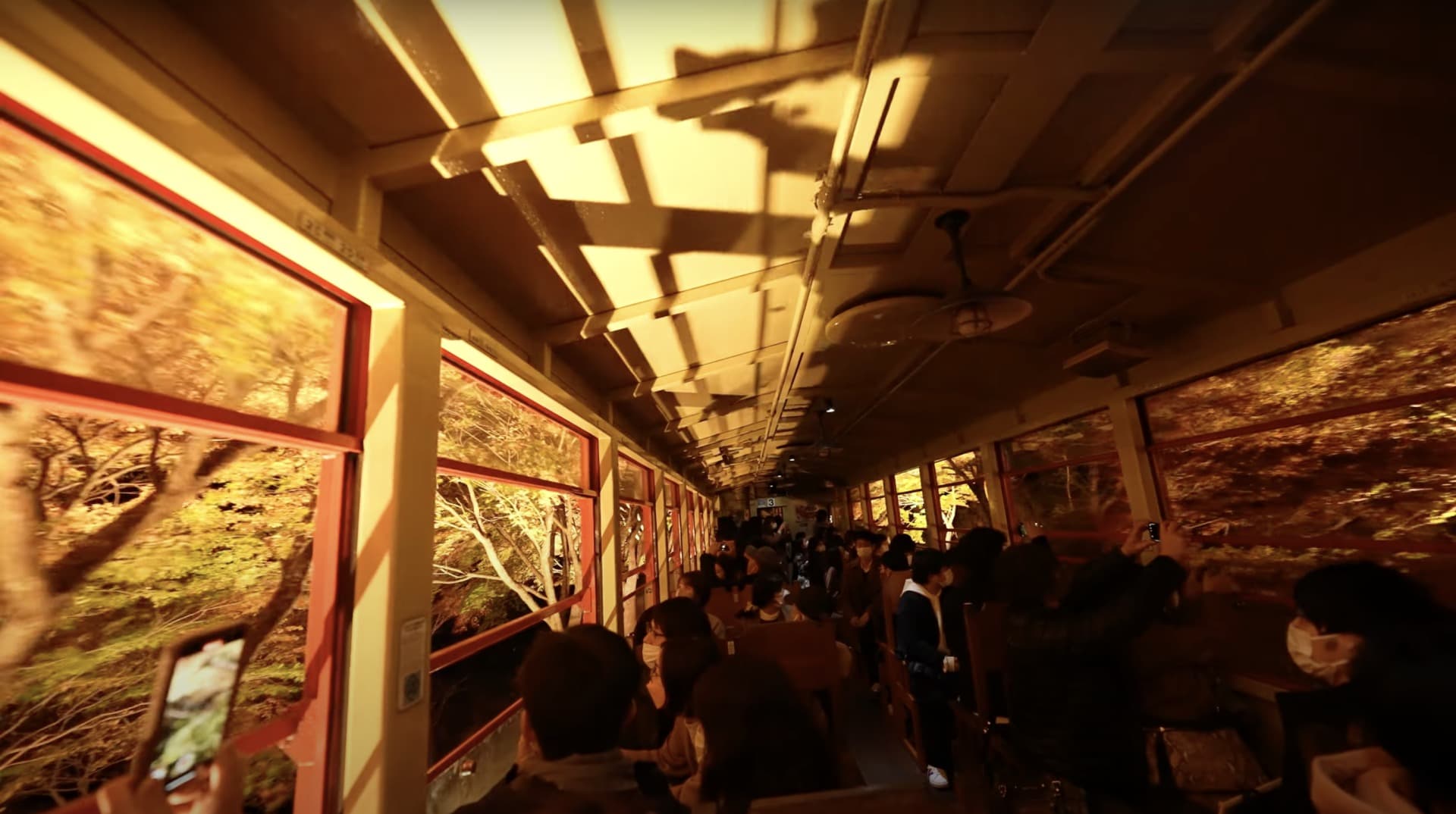
For access, the starting station, Torokko Saga Station, is located right next to Saga-Arashiyama Station on the JR Sanin Main Line (Sagano Line), and the terminal station, Torokko Kameoka Station, is about a 10-minute walk from Umahori Station on the same line. From Torokko Kameoka Station, shuttle buses and taxis are available to the Hozu River boat ride boarding point, making the combination with the river cruise a popular sightseeing course.
History of the Sagano Romantic Train
The history of the Sagano Romantic Train (Sagano Scenic Railway) is summarized in chronological format, primarily covering the flow from the route circumstances during the former Japanese National Railways and JR era to the opening as a third-sector sightseeing train. This is based on widely known facts confirmed through various official sources and publicly available information, not speculation or unverified claims.
1. 1897: Opening of the Kyoto Railway and the Beginning of the Saga-Kameoka Section
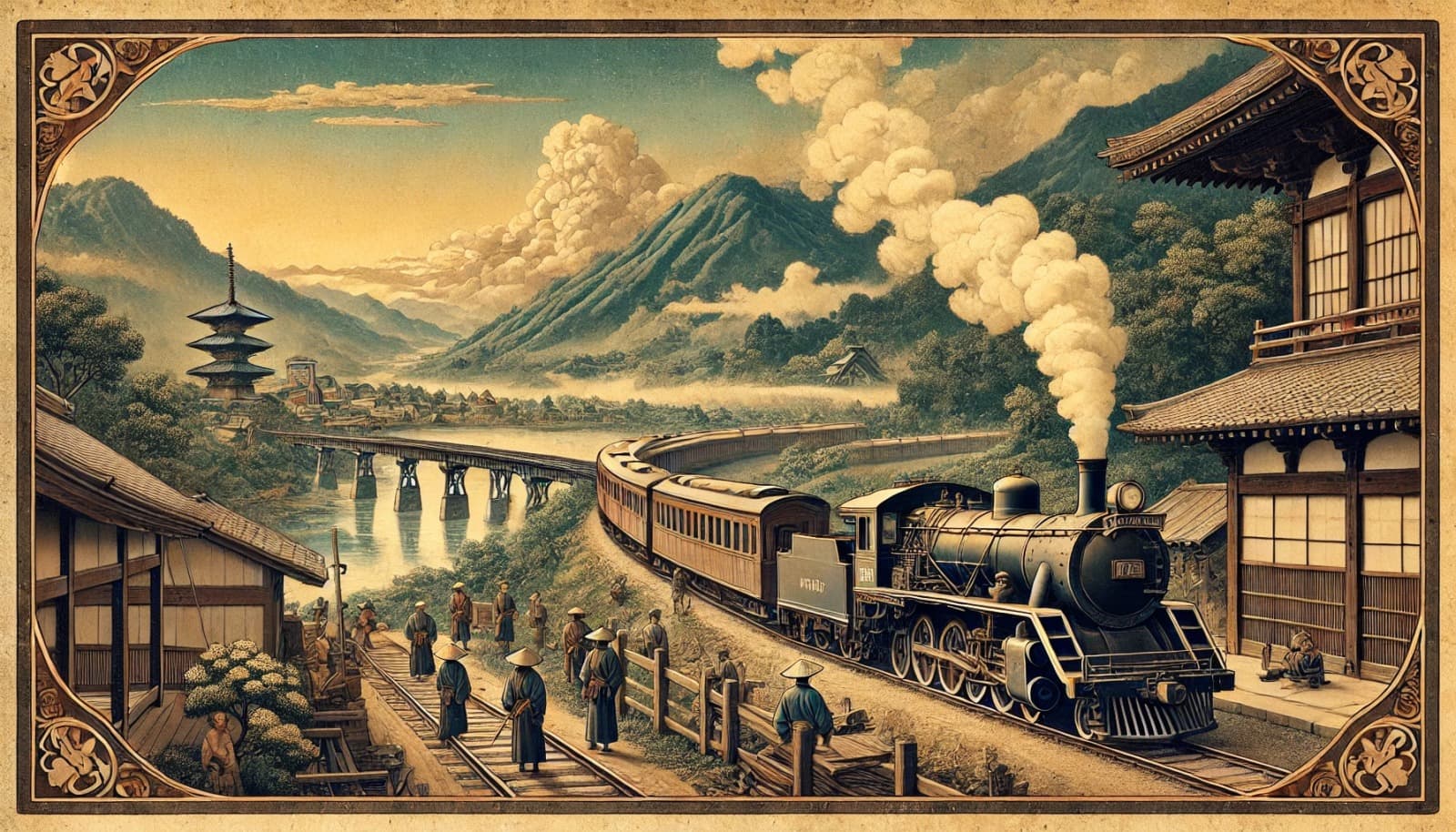 *Illustrative image
At the time, plans were underway to build a railway from Kyoto to the Tanba and Sanin regions, and a private company called “Kyoto Railway” was established. In 1897 (Meiji 30), a rail line was laid from Kyoto Station toward Kameoka, and the section passing through the present-day Saga-Arashiyama area was opened. This section would later become the foundation of the former line utilized as the Sagano Romantic Train.
2. 1907: Route Integration Through Nationalization
 *Illustrative image
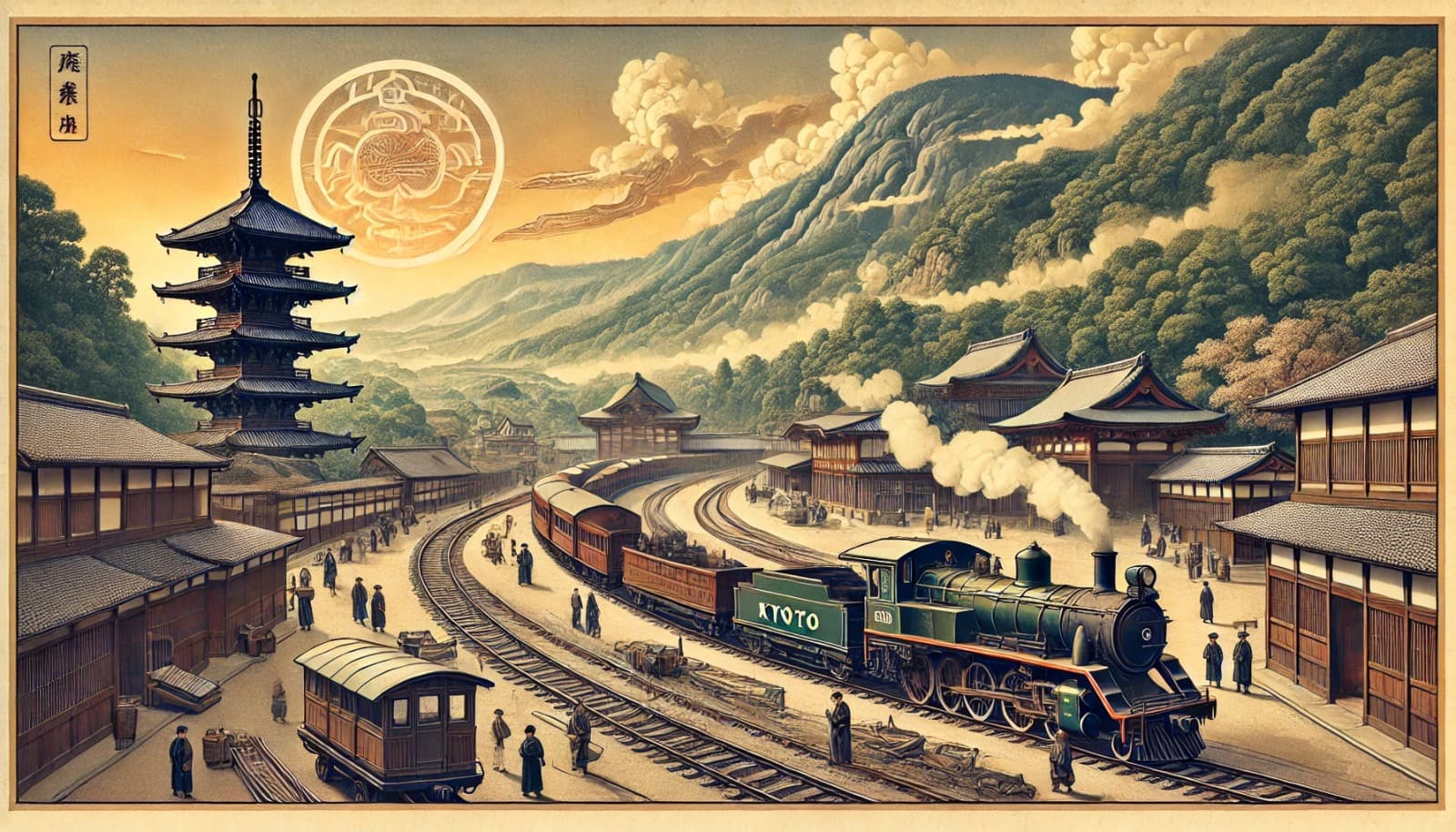
Many private railways, including the Kyoto Railway, were sequentially acquired under the Railway Nationalization Act advanced from 1906 (Meiji 39). In 1907 (Meiji 40), the Kyoto Railway was also nationalized, and the Saga-Kameoka section came under government management, eventually being incorporated as part of the Sanin Main Line of the Japanese National Railways (JNR).
3. 1989: Opening of the New JR Sanin Main Line and Closure of the Old Line
 *Illustrative image
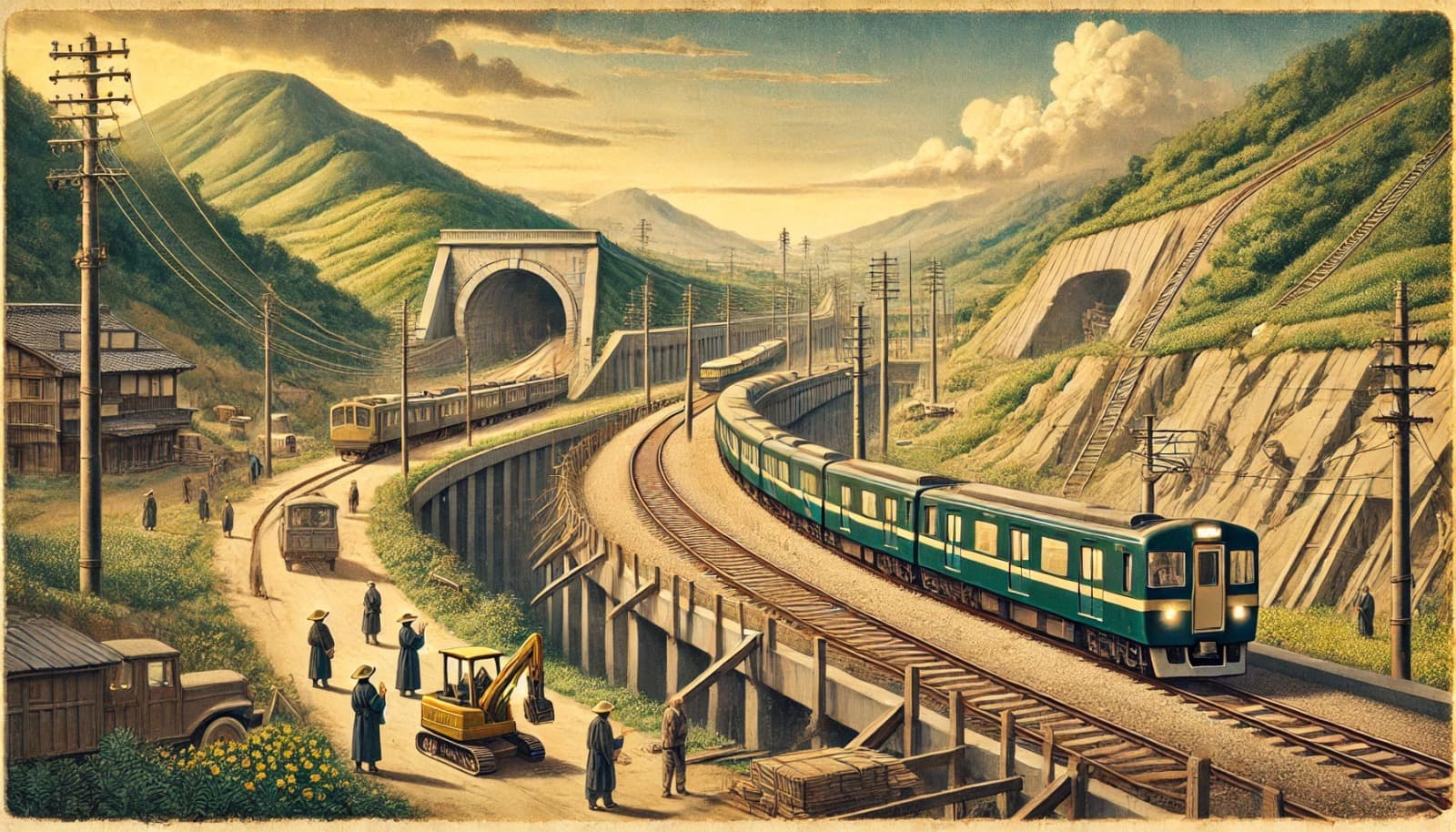
Following the privatization of JNR in 1987, the Sanin Main Line, now under JR West, underwent double-tracking and route improvements in various locations. Between Kyoto and Kameoka, a new route was completed with a more direct alignment using numerous tunnels. Consequently, the former line (now the Sagano Romantic Train section) was officially decommissioned, and train operations ceased.
4. 1991: Establishment of the Third-Sector “Sagano Scenic Railway”
 *Illustrative image
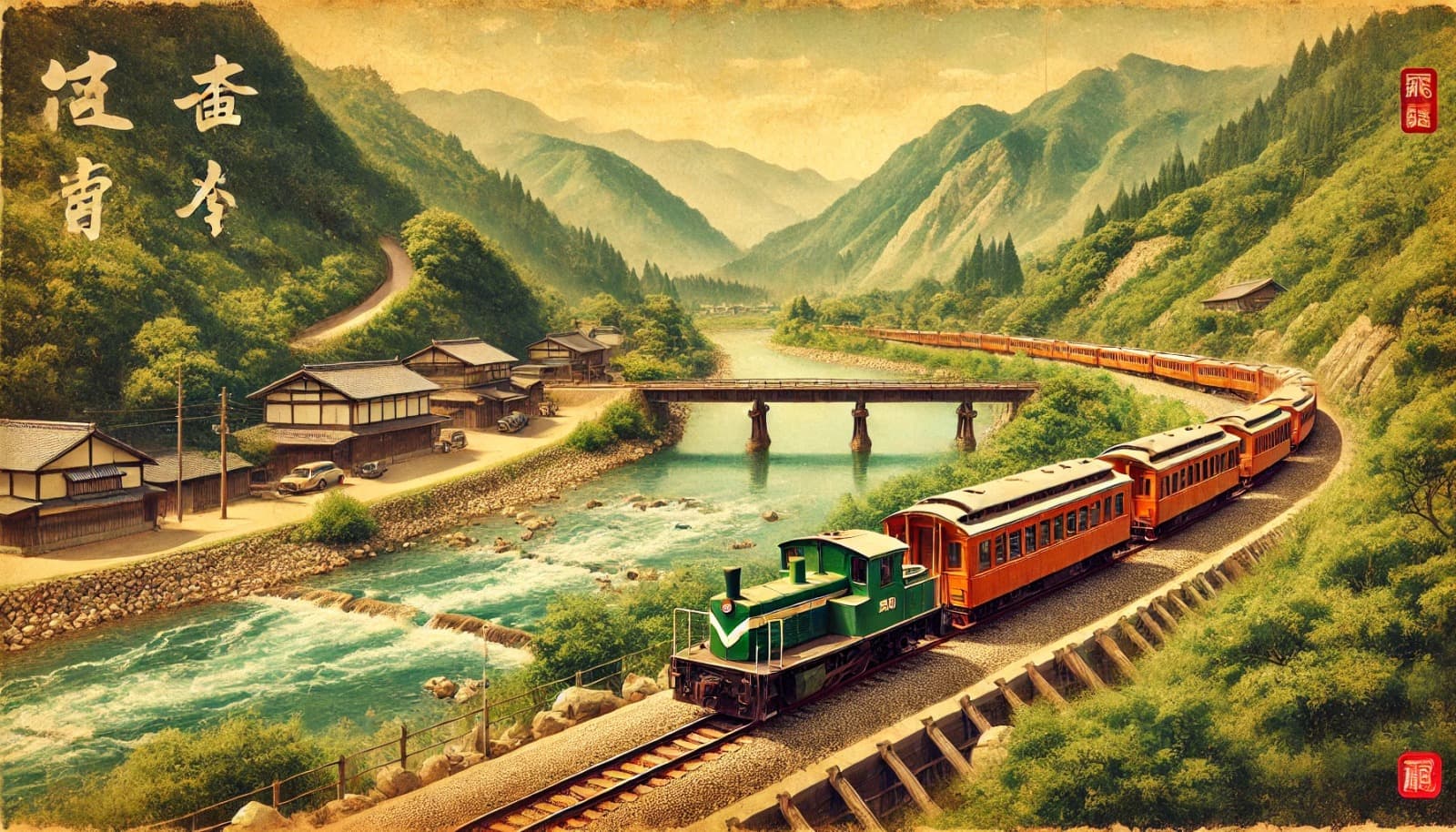
With the aim of reviving the old line as a sightseeing train that makes the most of the nature-rich scenery along the Hozu River, the third-sector “Sagano Scenic Railway Co., Ltd.” was established with investment from JR West, Kyoto Prefecture, and others. The style features a diesel locomotive pulling passenger cars, with an open-air car (Car No. 5, “The Rich”) allowing passengers to directly experience nature.
The Sagano Romantic Train attracted attention as a successful example of converting a defunct JNR line into a tourist attraction, establishing itself as a new tourism resource for Kyoto. After opening, word spread through word-of-mouth and guidebooks, and the number of tourists from both Japan and abroad increased as a route where visitors can enjoy seasonal scenery.
5. Over 30 Years Since Establishment: Continued Growth
 *Illustrative image
Over 30 years have passed since its opening in 1991, and the Sagano Romantic Train has become established as one of Kyoto’s most iconic tourist attractions. The combination of seasonal breathtaking views and the retro passenger car style continues to attract many repeat visitors. In recent years, usage by international tourists has also increased, and multilingual guidance has been introduced as part of ongoing service improvements.
How to Enjoy the Sagano Romantic Train
Here we provide a detailed introduction to “how to enjoy the ride” and “spots along and around the route” that you should know when riding the Sagano Romantic Train (Sagano Scenic Railway). Running through the Hozu River Gorge from Arashiyama to Kameoka, one of Kyoto’s most scenic areas, the train offers the appeal of magnificent natural landscapes that change with each season, combined with nearby sightseeing, making it enjoyable no matter how many times you visit.
1. Basic Information About the Sagano Romantic Train
- Operating section: Torokko Saga Station – Torokko Kameoka Station (approx. 7.3 km)
- Travel time: Approx. 25 minutes one way
- Configuration: A diesel locomotive pulls 5 passenger cars
2. Stations and Notable Spots Along the Route
(1) Around Torokko Saga Station
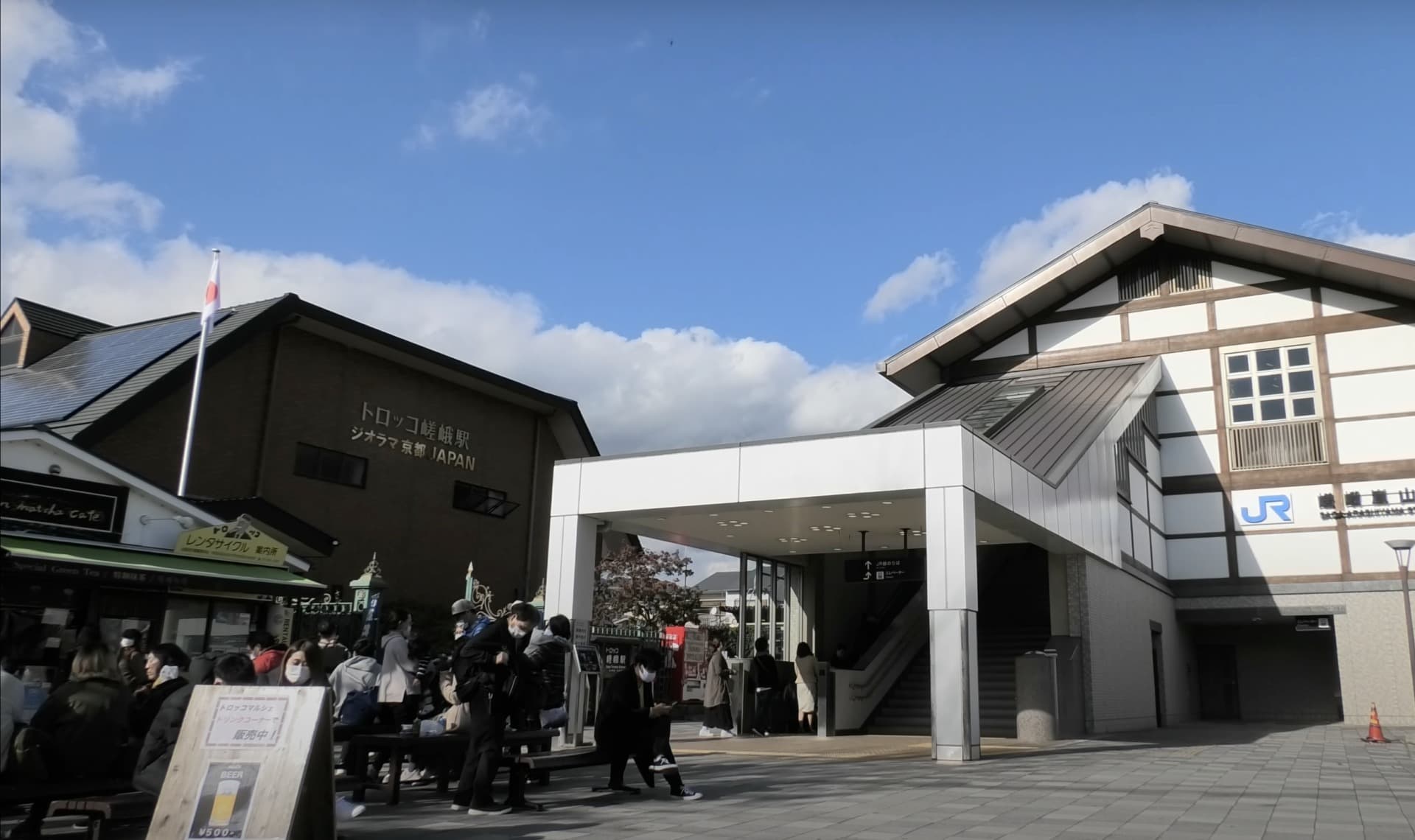
This is the starting station of the Sagano Romantic Train, located just a short walk from Saga-Arashiyama Station (JR Sagano Line). The gates and platform have a retro wooden atmosphere, and the waiting area features railway-related exhibits and shops.
Togetsukyo Bridge and Arashiyama Park are within walking distance of Saga-Arashiyama Station, centering on the bridge spanning the Hozu River (Oi River), representing Arashiyama’s most iconic scenic spot. The mountains that show different expressions with each season, the flow of the river, and the surrounding parks create scenery that boasts some of Kyoto’s finest beauty.
Furthermore, an unmissable part of Arashiyama is the “Bamboo Grove Path.” The mystical space created by the lush green bamboo stretching toward the sky offers different atmospheres depending on the season and time of day.
Additionally, Tenryuji Temple, the head temple of the Rinzai Tenryuji school and a UNESCO World Heritage Site, is another must-see spot when visiting Arashiyama. The Sogenchi Garden within the temple grounds is adorned with seasonal flowers, allowing visitors to fully enjoy the elegant scenery where history and nature harmonize.
(2) Around Torokko Arashiyama Station
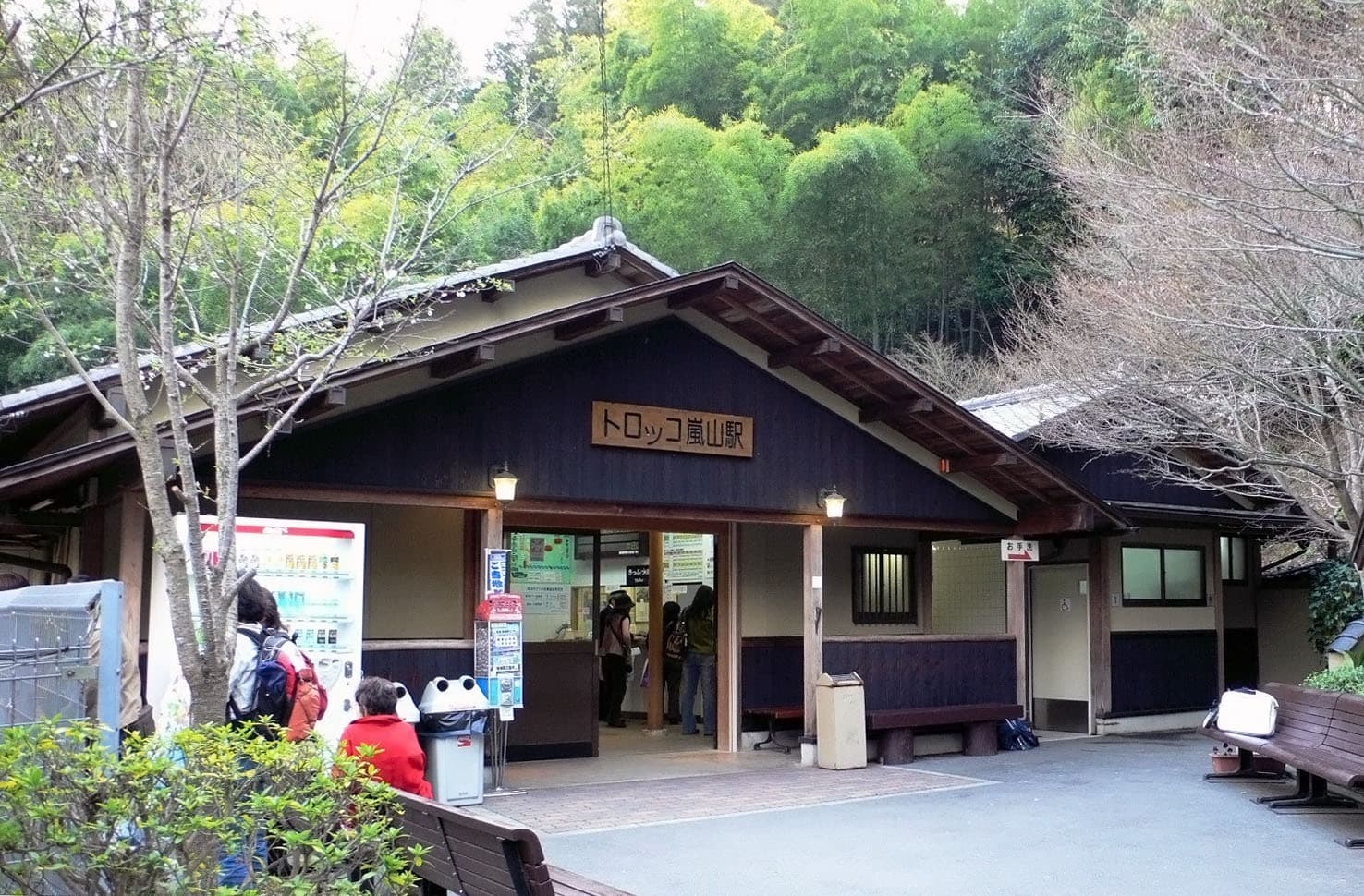
Located just one stop from Torokko Saga Station, “Torokko Arashiyama Station” is the closest station to Arashiyama among all Sagano Romantic Train stations. You can get off here to explore, and since it offers even shorter access to Arashiyama Park and the Bamboo Grove, it is also recommended as a starting point for walks.
Near the station, promenades adorned with seasonal flowers have been developed, allowing visitors to enjoy the scenery of each season while feeling the mountainsides of Arashiyama up close, not just the Hozu River Gorge.
(3) Hozu River Gorge from the Train Window
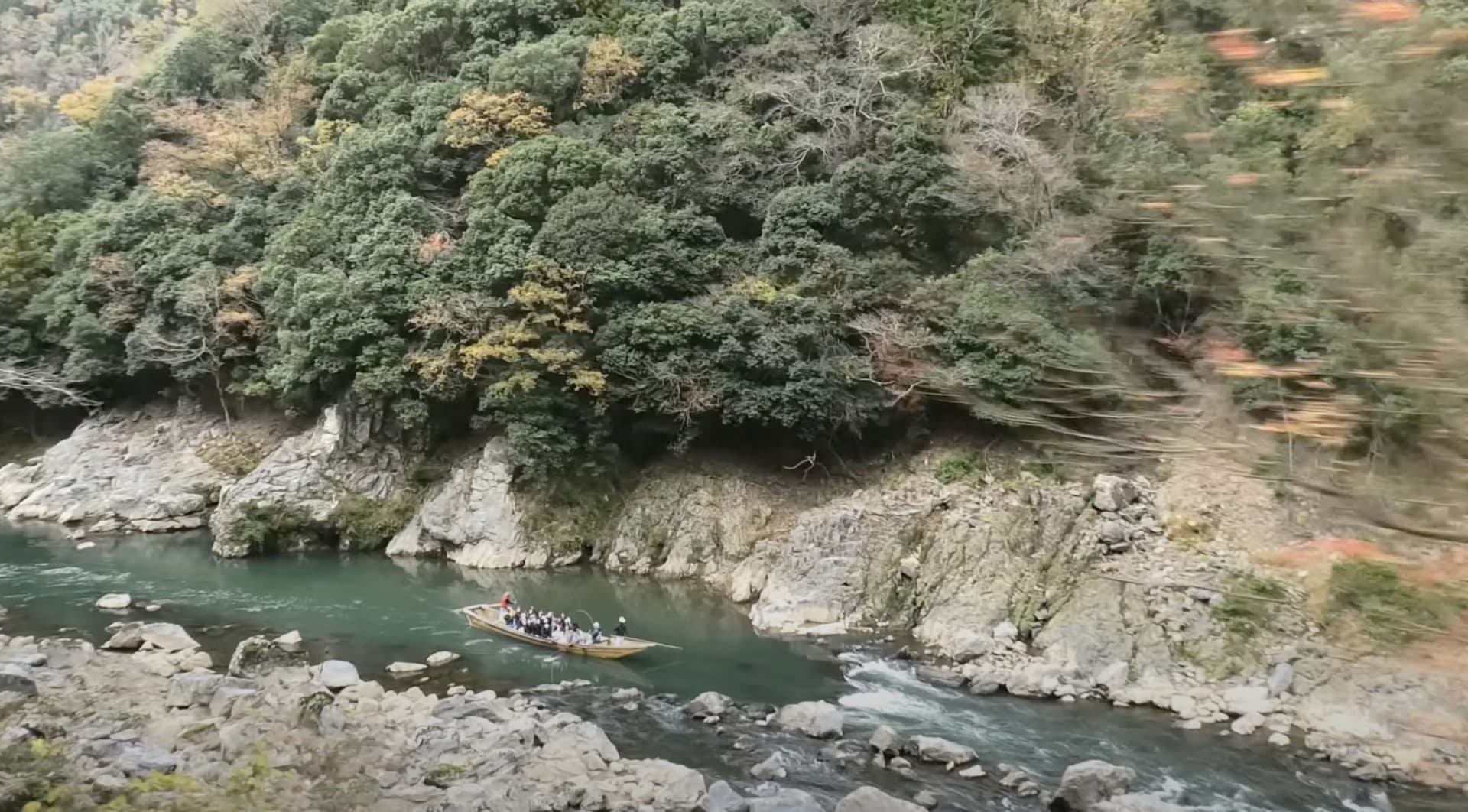
Past Torokko Arashiyama Station, the train slowly proceeds while tracing the gorge beauty of Hozukyo. In spring, the soft pink of cherry blossoms harmonizes with fresh green; in summer, deep green trees and the murmuring of clear streams create a refreshing landscape. In autumn, especially from mid-November to early December, the autumn foliage reaches its peak, creating spectacular views with vividly colored mountainsides. Winter brings fallen leaves and snow-covered scenery for yet another ambiance, though advance confirmation is needed as it may overlap with suspension periods.
Notable photo spots along the route include the promenade along the river, Hozu River cruise boats, and a suspension bridge visible in the distance. You can photograph the gorge scenery to your heart’s content as it changes with the season and time of day. Photography from Car No. 5 (the open-air car) is particularly impressive.
(4) Torokko Hozukyo Station
“Torokko Hozukyo Station,” located in the mountains along this section, is an atmospheric intermediate station surrounded by rich nature. However, depending on the service, the doors may not open and the train may pass through, so whether you can get off varies by season and time of day. If you can visit on a service that allows disembarkation, it is truly an ideal spot to enjoy the contrast between the mountainsides and the gorge right before your eyes.
While there are no major tourist facilities nearby, the area is attractive for nature lovers with hiking courses through Hozukyo and mountain trails leading toward Kiyotaki. The appeal of this station lies in being able to spend leisurely time surrounded by tranquility and beautiful scenery.
(5) Around Torokko Kameoka Station
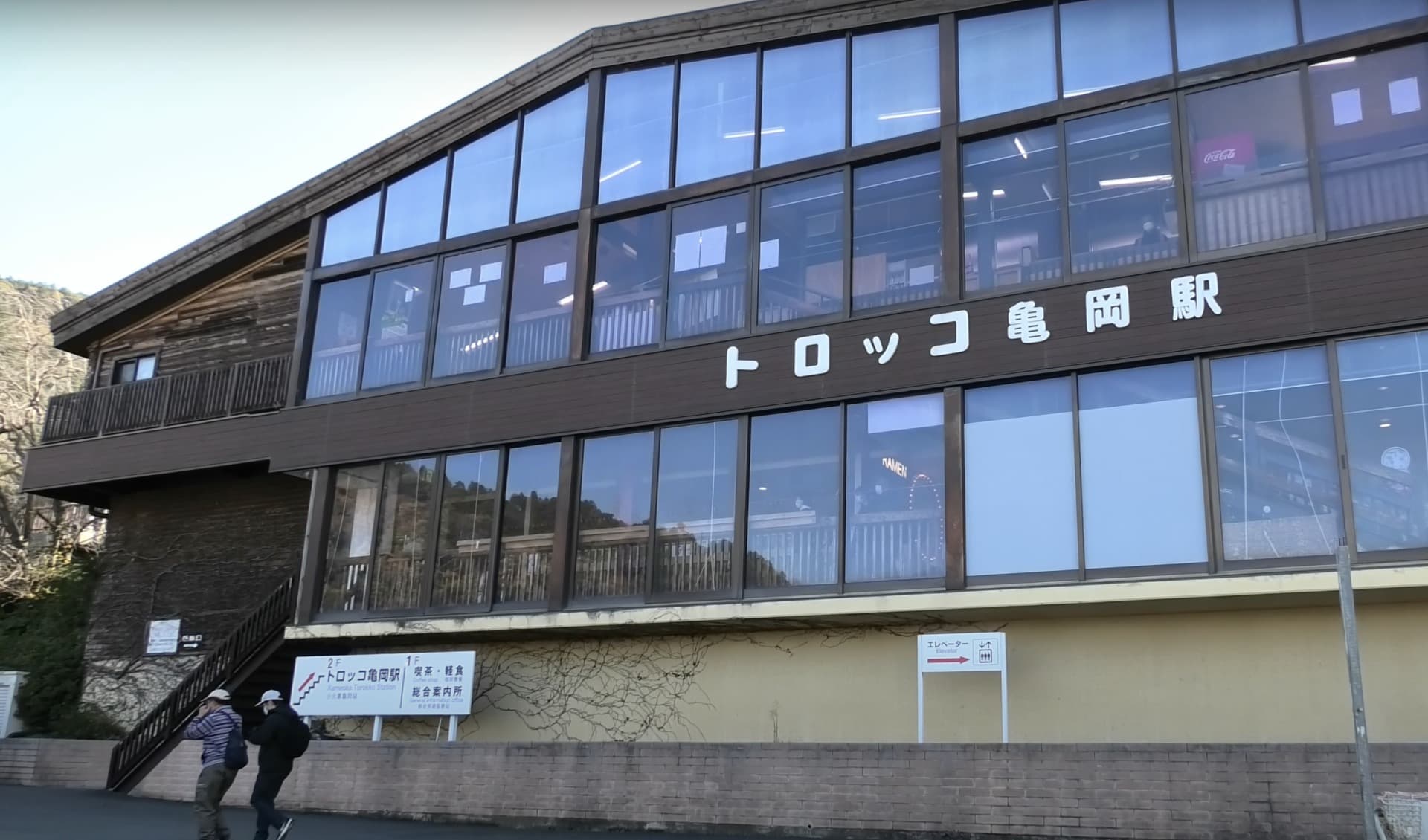
Torokko Kameoka Station is the terminal station on the Kameoka side, located about a 10-minute walk from Umahori Station on the JR Sanin Main Line. One of the biggest highlights here is the “Hozu River Cruise” boarding point (Kameoka boarding area). Just a few minutes by bus or taxi from Torokko Kameoka Station, the approximately 2-hour river journey down to Arashiyama is a classic way to enjoy the train as a set plan.
Additionally, the Kameoka city area is a castle town that has prospered since ancient times as the gateway to the Tanba region, overflowing with diverse historical and natural charms such as the Kameyama Castle ruins, surrounding temples and shrines, and the rural scenery of the Ano district. Furthermore, “Yunohana Onsen” hot springs scattered along the Hozu River offer day-trip bathing facilities and ryokan (traditional inns), where relaxing in an open-air bath is also recommended.
3. Seasonal Charms and Events
[ Spring (Around March-April) ]
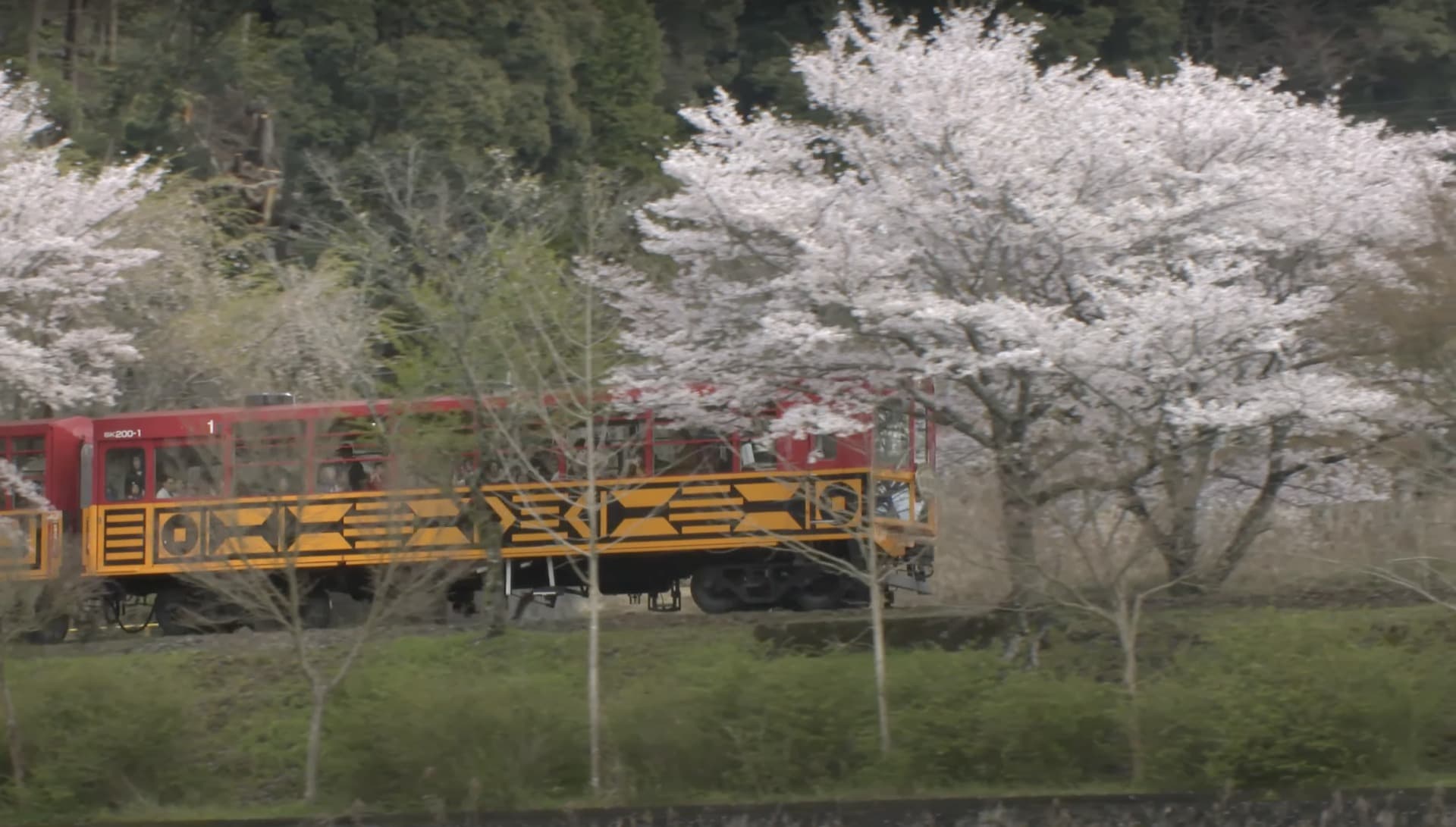
This is one of the most gorgeous seasons, with cherry blossoms in full bloom along the route. On sunny days in particular, looking down at the Hozu River Gorge from the train window reveals a breathtaking view dyed entirely in soft pink petals.
The romantic train slowly advancing through swirling cherry blossom petals creates a romantic moment perfect for photography.
[ Summer (Around July-August) ]
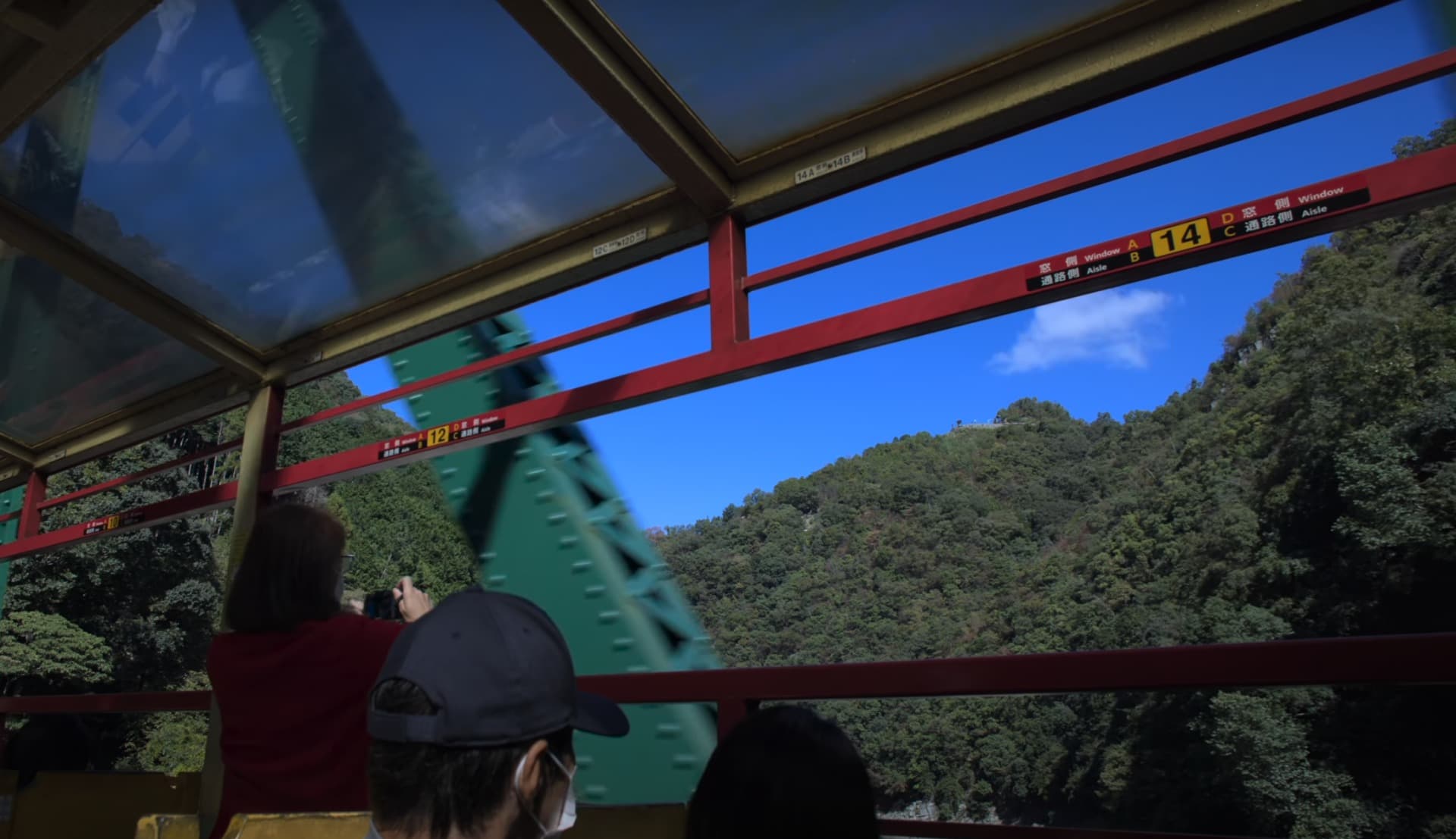
This is the season when the greenery along the romantic train route appears even more vivid. The Hozu River Gorge, with its lush tree canopy, is enveloped by the murmuring of mountain streams and pleasant mountain breezes, allowing passengers to feel cool even while riding. The course of getting off at Torokko Kameoka Station to enjoy the Hozu River cruise is particularly popular, as the splashing water during the gorge descent helps relieve the summer heat.
A leisurely boat trip along the river with lush green mountains as a backdrop is an excellent opportunity to escape everyday hustle and fully enjoy the charm of nature.
[ Autumn (October-Early December) ]
In autumn, the mountains of the Hozu River Gorge turn red and yellow, and especially from mid-November to early December when the autumn foliage reaches its peak, the Sagano Romantic Train experiences its busiest season of the year. The autumn leaves vividly coloring the gorge are stunningly beautiful whether viewed from the train window or while taking a walk after getting off at an intermediate stop.
Nighttime illumination events may also be held, and special trains may be scheduled, allowing visitors to enjoy a fantastical autumn foliage experience different from daytime. At illumination events held throughout the area, maple leaves are lit up against the dark night sky, allowing visitors to fully experience the quintessential autumn charm of Kyoto.
[ Winter (December-February) ]
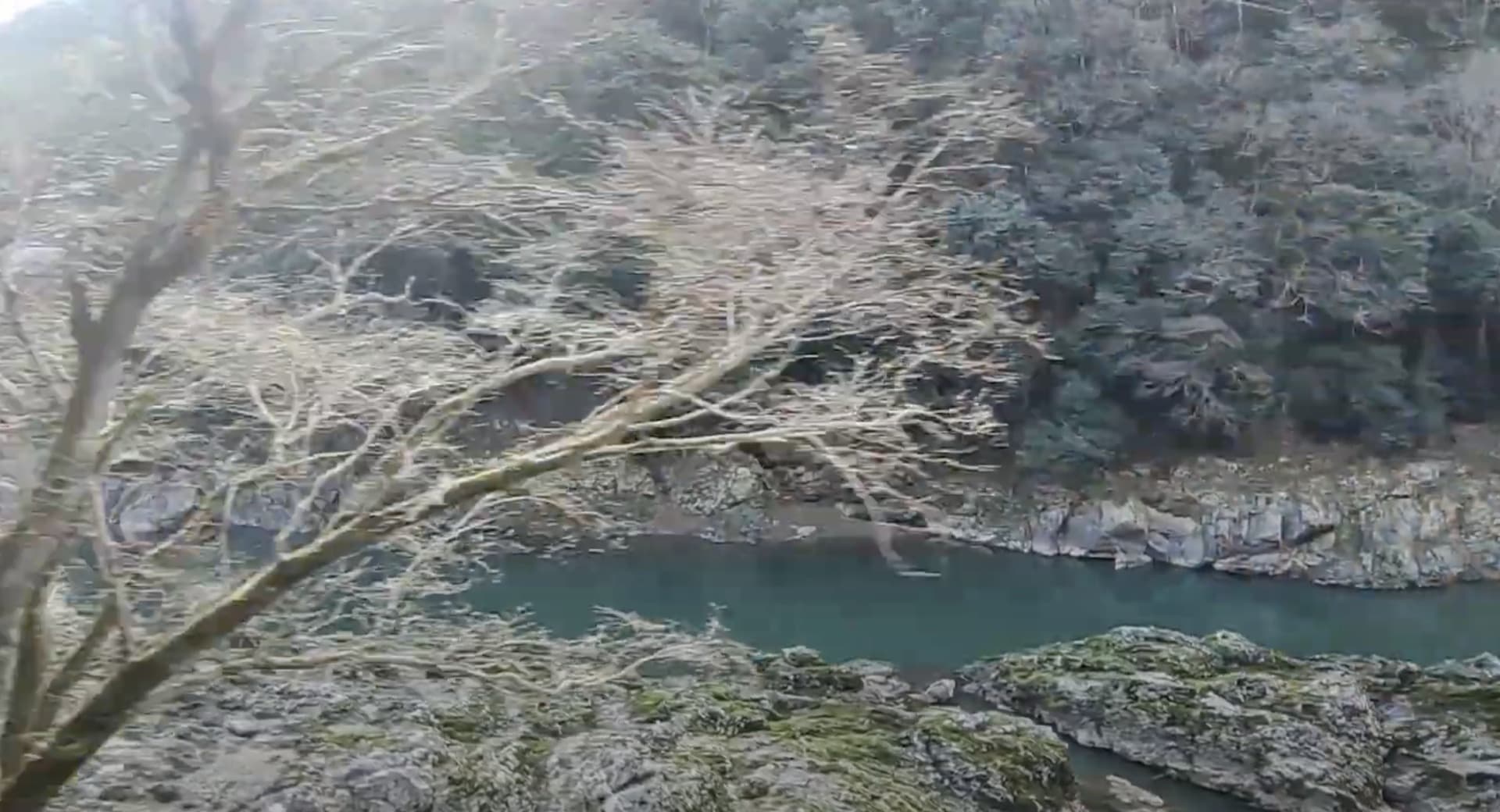
From mid-December onward, the operating schedule may fluctuate to accommodate year-end and New Year holidays, and there may be partial suspension periods from January to February. On snowy days, the Hozu River Gorge is covered in white, creating a winter wonderland.
While the tranquil scenery is enjoyable, since the train runs through mountain valleys where the cold is particularly severe, warm clothing is essential. Additionally, as operations may be altered due to snowfall, it is advisable to check the official website and local information in advance.
Recommended Model Courses
Below, we introduce two recommended model courses for fully enjoying the Sagano Romantic Train. Choose based on your available time and preferences, including combinations with the Hozu River cruise and round-trip riding plans.
One-Way Romantic Train, Hozu River Cruise, Return to Arashiyama
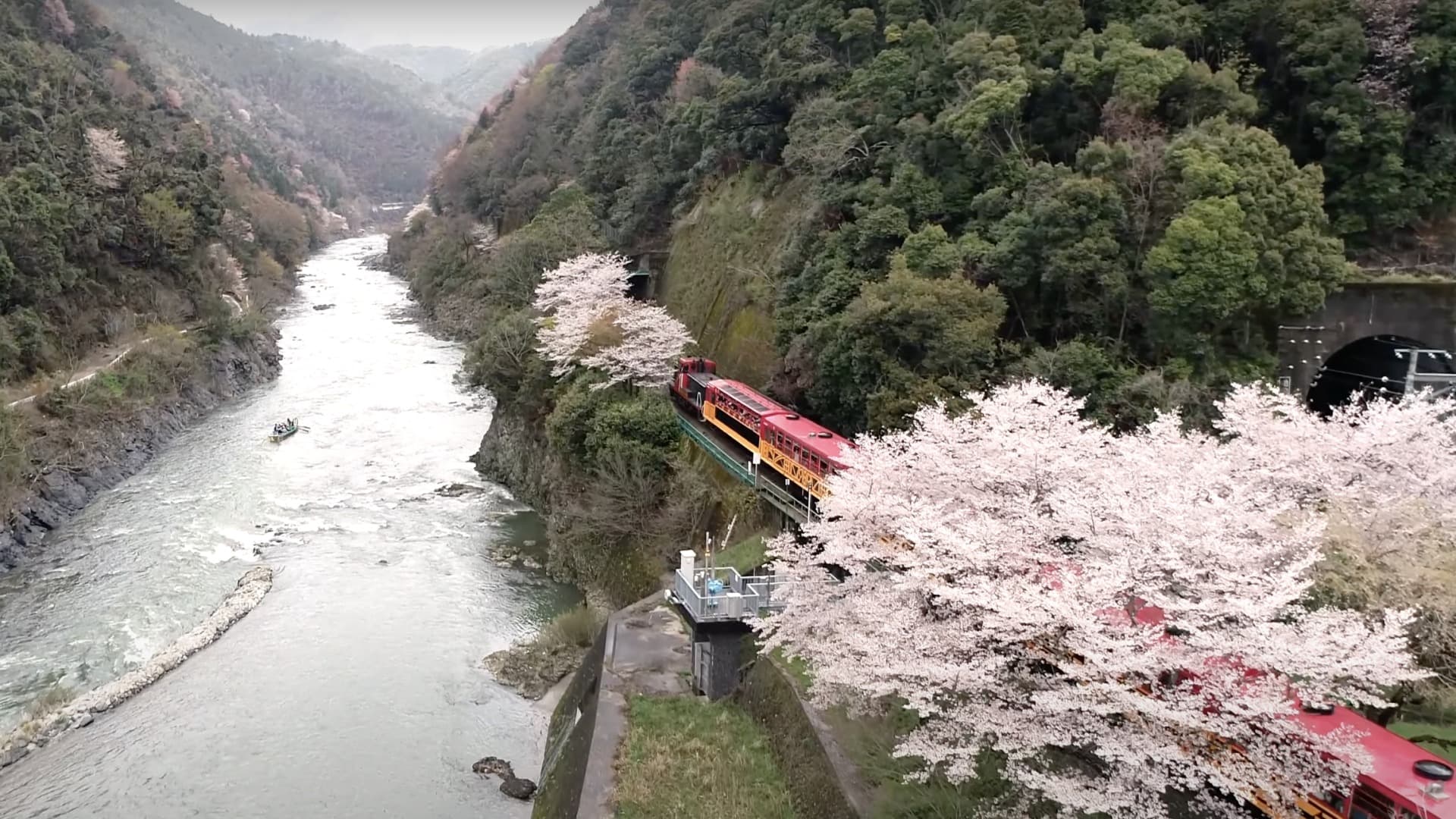
[ Sample Itinerary ]
- Torokko Saga Station: Board the Romantic Train (approx. 25 minutes)
- Torokko Kameoka Station: Alight and take a bus or taxi to the Hozu River cruise boarding point (approx. 5-10 min)
- Hozu River Cruise (approx. 2 hours): Enjoy the cruise and arrive at the Arashiyama/Togetsukyo Bridge area
- Explore and sightsee around Arashiyama
[ Highlights ]
- Both the romantic train ride and the boat trip allow you to enjoy the beautiful nature of the Hozu River Gorge on this most popular classic course.
- On the Hozu River cruise, you view the gorge from near the water surface, offering a completely different perspective where you can directly feel the river breeze and sounds of nature.
- Since the destination is the Arashiyama area, you can continue to enjoy Togetsukyo Bridge, bamboo grove walks, and temple visits after disembarking.
Round-Trip Romantic Train + Arashiyama Stroll
[ Sample Itinerary ]
- Torokko Saga Station: Take the Romantic Train to Torokko Kameoka Station (approx. 25 minutes)
- Stroll around the Kameoka area and enjoy lunch
- Torokko Kameoka Station: Take the Romantic Train to Saga (approx. 25 minutes)
- Sightsee in the Arashiyama and Sagano area
[ Highlights ]
- Ride the romantic train both ways, allowing you to enjoy the Hozu River Gorge at different times of day on the outbound and return trips.
- As the time changes from morning to afternoon to evening, the scenery and lighting from the train window also change, offering different charms even on the same route.
- If you alight near Saga-Arashiyama Station on the way back, you can smoothly explore the Bamboo Grove Path, Tenryuji Temple, and the area around Togetsukyo Bridge.
Summary
The Sagano Romantic Train has become an essential part of Kyoto sightseeing as a tourist train that offers an extraordinary journey through the Hozu River Gorge. Its appeal lies in the beautiful seasonal scenery viewed from the train window, the retro atmosphere of the train, and the rich tourist spots along and around the route. Whether you visit during the cherry blossoms of spring, the autumn foliage, the fresh greenery of summer, or the snowy landscapes of winter, you are sure to create special memories.
Using the information introduced in this article as a reference, please plan a trip that suits you and enjoy the unique journey of the Sagano Romantic Train. The scenery and moments woven by this train will deliver an unforgettable Kyoto experience.