
🕓 2025/1/29
#Sightseeing
A Detailed Guide to the History and Recommended Spots of Byodo-in Temple
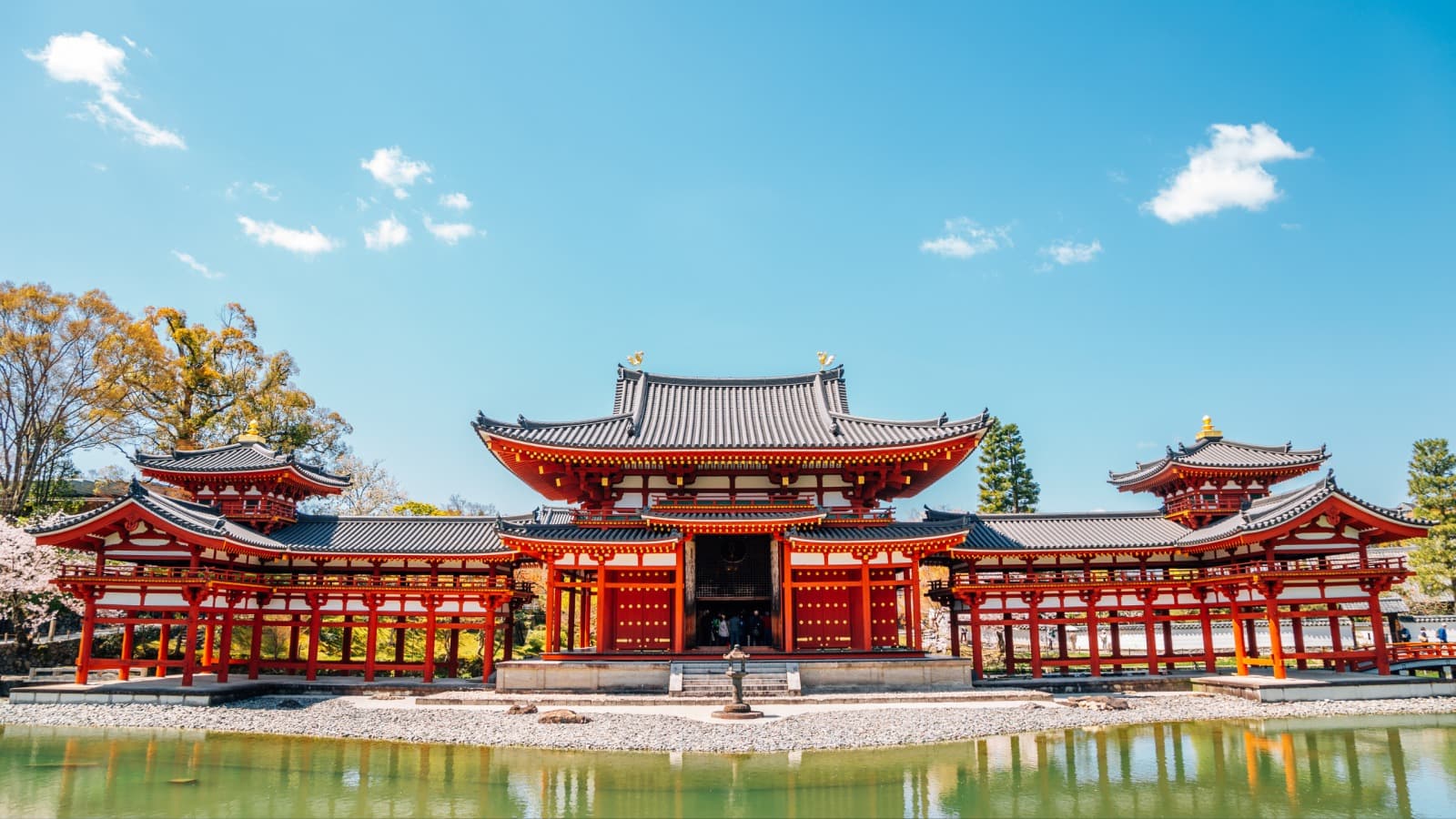
Table of Contents
Introduction
Byodo-in is a historic temple located in Uji City, Kyoto Prefecture, widely renowned for its beautiful architecture and cultural value. In 1994, it was registered as a UNESCO World Cultural Heritage Site as part of the “Historic Monuments of Ancient Kyoto,” with its significance recognized internationally. The temple was founded in 1052 by Fujiwara no Yorimichi and was built to recreate the ideal of the Pure Land paradise in this world. Centered on the Phoenix Hall, Byodo-in boasts magnificent architecture and numerous National Treasures, continuing to captivate all who visit. This article provides a detailed introduction to the overview, history, and highlights of Byodo-in Temple.
Overview of Byodo-in Temple
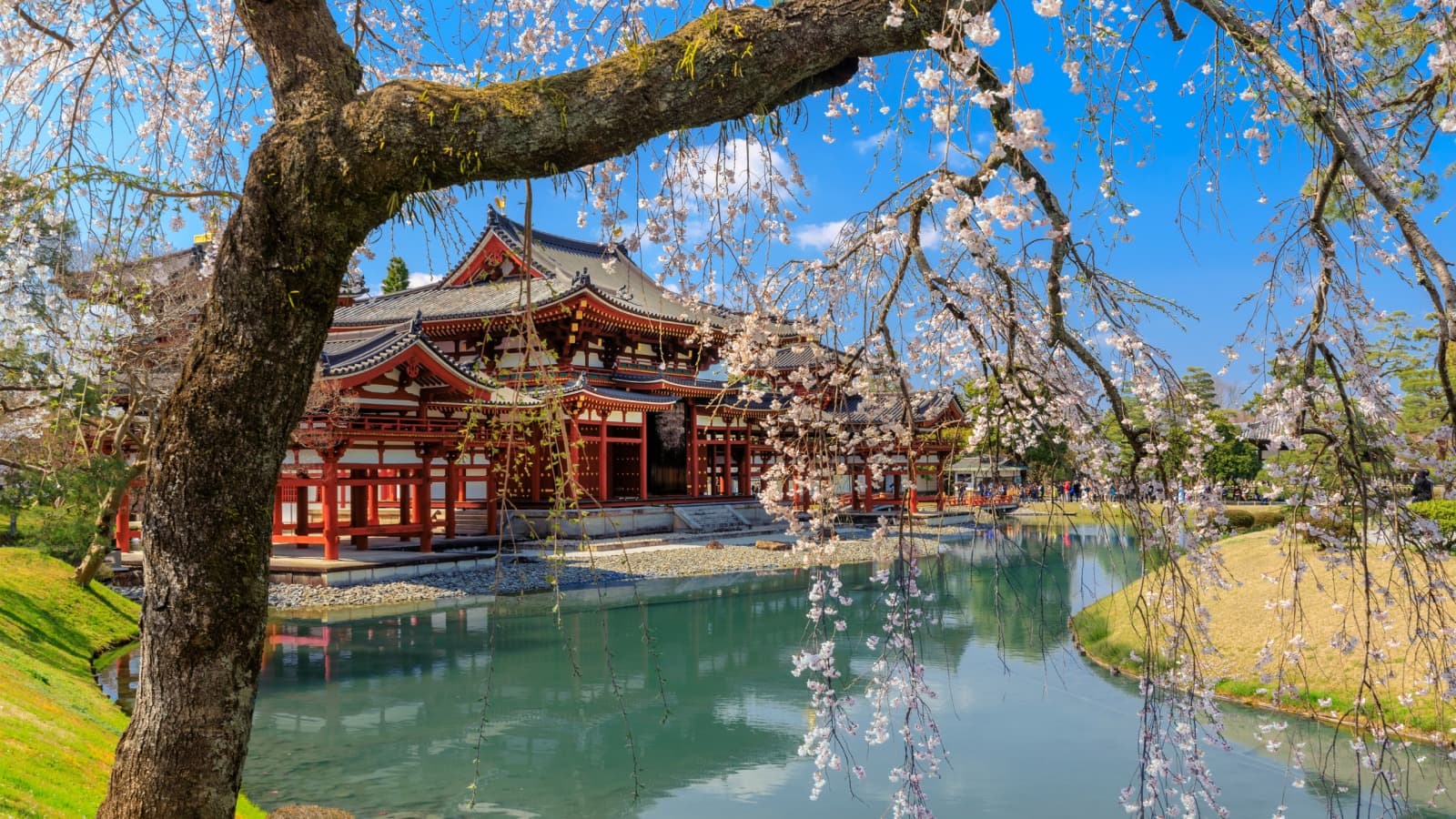
Byodo-in is a historic temple located in Uji City, Kyoto Prefecture, known for its beautiful architecture and cultural value. It was registered as a UNESCO World Cultural Heritage Site in 1994 as part of the “Historic Monuments of Ancient Kyoto.”
Its history dates back to 1052, when it was founded by Fujiwara no Yorimichi, son of Fujiwara no Michinaga. Originally the villa of Minamoto no Shigeaki, Yorimichi converted it into a temple. He believed that the age of Mappo (the Latter Day of the Law) had arrived and built Byodo-in to recreate the Western Pure Land paradise in this world.
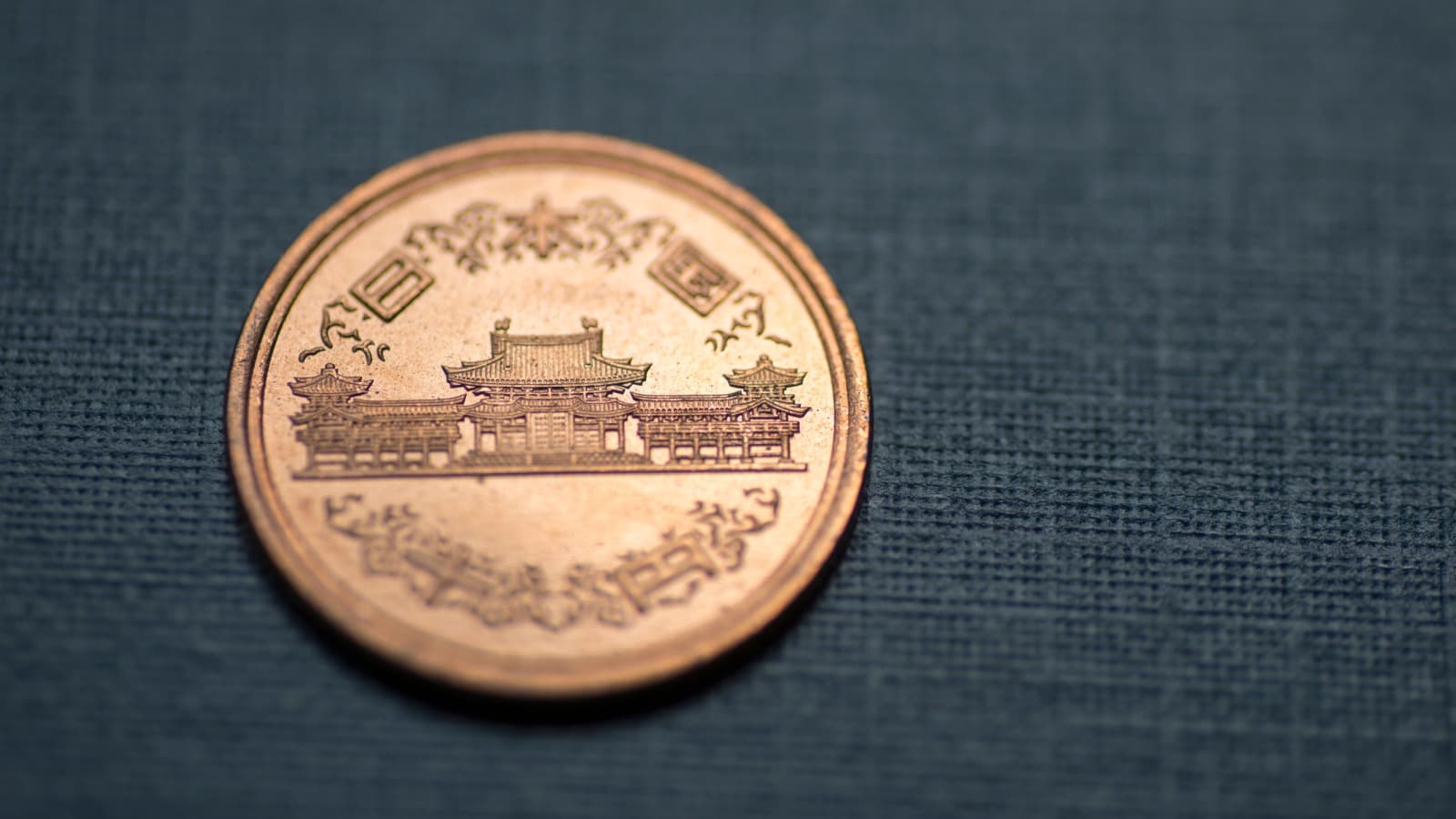
The central building is the Phoenix Hall. Completed in 1053, it houses the Amida Nyorai (Amitabha) statue. The Phoenix Hall is renowned for its beautiful architecture and is depicted on Japan’s 10-yen coin. Golden phoenix statues adorn the roof, giving the hall its name.
Byodo-in houses numerous National Treasures. Particularly noteworthy are the 52 Unchu Kuyo Bosatsu (Bodhisattvas on Clouds) statues arranged within the Phoenix Hall. These bodhisattva figures are depicted riding on clouds and playing musical instruments, expressing the ideal of the Pure Land paradise of that era. The temple also houses one of Japan’s Three Famous Bells.
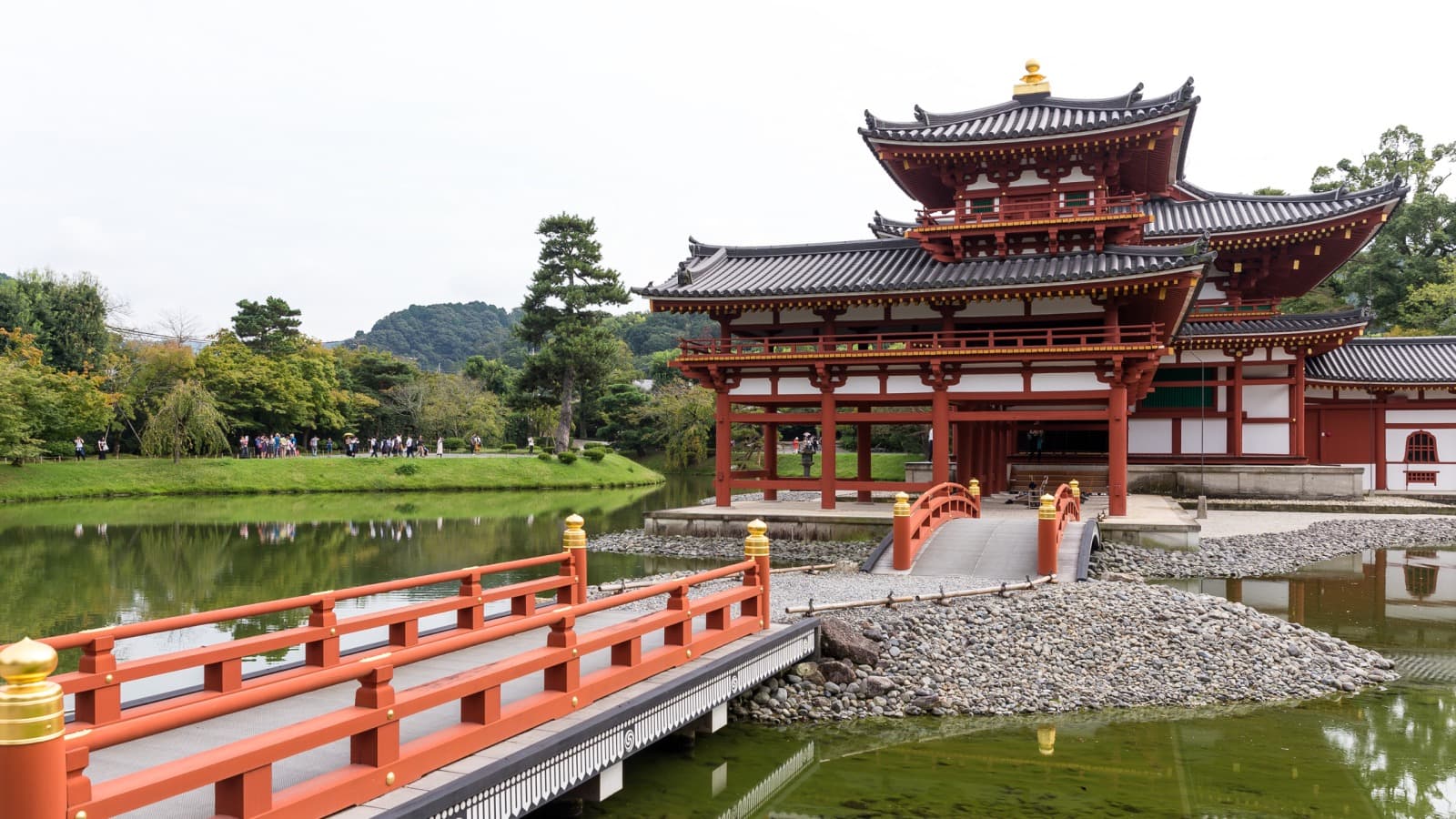
Today, the gardens and buildings of Byodo-in are preserved, and the Hoshokan Museum displays various temple treasures. Here, visitors can view exhibits reproducing the vivid colors of the Phoenix Hall’s interior as it appeared when first built. This museum serves as a place that allows visitors to feel a close connection to the culture and faith of the Heian period.
History of Byodo-in Temple
The history of Byodo-in begins with its founding by Fujiwara no Yorimichi, and through many eras of protection and preservation, it has maintained its beauty and cultural value to the present day. Details are explained below.
1. 1052 – Founding
 *Illustrative image
The history of Byodo-in begins in 1052, when Fujiwara no Yorimichi converted a villa in Uji, inherited from his father Fujiwara no Michinaga, into a temple. This site was originally the villa of Minamoto no Shigeaki, which Michinaga had acquired from his wife. Yorimichi believed that the age of Mappo had arrived and built Byodo-in to recreate the Western Pure Land paradise in this world. His deep faith and the influence of Mappo thought led to the creation of this grand religious complex.
2. 1053 – Construction of the Phoenix Hall
*Illustrative image
The following year in 1053, the Phoenix Hall, the central building of Byodo-in, was completed. This hall was constructed to embody the ideal of the Pure Land paradise, and at its center sits the Amida Nyorai statue crafted by the master Buddhist sculptor Jocho. Inside, 52 Unchu Kuyo Bosatsu (Bodhisattvas on Clouds) statues are arranged, depicted riding clouds and playing musical instruments, symbolizing the peace and joy of the Pure Land paradise. Golden phoenix statues are placed on the roof, lending an air of sanctity and majesty to the entire structure.
3. 1074 – Death of Yorimichi
*Illustrative image
Fujiwara no Yorimichi passed away at Byodo-in in 1074. As the founder of Byodo-in, he dedicated his life to protecting and nurturing this temple. After his death, Byodo-in continued to be preserved due to its religious and cultural significance.
Even after Yorimichi’s death, Byodo-in underwent repeated restoration and preservation efforts. From the late Heian period to the Kamakura period, it received donations and protection from the aristocratic and warrior classes.
4. 1336 – Protection Under the Muromachi Shogunate
During the Muromachi period, Byodo-in was actively protected by Ashikaga Takauji and his descendants. Ashikaga Takauji overthrew the Kamakura Shogunate and established the Muromachi Shogunate in 1336. Subsequently, Takauji and his family pursued policies to protect many temples and cultural properties, including Byodo-in.
During this period, major restoration work was carried out at Byodo-in. In particular, the restoration and reconstruction of main buildings including the Phoenix Hall were undertaken, with repairs to damaged sections and reinforcement of the entire structure. The gardens were also maintained, restoring the beautiful landscape of Byodo-in. In the early Edo period, the hall came to be known as the Phoenix Hall, and the name became established. Through these restoration and maintenance efforts, Byodo-in maintained its religious and cultural value and was passed on to the next era.
5. 1994 – World Cultural Heritage Registration
In 1994, Byodo-in was registered as a UNESCO World Cultural Heritage Site as part of the “Historic Monuments of Ancient Kyoto.” This registration signifies that Byodo-in has been internationally recognized as an important heritage of Japanese history and culture. Byodo-in received this honor for its beautiful architecture, particularly the structure and decoration of the Phoenix Hall, the design of the gardens, and its historical value.This registration dramatically increased Byodo-in’s international recognition. Furthermore, registration as a World Cultural Heritage Site emphasized the importance of protecting and preserving Byodo-in.
6. Modern Era
Even today, Byodo-in continues to attract many visitors from both Japan and abroad as an important Japanese cultural property.
Within the Byodo-in grounds is the Hoshokan Museum, where visitors can view exhibits that reproduce the vivid colors of the Phoenix Hall’s interior as they appeared when first built. The museum displays numerous temple treasures including the Amida Nyorai statue, deepening visitors’ understanding of Byodo-in’s history and art. The museum’s exhibits include important works of Buddhist art dating from the Heian period, broadly communicating their value as cultural properties.
Furthermore, Byodo-in is known as a place where visitors can enjoy beautiful gardens throughout the seasons. Particularly during the cherry blossom season in spring and the autumn foliage season, many tourists visit to savor the harmony of natural beauty and historic architecture. In this way, Byodo-in continues to captivate many people with its historical value and beauty in the modern era.
Recommended Spots at Byodo-in Temple
Byodo-in, as a place symbolizing Japanese culture and history, captivates many visitors. Here we introduce some of the buildings and spots that are particularly worth seeing.
■ Phoenix Hall
The centerpiece of Byodo-in, the Phoenix Hall was completed in 1053 as a building that embodies the ideal of the Pure Land paradise. At its center sits the Amida Nyorai statue crafted by the master Buddhist sculptor Jocho, and the walls feature paintings of the “Nine Grades of Amida’s Welcome.” These paintings depict the path to the Pure Land paradise after death and leave a deep impression on visitors. Golden phoenix statues on the roof serve as the symbol of Byodo-in.
■ Aji Pond
Stretching before the Phoenix Hall, the Aji Pond reflects the building on its surface, creating a fantastical scene as if it were floating in the Pure Land paradise. The pond’s design is meticulously calculated to enhance the beauty of the Phoenix Hall, and the reflection of the hall on the pond deeply moves visitors. The “Aji” in Aji Pond derives from the Buddhist mantra syllable “A,” which is said to represent the origin of the universe.
■ Hoshokan Museum
Within the Byodo-in grounds is the Hoshokan Museum, where visitors can learn in detail about the history and cultural properties of Byodo-in. Inside, many National Treasures and Important Cultural Properties are displayed, including the Heian-period temple bell, the Unchu Kuyo Bosatsu (Bodhisattvas on Clouds) statues, and the phoenix statues. The museum is designed to harmonize with the garden landscape, allowing visitors to explore in a tranquil atmosphere.
■ Ougi no Shiba
Behind Byodo-in lies a historic spot known as “Ougi no Shiba” (Fan Lawn). This is where Minamoto no Yorimasa, defeated in the Battle of Byodo-in in 1180, is said to have committed seppuku (ritual suicide). After losing to the Taira clan, Yorimasa spread his fan toward the Pure Land paradise at this spot, composed a waka poem, and took his own life with dignity. He maintained his pride as a warrior until his final moment.
In contrast to the other beautiful scenery of Byodo-in, this site preserves its value as an important place that conveys the history of battle and tragedy.
■ Seated Amida Nyorai Statue
The Seated Amida Nyorai statue enshrined at the center of the Phoenix Hall was crafted by the master Buddhist sculptor Jocho and is considered the pinnacle of Heian-period Buddhist sculpture. Standing approximately 2.7 meters tall, the statue features a radiant appearance covered in gold leaf. Together with the interior decorations, it visually expresses the ideal of the Pure Land paradise.
■ Temple Bell
The temple bell of Byodo-in is counted as one of Japan’s Three Famous Bells, known as “the Bell of Byodo-in, renowned for its beauty.” It is famous for its beautiful tone and elegant form, and is currently housed in the Hoshokan Museum. The bell’s surface features exquisite relief carvings of celestial beings, phoenixes, and lions, enhancing the artistic value of Byodo-in.
Summary
Byodo-in is widely recognized as a place that symbolizes Japanese culture and history through its historical background, architectural beauty, and religious significance. Since its founding in 1052, this temple, built to embody Fujiwara no Yorimichi’s deep faith and Mappo thought, has maintained its beauty and value through numerous restorations and preservation efforts to the present day. The 1994 UNESCO World Cultural Heritage registration further enhanced Byodo-in’s international recognition and the importance of its protection.
Visitors can experience the rich culture and history of Japan that has continued since the Heian period through the magnificent architecture of the Phoenix Hall, the fantastical sight reflected in the Aji Pond, and the many National Treasures displayed at the Hoshokan Museum. The landscape of Byodo-in, harmonizing with beautiful gardens that change with the seasons, offers new discoveries and inspiration with each visit. Byodo-in will undoubtedly continue to captivate many people for years to come.