What is a Geisha?
A geisha is a highly trained female entertainer in Japan who masters traditional arts — dance, song, shamisen (three-stringed instrument), tea ceremony, and the art of conversation — to enliven banquets and social gatherings. The word “geisha” literally means “person of the arts,” and that is precisely what defines the profession: the ability to elevate any occasion through refined artistic performance and graceful interaction.
A common misconception equates geisha with courtesans, but the two are entirely distinct. During the Edo period, strict laws prohibited geisha from engaging in prostitution; their role was purely artistic. In Kyoto, an apprentice is called “maiko” and a fully qualified geisha is called “geiko.” In Tokyo, the term “geisha” is standard, with apprentices known as “hangyoku.” Today, geisha culture is maintained in designated districts called “hanamachi” (flower towns) in Kyoto, Tokyo, and a handful of other cities.
History of Geisha
Heian Period: Shirabyoshi — The Seeds of Female Performance
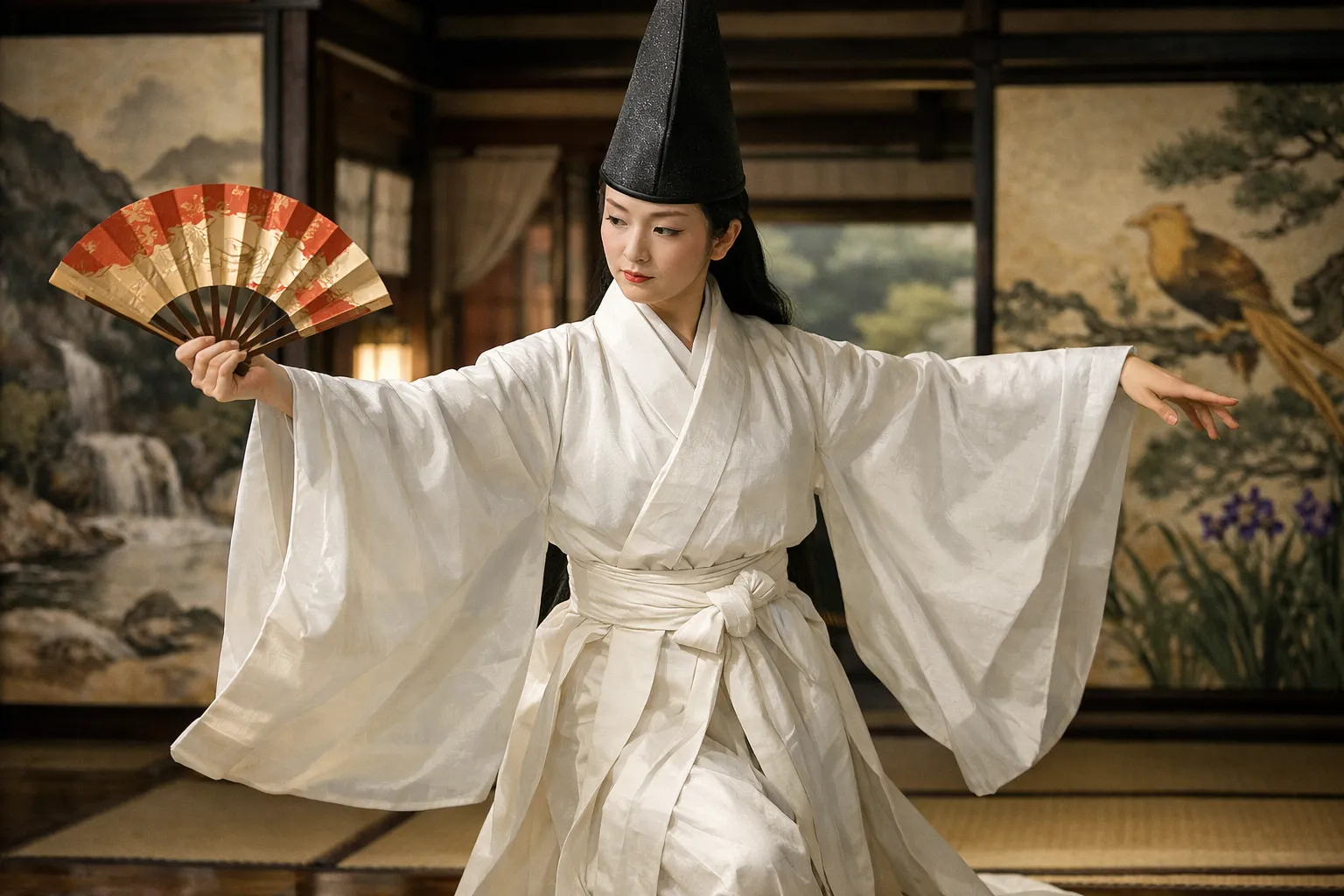
The roots of geisha culture reach back to the Heian period (794–1185) and the “shirabyoshi” — female performers who dressed in men’s attire and entertained aristocrats with song and dance. The famous Shizuka Gozen, beloved of the warrior Minamoto no Yoshitsune, was a renowned shirabyoshi. These early female artists established the cultural soil from which the geisha tradition would later grow.
Early Edo Period: Male Entertainers in the Pleasure Quarters
When the Tokugawa shogunate established licensed pleasure quarters, male entertainers called “houkan” (jesters) and “taiko-mochi” (drum-bearers) enlivened banquets with music, comedy, and conversation. Their professional model — entertaining through art rather than physical services — directly influenced the emergence of female geisha.
Mid-18th Century: The Birth of the Female Geisha
Around 1751, the first female geisha appeared in the Fukagawa pleasure quarter of Edo. Unlike courtesans, these women were recognized exclusively as performing artists — specialists in dance, shamisen, and song. Their refined skills and elegant bearing quickly attracted a devoted following, and hanamachi districts soon formed in Edo, Kyoto, and Osaka.

Meiji to Prewar: Modernization and the Golden Age
Following the Meiji Restoration, the government’s 1872 Emancipation Edict abolished indentured contracts for geisha and courtesans, allowing geisha to work as free professionals. The Meiji through Taisho eras are often considered the golden age of geisha culture, with hanamachi flourishing across the country.
Postwar to Present: Preservation and New Outreach
After World War II, changing lifestyles and the diversification of entertainment led to a significant decline in geisha numbers. Yet in Kyoto especially, the hanamachi traditions have been carefully maintained. In recent years, social media and tourist-oriented experience programs have introduced geisha culture to new generations both in Japan and abroad.
Maiko vs. Geiko: Understanding the Difference
Maiko (Apprentice)
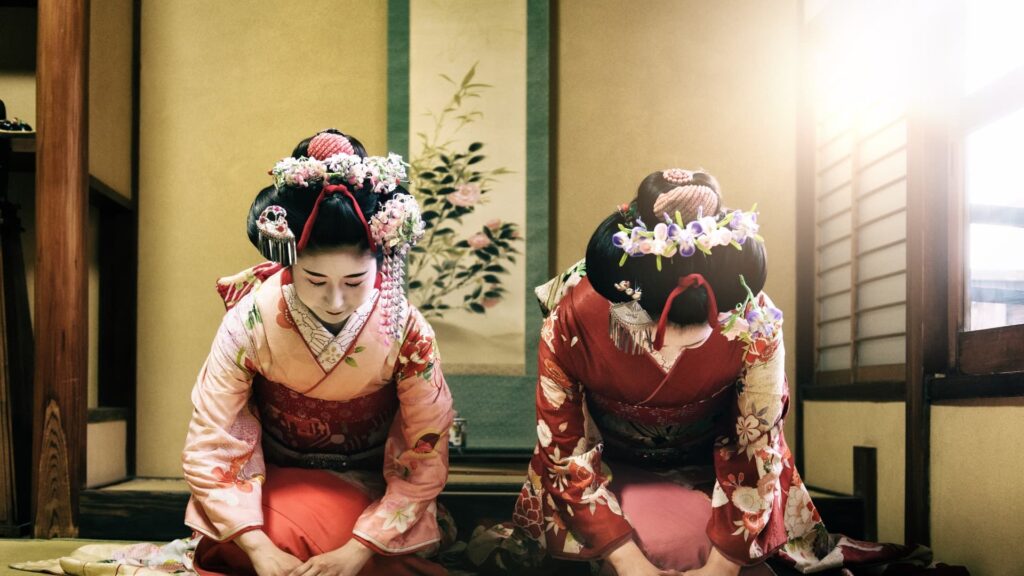
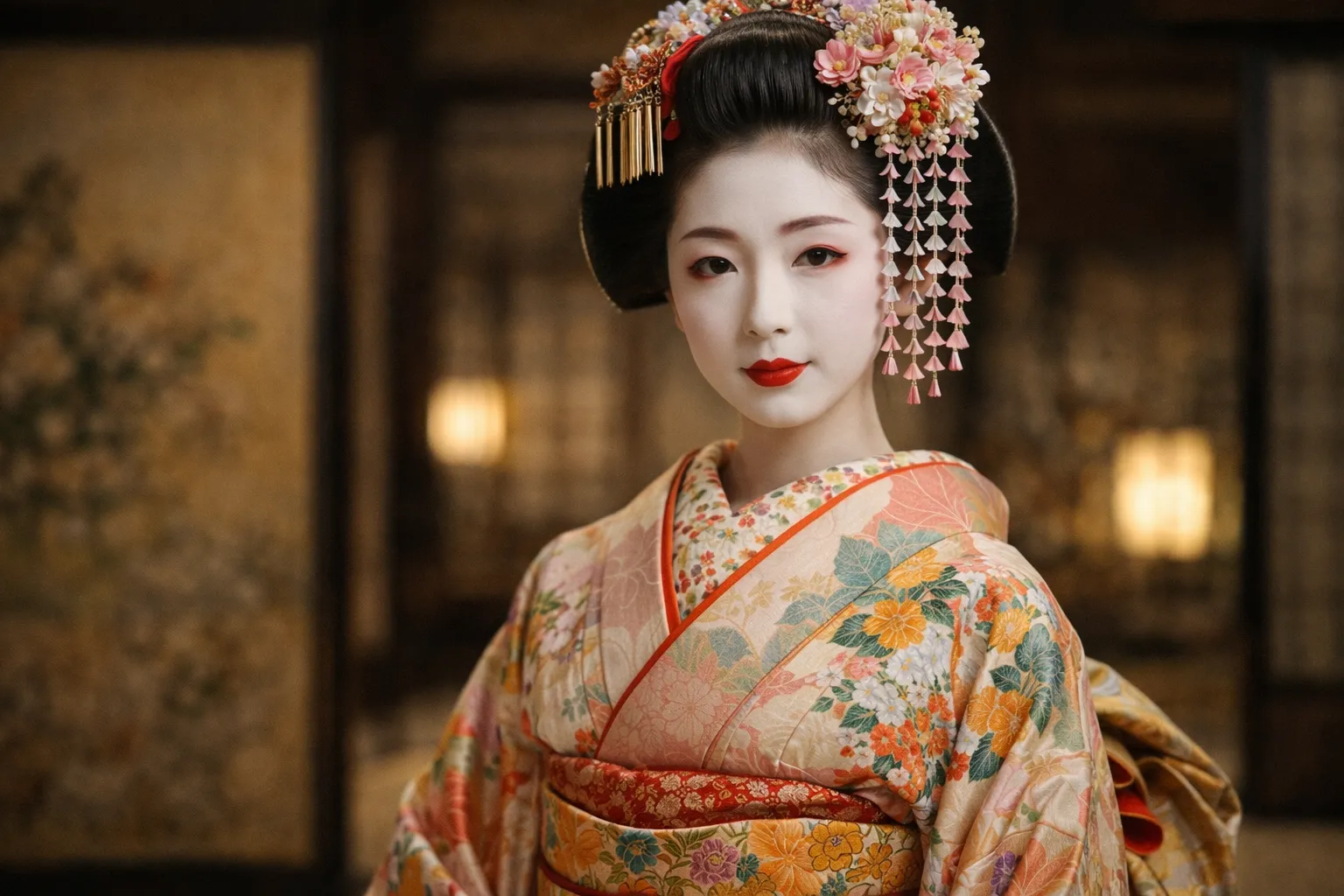
A maiko is a young woman, typically 15–20 years old, undergoing roughly five years of training in Kyoto’s hanamachi. She wears her own hair in elaborate traditional styles adorned with seasonal flower hairpins (kanzashi), dons a vibrant long-sleeved furisode kimono with a distinctive trailing “darari” obi, and applies the iconic white makeup — with only the lower lip painted red during her earliest days. The maiko’s vivid appearance has become one of Kyoto’s most recognizable symbols.
Geiko (Full-Fledged Geisha)
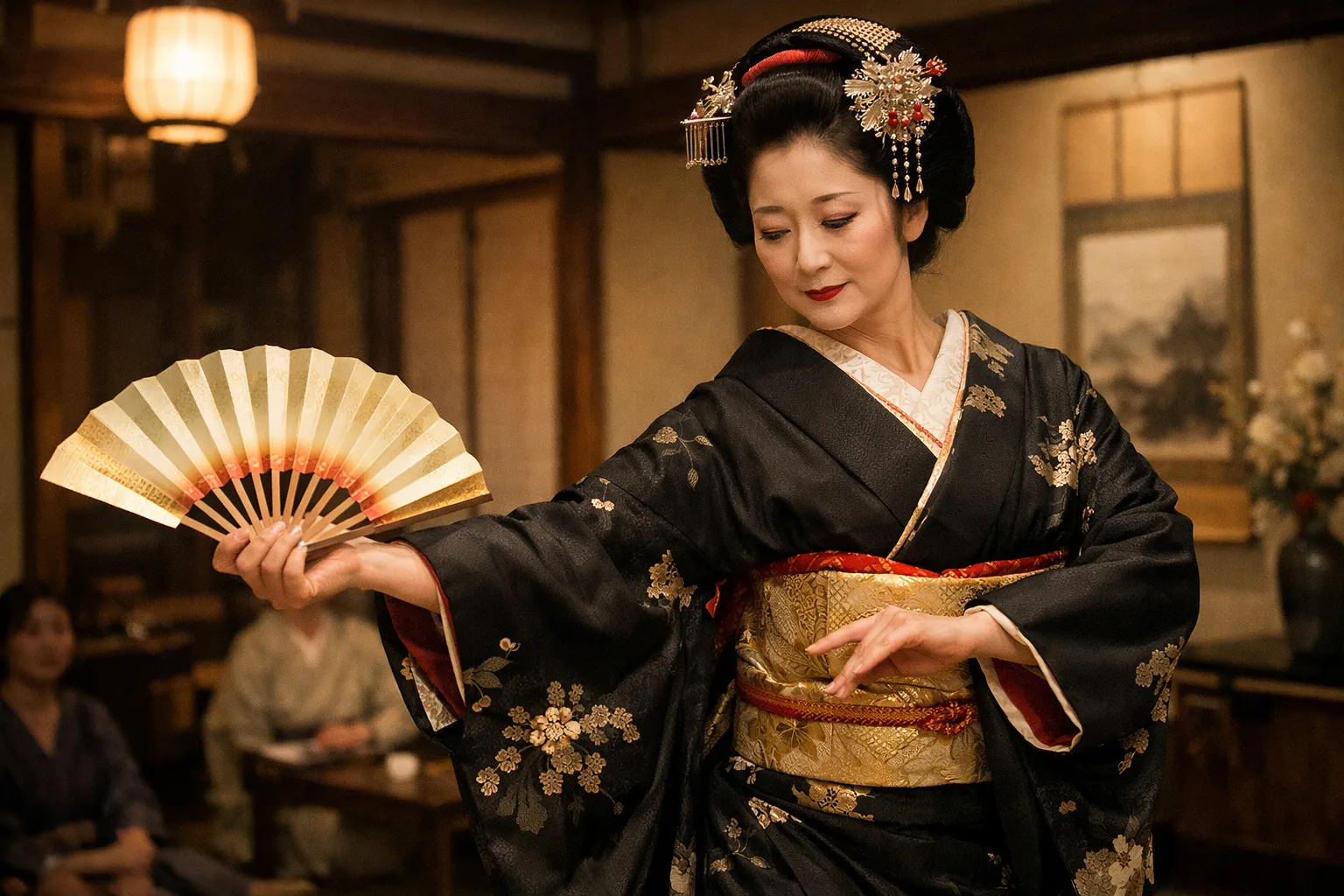
After completing her apprenticeship, a maiko becomes a “geiko.” The transformation is visible: geiko wear wigs rather than styling their own hair, and their kimono and obi become more subdued and elegant. Geiko specialize as either “tachikata” (dancers) or “jikata” (musicians who accompany the dance with shamisen and song). The jikata role demands particularly deep skill and experience, and many transition to it after years as a tachikata.
Hangyoku — Tokyo’s Apprentice Geisha
In Tokyo and other parts of eastern Japan, apprentice geisha are called “hangyoku,” meaning “half-jewel” — a reference to the reduced fee charged for their services while still in training. Like Kyoto’s maiko, they study dance, music, and the social arts on the path to becoming full geisha.
Where to Experience Geisha Culture
Walking the Streets of Gion (Kyoto)
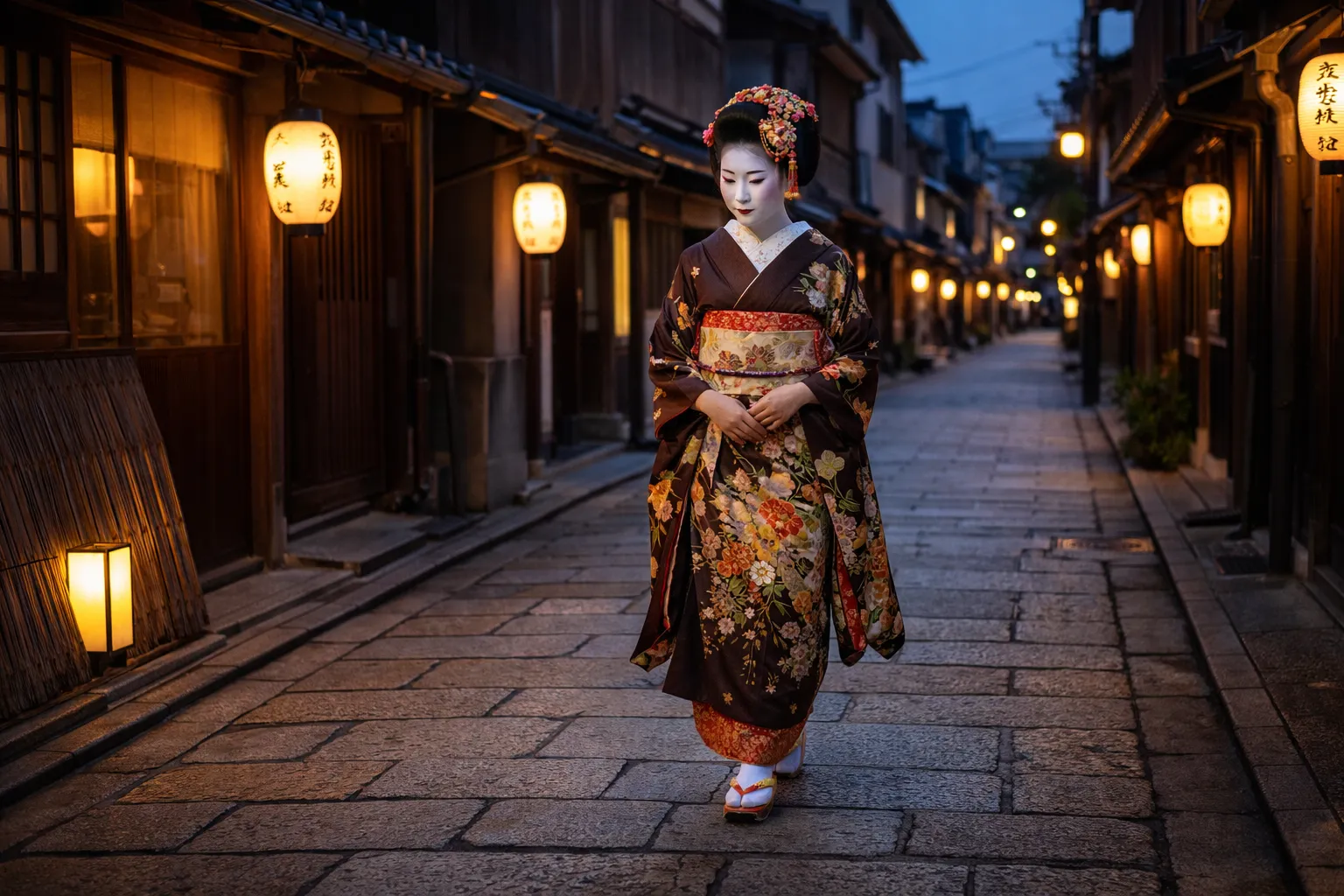
Gion is Japan’s most famous hanamachi. At dusk, a stroll along Hanamikoji street offers the chance to glimpse maiko and geiko making their way to evening engagements. The sight of white-faced figures in brilliant kimono passing through lantern-lit lanes of wooden machiya is a scene unique to Kyoto. Note that chasing or photographing maiko without permission is considered a serious breach of hanamachi etiquette.

Maiko Makeover Experience (Kyoto)
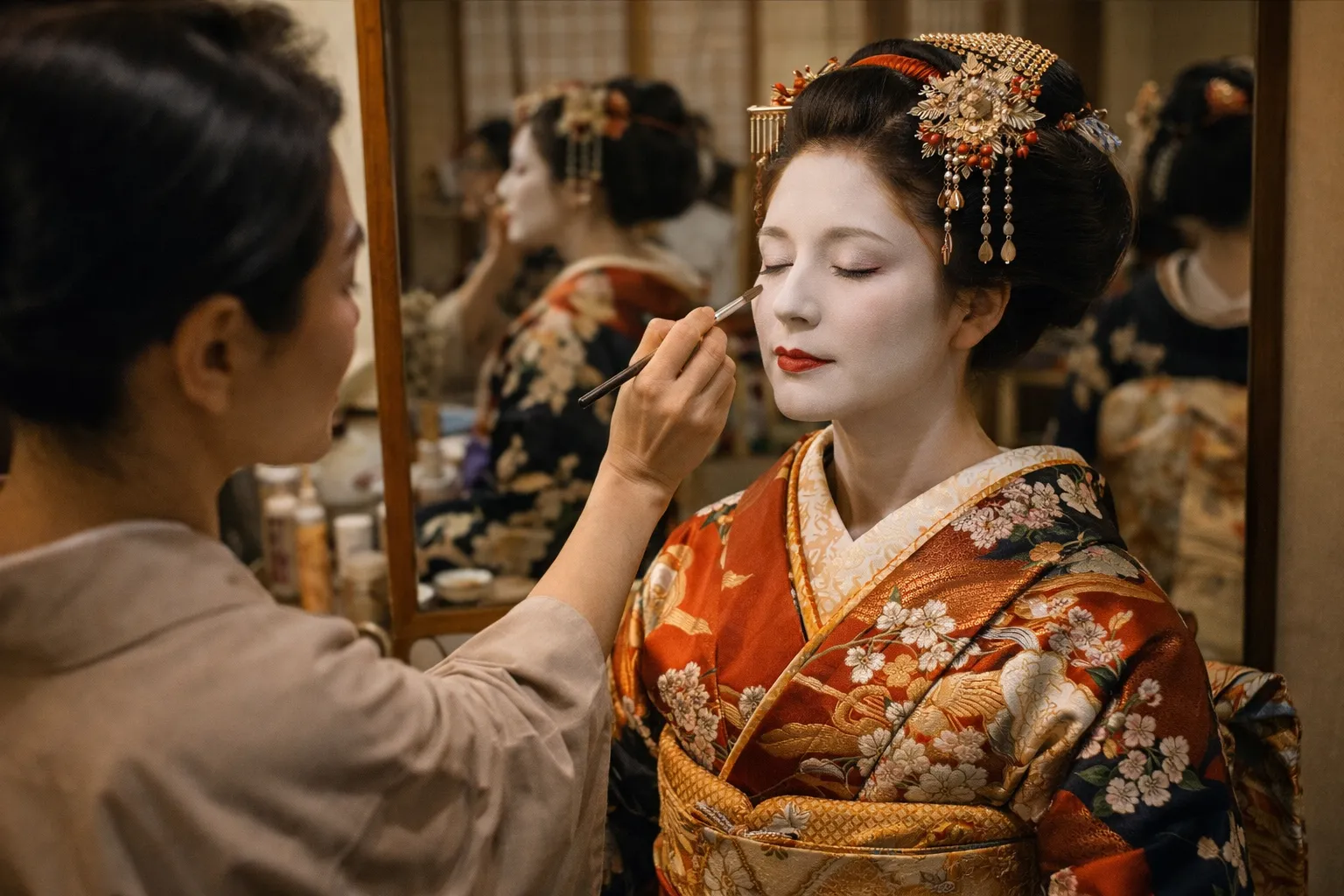
Numerous studios in Kyoto offer the chance to be transformed into a maiko — complete with white makeup, traditional wig, and colorful furisode — and pose for professional photos. Many studios provide English-language service, making this one of the most popular cultural experiences for international visitors.
Seasonal Dance Performances in Kyoto’s Five Hanamachi
Kyoto’s five hanamachi — Gion Kobu, Gion Higashi, Pontocho, Miyagawa-cho, and Kamishichiken — each host seasonal dance performances. The spring “Miyako Odori” (Gion Kobu) and “Kamogawa Odori” (Pontocho) are especially renowned. These performances are open to the general public and offer a rare opportunity to see maiko and geiko perform on stage.
Tokyo’s Hanamachi
Tokyo has six hanamachi: Shinbashi, Asakusa, Kagurazaka, Akasaka, Mukojima, and Yoshicho. While less tourist-oriented than Kyoto’s, some ryotei (traditional restaurants) in these districts welcome guests for banquets with geisha entertainment, occasionally without the need for a personal introduction.
Summary
Geisha are the living embodiment of Japan’s artistic traditions — dance, music, conversation, and the spirit of omotenashi (hospitality) made manifest. From the shirabyoshi dancers of the Heian court to the thriving hanamachi of modern Kyoto, geisha culture has adapted across centuries while preserving its essential character. Whether you catch a fleeting glimpse of a maiko in Gion at twilight, attend a spring dance performance, or try a maiko makeover for yourself, encountering geisha culture is one of the most memorable ways to connect with the heart of Japanese tradition.