
🕓 2023/6/12
#Gourmet
Ishikawa Prefecture Gourmet Guide
Ishikawa Prefecture is a place where beautiful nature and rich culture merge, making it a region where you can enjoy many culinary delights. Kanazawa City, in particular, is known as a gourmet destination where you can savor local cuisine while immersing yourself in history and tradition. In this article, we introduce three carefully selected Ishikawa Prefecture dishes: “Jibuni,” “Noto Beef,” and “Kanazawa Oden.”
For each dish, we provide a detailed introduction to its appeal and history, along with recommended restaurants. When visiting Ishikawa Prefecture, be sure to try these exquisite gourmet offerings.
Top 3 Gourmet Picks from Ishikawa Prefecture
Jibuni
● The Appeal of Jibuni
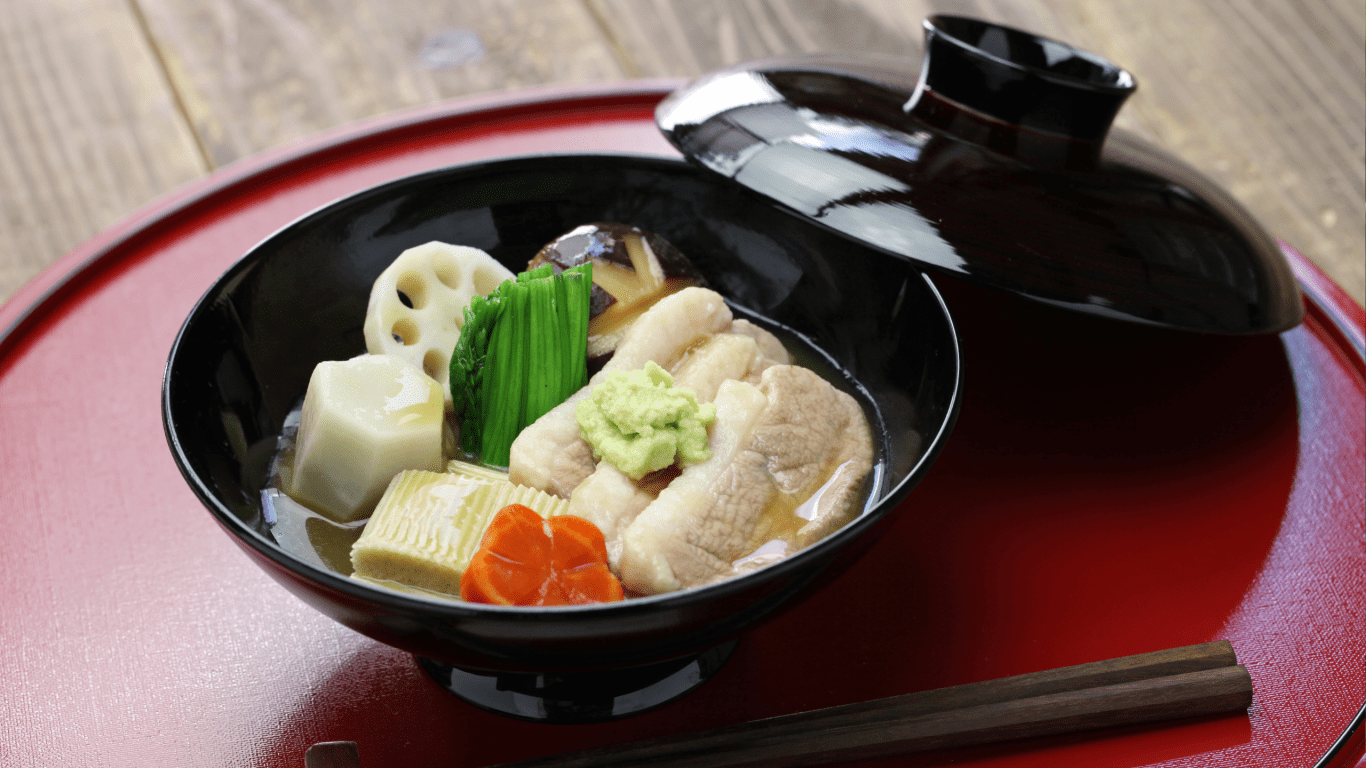
Jibuni is a traditional local dish representing Kanazawa City in Ishikawa Prefecture, and is particularly well-known as a Kaga cuisine specialty. This dish is made with duck or chicken, seasonal vegetables, and a local specialty called “sudare-fu” (bamboo-screen wheat gluten), all simmered in a sweet and savory broth. The name is said to derive from the “jibu-jibu” simmering sound the ingredients make while cooking.
A key feature is that the meat is dusted with wheat flour or potato starch before simmering, which thickens the broth and seals in the umami of the ingredients. This thickness is especially effective at warming the body during cold seasons. Additionally, wasabi is served as a condiment, creating a perfect harmony between the tender duck meat and the refreshing spiciness of the wasabi.
● History of Jibuni
Jibuni is a traditional local dish representing Kanazawa City in Ishikawa Prefecture, with origins dating back to the Edo period. There are various theories about the name’s origin: some say it comes from the “jibu-jibu” sound made during cooking, while others suggest it is an abbreviation of “jukubu,” meaning duck meat.
The dish developed as a samurai cuisine of the Kaga Domain and has been served as part of formal meals since around the 17th century. The chefs who served the Maeda family, lords of the Kaga Domain, refined this dish over time. According to historical records, a dish called “mugidori” described in the early 18th-century cookbook “Ryori no Shiori” closely resembles modern-day Jibuni.
Another theory suggests that the dish originated from a recipe brought back from Korea by Okabe Jibuemon, who served as a provisions officer under Toyotomi Hideyoshi. According to this theory, the dish he brought was adapted in the Kaga Domain and became established as Jibuni.
● Where to Eat Jibuni!
- Restaurant Name: Shiroyamatei
- Appeal:
“Shiroyamatei” is a restaurant where you can casually enjoy Kaga cuisine while soaking in the historic atmosphere of Kanazawa Castle. Their most popular dish, “Jibuni,” is a must-try when visiting Kanazawa. In addition to the appeal of the Jibuni itself, they offer a variety of menu options.
For example, you can enjoy creative dishes that combine Jibuni with noodles, such as “Jibuni Udon,” “Jibuni Soba,” and “Jibuni Ramen.” They also offer unique arrangements like “Jibuni Don” (rice bowl) and “Jibuni with Sweet Shrimp,” all of which are absolutely delicious. - Access: Approximately 10 minutes by taxi from “Kanazawa Station”
- Address: 1-13 Kenrokumachi, Kanazawa City
- Google Maps: https://maps.app.goo.gl/aHz8Rsp29dmeKGks8
Noto Beef
● The Appeal of Noto Beef
Noto Beef is a high-quality Japanese Black Wagyu raised in the beautiful natural environment and rustic landscape of Ishikawa Prefecture. In 1995 (Heisei 7), the “Noto Beef Brand Promotion Council” was established, and only cattle meeting its standards are certified as “Noto Beef.” The rich natural environment of the Noto region and the dedicated husbandry techniques of producers greatly contribute to the raising of Noto Beef.
Its greatest feature is its finely marbled texture and premium fat. The fat is rich in oleic acid, which gives it a melt-in-your-mouth texture and rich flavor. In particular, beef certified as “Noto Beef Premium” must be A5 rank with a BMS (Beef Marbling Standard) of 10 or higher, or BMS 8 or 9 with an oleic acid content of 55% or more.
Noto Beef maintains strict certification standards to ensure its high quality. The cattle must be raised in Ishikawa Prefecture, with their final feeding location also within Ishikawa Prefecture, and the meat quality grade must be A3 or higher, or B3 or higher. Only Noto Beef that meets these criteria is permitted to bear the Noto Beef name.
● History of Noto Beef
The history of Noto Beef dates back to the Taisho era. Cattle from Tottori Prefecture were introduced to the Noto region of Ishikawa Prefecture for agricultural use, serving as the origin. Later, breeding stock was introduced from Hyogo Prefecture, and crossbreeding was advanced. Through this crossbreeding, Noto Beef came to be valued as a wagyu with excellent growth, ample body volume, and superior quality.
In 1995 (Heisei 7), Ishikawa Prefecture and beef-related organizations within the prefecture established the “Noto Beef Brand Promotion Council” to advance the branding of Noto Beef. Through this council, only beef meeting certain standards became certified as “Noto Beef.” Furthermore, at the 9th National Wagyu Competition in 2007, Noto Beef received a special award for the high quality of its fat.
● Where to Eat Noto Beef!
- Restaurant Name: Rokkakudo
- Appeal:
“Rokkakudo Main Branch” is a long-established steak restaurant in Kanazawa with 47 years of history, beloved by Kanazawa residents for many years. The restaurant offers a live cooking experience where the chef grills steak right before your eyes, allowing you to enjoy the meat with all five senses. Located within walking distance from the Higashi Chaya District, you can enjoy your meal in an atmosphere-rich setting.The recommended “Rokkakudo Course Black Wagyu Filet or Loin” is a luxurious course featuring 100g of carefully selected steak accompanied by appetizers, soup, seasonal teppanyaki seafood, dessert, and more. The Noto Beef steak features a light sear that locks in the juices, with characteristically tender and light fat. In addition to simple salt and pepper seasoning, you can also enjoy condiments such as ginger soy sauce and homemade chili sauce.
- Address: 1-38-27 Higashiyama, Kanazawa City, Ishikawa Prefecture
- Access: 2,029m from Hokutetsu Kanazawa Station
- Google Maps: https://maps.app.goo.gl/KkkLGa3nKZPB6DJHA
Kanazawa Oden
● The Appeal of Kanazawa Oden
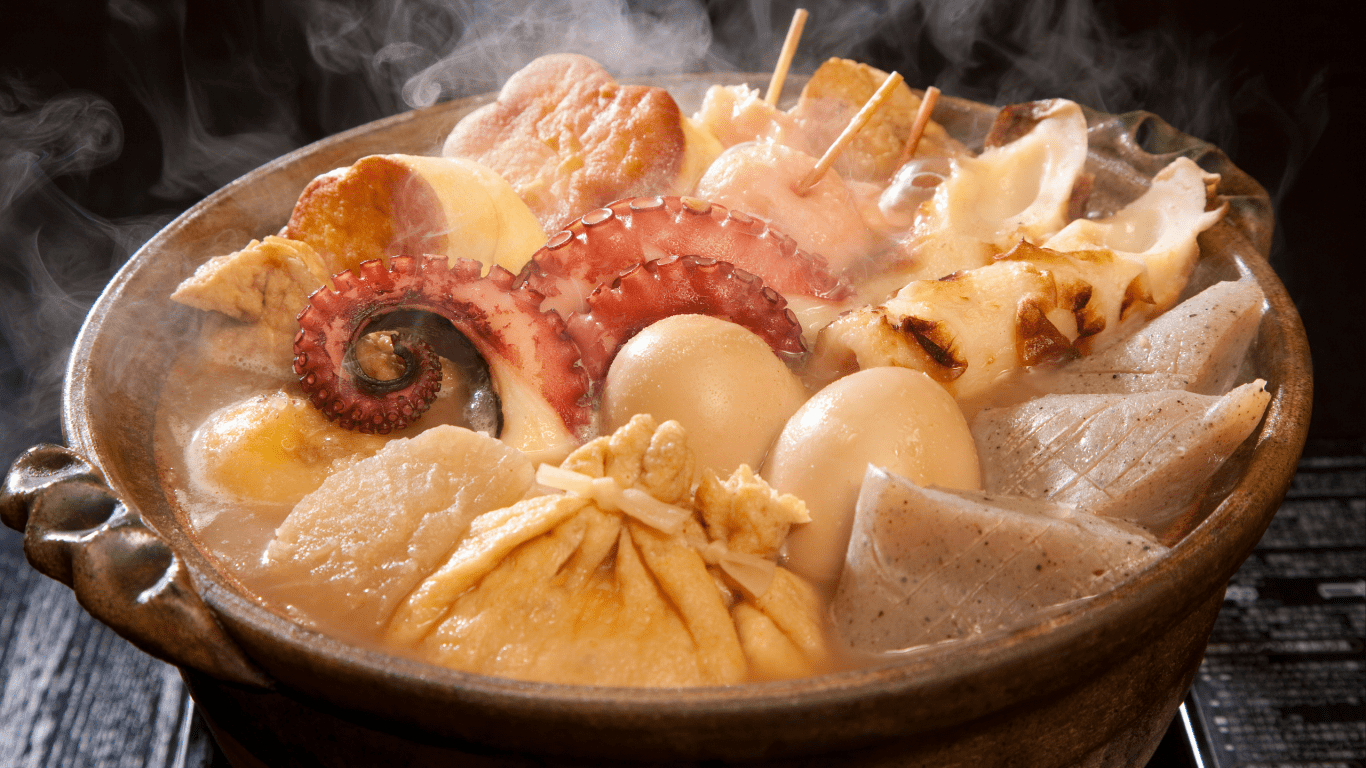
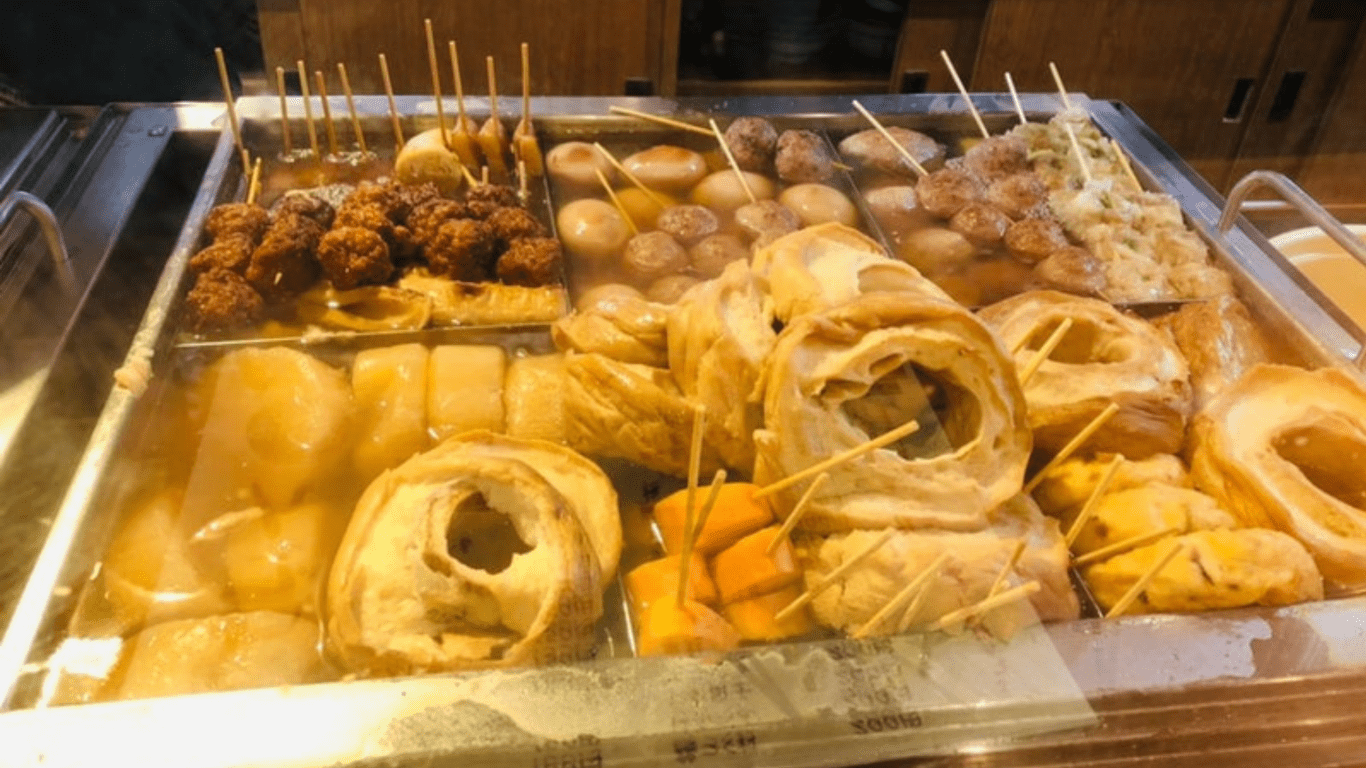
Kanazawa Oden is a traditional local dish representing Kanazawa City in Ishikawa Prefecture, cherished by locals and tourists alike as a heartwarming dish that eases the cold of winter. The greatest features of this oden are its elegant broth and diverse ingredients. The broth is characterized by a clear soup based on kelp and bonito flakes, with a deeper flavor than Kansai-style oden. Local Ono soy sauce is often used, giving the broth a distinctive flavor.
Local specialty ingredients are widely used. For example, “kani-men” (crab shell), a winter tradition, is a luxurious item made by stuffing a female Kobako crab shell with crab meat and miso, and is one of the most iconic ingredients of Kanazawa Oden. Other staple ingredients include bai-gai (sea snails), fukashi (white fish paste), kuruma-fu (wheel-shaped wheat gluten), and Gensuke daikon radish. These ingredients harmonize perfectly with the broth, creating a rich and flavorful experience.
● History of Kanazawa Oden
The history of Kanazawa Oden dates back to the late Meiji era. At that time, oden, which was popular in Tokyo, was brought to Kanazawa and fused with the local food culture to develop into its current form. It is said that oden was first served in Kanazawa during a celebration event. This became the catalyst for oden to take root in Kanazawa’s food culture.
In the Taisho era, Kansai-style light-flavored oden began to be served in Kanazawa as well, spreading further. The Kansai-style oden served during relief efforts after the Great Kanto Earthquake in 1923 spread nationwide, and Kanazawa was also influenced by this. In 1923 (Taisho 12), the first restaurant to hang an oden sign appeared, and Kanazawa experienced a major oden boom.
In 2009, an NHK program featured Kanazawa as having “the most oden restaurants per capita in Japan,” making Kanazawa Oden famous nationwide. Since then, it has been featured in various media and has become a popular gourmet choice for tourists visiting Kanazawa.
● Where to Eat Kanazawa Oden!
- Restaurant Name: Oden Izakaya Sanko
- Appeal:
“Sanko,” located on a back street in Kanazawa, is a popular restaurant that draws discerning customers every night. Despite its back-street location, it is always bustling, thanks to its high-quality cuisine and pleasant lively atmosphere.One of the appeals of “Sanko” is its elegant broth made from a chicken stock base. This broth, which also incorporates bonito and dried sardines, has a unique flavor while maintaining a robust taste. The oden, thoroughly infused with this broth, uses only carefully selected ingredients, and one bite is all it takes to be convinced of its deliciousness. Additionally, signature dishes like “Miyuki-age” (fried specialties) and “Tororo Teppanyaki” (grated yam on a hot plate) are also popular, attracting many fans.
- Access: 917m from Nomachi Station
- Address: 1-10-3 Katamachi, Kanazawa City, Ishikawa Prefecture
- Google Maps: https://maps.app.goo.gl/kLKt78788SecPNP68