- Introduction
- Overview of Kitano Tenmangu
- History of Kitano Tenmangu
- 1. Early Heian Period: The Life of Sugawara no Michizane—A Genius Scholar and Tragic Exile
- 2. Mid-Heian Period: The Birth of Tenjin Faith—From Vengeful Spirit to God of Learning
- 3. Azuchi-Momoyama Period: Toyotomi Hideyoshi and Kitano Tenmangu—The Grand Tea Ceremony and Odoi
- 4. Edo Period to Meiji: Popular Tenjin Faith and the Flourishing Tenjin Market
- 5. Modern Era: Sacred Site for Examinees and Cultural Hub
- Highlights and Recommended Spots
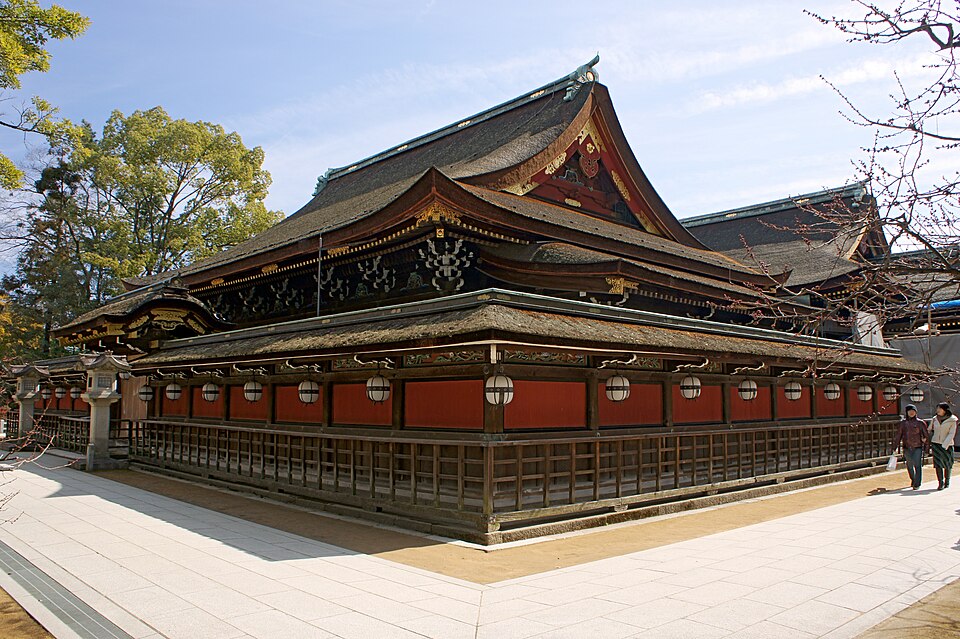
- 1. National Treasure Shrine Buildings—The Magnificent Architecture of Yatsumune-zukuri
- 2. Plum Garden—1,500 Plum Trees Creating Early Spring Splendor
- 3. Momiji-en (Odoi)—Autumn Foliage Adorning Hideyoshi’s Earthwork
- 4. The Seven Mysteries of Kitano Tenmangu—Enigmas Hidden in the Grounds
- 5. Tenjin Market—Kyoto’s Largest Monthly Market on the 25th
- Nearby Attractions
- Access
- Summary
- Frequently Asked Questions
Introduction
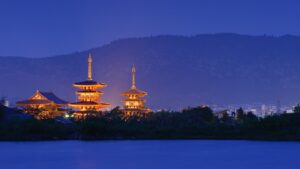
At Kitano Tenmangu, enshrined in the Kitano district of Kyoto’s Kamigyo Ward, the first thing that catches your eye as you walk along the approach is the countless plum and maple trees that change expression with each season. In spring, approximately 1,500 plum trees paint the grounds in delicate shades of pink and white, filling the air with sweet fragrance. Step through the tower gate onto the stone path, and the National Treasure shrine buildings welcome you with their imposing presence. This is the head shrine of approximately 12,000 Tenmangu and Tenjin shrines across Japan—the sacred site of Tenjin faith, dedicated to the deity of learning, Sugawara no Michizane.
Kitano Tenmangu is one of Kyoto’s oldest shrines, with over 1,000 years of history since its founding in 947. Born from the dramatic origin of being established to appease the wrath of Sugawara no Michizane, it eventually attracted tremendous devotion as the “God of Learning.” During exam season, approximately 5 million visitors come from across Japan annually, and the sight of the grounds filled with prayer tablets for exam success is a quintessential winter scene in Japan.
Yet Kitano Tenmangu’s appeal extends far beyond academic blessings. It was the stage for Toyotomi Hideyoshi’s grand “Kitano Grand Tea Ceremony,” features the famous autumn foliage garden along Hideyoshi’s earthwork embankment “Odoi,” and hosts the bustling “Tenjin-ichi” market on the 25th of every month—a shrine layered with history and culture. This article thoroughly covers Kitano Tenmangu’s history, highlights, nearby attractions, and access information.
Overview of Kitano Tenmangu
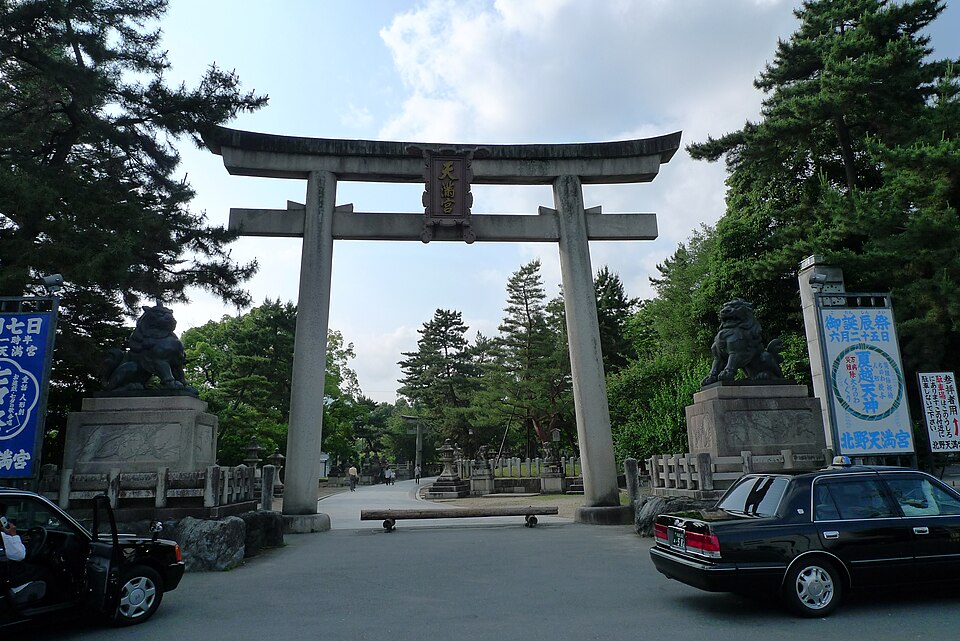
Kitano Tenmangu is a shrine located in Kamigyo-ku, Kyoto, enshrining Sugawara no Michizane (845-903) as its principal deity. While its official name is “Kitano Tenmangu,” locals affectionately call it “Kitano no Tenjin-san” or simply “Tenjin-san.”
| Official Name | Kitano Tenmangu |
|---|---|
| Location | Bakurocho, Kamigyo-ku, Kyoto |
| Principal Deity | Sugawara no Michizane |
| Shrine Rank | Former Kanpei-chusha, Nijunisha |
| Founded | 947 (Tenryaku 1) |
| Visiting Hours | Grounds open freely (Shrine buildings 5:30-17:30) |
| Admission | Grounds free (Plum Garden & Maple Garden paid) |
| Closed | None (Treasure Hall open on 25th of each month, Jan 1, etc.) |
| Phone | 075-461-0005 |
*Please check the official Kitano Tenmangu website for the latest visiting hours and fees.
Kitano Tenmangu is the head shrine of approximately 12,000 Tenmangu and Tenjin shrines nationwide, considered one of the two great sacred sites of Tenjin faith alongside Dazaifu Tenmangu in Fukuoka. Ranked as a Kanpei-chusha in the former shrine system, it was also listed among the “Nijunisha” (Twenty-Two Shrines) especially revered by the imperial court. The current shrine buildings were rebuilt in 1607 through a donation by Toyotomi Hideyori and feature a unique architectural style called “Yatsumune-zukuri,” where the main hall, stone chamber, worship hall, and music hall form one integrated structure—designated a National Treasure.
The grounds span approximately 12,000 tsubo (about 40,000 square meters), with approximately 1,500 plum trees of 50 varieties planted as a renowned plum blossom destination. Along the Kamiyagawa River on the west side, remnants of Toyotomi Hideyoshi’s “Odoi” earthwork remain, and in autumn, approximately 350 maple trees create the famous “Momiji-en” (Maple Garden). Annual visitors number about 5 million, with the busiest periods being exam season (January-March) and plum blossom season (February-early March).
History of Kitano Tenmangu
1. Early Heian Period: The Life of Sugawara no Michizane—A Genius Scholar and Tragic Exile
To understand Kitano Tenmangu’s history, one must first know the tumultuous life of Sugawara no Michizane (845-903). Born into the Sugawara family, a hereditary line of scholars, Michizane displayed prodigious intelligence from childhood. He reportedly composed waka poetry at age 5 and Chinese poetry at age 11, astonishing his contemporaries with his literary talent.
Becoming a Doctor of Literature at age 33, Michizane continued to rise through the ranks, and with the deep trust of Emperor Uda, was promoted to Minister of the Right in 899. For a member of a scholarly family to reach ministerial rank was extraordinarily unprecedented, breaking new ground in the political power long monopolized by the Fujiwara clan. Michizane is also known for proposing the abolition of envoys to Tang China, which helped lay the foundation for the distinctly Japanese “Kokufuu Bunka” (National Culture).
However, Michizane’s exceptional rise provoked jealousy and alarm from the Fujiwara clan, led by Fujiwara no Tokihira. In 901, through Tokihira’s slander, Michizane was demoted to a minor post in distant Dazaifu. The poem he reportedly composed upon leaving Kyoto—”When the east wind blows, let it send your fragrance, oh plum blossoms. Though your master is gone, do not forget the spring”—has been passed down as one of the most beloved poems known to every Japanese person. Michizane died in despair at Dazaifu in 903 at the age of 59, never able to return to the capital.
2. Mid-Heian Period: The Birth of Tenjin Faith—From Vengeful Spirit to God of Learning
After Michizane’s death, a series of inexplicable calamities struck Kyoto. In 908, Fujiwara no Sugane, who was involved in Michizane’s exile, died suddenly. In 909, the ringleader Fujiwara no Tokihira died of illness at just 39. Then in 930, lightning struck the Seiryoden Palace in the “Seiryoden Lightning Incident,” killing and injuring several court officials. The Great Counselor Fujiwara no Kiyotsura died from injuries, and Emperor Daigo, who witnessed the event, fell ill and passed away three months later.
People feared these calamities as the work of Michizane’s vengeful spirit, and various measures were taken to appease his anger. First, the posthumous rank of Grand Minister was conferred upon Michizane, and his exile was officially reversed. Then in 947, a shrine was built in Kitano to enshrine Michizane’s spirit as “Tenman Daijizai Tenjin.” This was the founding of Kitano Tenmangu. The oracles received by Tajihi no Ayako and Taro-maru, son of a shrine priest from Omi Province, played crucial roles in the shrine’s establishment.
Over time, the fear of Michizane’s vengeful spirit transformed into veneration of the “God of Learning” and “God of Sincerity.” Michizane’s excellence as a scholar during his lifetime and his mastery of poetry were reevaluated, and “Tenjin-sama” came to be worshipped as the guardian deity of learning and arts. This transformation is an extremely unique phenomenon in Japanese religious history—worship that began to appease a vengeful spirit was sublimated into a bright faith for academic success. Kitano Tenmangu stands as the sacred site symbolizing this transformation of faith.
3. Azuchi-Momoyama Period: Toyotomi Hideyoshi and Kitano Tenmangu—The Grand Tea Ceremony and Odoi
Toyotomi Hideyoshi (1537-1598) looms large in Kitano Tenmangu’s history. In 1587, Hideyoshi held the unprecedented “Kitano Grand Tea Ceremony” in and around the shrine grounds. This revolutionary event was open to anyone who practiced tea, regardless of social rank. Hideyoshi himself, together with Sen no Rikyu, served tea to between 800 and 1,500 recorded participants.
On the day, countless tea seats were set up among the pine groves, and Hideyoshi’s prized tea utensils were generously displayed. Originally announced as a 10-day event, it actually ended after just one day. While various theories exist for this, it is said to be related to political circumstances following the subjugation of the Shimazu clan in Kyushu. Regardless, this tea ceremony is remembered as one of the most magnificent events in the history of Japanese tea ceremony.
Additionally, Hideyoshi built the “Odoi” earthwork embankment encircling Kyoto in 1591, and part of it survives on the western side of Kitano Tenmangu’s grounds. Originally spanning approximately 22.5 kilometers for Kyoto’s defense and flood prevention, the remnants at Kitano Tenmangu are among the best-preserved. Along this earthwork, approximately 350 maple trees have been planted, and in autumn it opens as the popular “Momiji-en” (Maple Garden). That an embankment built by Hideyoshi has become a famous foliage spot after more than 400 years—one might call it a marvelous twist of history.
4. Edo Period to Meiji: Popular Tenjin Faith and the Flourishing Tenjin Market
During the Edo period, faith in Kitano Tenmangu spread widely among common people, solidifying its position as the “God of Learning.” In every terakoya (temple school), a Tenjin scroll was displayed, and praying to Tenjin-sama before beginning studies became customary. Kitano Tenmangu was counted among “Japan’s Three Great Tenjin” shrines, and branch shrines were established across the country.
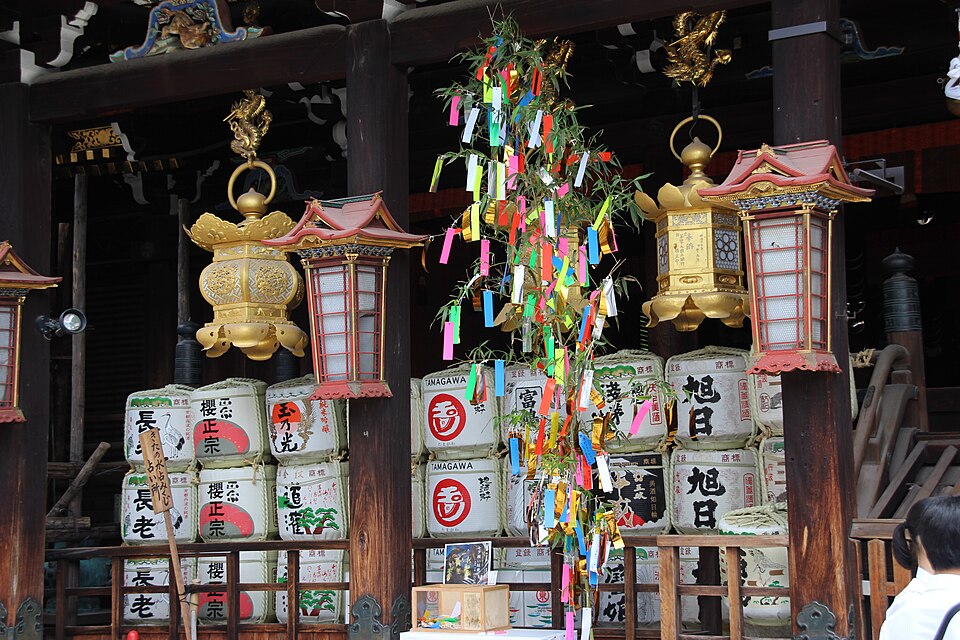
Most notable in the Edo-period Kitano Tenmangu was the establishment of the monthly “Tenjin-ichi” market on the 25th. Since the 25th is both Michizane’s birthday (June 25) and death anniversary (February 25), it became “Tenjin-sama’s Day” with regular market fairs. Vendors selling antiques, used clothing, food, plants, and more lined up, making the market an essential entertainment for Kyoto’s common people. At its peak, over 1,000 stalls operated, rivaling the “Kobo-san” market at Toji as one of Kyoto’s two great monthly markets.
After the Meiji Restoration’s separation of Shinto and Buddhism, Buddhist facilities within the grounds were removed, but Kitano Tenmangu itself was ranked as a Kanpei-chusha, maintaining its status under state patronage. Faith in the God of Learning continued undiminished, and the spread of modern education actually increased the custom of praying for exam success, bringing ever more visitors. Its reputation as a plum viewing destination also solidified, with literary figures visiting to enjoy the blossoms.
5. Modern Era: Sacred Site for Examinees and Cultural Hub
Today’s Kitano Tenmangu welcomes approximately 5 million visitors annually as one of Kyoto’s most prominent shrines, with many facets. The most iconic scene is undoubtedly exam season. From January through March, the grounds bustle with examinees and their families coming to pray for success. Prayer tablets inscribed with “Pass my dream school” are packed densely on the ema racks, reportedly numbering hundreds of thousands annually.
The shrine also focuses on cultural property protection and display. From 2018 to 2023, the first major restoration of the National Treasure shrine buildings in approximately 50 years—the “Reiwa Grand Reconstruction”—was carried out. Following extensive work including re-thatching the cypress bark roof and restoring painted decorations, the buildings have regained their original brilliance. The shrine’s National Treasure “Kitano Tenjin Engi Emaki” (Jokyu version) is a Kamakura-period picture scroll depicting Michizane’s life and the establishment of Tenjin faith, highly valued as a masterpiece of Japanese art history.
Recently, the shrine has also attracted attention as a sacred site for sword enthusiasts. Kitano Tenmangu houses famous swords including “Onikiri-maru (Higekiri),” and special sword-themed exhibitions draw fans from across the country. The monthly Tenjin market on the 25th continues as one of Kyoto’s largest markets with approximately 1,000 stalls, bustling with locals and tourists seeking antiques, used clothing, and Kyoto delicacies. Kitano Tenmangu is a “living shrine” that constantly generates new appeal while preserving over 1,000 years of history.
Highlights and Recommended Spots
Here are the must-see highlights at Kitano Tenmangu. Along with prayers to the God of Learning, savor the beauty of history and nature.
1. National Treasure Shrine Buildings—The Magnificent Architecture of Yatsumune-zukuri
The shrine buildings at the heart of Kitano Tenmangu were rebuilt in 1607 through a donation by Toyotomi Hideyori and are a masterpiece of Momoyama architecture designated as a National Treasure. The unique architectural style called “Yatsumune-zukuri,” integrating the main hall, stone chamber, worship hall, and music hall, is unique to Kitano Tenmangu and is also called “Kitano-zukuri.”
Standing before the worship hall, the richly colored carvings and gorgeous decorations immediately catch the eye. The carvings, representing the pinnacle of Momoyama culture, feature auspicious motifs including dragons, phoenixes, peonies, and lions, with gold leaf and vivid pigments adding splendor. Particularly noteworthy is the exquisite openwork carving on the worship hall’s transoms. The technique of carving three-dimensional sculptures from a single board conveys the exceptional skill of Momoyama-era craftsmen.
The “Ishi-no-ma” (Stone Chamber) connecting the main hall and worship hall is a unique space not found in ordinary shrines. As the name suggests, this space—once paved with stone—was designed as an intermediate realm connecting the divine and human worlds. This structure speaks to the innovative nature of Kitano Tenmangu’s shrine architecture that transcends conventional norms. When visiting, also note the roof shapes—the complex interplay of cypress bark roofs truly lives up to the name “Yatsumune-zukuri.”
2. Plum Garden—1,500 Plum Trees Creating Early Spring Splendor
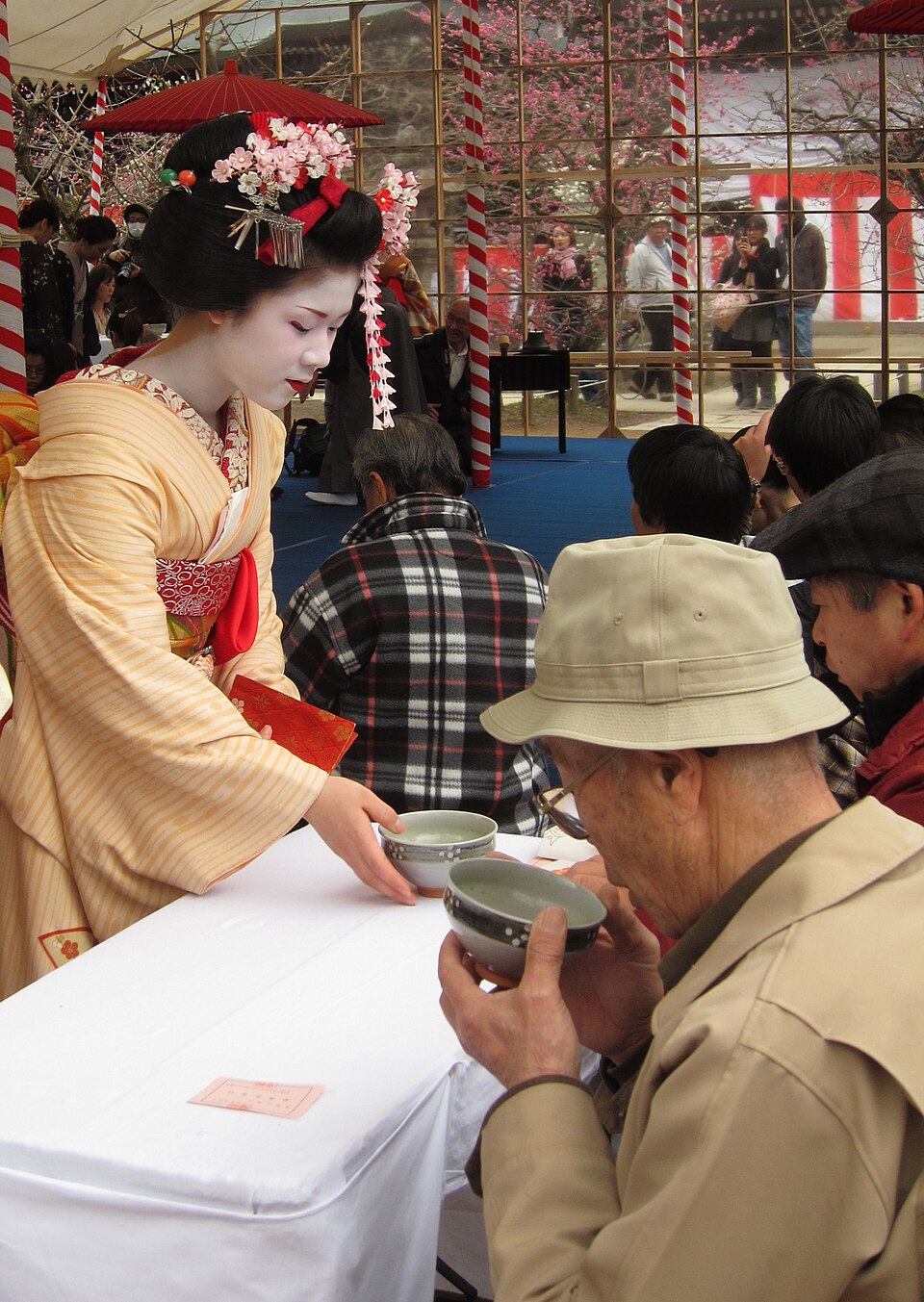
Kitano Tenmangu means plum blossoms. The grounds contain approximately 1,500 plum trees of 50 varieties, and the “Baien” (Plum Garden) opens annually from early February to mid-March. This plum grove, originating from Sugawara no Michizane’s deep love for plums, is widely known as Kyoto’s premier plum blossom destination.
Stepping into the Plum Garden, gradations of pink and white from white plums, red plums, and weeping plums fill your entire field of vision. Particularly stunning are the paths that continue like tunnels of weeping plum. Branches extending overhead with pale pink petals dancing in the breeze is truly a quintessential early-spring Kyoto scene. The garden admission includes tea and confections, offering an elegant moment to rest while viewing the plums.
In homage to the poem Michizane composed when exiled to Dazaifu—”When the east wind blows, let it send your fragrance, oh plum blossoms”—plums are treasured as Kitano Tenmangu’s sacred tree (shrine crest). The sacred tree called “Tobiume” (Flying Plum) before the shrine buildings carries the legend of a plum tree that flew overnight from Dazaifu to Kyoto, yearning for its master. This flying plum is said to bloom earliest each year, and its flowering is reported as news heralding spring’s arrival. Being enveloped in plum fragrance while touching the feelings Michizane held over 1,000 years ago—a luxurious experience unique to Kitano Tenmangu.
3. Momiji-en (Odoi)—Autumn Foliage Adorning Hideyoshi’s Earthwork
The “Odoi” remnants along the Kamiyagawa River on the west side of Kitano Tenmangu are earthwork embankments built by Toyotomi Hideyoshi in 1591 for Kyoto’s defense and flood prevention. Approximately 350 maple trees planted along this earthwork open as the “Momiji-en” (Maple Garden) in autumn.
The Momiji-en foliage peaks from mid-November to early December. Walking paths that take advantage of the Odoi’s elevation changes reveal one tunnel of overhead foliage after another, with breathtaking gradations of red, orange, and yellow. The view from the vermilion “Uguisu-bashi” (Nightingale Bridge) spanning the Kamiyagawa is particularly spectacular, making it a popular photo spot where the babbling stream and colorful foliage create a memorable landscape.
Evening illuminations transform the foliage into a magical display completely different from daytime. Lit-up maple leaves reflected on the Kamiyagawa’s surface create a beauty that takes your breath away. Admission includes tea and confections, allowing for a leisurely autumn moment amid the foliage. That earthworks Hideyoshi built over 400 years ago now deliver the wonder of autumn foliage to modern visitors—a spot that makes you feel the layered depth of history.
4. The Seven Mysteries of Kitano Tenmangu—Enigmas Hidden in the Grounds
Kitano Tenmangu has legends known as the “Seven Mysteries.” These aren’t mere tales but traces of faith and culture accumulated over more than 1,000 years of history. Searching for each one as you explore the grounds makes for an enjoyable experience.
One of the most famous is the “Star-Missing Sanko-mon.” The Sanko-mon (Three Lights Gate) before the shrine buildings was named for its carvings of the sun, moon, and stars. However, the star carving is actually missing—legend has it that the North Star once shone visibly above this gate, so the celestial star itself completed the “three lights.” The “Daikokuten Lantern” is another intriguing mystery. A stone lantern along the approach has a Daikokuten figure carved on its base stone—if you can balance a small pebble on Daikokuten’s mouth without it falling, carrying that stone as a charm is said to bring financial luck.
The “Standing Bull” is also not to be missed. Among the approach’s stone bull statues, one stands rather than lies—based on the legend that the ox pulling Michizane’s funeral cart stopped and refused to move at this spot. Other mysteries include the “Diagonal Main Hall,” “Only Standing Bull,” “Giant Cedar of Tengu Mountain,” and “Rear Shrine,” all explained through guides and shrine pamphlets. Exploring the Seven Mysteries offers intellectual pleasure beyond ordinary sightseeing.
5. Tenjin Market—Kyoto’s Largest Monthly Market on the 25th
The “Tenjin-ichi” market, held on the 25th of every month in and around Kitano Tenmangu, is one of Kyoto’s largest markets with approximately 1,000 stalls. Named for the 25th being both Michizane’s birthday (June 25) and death anniversary (February 25), it is affectionately known as “Tenjin-san” by locals.
The market’s charm lies in its incredible variety. Antiques, vintage clothing, kimono, ceramics, pickles, Kyoto vegetables, takoyaki, yakisoba, mitarashi dango—everything imaginable lines the approach and surrounding streets. Antiques are particularly popular, with dedicated collectors arriving early morning seeking bargains. Vintage kimono are also plentiful, and foreign tourists searching for their perfect piece is a common sight.
The grandest events are January 25th’s “Hatsu Tenjin” (First Tenjin) and December 25th’s “Shimai Tenjin” (Final Tenjin). Hatsu Tenjin, as the year’s first market, features approximately 1,500 stalls amid lingering New Year festivities. Shimai Tenjin, closing out the year, offers New Year goods, sacred rope decorations, and dried persimmons—a quintessential Kyoto year-end tradition. The market runs from about 6 AM until evening, but popular vendors may sell out early, so morning visits are recommended. Experience the locally-rooted, lively market atmosphere quite different from Fushimi Inari Taisha’s approach street.
Nearby Attractions
1. Kinkaku-ji—A World Heritage Site Within Walking Distance
About a 20-minute walk northeast or 5 minutes by bus from Kitano Tenmangu is the World Heritage-listed Kinkaku-ji (Rokuon-ji). Originating from Ashikaga Yoshimitsu’s Kitayama Villa, the gold-leaf Shariden reflected in Kyokochi Pond enjoys enduring popularity as the highlight of Kyoto sightseeing.
Both Kitano Tenmangu and Kinkaku-ji are deeply connected to Muromachi-Momoyama history, and visiting both reveals the layered power and culture of that era’s Kyoto. After praying to the God of Learning at Kitano Tenmangu, the route through Kinukake-no-Michi to Kinkaku-ji is a classic northern Kyoto sightseeing course. During autumn, the luxurious foliage tour combining Kitano Tenmangu’s Momiji-en and Kinkaku-ji’s gardens is especially rewarding.
2. Arashiyama—Savor Western Kyoto’s Natural Beauty
About 20 minutes by Randen streetcar from Kitano Tenmangu, Arashiyama is one of Kyoto’s premier scenic spots, famous for the Togetsukyo Bridge and bamboo grove. The Randen runs directly from Kitano Hakubaicho Station to Arashiyama Station with no transfers, and the charming streetcar ride is itself part of the journey.
The Arashiyama area features attractions including Tenryu-ji (World Heritage) and Nonomiya Shrine, and combining Kitano Tenmangu with Arashiyama creates a plan that distills western Kyoto’s charm. Enjoying Zen gardens at Tenryu-ji, immersing in the bamboo grove’s tranquility, and taking in Arashiyama’s majestic views from Togetsukyo—a natural, harmonious Kyoto beauty quite different from the Kitano Tenmangu experience.
3. Gion—Kyoto’s Traditional Culture Condensed in a Geisha District
About 30 minutes by bus from Kitano Tenmangu, Gion in central Kyoto is the quintessential district of Kyoto’s traditional culture, with machiya townhouses lining the stone-paved streets of Hanamikoji and along the Shirakawa canal. The flower district atmosphere where maiko and geiko pass by offers a special ambiance found only in Kyoto.
After praying to the God of Learning at Kitano Tenmangu, then immersing in Gion’s traditional culture—this course lets you enjoy Kyoto’s “stillness” and “elegance” simultaneously. Around Gion, attractions include Kennin-ji, Yasaka Shrine, and Kiyomizu-dera, and enjoying Kyoto cuisine at Gion’s restaurants and tea houses in the evening is also recommended.
Access
By Train
The most convenient train access is Keifuku Electric Railway Kitano Line (Randen) “Kitano Hakubaicho Station,” about a 5-minute walk. Direct from the Arashiyama direction, you can enjoy the charming streetcar ride. From JR “Enmachi Station,” transfer to Kyoto City Bus for about 10 minutes to “Kitano Tenmangu-mae” bus stop. Also accessible from subway “Imadegawa Station” by city bus in about 10 minutes.
By Bus
From Kyoto Station, take City Bus Route 50 or 101 to “Kitano Tenmangu-mae” bus stop (about 30-40 minutes). From Shijo-Kawaramachi, Route 51 takes about 20 minutes. From Sanjo-Keihan, Route 10 takes about 30 minutes. Buses are the most accessible transport, but delays due to tourist-season traffic are possible, so plan with extra time.
By Car
About 30 minutes from “Kyoto-Minami IC” on the Meishin Expressway. Kitano Tenmangu has free visitor parking (approximately 300 spaces), but it is unavailable or extremely crowded on the 25th (Tenjin Market day), New Year, and plum season. Nearby coin parking is also limited, so public transportation is strongly recommended during busy periods.
Recommended Access Route
The most recommended is the bus from Kyoto Station (Route 50 or 101). The “Kitano Tenmangu-mae” bus stop is right in front of the grounds, so you’ll arrive without getting lost. When combining with Arashiyama, the Randen is convenient. For heading to Kinkaku-ji afterward, City Bus Route 204 provides smooth connections.
Summary
Kitano Tenmangu is the head shrine of approximately 12,000 Tenmangu and Tenjin shrines nationwide, with over 1,000 years of history and culture concentrated here—faith in the God of Learning, National Treasure architecture, approximately 1,500 plum trees and Odoi autumn foliage, and the monthly Tenjin Market on the 25th. The dramatic story of Tenjin faith’s transformation from vengeful spirit to God of Learning is one of the most dramatic in Japanese religious history.
Kitano Tenmangu is ideally positioned as a base for a western Kyoto sightseeing course combined with Kinkaku-ji and Arashiyama. Enveloped in plum fragrance in early spring, dyed in autumn foliage in late fall, alive with the bustle of the Tenjin Market on the 25th—please visit Kitano Tenmangu, where every season brings new discoveries.