Introduction
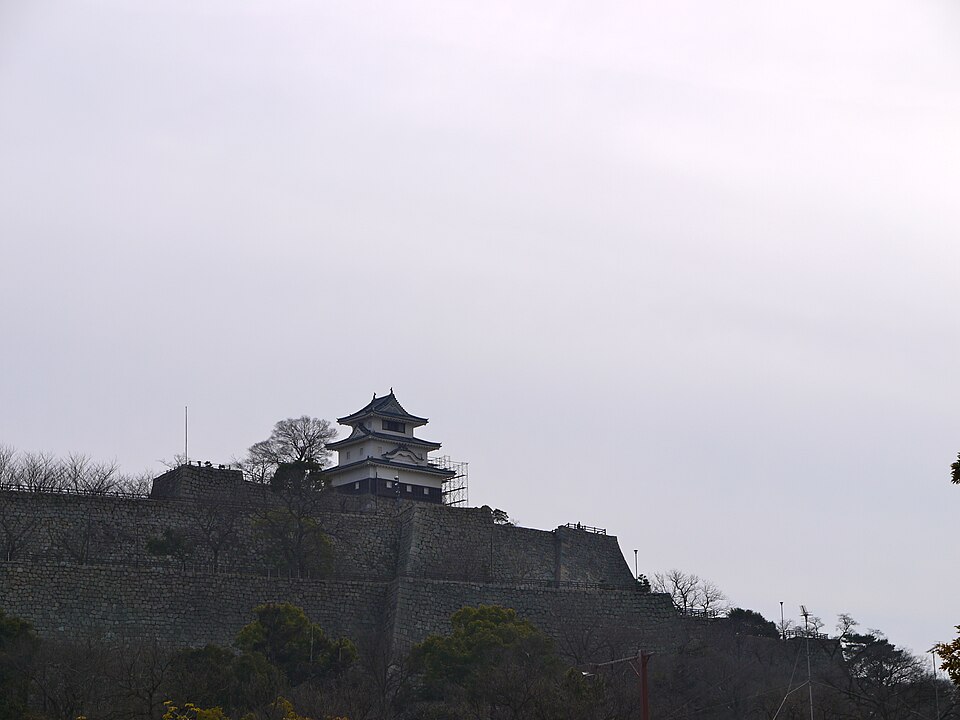
Atop Kameyama, a small hill in Marugame City, Kagawa Prefecture, overlooking the Seto Inland Sea, a white castle tower stands tall and proud. This is Marugame Castle. The moment you step inside the castle grounds, what overwhelms you first is the imposing presence of the massive stone walls towering before your eyes. The rugged surfaces of rough-hewn stones are stacked layer upon layer, reaching a staggering height of 60 meters. No other stone walls among Japan’s castles can rival this height. On clear days, from atop the stone walls you can gaze out over the calm Seto Inland Sea and even spot Awaji Island in the distance, a sight that leaves visitors breathless.
What makes Marugame Castle special goes beyond just the height of its stone walls. After the Meiji Restoration, the Haijo-rei (Castle Abolition Decree) led to the demolition or deterioration of castle structures across Japan, yet Marugame Castle’s tower has survived in its original Edo-period form to this day. Only 12 castles in all of Japan retain their original castle towers, and Marugame Castle is counted among these precious few. Designated as a National Important Cultural Property, the fine details of the buildings bear the weight of nearly 400 years of history.
In this article, we will provide a detailed guide to Marugame Castle, covering its historical background, highlights, surrounding tourist attractions, and access information. We will explore why this castle holds a special place among the “12 Surviving Original Castle Towers,” how Japan’s tallest stone walls were constructed, and how the castle survived the turbulent period of the Bakumatsu era and the Meiji Restoration. We invite you to use this comprehensive guide as a reference before your visit. For anyone planning a trip to Shikoku or Kagawa, Marugame Castle is an unmissable destination. Whether you are a castle enthusiast or simply unfamiliar with Japanese history, the overwhelming grandeur of its stone walls and the stunning views of the Seto Inland Sea are guaranteed to leave a lasting impression.
Overview of Marugame Castle
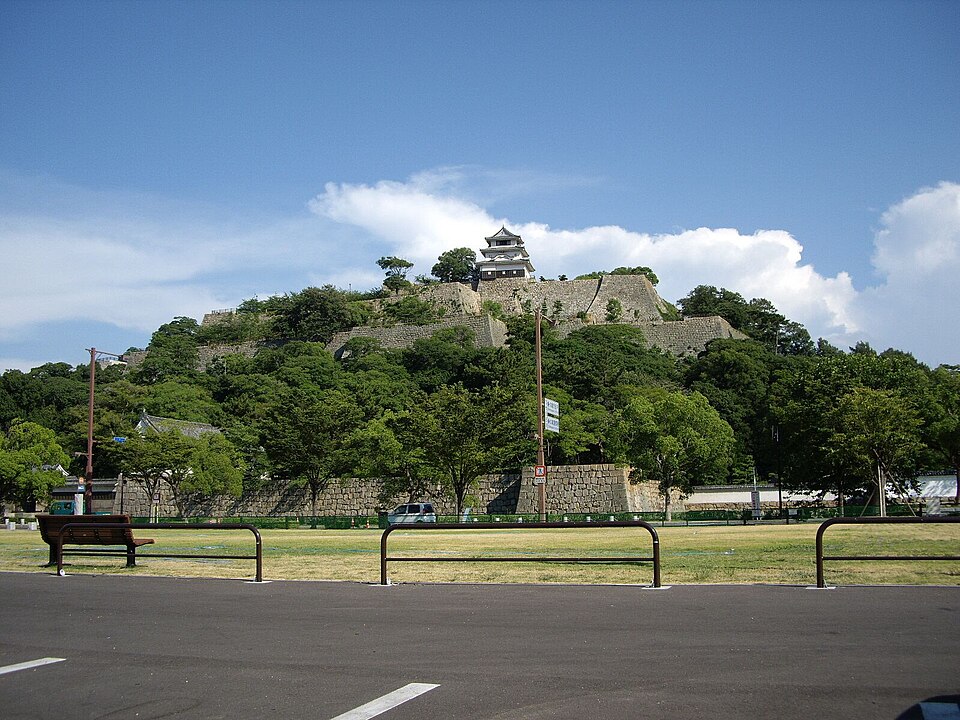
Marugame Castle is located in Ichibanchō, Marugame City, Kagawa Prefecture, and was built on Kameyama, a hill with an elevation of 66 meters. It is classified as a hirayamajiro (hilltop castle on a plain). The castle’s layout originally spanned approximately 540 meters from north to south and 430 meters from east to west, though today only the honmaru (main bailey), ninomaru (second bailey), sannomaru (third bailey), obikuruwa (belt bailey), and yamashita kuruwa (foothill bailey) remain. The total area of the castle grounds is approximately 230,000 square meters, equivalent to roughly five Tokyo Domes.
The most distinctive feature of Marugame Castle is undoubtedly its beautiful stone walls, known as the “fan-shaped slope” (ōgi no kōbai). The stone walls are stacked in four tiers across the honmaru, ninomaru, sannomaru, and obikuruwa, reaching a combined height of approximately 60 meters. This makes them the tallest stone walls of any castle in Japan, earning the title of “Japan’s highest stone walls.” The construction methods used include nozurazumi (rough stone stacking using unprocessed natural stones) and uchikomihagi (stacking with roughly dressed stones), with different techniques reflecting different construction periods.
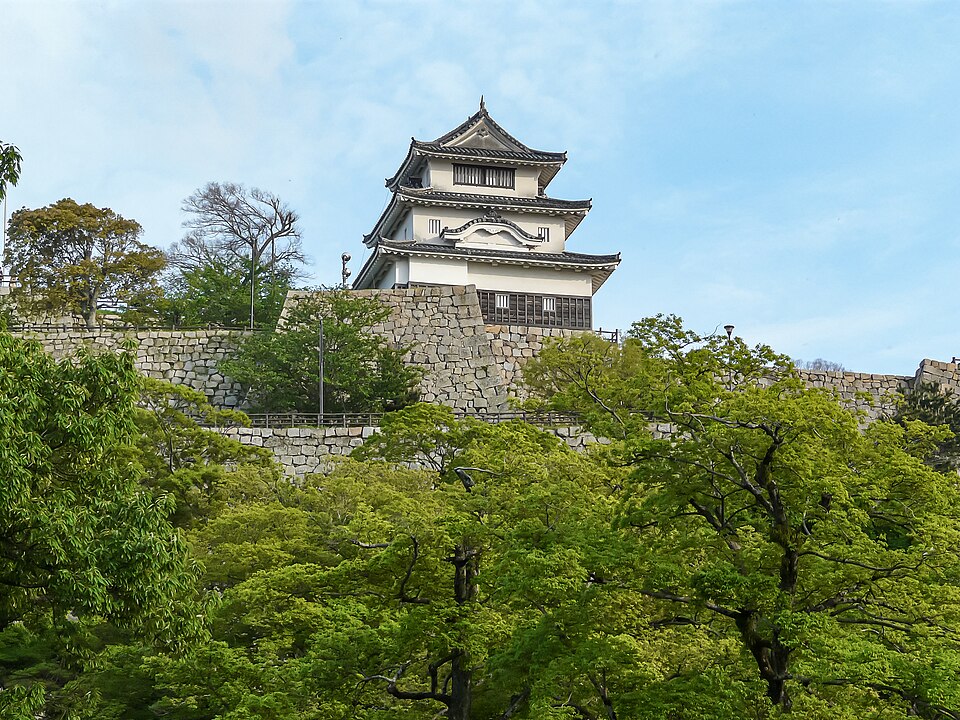
The castle tower is a three-story, three-level sōtō-gata (layered tower type). While it appears to have three tiers from the outside, the interior has three floors. Standing at approximately 15 meters tall, the tower is not particularly large, but since it sits atop the 60-meter stone walls, visitors can actually enjoy views from a height of 75 meters above the surrounding area. The tower is believed to have been built in 1660 (Manji 3), and among surviving castle towers, it is in relatively good condition, preserving the architectural techniques of its era.
| Official Name | Marugame Castle (also known as Kameyama Castle) |
|---|---|
| Location | Ichibanchō, Marugame City, Kagawa Prefecture |
| Castle Type | Hirayamajiro (hilltop castle; renkaku-style layout) |
| Year Built | 1597 (Keichō 2) |
| Tower Construction Year | 1660 (Manji 3) |
| Tower Style | Three-story, three-level layered tower type; independent style |
| Stone Wall Height | Approximately 60 meters (tallest in Japan) |
| Cultural Property Designation | Castle tower & main gate: National Important Cultural Properties |
| Opening Hours | 9:00–18:00 (last tower entry at 17:30) |
| Admission Fee | Adults: 200 yen, Children: 100 yen (tower only) |
| Closed | Open year-round (tower interior closed December 25–31) |
| Phone Number | 0877-22-0331 (Marugame City Tourism Division) |
Marugame Castle is renowned nationwide as one of the “12 Castles with Surviving Original Towers.” Surviving original towers refer to castle towers built during or before the Edo period that have remained standing without being demolished, and only 12 exist throughout Japan. Among these, Marugame Castle is particularly known for the magnificence of its stone walls, making it one of the top destinations in Shikoku for castle enthusiasts. The castle welcomes approximately 200,000 visitors annually and stands as a deeply rooted community landmark representing Kagawa Prefecture’s tourism.
History of Marugame Castle
The Beginning of Construction: Ikoma Chikamasa and the Rule of Sanuki
The history of Marugame Castle dates back to 1597 (Keichō 2). Ikoma Chikamasa, appointed by Toyotomi Hideyoshi as ruler of the Sanuki Province (present-day Kagawa Prefecture), began construction of Marugame Castle as a branch castle on Kameyama in Marugame while maintaining Takamatsu Castle as his main stronghold. Originally from Owari Province, Ikoma Chikamasa served Toyotomi Hideyoshi from a young age and distinguished himself in numerous military campaigns. He participated in major military operations under Hideyoshi, including the Battle of Shizugatake, the Battle of Komaki and Nagakute, and the Kyushu Campaign, earning deep trust as a loyal retainer.
The castle’s design made maximum use of Kameyama’s natural terrain. Although the hill stands at only 66 meters in elevation, its location surrounded by flat plains provided excellent visibility, making it a strategically superior military position. According to tradition, specialized groups of stone wall craftsmen known as ishigakishi from Sanuki were mobilized for the construction. The honmaru stone walls, which employed the cutting-edge uchikomihagi technique of the time, represented the pinnacle of contemporary engineering in both their precision and scale.
However, the construction of Kameyama Castle was no simple undertaking. Since the beginning of Sanuki rule in 1587 (Tenshō 15), the Ikoma clan had been dealing with friction from local warlords, and the castle’s development carried political significance as well. Securing and transporting stone materials required enormous labor, with granite quarried from nearby quarries being hauled by ox carts and manual labor over many years. It is said that the castle took several decades to complete, and it is believed that construction was not fully finished during Ikoma Chikamasa’s lifetime.
The Ikoma clan established a governance system based on a two-castle framework of Takamatsu Castle and Marugame Castle. Marugame Castle served as the center of western Sanuki, playing an important role in both military and administrative functions. Some of the stone walls built during this period can still be observed today, and traces of the early nozurazumi construction remain a valuable resource for modern castle studies.
Prosperity in the Edo Period: The Kyōgoku and Yamazaki Clans
Following the Ikkoku Ichijō Rei (One Province, One Castle Decree) of 1615 (Genna 1), the Ikoma clan was ordered to keep only Takamatsu Castle and abolish Marugame Castle. Subsequently, in 1641 (Kan’ei 18), the Ikoma clan was dispossessed due to internal strife (the Ikoma Incident), and the Sanuki Province was divided. Western Sanuki was granted to Yamazaki Ieji, and Marugame Castle regained its function as a castle. The Yamazaki clan undertook a major renovation of Marugame Castle and pushed forward with the construction of the castle tower. However, the Yamazaki clan died out without an heir in 1660 (Manji 3), and the Marugame Domain dissolved after just one generation. The castle tower, believed to have been completed in this same year, was ironically finished at the very moment the domain ceased to exist.
Following the extinction of the Yamazaki clan in 1660, Kyōgoku Takakazu was appointed to the Marugame Domain. The Kyōgoku family was a distinguished clan that once held great power in Ōmi Province (present-day Shiga Prefecture) and had sided with the Eastern Army (Tokugawa faction) at the Battle of Sekigahara in 1600. Rather than making Takamatsu Castle his seat, Takakazu chose Marugame Castle as his headquarters and devoted efforts to developing both the castle and the surrounding castle town. This decision greatly contributed to the development of Marugame Castle.
Under the rule of Kyōgoku Takakazu, Marugame Castle underwent extensive renovations. Repairs and reinforcement of stone walls, development of the ninomaru and sannomaru, and planned construction of the castle town were carried out. During the Kyōgoku era, the castle town of Marugame was neatly divided into samurai districts, merchant districts, and temple districts, forming an urban structure that became the foundation of modern-day Marugame City. Inner and outer moats were dug on the eastern side of the castle, enhancing its defensive capabilities.
In 1694 (Genroku 7), during the reign of Kyōgoku Takatoyo, the domain was subdivided into the Marugame Domain (main house) and Tadotsu Domain. This reduced the Marugame Domain’s assessed yield to 51,000 koku, but the Kyōgoku family continued as lords of the Marugame Domain until the end of the Edo period. Throughout the Edo period, Marugame Castle functioned as the center of regional politics and economy alongside its castle town. A domain school was established within the castle grounds, promoting education through scholarly governance policies. A distinctive commercial culture also developed in the castle town, with the production of wooden Marugame uchiwa (round fans) beginning in the mid-Edo period and continuing as a local traditional craft to this day.
The Castle Abolition Decree and Hardships After the Meiji Era
The Meiji Restoration brought a period of great trial for Marugame Castle. In 1868 (Meiji 1), the Hanseki Hōkan (Return of Domains) was carried out, and the head of the Kyōgoku family became the governor of the Marugame Domain. Then, with the Haihan Chiken (Abolition of Domains) in 1871 (Meiji 4), the Marugame Domain was dissolved and the castle came under the jurisdiction of the new government. At this point, the castle structures were still preserved, but the castle had lost its political and military significance.
In 1873 (Meiji 6), the government issued the Haijō-rei (Castle Abolition Decree) by Grand Council of State proclamation. This directive called for the abolition and demolition of castles nationwide in principle, and many castles were slated for destruction. Marugame Castle was also targeted for abolition, and at one point the demolition of the castle tower was considered. However, thanks to strong preservation efforts by local residents and former domain retainers, the castle tower and main gate were designated as “preserved structures.” Without this preservation movement, Marugame Castle as we know it today might not exist.
After the Castle Abolition Decree, much of the castle grounds came under the jurisdiction of the Army Ministry and was later used as barracks for the former 12th Infantry Regiment. Military facilities including barracks, warehouses, and a parade ground were constructed within the castle grounds, significantly altering portions of the castle. The castle tower and stone walls were placed under military management, but insufficient maintenance led to progressive deterioration of the buildings. Damage from the elements accumulated, including falling roof tiles and rotting timber.
During the Pacific War, Marugame Castle was also subject to military use. Air-raid shelters were dug within the castle grounds, and the tower is said to have been used as an observation post. After the end of the war in 1945 (Shōwa 20), military use of castle grounds was prohibited under GHQ (General Headquarters of the Supreme Commander for the Allied Powers) occupation, and the castle grounds were gradually returned to the citizens. During this period, Marugame Castle once again faced uncertain survival, but the strong will of the local community to preserve its history helped it overcome this crisis.
Preservation and Restoration Efforts
After the war, Marugame Castle was steadily preserved and maintained through the efforts of its citizens. When the Cultural Properties Protection Act was enacted in 1950 (Shōwa 25), the following year in 1951 (Shōwa 26), Marugame Castle’s tower and main gate were designated as National Important Cultural Properties. This designation made it possible to receive national subsidies for full-scale restoration work, accelerating preservation efforts.
From 1955 (Shōwa 30) to 1966 (Shōwa 41), a complete disassembly and restoration of the castle tower was carried out. This involved removing all deteriorated pillars, beams, and roofing for inspection and repair in a large-scale project. During the work, traces from the original construction and ink inscriptions (bokusho) indicating construction dates were discovered, providing valuable materials for understanding the tower’s architectural history. The disassembly restoration brought the tower close to its original appearance, resulting in the beautiful exterior we can see today.
The stone walls have been subject to ongoing deterioration from years of wind and rain, requiring multiple restoration projects. A particularly concerning issue has been a phenomenon called “haramidashi” (bulging), where the stone walls bulge outward due to internal pressure. This is caused by rainwater infiltrating the interior of the walls, weakening the foundation, and by age-related changes in the stone materials. After the Great Hanshin-Awaji Earthquake of 1995 (Heisei 7), safety assessments of the stone walls were conducted, and partial repair work was carried out.
More recently, a serious stone wall collapse occurred. Following the heavy rains that struck western Japan in 2018 (Heisei 30), a section of the ninomaru western stone wall collapsed in March 2019 (Heisei 31). The collapsed section measured approximately 39 meters in length and up to 14.5 meters in height, a major event. In response, a large-scale stone wall restoration project was launched in collaboration with the Agency for Cultural Affairs, Kagawa Prefecture, and Marugame City. The restoration involves numbering each fallen stone individually for management and returning them to their original positions using the “tsumnaoshi” (re-stacking) method. Full recovery is expected to take more than 10 years. This restoration project has attracted attention from the perspective of preserving stone wall construction techniques, with specialist stone wall restoration technicians participating from across the country.
Marugame Castle Today
Today, Marugame Castle serves as a beloved community gathering place where castle grounds and surrounding parks form a unified recreational area. Approximately 1,000 cherry trees are planted within the castle grounds, making it a popular cherry blossom viewing destination in spring. Evening illuminations are held during certain periods, creating a magical atmosphere. With approximately 200,000 annual visitors, the castle has established itself as a premier tourist attraction representing Shikoku.
In 2006 (Heisei 18), the “Marugame Castle Stone Wall Repair and Development Committee” was established to conduct research and planning for long-term preservation. Restoration work following the 2019 stone wall collapse is still ongoing, and some areas are covered by temporary fencing, but visitors can still enter the castle tower during the construction period. Viewing areas have been set up where visitors can observe the restoration work up close, offering a valuable opportunity to learn about the traditional techniques used in castle restoration.
In 2009 (Heisei 21), the “Summit of 12 Surviving Original Castle Towers” was held in Marugame City, bringing together municipalities that possess all 12 surviving original castle towers. This summit helped promote the “12 Surviving Original Towers” brand to national recognition. Marugame Castle has differentiated itself with the unique character of its magnificent stone walls, becoming a tourist destination beloved not only by castle enthusiasts but also by general visitors. Marugame City is committed to castle-centered community development, with ongoing improvements to the areas surrounding the castle and enhancement of tourist information services.
Since the 2020s, efforts to boost social media presence have also been underway. The castle has gained popularity among younger generations as a photogenic spot, with scenes of the tower and stone walls bathed in sunset light and spring cherry blossom illuminations proving especially popular on social media. Marugame Castle is not merely a historical heritage site but has become an important pillar of Kagawa Prefecture’s modern tourism industry.
Highlights & Recommended Spots
Here is a curated selection of must-see spots when visiting Marugame Castle. From the power of the stone walls to the interior of the surviving castle tower and the grandeur of the main gate, each offers its own unique appeal.
Japan’s Tallest Stone Walls
The number one highlight of Marugame Castle is undoubtedly its “tallest stone walls in Japan.” Stacked in four tiers across the honmaru, ninomaru, sannomaru, and obikuruwa, the combined height of the stone walls reaches approximately 60 meters, making them the tallest stone walls of any castle in Japan. The magnificent view stretching from the base of the stone walls all the way up to the castle tower is so imposing that looking up from below can literally make your neck ache, and nearly every first-time visitor exclaims that it exceeded their expectations.
The most breathtaking vantage point is from near the Ōte Ninomon (second gate guardhouse). Looking up from here, you can see all four tiers of stone walls stretching skyward in front of you. The contrast with the castle tower, appearing small at the summit, makes the enormity of the stone walls all the more striking. It is the ultimate photo spot, where camera-wielding tourists constantly stop to take shot after shot.
Different construction techniques were used on the stone walls depending on the era. The oldest sections feature nozurazumi (rough stone stacking), where unprocessed natural stones are stacked as they are. This method dates from the Ikoma clan era (late 16th to early 17th century) and gives a rustic, powerful impression. In contrast, stone walls from the early Edo period onward feature uchikomihagi (roughly dressed stone stacking) and kirikomihagi (precisely cut and fitted stone stacking with no gaps). Being able to compare these different construction methods is one of the unique pleasures of visiting Marugame Castle’s stone walls.
The stone walls feature a distinctive shape called the “ōgi no kōbai” (fan-shaped slope). This curved form, steep at the base and gradually becoming gentler toward the top, allows the stone walls to achieve both aesthetic beauty and structural strength. This fan-shaped gradient enhances resistance to earthquakes and heavy rain while also serving a defensive function by making it difficult for attacking enemies to scale the walls. The overall form of the stone walls creates a beautiful curve, leading many to consider them a symbol of Japanese castle aesthetics.
While you can enjoy views of the stone walls from anywhere within the castle grounds, here are some particularly recommended spots. From the slope just after passing through the main gate, you can see a magnificent panorama where the sannomaru, ninomaru, and honmaru stone walls overlap. From the sannomaru plaza, you can look up at the honmaru stone walls at close range, feeling their immense scale with your entire body. For capturing the stone walls’ grandeur in photographs, early morning and late afternoon are especially recommended, as the angled light accentuates the shadows and textures of the stones.
The Surviving Original Castle Tower
Marugame Castle’s tower is a three-story, three-level layered tower type (sōtō-gata) built in 1660 (Manji 3). Its exterior features a beautiful contrast between white plaster (shirashikkui) walls and black latticed windows, projecting an elegant and dignified appearance. While compact at approximately 15 meters tall, its position atop the 60-meter stone walls gives it a commanding vantage point of approximately 75 meters above sea level. It ranks among the smallest of the 12 surviving original castle towers, yet its delicate beauty holds its own against any of the others.
Stepping inside the tower, you can sense Edo-period architectural techniques throughout. The steeply angled wooden staircases leading up to the third floor were deliberately made steep for defensive purposes, designed to prevent armed enemies from ascending quickly. The floors on each level are laid with thick timber that, despite nearly 400 years of age, still maintains solid strength with only occasional creaking. Ink inscriptions (bokusho) left by Edo-period carpenters remain on the pillars and beams, holding high academic value as primary sources for castle architectural research.
The view from the top floor (third level) of the castle tower is arguably the highlight of any visit to Marugame Castle. On clear days, you can see the streets and farmland of Marugame City spreading below, the calm blue waters of the Seto Inland Sea beyond, and the silhouettes of Shōdoshima and Awaji Island in the far distance. The grid-pattern streets of the castle town below preserve traces of Edo-period urban planning. The mountains of Shikoku are also visible, and on particularly clear autumn days, you can make out the beautiful form of Sanuki Fuji (Mt. Iinoyama).
Inside the castle tower, exhibits related to the history of Marugame Castle are on display. Brief histories and related materials of the successive castle lords—the Ikoma, Yamazaki, and Kyōgoku clans—are presented, allowing visitors to learn about the castle’s history as they tour. Additionally, since the path to the tower passes through the ruins of the ninomaru, visitors can observe the former castle layout firsthand as they walk. A visit to the castle tower typically takes about 30 to 45 minutes, even during busy periods.
The tower’s exterior shows different expressions depending on the season and time of day. The white tower against a blue sky is most beautiful on clear days, while on cloudy days it takes on the feel of a monochrome painting. During nighttime illuminations, the stone walls and tower float in golden light, creating a fantastical atmosphere completely different from daytime. This is a deeply layered architectural treasure that offers new discoveries no matter when you visit throughout the four seasons.
The Main Gate & Bansho-maru
The Ōtemon (main gate), the front entrance of Marugame Castle, is a historic structure designated alongside the tower as a National Important Cultural Property. Located on the south side of the ninomaru, it features a double structure combining a Kōraimon (Korean-style gate) and a watariyagura-mon (turret gate). The Ōte Ichimon (first gate) and Ōte Nimon (second gate) form an uchi-masugata (inner square enclosure) designed to funnel attacking enemies into a narrow space where they could be attacked from three sides—a highly sophisticated defensive mechanism.
The Ōte Ichimon was built in 1670 (Kanbun 10) in the Kōraimon style with a gabled roof. Its pillars use thick timbers over 40 centimeters in diameter, still projecting a commanding presence today. The Ōte Nimon was built in 1660 (Manji 3) in the two-story watariyagura-mon style. Between the two gates stood a bansho (guardhouse) where domain retainers maintained constant watch. This uchi-masugata configuration represents the culmination of Sengoku-period defensive philosophy and is an essential point of interest for castle enthusiasts.
The slope leading from the main gate is also called “Mikaeri-zaka” (Looking-Back Slope), and turning back while walking creates a beautiful composition of the main gate layered against the stone walls. Stone walls line both sides of the slope, preserving a landscape that evokes the old road to the castle town below. The incline is by no means gentle, and a considerable uphill climb continues all the way to the honmaru. Visitors who are less confident in their stamina are advised to take breaks along the way at the sannomaru plaza.
Bansho-maru is a kuruwa (enclosure) located near the main gate where garrison soldiers once stood guard. Today it has been maintained as a park space and serves as one of the best viewpoints for taking in the full stone walls of Marugame Castle. From here, you can capture the main gate, stone walls, and castle tower all aligned in a single frame, providing the perfect angle to photograph Marugame Castle in all its glory.
Information boards about the castle are installed around the main gate area, offering detailed explanations of the castle’s architectural features and historical background. Whether you are knowledgeable about castle architecture or not, carefully reading these boards while examining the details of the main gate will reveal many discoveries. In particular, the ornamental craftsmanship on the beams and purlins, as well as the patterns on the roof tiles, showcase the exceptional skills of artisans from centuries past.
Sannomaru Plaza (Third Bailey Plaza)
The sannomaru plaza is an expansive flat area that spreads out directly below the honmaru stone walls. It is the largest level ground within the castle and was once the site of the domain’s key facilities. Today it has been maintained as a grassy park and is enjoyed by residents of all ages as a relaxation space. Standing in the sannomaru plaza, the honmaru stone walls loom directly in front of you, and you can feel their overwhelming height with your entire body.
The view of the honmaru stone walls from the sannomaru plaza is one of the most spectacular sights at Marugame Castle. The stone walls of the honmaru section alone stand approximately 22 meters high, and when combined with the ninomaru and sannomaru stone walls, the total height reaches approximately 60 meters. The texture of the granite covering the wall surfaces shows different expressions depending on how the light falls. In the morning, when angled sunlight hits the walls, the bumps and recesses stand out dramatically, adding three-dimensional impact. At dusk, the stone walls are dyed red, creating a special atmosphere.
When spring cherry blossom season arrives, the sannomaru plaza transforms into a famous flower-viewing destination. When the cherry trees lining the perimeter of the plaza burst into bloom simultaneously, the stone walls and tower become visible through a curtain of pale pink blossoms, creating an incomparably beautiful scene. The spot is so popular that visitors stake out flower-viewing spots, and weekends draw large crowds of hanami (cherry blossom viewing) visitors. For local residents, it is an annual tradition, and the cherry blossoms of Marugame Castle are deeply ingrained as a beloved harbinger of spring.
The sannomaru plaza also houses a facility exhibiting materials related to Marugame Castle. Panel displays introducing the castle’s history and exhibits showing the progress of the stone wall restoration project are available, helping visitors deepen their understanding of the castle. A stamp rally point is also set up, making it a popular spot for fans who collect castle stamps.
Since the sannomaru plaza is located along the route to the honmaru, it also serves as an ideal rest stop for adjusting your pace according to your stamina. The plaza has water fountains, and staying hydrated is especially recommended during summer visits. Shops and tea houses are also in operation, where you can enjoy udon noodles and local souvenirs. Whether you are a castle enthusiast or not, the sannomaru plaza is the perfect place for a leisurely visit.

Spring Cherry Blossoms & Nighttime Illuminations
The season when Marugame Castle shines most beautifully is spring, during cherry blossom season. Approximately 1,000 cherry trees are planted within the castle grounds, and at full bloom, the entire castle appears wrapped in a veil of flowers—a spectacular sight. The cherry trees at Marugame Castle are primarily Somei Yoshino varieties, typically reaching peak bloom from late March to early April. Known as one of the premier cherry blossom viewing spots in Kagawa Prefecture, the castle grounds bustle with visitors, especially on weekends during the blossom season.
The landscape created by cherry blossoms, stone walls, and the castle tower together is one of the most stunning views at Marugame Castle. Looking up from the sannomaru plaza, the tower becomes visible through cherry blossoms that frame the stone walls, creating a beauty reminiscent of a traditional folding screen painting. The cherry tree-lined tunnel along the path leading to the ninomaru is another highlight—when petals are falling, they drift down like snow, stopping many visitors in their tracks to gaze in wonder.
Nighttime illumination is another major attraction of Marugame Castle. During cherry blossom season, the “Marugame Castle Cherry Blossom Festival” is held, with illuminations continuing into the evening hours. The illuminated tower is bathed in golden light, radiating a magical glow in the darkness of night. The light hitting the stone walls brings out the texture and relief of the stones, creating a dramatic beauty entirely different from the daytime experience. This period, when you can enjoy both night cherry blossoms and the illuminated tower simultaneously, is arguably the best season to visit Marugame Castle.
Nighttime illuminations are also held during certain periods outside of cherry blossom season. Special events and peak tourism periods may include evening openings, so we recommend checking official information before your visit. The color of the illumination lights may change depending on the season and event, allowing visitors to enjoy a different atmosphere each season.
Autumn at Marugame Castle is equally unmissable. The late autumn view of the white tower against a clear sky is exceptional, and when the trees within the castle grounds turn colors, visitors can enjoy the contrast of autumn foliage, stone walls, and the tower. In winter, the castle viewed through the crisp, clear air has a sharp, austere beauty that makes the stone walls’ dignified expression stand out even more. On rare occasions, Marugame Castle can be seen dusted with snow, a sight that locals speak of as exceptionally beautiful. Marugame Castle is a place with a different face for each of the four seasons—somewhere you will want to visit again and again.
Nearby Tourist Attractions
Kotohira-gū Shrine
Located about a 30-minute drive from Marugame Castle and accessible on foot via the approach from JR Kotohira Station, Kotohira-gū Shrine is one of the largest shrines in Shikoku, welcoming over 3 million worshippers annually from across the country. Affectionately known as “Konpira-san,” the shrine enshrines Ōmononushi-no-kami, the god of maritime navigation, as its principal deity. Situated on the slopes of Mt. Zōzu, the shrine is famous for its stone stairway—785 steps to the main hall and 1,368 steps to the inner shrine.
The stone stairway approach is lined with numerous souvenir shops and restaurants, making the stroll before and after worship equally enjoyable. Famous treats of the approach include Kamiyo-ame (traditional candy) and Kyūman (moxibustion-shaped cakes), well known as souvenirs of a Konpira pilgrimage. Traditional pilgrimage customs, such as the palanquin carriers (kagoya), also survive, giving this spot a depth that goes beyond typical tourism.
The shrine grounds contain many points of interest, including the Asahisha (a National Important Cultural Property), the Ema-den (votive tablet hall), and the Kagura-den (sacred dance hall). We recommend spending half a day to a full day visiting Kotohira-gū along with Marugame Castle. Access from Marugame to Kotohira is convenient at just about 15 minutes on the JR Dosan Line, making it easy to include in a same-day or next-day itinerary with Marugame Castle. We highly recommend visiting both when traveling to Shikoku.
Takamatsu City & Ritsurin Garden
About 30 minutes by train from Marugame, Takamatsu City is home to Ritsurin Garden, renowned as a masterpiece of Japanese garden design. This expansive strolling garden, spanning approximately 750,000 square meters and designated as a Special Place of Scenic Beauty, was developed as a detached villa of the Matsudaira clan of Sanuki during the Edo period. The garden features six ponds and thirteen hills, offering beautiful scenery that changes with each season.
The reason Ritsurin Garden earned its Special Place of Scenic Beauty designation lies in its exceptional level of completion. The view from the Kikugetsu-tei teahouse in particular presents a composition that encapsulates the essence of Japanese garden beauty, attracting many photographers. Each pine tree in the garden has been meticulously pruned by skilled craftsmen, and there are many notable trees with distinctive forms, such as the “root-rising pine.” The garden is also popular with international tourists and has earned three stars in the Michelin Guide, establishing it as a globally recognized tourist destination.
In addition to Ritsurin Garden, Takamatsu City offers the “Takamatsu Seven Temple Pilgrimage” (temples No. 84–87 of the Shikoku 88 Temple Pilgrimage), the Takamatsu Castle ruins (Tamamo Park), and numerous famous Sanuki udon restaurants, making it easy to plan a fulfilling one-night, two-day itinerary combined with Marugame Castle.
Kōchi Castle & Castle Tours in Shikoku
For castle enthusiasts visiting Marugame Castle, we strongly recommend combining your trip with other famous castles in Shikoku. Shikoku is home to three castles with surviving original towers—Marugame Castle, Kōchi Castle, and Uwajima Castle—each with its own distinctive appeal. Bitchū Matsuyama Castle, while located in Okayama Prefecture, is within day-trip range from Shikoku and offers a different experience as a mountain castle with a surviving original tower.
Kōchi Castle is known as the only castle where the entire honmaru building complex has survived intact, with six structures including the tower, honmaru palace, corridor bridge, and main gate designated as National Important Cultural Properties. The journey from Marugame to Kōchi takes about 2 hours by highway bus, making a day trip entirely feasible. A plan to conquer all three surviving original castle towers in Shikoku as part of a nationwide “castle journey” is supported by many castle enthusiasts.
To further enrich your Shikoku castle tour, we also recommend considering famous castles in other regions. For example, Inuyama Castle (Aichi Prefecture) is one of the surviving original towers designated as a National Treasure, offering views along the Kiso River as an added attraction. Many castle enthusiasts set a goal of achieving “complete conquest of all 12 surviving original castle towers,” and among them, Marugame Castle is often cited as one of the most memorable.
Access Information
Marugame Castle can be reached by train, bus, or car. Here is a guide to approximate travel times and methods from major departure points.
- By Train: Get off at “Marugame Station” on the JR Yosan Line, then walk approximately 10 minutes. From Takamatsu Station, it takes about 25 minutes on the JR Yosan Line rapid service; from Matsuyama Station, about 1 hour 20 minutes by limited express. From Okayama Station, it takes about 1 hour on the JR Seto-Ōhashi Line and Yosan Line (transfer from Marine Liner). From the Osaka/Kobe area, taking the Shinkansen to Okayama and then transferring is the most convenient option.
- By Bus: From Takamatsu Airport, take the connecting bus to central Takamatsu, then transfer to JR to reach Marugame Station. Highway buses also operate from major cities including Osaka and Tokyo, with some routes stopping near the Marugame Interchange.
- By Car: Via the Kobe-Awaji-Naruto Expressway and Takamatsu Expressway, it takes approximately 1.5 to 2 hours from Kobe. Exit at “Marugame IC” or “Zentsuji IC” and drive about 10–15 minutes to the city center. Several municipal and private parking lots are available near the castle.
- By Air: The nearest airport is Takamatsu Airport, approximately 1 hour 10 minutes by flight from Tokyo (Haneda). From the airport to Marugame, it takes about 60–70 minutes by limousine bus or connecting bus plus JR.
Since Marugame Castle is within walking distance of Marugame Station, train access is the most convenient option. Exiting the station and heading north, you will soon see the castle’s stone walls. It takes about 10 minutes on foot to reach the main gate, but from the main gate to the honmaru, steep slopes continue, so we recommend wearing comfortable walking shoes. Additionally, since ascending to the castle tower takes 15 to 30 minutes, be sure to allow plenty of time in your schedule.
Parking options near Marugame Castle include the “Marugame Castle Sannomaru Parking Lot” and “Marugame City Civic Hall Parking Lot,” among others. Parking lots can become crowded on weekends during cherry blossom season and holiday periods, so using public transportation is a wise choice. Bicycle rental services are also available near Marugame Station, making cycling between the castle and surrounding spots an enjoyable option.
Summary
Marugame Castle is a historic castle representing Shikoku that combines two great attractions: Japan’s tallest stone walls (approximately 60 meters) and a surviving original castle tower. With a history spanning over 400 years since Ikoma Chikamasa began construction in 1597, it has endured numerous hardships including the Castle Abolition Decree and stone wall collapses to survive to the present day. The grandeur of its stone walls is unparalleled among Japan’s castles, leaving an unforgettable impression on all who see them.
The surrounding area offers excellent tourist attractions representative of Kagawa, including Kotohira-gū Shrine and Ritsurin Garden. A one-night, two-day itinerary centered on Marugame Castle allows for a fulfilling Shikoku trip. We also recommend planning a “castle tour” that includes other surviving original towers in Shikoku (Kōchi Castle and Uwajima Castle) as well as nearby Bitchū Matsuyama Castle and Inuyama Castle.
Whether you are interested in Japanese castle culture, want to enjoy the beautiful scenery of the Seto Inland Sea, or simply wish to experience the overwhelming power of these stone walls, Marugame Castle will deliver an experience that far exceeds your expectations. We encourage you to consider a visit to Marugame Castle on your next trip to Kagawa and Shikoku. A special experience awaits you, one that will help you rediscover the depth and richness of Japanese castles. For those also interested in traditional Japanese accommodation, please refer to our ryokan guide as well.