Introduction
The moment you sink into a hot spring and feel the warmth envelop your body, the cares of daily life seem to dissolve. That sensation has been soothing the Japanese body and soul for thousands of years. Japan, one of the world’s most volcanically active countries, has roughly 27,000 hot spring sources. According to the Ministry of the Environment, approximately 120 million visits are made to hot springs annually — a figure that earns Japan the title of “onsen nation.”
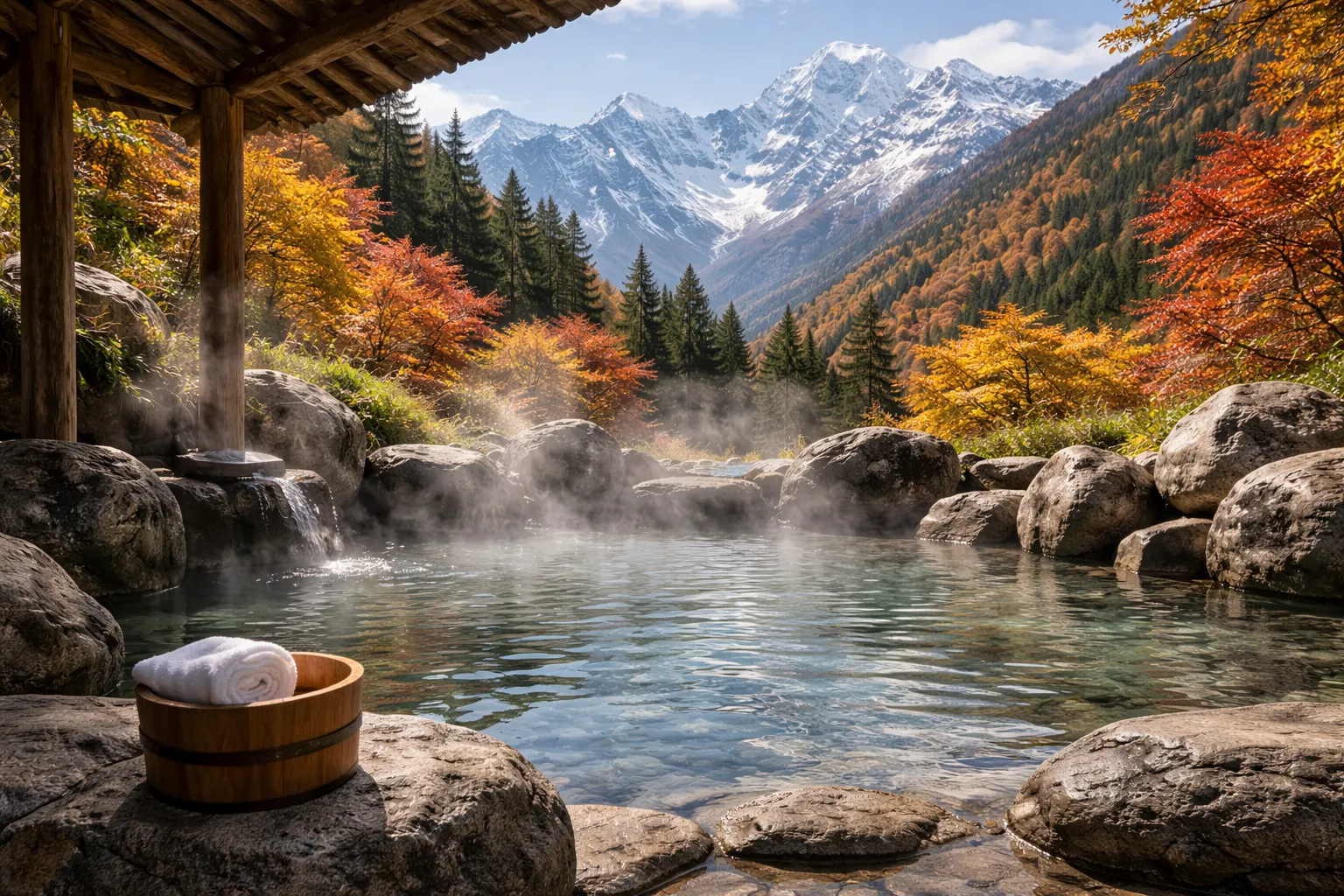
Onsen is far more than a bathing facility. It is a comprehensive culture deeply intertwined with Japanese history, medicine, hospitality, and tourism. This article covers what onsen is, its mineral classifications and health benefits, its history stretching back to ancient mythology, and three must-visit hot spring destinations.
What is Onsen?
Under Japan’s Hot Spring Law, a source qualifies as “onsen” if its water temperature is at least 25°C at the point of emergence, or if it contains a specified minimum concentration of any one of 19 designated minerals — including lithium, sulfur, and radon. This means even cold water can legally be “onsen” if it contains the right minerals.
Onsen waters are classified into roughly ten types based on chemical composition. Each type has distinct color, scent, texture, and therapeutic properties. Simple thermal springs are gentle and suitable for sensitive skin. Chloride springs retain heat well, keeping the body warm long after bathing. Bicarbonate springs are nicknamed “beauty baths” for their skin-smoothing effect. Sulfur springs, with their distinctive egg-like smell, are known for antibacterial properties. Acid springs have strong sterilizing power. Each type offers a different experience, making onsen exploration endlessly rewarding.
The health benefits of onsen go beyond mineral absorption. Warm water promotes blood circulation, hydrostatic pressure provides a gentle massage effect, buoyancy relieves strain on joints, and the simple act of leaving daily life behind delivers a psychological reset known as “tenchi effect.” The traditional practice of “toji” — staying at an onsen for one to three weeks to treat chronic ailments — has been studied in modern balneology and shown to benefit conditions such as rheumatoid arthritis, chronic pain, and atopic dermatitis.
History of Onsen
Ancient: Mythology and the Beginnings of Bathing
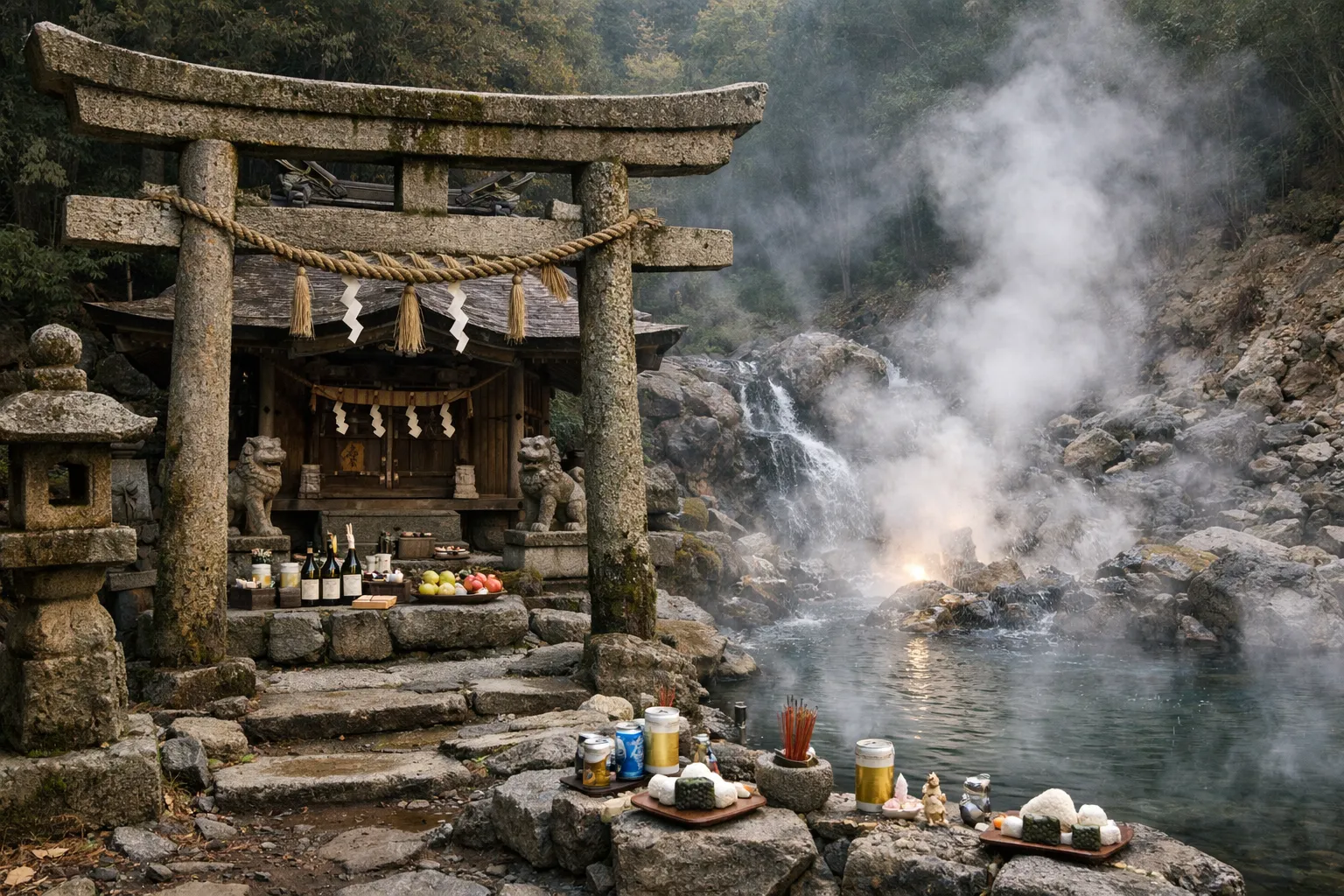
Onsen appears in Japan’s oldest texts. The Kojiki and Nihon Shoki contain accounts of gods healing wounds in hot springs. Dogo Onsen (Ehime Prefecture), mentioned in the Nihon Shoki, claims a history of some 3,000 years and is considered one of Japan’s oldest hot springs. Prince Shotoku is said to have bathed there. Arima Onsen (Hyogo Prefecture) records an imperial visit in the Nihon Shoki as well. In an era before scientific understanding, people revered onsen as divine blessings, building shrines where hot water emerged.
Medieval: Warriors and the Rise of Toji
From the Kamakura through Muromachi periods, Buddhist influence elevated bathing as a purifying ritual, and temples began managing onsen facilities. During the Sengoku era, warlords actively used onsen to heal battle wounds. Takeda Shingen famously maintained secret hot springs — “Shingen no Kakushi-yu” — including Shimobe Onsen and Masutomi Onsen in Yamanashi Prefecture, to treat his injured soldiers. The concept of “toji” crystallized during this period, with a standard treatment cycle of 21 days.
Edo Period: Onsen Culture Blossoms Among the People
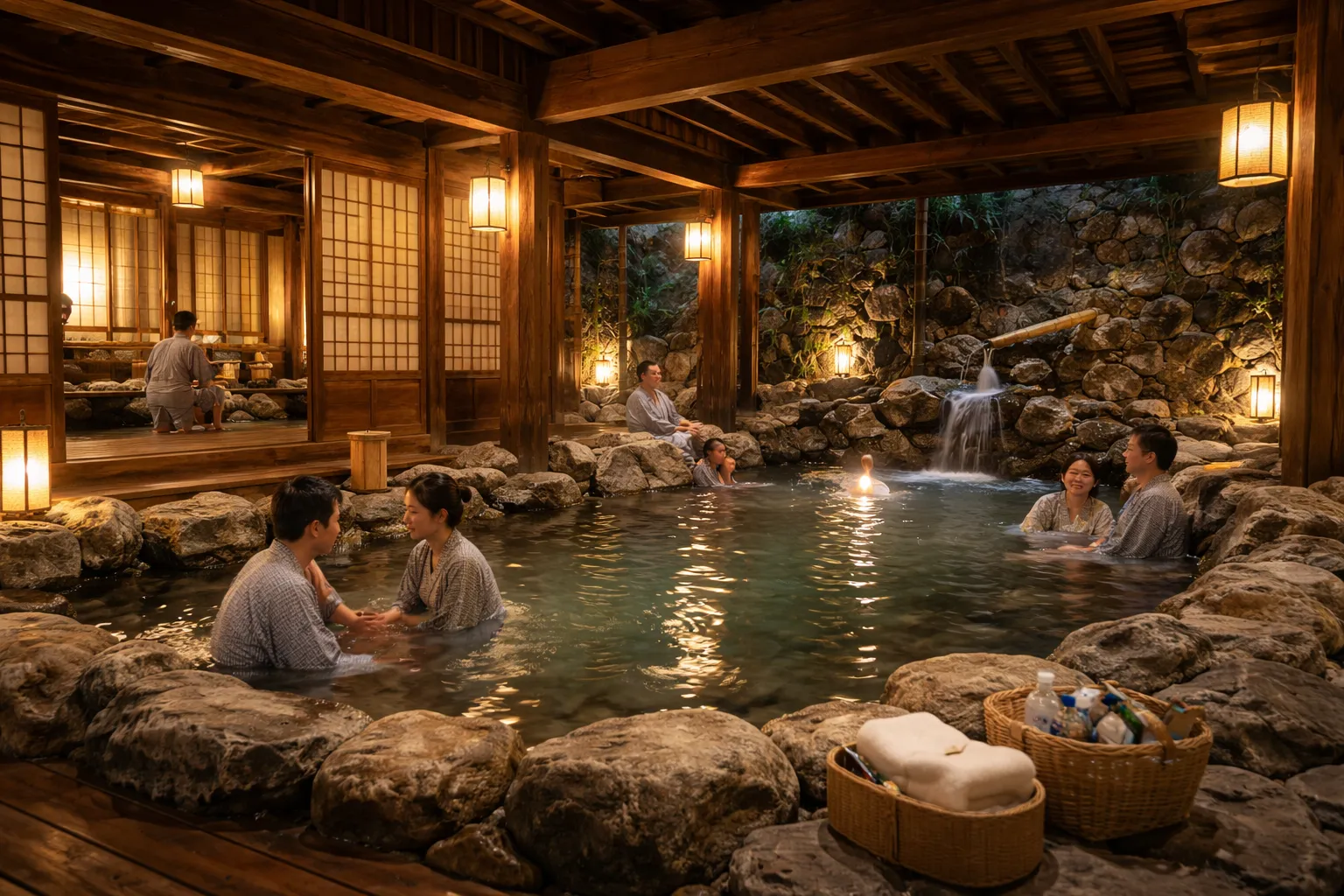
Under the Tokugawa peace, onsen transformed from a privilege of warriors and clergy into a pleasure accessible to ordinary citizens. Guidebooks ranking hot spring destinations became popular, and onsen towns developed with inns, teahouses, and entertainment. Kusatsu Onsen and Arima Onsen emerged as top-ranked springs in the “Onsen Rankings” of the era, a reputation they maintain to this day.
Modern: Science and Mass Tourism
After the Meiji Restoration, the government promoted scientific analysis of onsen waters. The Hot Spring Law, first enacted in 1948, defined onsen standards and therapeutic indications. Rail networks made onsen towns accessible to city dwellers, fueling the growth of mass tourism. Today, onsen ranges from luxury ryokan with private outdoor baths to casual day-trip facilities and free public foot baths along onsen town streets.
Today: Diverse Ways to Enjoy Onsen
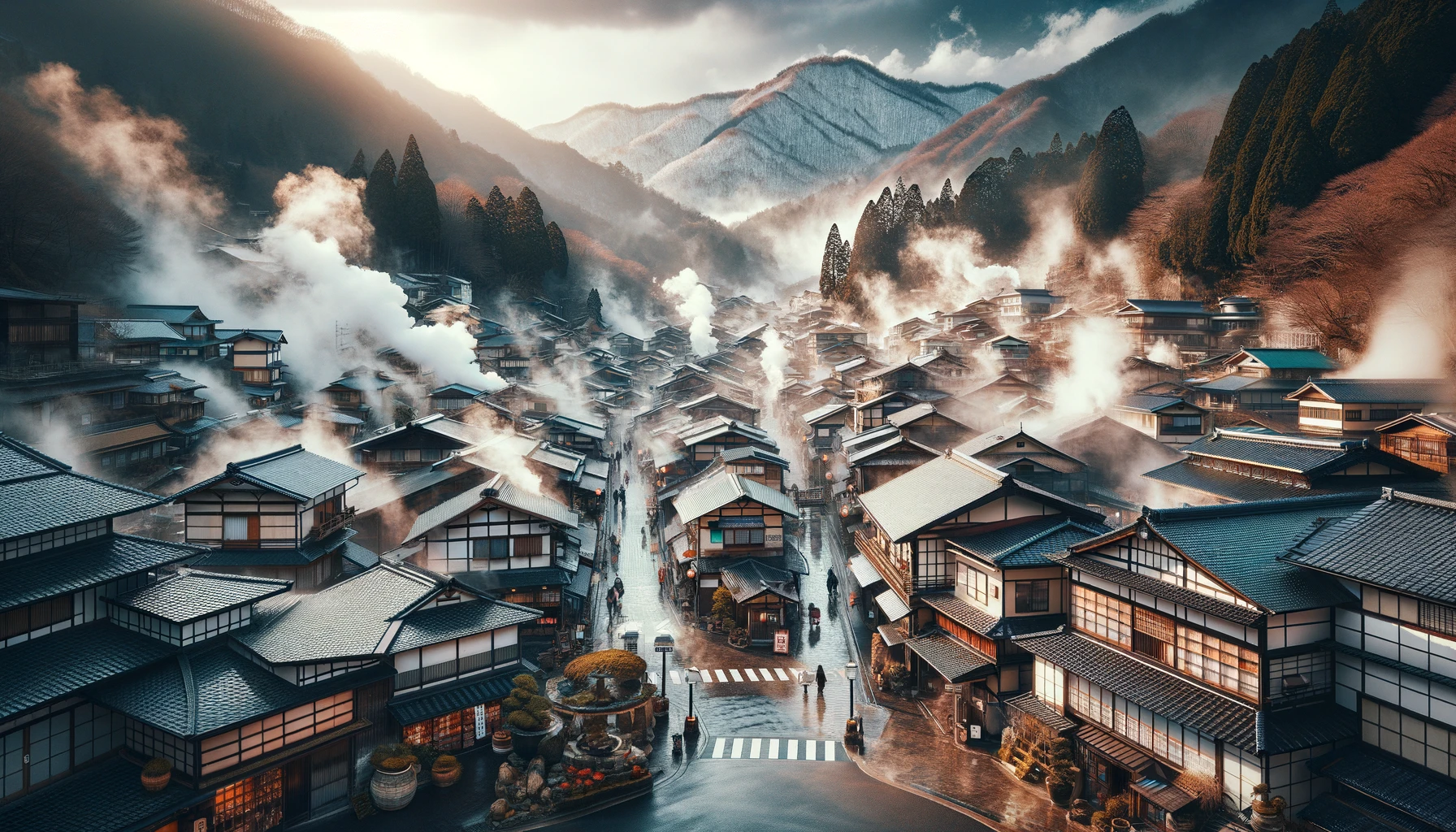
Contemporary onsen culture embraces extraordinary diversity: rotenburo (outdoor baths) with mountain or ocean views, sand baths in Ibusuki (Kagoshima), steam baths in Beppu, and even onsen theme parks. Tattoo-friendly onsen and private reservation baths have expanded access for international visitors. Onsen remains, as it has been for millennia, a uniquely Japanese way to restore body and spirit.
Three Must-Visit Onsen Destinations
1. Hakone Onsen (Kanagawa) — Tokyo’s Nearest Hot Spring Paradise
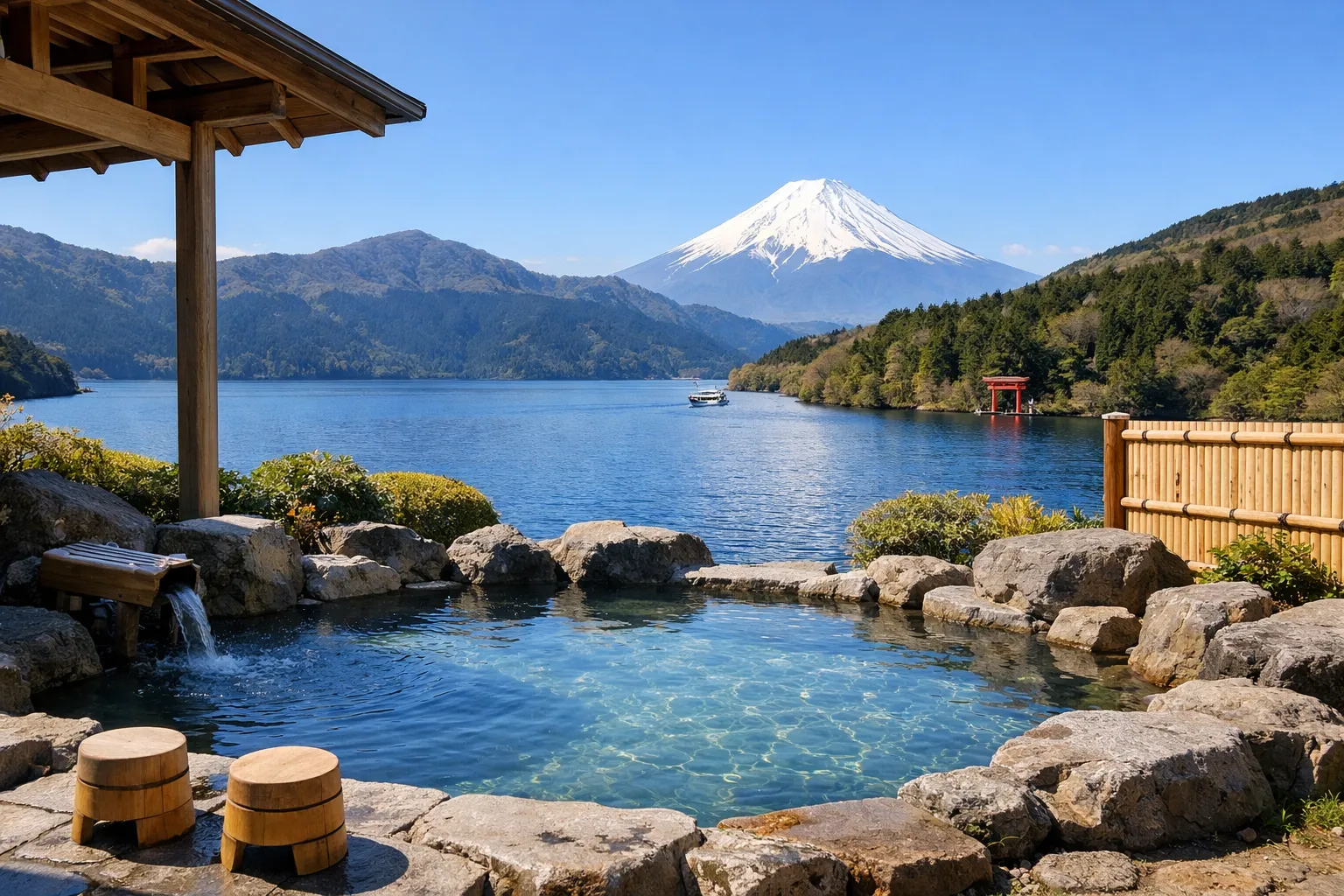
Just 90 minutes from central Tokyo, Hakone offers over 20 distinct hot spring areas with diverse mineral compositions. From luxurious ryokan in Gora to the volcanic landscape of Owakudani, Hakone combines onsen with art museums, scenic Lake Ashi cruises, and views of Mount Fuji. Its proximity to Tokyo makes it Japan’s most accessible major onsen destination.
2. Beppu Onsen (Oita) — Japan’s Hot Spring Capital
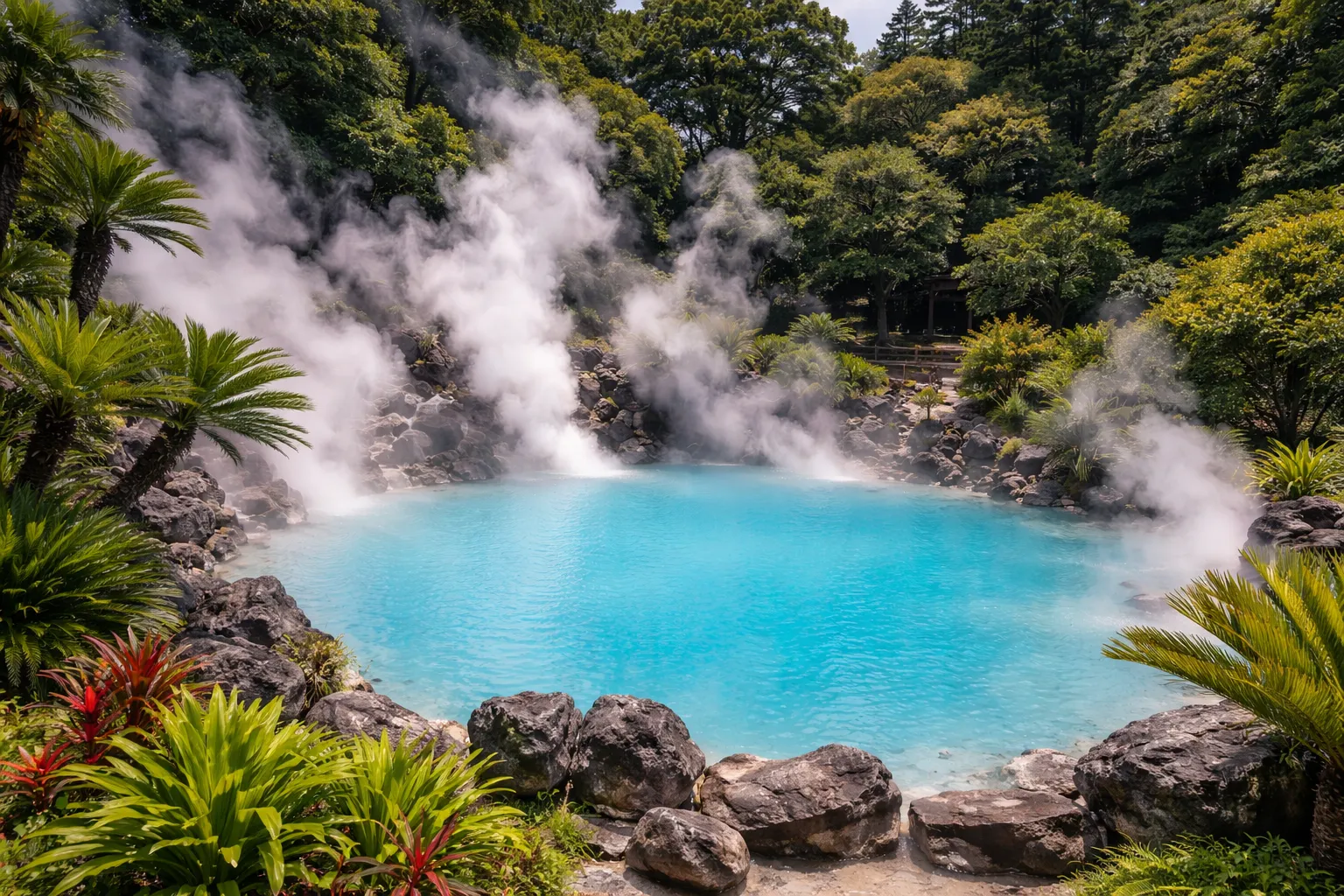
Beppu produces more hot spring water than any other city in Japan, with eight distinct onsen districts known as the “Beppu Hatto.” The variety is extraordinary: sulfur springs, iron springs, mud baths, sand baths, and steam baths. The “Jigoku Meguri” (Hell Tour) showcases Beppu’s geothermal power through a series of dramatic, vividly colored hot spring pools — including the cobalt blue “Umi Jigoku” and the blood-red “Chinoike Jigoku.”
3. Kusatsu Onsen (Gunma) — One of Japan’s Three Great Springs
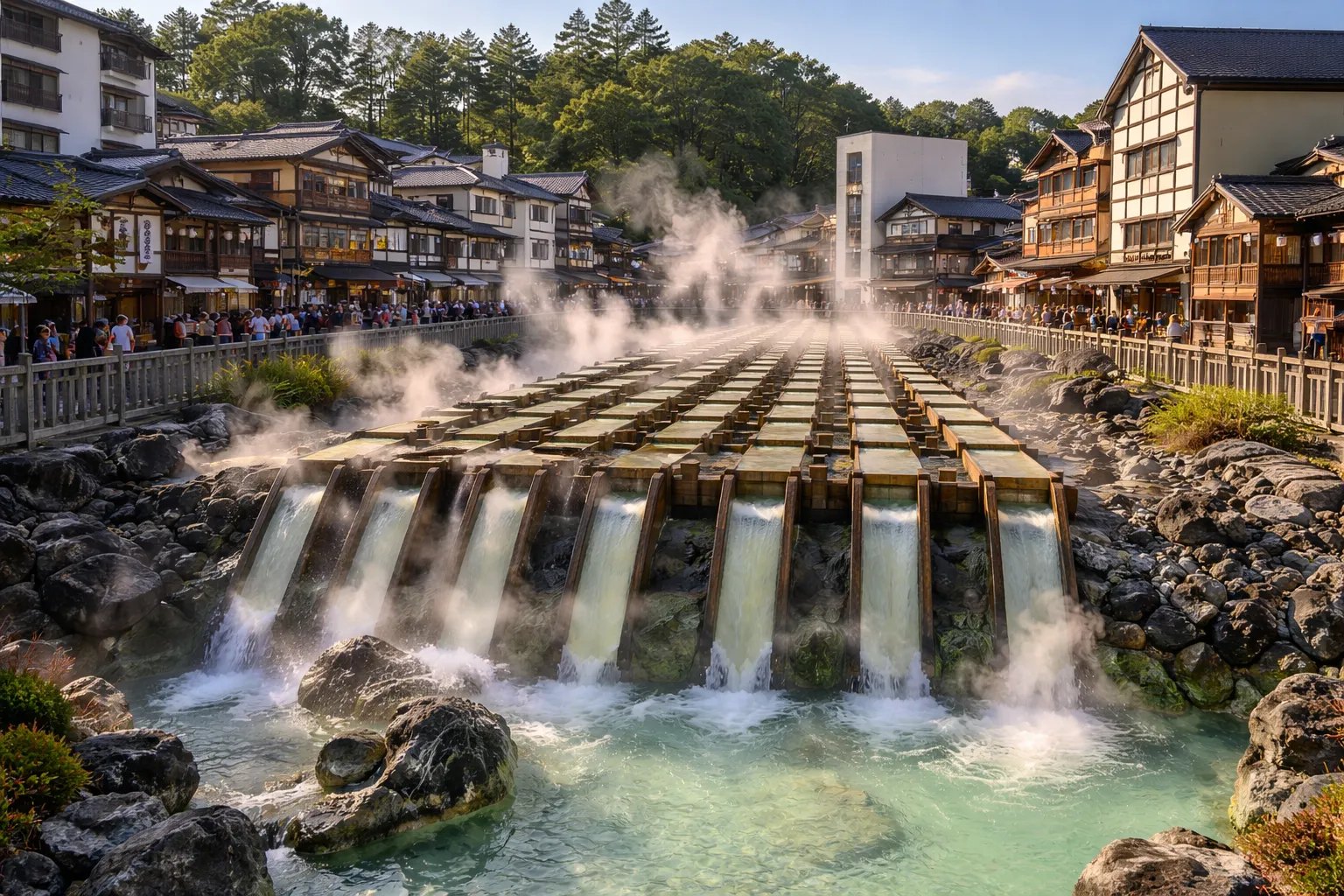
Kusatsu is famed for its strongly acidic, sulfur-rich waters with a pH of around 2.1, powerful enough to dissolve iron nails. At the town center, the Yubatake (hot water field) channels boiling spring water through wooden conduits to cool it for bathing — a mesmerizing sight of steam and mineral deposits. The traditional “Yumomi” performance, in which women in colorful kimono stir the hot water with large wooden paddles, is a Kusatsu icon.
Summary
Onsen is woven into the very fabric of Japanese life — from the mythology of the Kojiki to the warrior’s toji, from the Edo-era pleasure trip to today’s snow-viewing rotenburo. With roughly 27,000 sources and ten distinct mineral types, no two onsen are alike. Whether you soak in Hakone with Mount Fuji on the horizon, explore Beppu’s otherworldly “hells,” or experience Kusatsu’s ancient Yumomi ritual, onsen offers a uniquely Japanese path to physical and spiritual renewal.