🕓 2025/5/11
#Sightseeing
Arashiyama Bamboo Grove: A Detailed Guide to Its History and Overview
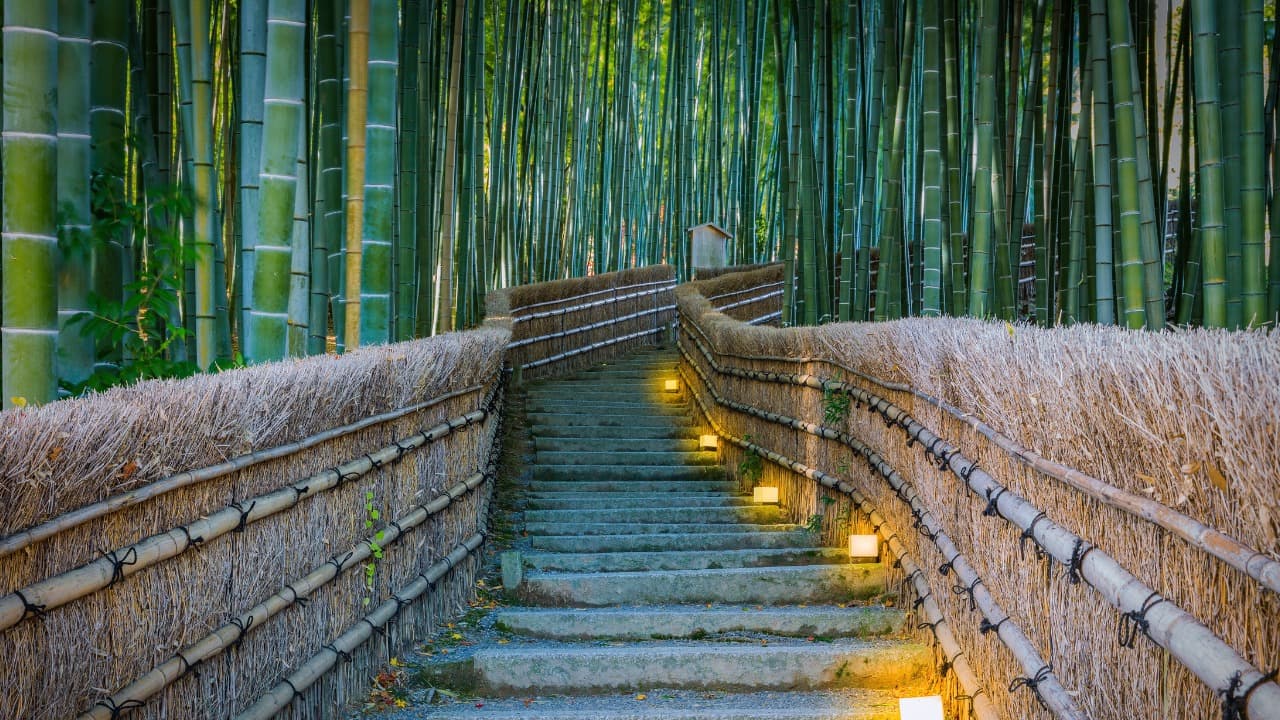
Table of Contents
- What Is the Arashiyama Bamboo Grove?
- History of the Arashiyama Bamboo Grove
- How to Enjoy the Arashiyama Bamboo Grove
Introduction
Togetsukyo Bridge, a symbol of Kyoto’s Arashiyama area, captivates many tourists with its elegant scenery and deep history. Around this bridge and its surroundings, you will find spots where natural beauty, history, and culture blend together, offering visitors a wide variety of pleasures.
In this article, we introduce the overview and history of Togetsukyo Bridge itself, as well as the must-see highlights in the surrounding area. Please immerse yourself in the charms of the Arashiyama area, which reveals different expressions with each season.
Arashiyama What Is the Bamboo Grove?
The Bamboo Grove Path (Chikurin no Komichi) is an approximately 400-meter-long walking trail located in the Sagano-Arashiyama area of Ukyo Ward, Kyoto, and is one of Kyoto’s most iconic tourist attractions. The path extends from Nonomiya Shrine through the north gate of Tenryu-ji Temple to Okochi Sanso Garden, with well-maintained bamboo groves spreading out on both sides.
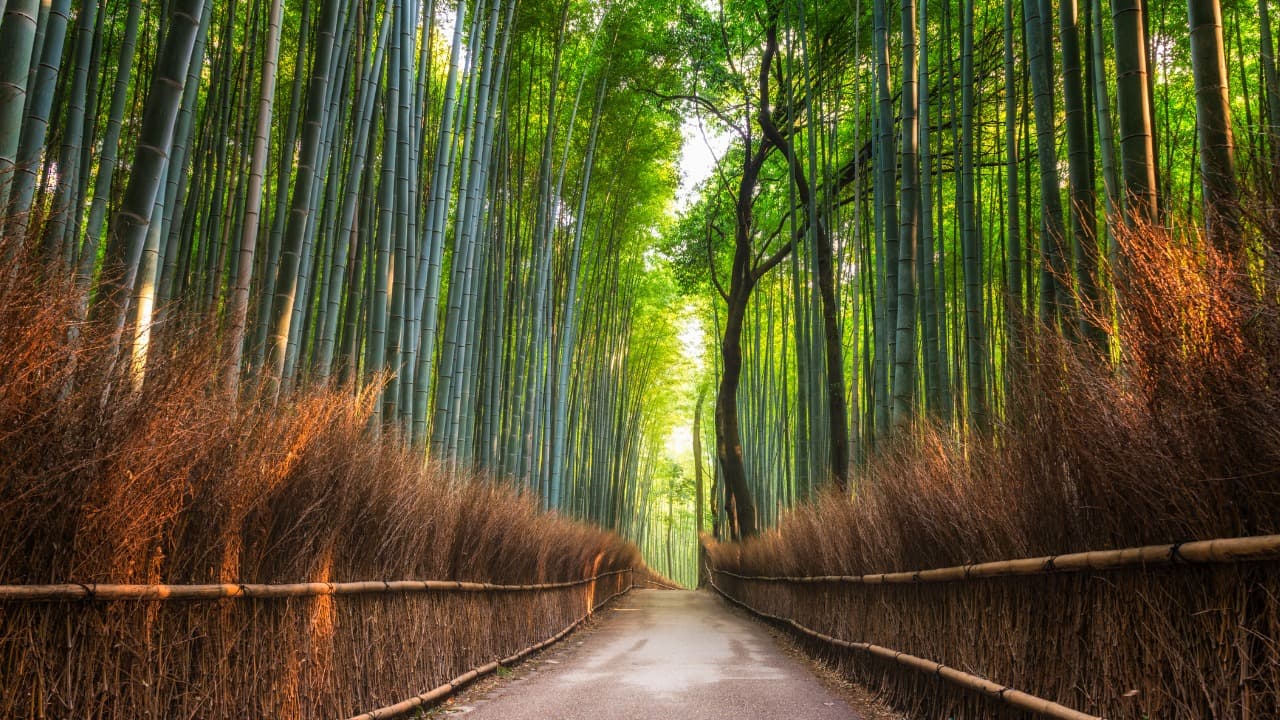
During the Heian period, this area was reportedly used as a villa retreat for aristocrats. Today, it is a spot where visitors can enjoy scenic beauty across all four seasons. On sunny days, the sunlight filtering through the bamboo creates a beautiful and enchanting atmosphere. Illumination events are also sometimes held in the evening, offering a different charm from daytime visits.
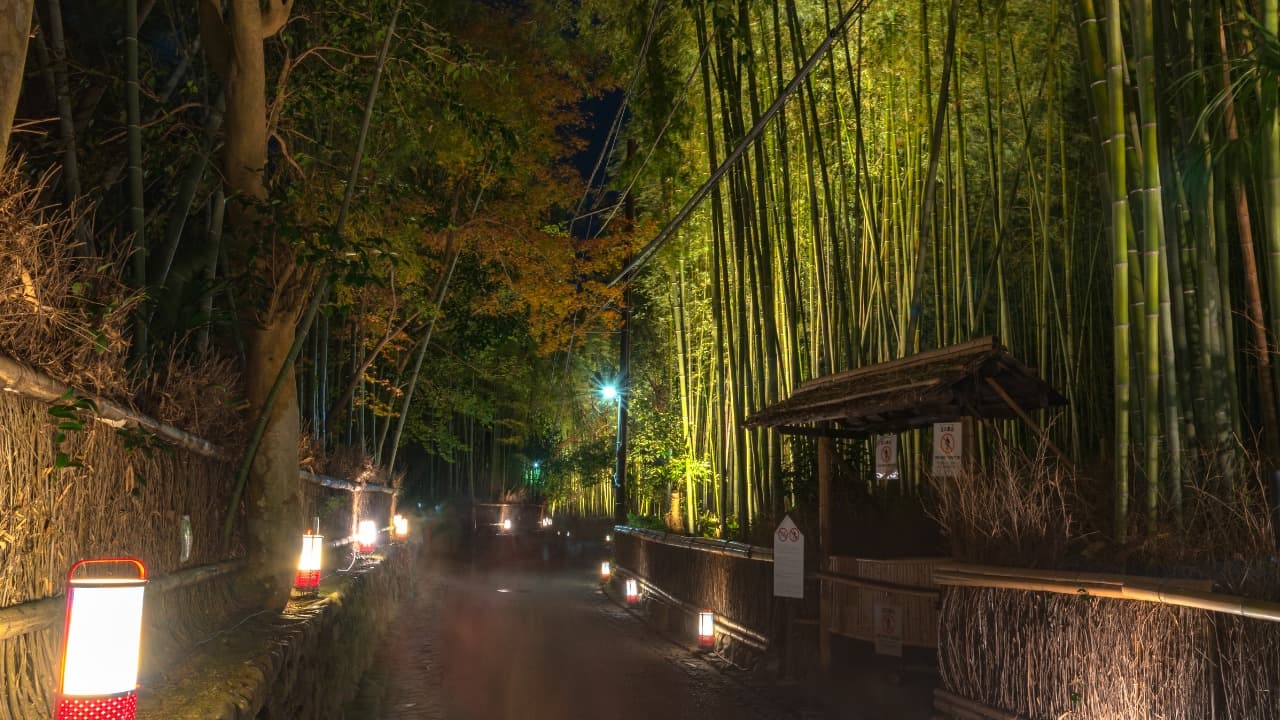
The Bamboo Grove Path can be enjoyed on foot, or you can take a rickshaw ride to savor the elegant atmosphere. Nearby, tourist spots such as the World Heritage Site Tenryu-ji Temple and the historic Nonomiya Shrine are scattered throughout the area, and visiting them together allows for an even more enriching experience. Access is excellent, as the path is within walking distance from JR Saga-Arashiyama Station and Randen Arashiyama Station.
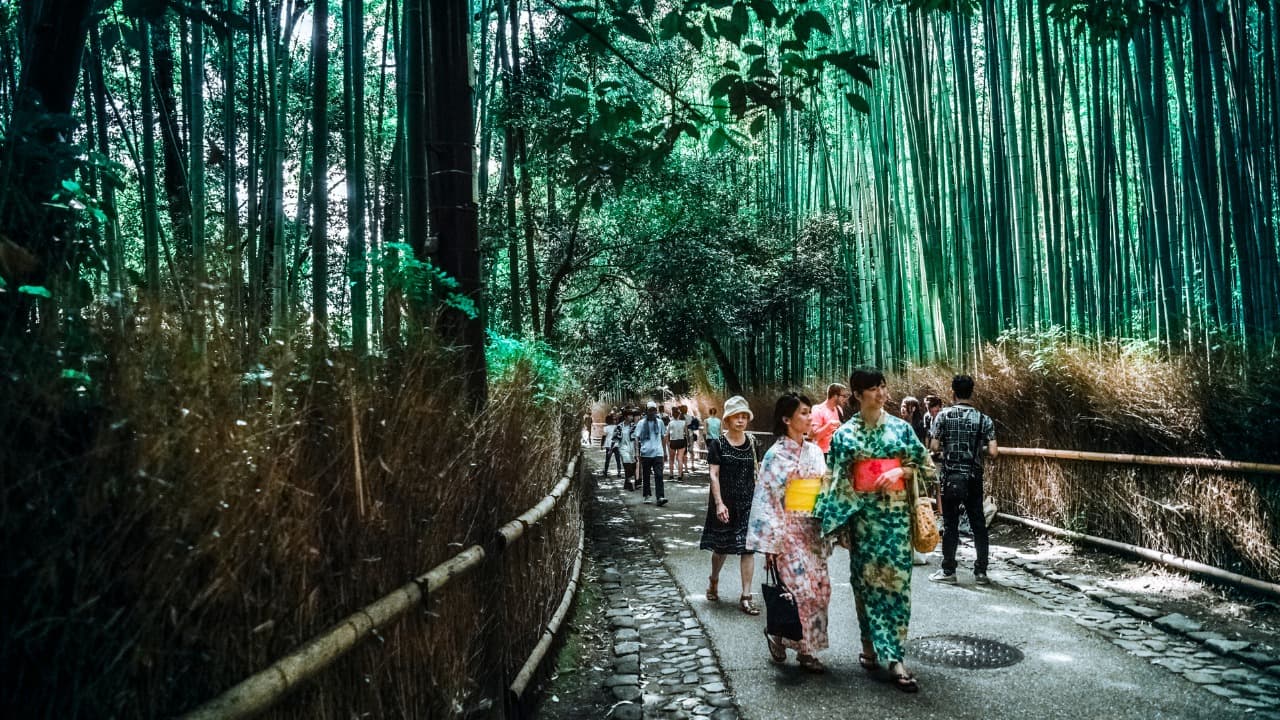
The Bamboo Grove Path shows different expressions depending on the season and time of day, so there are always new discoveries no matter how many times you visit. Visiting early in the morning or in the evening when there are fewer people allows you to feel the beauty of the bamboo grove even more deeply in a tranquil atmosphere. Additionally, bicycle rental and kimono rental services are available nearby, so you can enjoy strolling in kimono or cycling through the area.
Arashiyama History of the Bamboo Grove
The Bamboo Grove Path is an approximately 400-meter-long promenade located in Sagano, Ukyo Ward, Kyoto, known for the beautiful scenery created by bamboo groves on both sides. Although there are few clear records regarding its history and many details remain unknown, the following is a detailed chronological explanation of the major events.
1. Heian Period (794-1185): Development as an Aristocratic Villa Area
 *Illustration
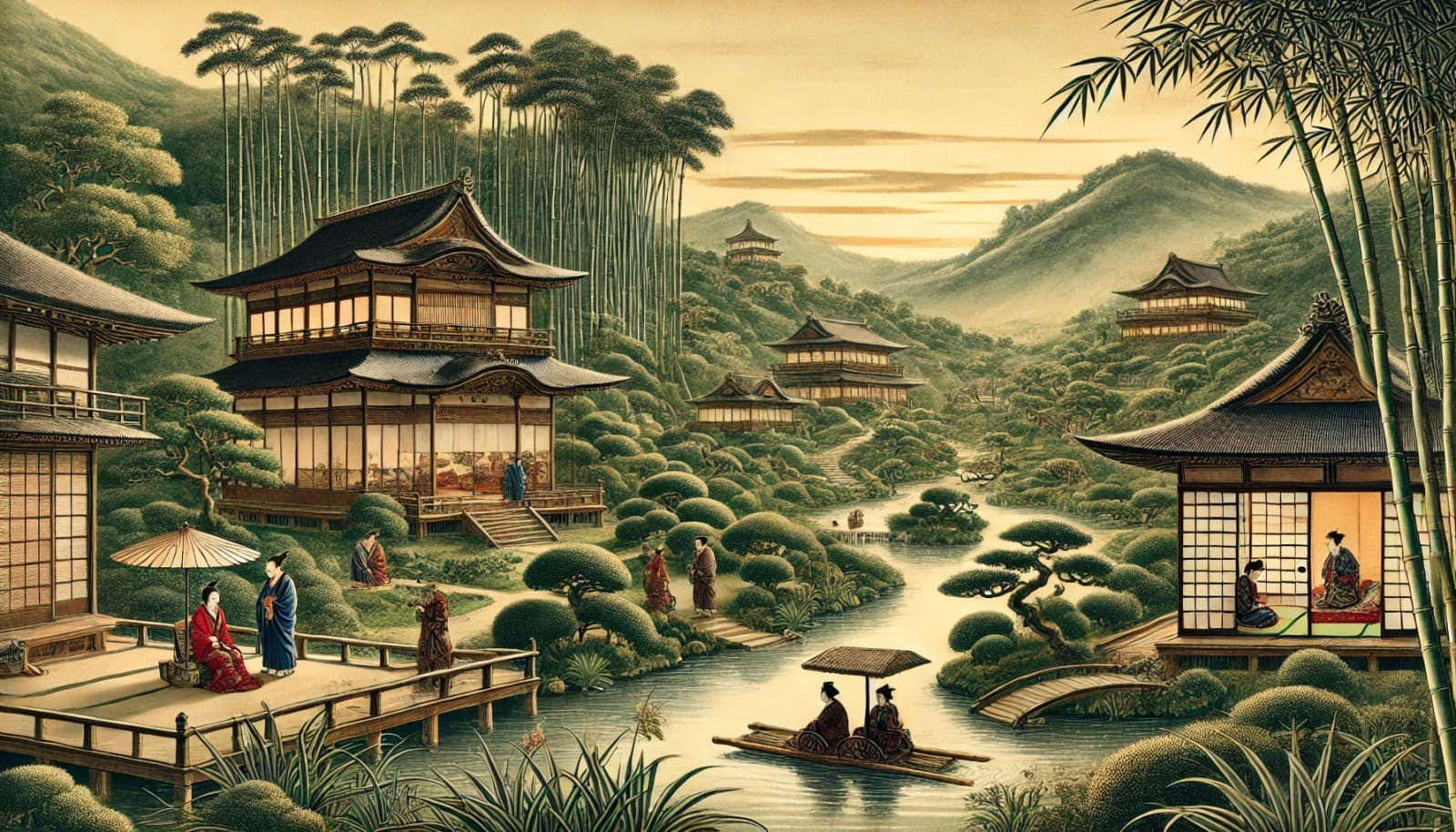
The Saga-Arashiyama area flourished as a villa retreat for aristocrats since the Heian period. In particular, after Emperor Saga established a detached palace here, many nobles built residences and enjoyed an elegant lifestyle. During this period, bamboo groves may have been incorporated as part of the gardens, forming part of the landscape.
2. 809 AD: Founding of Nonomiya Shrine
 *Illustration
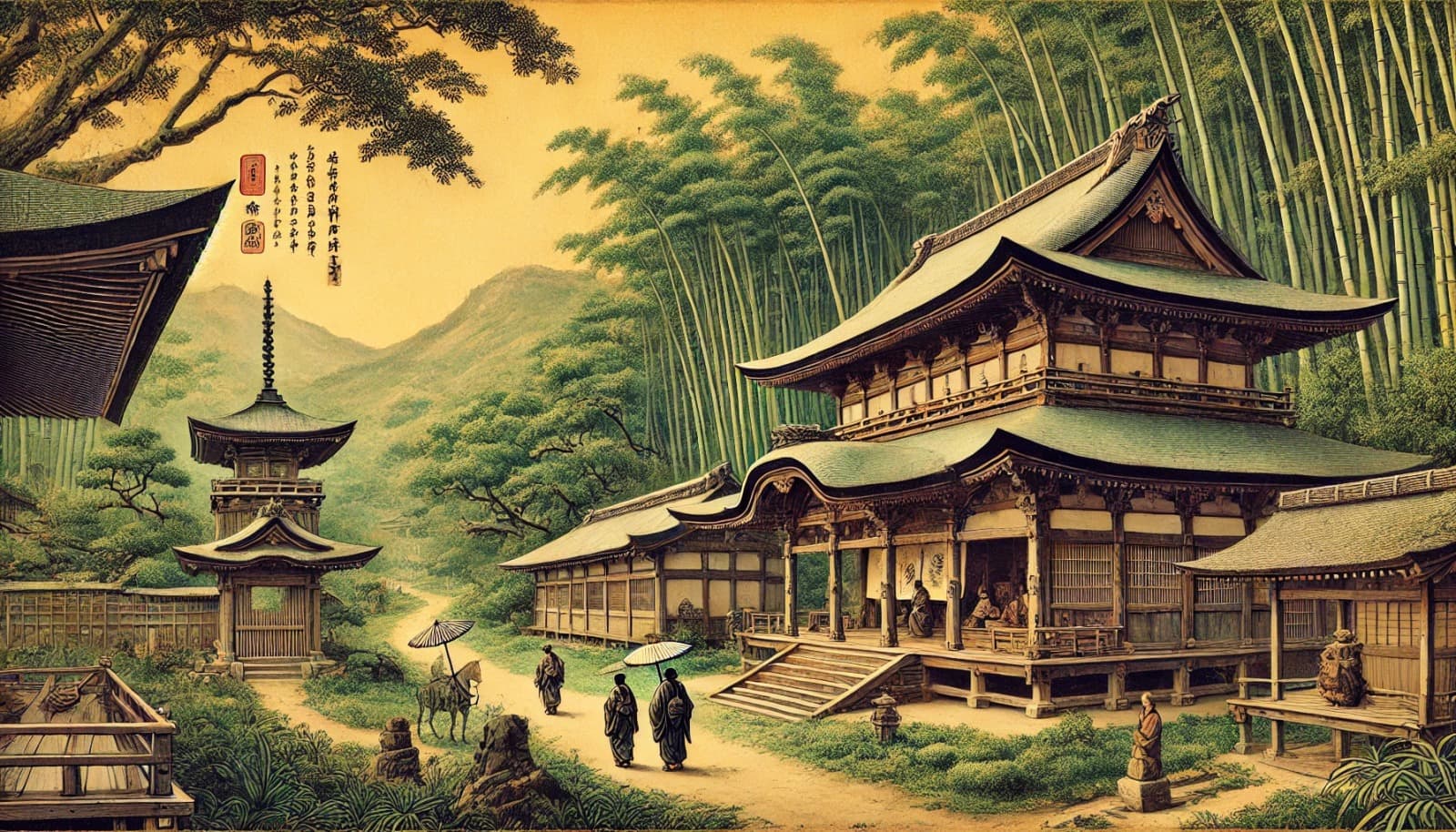
Nonomiya Shrine, located on the east side of the Bamboo Grove Path, is said to have been founded in 809 AD (Daido 4). This shrine derives its name from “Nonomiya,” a place where the Saio (a priestess serving at Ise Grand Shrine on behalf of the Emperor) would purify herself before departing for Ise. It is also depicted in “The Tale of Genji” in the “Sakaki” chapter, underlining its historical significance. The surrounding bamboo groves are believed to have existed as a sacred place since that time.
3. Kamakura Period (1185-1333): Formation of the Bamboo Grove Landscape
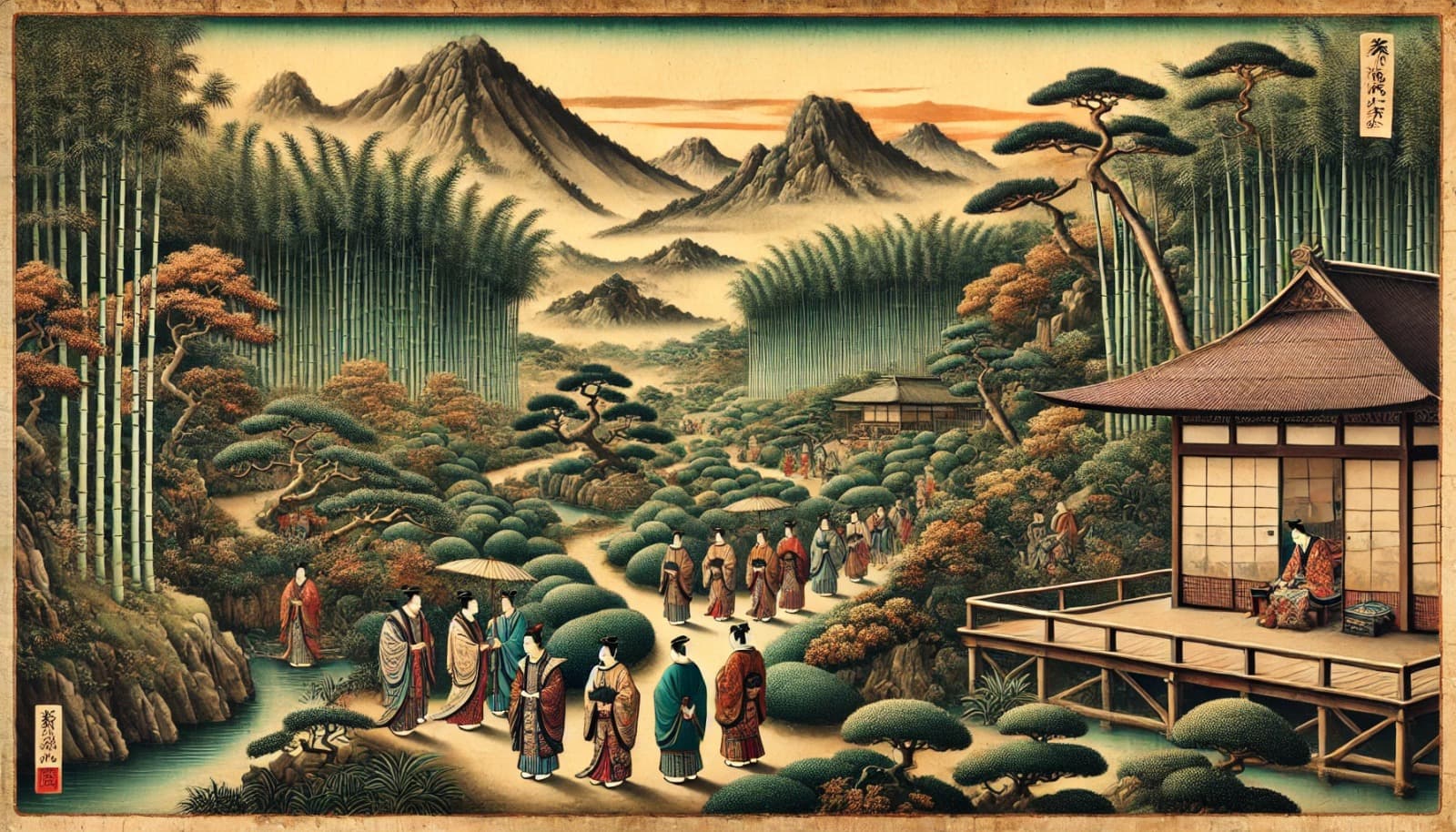 *Illustration
In the mid-Kamakura period, in 1255 (Kencho 7), Retired Emperor Go-Saga constructed a detached palace called Kameyama-den (Saga-den) in Sagano. This led to the development of the Sagano area as a center of aristocratic culture, and the landscaping and scenery were further refined. It is possible that during this period, bamboo groves became valued as aesthetic landscapes, and the prototype of today’s Bamboo Grove Path was formed.
4. Edo Period (1603-1868): Maintenance of Bamboo Groves and Cultural Development
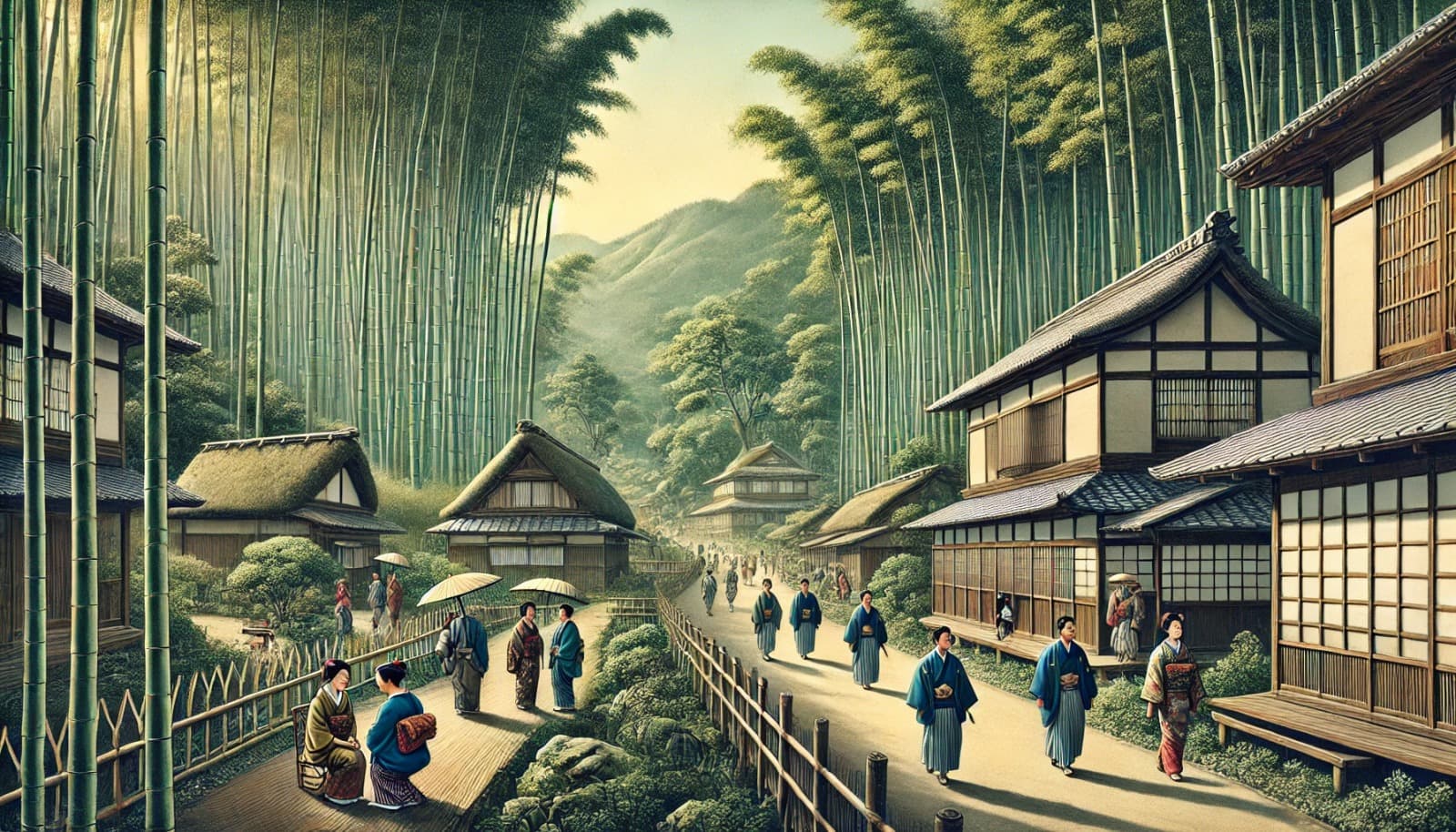 *Illustration
During the Edo period, tea ceremony and garden culture flourished, and bamboo groves were maintained as aesthetic landscapes. In the Sagano area, bamboo groves enhanced the value of the area as a tourist destination, becoming a place visited by many literary figures and artists. Additionally, Saga-Toriimoto prospered as a temple town of Atago Shrine, and the streetscape retaining the atmosphere of the Edo period was formed.
5. 2015: Development of the Bamboo Grove Walking Trail
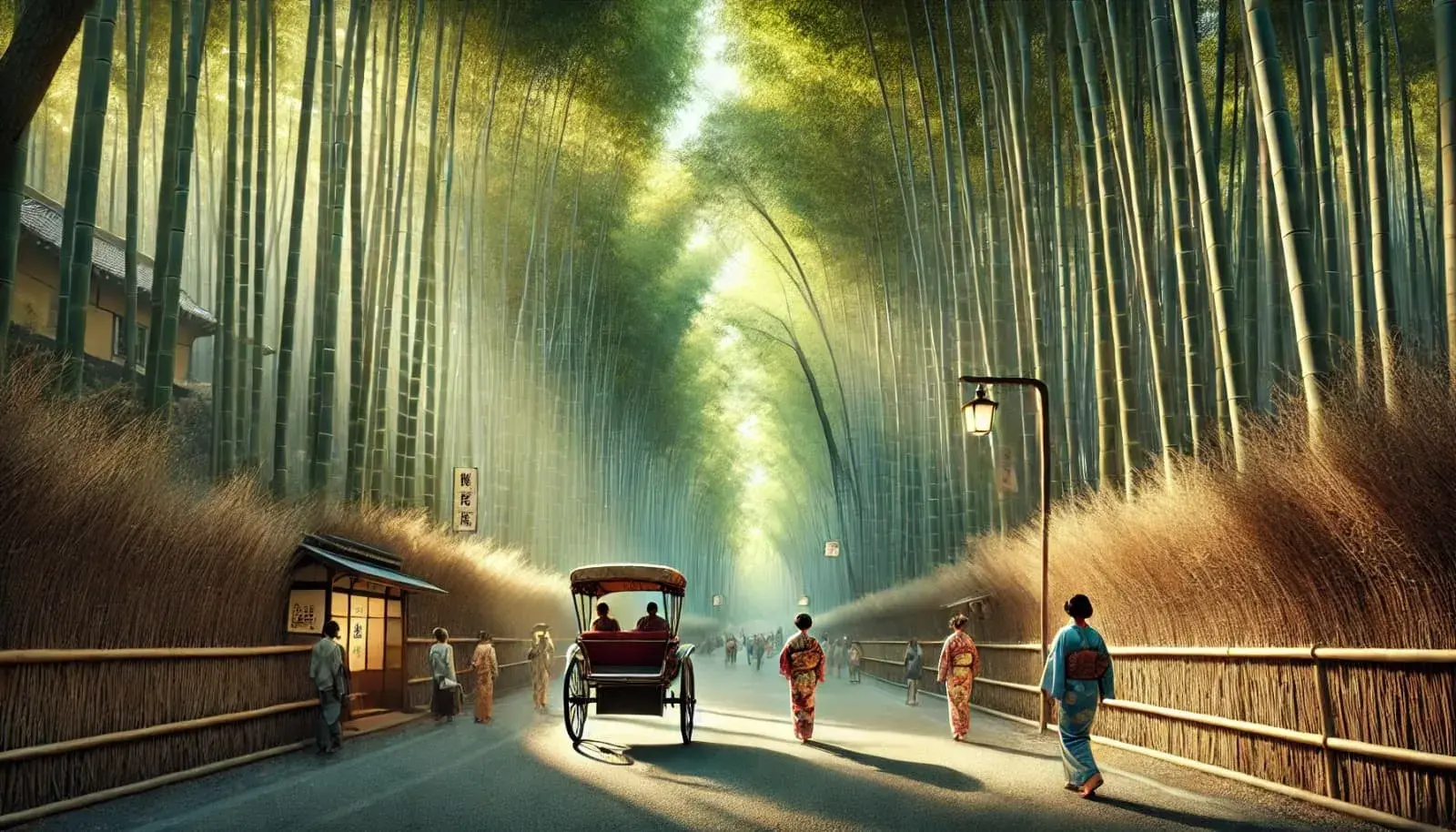 *Illustration
In the autumn of 2015, a new walking trail was developed on the north side of the Bamboo Grove Path. This was funded and maintained by a rickshaw operator born in the Arashiyama-Sagano area. With this new trail, visitors can enjoy an even more diverse range of bamboo grove scenery.
Arashiyama How to Enjoy the Bamboo Grove
The Bamboo Grove Path is a beautiful walking trail where nature and history blend harmoniously in the Saga-Arashiyama area of Kyoto. Here are some ways to enjoy it.
- Enjoy the Tranquility of Early Morning and Evening
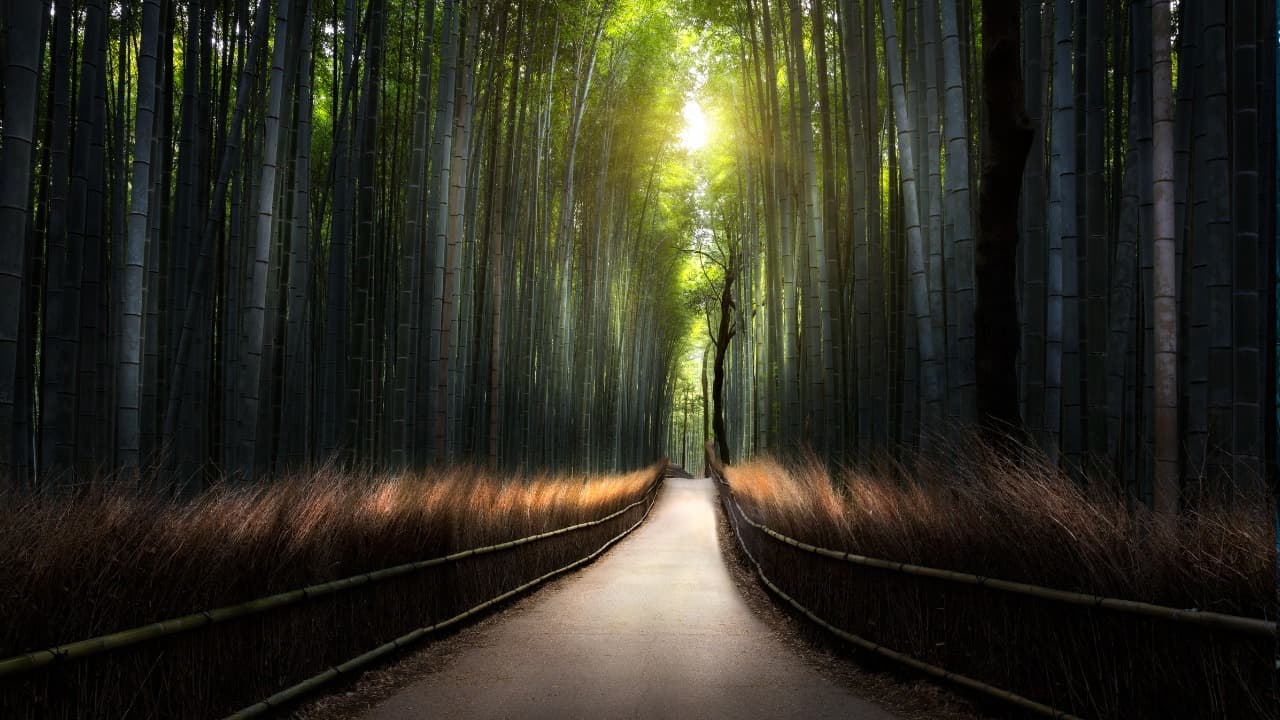
By visiting the Bamboo Grove Path early in the morning or in the evening when there are fewer tourists, you can more deeply appreciate the tranquil atmosphere and the beauty of the bamboo grove. The sight of sunrise or twilight light illuminating the bamboo is truly special, allowing you to immerse yourself in an enchanting space.
- Enjoy Photography
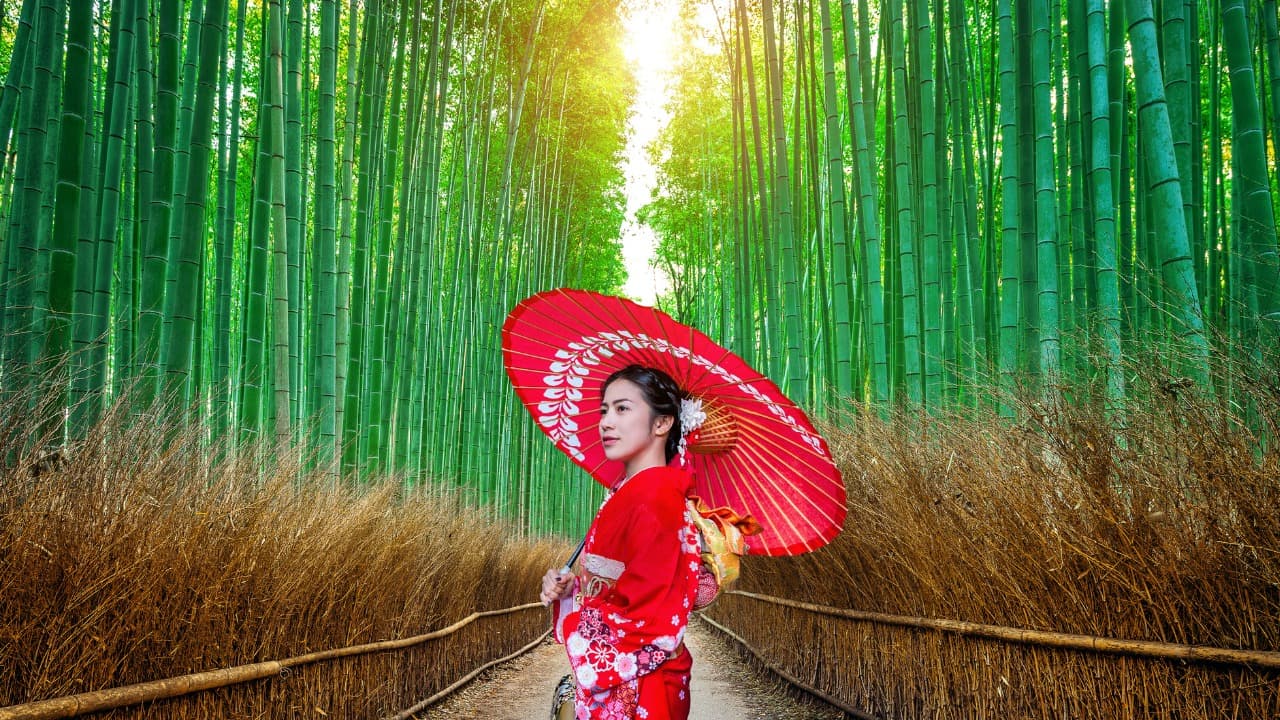
The Bamboo Grove Path is also famous as a photography spot. The green tunnel of towering bamboo stalks creates a stunning scene from any angle. Taking photos using natural light adds beautiful shadows and contrasts, helping you capture an even more impressive shot.
- Experience the Charm by Rickshaw
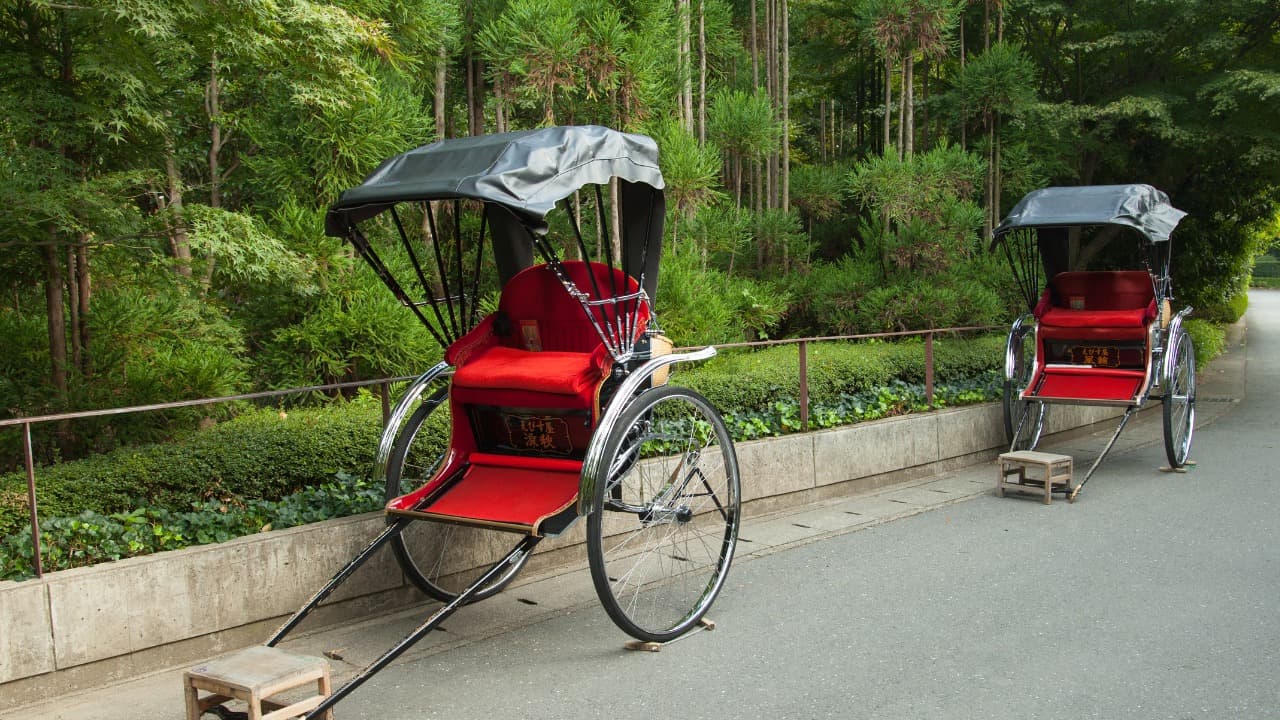
At the Bamboo Grove Path, taking a rickshaw ride is another recommended way to enjoy the experience. With professional rickshaw runners guiding you, you can listen to explanations about the history of the bamboo grove and nearby spots while spending a special time. This is also a great option for those who find walking difficult.
- Combine with the Sagano Scenic Railway
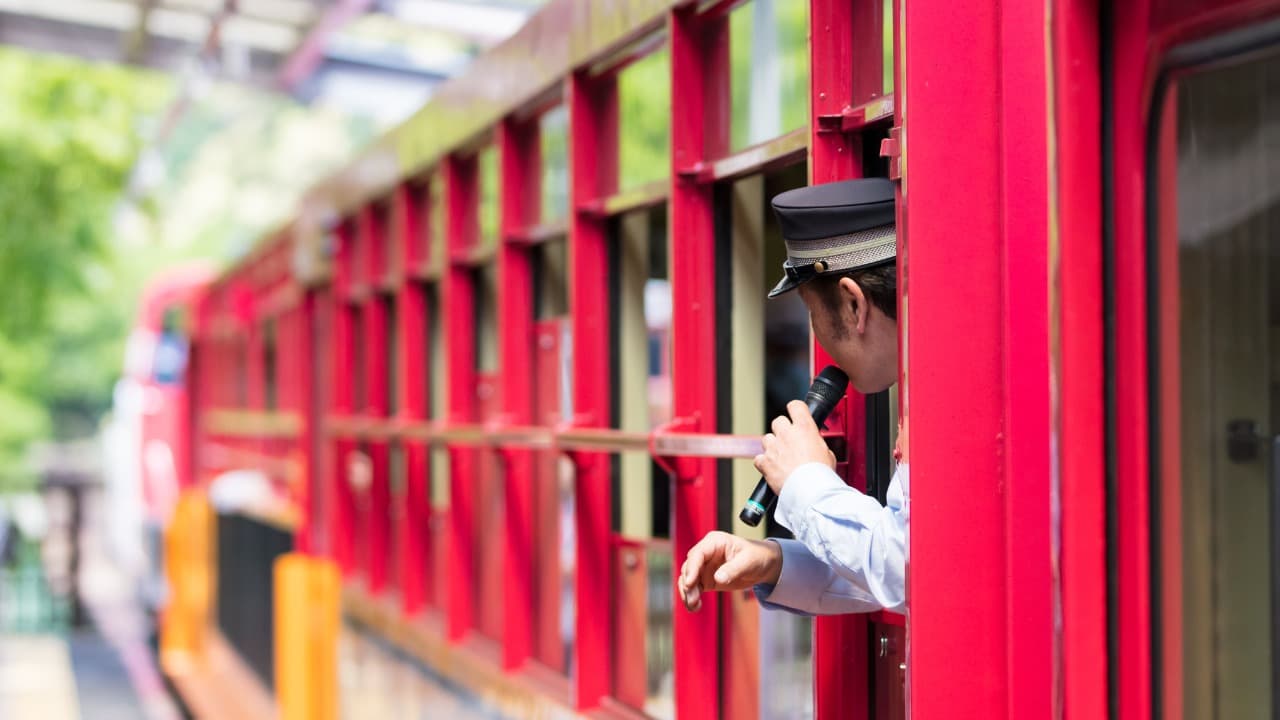
A popular course is to enjoy the stunning scenery along the Hozu River on the Sagano Scenic Railway and then stroll through the Bamboo Grove Path. The scenery changes with the seasons, so visiting during the spring greenery or autumn foliage is especially recommended.
- Enjoy the Seasonal Beauty
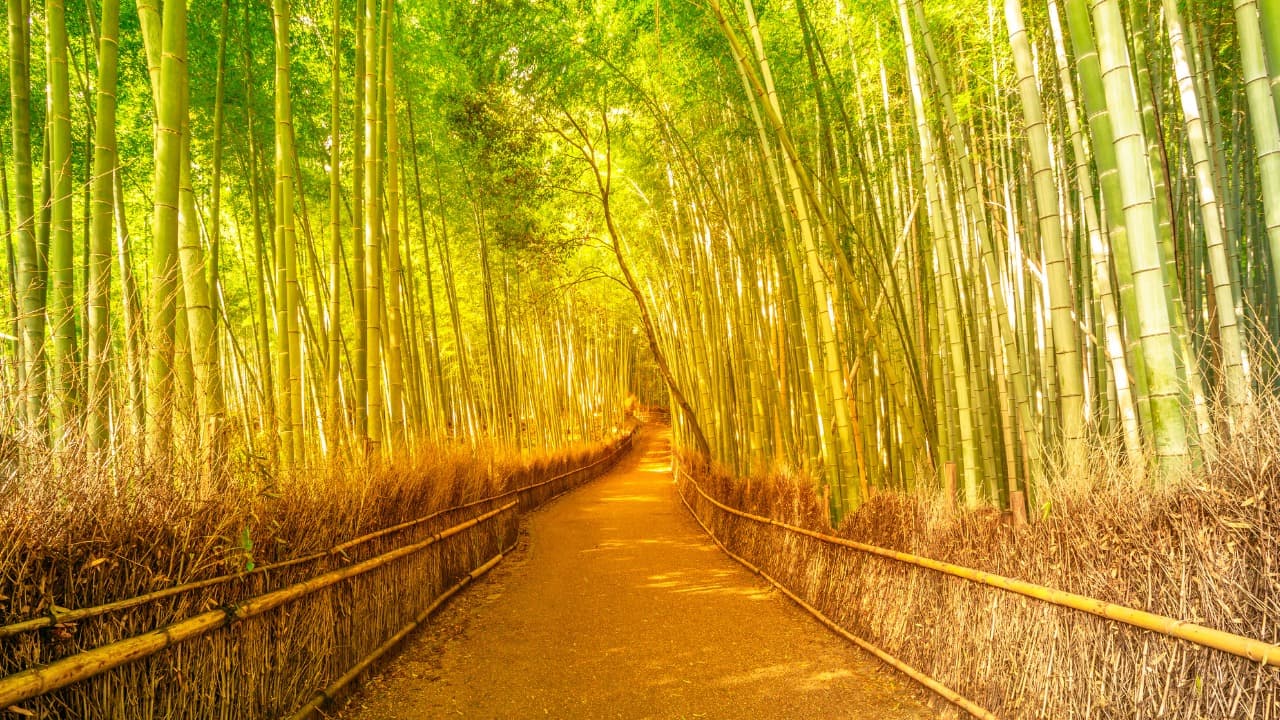
The Bamboo Grove Path offers unique charms in each season. Spring brings fresh greenery, summer displays deep green hues, autumn is enhanced by colorful foliage, and winter features soft light filtering through the bamboo. Visiting during different seasons allows you to discover new charms each time.
- Stroll in Traditional Japanese Attire
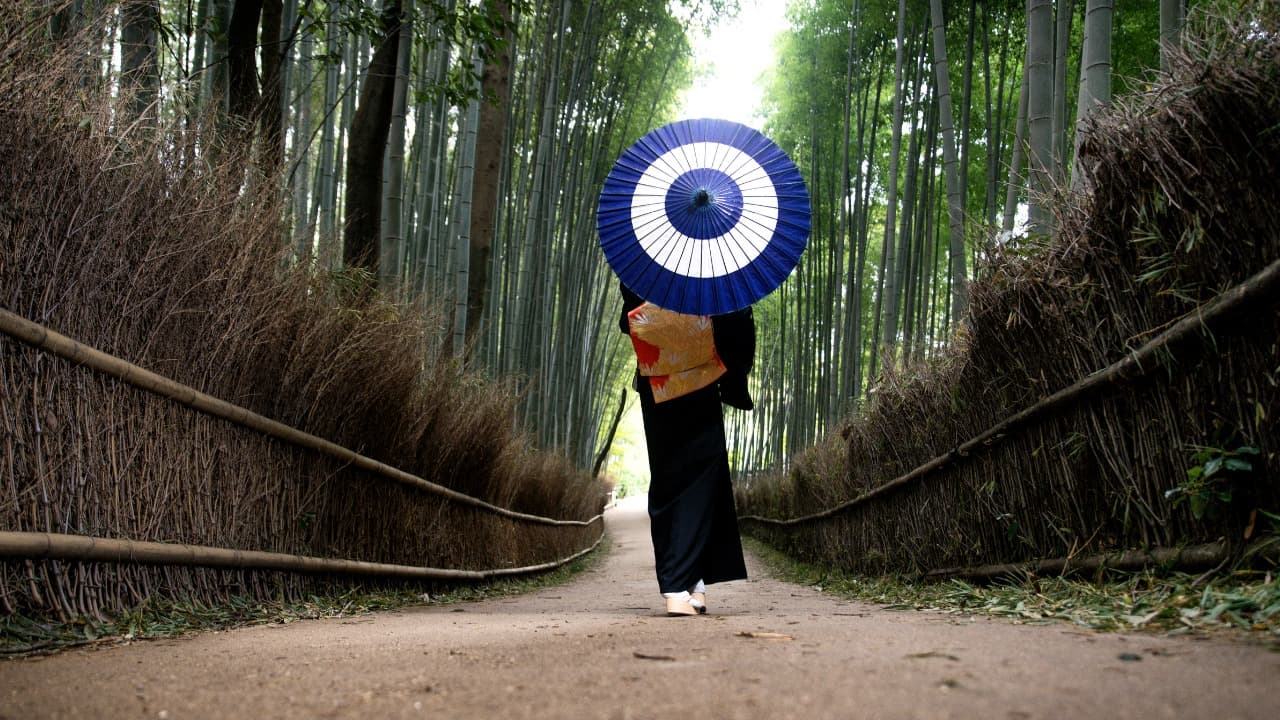
By renting a kimono and strolling through the Bamboo Grove Path in traditional Japanese attire, you can savor an even more authentic Kyoto atmosphere. Taking photos in kimono creates special travel memories.
Summary
Togetsukyo Bridge and its surroundings are a special place where you can fully enjoy Kyoto’s nature, history, and culture. The magnificent scenery of the bridge, along with nearby highlights such as Tenryu-ji Temple and the Bamboo Grove Path, welcome visitors with seasonal charm throughout the year. Additionally, activities such as the Sagano Scenic Railway and Arashiyama Monkey Park offer unforgettable experiences for families and tourists alike.
By learning about its historical background and visiting the highlights, you will surely discover new facets of Togetsukyo Bridge’s charm. Please visit and enjoy the unique atmosphere that the Arashiyama area has to offer.