
🕓 2024/7/28
#Culture
A Detailed Guide to the History and Overview of Sumiyoshi Taisha
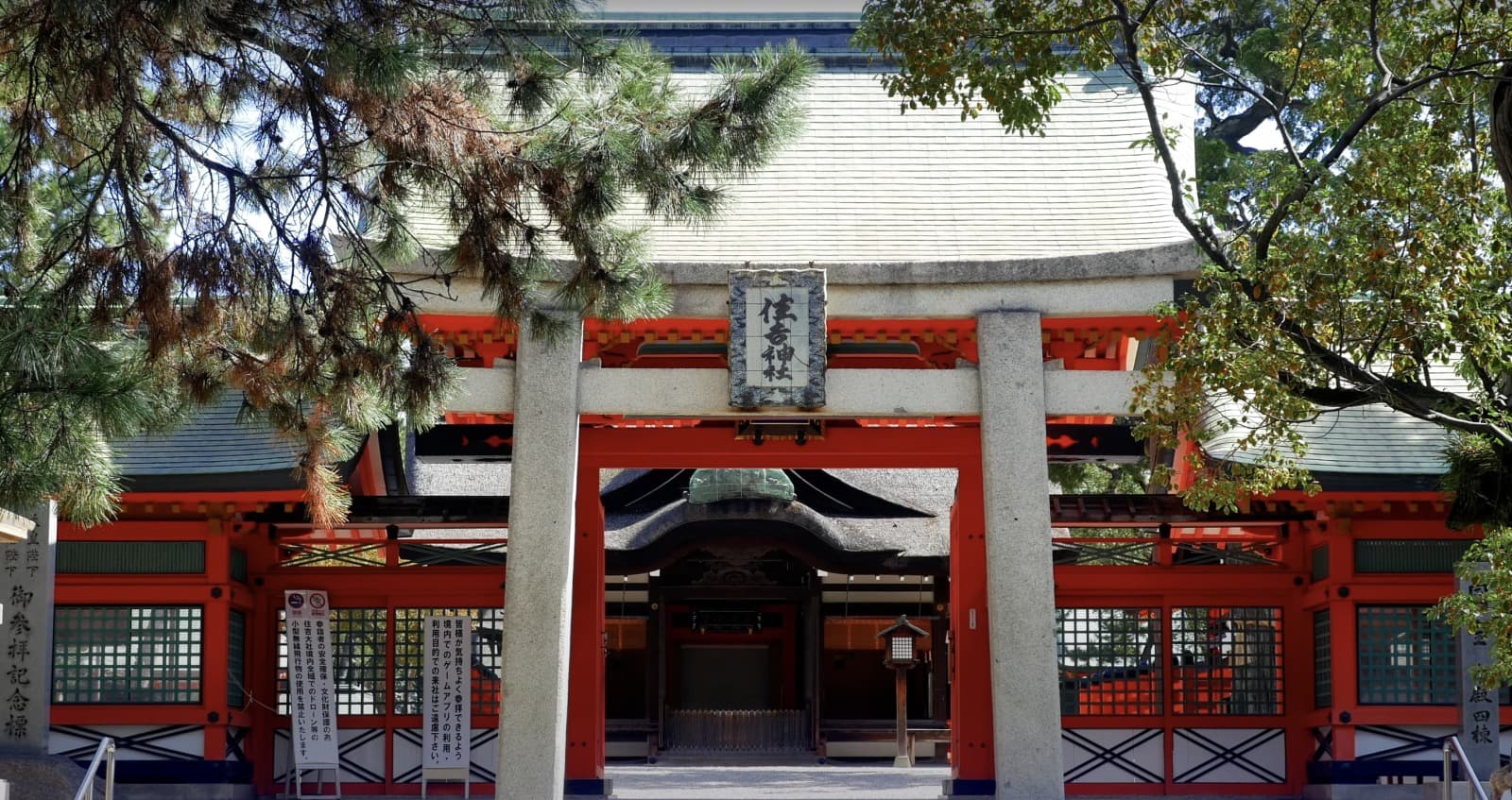
Table of Contents
- Overview of Sumiyoshi Taisha
- History of Sumiyoshi Taisha
- Highlights of Sumiyoshi Taisha
Introduction
Sumiyoshi Taisha is one of the oldest shrines in Japan, and its historical and cultural significance runs deep, occupying an important position in Japanese Shinto. Located in Sumiyoshi Ward, Osaka City, the shrine has long been revered as the guardian deity of maritime traffic. With its distinctive architectural style known as “Sumiyoshi-zukuri,” the sacred “Goza no Ishi” (Seat Stone), and many other points of interest, it continues to preserve and convey its history and traditions to the present day.
In this article, we will provide a detailed introduction to the overview, history, and highlights of Sumiyoshi Taisha. Through this information, we hope to deepen your understanding of the shrine’s charm and cultural background.
Overview of Sumiyoshi Taisha

Sumiyoshi Taisha is one of the oldest shrines in Japan and serves as the head shrine of more than 2,300 Sumiyoshi shrines nationwide. It is the most famous shrine in Osaka for hatsumode (New Year’s first shrine visit) and is affectionately called “Sumiyossan” by locals.
The shrine is said to have been established in 211 AD by Empress Jingu, and enshrines the three Sumiyoshi deities of the sea — Sokotsutsu-no-o-no-mikoto, Nakatsutsu-no-o-no-mikoto, and Uwatsutsu-no-o-no-mikoto. These deities are regarded as guardians of maritime safety, and many sailors and fishermen have visited to pray for safe voyages.According to legend, Empress Jingu enshrined the deities at sea during her return from the expedition to the Three Korean Kingdoms. The shrine’s founding dates to 211 AD, and from ancient times to the present, it remains an important place of worship visited by many worshippers.
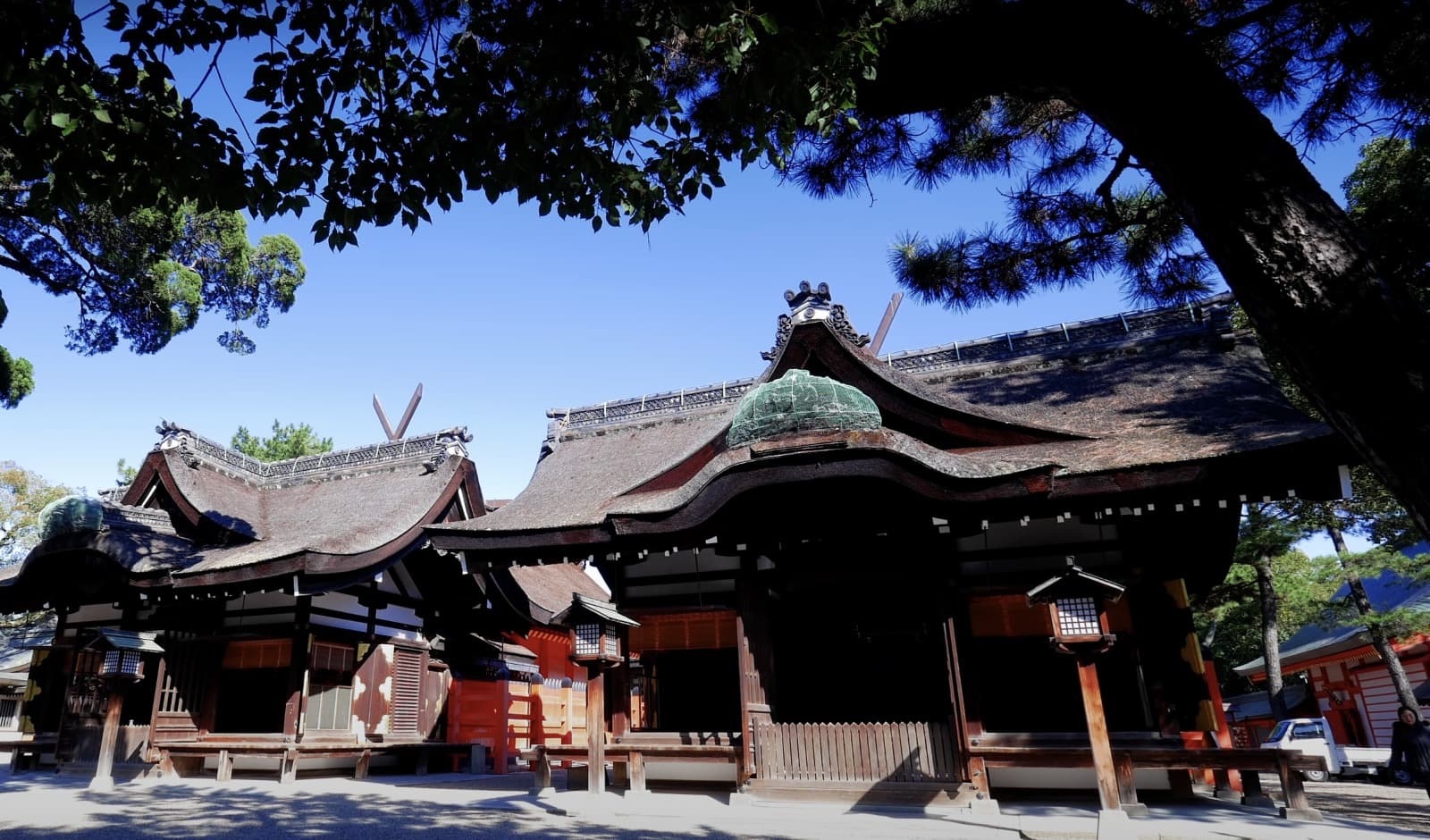
The shrine is known for its distinctive Sumiyoshi-zukuri architectural style. This style is unique among Japanese shrine architecture, characterized by its straight, simple design. The main sanctuary consists of four buildings, each enshrining one of the three Sumiyoshi deities and Empress Jingu. These buildings are designated as National Treasures and hold an important place in the history of Japanese architecture.
The shrine grounds boast an expansive property dotted with beautiful gardens and ponds. In particular, the arched bridge known as “Sorihashi” (also called Taiko-bashi, or Drum Bridge) is an iconic structure of Sumiyoshi Taisha and a popular photo spot for many tourists. It is said to symbolize the purification of impurities for worshippers approaching with a clean heart. This bridge became famous when Nobel Prize-winning author Yasunari Kawabata featured it in his novel “Sorihashi.”
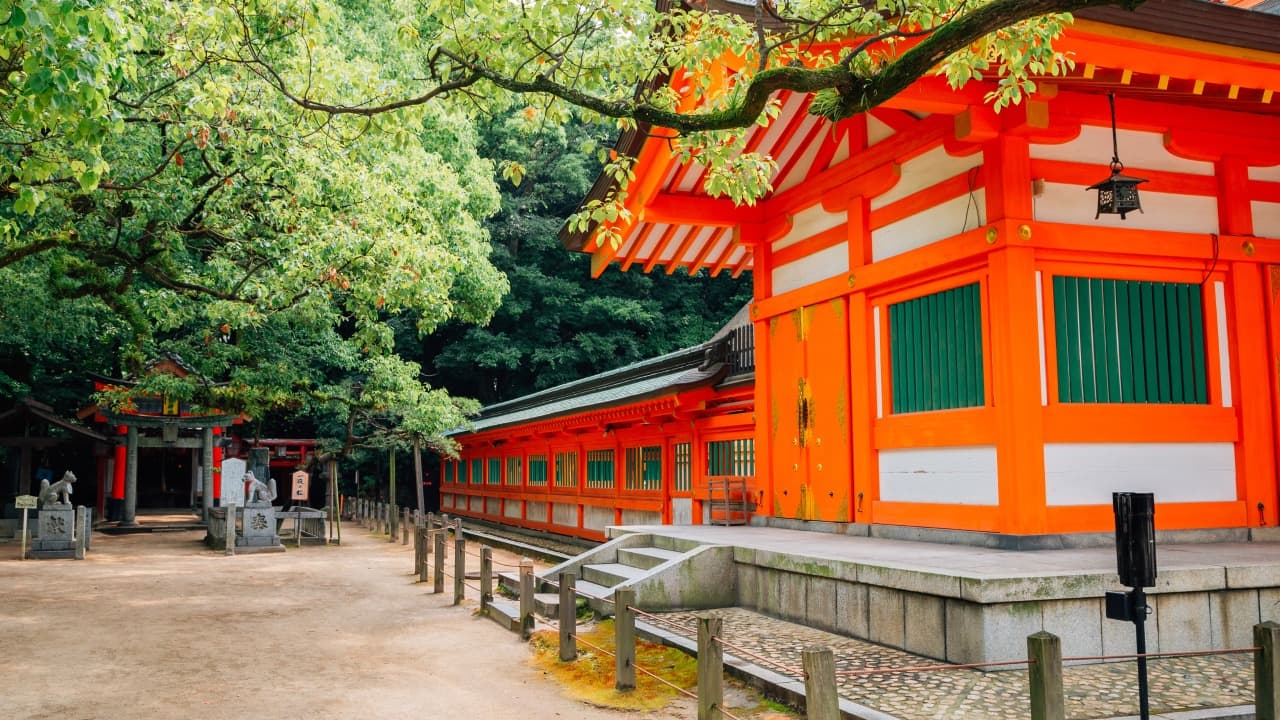
Throughout the year, various festivals and events are held. The most famous are “Hatsumode” in January and the “Sumiyoshi Matsuri” held from July 30 to August 1. The Sumiyoshi Matsuri is the shrine’s annual festival, featuring a grand mikoshi (portable shrine) procession and bugaku (traditional court dance) performances, attracting many worshippers. Additionally, the “Unohana Shinji” ceremony held every May is an important ritual that dates back to ancient times, allowing visitors to experience the history and traditions of Sumiyoshi Taisha.
2. History of Sumiyoshi Taisha
Sumiyoshi Taisha has maintained its important position in Japanese Shinto throughout its long history and cultural significance. Below, we introduce the major events by era.
■ Foundation and Legend (211 AD)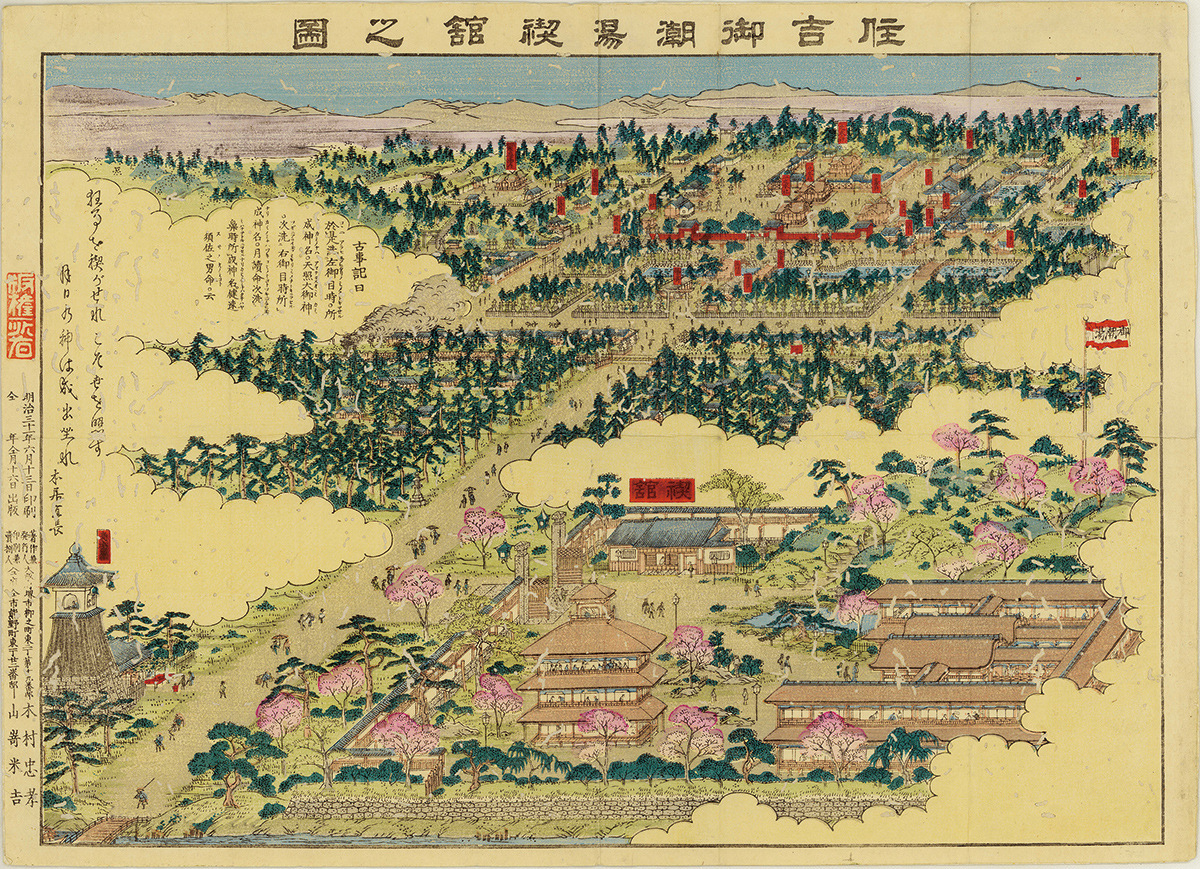
Sumiyoshi Taisha is one of the oldest shrines in Japan, with its founding dating back to 211 AD. According to legend, Empress Jingu established the shrine to enshrine the three Sumiyoshi deities (Uwatsutsu-no-o-no-mikoto, Nakatsutsu-no-o-no-mikoto, and Sokotsutsu-no-o-no-mikoto) after returning from her expedition to the Korean Peninsula. These deities are known as guardians of maritime traffic, and many people have worshipped them to pray for safe voyages.
■ Medieval Development and Influence (8th-16th Century)
During the medieval period, Sumiyoshi Taisha influenced many literary works and poems. In Murasaki Shikibu’s “The Tale of Genji,” part of the story is set at Sumiyoshi Taisha. The Japanese folktale “Issun-boshi” (The One-Inch Boy) also features a scene where the protagonist prays at this shrine before setting off on his journey. The landscape of Sumiyoshi Taisha has been frequently depicted in Japanese art as “Hakusha Seisho” (white sand and green pines), making it an iconic presence in Japanese culture.
■ Prosperity in the Edo Period (17th-19th Century)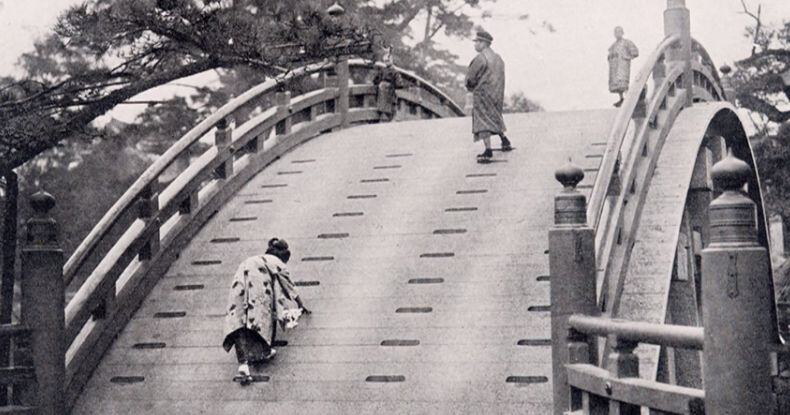
During the Edo period, Sumiyoshi Taisha played a major role as the center of the local community. During this period, the shrine functioned as a major religious institution attracting many worshippers, and active restoration and reconstruction of the shrine took place. In the Edo period, Sumiyoshi Taisha established its position as the head shrine of all Sumiyoshi shrines nationwide and became widely recognized as a particularly important shrine. The beautiful “Hakusha Seisho” (white sand and green pines) landscape of Sumiyoshi Taisha was frequently depicted in the art and poetry of the era, and its cultural influence was considerable.
■ Modern Reconstruction and Preservation Efforts (20th Century-Present)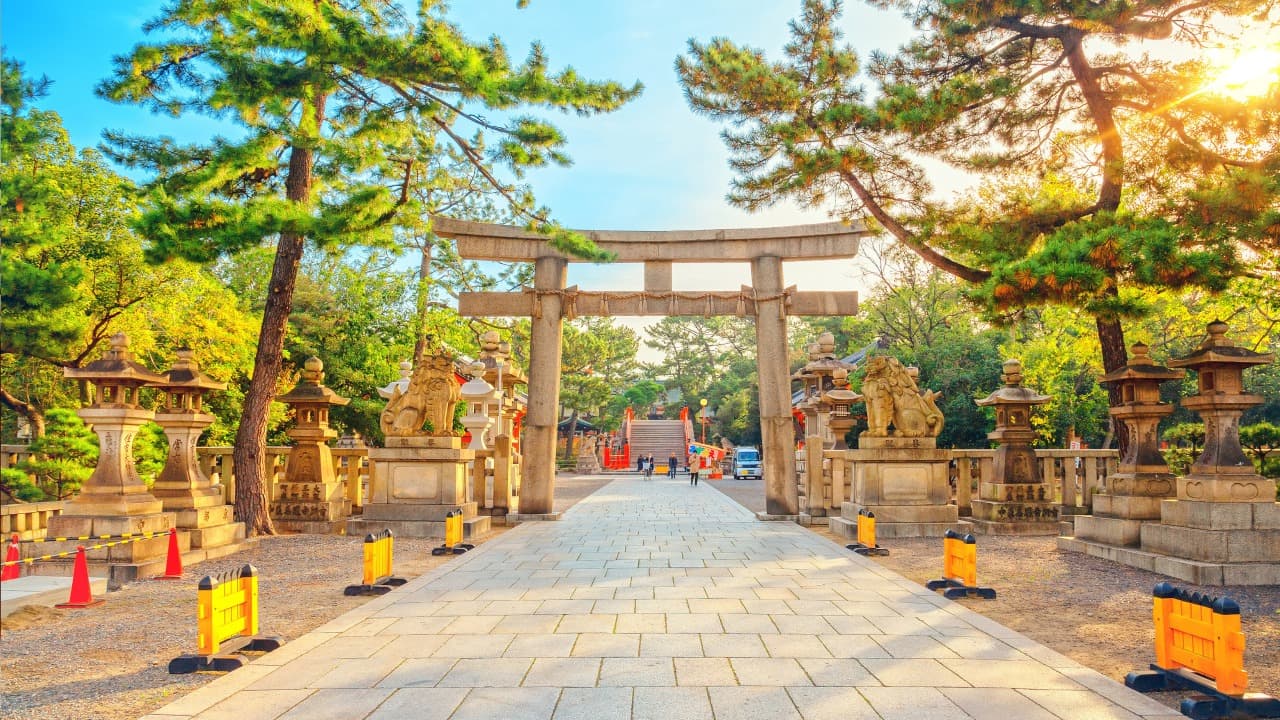
After the Meiji Restoration, in 1871 Sumiyoshi Taisha was designated as a Kanpei Taisha (Grand Imperial Shrine), receiving national protection. During the modernization process, the Sumiyoshi-zukuri architectural style was reevaluated for its unique design, and the entire shrine was designated as an Important Cultural Property of Japan. These preservation efforts play a vital role in protecting traditional Japanese shrine architecture and passing it on to future generations. In the modern era, Sumiyoshi Taisha continues to serve as a cultural icon of Osaka City, hosting numerous festivals and events and attracting many worshippers and tourists.
Highlights of Sumiyoshi Taisha
Sumiyoshi Taisha is a shrine representative of Osaka, with many attractive spots scattered throughout. Below are the particularly noteworthy highlights.
■ Sorihashi (Taiko-bashi / Drum Bridge)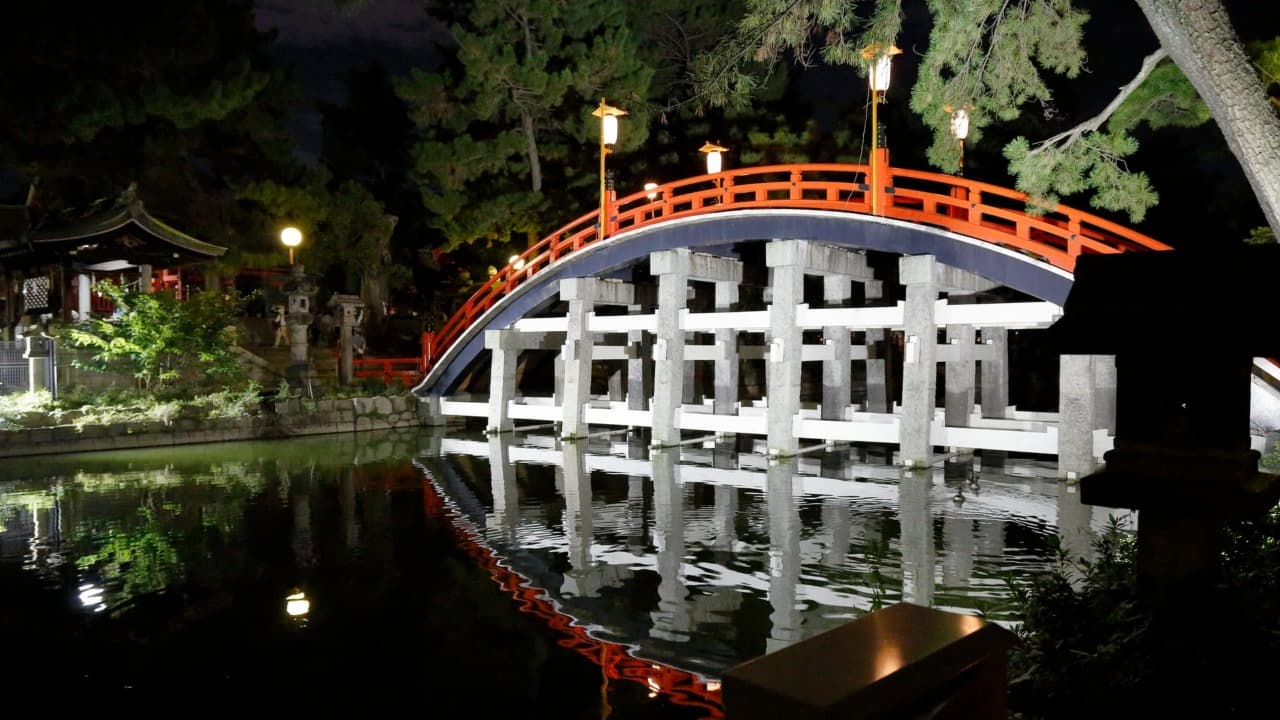
Sorihashi is an iconic structure of Sumiyoshi Taisha, with its beautiful red arch creating a stunning landscape. The bridge has a maximum incline of about 48 degrees, making it quite steep. Crossing the bridge is believed to serve as a kind of ritual, purifying both body and mind. Due to this steep gradient, it is often said that descending is scarier than ascending.
Additionally, Sorihashi is also called “Taiko-bashi” (Drum Bridge), named because the arch’s reflection on the water surface resembles the shape of a taiko drum. On clear days, the bridge is beautifully reflected on the water, creating a symmetrical view.
■ The Main Hall in Sumiyoshi-zukuri Style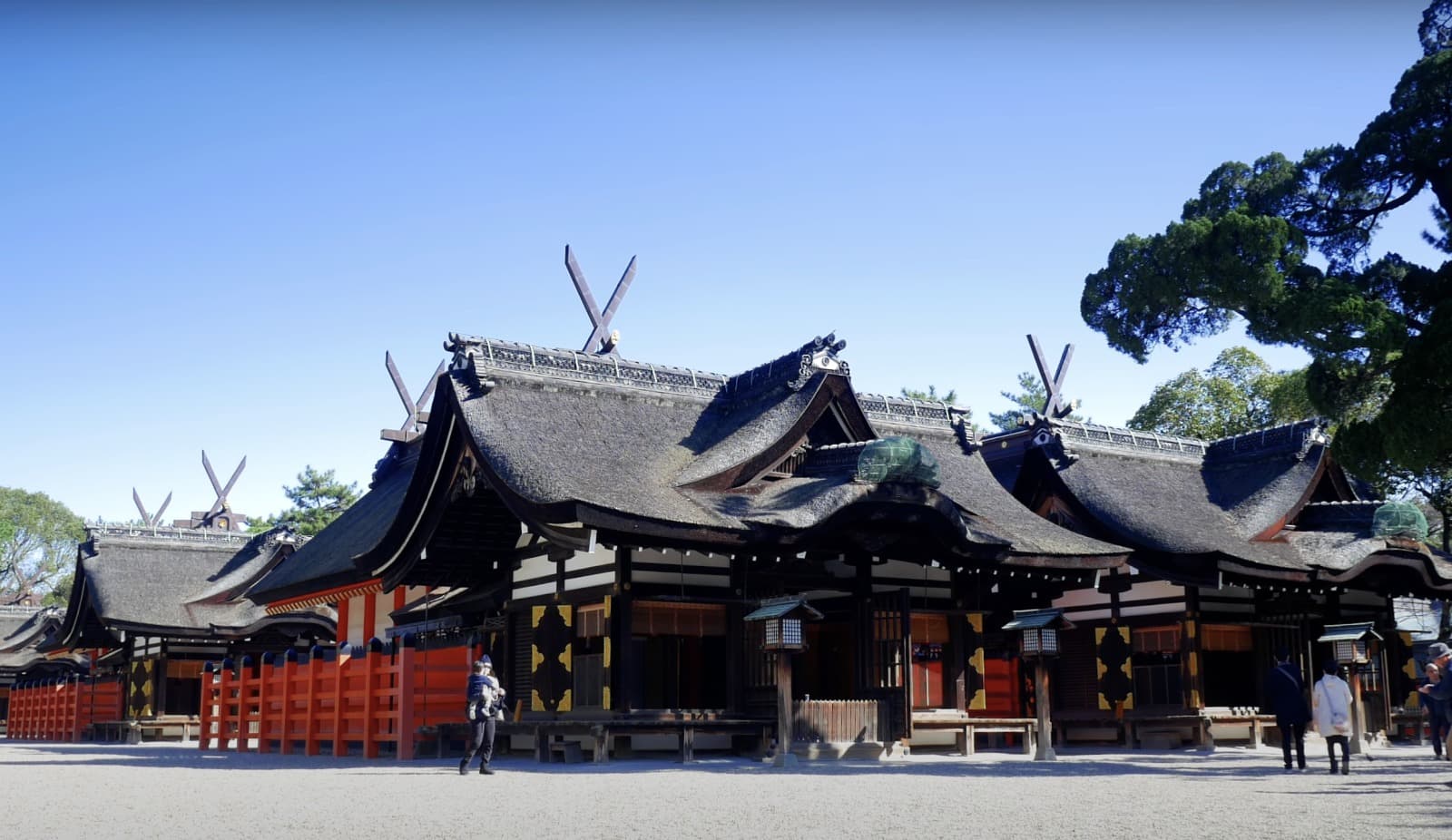
The main halls of Sumiyoshi Taisha are built in the distinctive “Sumiyoshi-zukuri” architectural style, one of the oldest styles in shrine architecture history, and all four main halls are designated as National Treasures. Sumiyoshi-zukuri is characterized by straight rooflines and widely spaced pillars, creating an open and well-ventilated interior space. The roofs are thatched, and natural materials are used throughout the buildings, giving them a warm atmosphere.
The roofs of the main halls feature two vertical wooden ornaments called “chigi” and horizontally placed “katsuogi,” which are symbolic decorations of Shinto architecture. The main halls are supported by four main beams, giving the entire structure a sense of stability.
■ Goshogozen (Five Great Power Stones)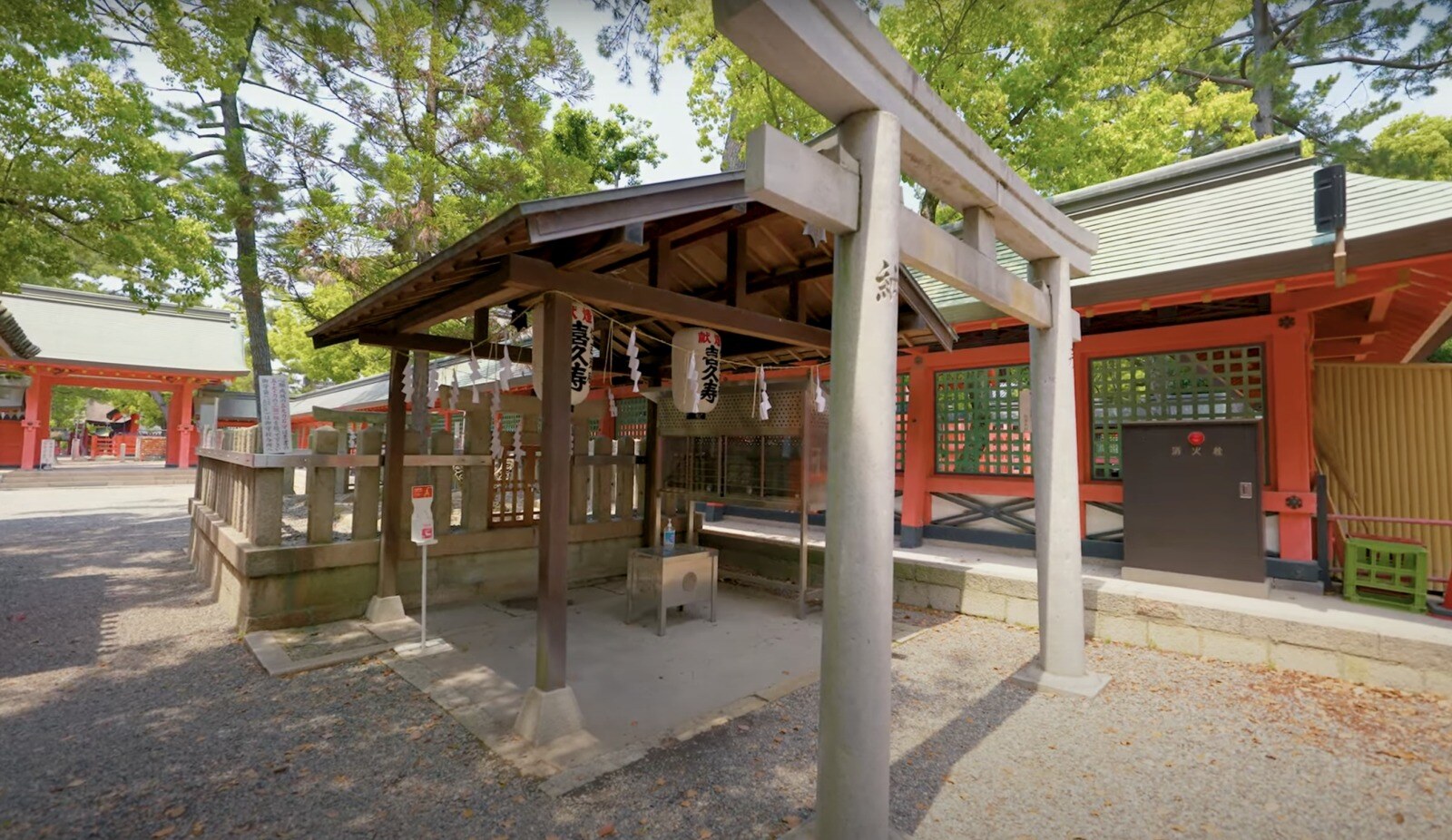
Goshogozen is one of the most sacred places within Sumiyoshi Taisha, also known as the “Godairiki-ishi” (Five Great Power Stones). In this area, small stones inscribed with the characters for “Go” (five), “Dai” (great), and “Riki” (power) are scattered about. It is believed that picking up these stones and keeping them as charms will bestow five powers: physical strength, wisdom, wealth, fortune, and longevity.
Worshippers take these stones home with their wishes in mind and treasure them as charms. When their wishes come true, they return double the number of stones as an expression of gratitude. These returned stones are called “gratitude pebbles” and can be obtained at the charm distribution center. Goshogozen is also said to be the place where the Sumiyoshi deity first took up residence, giving it extremely high historical value.
■ Omokaru-ishi (Heavy-Light Stone)
The Omokaru-ishi is a sacred stone located within the Otoshi-sha shrine grounds, known for its ability to divine whether a wish will come true. It is one of the most popular spots at Sumiyoshi Taisha. The divination method involves first offering a prayer (two bows, two claps, one bow), then lifting the stone to check its weight. Next, you place your hands on the stone and make your wish, then lift it again. If the stone feels lighter the second time, it is said that your wish will be granted.
There are three Omokaru-ishi in total, and you can make a wish with just one stone, or try all three following the saying “third time’s the charm.”
■ Sumiyoshi Matsuri (Festival)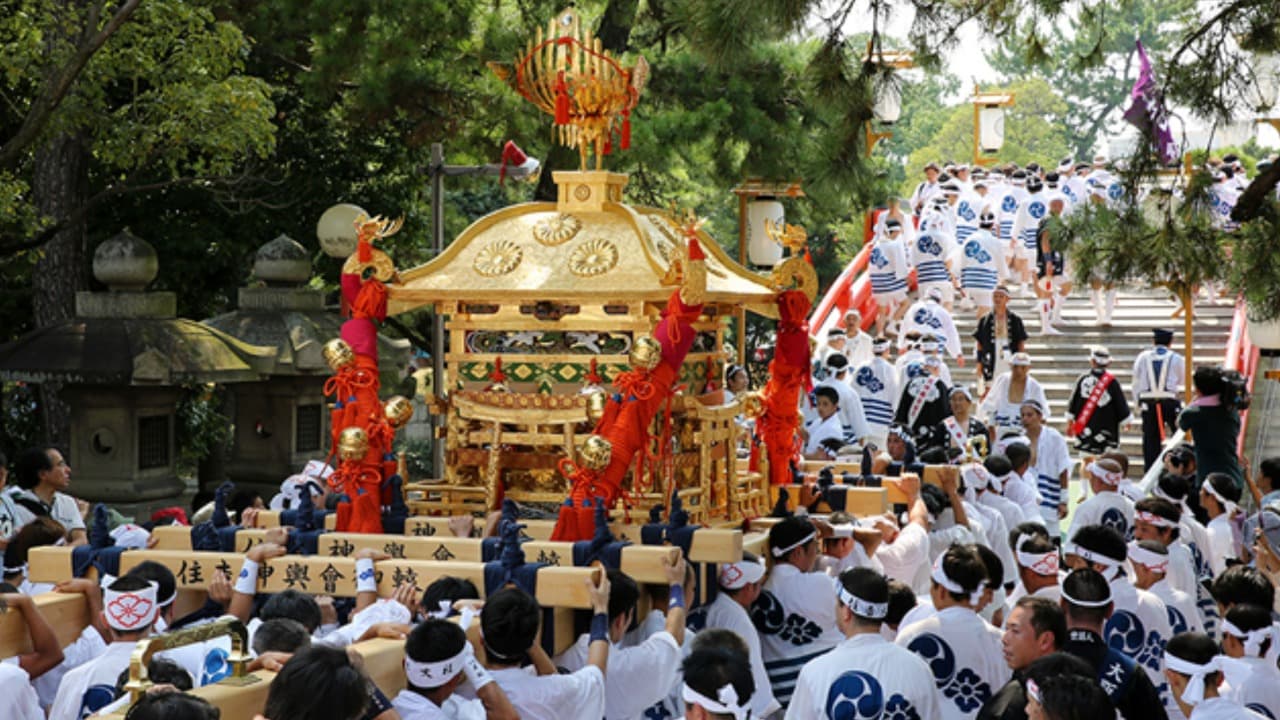
Source: Sumiyoshi Taisha Official Website
Various festivals are held at Sumiyoshi Taisha throughout the year, and the most famous is the “Sumiyoshi Matsuri.” This festival takes place annually from July 30 to August 1, with the “Nagoshi no Harae” (Summer Purification) grand purification ceremony held on July 31. During the ceremony, participants walk through a large ring of miscanthus grass (chinowa) to ward off evil. On August 1, the “Mikoshi Togyo” (Portable Shrine Procession) takes place, carrying the mikoshi from Sumiyoshi Taisha to Shukuin Shrine in Sakai City. This festival is an important event that symbolizes the culture and history of the region.
★ Introducing Our Tourism Website ★
We introduce carefully selected tourist destinations in Japan like those featured in this article.
By bookmarking this site, you can access must-know tourism information at a glance. We are constantly updating and providing even more exciting experiences for discovering tourist destinations.
Click the image below if you’re interested
Summary
Sumiyoshi Taisha is an important Japanese shrine with a long history and unique culture. From ancient times to the present, many worshippers have visited this shrine, which has been revered as the guardian deity of maritime traffic. Iconic spots such as the Sorihashi bridge, the main halls in Sumiyoshi-zukuri style, Goshogozen, and the Goza no Ishi stone deeply move visitors and tell the story of Sumiyoshi Taisha’s rich history and traditions.
Gaining a deep understanding of this shrine’s charm and experiencing a moment of quiet prayer in its sacred space will undoubtedly become a special memory for every visitor. We encourage you to visit Sumiyoshi Taisha at least once and experience its allure firsthand.