
🕓 2024/9/23
#Temples
A Detailed Guide to the History and Overview of Yakushiji Temple
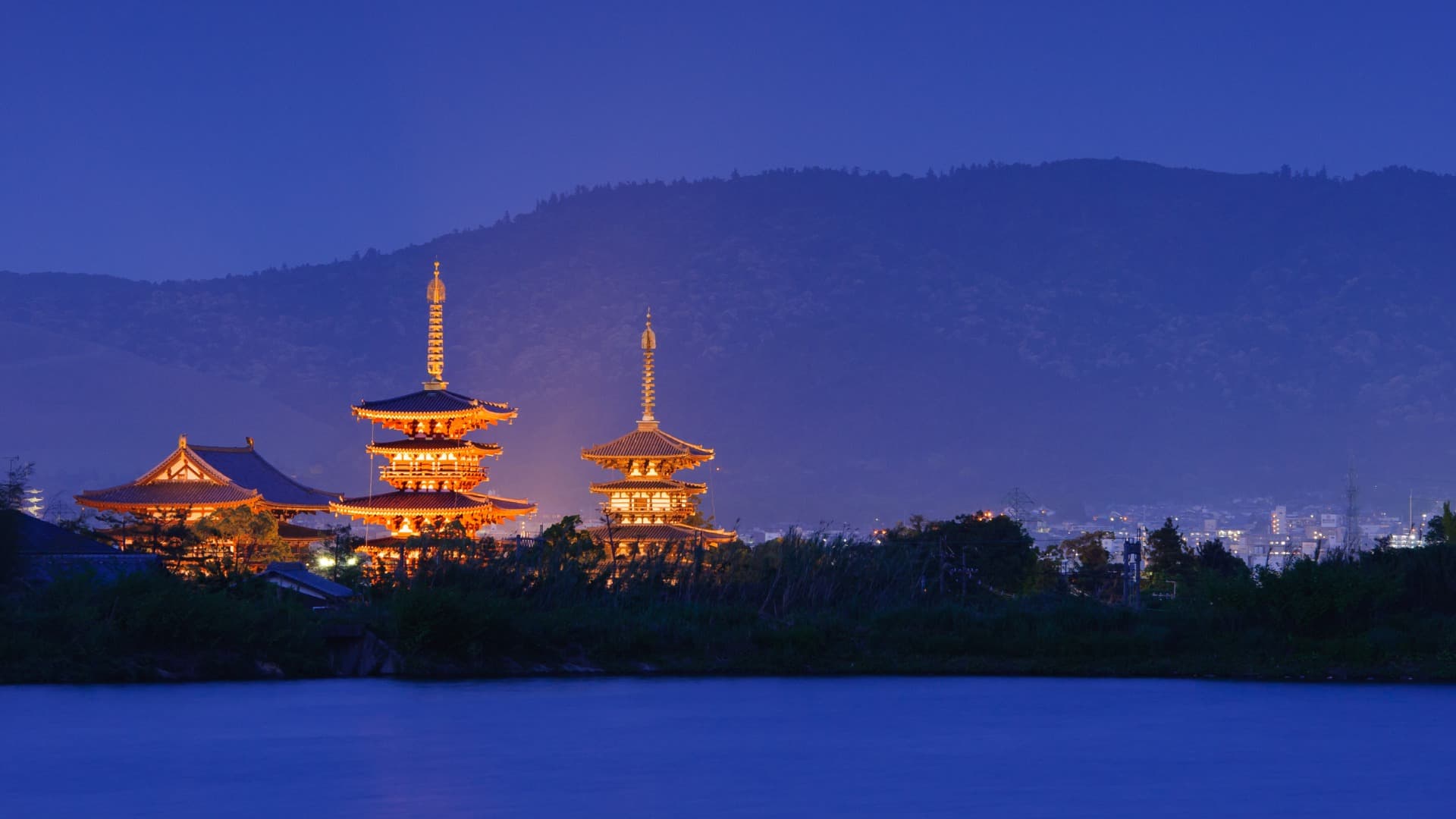
Table of Contents
- Overview of Yakushiji Temple
- History of Yakushiji Temple
- Highlights of Yakushiji Temple
Introduction
Yakushiji Temple is one of the most important temples in Japanese Buddhism. Located in the ancient capital of Nara, it boasts a history spanning over 1,300 years. With its beautiful temple layout, nationally designated architectural treasures, and a remarkable collection of Buddhist art, this temple has undergone countless transformations throughout its long history.
In this article, we provide a detailed introduction to the historical background and highlights of Yakushiji Temple, delving deep into its many charms.
Overview of Yakushiji Temple
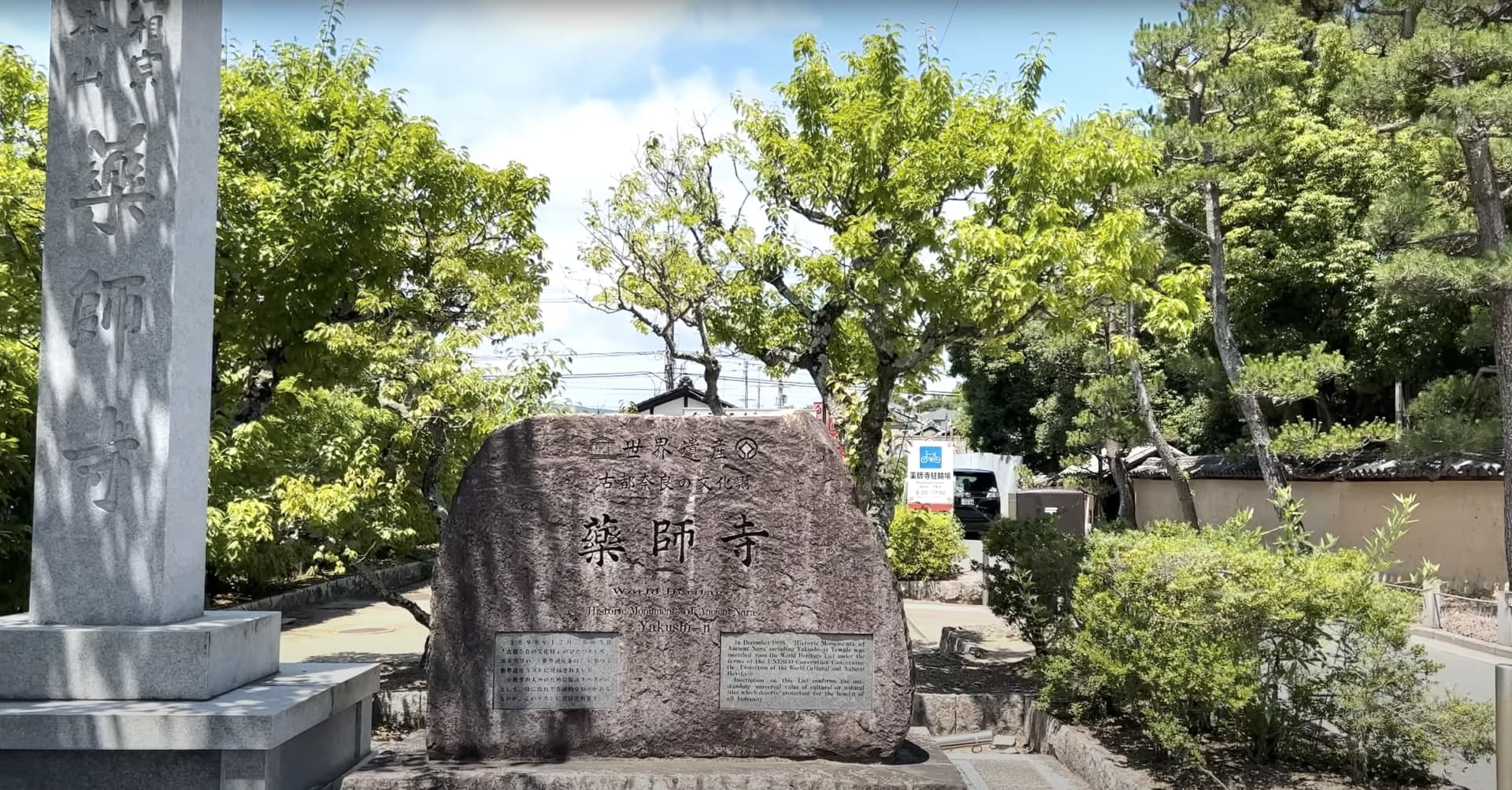
Yakushiji Temple is the head temple of the Hosso school of Buddhism, located in Nishinokyo-cho, Nara City, Nara Prefecture, and has played a crucial role in the history of Japanese Buddhism. Its founding dates back to 680 AD (the 9th year of Emperor Tenmu’s reign), when Emperor Tenmu prayed for the recovery of his consort, Empress Jito, from illness.
Originally, Yakushiji was built in Fujiwara-kyo during the Asuka period, but it was relocated to its present location in Nishinokyo, Nara City, when the capital moved to Heijo-kyo in 710 AD. Although many buildings were destroyed by fire and war over the centuries, the East Pagoda (Toto) has survived since the temple’s founding and is designated as a National Treasure.
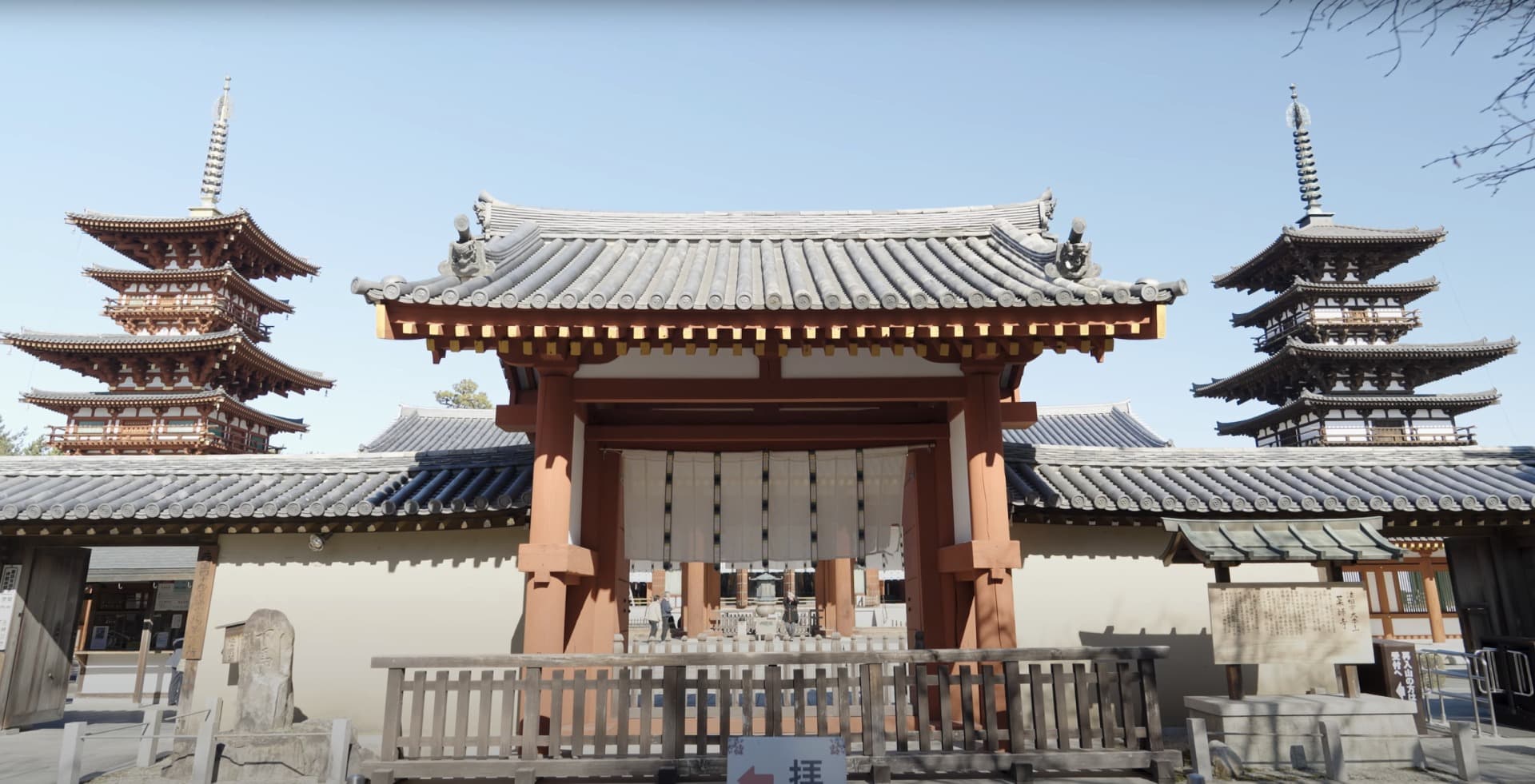
The temple layout features bilateral symmetry, with the East Pagoda and West Pagoda standing side by side in a twin-tower style that is rare even in Japan. In particular, the East Pagoda is a three-story pagoda with decorative “mokoshi” (subsidiary roofs) on each level, giving it the unique appearance of a six-story tower when viewed from a distance. The Yakushi Triad, designated as a National Treasure, is considered one of the supreme masterpieces of Japanese Buddhist art. The temple also houses numerous other National Treasures and Important Cultural Properties, and its artistic value is highly regarded both domestically and internationally.
In recent years, major restoration and repair work has been carried out. The West Pagoda was rebuilt in 1976, and the Great Lecture Hall (Daikodo) was restored in 2003. Through these efforts, the temple layout as it appeared at the time of its founding is gradually being recreated. In addition, many worshippers and tourists visit through Buddhist events and international cultural exchanges.
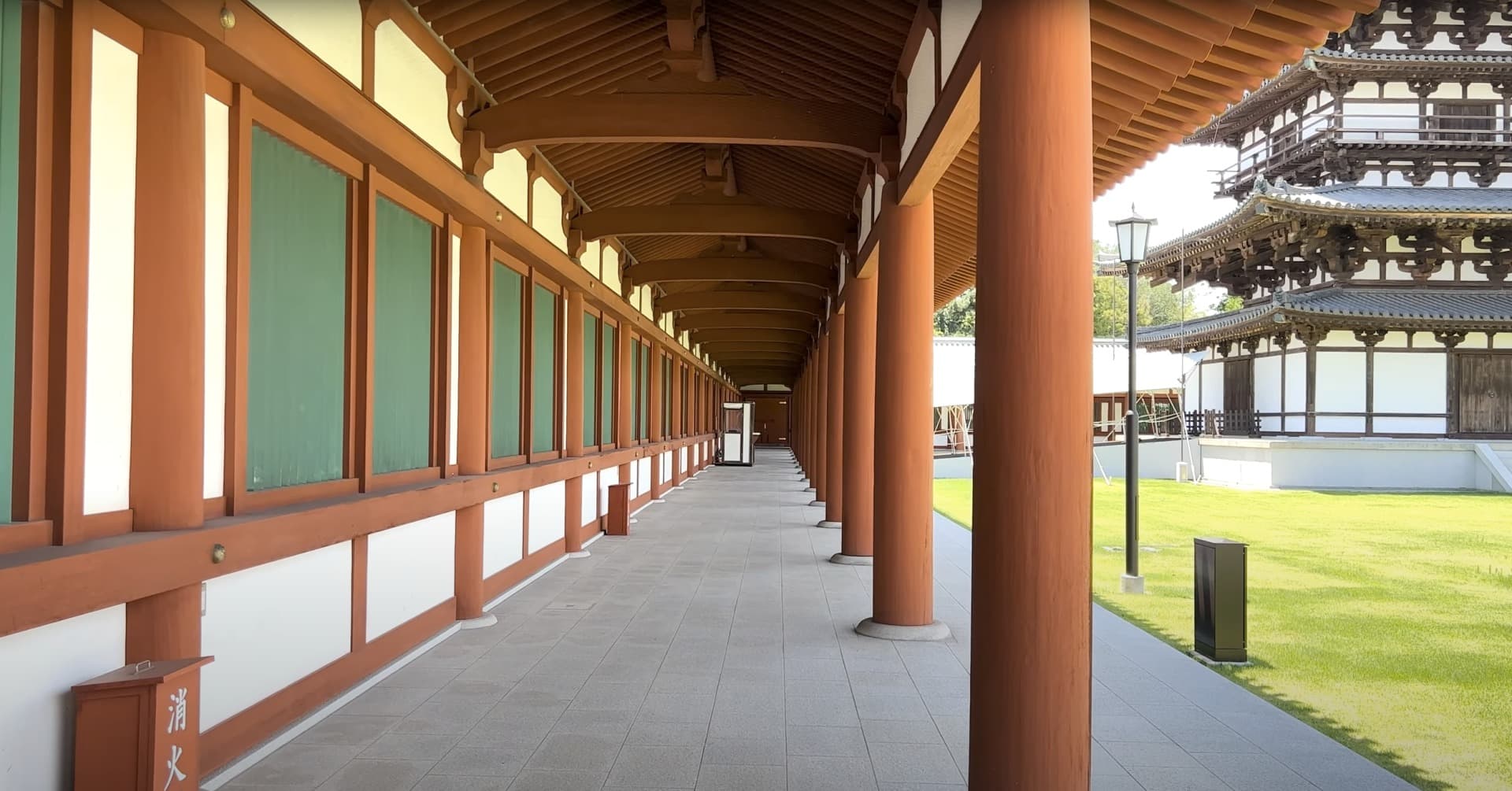
In 1998, Yakushiji was registered as a UNESCO World Heritage Site as part of the “Historic Monuments of Ancient Nara,” earning international recognition for its historical and cultural significance.
History of Yakushiji Temple
Since Emperor Tenmu initiated its founding, Yakushiji Temple has endured numerous historical events to survive to the present day. Below, we present the major events in Yakushiji’s history organized by category, based on accurate historical information.
1. Founding (680 AD)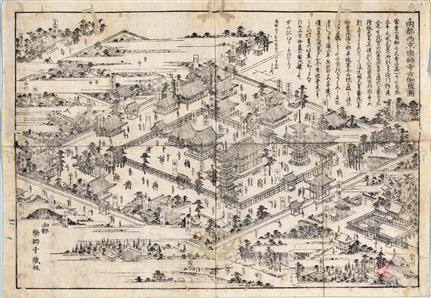
The founding of Yakushiji dates back to 680 AD (the 9th year of Emperor Tenmu). Emperor Tenmu initiated the construction of the temple to pray for the recovery of his ailing consort, Empress Jito. The temple was originally located in “Yakushiji Fujiwara-kyu” south of Fujiwara-kyo, in what is now the Asuka region. After Emperor Tenmu’s death, Empress Jito continued his legacy, and the temple was completed during the reign of their son, Emperor Monmu.
Yakushiji served as a central institution of state Buddhism at the time, playing important political and religious roles. The first temple complex was built in Fujiwara-kyo, and notably, the Yakushi Triad — with Yakushi Nyorai (the Medicine Buddha) as the principal image — was enshrined there. Faith in the healing power of Yakushi Nyorai spread widely. This Yakushi Triad was later transferred when the capital moved to Heijo-kyo.
2. Transfer to Heijo-kyo (710 AD)
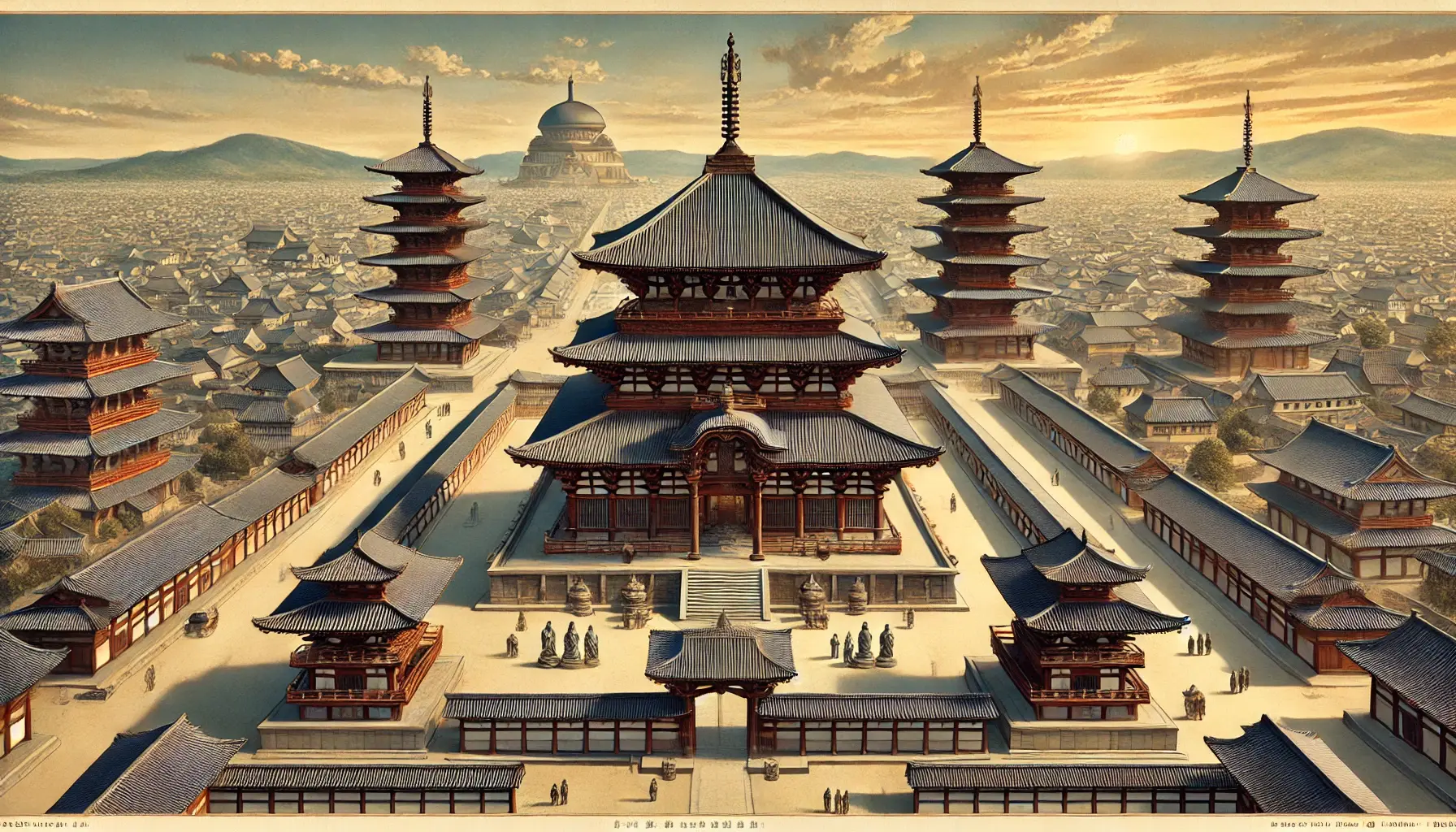 *Illustrated image
In 710 AD, when the capital was relocated to Heijo-kyo in Nara, Yakushiji was also moved to its current location in Nishinokyo, Nara City. This relocation coincided with the political and cultural shift from Fujiwara-kyo to Heijo-kyo, and Yakushiji once again assumed its role as a central temple of the new capital. The original Yakushiji in Fujiwara-kyo was rebuilt as a temple of Heijo-kyo, and the present Yakushiji carries on that legacy.
After the relocation, Yakushiji adopted a symmetrical twin-tower layout with the East Pagoda and West Pagoda flanking the Kondo (Main Hall). This style was extremely rare among Japanese Buddhist temple architecture and represents a distinctive feature of temple layouts from this period. The Yakushi Triad was enshrined in the Kondo after being transferred from Heijo-kyo, and the East and West Pagodas stood symmetrically, creating a beautifully balanced temple complex. This architectural style had a significant influence on the development of Japanese temple architecture.
3. Losses from War and Fire (Heian to Muromachi Period)
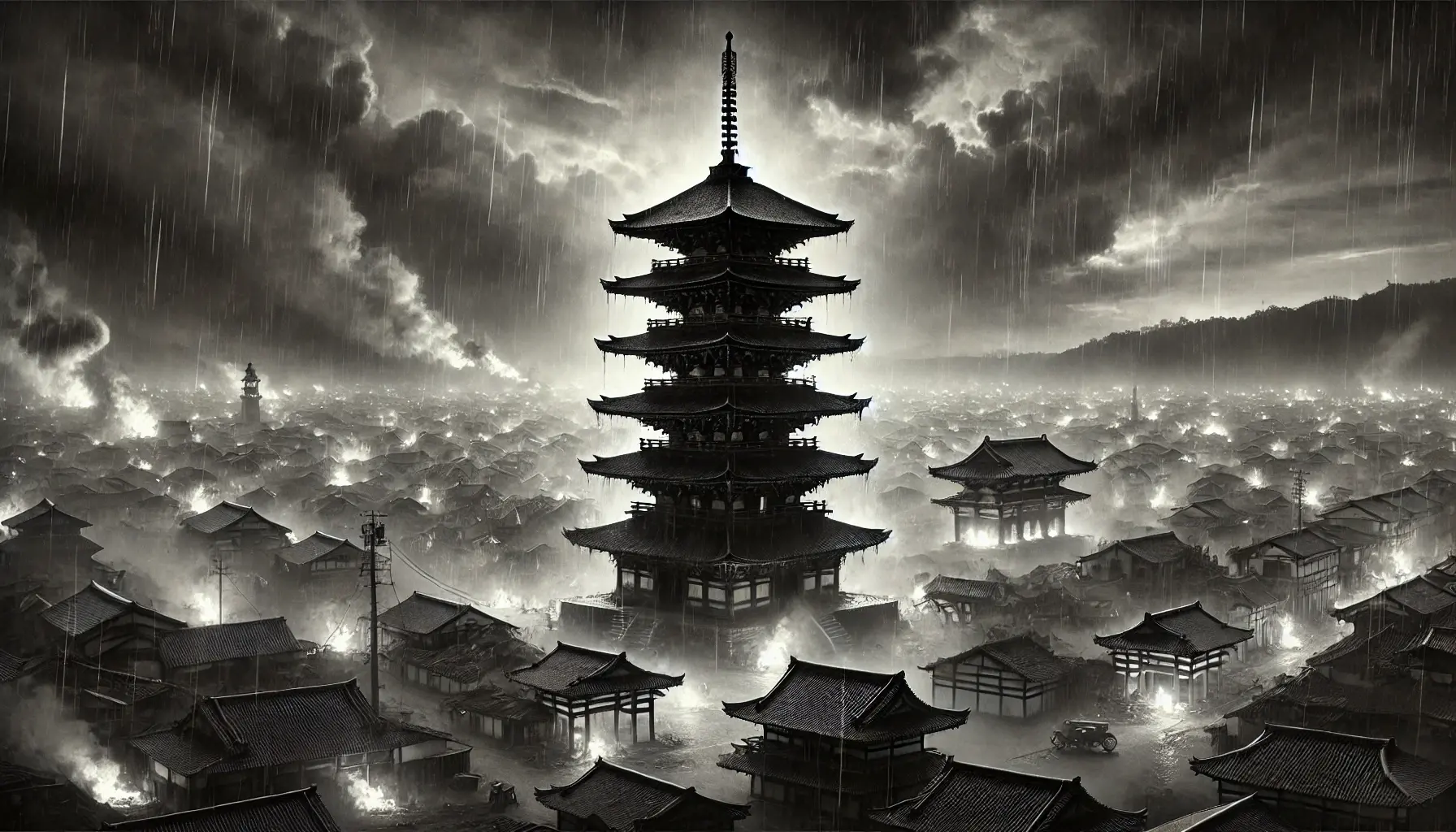 *Illustrated image
From the Heian to the Muromachi period, Yakushiji suffered from multiple fires and wars, resulting in the loss of many buildings. In particular, the “Burning of Nanto” in 1180 (Jisho 4) dealt a devastating blow to the temple. When the Taira (Heike) forces attacked the Nara area, causing massive damage to Todai-ji and Kofuku-ji, Yakushiji was also burned to the ground. Although most structures were destroyed, the East Pagoda miraculously survived the flames.
The East Pagoda is a three-story pagoda with “mokoshi” (subsidiary roofs) on each level, giving it a unique architectural style. Because it appears to have six stories from the outside, it has been called “frozen music” and is designated as a National Treasure — an extremely valuable heritage of Japanese architectural history. Even through the turmoil of the Muromachi period, the East Pagoda survived thanks to its robust structure and good fortune.
4. Reconstruction of the West Pagoda (1981)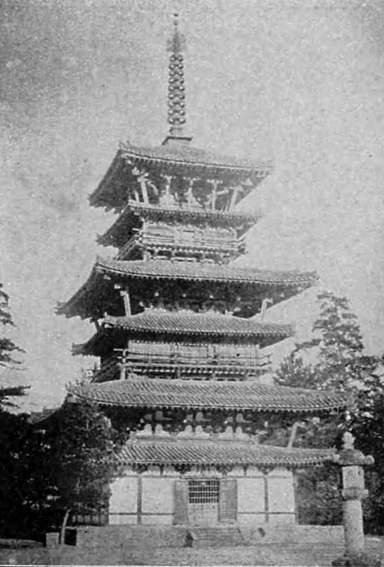
The West Pagoda had been lost to war and fire over the course of history, but from 1976 to 1981, it was faithfully reconstructed based on detailed historical records and archaeological surveys. During the reconstruction process, skilled craftsmen gathered to faithfully reproduce the techniques and designs of the original era.
Like the East Pagoda, the West Pagoda was rebuilt as a three-story pagoda, thereby restoring Yakushiji’s characteristic symmetrical twin-tower layout. This restoration project is regarded as one of the most significant in Japanese architectural history and is recognized as an important effort to pass on the architectural techniques and culture of the ancient period to modern times.
5. Restoration of the Great Lecture Hall (2003)
 *Illustrated image
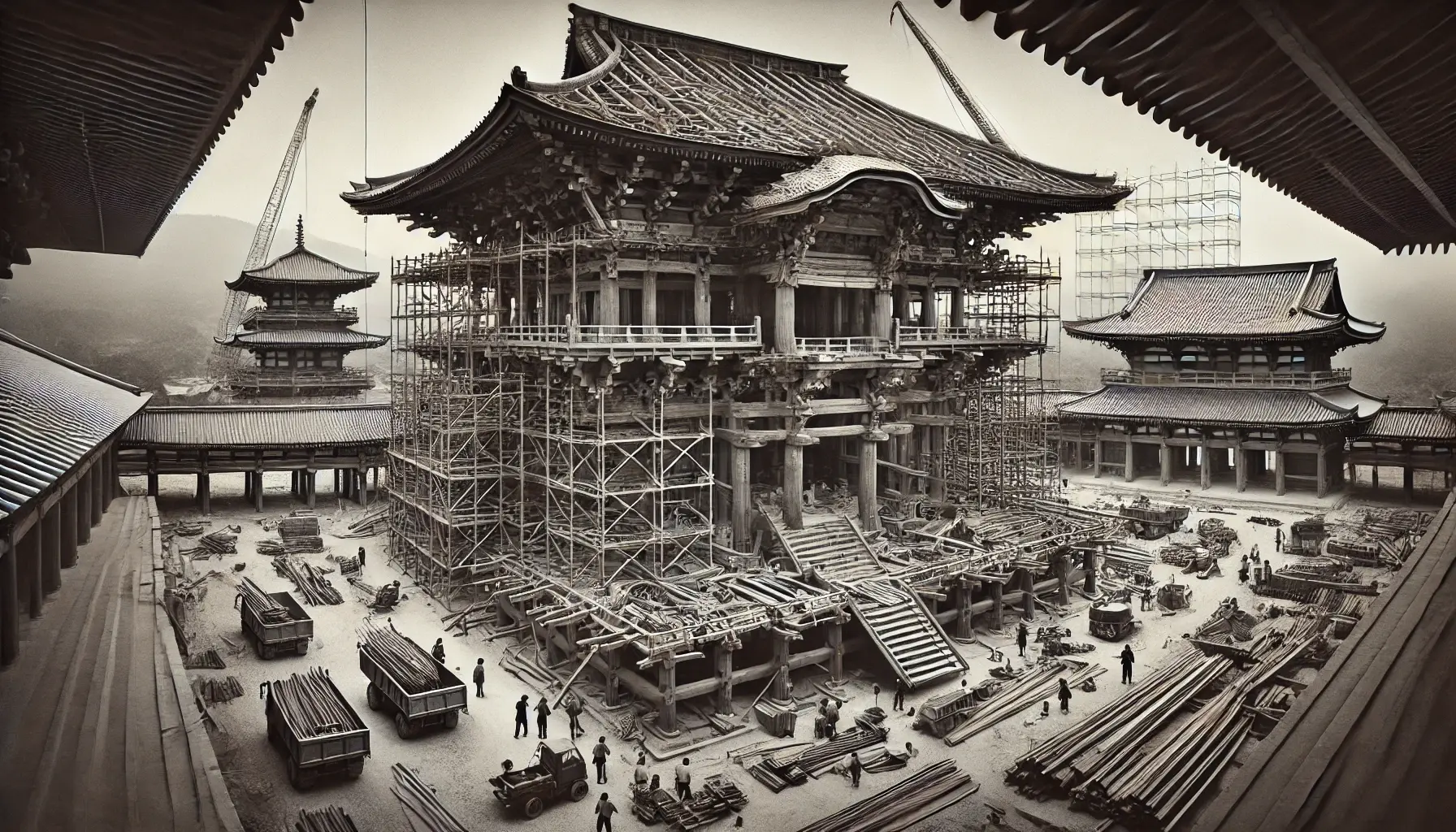
The Great Lecture Hall (Daikodo) of Yakushiji was reconstructed in 2003. Located at the center of Yakushiji’s temple layout, the hall was restored on the same site as the original, based on ancient architectural designs. The restoration relied on historical documents and archaeological excavation results to faithfully recreate the structure of the era as closely as possible.
Through this restoration, Yakushiji’s temple layout became more complete, allowing the entire complex to recapture the appearance it had at the time of founding. Since its reconstruction, the Great Lecture Hall has been used as a venue for Buddhist ceremonies and cultural exchange, serving as an important facility that fulfills Yakushiji’s religious and cultural role.
In 1998, Yakushiji was registered as a UNESCO World Heritage Site as part of the “Historic Monuments of Ancient Nara.” This recognition established Yakushiji’s historical and cultural value not only within Japan but on a global scale.
6. Recent Restoration and Preservation Activities (21st Century)
Even in the 21st century, preservation and restoration work on buildings such as the East Pagoda continues at Yakushiji. In particular, a decade-long major repair project on the East Pagoda began in 2012 and was completed in 2020. This work has further ensured the preservation of the pagoda’s beautiful original appearance. As an important cultural heritage to be passed on to future generations, ongoing preservation activities continue at Yakushiji.
Highlights of Yakushiji Temple
Yakushiji Temple has played an important role in Japanese Buddhist and architectural history, and offers numerous highlights. Here are the must-see spots when visiting Yakushiji.
■ East Pagoda (National Treasure)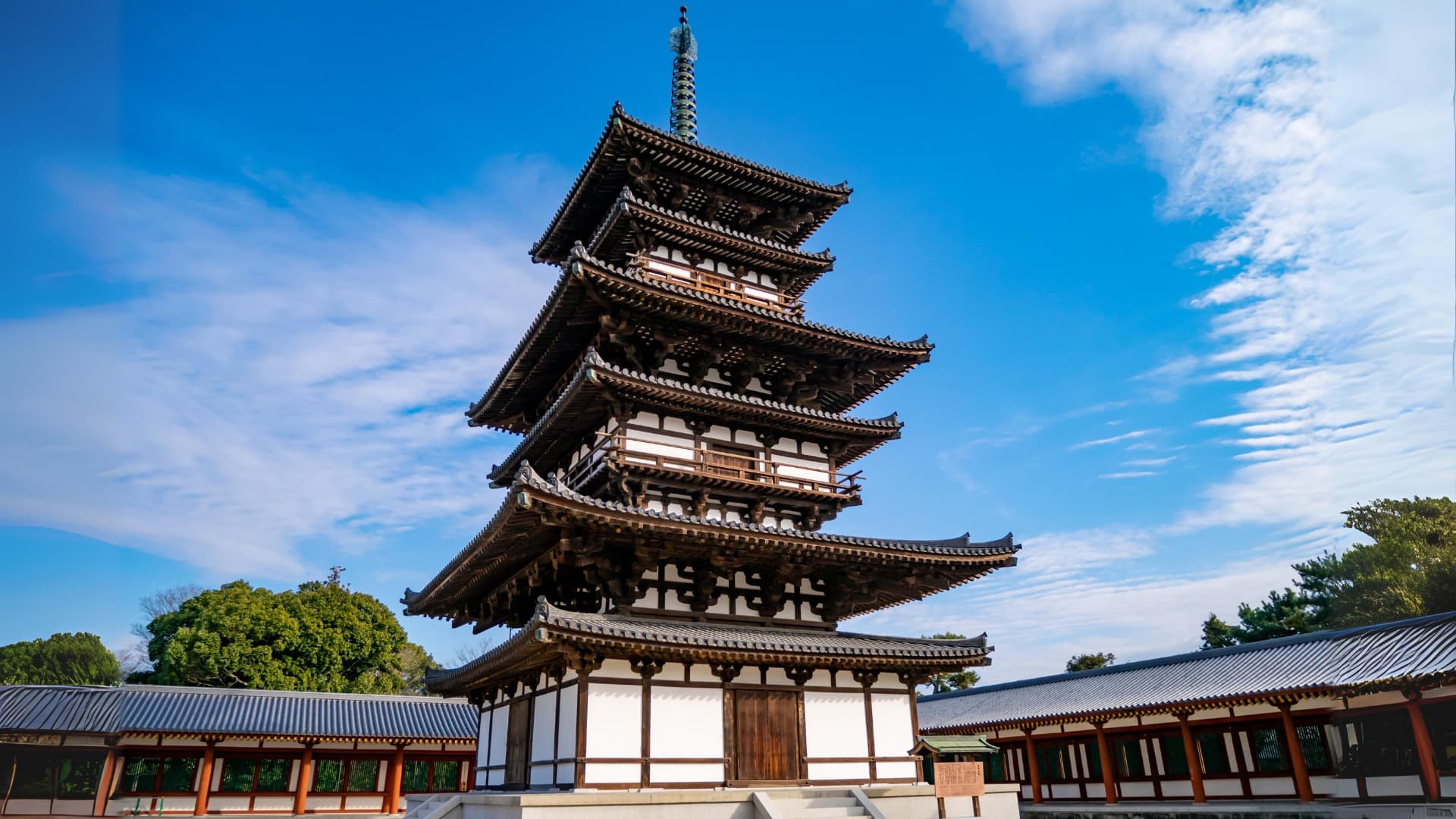
The symbol of Yakushiji, the East Pagoda is the only surviving structure from the temple’s founding and is designated as a National Treasure. Standing approximately 34 meters tall, this three-story pagoda features “mokoshi” (decorative subsidiary roofs) on each level, giving it the distinctive appearance of a six-story tower when viewed from afar.
This structure possesses a beauty often described as “frozen music” and is considered a masterpiece of Japanese architecture. Having survived the wars of the Kamakura period, it retains its original appearance and is an absolute must-see for visitors to Yakushiji.
■ West Pagoda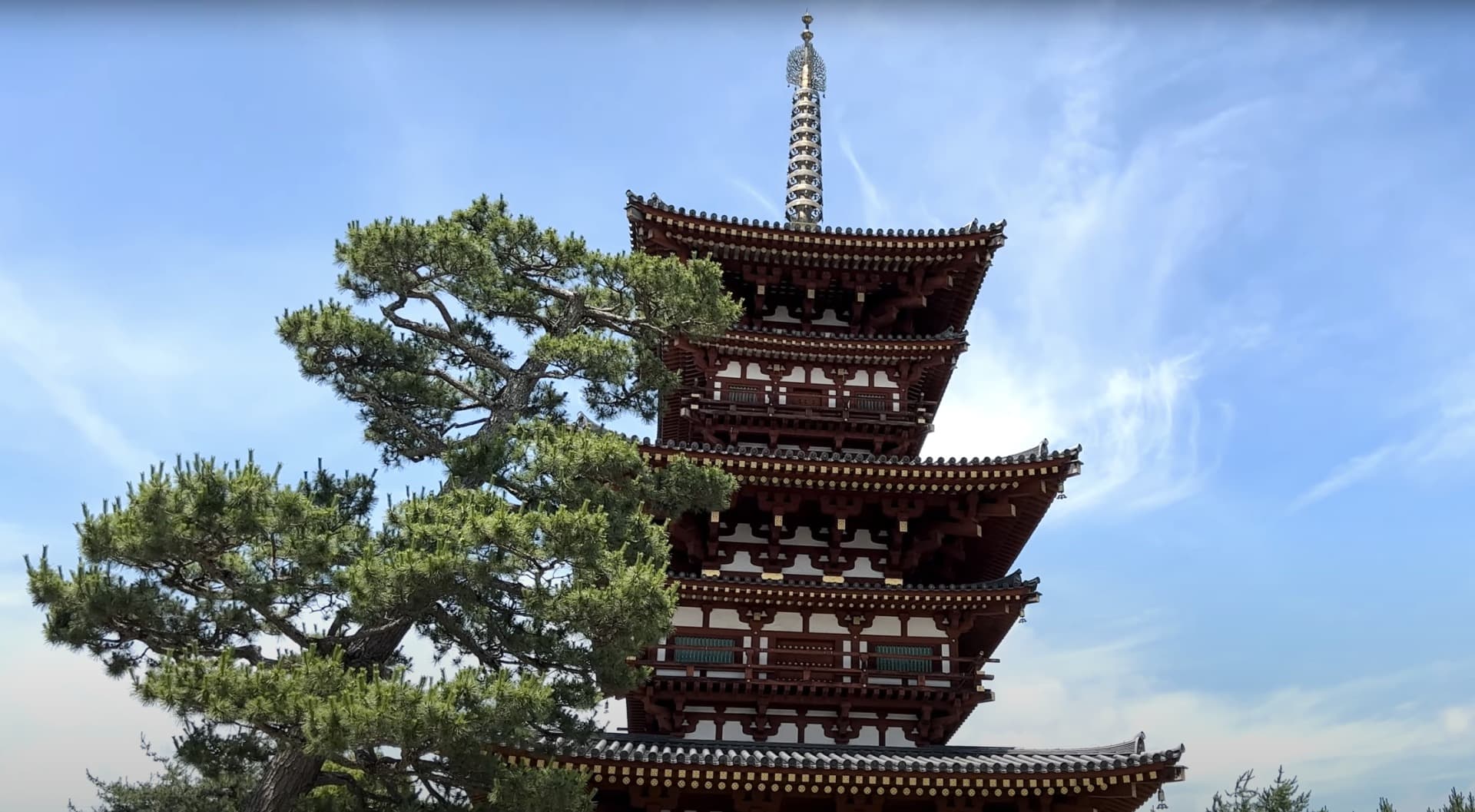
Rebuilt in 1981, the West Pagoda is a three-story pagoda identical to the East Pagoda. Faithfully restored using the techniques of the reconstruction era, this pagoda further enhances the beauty of Yakushiji’s temple complex.
The symmetrical twin-tower layout is rare even in Japan, and the sight of the two pagodas rising side by side symbolizes Yakushiji’s grandeur. The West Pagoda is particularly beautiful in the evening when it is bathed in sunlight, captivating visitors with its radiant glow.
■ Kondo (Main Hall)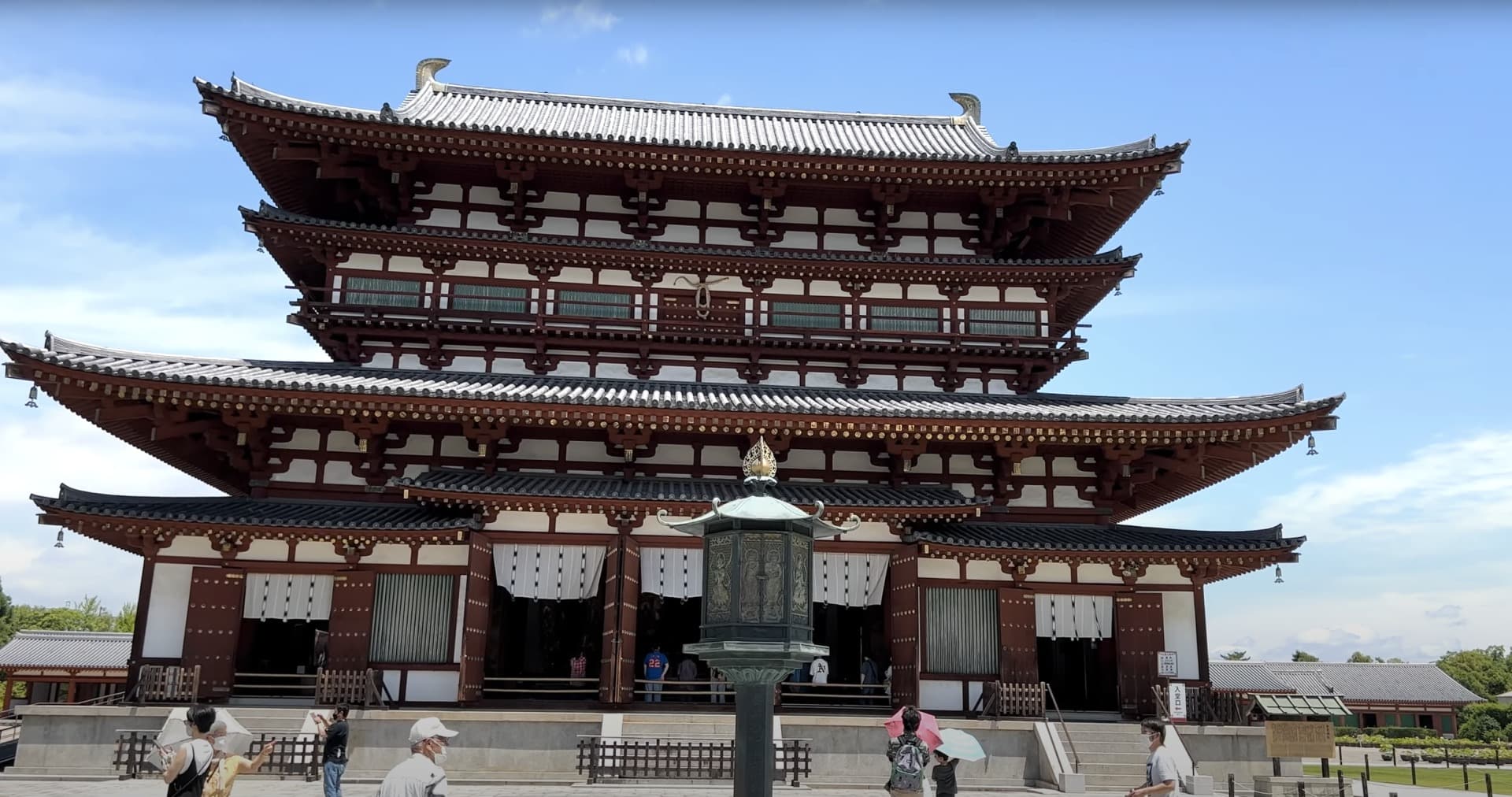
The Kondo is the central building of Yakushiji, housing the Yakushi Triad. This triad consists of Yakushi Nyorai (the Medicine Buddha) at the center, flanked by Nikko Bosatsu (Sunlight Bodhisattva) and Gakko Bosatsu (Moonlight Bodhisattva), and is considered one of the supreme masterpieces of Japanese Buddhist art.
The statue of Yakushi Nyorai in particular, though rebuilt during the Kamakura period, displays overwhelmingly exquisite carving and detailed beauty. The interior of the hall is enveloped in a solemn and serene atmosphere where visitors can feel the spirit of Buddhism.
■ Great Lecture Hall (Daikodo)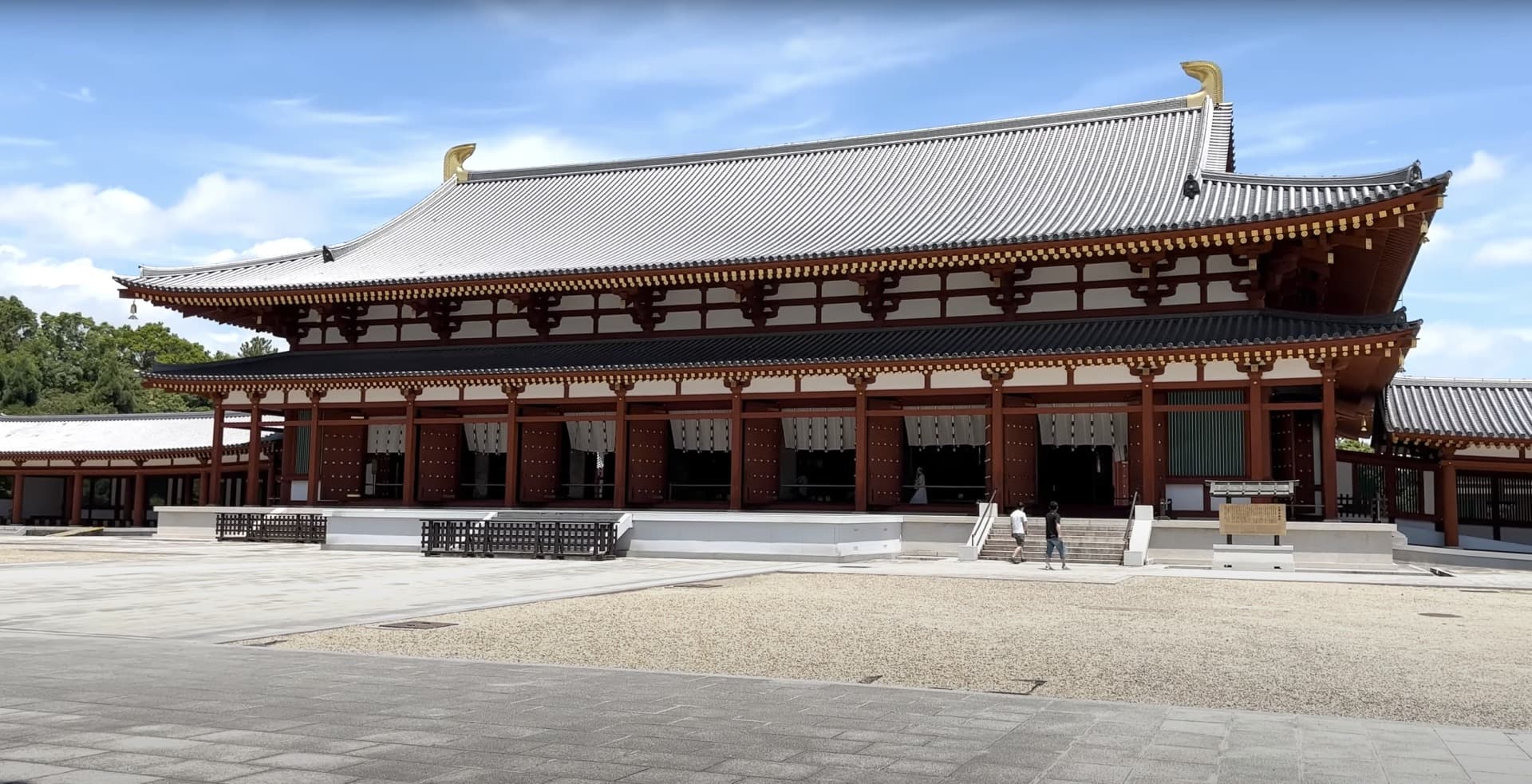
Restored in 2003, the Great Lecture Hall is located at the center of Yakushiji’s temple layout and faithfully recreates the original structure. Originally used as a place for learning Buddhist doctrines, it now also serves as a venue for large-scale Buddhist ceremonies and cultural exchange.
Inside the hall, exhibitions on the history of Yakushiji and Buddhist doctrines are presented, providing visitors with a deeper understanding of Buddhist culture. Walking around the hall allows you to leisurely appreciate the overall temple layout of Yakushiji.
■ Genjo Sanzo-in Garan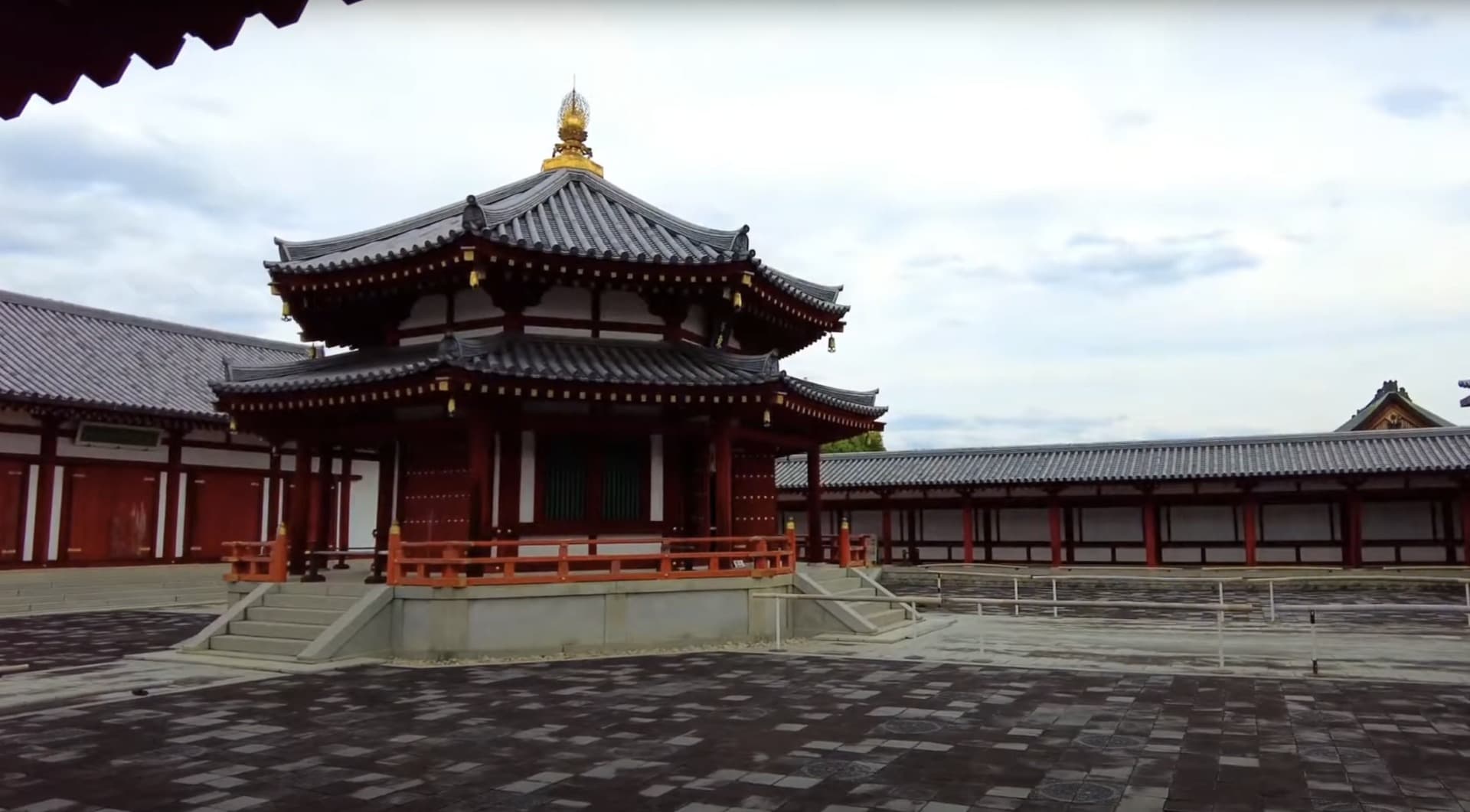
The Genjo Sanzo-in is a temple precinct built to commemorate the Chinese monk Xuanzang (Genjo Sanzo), who is known for bringing Buddhist scriptures from India and spreading Buddhist teachings widely. The main hall of this precinct houses an image of Xuanzang, and exhibitions honoring his achievements are also on display.
Notable features include rare Buddhist statues and historical artifacts such as the “Statue of Xuanzang” and the “Byakuho Sekizo” (White Phoenix Stone Image), offering visitors yet another dimension of Yakushiji’s appeal.
■ Nishinokyo Scenery and Gardens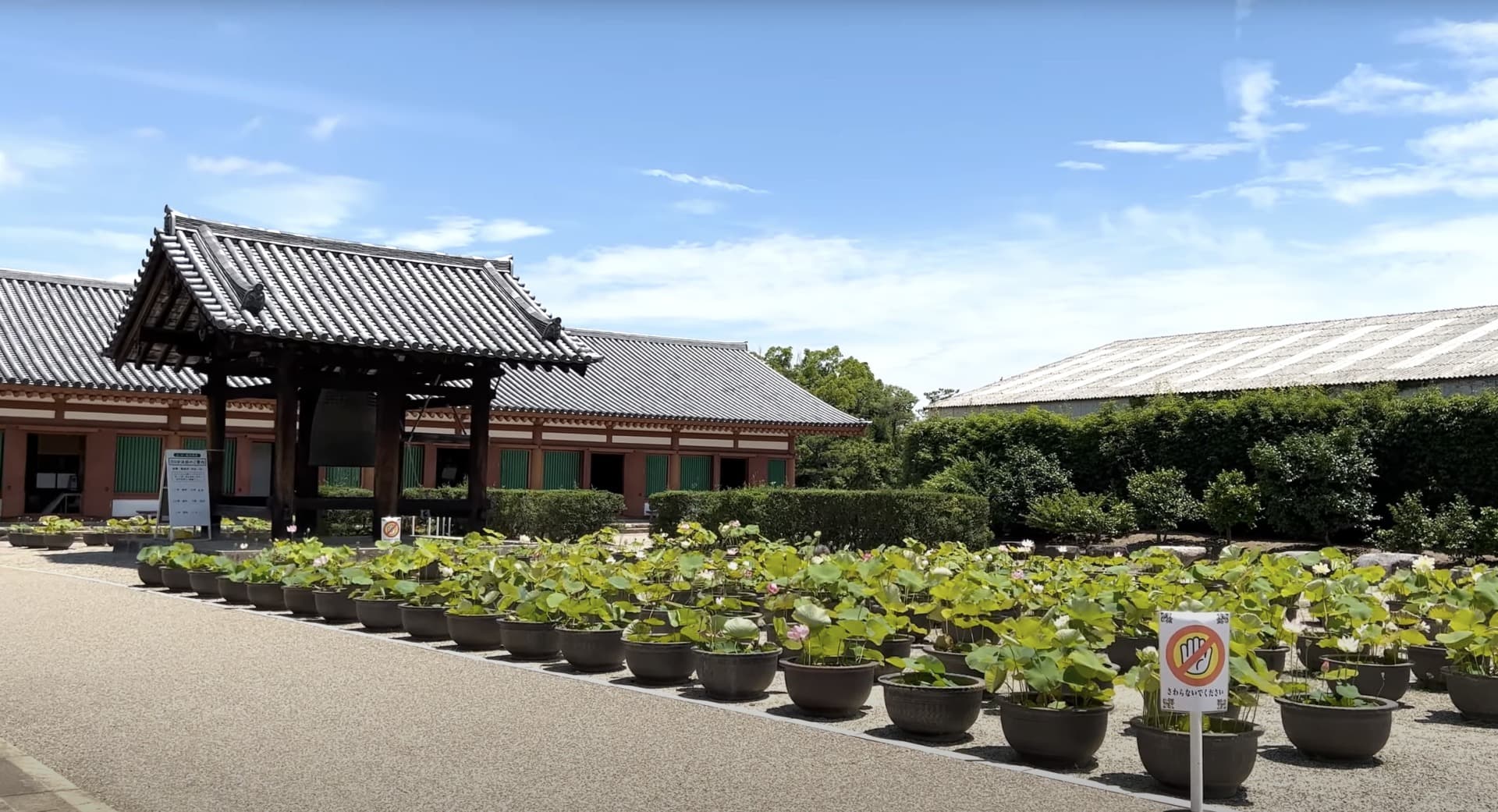
The beautiful gardens surrounding Yakushiji are also a delightful spot for visitors. In spring, cherry blossoms are in full bloom, and in autumn, the fall foliage colors the temple grounds. Strolling through the gardens, you can enjoy the harmony between the four seasons of nature and Yakushiji.
In particular, walking around the area surrounding Yakushiji reveals the scenery of the Nishinokyo district, where you can feel the tranquil atmosphere of the ancient capital of Nara.
★ Introducing Our Tourism Site ★
Just like this article, we introduce carefully selected tourist destinations across Japan. Bookmarking this site ensures easy access to essential tourism information you should know. We continue to update regularly, providing you with an even more exciting destination discovery experience.
Click the image below if you are interested
In Closing
Yakushiji Temple stands as an important temple symbolizing Japanese Buddhist culture throughout its long history. Despite enduring countless wars and fires since its founding, it has been preserved to this day. Beyond the historically valuable buildings and Buddhist statues such as the National Treasure East Pagoda and the Yakushi Triad, the beautiful scenery through all four seasons also captivates visitors.
To experience the spirit and culture of Japanese Buddhism firsthand, we highly recommend visiting Yakushiji Temple and discovering its many charms for yourself.