
🕓 2026/2/11
#Tourist Destination
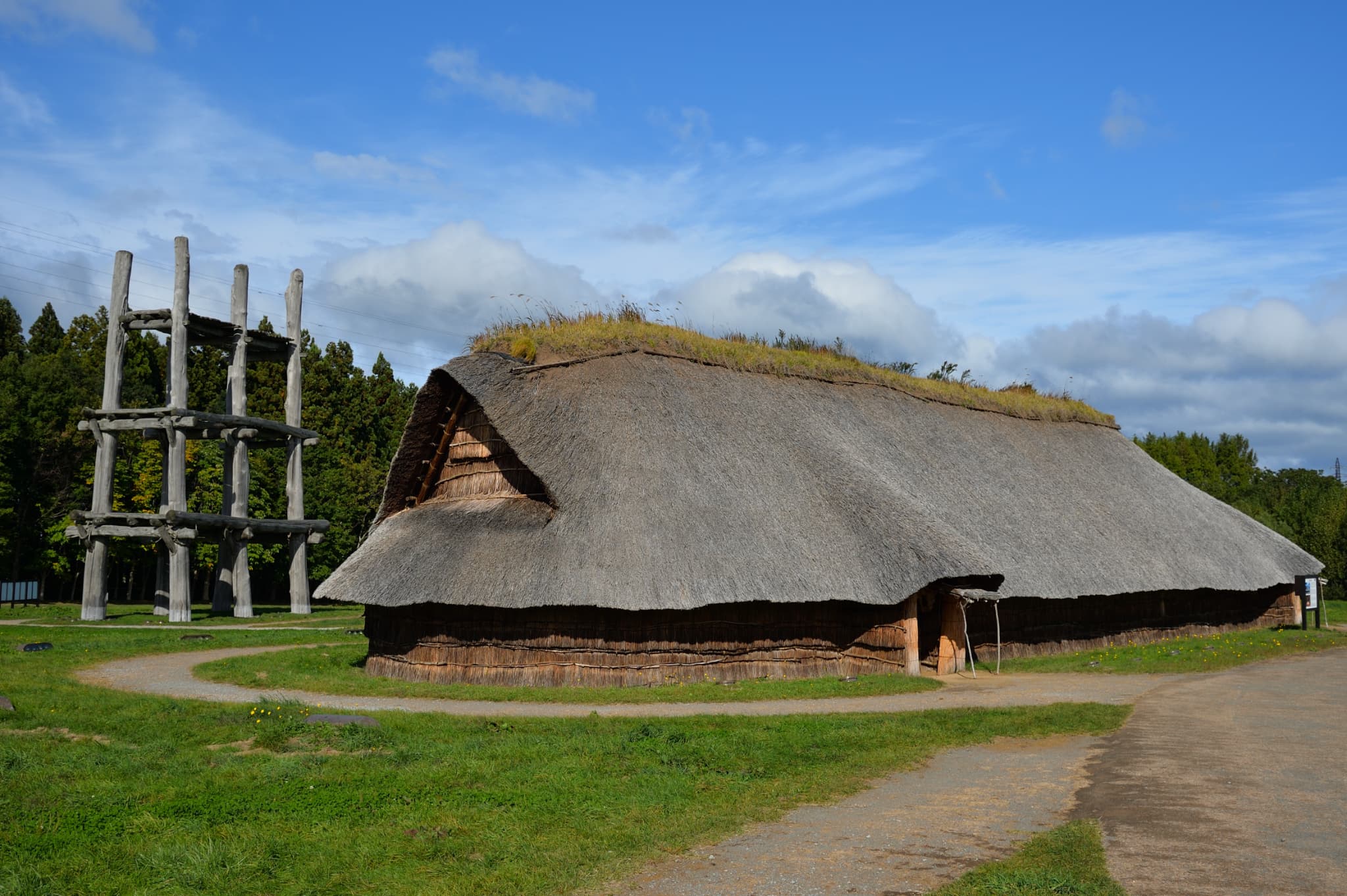
Table of Contents
- A Beautiful Castle for All Seasons | Hirosaki Castle
- A Thousand-Year Hidden Hot Spring | Sukayu Onsen
- One of Japan’s Largest Archaeological Sites | Sannai-Maruyama Site
- 3 Must-Visit Tourist Spots in Aomori Prefecture
- – What is Aomori Prefecture? –
- A Beautiful Castle for All Seasons | Hirosaki Castle
- >See Details of Hirosaki Castle
3 Must-Visit Tourist Spots in Aomori Prefecture
– What is Aomori Prefecture? –
Aomori Prefecture is a captivating area located at the northernmost tip of Honshu, Japan. Its rich nature and unique history are highly attractive to international tourists.
Known since ancient times as Mutsu, it served as a key point of exchange between Honshu and Hokkaido. Aomori Prefecture was also a cultural center of the northern Tohoku region where the Hiraizumi culture flourished under the Oshu Fujiwara clan, and unique cultures were cultivated by two feudal domains: the Tsugaru and Nanbu clans.
Aomori Prefecture captivates visitors with its beautiful scenery, including the Shirakami Mountains (a UNESCO World Heritage Site), the Oirase Stream, and spectacular views along the Gono Line. Local cuisine featuring regional ingredients and traditional crafts are also among the joys of tourism.
A Beautiful Castle for All Seasons | Hirosaki Castle


Highlights of Hirosaki Castle
Hirosaki Castle is a historic castle located in Hirosaki City, Aomori Prefecture, captivating visitors with its diverse charms. It was built in 1611 by Tsugaru Nobuhira, the son of Tsugaru Tamenobu. The castle tower is one of only 12 remaining original towers from the Edo period in Japan, and as the only surviving castle tower in the Tohoku region, it is designated as a National Important Cultural Property.
One of its major attractions is the natural beauty that changes with the seasons. In spring, about 2,600 cherry trees bloom throughout Hirosaki Park, and the “Hirosaki Cherry Blossom Festival” is held, drawing many tourists. In autumn, the fall foliage, and in winter, the snow scenery offer different beautiful landscapes to enjoy with each season.
Furthermore, within the castle grounds, five castle gates, three turrets, moats, and earthen walls remain from the time of construction, making them highly valued historically. Touring these ruins allows you to feel the vestiges of the Edo period.
History of Hirosaki Castle
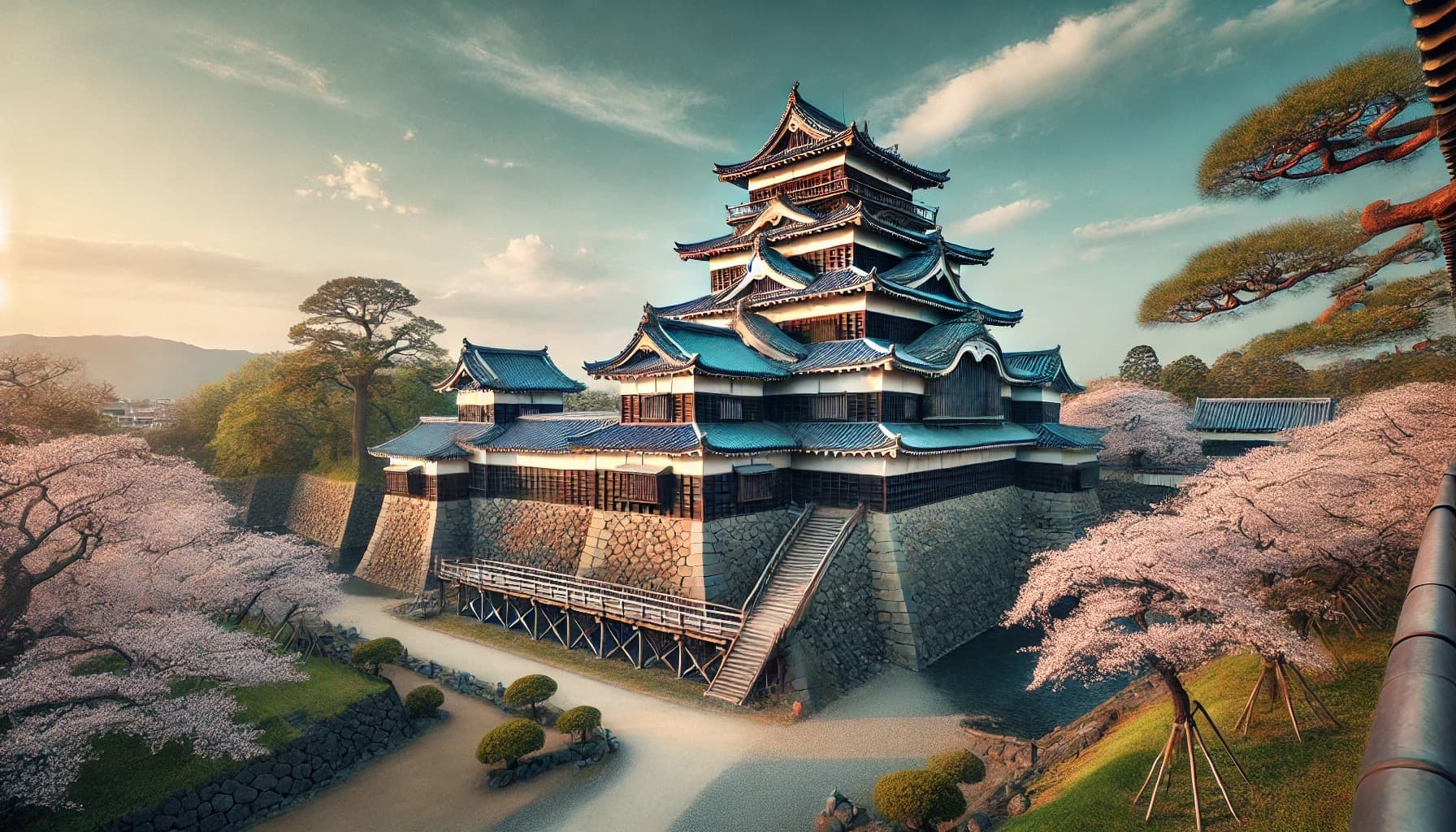
During the Edo period, Hirosaki Castle served as the residence of the Tsugaru clan of Hirosaki Domain, and was the political and economic center of the Tsugaru region. In 1603, Tamenobu planned to build a new castle in Takaoka (present-day Hirosaki City), but died in Kyoto, and construction was interrupted. Subsequently, the second lord resumed construction, and in 1611, Takaoka Castle (later Hirosaki Castle) was completed with a five-story tower.
Hirosaki Castle’s tower was destroyed by lightning. At the time, the Laws for Military Houses restricted the construction of new castle towers, so the tower was not rebuilt for approximately 200 years. However, the 9th lord, Tsugaru Yasuchika, obtained permission from the shogunate and rebuilt a three-story tower under the guise of turret reconstruction.
After the Meiji Restoration, Hirosaki Castle became government property through the abolition of the feudal domain system and was used as an army garrison. It was later donated by the Tsugaru family to the government and developed as a park open to the public from the following year.
Access to Hirosaki Castle
- Address: 1 Oaza Shimoshirogane-cho, Hirosaki City, Aomori
- Google Maps Link: Hirosaki Castle
- Walking Access: About 20 minutes from Hirosaki Station
- Train/Bus Information: From Hirosaki Station, take a bus from Hirosaki Bus Terminal and get off at Hirosaki Park bus stop, then walk about 5 minutes


Highlights of Sukayu Onsen
Sukayu Onsen is a historic hot spring resort located on the slopes of Mt. Hakkoda in Aomori City, Aomori Prefecture, at an altitude of approximately 900 meters. It has been popular as a therapeutic bathing spot since the Edo period and continues to be loved by many people today.Its most iconic feature is the “Hiba Sennin-buro” (Thousand-Person Bath), built entirely of Japanese cypress (hiba) wood and boasting a vast space of 160 tatami mats.
Four different baths are arranged in a pillar-free open space. In particular, the “Netsu no Yu” (Hot Bath) has hot spring water bubbling up directly from beneath the bathtub, allowing you to enjoy fresh spring water directly. The water is an acidic sulfur spring, with a milky white color and a faint scent of sulfur.The facility includes a ryokan wing and a therapeutic bathing wing, with the latter equipped with a self-catering kitchen.
Surrounded by the rich nature of Mt. Hakkoda, Sukayu Onsen offers beautiful scenery that changes with the seasons. In winter, the surroundings are covered in snow, creating a magical winter landscape.
History of Sukayu Onsen
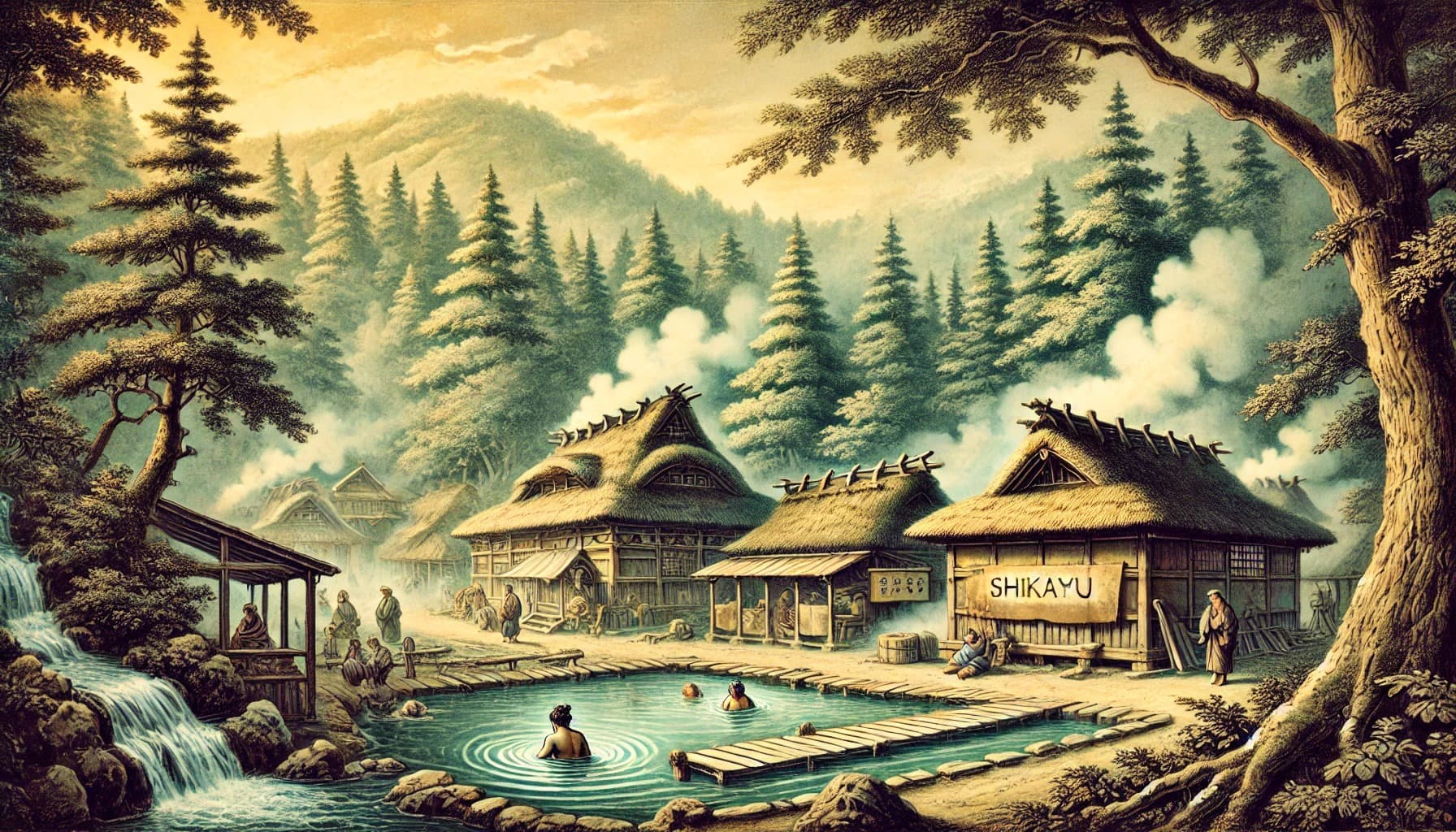
Sukayu Onsen is a hot spring resort with approximately 330 years of history, located in the Hakkoda mountain range in Aomori City, Aomori Prefecture. Discovered in 1684 (Jokyo 1), it was originally called “Shikayu” (Deer Hot Spring), but was renamed “Sukayu” (Acidic Hot Spring) due to the strong acidity of the water.
Flourishing as a therapeutic bathing spot from the mid-Edo period, it was officially established as “Sukayu Onsen Co., Ltd.” in 1933. In 1954, it was designated as “National Health Resort Hot Spring No. 1” as an excellent hot spring resort, with its healing properties and abundant water supply highly valued. The printmaker Shiko Munakata also loved Sukayu, creating many works while undergoing therapeutic bathing.
Access to Sukayu Onsen
- Address: Arakawa Nakagawa Onsen, Aomori City, Aomori
- Google Mapsリンク: Sukayu Onsen
- Walking Access: About 1 minute from the nearest bus stop “Sukayu”
- Train/Bus Information: Take the Hakkoda sightseeing bus from Aomori Station and get off at the “Sukayu” bus stop
One of Japan’s Largest Archaeological Sites | Sannai-Maruyama Site


Highlights of the Sannai-Maruyama Site
The Sannai-Maruyama Site is one of the largest Jomon period settlement ruins in Japan, located in Aomori City, Aomori Prefecture. Due to its scale and excellent state of preservation, it is considered an extremely important site for understanding Jomon culture.The site spans approximately 42 hectares, with various remains confirmed including pit dwelling ruins, large pillar-supported building ruins, cemeteries, and earthen mounds.
A wide variety of artifacts have been discovered in excellent condition, including pottery, stone tools, wooden products, bone and antler tools, and lacquerware.Furthermore, more than 2,000 ritual-related artifacts such as dogu figurines have been excavated in large quantities, indicating the continuity of religious activities over a long period.
Within the site, visitors can tour restored pit dwellings and large pillar-supported buildings to experience Jomon period life. At the adjacent “Jomon Jiyukan” museum, exhibitions of excavated artifacts and hands-on workshops help deepen understanding of Jomon culture.In 2021, it was registered as a UNESCO World Cultural Heritage Site as part of the “Jomon Prehistoric Sites in Northern Japan.”
History of the Sannai-Maruyama Site
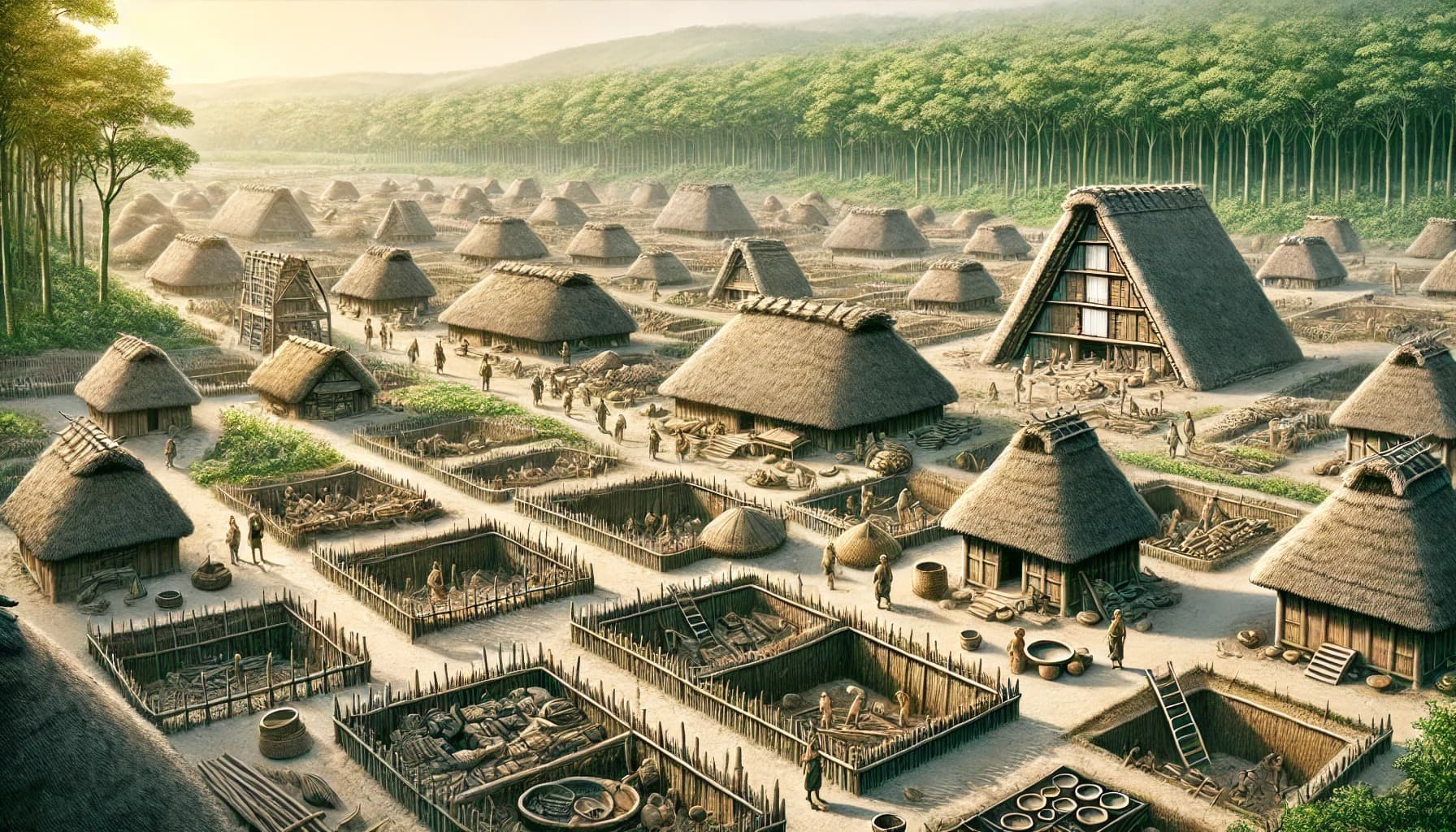
The Sannai-Maruyama Site is a large-scale settlement from the middle of the Early Jomon period to the end of the Middle Jomon period (approximately 5,900 to 4,200 years ago). The site spans approximately 42 hectares, and it has been revealed that settled life was maintained over a long period.
Excavation surveys have uncovered various remains including pit dwellings, large pillar-supported buildings, earthen mounds, and graves, with large quantities of pottery, stone tools, wooden products, and bone and antler products unearthed. In particular, the large pillar-supported building ruins using chestnut wood pillars approximately 1 meter in diameter demonstrate the advanced construction techniques of the time.Based on these discoveries, the Sannai-Maruyama Site is considered an extremely important site for understanding the life, culture, and social structure of Jomon period people.
Access to the Sannai-Maruyama Site
- Address: Oaza Sannai Aza Maruyama, Aomori City, Aomori
- Google Maps リンク: Sannai-Maruyama Site
- Walking Access: About 30 minutes by bus from Aomori Station, get off at “Sannai-Maruyama Site Entrance” bus stop, then walk about 5 minutes
- Train/Bus Information: Take the municipal bus “Sannai Line” from Aomori Station
Related Articles