- Introduction
- Overview of Bitchu Matsuyama Castle
- History of Bitchu Matsuyama Castle
- Construction in the Kamakura Period and the Bitchu Rebellion (13th-14th Century)
- Renovation into an Early Modern Castle — Kobori Masakazu and Mizunoya Katsutaka (17th Century)
- Yamada Hokoku’s Domain Reforms and the End of the Edo Period (19th Century)
- Revival from Neglect — Rediscovery as a “Castle in the Sky” (20th-21st Century)
- Highlights and Recommended Spots
- Access Information
- Conclusion
- Frequently Asked Questions
Introduction
Near the summit of Mount Gagyu, at an elevation of 430 meters, a castle tower stands in quiet solitude. Bitchu Matsuyama Castle is one of Japan’s 12 surviving original castle towers, and the only one built on a mountaintop. Nestled in the mountains of Takahashi City, Okayama Prefecture, this castle has attracted growing attention in recent years as a “Castle in the Sky,” thanks to its ethereal appearance when floating above a sea of clouds.
The charm of Bitchu Matsuyama Castle lies not in grandeur, but in the rustic beauty unique to mountain castles. Its modest two-story tower retains the character of a sturdy, no-nonsense mountain fortress, serving as a precious relic that conveys the appearance of castles during Japan’s Warring States period. The challenging climb up the steep mountain path from the main gate ruins to the tower is itself an experience that lets visitors feel the difficulty of attacking such a castle in the past.
This article provides a detailed guide to Bitchu Matsuyama Castle, covering its history, highlights, and access information. Whether you are a mountain castle enthusiast or simply interested in Japanese castle culture, this is a castle well worth knowing about.
Overview of Bitchu Matsuyama Castle
| Official Name | Bitchu Matsuyama Castle |
|---|---|
| Alternate Name | Takahashi Castle |
| Location | 1 Uchisange, Takahashi City, Okayama Prefecture |
| Castle Type | Mountain castle with connected baileys (renkaku-shiki yamajiro) |
| Year Built | 1240 (first year of Ninji era) |
| Tower | Original surviving tower (two-story, Nationally Designated Important Cultural Property) |
| Elevation | Approximately 430 meters (near the tower) |
| Admission | 500 yen for adults |
| Opening Hours | April-September: 9:00-17:30 / October-March: 9:00-16:30 |
Bitchu Matsuyama Castle is counted among the “Three Great Mountain Castles of Japan” (the other two being Takatori Castle in Nara Prefecture and Iwamura Castle in Gifu Prefecture). Mount Gagyu consists of four peaks: Omatsu-yama, Tenjin-no-maru, Komatsu-yama, and Mae-yama, and the castle grounds extend approximately 3 kilometers from north to south, utilizing these peaks. The surviving tower stands at the summit of Komatsu-yama (approximately 430 meters above sea level), with an elevation difference of about 300 meters from the castle town below.
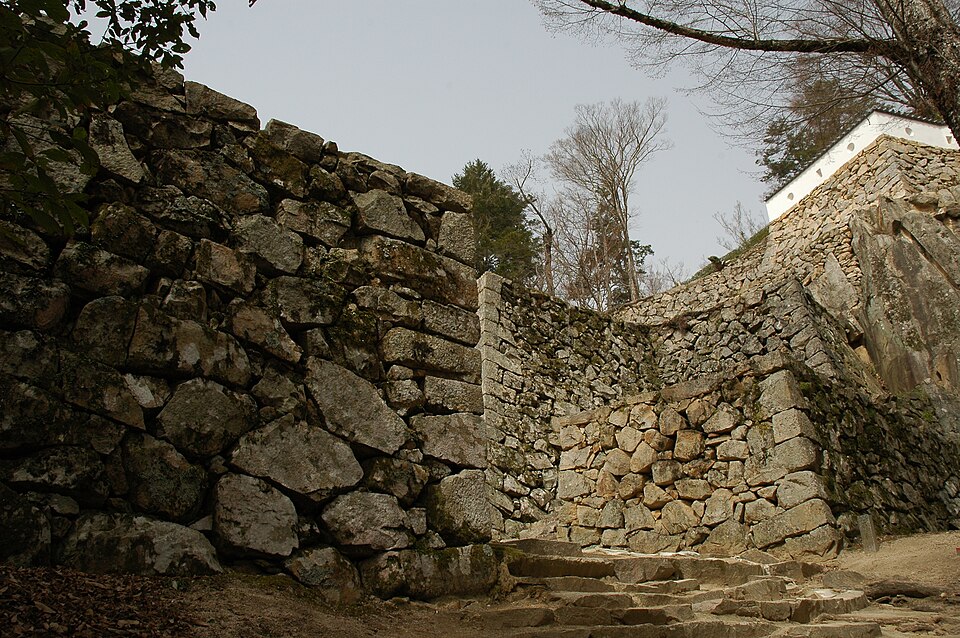
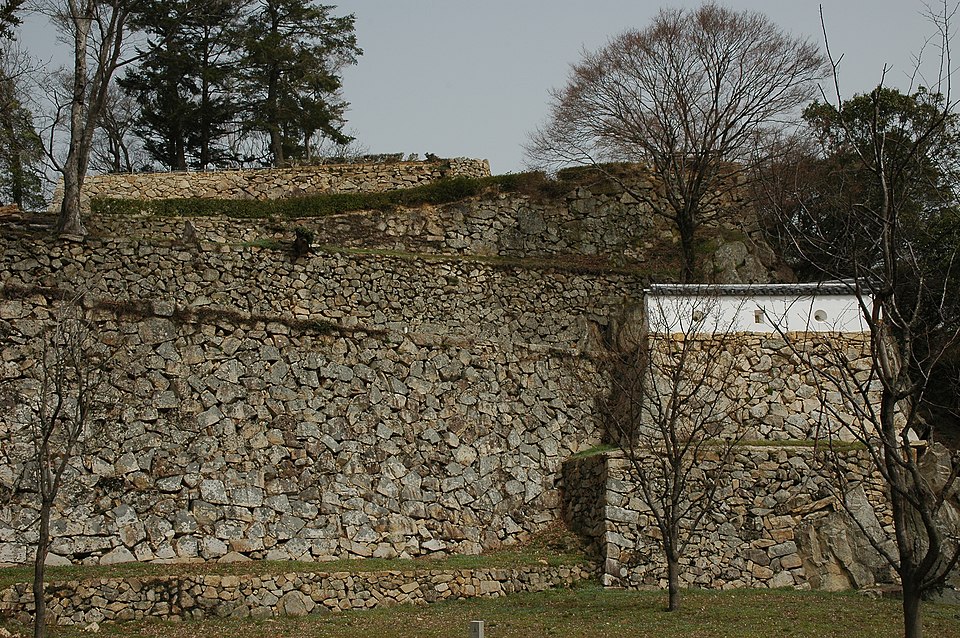
A remarkable feature of this castle is its architectural structure where natural bedrock and man-made stone walls are integrated as one. Stone walls were built upon massive granite bedrock, maximizing the use of the natural terrain in a design that represents the pinnacle of mountain castle construction techniques. Even among Japanese castles, one that achieves such a fusion of nature and human craftsmanship is exceptionally rare.
History of Bitchu Matsuyama Castle
Construction in the Kamakura Period and the Bitchu Rebellion (13th-14th Century)
The history of Bitchu Matsuyama Castle begins in 1240, when Akiba Shigenobu built a fortress on Omatsu-yama. As a jito (estate steward) governing the Ukan District of Bitchu Province, Akiba needed to establish a military stronghold at this location overlooking the San’yodo highway. At that time, the castle was built not on Komatsu-yama where the current tower stands, but on Omatsu-yama to the north.
During the Nanbokucho period (Northern and Southern Courts period), Bitchu Matsuyama Castle became the stage for fierce battles between the Southern and Northern Court factions. Local lords including the Takahashi, Ueno, Sho, and Akiba clans took turns as castle lords, and the castle repeatedly underwent expansion and destruction with each conflict. It is believed that during this period, the castle grounds expanded from Omatsu-yama to Komatsu-yama, forming the prototype of the present-day Bitchu Matsuyama Castle.
In the Warring States period, Bitchu Matsuyama Castle was drawn into the power struggles among feudal lords such as the Mori clan, the Amago clan, and the Mimura clan. In the “Bitchu Rebellion” of 1574, castle lord Mimura Motochika revolted against the Mori clan, and after a fierce siege, the castle fell. Mimura Motochika took his own life in this battle, making it one of the most devastating conflicts in the history of Bitchu Matsuyama Castle.
Renovation into an Early Modern Castle — Kobori Masakazu and Mizunoya Katsutaka (17th Century)
After the Battle of Sekigahara, Bitchu Matsuyama Castle came under the administration of the Kobori father-and-son duo, Masatsugu and Masakazu (Enshu). Kobori Masakazu, known by his title “Kobori Enshu,” was a cultured daimyo of exceptional talent in tea ceremony, garden design, and architecture, and his aesthetic sensibility is said to have been reflected in the renovation of Bitchu Matsuyama Castle. The Raikyuji Temple garden in the castle town is attributed to Kobori Enshu and is designated as a National Place of Scenic Beauty.
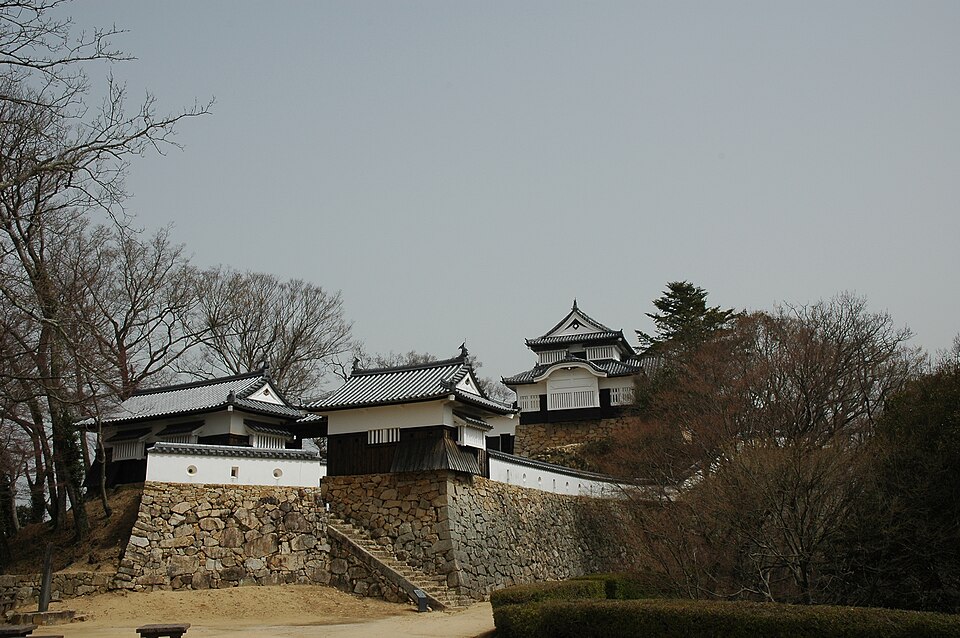
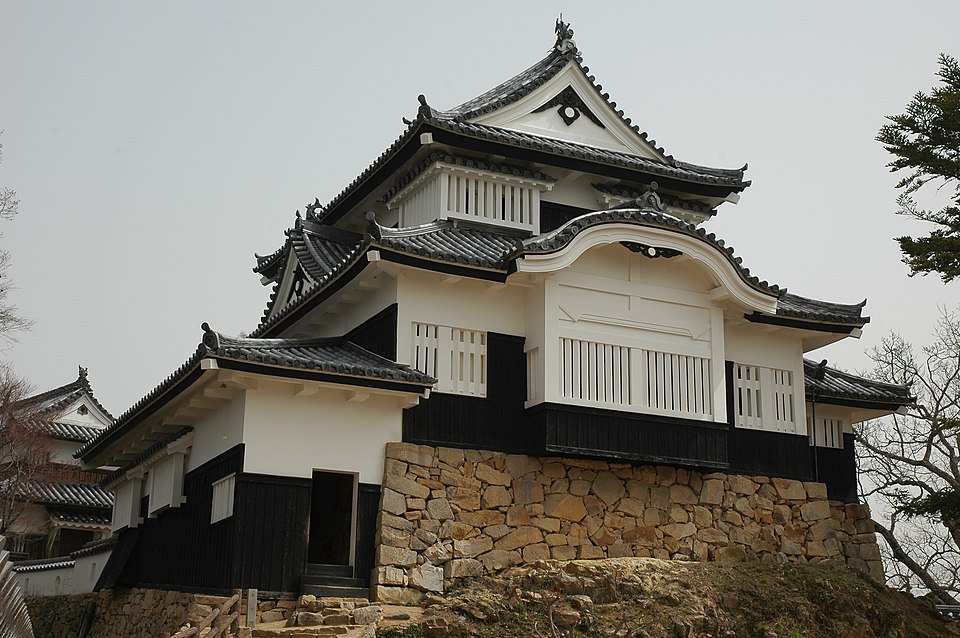
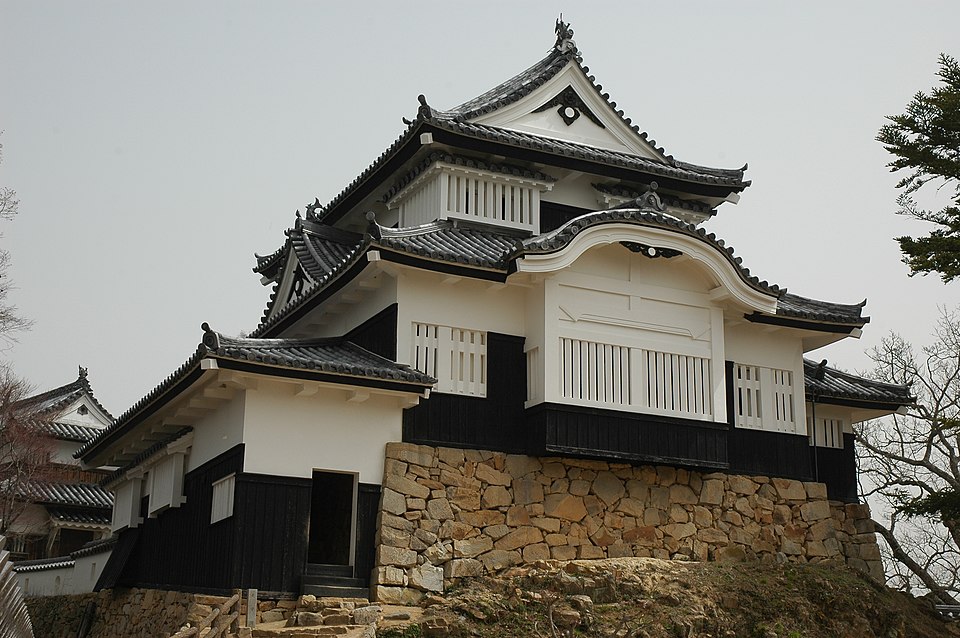
During the era of Mizunoya Katsutaka, who entered the castle in 1642, and his son Katsumune, Bitchu Matsuyama Castle underwent large-scale renovations that gave it a form close to its present appearance. The surviving tower was extensively rebuilt by Mizunoya Katsumune in 1683, and though compact in its two-story design, it features a solid and imposing construction. The tower walls combine white plaster with black weatherboarding on the lower section, presenting a sturdy and practical appearance befitting a mountain castle.
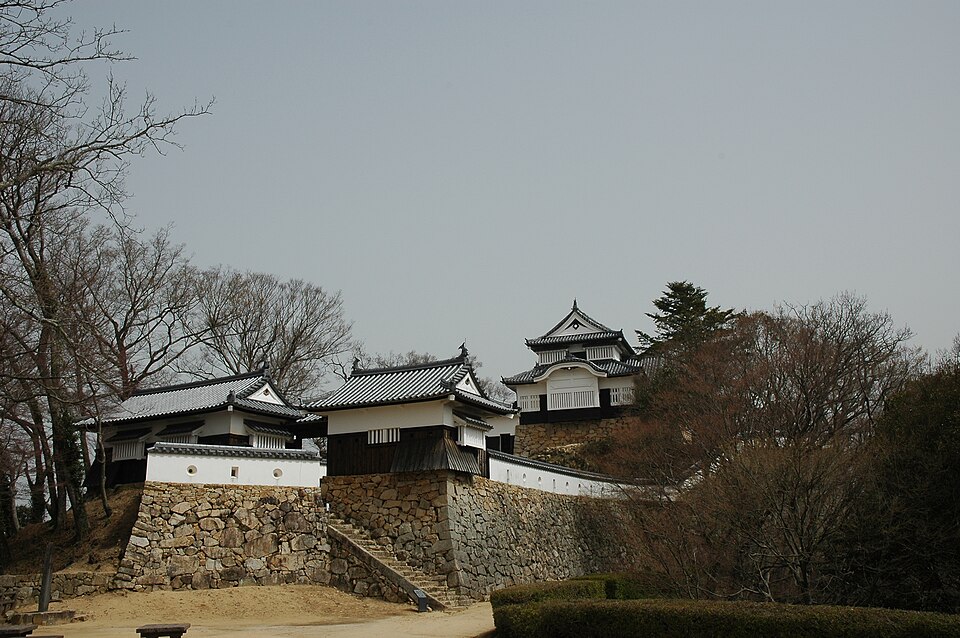
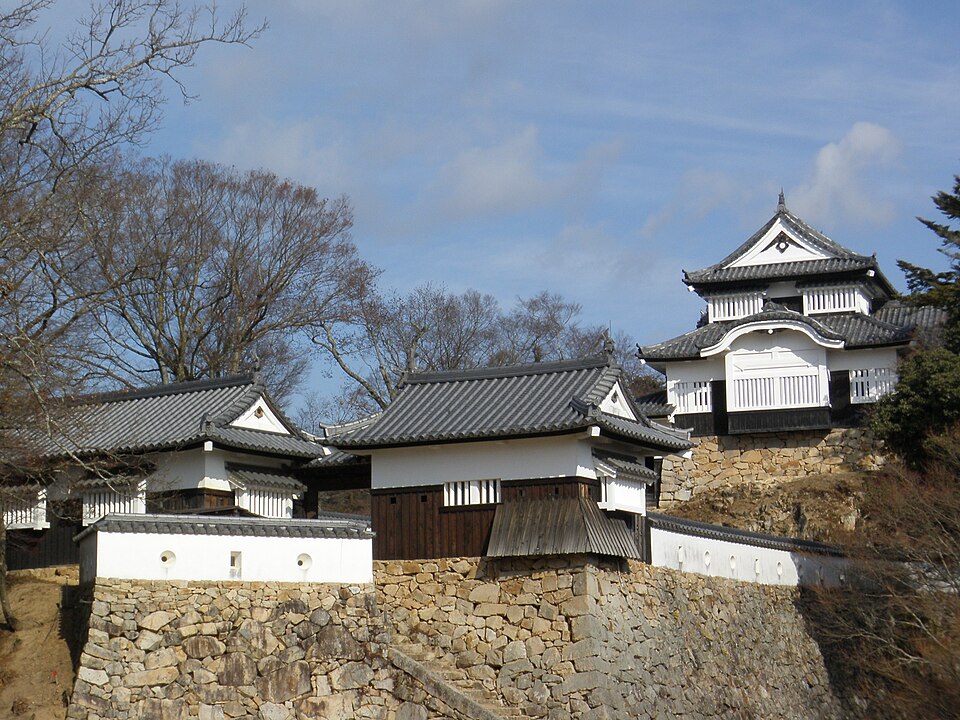
The Mizunoya clan significantly renovated the stone walls from the third bailey to the main bailey, and many of the precisely fitted kirikomi-hagi stone walls visible today were built during this period. Additionally, the surviving two-story turret and earthen walls are also attributed to this era.
Yamada Hokoku’s Domain Reforms and the End of the Edo Period (19th Century)
In the late Edo period, the Bitchu Matsuyama Domain was suffering from severe financial difficulties. The person who rescued the domain from this crisis was Yamada Hokoku, who was appointed as the domain’s chief administrator. From 1849, Hokoku carried out sweeping domain reforms over approximately eight years, brilliantly restoring the domain’s finances from a debt of 100,000 ryo.
Hokoku’s reforms were built on the twin pillars of “frugality” and “industrial development.” Revenue-boosting measures such as manufacturing iron products utilizing the local specialty of iron sand, and improving the quality of Bitchu cotton proved highly effective. These reforms are regarded as one of the great administrative reforms in Japanese history, on par with Uesugi Yozan’s reforms in the Yonezawa Domain, and are still studied in modern business management. A monument honoring Hokoku stands in the castle town of Takahashi, and there is even a rare JR Hakubi Line station named “Hokoku Station” after this individual.
At the end of the Edo period, the last domain lord, Itakura Katsukiyo, participated in the shogunate government as senior councilor. However, the Bitchu Matsuyama Domain was branded an enemy of the Imperial court during the Boshin War and chose to surrender the castle without bloodshed. The castle was handed over to the Meiji government.
Revival from Neglect — Rediscovery as a “Castle in the Sky” (20th-21st Century)
After the Meiji era, Bitchu Matsuyama Castle ironically survived demolition because its mountaintop location made dismantling too costly and troublesome. However, without anyone to maintain it, the castle fell into disrepair, with the tower deteriorating to the point of near collapse.
In 1939, the tower and two-story turret were designated as Nationally Important Cultural Properties, and full-scale restoration work began in the 1960s. Furthermore, a major restoration and reconstruction project starting in 1994 saw the rebuilding of earthen walls and gates in the main bailey, significantly restoring the castle’s appearance.
From the 2000s onward, photographs of Bitchu Matsuyama Castle floating above a sea of clouds in autumn and winter went viral on social media, catapulting it to fame as a “Castle in the Sky.” The conditions for the sea of clouds to appear include early mornings from late September to early April, when there is a large temperature difference from the previous day and the wind is calm. The view of the sea of clouds from the observation deck has attracted visitors from across Japan, rivaling the famous views of Takeda Castle in Hyogo Prefecture.
In 2018, a cat named “Sanjuro” was appointed as the “Castle Lord” at the castle’s administration office. As a beloved new mascot of Bitchu Matsuyama Castle, Sanjuro has gained popularity and contributed to increasing visitor numbers.
Highlights and Recommended Spots
Here are the must-see spots when visiting Bitchu Matsuyama Castle. This mountain castle is packed with unique attractions.
- Japan’s only surviving original mountain castle tower (two-story, Nationally Designated Important Cultural Property)
- Impressive castle walls where natural bedrock and man-made stone walls merge as one
- The “Castle in the Sky” sea of clouds, visible in early mornings from autumn to winter
- Meeting the cat castle lord “Sanjuro”
- The historic townscape of the castle town Takahashi and Raikyuji Temple garden
The Original Surviving Tower
Though the tower of Bitchu Matsuyama Castle is a small two-story structure, its value as an original surviving tower is immeasurable. Among only 12 original castle towers remaining in Japan, its distinction as the only mountain castle tower makes it an exceptionally special place for castle enthusiasts. Inside, you can find the shozoku-no-ma (a chamber used as the castle lord’s quarters) and remnants of an irori hearth prepared for sieges, offering a glimpse into life at a mountain castle.
The wall structure of the tower is another highlight. The exterior features black weatherboarding on the first floor and white plaster on the second floor, combining the practical needs of a mountain castle with the dignity expected of a castle. Additionally, in one corner of the tower’s interior, a gosha-dan (guardian shrine) is enshrined as a protector of the castle. This is a rare feature found only in Bitchu Matsuyama Castle among all surviving original towers in Japan.
The Climbing Path from the Main Gate Ruins to the Main Bailey
The highlights of Bitchu Matsuyama Castle extend well beyond the tower. The approximately 700-meter climb from Fuigo Pass parking area to the tower, taking about 20 minutes on foot, is an experience in itself. The stone wall formations along the way present spectacular views where natural bedrock and man-made stone walls blend together. The high stone walls near the main gate ruins are particularly impressive at approximately 10 meters tall, giving visitors a real sense of the castle’s defensive capabilities.
Two-Story Turret and Earthen Walls
The two-story turret located behind (to the north of) the tower is designated as a Nationally Important Cultural Property alongside the tower. This turret, which fortified the castle’s rear defense, was a practical defensive facility designed to protect against attacks from behind. The earthen walls connecting the tower and the two-story turret also survive, offering a valuable opportunity to see castle architectural systems as an integrated whole.
Sea of Clouds Observation Deck
The best spot for viewing the sea of clouds at Bitchu Matsuyama Castle is the observation deck on the opposite side of the valley. It is about a 5-minute walk from the parking area along National Route 484. The peak season for the sea of clouds is from late October to early December in the early morning (dawn to around 8:00 AM). The sight of the tower floating above the clouds is an otherworldly spectacle, as if the castle belongs to the heavens.
The Castle Town of Takahashi
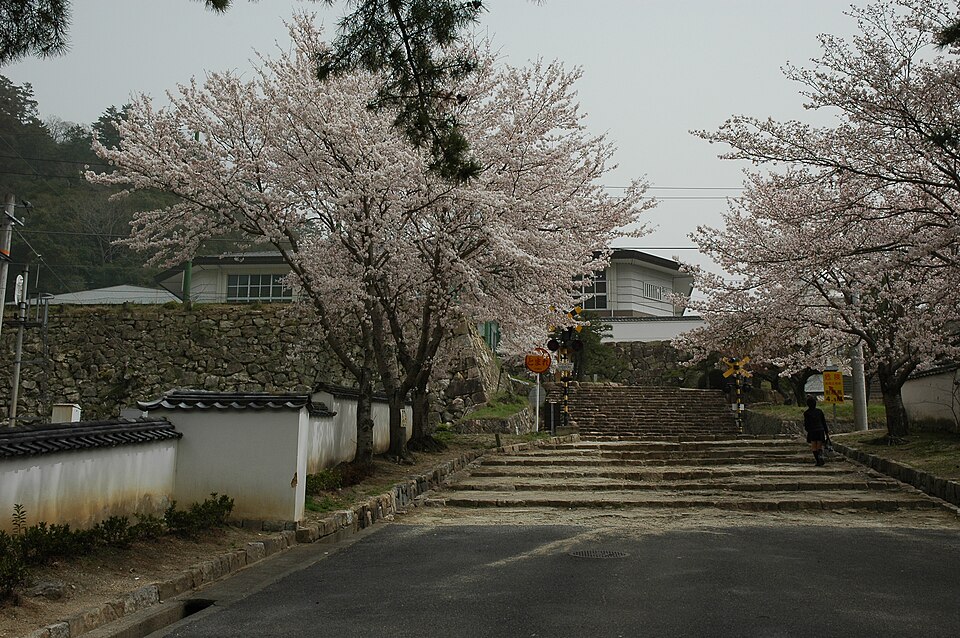
The townscape of Takahashi City, which developed as the castle town of Bitchu Matsuyama Castle, is also not to be missed. The samurai district of Ishibiya-cho with its preserved warrior residences, the merchant street of Honmachi-dori, and the Raikyuji Temple garden attributed to Kobori Enshu all preserve a historical landscape that is inseparable from the castle. After descending from the castle, a leisurely stroll through the town is highly recommended.
Access Information
By Train
The nearest station is “Bitchu-Takahashi Station” on the JR Hakubi Line. From Okayama Station, it takes approximately 35 minutes by the limited express “Yakumo” or about 60 minutes by local train. From Bitchu-Takahashi Station, a shared sightseeing taxi (reservation required) takes about 10 minutes to Fuigo Pass parking area, and from there it is about a 20-minute walk to the tower. During the visiting season (April to November), shuttle buses may operate from the station on weekends and holidays.
By Car
From the “Kayo IC” on the Okayama Expressway, it takes approximately 25 minutes to reach Fuigo Pass parking area. However, the road beyond Fuigo Pass leading up the castle mountain is narrow, and private vehicle restrictions may be enforced during peak tourist seasons. In that case, park at Shiromi-bashi Park parking lot and use the shuttle bus.
Recommended Access Method
Viewing the sea of clouds requires an early morning visit, so traveling by car is the most convenient option. For castle sightseeing only, a combination of JR train and taxi works smoothly. The climbing path is a steep mountain trail, so be sure to wear comfortable walking shoes and bring drinks.
Conclusion
Bitchu Matsuyama Castle is a precious castle that retains the closest appearance to the “original form” of a castle among all surviving towers in Japan. The small tower standing atop the mountain may lack flashy grandeur, but it conveys the overwhelming presence of a mountain castle that harnesses natural fortifications and the enduring strength of architecture that has withstood centuries of wind and snow.
The sight of the “Castle in the Sky” floating above a sea of clouds is worth seeing on its own, but beyond that, the experience of climbing the mountain path on your own feet, touching the stone walls, and gazing down at the castle town from within the tower is something that cannot be found at any other castle. Combined with visits to other surviving original towers such as Matsumoto Castle and Hikone Castle, you can gain a deeper understanding of Japan’s castle culture.