
🕓 2025/6/29
#Tourist Destinations
Seventy-five years since that night when flames scorched the heavens and the white castle keep vanished
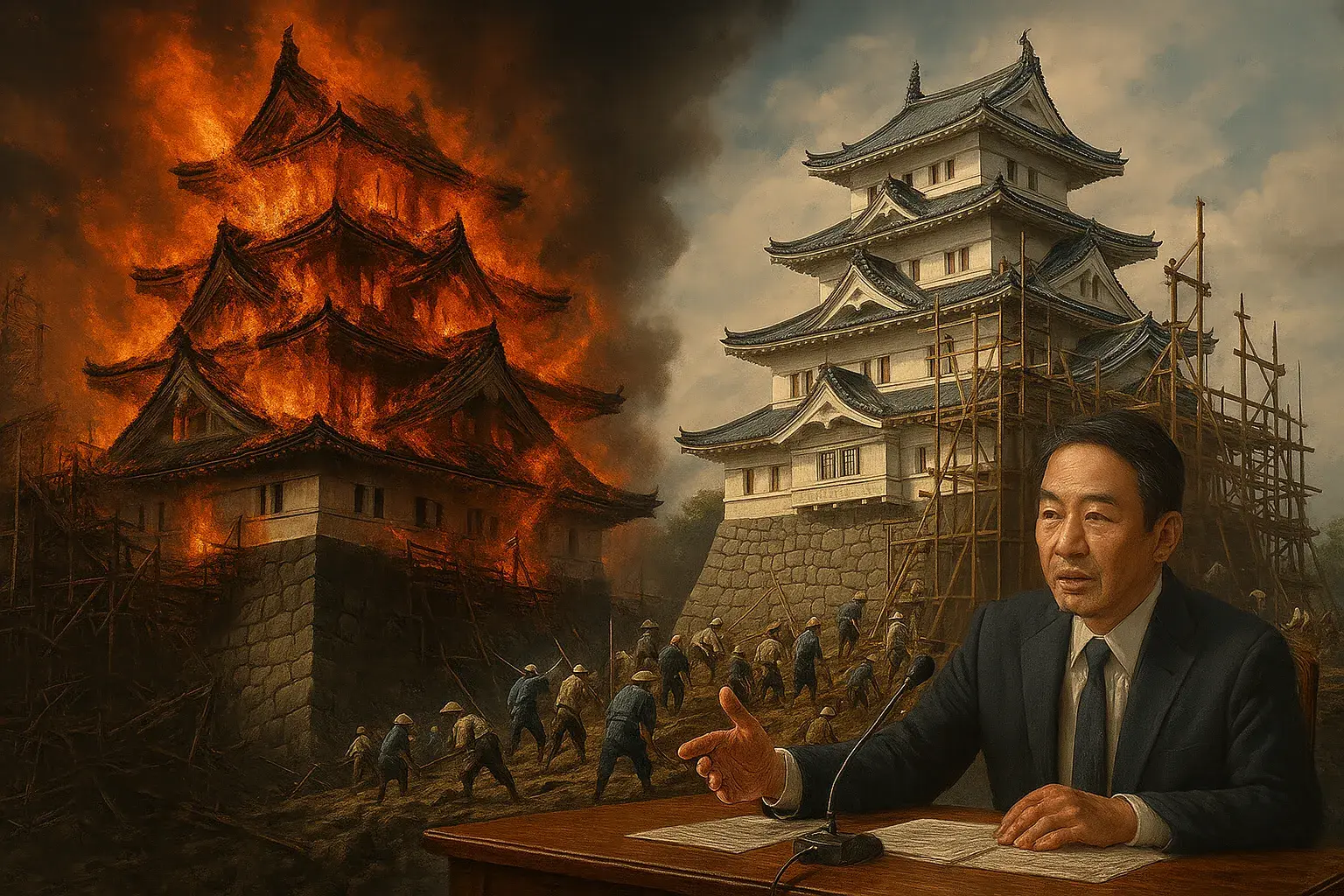
Table of Contents
Introduction
At the heart of Edo once towered a “castle in the sky” — the Edo Castle keep. Its form has now become a phantom, leaving only stone walls standing in silent repose beneath the Tokyo sky. Why was this keep, once hailed as one of Japan’s largest, never rebuilt after it was lost?
This article traces the story of the “vanished castle keep,” from the fateful night it was engulfed in flames, through a recovery without reconstruction, the resurgence of rebuilding proposals, and the traces that remain on-site today.
Please note that the visuals in each chapter are AI-generated images intended to help readers envision the scenes more vividly. They may differ from actual landscapes, so please enjoy them as supplementary references.
- The Lost Castle in the Sky — The Vanished Keep and the Fate of a City
- Timeline Digest: From Destruction to “Recovery Without Reconstruction”
- About the Reconstruction Methods (Edo Castle Keep Edition)
- 1. Blueprint Reconstruction Based on the Tateji-warizu (from surveys since 1712 and CG modeling)
- 2. Archaeological Surveys and Current Condition of the Keep Foundation (from the 2010s onward)
- 3. Timber and Material Procurement and the Pursuit of Traditional Techniques
- 4. Envisioned Construction Process (as a model case)
- 5. Challenges Under Modern Legal Systems and Cultural Property Protection
- 5 Traces of the Fire You Can Experience On-Site
- Top 5 “Traces of the Fire” You Can Experience On-Site (Edo Castle Keep Edition)
- Conclusion
- Do You Know Who Built Himeji Castle? — The 700-Year Story of the “White Heron Castle”
- [2025 Edition] Only in Spring Arashiyama! 4 Breathtaking Cherry Blossom Spots That Will Captivate Your Heart
- [2025 Edition] “3 Cherry Blossom Spots in Japan You Must Visit Once in a Lifetime — Stunning Spring Scenery”
- Frequently Asked Questions
The Lost Castle in the Sky — The Vanished Keep and the Fate of a City
Edo in the mist, a castle reaching toward the heavens —
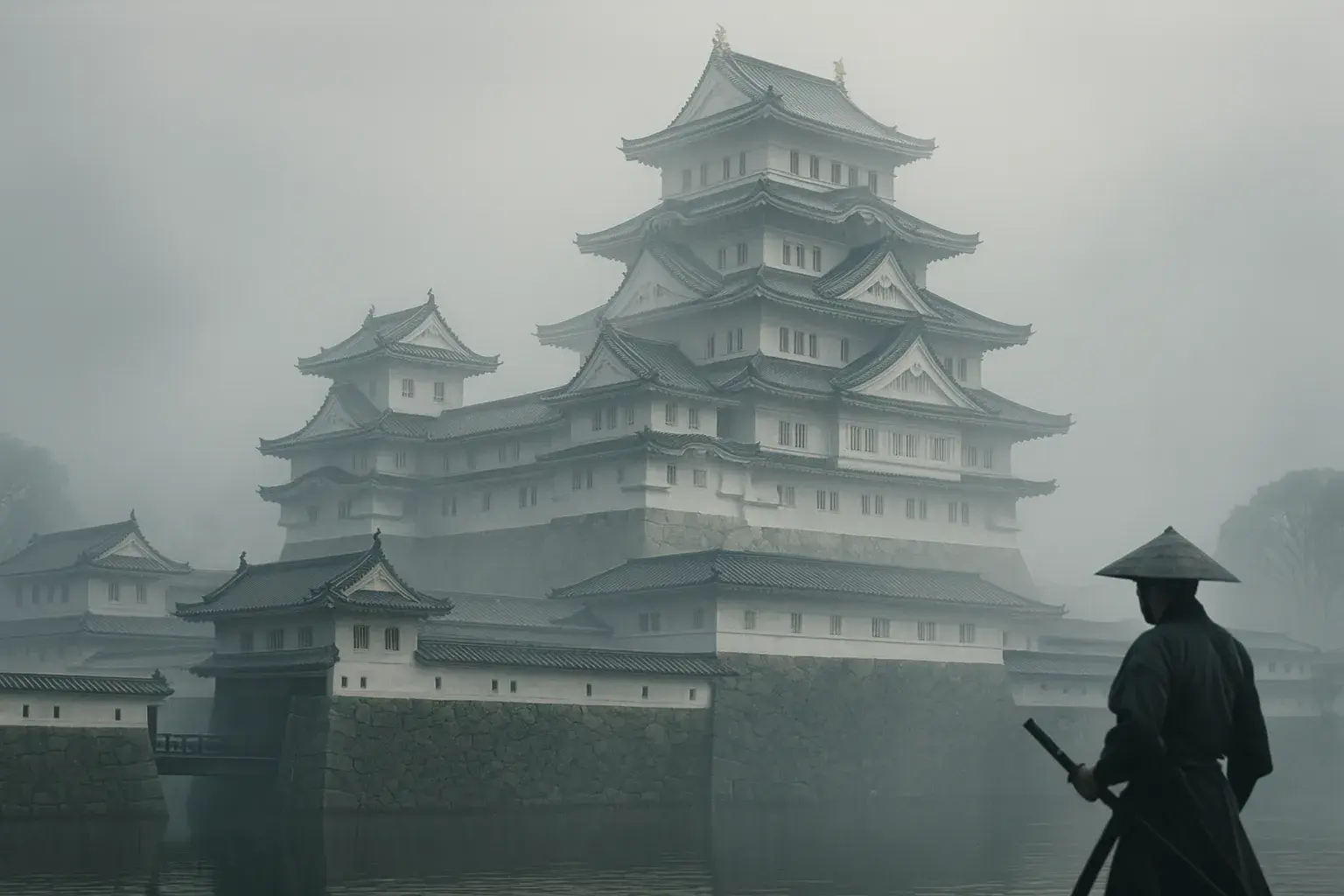
If you looked up at the Edo sky, there once stood a castle keep that seemed to pierce the heavens. The five-story keep, radiating white magnificence, was built by the third shogun, Tokugawa Iemitsu. The Edo Castle keep was not merely a military facility. It was a symbol of lasting peace, an embodiment of authority, and a structure built on the belief in the shogunate’s “perpetuity.”
Yet that glorious form exists nowhere today. Only the keep foundation remains, solitary, exposing the memory of an era to the wind.
Why did that massive structure vanish? Did no one attempt to rebuild it? When did the fate of the city called Edo begin to change?
It all began with a single “flame.”
Chapter 1: The Night of Fire — The Great Fire of Meireki, 1657
On March 2, 1657 (January 18 of the third year of Meireki by the old calendar), the city of Edo was struck by the worst possible combination of winter dryness and strong winds, triggering a chain of fires. Around 2:00 PM, a memorial fire at Honmyo-ji Temple in Hongo Maruyama was fanned by the wind and spread, instantly leaping to surrounding rooftops.
Over the following three days, three separate outbreaks of fire were recorded from north to south across Edo:
- January 18, afternoon: Honmyo-ji (present-day Bunkyo Ward)
- January 19, morning: Koishikawa (present-day Koishikawa, Bunkyo Ward)
- Same day, evening: Kojimachi (Chiyoda Ward)
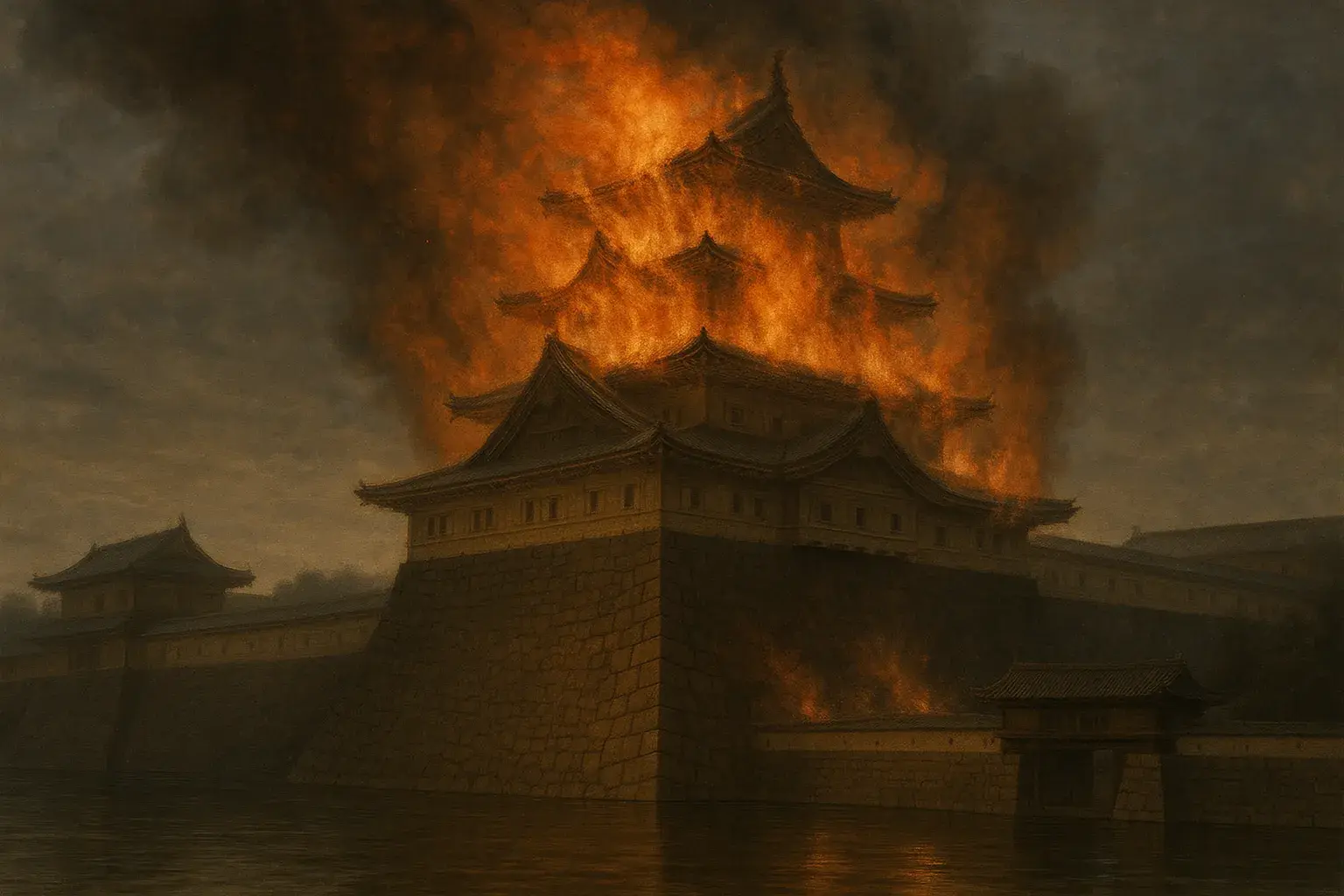
As a result, nearly the entire area within the outer moat — including the main keep, honmaru (main enclosure), ninomaru (second enclosure), and sannomaru (third enclosure) of Edo Castle — was consumed by flames. The burned area encompassed approximately 60-70% of the Edo townscape, and while casualty figures range from 30,000 to over 100,000 depending on the historical source, the most widely cited number is a maximum of 100,000.
The “Kan’ei-era keep” of Edo Castle was completed in 1638 (Kan’ei 15), and was destroyed by fire barely 20 years later. Including its stone base, it stood approximately 59 meters tall, making it one of Japan’s largest wooden castle keeps. It is said that embers entered through the uppermost windows and the entire structure was consumed, along with its magnificent decorations and copper roof tiles.
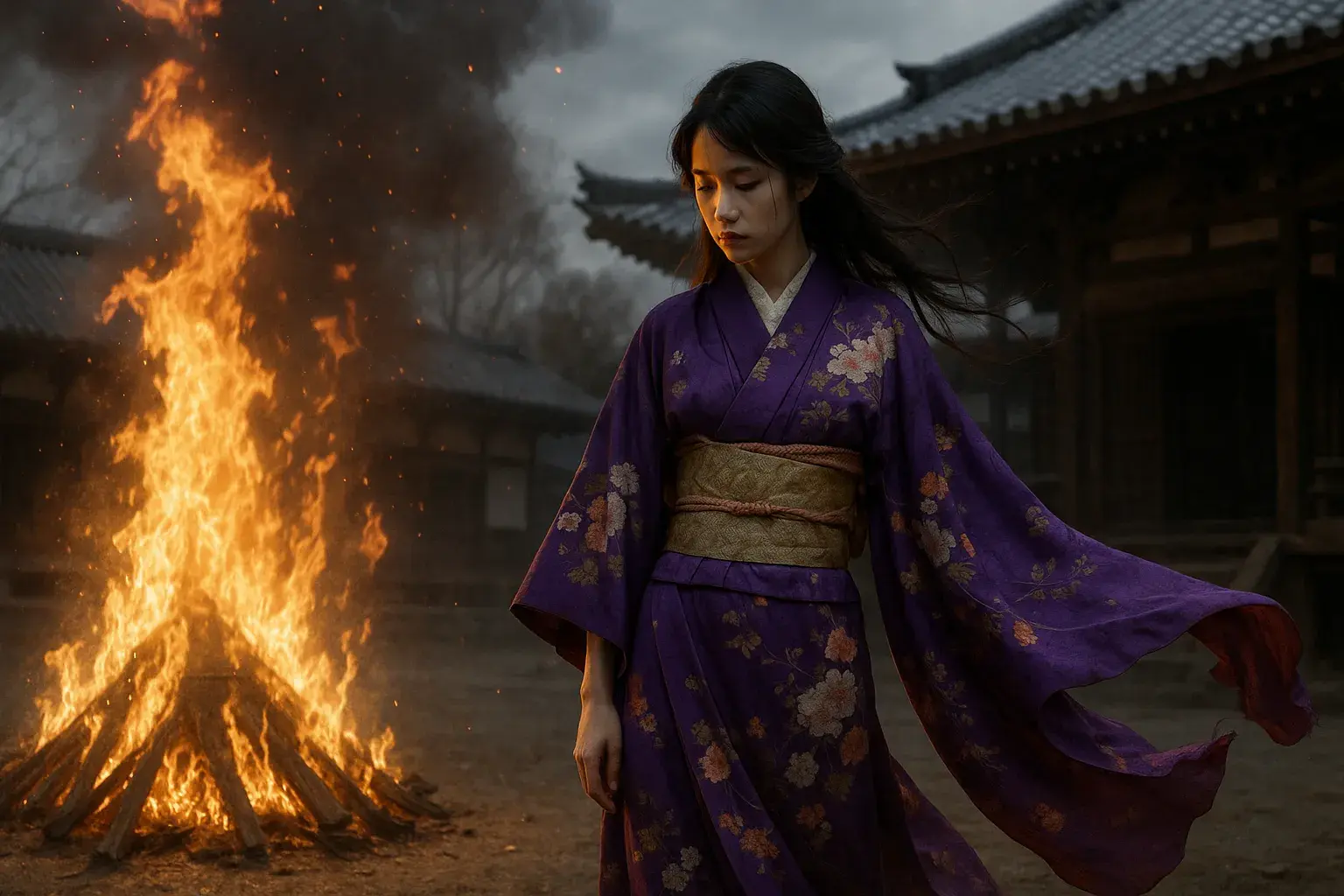
The popular name “Furisode Fire” derives from a legend that a girl’s purple long-sleeved kimono (furisode), used in the memorial fire, was the catalyst for the spreading flames. However, this is a later folk tale and is not confirmed in official records of the time.
Chapter 2: Why It Was Never Rebuilt — The Unseen Intent

The burned Edo Castle keep never again rose to its former glory — not even once. While recovery from the Great Fire of Meireki was an urgent matter, the shogunate chose not to rebuild the keep.
The shogun at the time, Tokugawa Ietsuna, was still young, and governance was supported by his uncle Hoshina Masayuki and others. Hoshina prioritized urban recovery after the disaster, implementing a succession of pragmatic policies: relocating burned samurai residences, creating firebreaks (hiyokechi), and re-digging waterways. In this context, the keep — a monumental structure of merely symbolic significance — was excluded from reconstruction plans.
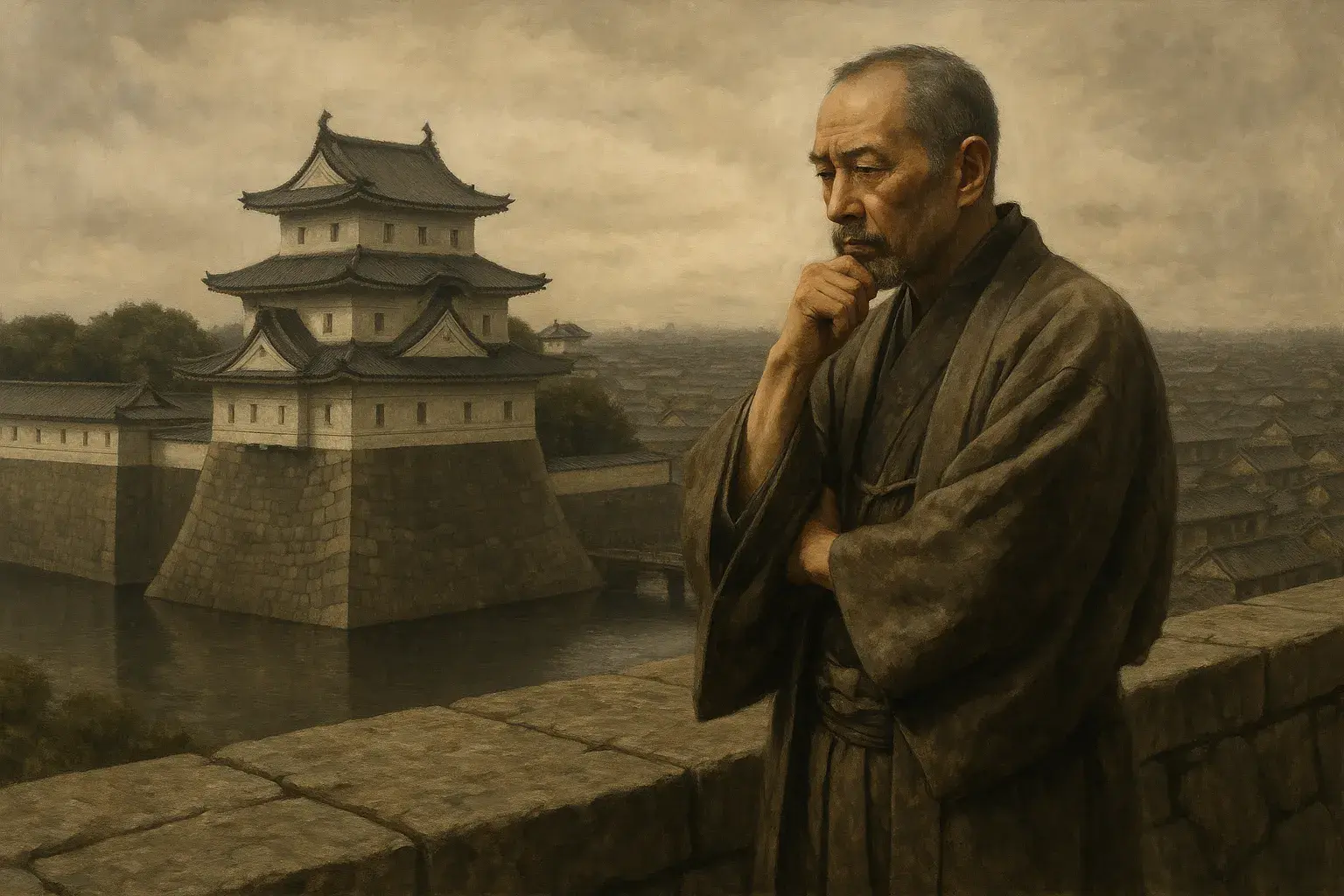
While some historical sources cite insufficient funds and materials as reasons, the decision was largely political. In an Edo that had entered an era of peace, the castle keep — a symbol of warfare — had become something “unnecessary for governance.”
The image of Edo Castle without a keep gradually became a mirror reflecting the shogunate’s new stance. Governing Edo not through military might, but through institutions and order — rule without a keep. It was the shogunate’s quiet resolve to choose sustainability and stability over displays of power.
Chapter 3: The Passage of Time and the Castle’s Transformation
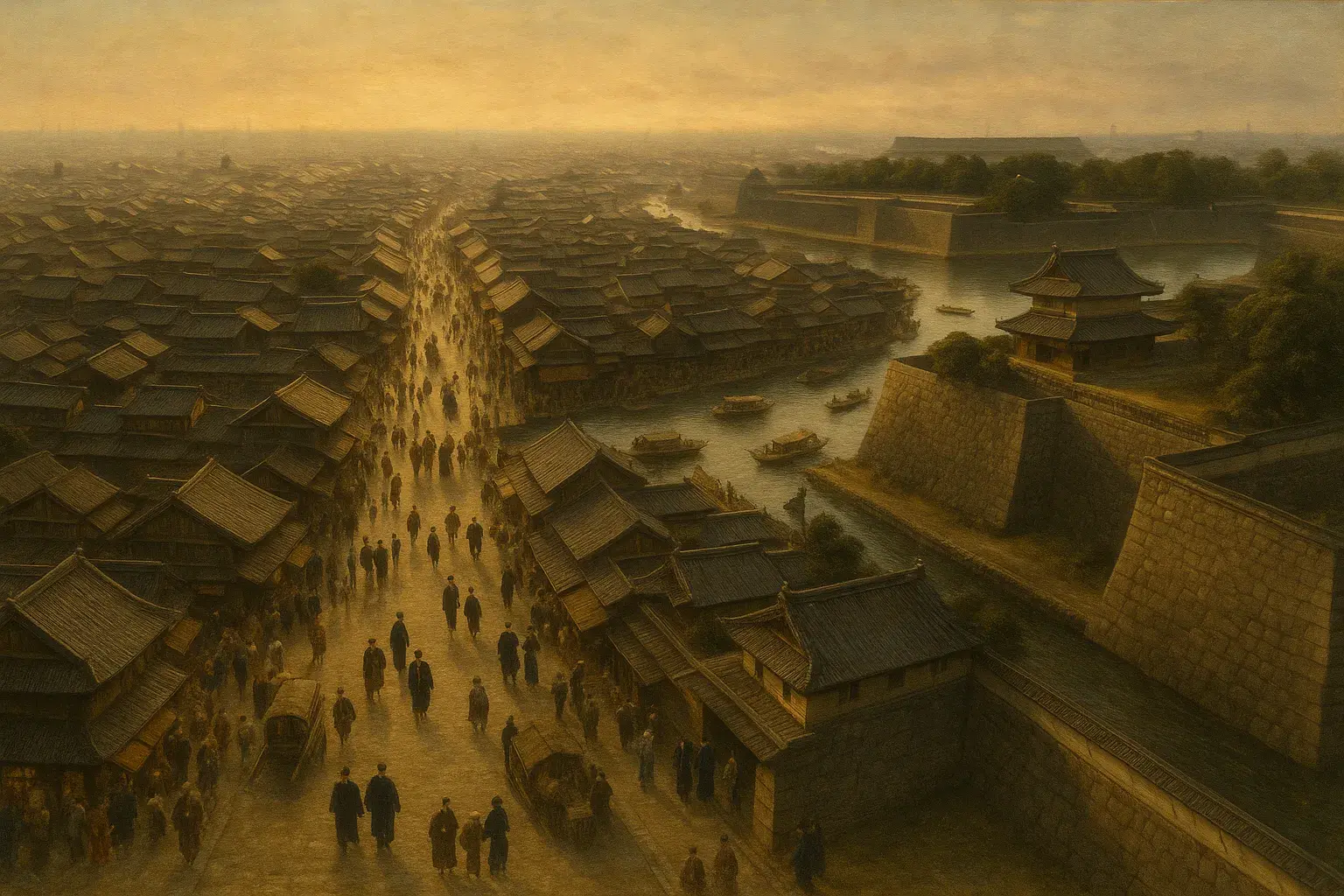
Edo Castle, now without its keep, continued to function as the center of the shogunate for over two hundred years. The keep foundation left in the aftermath quietly endured the elements, bearing the passage of time along with the dream of reconstruction.
During this period, the city of Edo continued to expand, growing into one of the world’s largest metropolises with a population exceeding one million. Edo prospered even without a keep. This was proof that the city had transformed its identity from “military” to “governance.”
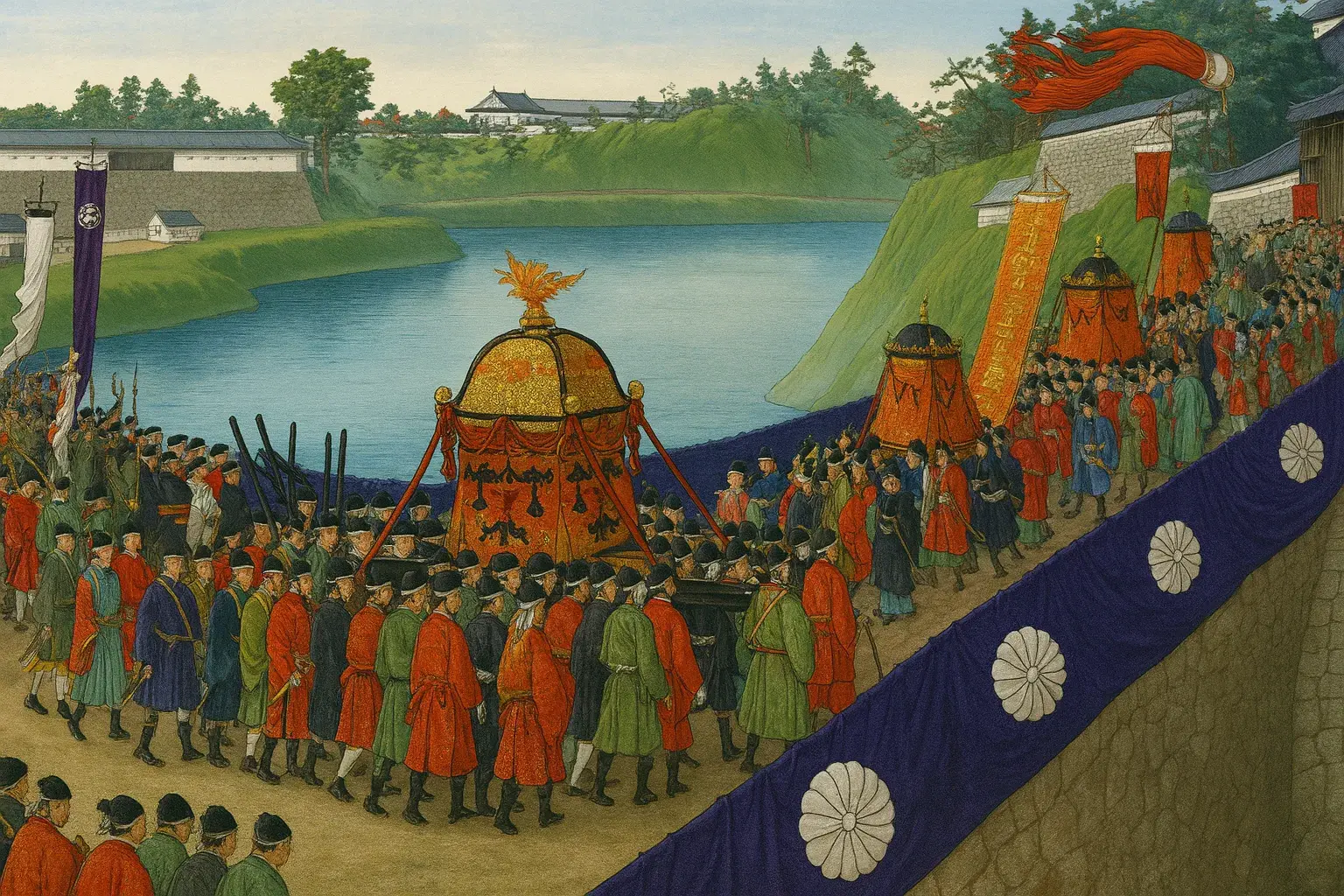
Then came the first year of Meiji. The Tokugawa shogunate relinquished power, and Edo Castle was handed over to the new Meiji government. Edo was renamed “Tokyo” and became Japan’s new capital. A Western-style palace was built on the site of the honmaru, and the former keep foundation was incorporated as part of the new “Imperial Palace.”
Yet that keep foundation alone seemed to remain in a different time. Bearing the memory of an era when the castle was the center of authority, it stood in silence, gazing up at the Tokyo sky.
Chapter 4: To Those Who Stand on the Keep Foundation — Into the Modern Era
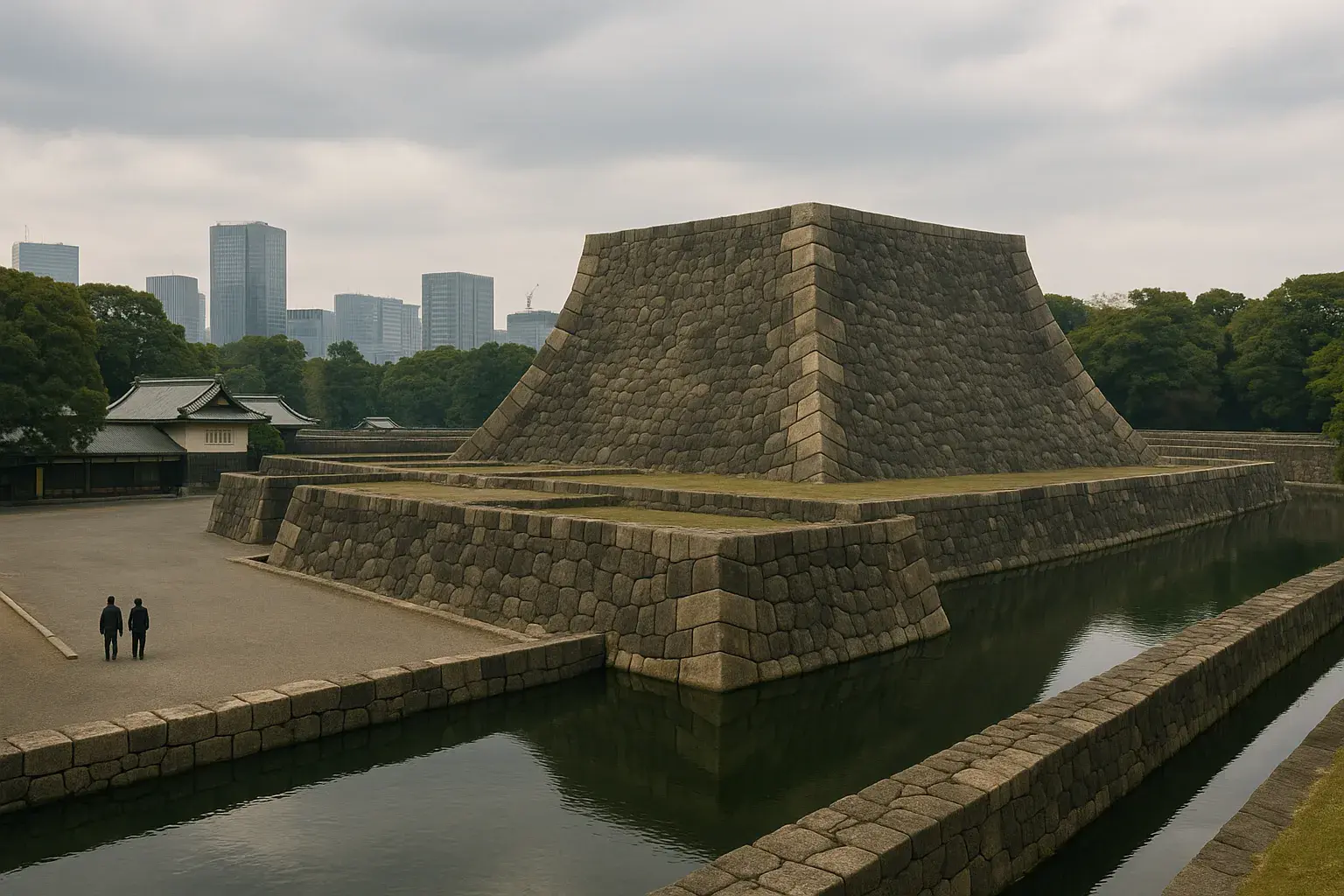
In modern Tokyo, there is no trace of the keep. Yet the memory that a castle once stood there still lingers deep within people’s hearts.
When you visit the East Gardens of the Imperial Palace, stand atop the stone walls, and look up at the sky, you might sense something. The keep that was supposed to have turned to ash that day seems to communicate its presence, formless though it may be.
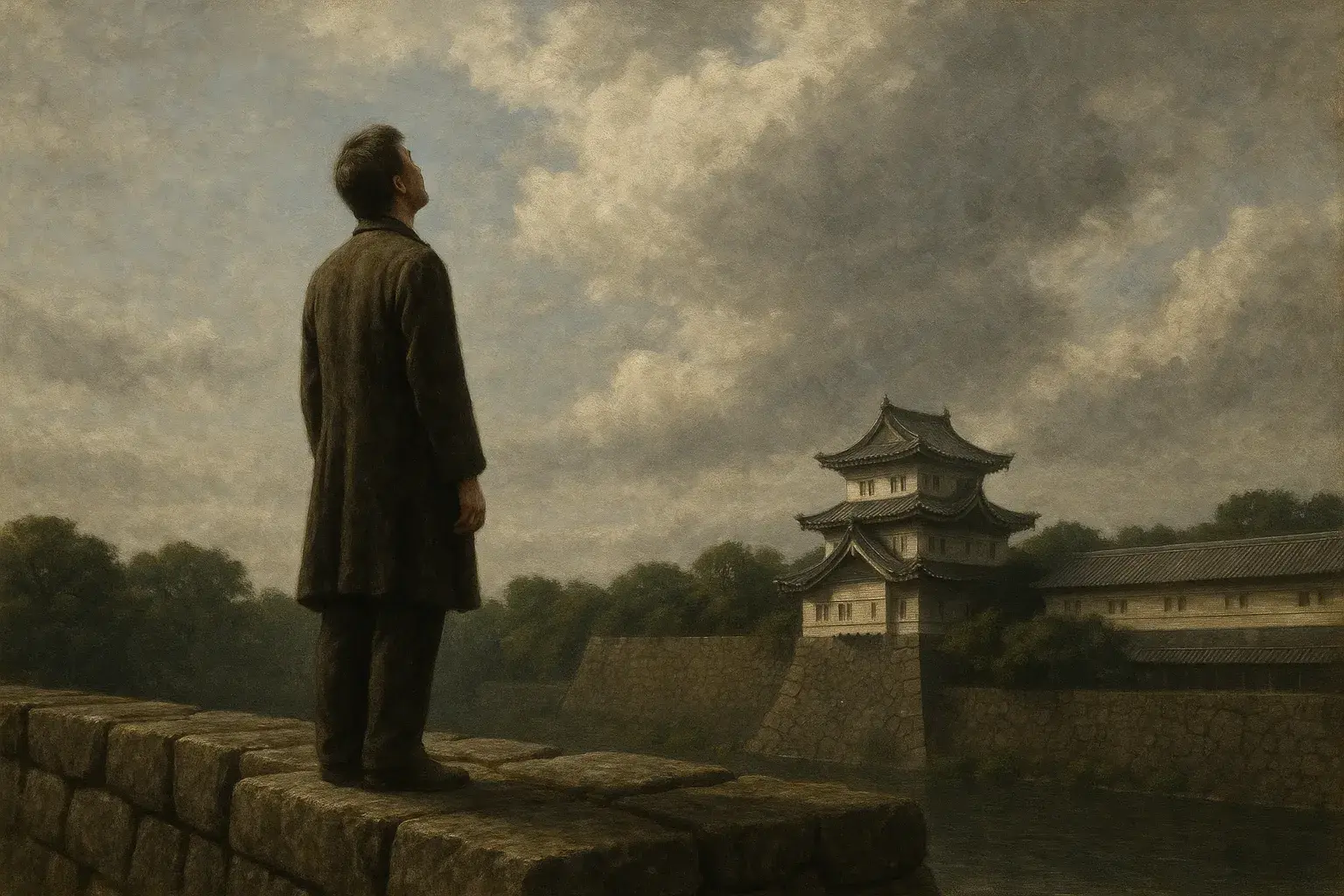
The desire to rebuild the keep may be mere nostalgia for the past. But it is also an act of connecting the memory of a city to the future. Rather than simply consigning what was lost to “the past,” it is the act of contemplating it anew.
Standing on the stone walls in the wind, we in the modern era may be being asked a question. What did the city of Edo protect, and what did it let go? That question casts a quiet shadow upon the path that Tokyo, as a city, will walk into the future.
— Once, there was a castle here. A dream that reached for the heavens and burned away.
Timeline Digest: From Destruction to “Recovery Without Reconstruction”
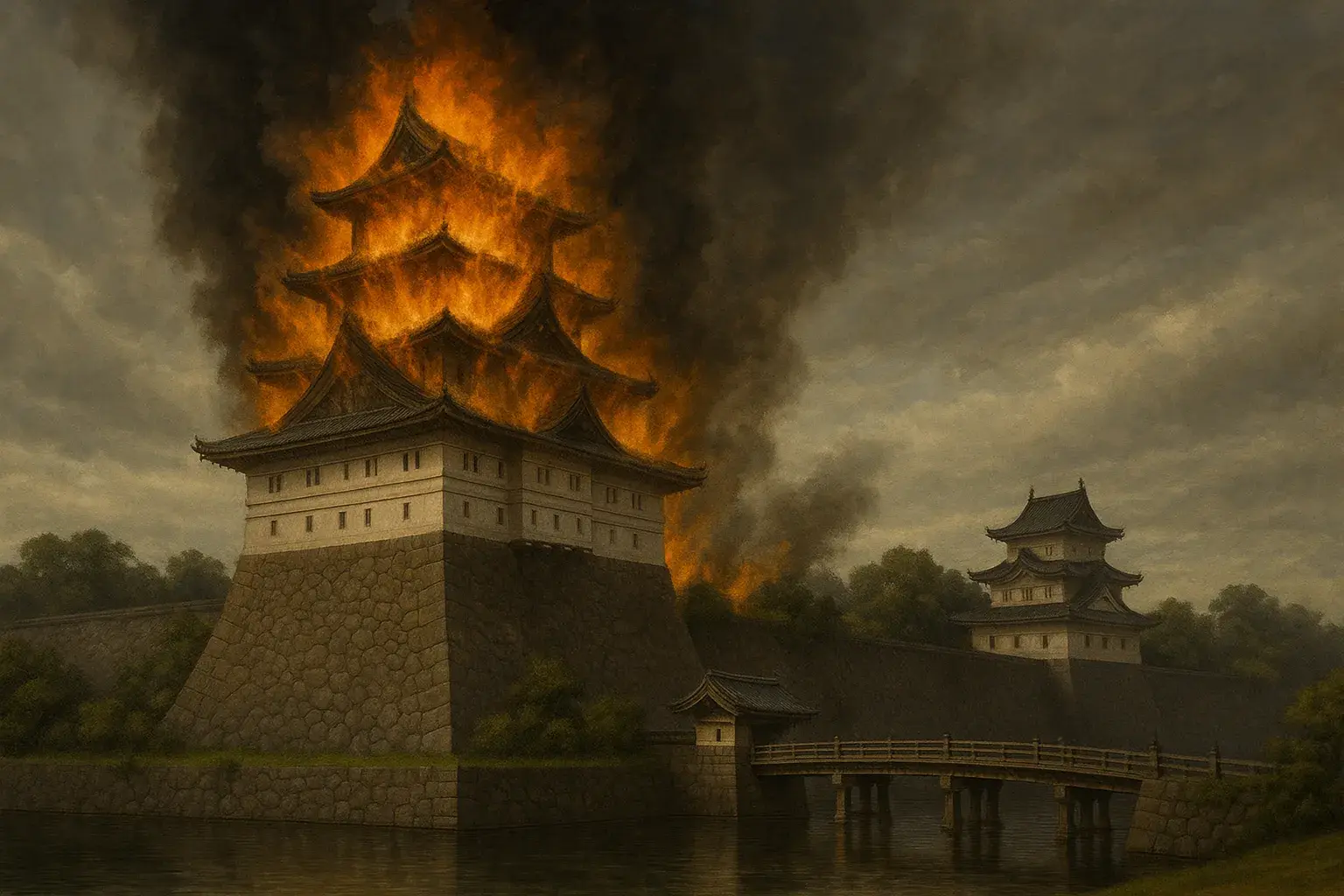
In 1657, the Great Fire of Meireki destroyed the Edo Castle keep. The five-story keep, one of the largest wooden structures in Japan at the time, was reduced to ashes. However, the shogunate deliberately chose not to rebuild it.
Instead, the shogunate focused on creating firebreaks, reorganizing townspeople’s districts, and other measures for disaster prevention and urban reconstruction. Even without a keep, Edo Castle and its surrounding castle town went on to achieve even greater prosperity, reaching new heights as an early modern city.
Since then, the Edo Castle keep has been etched into history as a “lost symbol,” and to this day it has never been rebuilt. Yet it is precisely this absence that eloquently speaks to the political philosophy of the shogunate and the approach to urban planning in Edo.
| Date | Event |
|---|---|
| 1657.3.2 | The Great Fire of Meireki engulfs the Edo Castle honmaru. The keep, honmaru palace, and other structures are destroyed. The keep catches fire from the top floor and burns completely. |
| Spring 1657~ | Recovery of the castle town begins. Creation of firebreaks, relocation of samurai residences, and full-scale urban redevelopment. |
| 1659 | The keep foundation (stone base for reconstruction) is built. However, reconstruction of the keep itself is abandoned. No substitute keep is built either. |
| 1681 | The Edo Castle keep foundation is renovated. The honmaru and nishinomaru palaces are subsequently developed as the shogun’s living quarters, rendering the keep’s function effectively unnecessary. |
| 1868 | The Meiji Restoration transforms Edo Castle into the “Imperial Castle.” Emperor Meiji enters Tokyo. Edo is renamed “Tokyo.” |
| 1888 | The Meiji Palace is completed on the former honmaru site (later destroyed in wartime). The Edo Castle grounds are reorganized as the Imperial Palace. |
| Showa era onward | Conservation work and archaeological excavations are carried out on the keep foundation. Debates over reconstruction continue, but no conclusion has been reached. |
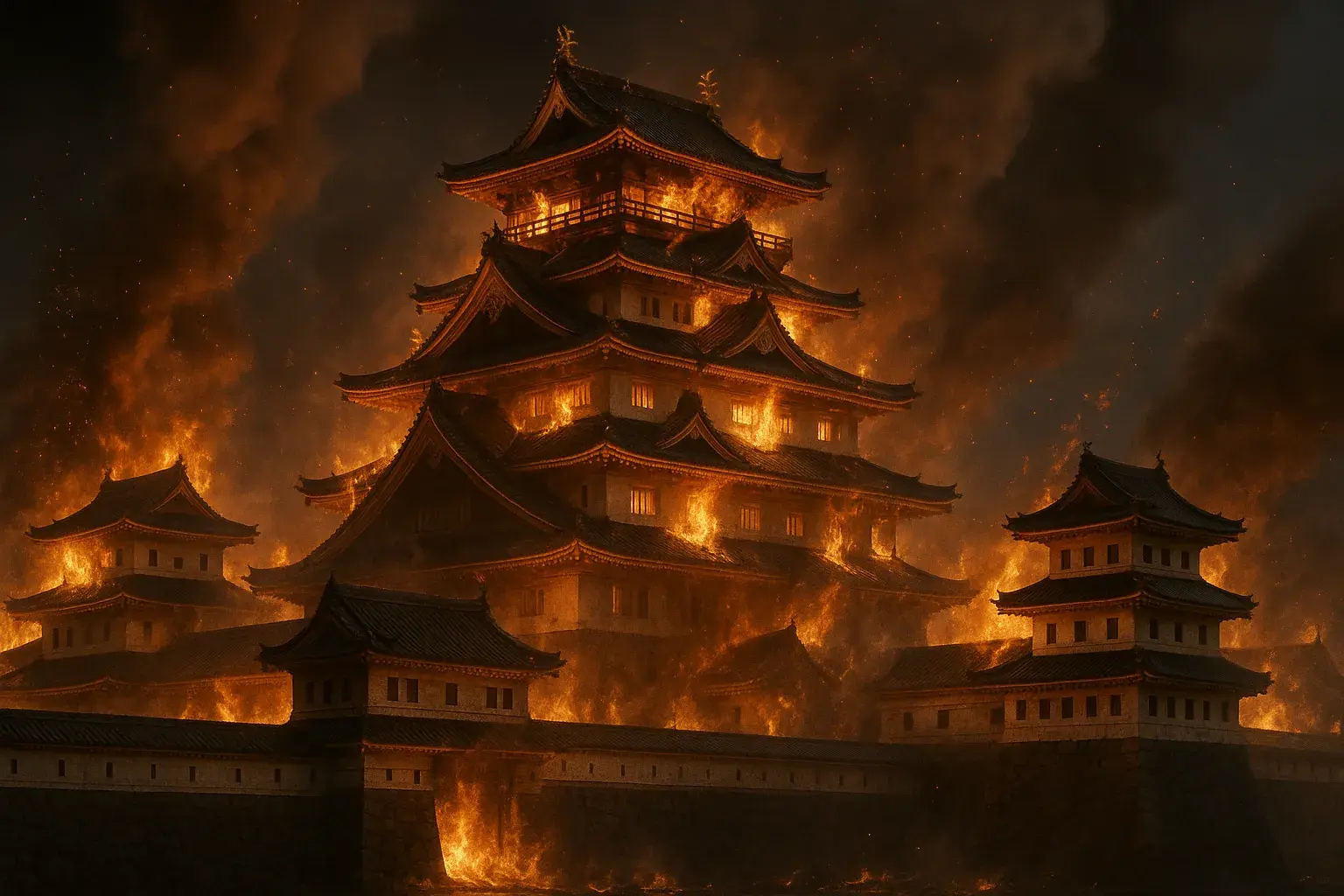
The Edo Castle keep was destroyed in the Great Fire of Meireki in 1657, and the shogunate subsequently abandoned plans to rebuild it. However, proposals for reconstruction have repeatedly surfaced from the late Edo period to the present day. In recent years, the discovery of architectural drawings and archaeological excavations have made a wooden restoration of the “Kan’ei-era keep” increasingly realistic. Below, we introduce the possible construction methods and the stories behind them, drawing from past reconstruction plans and surveys.
1. Blueprint Reconstruction Based on the Tateji-warizu (from surveys since 1712 and CG modeling)
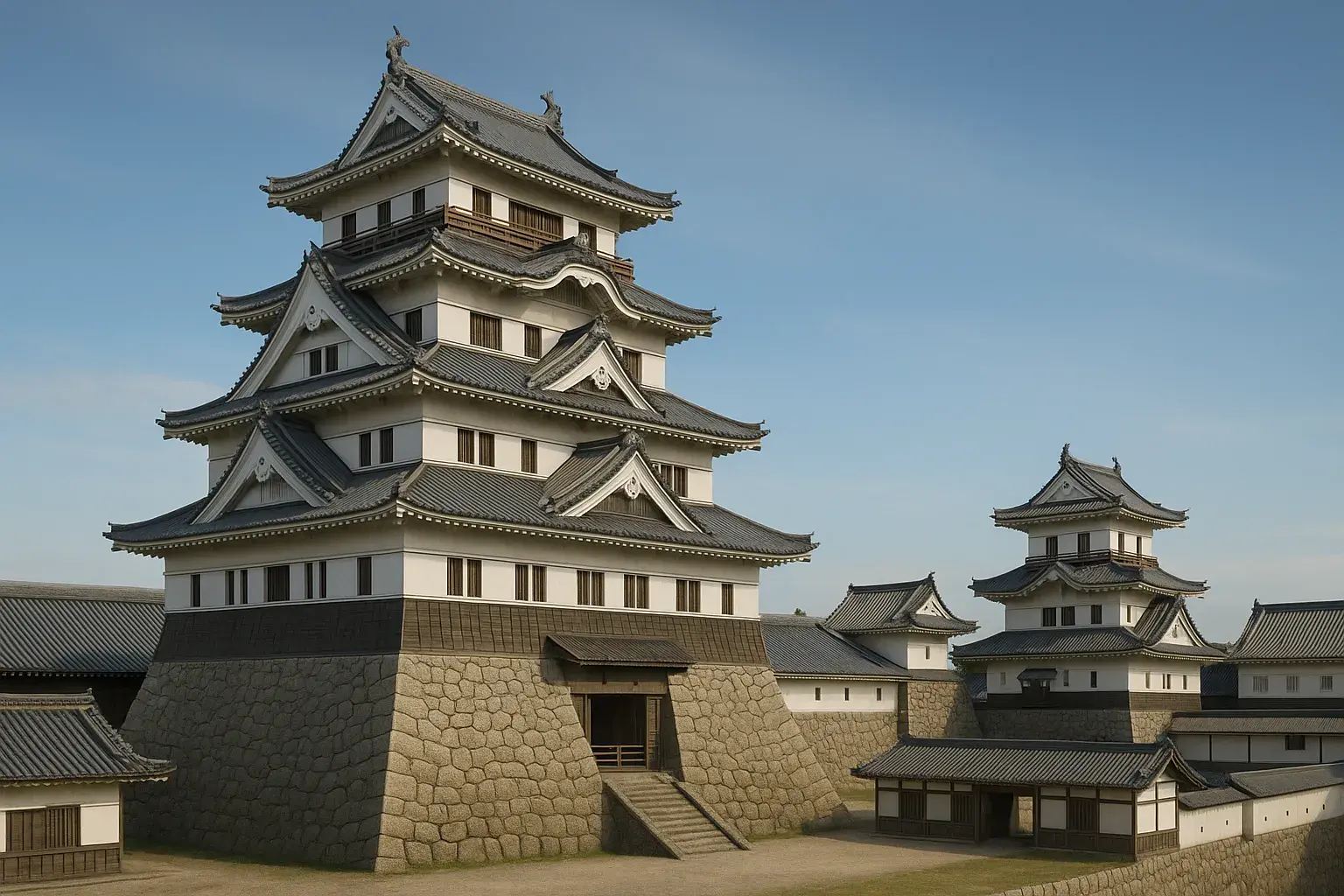
A single surviving “tateji-warizu” (cross-section architectural plan), submitted in 1712 by the mid-Edo period scholar Arai Hakuseki, was reconstructed into 12 detailed design drawings by Professor Miura Masayuki of Hiroshima University, enabling CG restoration. This has become the technical foundation for planning a wooden reconstruction.
2. Archaeological Surveys and Current Condition of the Keep Foundation (from the 2010s onward)
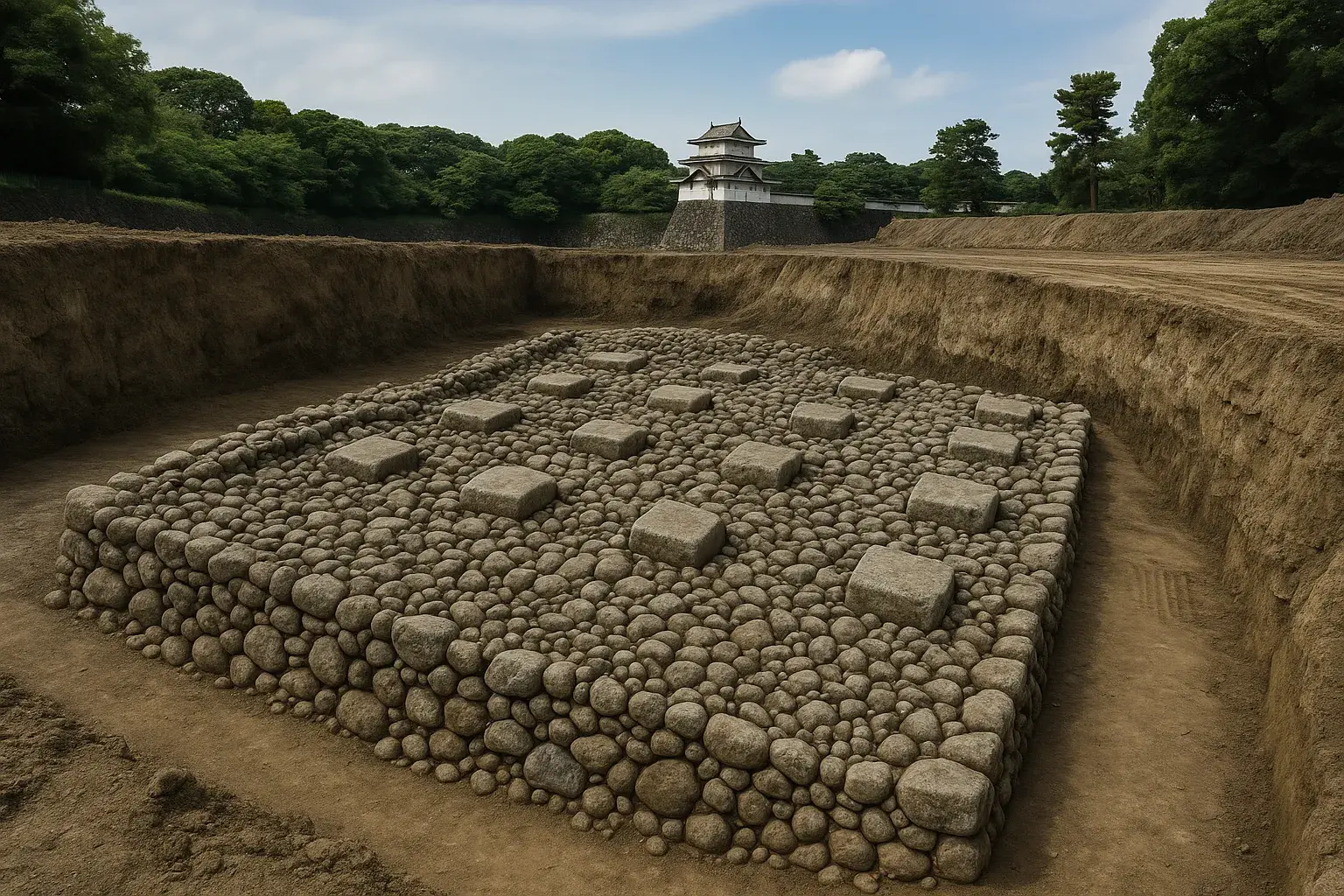
The “Manji-era keep foundation,” reconstructed in 1658, survives as stone walls to this day. A 2018 excavation confirmed its scale — approximately 45 meters on the west side and 41 meters on the north side — and revealed details including the arrangement of foundation stones and stone composition. The excavation also uncovered stratified remains from the Keicho era, making construction methods across different periods a subject of study.
3. Timber and Material Procurement and the Pursuit of Traditional Techniques
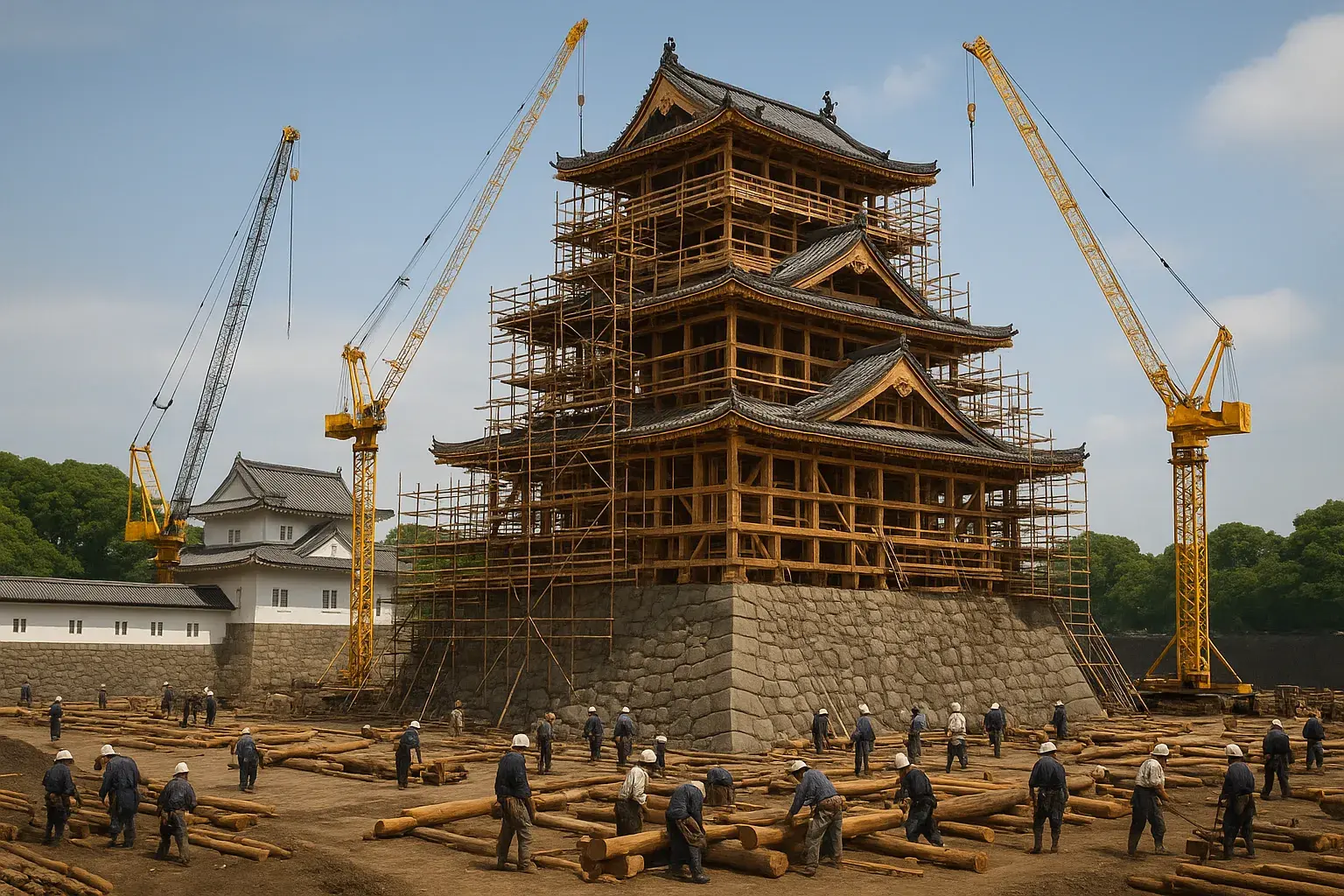
The proposed reconstruction method envisions a wooden structure with one basement level and five above-ground stories, built atop the keep foundation’s stone walls. The timber would require Japanese cypress with diameters of approximately 50 cm, sourced from domestic national forests. Approximately 200 miya-daiku (shrine and temple carpenters) with traditional skills would be needed, and in surveys and planning meetings, the significance of a wooden reconstruction has been repeatedly emphasized.
4. Envisioned Construction Process (as a model case)
Keep foundation renovation: Repair deteriorated sections of the stone walls and ensure structural strength and earthquake resistance
Erection of basement and above-ground pillars: Traditional timber-frame column raising from basement to 1st floor, 2nd floor, and upward, based on the tateji-warizu
Roof and tile installation: Restoration of copper-plate tiles or lead tile roofing (the Kan’ei-era version used copper-plate tiles)
Exterior wall finishing: Faithfully reproducing the historical design with a combination of white plaster (shikkui) and copper rain guards
Interior finishing: Prioritizing durability of the wooden structure while considering future interior exhibitions in restricted areas
5. Challenges Under Modern Legal Systems and Cultural Property Protection
A wooden building approximately 45 meters tall is limited to three stories under the current Building Standards Act, requiring exceptional permits. Furthermore, because the keep foundation itself is designated as a Special Historic Site, there are legal hurdles including archaeological surveys and cultural property reviews.
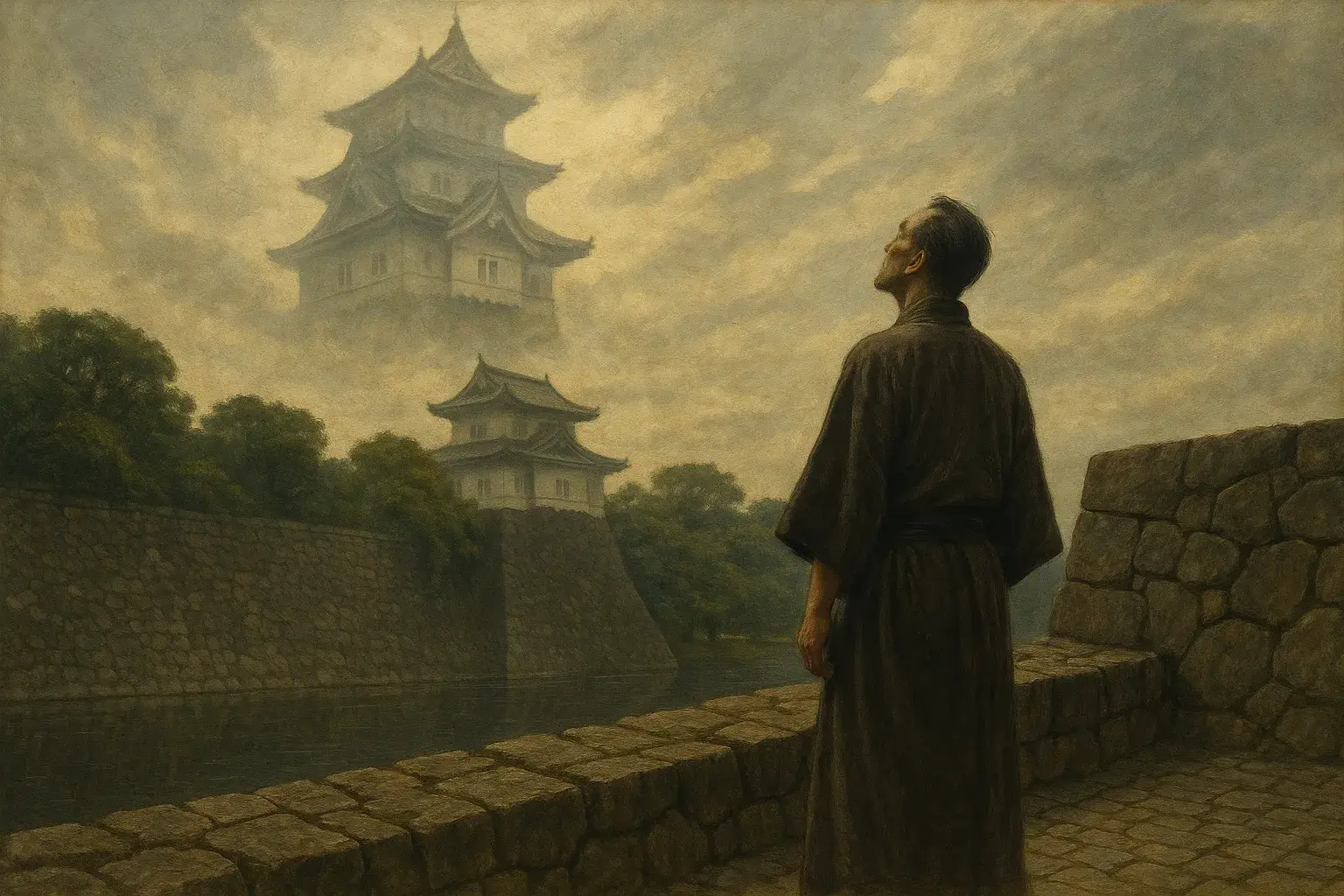
Here are five “traces” of the destroyed Edo Castle keep that you can experience on-site, centered on the East Gardens of the Imperial Palace. They are compiled in an experiential format inspired by the layout of Kinkaku-ji.
Top 5 “Traces of the Fire” You Can Experience On-Site (Edo Castle Keep Edition)
| Experience Point | Highlights |
|---|---|
| 1. Soot marks on the keep foundation stone walls | Blackened areas from the Great Fire of Meireki still remain on the surface of the keep foundation stone walls, allowing you to see the scars of the flames firsthand. The stonework itself serves as “proof of reconstruction after the fire.” |
| 2. The view from atop the keep foundation | From the top of the keep foundation, you can enjoy a panoramic view of the honmaru ruins and the Marunouchi high-rise district, visually experiencing the transformation from “the scale of Edo to modern Tokyo.” This is a “bird’s-eye experience” where history and city overlap. |
| 3. The great lawn and ground layers of the honmaru site | The open area below the keep foundation was the center of the honmaru palace. You can walk across the terrain and imagine what buildings once stood here. Information boards are also installed on-site. |
| 4. Fujimi Yagura (substitute turret) | This three-story turret, rebuilt in 1659 after the Meireki fire, served as a substitute for the keep and is an existing historical structure. As “a symbol of the castle that watched over the grounds after the fire,” the curator’s commentary is well worth hearing. |
| 5. Information displays | The East Gardens feature information boards, CG renderings, and scale models of the keep foundation, allowing you to visually compare its appearance before and after the fire. Smartphone audio guides and AR-linked commentary are also available, deepening the historical experience. |
Recommended Morning Experience
The period just after the gates open (from 9:00 AM) is the quietest time. It is ideal for closely observing the keep foundation or surveying the entire honmaru site from the great lawn. You can feel the breath of history in the crisp morning air.
The soot marks on the stone walls, the turret’s quiet presence, and the scent of grass in the open field — all of these are “living traces” that convey the story of the night the keep was “consumed and erased by flames,” and the history of Edo that followed. By standing on the actual site, you can reawaken the memory of the magnificent structure and the city that once occupied this very place.
Conclusion
The Edo Castle keep never reappeared and vanished into the far reaches of history. Yet what its loss conveys is not “failure” or “decline.”
Rather, the choice made by Edo — a city that grew without rebuilding its keep — and the shogunate that built a lasting regime through institutions and order, quietly tells us that there are things “preserved by choosing not to build.”
The soot marks on the stone walls, the memories etched into the earth, and the urban structure that extends to modern-day Tokyo — all of it continues to speak of the castle that once rose toward the heavens from this very spot.
The Edo Castle keep was lost. Yet it is precisely this “loss” that poses a question to us.
“What will you choose to leave behind for the future?”