
🕓 2025/2/17
#Tourist Destination
What Makes the Hogon-in Temple Light-Up So Enchanting?
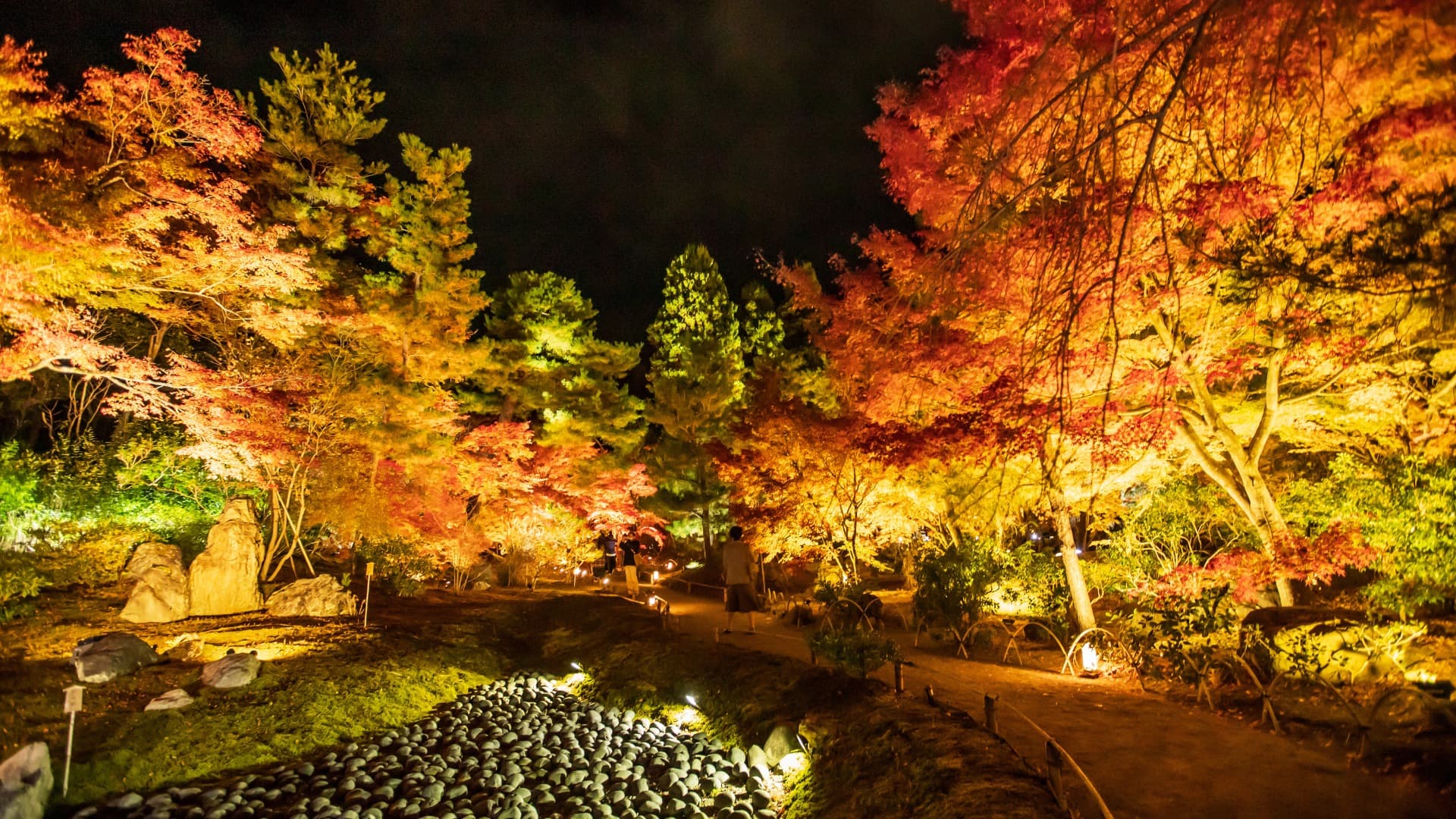
Table of Contents
Introduction
Arashiyama in Kyoto is home to many renowned temples, but among them, Hogon-in Temple is especially popular during the autumn foliage season. Founded in the Muromachi period as a sub-temple of Tenryu-ji, this temple is usually closed to the public and only opens for special viewings in spring and autumn. The autumn light-up is particularly famous, with the garden “Shishiku no Niwa” (Garden of the Lion’s Roar) illuminated amidst the brilliant autumn leaves, attracting a large number of visitors and worshippers every year.
In this article, we will introduce the history and highlights of Hogon-in Temple in detail, with a special focus on the enchanting light-up. Be sure to check the information before your visit so you can fully enjoy this magical scenery.
What Is Hogon-in Temple?
Hokyo-in is a Rinzai sect temple located in Sagano, Ukyo Ward, Kyoto. It was originally founded by imperial decree of the 72nd Emperor Shirakawa during the Heian period. Initially called “Zennu-ji,” the temple was restored in the Nanbokucho period (1345-1350) by Zen Master Mokuan Shuyu, a distinguished disciple of Muso Soseki, as the restorer. At that time, the temple received the patronage of Ashikaga Yoshiakira, the second Shogun of the Muromachi Shogunate, and was renamed “Kanrin-ji,” though it was later reverted to “Zennu-ji.”
According to temple records, Kusunoki Masatsura, a warrior of the Southern Court, was a devout follower of Mokuan Shuyu. When Masatsura died in the Battle of Shijonawate in 1348, Mokuan is said to have carefully buried his severed head within the temple grounds. Later, Ashikaga Yoshiakira also wished to be buried beside Masatsura’s grave after his own death, and when he passed away in 1367, he was interred next to Masatsura’s tomb. As a result, the temple was renamed “Hokyo-in” after Yoshiakira’s posthumous Buddhist name.
Hokyo-in subsequently flourished under the reverence of successive Ashikaga rulers, but its influence declined along with the fall of the Muromachi Shogunate. By the late Edo period, the temple was temporarily abandoned. However, during the Meiji era, Kyoto Governor Kitagaki Kunimichi erected a stone monument in honor of the historic site associated with Kusunoki Masatsura. In the Taisho era, the temple was restored by Kawasaki Yoshitaro of the Kawasaki zaibatsu.
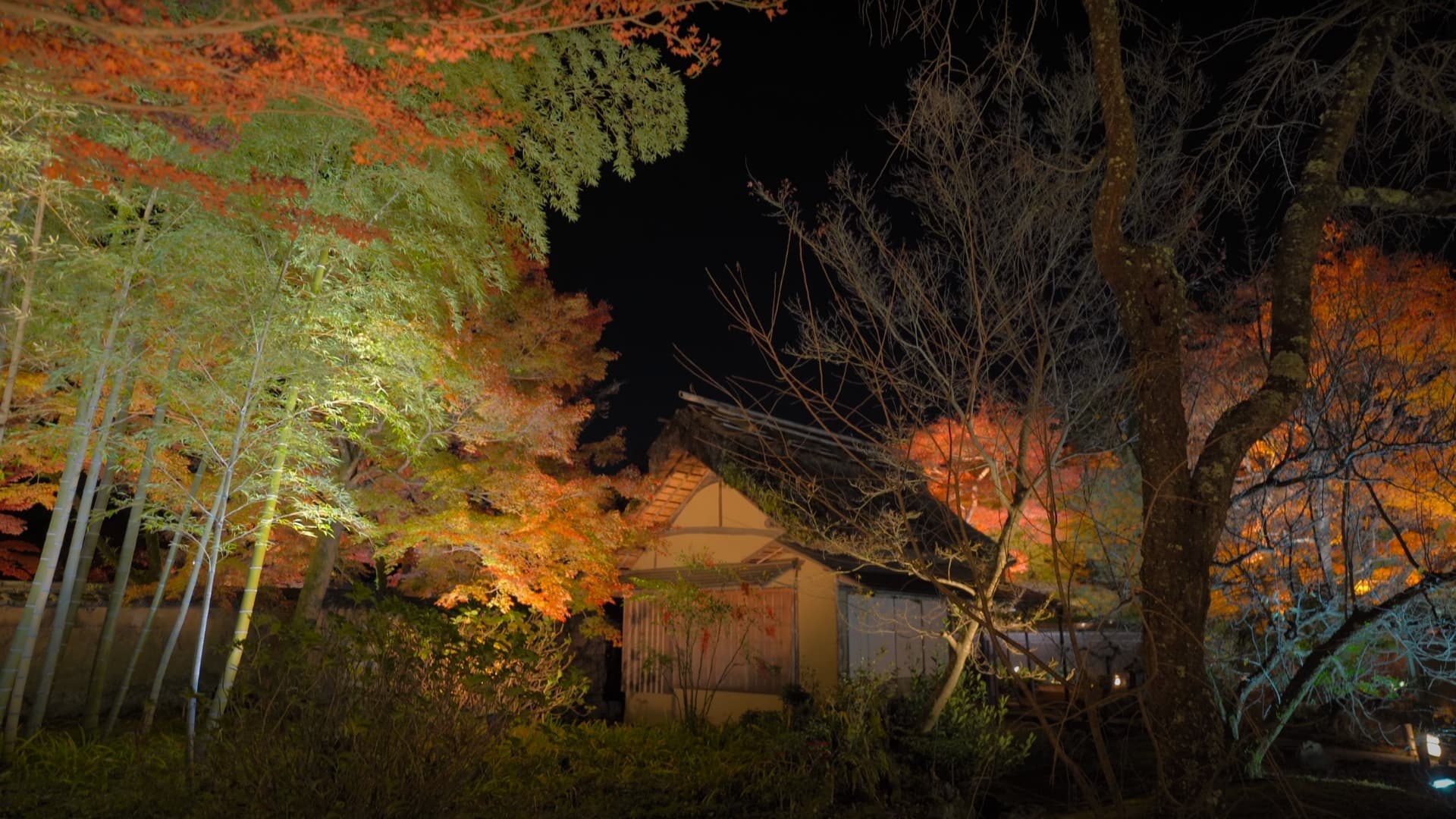
Today, it is well-known as a famous spot for autumn foliage, and its beautiful gardens that change with each season continue to captivate many visitors and worshippers.
Details of the Hogon-in Light-Up
Hogon-in is a sub-temple of the Rinzai sect head temple Tenryu-ji, located in Saga Tenryuji Susukinobaba-cho, Ukyo Ward, Kyoto. Although normally closed to the public, it opens for general viewing during special exhibition periods in spring and autumn. During the autumn foliage season in particular, the garden “Shishiku no Niwa” (Garden of the Lion’s Roar) is adorned with approximately 300 maple and ginkgo trees, captivating many visitors with its stunning beauty. This garden is a strolling-style landscape garden designed by Zen Master Sakugen during the Edo period, featuring a distinctive scenery that incorporates Mount Arashiyama as borrowed landscape.
[ Main Highlights of the Illuminated Garden ]
(1) Shishiku no Niwa (Garden of the Lion’s Roar)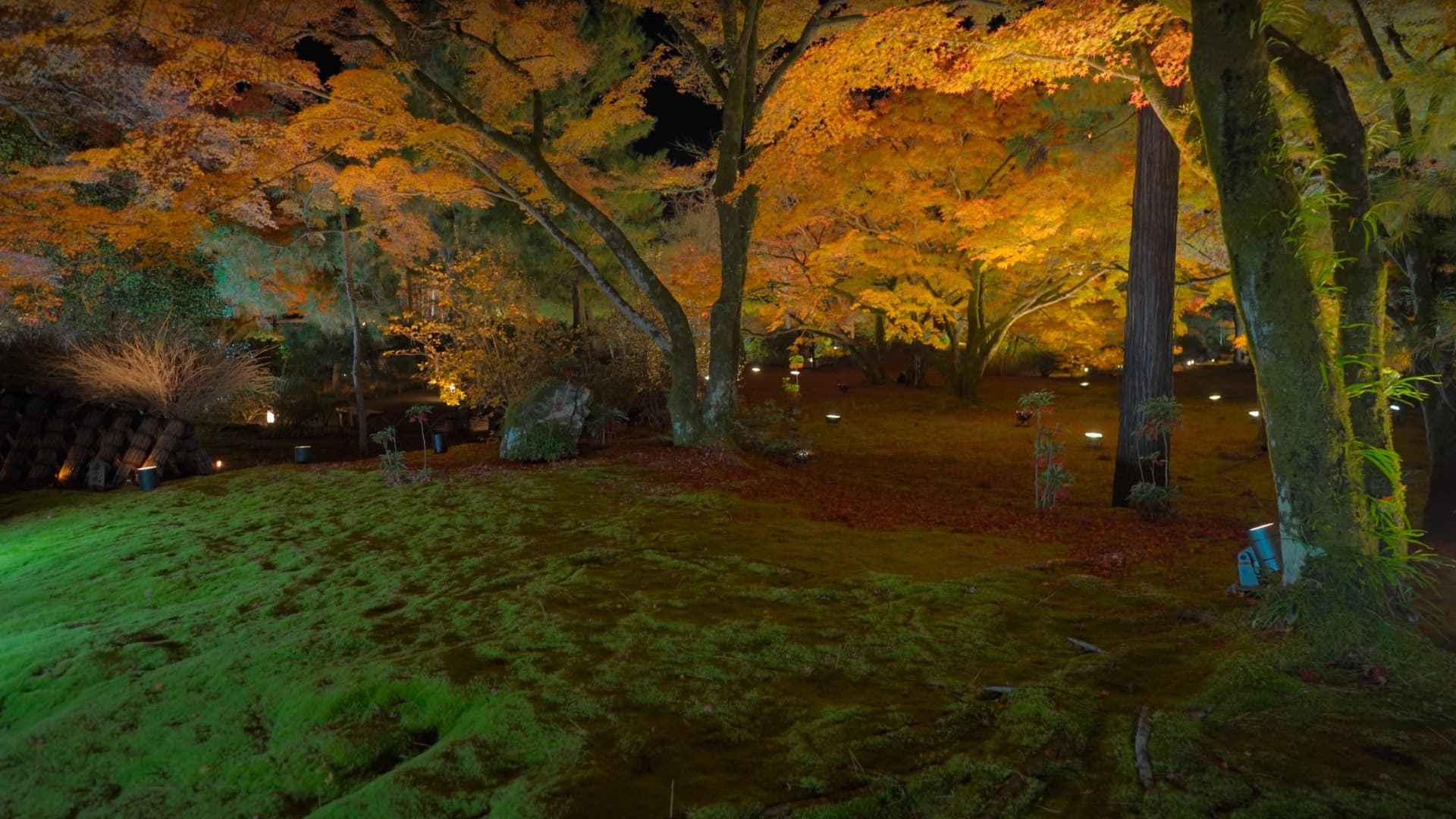
The Shishiku no Niwa is the symbolic garden of Hogon-in Temple. Created during the Edo period, it is renowned as a strolling garden that incorporates Mount Arashiyama as its backdrop. During the evening light-up, the red and yellow autumn leaves and the moss within the garden create a fantastical landscape.
(2) Ryumonbaku (Dragon Gate Waterfall)
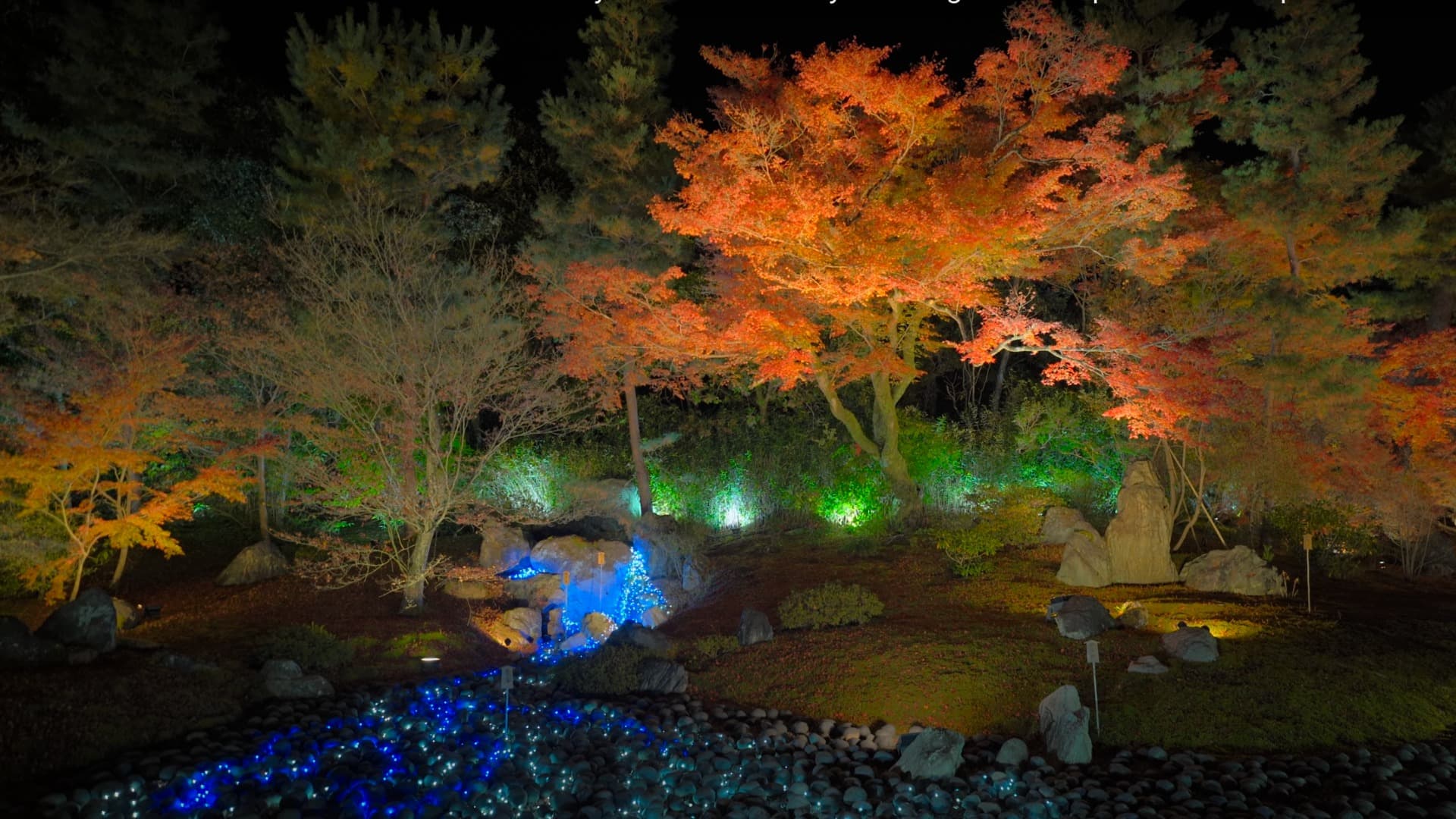
The Ryumonbaku is a beautiful spot within the garden where a small waterfall flows. The illumination makes the water sparkle, and the contrast with the surrounding autumn foliage stands out beautifully. This spot is also popular as a particularly photogenic location.
(3) Autumn Foliage Tunnel Near the Entrance Gate
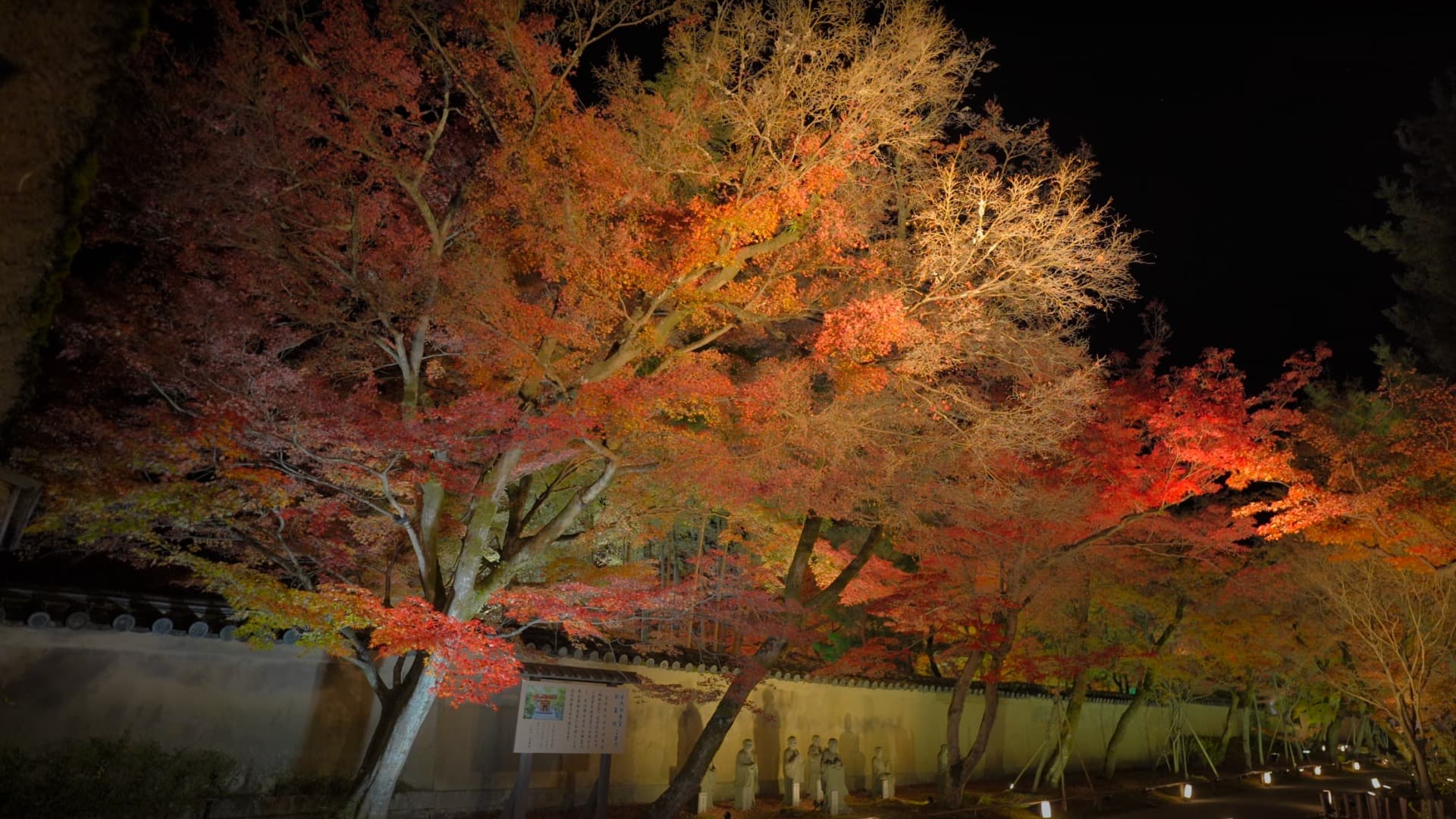
Around the entrance gate of Hogon-in, maple trees grow thickly like a tunnel, and when illuminated, a fantastical corridor of autumn foliage appears. Walking through here feels like stepping into another world entirely.
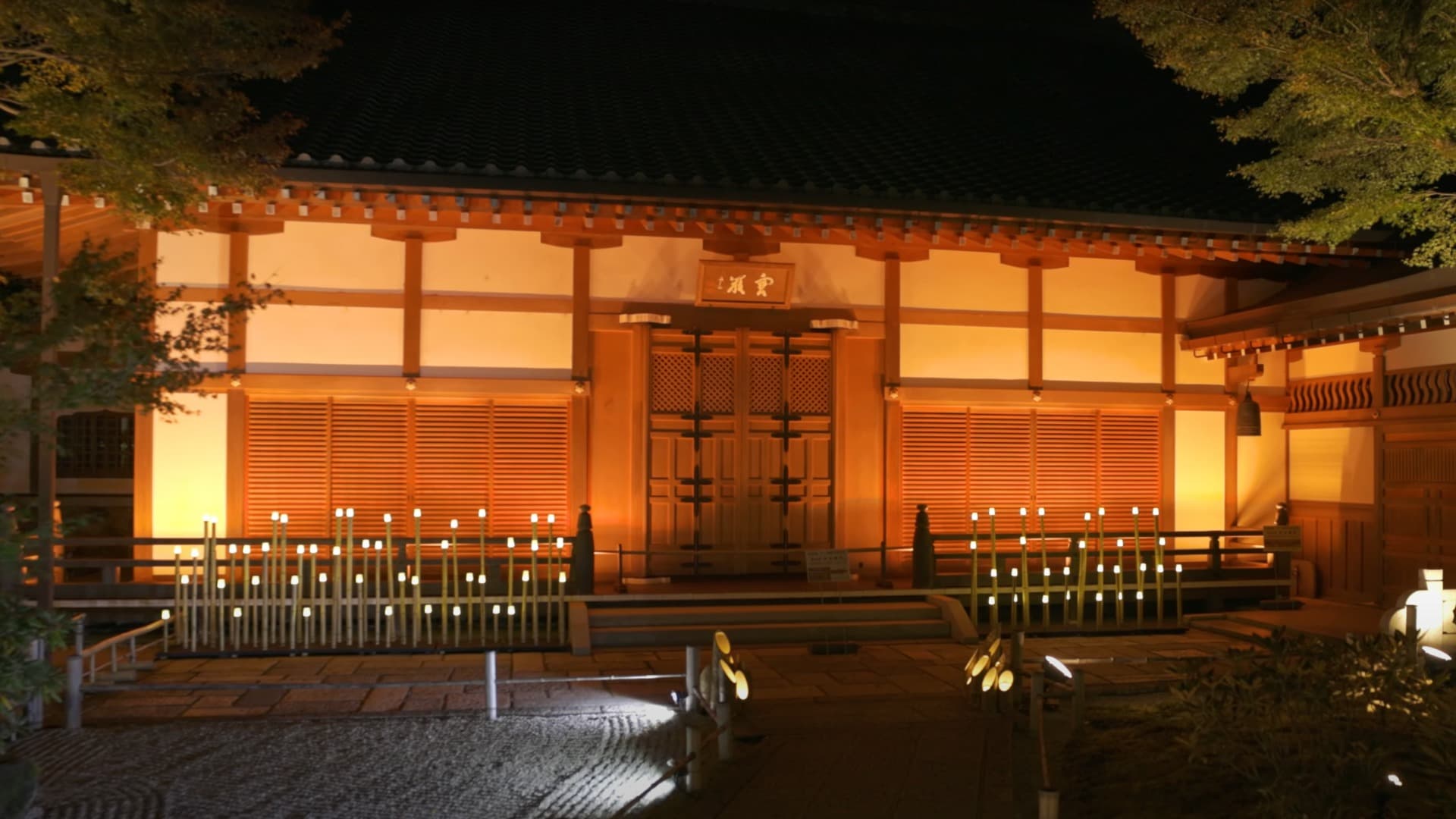
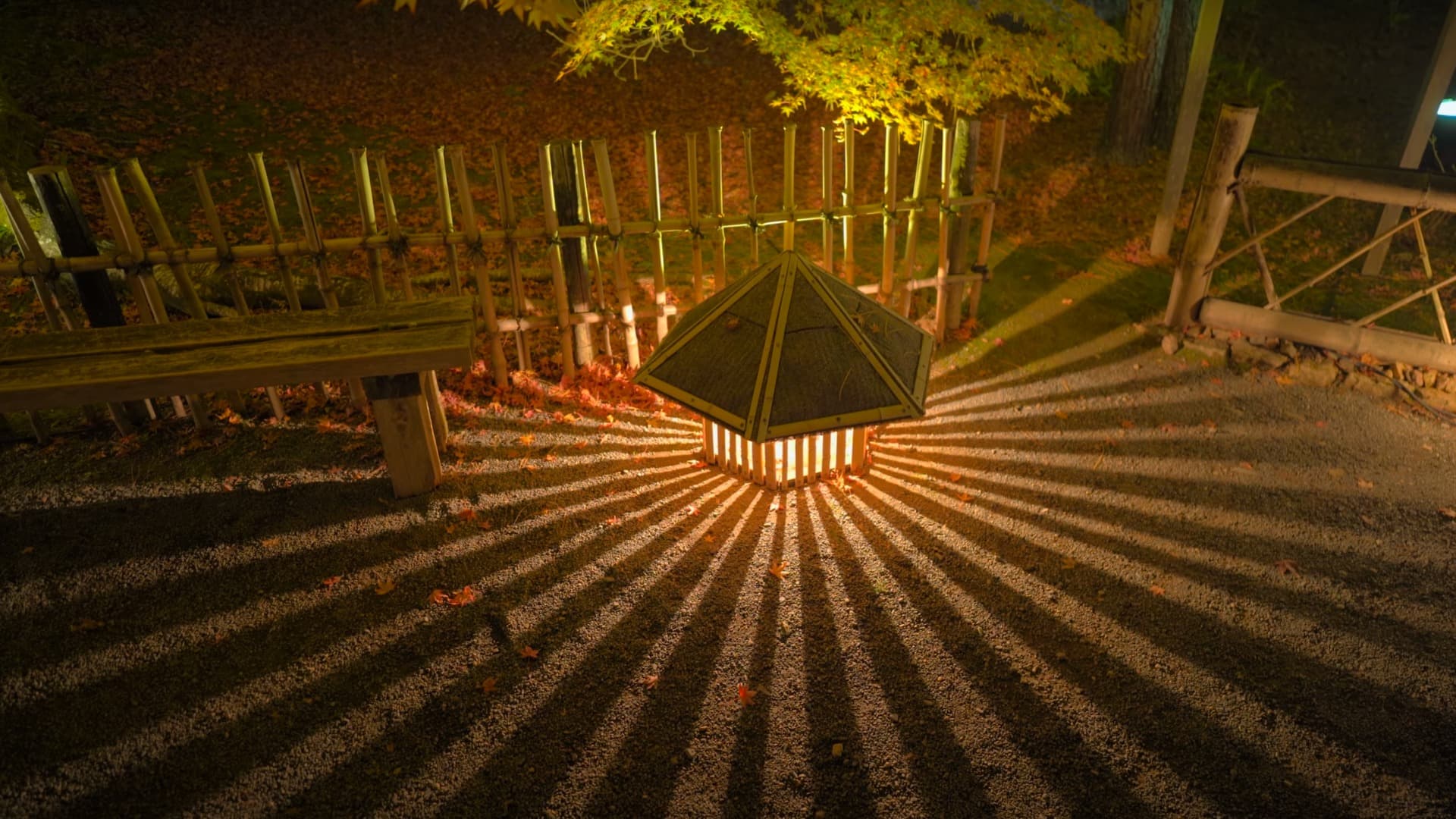
During the special autumn viewing period, evening light-ups are also held, allowing visitors to experience a fantastical atmosphere quite different from the daytime scenery.In the illuminated garden, the contrast between the autumn leaves and the moss emerges beautifully, enchanting all who visit.
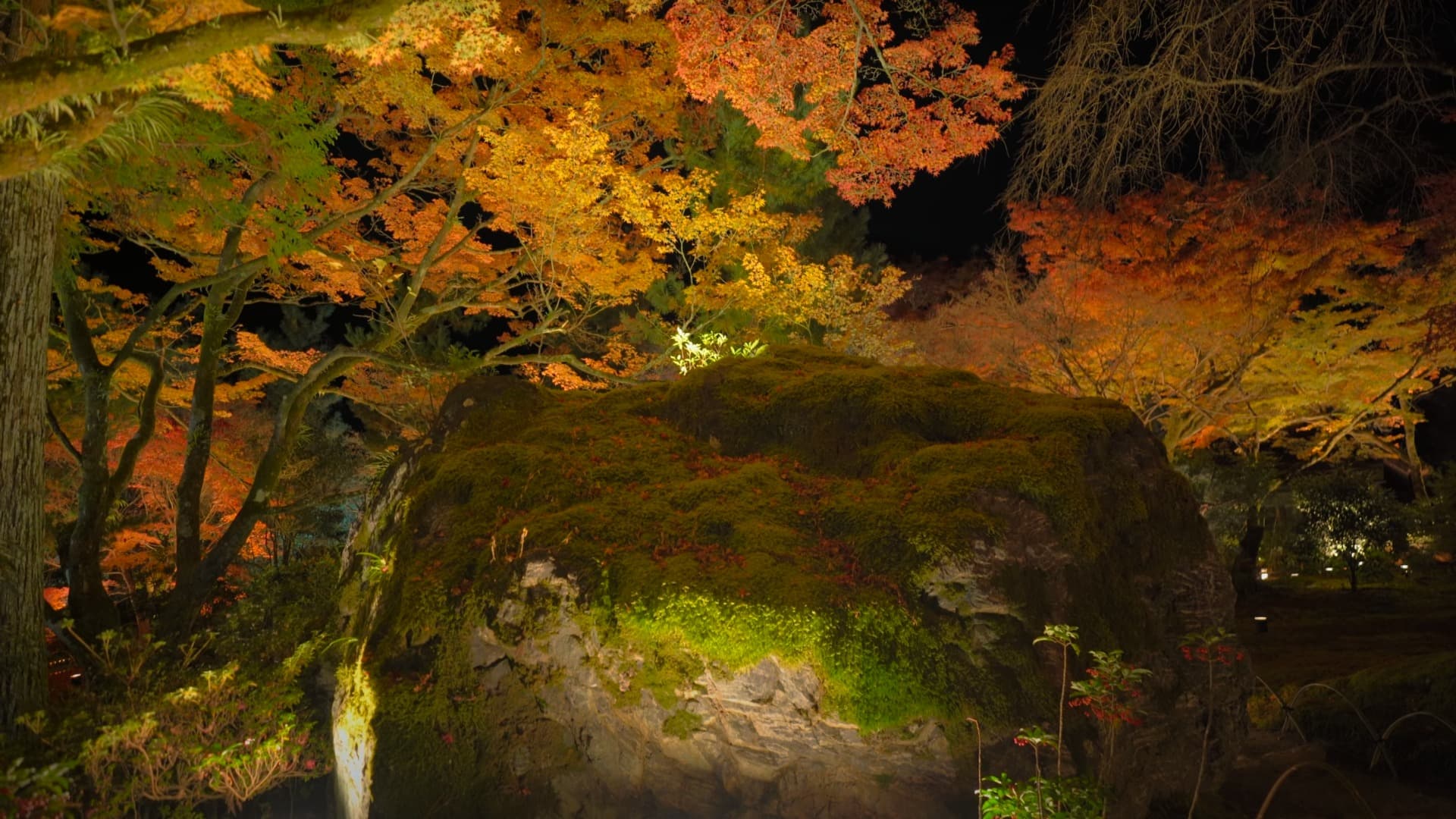
In particular, the areas around “Shishiku no Niwa” and “Ryumonbaku” offer stunning contrasts between the illuminated autumn foliage, rocks, and waterfall. Additionally, the autumn foliage tunnel near the entrance gate is lit up, creating a fantastical landscape for visitors to enjoy.
History of Hogon-in Temple
Since its founding in the Muromachi period, Hogon-in has undergone donations from Toyotomi Hideyoshi during the Sengoku period and destruction by fire at the end of the Edo period, before being rebuilt to its current form. In recent years, the beauty of its garden has been highly regarded, and special viewings and light-ups in spring and autumn have established its status as a major tourist attraction.
1. 1461 – Founding of Hogon-in Temple
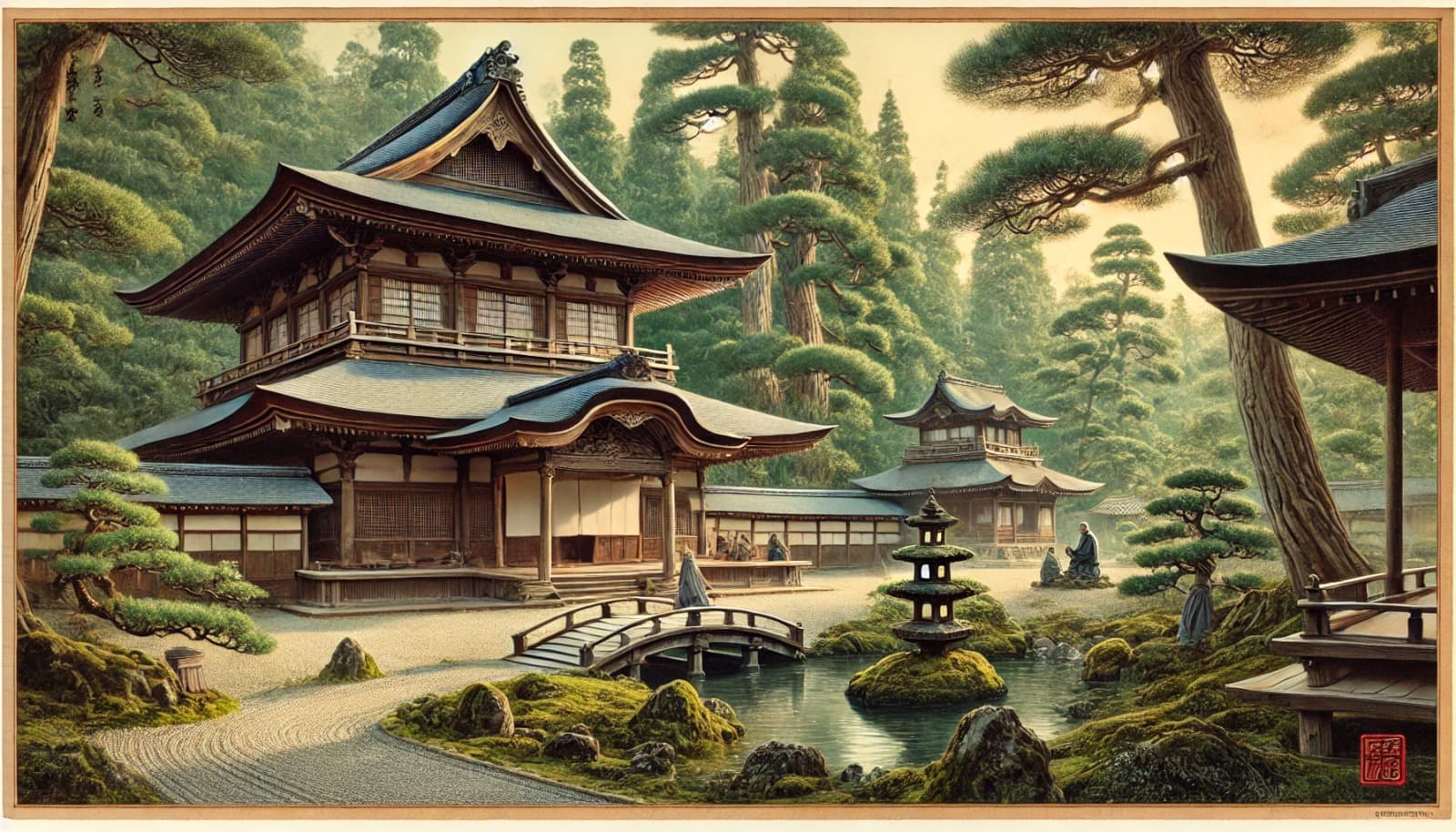 *Illustrative image
Hogon-in Temple was founded in 1461 by the Muromachi-period Zen monk Seichu Eiko. Originally established as a sub-temple of Tenryu-ji, it developed as one of Kyoto’s Zen sect temples. The founding priest is said to be Sakugen Shuryo, a renowned Rinzai Zen master who was also known for his involvement in diplomacy between Japan and China.
2. 1596 – Donation by Toyotomi Hideyoshi
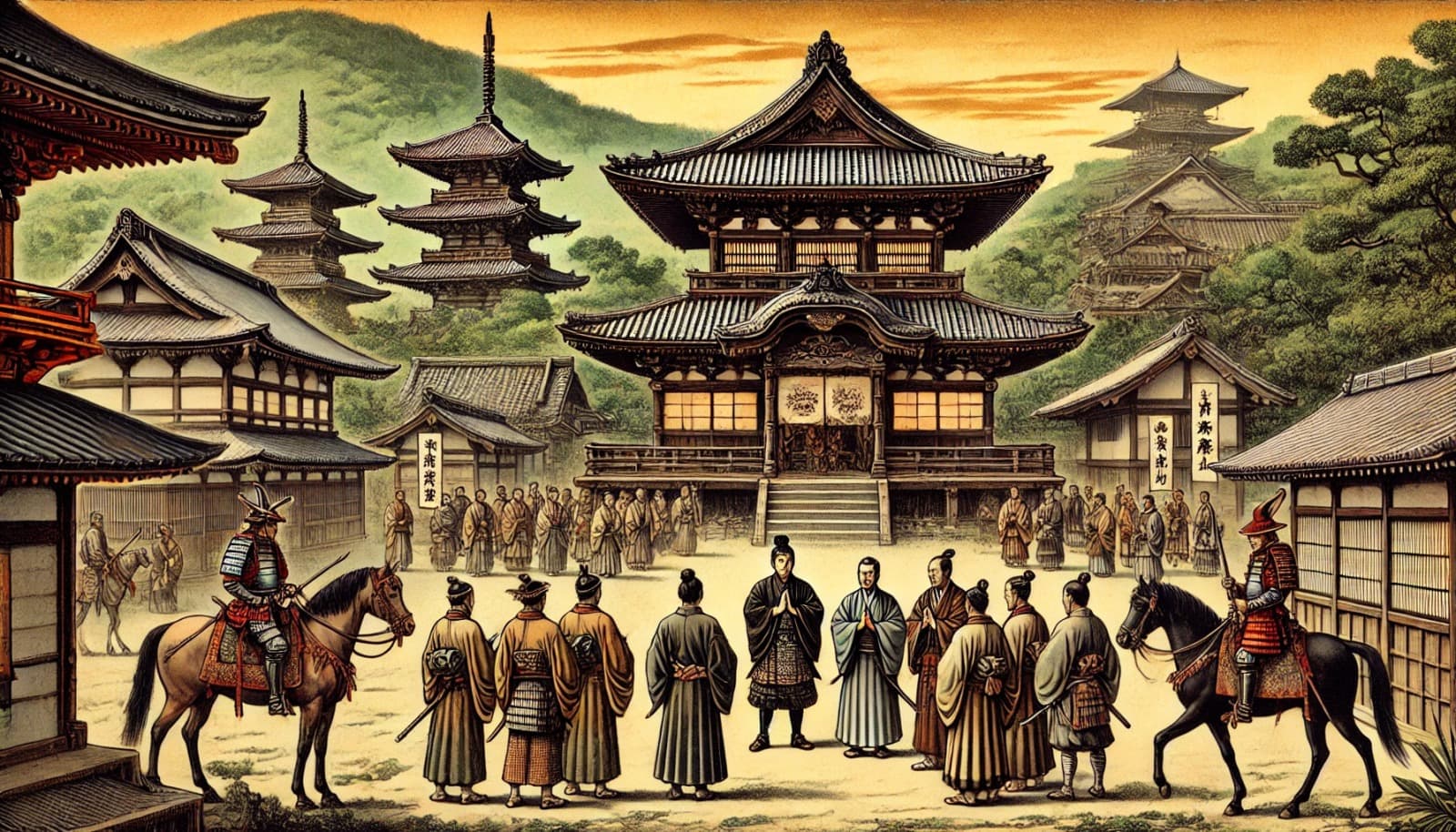 *Illustrative image
During the Momoyama period, Hogon-in received the patronage of Toyotomi Hideyoshi. In 1596, Hideyoshi donated temple lands, supporting the maintenance and development of the temple. This reflected Hideyoshi’s high regard for the Saga and Arashiyama area, including Tenryu-ji, and Hogon-in benefited from this association.
3. 1864 – Destruction in the Kinmon Incident
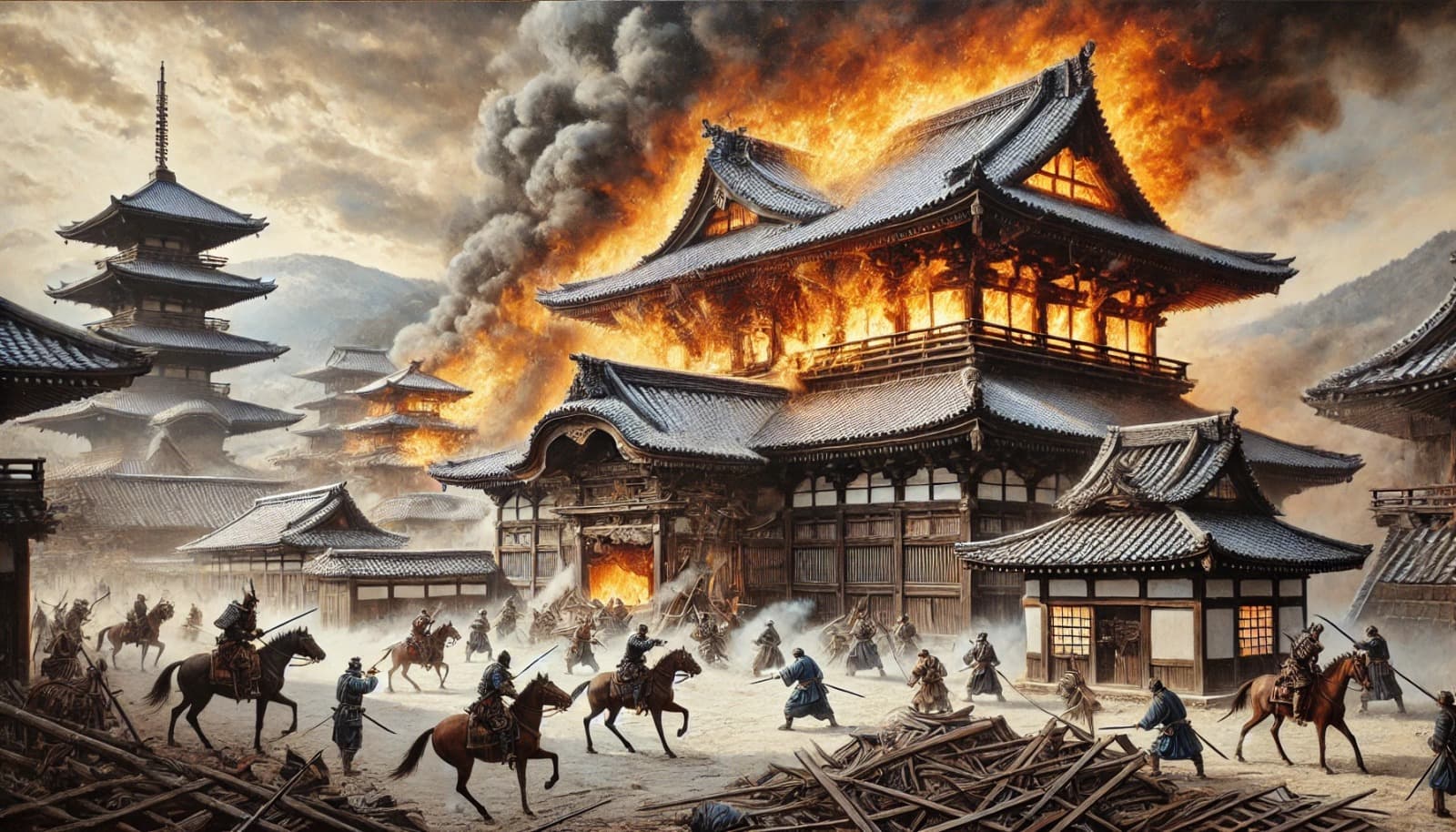 *Illustrative image
In 1864 (the first year of Genji), during the late Edo period, the fires from the “Kinmon Incident” (Forbidden Gate Incident) — a battle between the Choshu domain and the Shogunate forces — spread through Kyoto, and Hogon-in was also damaged. The temple complex was destroyed by the fires, and the temple’s functions were temporarily lost. As a result, many cultural properties and records were lost, marking a major turning point in Hogon-in’s history.
4. 20th Century – Reconstruction and Garden Restoration
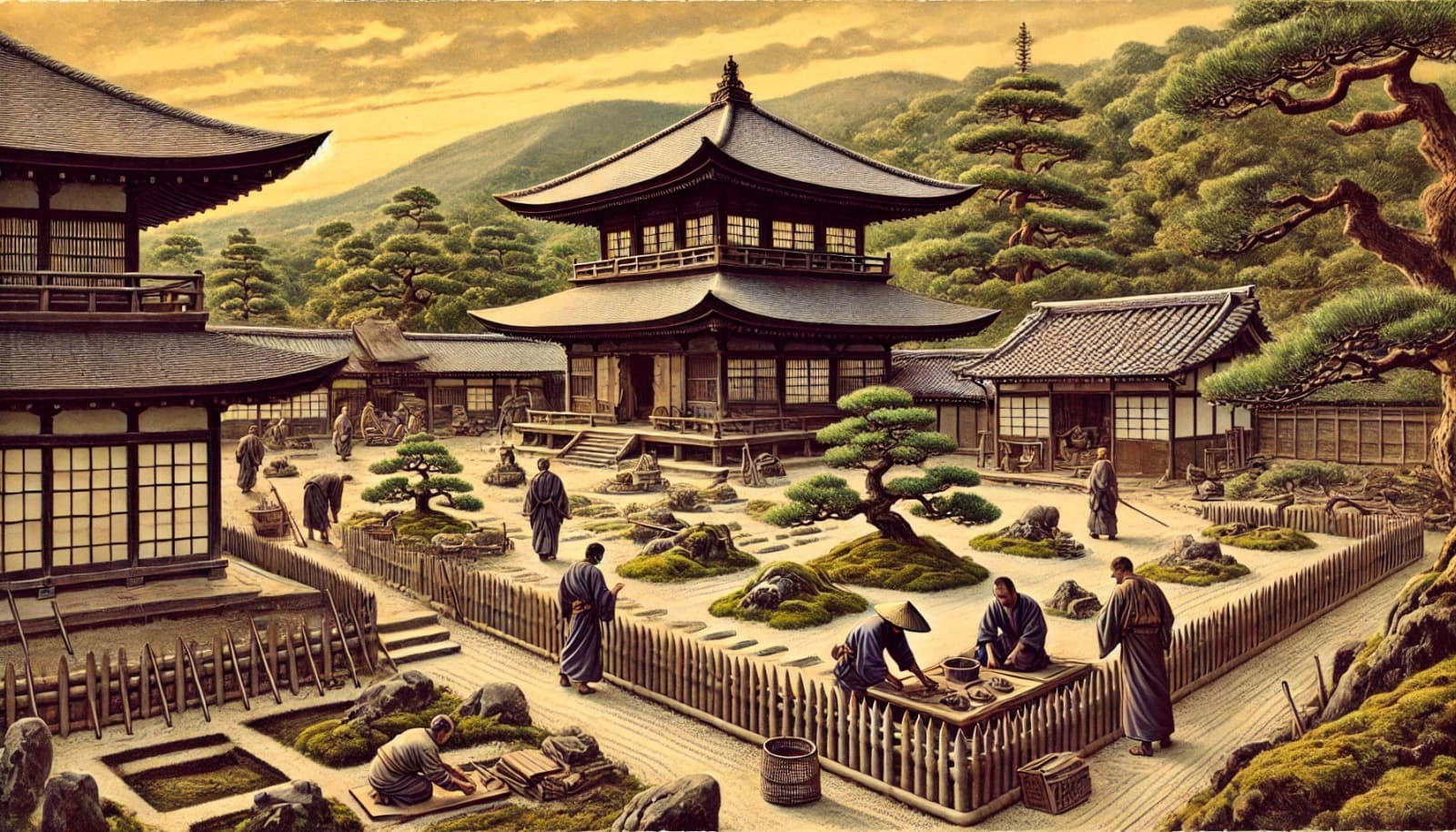 *Illustrative image
During the Meiji era, attempts were made to rebuild the temple, but large-scale restoration did not progress. Full-scale reconstruction began during the Showa period, when the “Shishiku no Niwa” garden was developed. This garden uses Mount Arashiyama as borrowed scenery and was developed as a beautiful strolling-style garden reflecting the spirit of Zen.
5. 2002 – Start of Spring and Autumn Special Openings
 *Illustrative image
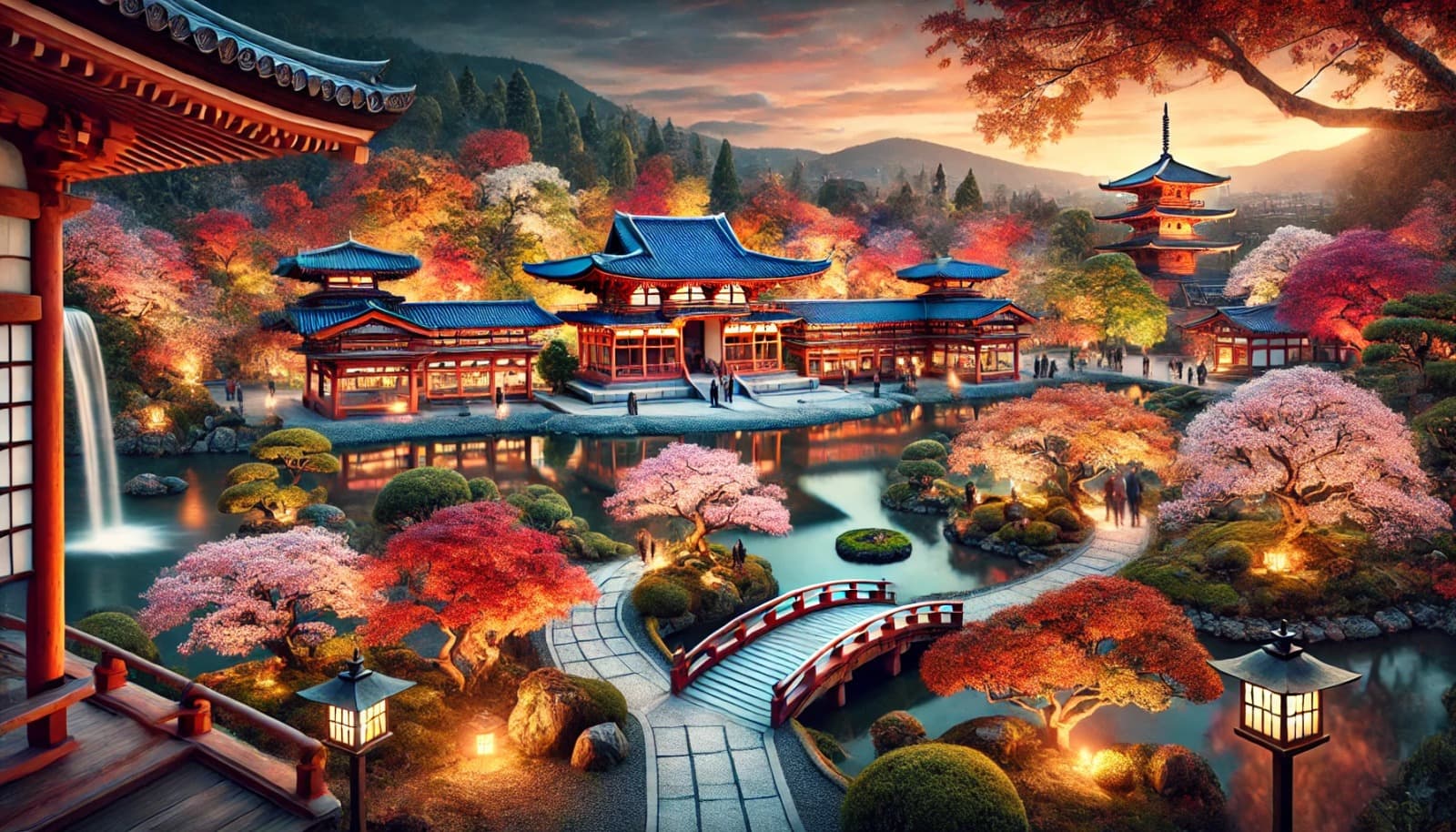
Starting in 2002, the garden and main hall of Hogon-in were opened to the general public as special spring and autumn exhibitions. During the autumn foliage season in particular, many tourists visit, and enchanting light-ups have also been held. As a result, Hogon-in has become widely known as a premier autumn foliage destination in the Saga-Arashiyama area, and its value as a cultural property has been re-evaluated.
Summary
Hogon-in is a renowned temple in Kyoto’s Arashiyama area that combines a rich historical background with a beautiful garden. Founded during the Muromachi period and restored through wars and fires, this temple is now also known as a famous autumn foliage spot. The light-up held during the special autumn viewing period is a rare opportunity to enjoy a fantastical atmosphere and can be considered a highlight of Arashiyama sightseeing.
The Arashiyama area is dotted with other tourist spots such as Tenryu-ji Temple, the Bamboo Grove Path, and the Sagano Romantic Train, making it ideal to combine a visit to Hogon-in with a leisurely stroll through the area.
If you are visiting Kyoto, be sure to experience the special viewing and light-up at Hogon-in. The autumn foliage scenery bathed in ethereal light will surely become an unforgettable memory.