
🕓 2023/1/28
#Sightseeing
About Miyazaki Prefecture
Miyazaki Prefecture is known for its mild climate, abundant natural scenery, deep history and cultural heritage, and unique food culture. Agriculture thrives here, and the prefecture is nationally renowned especially for its fruit production.
Takachiho Gorge, Aoshima Island, Udo Shrine, and other places where the legends of the gods live on inspire visitors to reflect on ancient times. These locations serve as the stage for the mythology surrounding Japan’s origins and the deeds of the gods, profoundly influencing the spirituality and culture of the Japanese people.
The food culture makes excellent use of the region’s abundant natural resources. Miyazaki beef is highly regarded for its tenderness and flavor, and there is a wealth of cuisine using local ingredients, including charcoal-grilled Miyazaki free-range chicken and the locally beloved cold soup called “hiyajiru.” In terms of fruit production, the prefecture is known for its high quality, and in particular, the mango branded “Taiyo no Tamago” (Egg of the Sun) is popular for its sweetness and juiciness.
The tourist destinations are known for both their natural beauty and historical significance. Takachiho Gorge is renowned for its magnificent natural landscape and leaves a deep impression on visitors. Coastal destinations like Aoshima and the Nichinan Coast are popular as beautiful beaches and surfing spots. Historic shrines such as Udo Shrine are also popular tourist destinations as places that convey stories from the age of mythology.
3 Select Tourist Destinations in Miyazaki Prefecture
Ama no Yasukawara
● The Appeal of Ama no Yasukawara
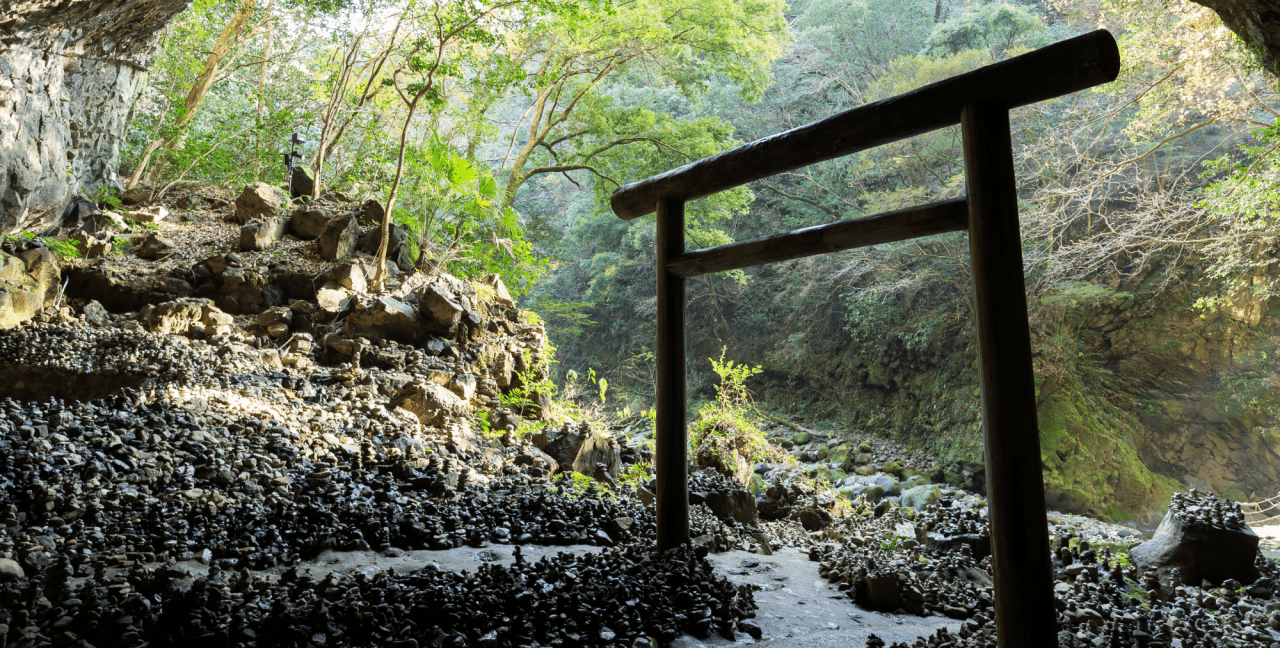
Ama no Yasukawara is known for its beautiful natural scenery and deep historical background. Located in Takachiho Town, Miyazaki Prefecture, this site is closely associated with the mythology of the sun goddess Amaterasu Omikami. In addition to being the heart of the Amano Iwato legend, visitors can enjoy the serene atmosphere surrounded by the gentle flow of the river and lush greenery.
The unique cultural practice of stone stacking offers visitors the experience of making wishes while placing their own stones, creating a sense of mystery and participation. The spiritual atmosphere of this place evokes a feeling not so much of visiting a sacred site, but rather of joining a historical journey, leaving a strong impression on every visitor.
● History of Ama no Yasukawara
The history of Ama no Yasukawara dates back to the creation of Japan. The legend of the supreme sun goddess Amaterasu Omikami hiding in the Ama no Iwato cave due to the unruly behavior of her brother Susanoo no Mikoto, plunging the world into darkness, is one of the most famous tales in Japanese mythology. This site is said to be the place where the gods devised their plan to lure Amaterasu out of the cave and restore light to the world, making it an important place at the very foundation of faith and mythology in Japanese culture.
Together with Amano Iwato Shrine, Ama no Yasukawara is one of the few places where you can physically experience mythology, and from ancient times to the present, it has been a place of special significance for many worshippers.
● Access to Ama no Yasukawara
- Address: Iwato, Takachiho-cho, Nishiusuki-gun, Miyazaki Prefecture
- Nearest Station: Takachiho Station is the nearest railway station. From the station, the site is accessible by bus or taxi. The Takachiho Loop Bus operates from Takachiho Station to the Amano Iwato Shrine bus stop, from where it is about a 10-minute walk to Ama no Yasukawara.
- Official Website: Ama no Yasukawara Official Website
- Google Maps Link: https://maps.app.goo.gl/vPvGuxZDVPTCuuUn7
Udo Shrine
● The Appeal of Udo Shrine
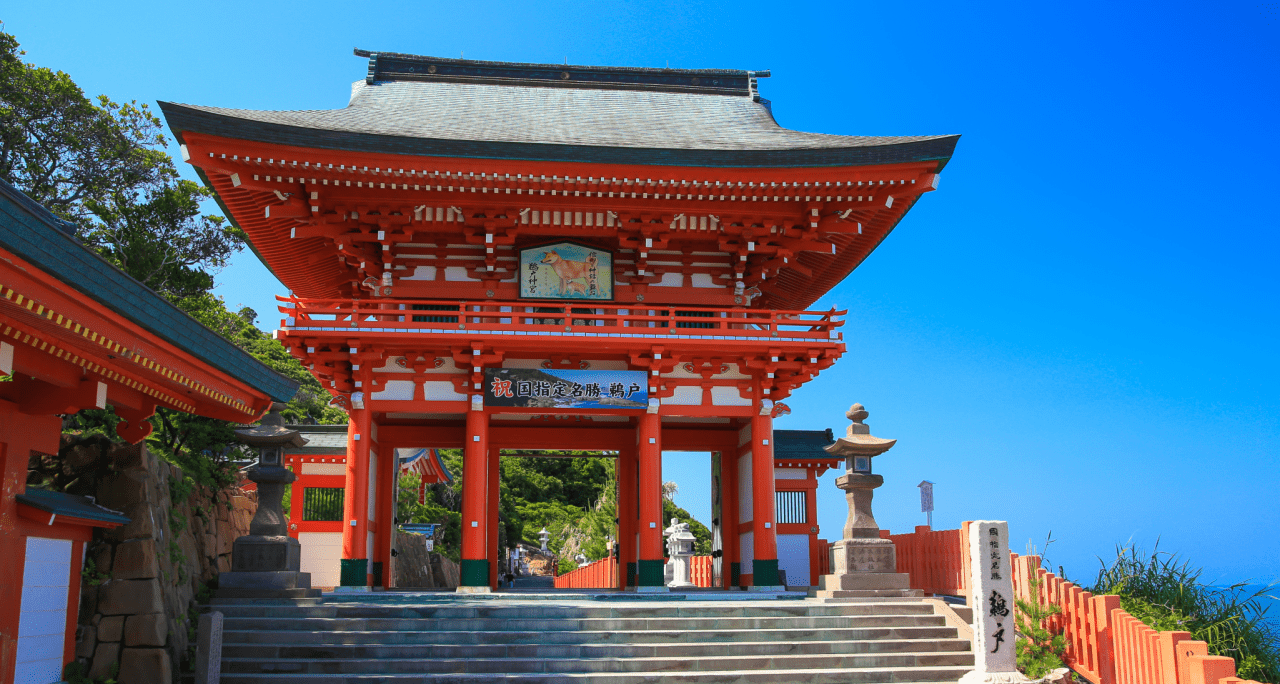
Udo Shrine is a colorful vermilion-painted main hall nestled within a cave on the Udozaki Cape jutting out into the Pacific Ocean, situated in a scenic location along the Nichinan Coast of Miyazaki Prefecture. This shrine is also known as a beautiful scenic spot surrounded by unusual rock formations and crashing Pacific waves.
Particularly famous is the custom of throwing “undama” (luck balls) with the left hand for men and the right hand for women – if you make a wish and the ball lands in the cup-shaped depression of the turtle-shaped rock (kameishi), your wish will come true. Every March, the “Shan Shan Uma Dochu Uta National Competition” is held, keeping the shrine’s unique culture and traditions alive.
● History of Udo Shrine
The history of Udo Shrine dates back to the Heian period, when it flourished as a major training ground for Shugendo (mountain asceticism) and as a sacred site of Ryobu Shinto, earning the title of “Nishi no Koya” (Koya of the West). During the medieval period, the shrine was deeply revered by the Ito clan, and in 1560, Ito Yoshisuke had the shrine buildings restored. Multiple repairs and reconstructions were carried out by the Ito family thereafter. Following the Shinbutsu Bunri decree of 1868 (Meiji 1), the relationship with the temple Nio Gokoku-ji was dissolved, and the shrine was ranked as a Kanpei Shosha (government minor shrine), later being elevated to Kanpei Taisha (government major shrine).
During the Meiji period’s separation of Shinto and Buddhism, when religious facilities were reorganized, Udo Shrine occupied an important position. In 1965, NHK’s morning serial television drama “Tamayura” was set in Miyazaki, and the introduction of Udo Shrine established it as a classic honeymoon destination. Furthermore, in 1970, the thatched-roof shrine office built during the Bunsei era was unfortunately lost to fire, but in 1997, the roof was re-thatched and the lacquer reapplied, resulting in the shrine buildings as they stand today.
● Access to Udo Shrine
- Address: 3232 Miyaura, Nichinan City, Miyazaki Prefecture
- Phone: 0987-29-1001
- Official Website: Udo Shrine Official Website
- Access: Approximately 20 minutes by car or 30 minutes by bus from Aburatsu Station.
- Google Maps: https://maps.app.goo.gl/Eh3of2demNdJCHzJ
Takachiho Gorge
● The Appeal of Takachiho Gorge
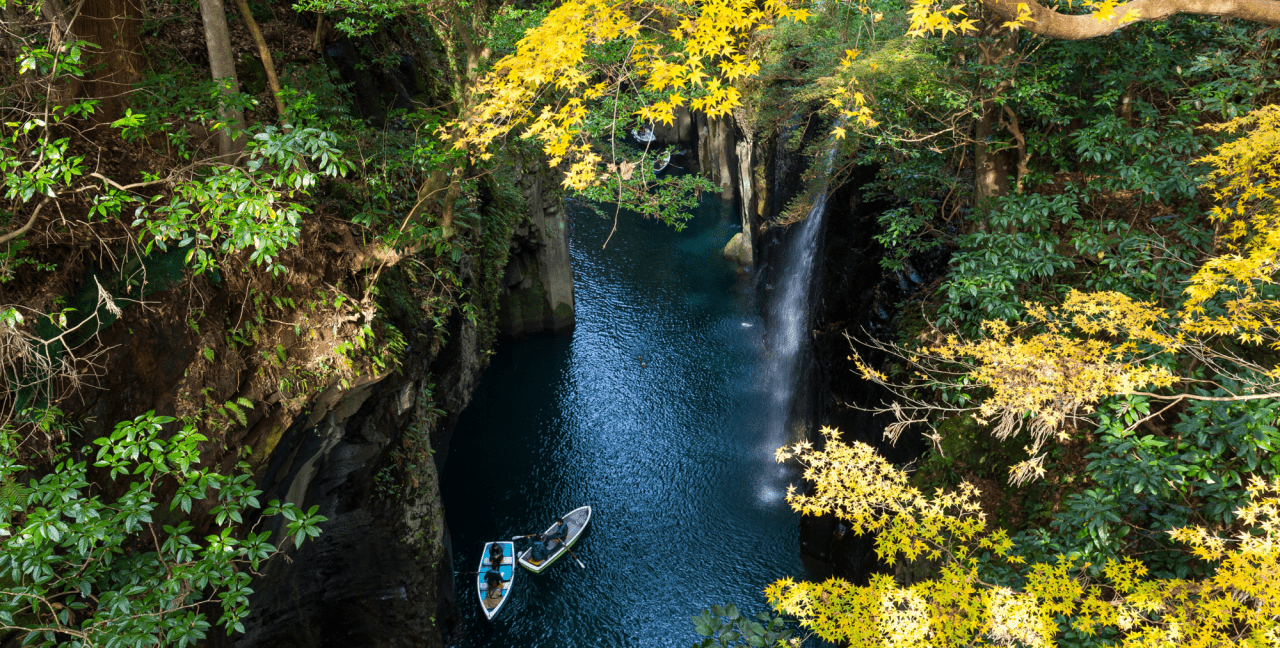
Takachiho Gorge is known for its majestic natural beauty and mystical atmosphere. In ancient times, pyroclastic flows erupted from Mount Aso cooled and solidified, then were eroded over long ages to form this gorge, which stretches approximately 7 kilometers with cliff heights reaching 80 to 100 meters in some places. The magnificent scenery of this site overwhelms visitors.
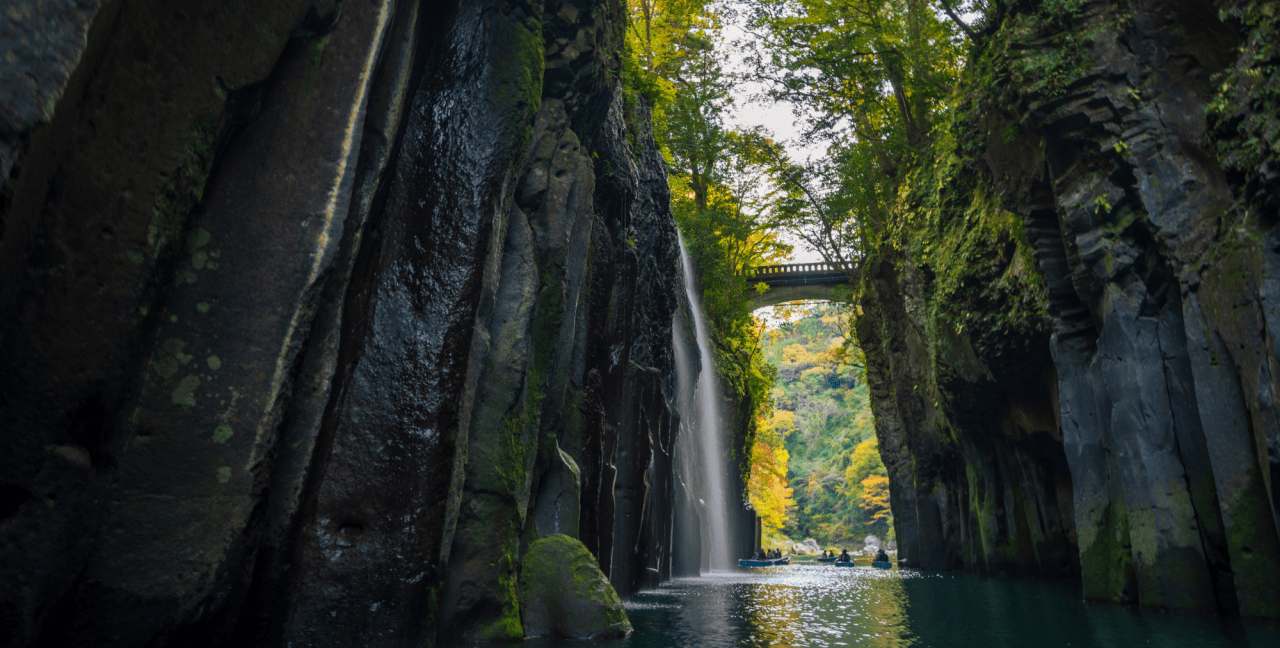
In particular, “Manai Falls” is an iconic feature of Takachiho Gorge, with water cascading from a height of approximately 17 meters. The experience of cruising through the gorge by rental boat allows visitors to feel the enchanting space created by emerald-green waters and sheer cliffs up close, creating an unforgettable experience. The walking trails along the gorge offer beautiful scenery of fresh greenery and autumn foliage depending on the season, making it ideal for nature walks.
● History of Takachiho Gorge
The formation of Takachiho Gorge dates back millions of years. Throughout history, people have woven numerous myths around this site and worshipped it as a sacred place. Takachiho, believed to be the place where the Sun Goddess’s grandson descended from heaven (Tenson Korin) in Japanese mythology, has natural landscapes including the gorge and Manai Falls that are perceived as a place where the world of the gods and the human world intersect.
Part of the area was closed due to Typhoon No. 14 in 2022, but it was fully reopened on March 1, 2024, allowing many people to visit and enjoy its beautiful scenery once again. Additionally, the “nagashi somen” (flowing noodles) experience at the nearby “Chiho no Ie” and the shrines scattered around the area make Takachiho Gorge a precious place that conveys not only the beauty of nature but also the region’s culture and history to the present day.
Takachiho Gorge is designated as both a National Scenic Spot and a Natural Monument, and as one of Japan’s representative scenic locations, it attracts many tourists throughout the year.
● Access to Takachiho Gorge
- Address: Mitai Oshioi, Takachiho-cho, Nishiusuki-gun, Miyazaki Prefecture
- Phone: 0982-73-1213 (Takachiho Town Tourism Association)
- Admission: Free
- Access: Approximately 2 hours 15 minutes by car from Miyazaki Airport/JR Miyazaki Station, approximately 1 hour 25 minutes by car from Kumamoto Airport, approximately 8 minutes by car from Takachiho Bus Center, approximately 1 hour 30 minutes by Miyazaki Kotsu Bus from JR Nobeoka Station to “Takachiho Bus Center,” approximately 13 minutes by car from Kyushu Chuo Expressway Hinokage Fukasumi IC
- Parking: Available
- Official Website: Takachiho Town Tourism Association Official Website
- Google Maps: https://maps.app.goo.gl/hRyXyV88UgTVJowW8