- Introduction
- Overview of Nanzen-ji
- History of Nanzen-ji
- 1. Kamakura Period (1291): Emperor Kameyama’s Founding—From Imperial Villa to Zen Temple
- 2. Muromachi Period: The Pinnacle of the Five Mountains—Ashikaga Yoshimitsu and the Golden Age of Zen
- 3. Azuchi-Momoyama to Edo Period: Revival by Warriors—Ishin Sūden and Tokugawa Ieyasu
- 4. Meiji Era: The Ordeal of Anti-Buddhist Movement and the Birth of the Suirokaku Aqueduct
- 5. Modern Era: A World-Renowned Zen Temple
- Highlights and Recommended Spots
- 1. Sanmon Gate (Dragon Gate of the Realm)—The Magnificent View That Ishikawa Goemon Saw
- 2. Hōjō Garden (Tiger Cubs Crossing Garden)—National Treasure Hōjō and a Masterpiece of Dry Landscape
- 3. Suirokaku Aqueduct—Meiji-Era Brick Arches in Harmony with a Zen Temple
- 4. Tenju-an—A Hidden Gem for Autumn Foliage with Two Gardens
- 5. Nanzen-in—The Birthplace of Nanzen-ji
- Nearby Attractions
- Access
- Summary
- Frequently Asked Questions
Introduction
When you step into the grounds of Nanzen-ji Temple at the foot of Kyoto’s Higashiyama mountains, the massive Sanmon gate greets you with an overwhelming presence. This is the stage where the legendary thief Ishikawa Goemon famously declared “What a magnificent view! What a magnificent view!” in the kabuki play “Sanmon Gosan no Kiri,” and the panoramic view of Kyoto from atop this gate truly lives up to those words.
Nanzen-ji holds the extraordinary distinction of “Gozan no Jō” (Above the Five Mountains)—the highest rank among all Zen temples in Japan. This designation, established by Ashikaga Yoshimitsu during the Muromachi period, places Nanzen-ji above all ten temples of both the Kyoto Gozan and Kamakura Gozan, a status that has remained unchanged for over 600 years. The temple grounds span approximately 45,000 tsubo (about the size of three Tokyo Domes), encompassing a National Treasure-designated Hōjō (abbot’s quarters), celebrated karesansui (dry landscape) gardens, and a brick aqueduct built during the Meiji era—all coexisting in remarkable harmony.
During the autumn foliage season, the areas around the Sanmon gate and the gardens of Tenju-an blaze with brilliant reds and golds, drawing approximately 2 million visitors annually and making it one of Kyoto’s premier autumn leaf destinations. This article provides a comprehensive guide to Nanzen-ji, tracing its history from its founding to the present day, covering must-see highlights, nearby attractions, and access information.
Overview of Nanzen-ji
Nanzen-ji is the head temple of the Nanzen-ji branch of the Rinzai school of Zen Buddhism, located in Sakyō-ku, Kyoto. Its formal name is “Taihei Kōkoku Nanzen Zenji,” with the mountain name “Zuiryūzan.” It was founded by the priest Mukan Fumon (Daimyō Kokushi) at the behest of Emperor Kameyama.
| Official Name | Taihei Kōkoku Nanzen Zenji |
|---|---|
| Location | 86 Nanzenji Fukuchi-chō, Sakyō-ku, Kyoto |
| Sect | Head Temple, Nanzen-ji Branch of Rinzai Zen |
| Principal Image | Shaka Nyorai (Shakyamuni Buddha) |
| Founder (Priest) | Daimyō Kokushi / Mukan Fumon |
| Founder (Patron) | Emperor Kameyama |
| Established | 1291 (Shōō 4) |
| Visiting Hours | 8:40–17:00 (until 16:30 Dec–Feb) |
| Admission | Hōjō Garden: ¥600 / Sanmon Gate: ¥600 / Nanzen-in: ¥400 |
| Closed | December 28–31 |
*Please check the official Nanzen-ji website for the latest visiting hours and fees.
Nanzen-ji occupies the supreme rank of “Gozan no Jō” among Japan’s Zen temples. This places it above all temples of both the Kyoto Gozan (Tenryū-ji, Shōkoku-ji, Kennin-ji, Tōfuku-ji, and Manju-ji) and the Kamakura Gozan (Kenchō-ji, Engaku-ji, Jufuku-ji, Jōchi-ji, and Jōmyō-ji). The grounds contain 12 sub-temples, along with the National Treasure-designated Greater and Lesser Hōjō, the Important Cultural Property Sanmon gate, and celebrated gardens that offer endless discoveries.
Located in the Keage area at the foot of Higashiyama, the temple is about a 10-minute walk from Keage Station on the Kyoto Municipal Subway. Eikan-dō and the Philosopher’s Path are also within walking distance, making it an ideal base for exploring the Higashiyama area. The temple welcomes approximately 2 million visitors annually, with tens of thousands visiting in a single day during the peak autumn foliage season in November.
History of Nanzen-ji
1. Kamakura Period (1291): Emperor Kameyama’s Founding—From Imperial Villa to Zen Temple
The origins of Nanzen-ji date back to the mid-Kamakura period. This site was originally the imperial villa “Zenrin-ji-dono,” belonging to Emperor Kameyama (later Retired Emperor Kameyama, 1249–1305). As the 90th Emperor of Japan, Kameyama lived during a politically complex era marked by the succession dispute between the Jimyōin and Daikakuji imperial lineages.
According to tradition, strange supernatural occurrences began plaguing the villa, and despite enlisting various monks to perform prayers, nothing worked. When the Retired Emperor summoned Mukan Fumon (1212–1292) from Tōfuku-ji, the priest simply sat in quiet meditation—and the disturbances ceased. Deeply impressed by the power of Zen, Emperor Kameyama converted the villa into a Zen temple in 1291, appointing Mukan Fumon as the founding abbot.
Mukan Fumon was an eminent monk who had traveled to Song Dynasty China to study under Wuzhun Shifan at Jingshan Temple. However, he passed away just one year after becoming the founding abbot, in 1292. His successor, Kian Soen, is regarded as the restorer of Nanzen-ji. Kian Soen established the temple’s buildings and laid its institutional foundation. Emperor Kameyama himself moved his residence to Nanzen-ji, spending his final years there and taking the tonsure (entering the priesthood) in 1299.
2. Muromachi Period: The Pinnacle of the Five Mountains—Ashikaga Yoshimitsu and the Golden Age of Zen
The turning point that elevated Nanzen-ji to the summit of Japanese Zen came during the Muromachi period. While Emperor Go-Daigo had already placed Nanzen-ji at the top of the Kyoto Gozan, the third Muromachi shogun Ashikaga Yoshimitsu dramatically reformed the Five Mountain system in 1386, establishing Nanzen-ji in the unprecedented rank of “Gozan no Jō”—above all Five Mountain temples.
During this era, Nanzen-ji was not merely a religious institution but also a center of politics, diplomacy, and culture. The temple’s head priests served as diplomatic advisors to the shogunate, drafting documents for trade with Ming Dynasty China, while the literary movement known as “Gozan Literature” flourished with Chinese poetry and prose. Distinguished monks such as Gidō Shūshin and Zekkai Chūshin were active, making Nanzen-ji an intellectual hub of Japan.
Yet beneath this splendor, Nanzen-ji suffered repeated devastating fires during the Muromachi period. A major fire in 1374 destroyed much of the main buildings, followed by further destruction in 1447 and during the Ōnin War beginning in 1467. The Ōnin War reduced much of Kyoto to ashes, and Nanzen-ji lost nearly all of its structures. The glory of “Gozan no Jō” was consumed by the flames of war.
3. Azuchi-Momoyama to Edo Period: Revival by Warriors—Ishin Sūden and Tokugawa Ieyasu
After roughly a century of desolation following the Ōnin War, the light of revival finally reached Nanzen-ji during the Azuchi-Momoyama period. Initial reconstruction efforts were undertaken by Gempo Reisan under imperial decree, but the full-scale rebuilding occurred in the early Edo period.
The most crucial figure in Nanzen-ji’s restoration was Ishin Sūden (1569–1633), the 270th head priest. Sūden was not only an eminent Rinzai Zen monk but also a political advisor to Tokugawa Ieyasu, known as the “Black-robed Chancellor.” He was involved in drafting the Laws for the Military Houses and the Laws for the Imperial Court, and he relocated Konchi-in as a sub-temple of Nanzen-ji. Thanks to Sūden’s influence, the shogunate provided generous patronage, enabling the successive rebuilding of the temple’s halls.
The current Sanmon gate was donated in 1628 by Tōdō Takatora to honor the souls of warriors who perished in the Siege of Osaka. Standing approximately 22 meters tall, this magnificent structure is also known as the “Dragon Gate of the Realm.” The Hōjō, now designated a National Treasure, was originally an imperial palace building bestowed upon the temple in 1611. Adorned with screen paintings by Kanō Tan’yū, both the Greater and Lesser Hōjō convey the fusion of Zen architecture and Momoyama-era culture.
4. Meiji Era: The Ordeal of Anti-Buddhist Movement and the Birth of the Suirokaku Aqueduct
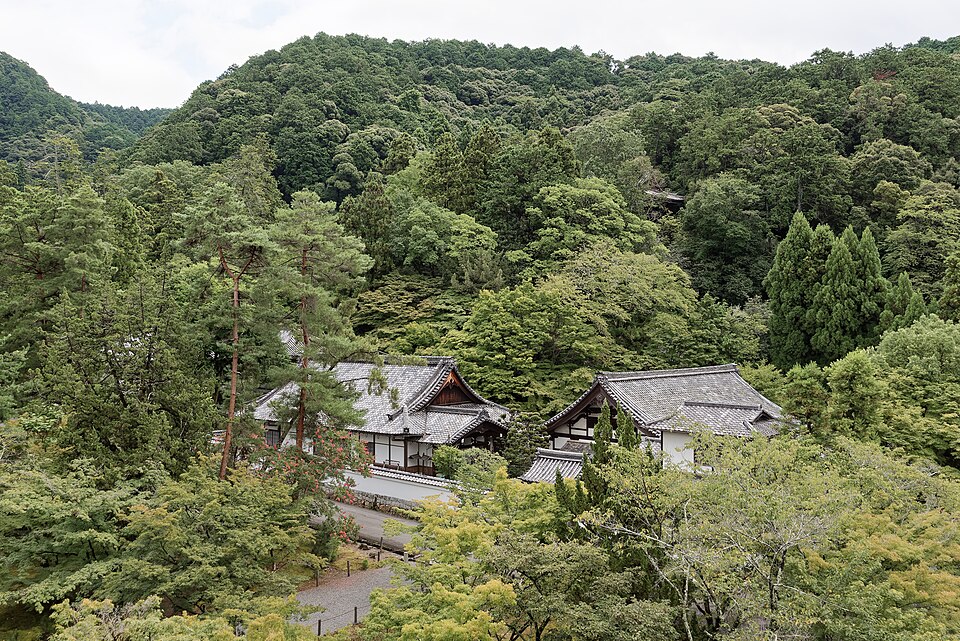
The Meiji Restoration marked a major turning point for Nanzen-ji. The anti-Buddhist movement (Haibutsu Kishaku) that followed the 1868 Separation of Shinto and Buddhism decree devastated temples nationwide, and Nanzen-ji suffered severely with the confiscation of its vast landholdings. Many sub-temples were abolished, and the once-supreme temple faced an existential crisis.
Then, in 1890, an unexpected structure appeared within Nanzen-ji’s grounds—the Suirokaku, an aqueduct bridge for the Lake Biwa Canal. The canal was designed to channel water from Lake Biwa to Kyoto, and its engineer, Tanabe Sakurō, was just 21 years old at the time. While the plan to run a brick aqueduct through a Zen temple’s grounds initially met with opposition, this structure—reminiscent of ancient Roman aqueducts—has become one of Nanzen-ji’s most iconic features.
The Suirokaku, built from brick and granite with 13 consecutive arches, creates a remarkable harmony between traditional Zen scenery and Western modern architecture. In the age of Instagram, it has become enormously popular as a photo spot, and pictures taken against the series of arches have become one of Nanzen-ji’s most famous images. The aqueduct remains operational to this day, carrying Lake Biwa’s water to Kyoto for over 130 years.
5. Modern Era: A World-Renowned Zen Temple
In the postwar era, Nanzen-ji has maintained its significance both as the head temple of the Rinzai Zen sect and as a major tourist destination. The Hōjō was designated a National Treasure in 1951, and the Hōjō Garden (the “Tiger Cubs Crossing” garden) was designated a National Place of Scenic Beauty. In 1953, the Sanmon gate received Important Cultural Property status, further elevating the temple’s cultural recognition.
From the Heisei era onward, Nanzen-ji’s popularity among international tourists soared. Growing global interest in Zen culture, combined with the unique scenery of the Suirokaku spreading through social media, led overseas travel guides to feature the temple as a “must-visit in Kyoto.” In recent years, the temple welcomes approximately 2 million visitors annually, and during the peak autumn foliage period from mid to late November, the entire grounds are painted in stunning shades of red, yellow, and orange.
Since 2019, major restoration work on the Greater and Lesser Hōjō has been underway, including restoration of screen paintings by Kanō Tan’yū. The temple also offers zazen (seated meditation) and shakyo (sutra copying) experiences, opening its doors to those who wish to experience the spirit of Zen beyond mere sightseeing. Nanzen-ji continues as a “living Zen temple” that flexibly adapts to the times while preserving nearly 800 years of history.
Highlights and Recommended Spots
Here are the must-see highlights at Nanzen-ji. Each spot represents a concentration of Zen aesthetics and the essence of Japanese culture.
1. Sanmon Gate (Dragon Gate of the Realm)—The Magnificent View That Ishikawa Goemon Saw
Standing approximately 22 meters tall and counted among Japan’s three great temple gates, Nanzen-ji’s Sanmon was rebuilt in 1628 by Tōdō Takatora. It is widely known as the setting of the famous kabuki scene from “Sanmon Gosan no Kiri,” where the legendary thief Ishikawa Goemon declares: “What a magnificent view! What a magnificent view! The spring scenery is worth a thousand gold pieces—but that’s too modest for Goemon’s eyes—it’s worth ten thousand, nay, ten million gold pieces!”
Climbing the steep stairs to the upper level, you are rewarded with a 360-degree panorama of Kyoto. To the east lies the ridgeline of Higashiyama, to the west Kyoto Tower, and to the north the Hidari Daimonji mountain and Mount Hiei—a vista that fully justifies Goemon’s exclamation. The upper level houses a statue of Shaka Nyorai with a jeweled crown and the Sixteen Arhats, while the ceiling features a dragon painting by Kanō Tan’yū. During autumn, the sea of red foliage spreading below is breathtaking, making this one of Kyoto’s finest viewpoints.
The recommended visiting time is early morning. The upper level of the Sanmon tends to get crowded, so arriving right at opening between 8:40 and 9:00 allows for a more relaxed experience. The stairs are quite steep, so comfortable walking shoes are recommended.
2. Hōjō Garden (Tiger Cubs Crossing Garden)—National Treasure Hōjō and a Masterpiece of Dry Landscape
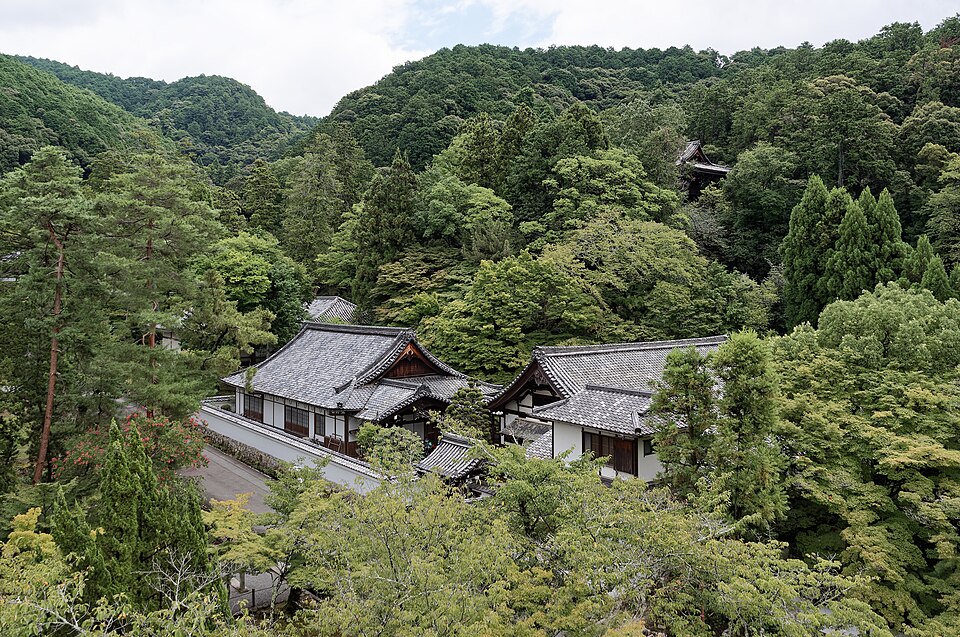
Nanzen-ji’s Greater Hōjō was relocated from the Imperial Palace in 1611 and is designated a National Treasure. Its interior features 120 screen paintings by Kanō Tan’yū, including the famous “Tiger Drinking Water,” which depicts a tiger crouching at the water’s edge with remarkable dynamism—one of Tan’yū’s masterworks. These paintings convey the magnificent artistic culture of the Momoyama period.
Spread before the Greater Hōjō is the “Tiger Cubs Crossing Garden.” Attributed to the master garden designer Kobori Enshū, this karesansui garden is designated a National Place of Scenic Beauty. Stones of various sizes are arranged on white sand, said to represent a mother tiger leading her cubs across a river—though the garden lends itself to countless interpretations depending on the viewer’s state of mind. The ripples in the white sand symbolize flowing water, while the large stones represent mountains and islands, condensing the grandeur of nature into a limited space.
Sitting on the veranda of the Hōjō and gazing absently at the garden, you may lose track of time. In Zen teachings, such quiet contemplation is itself a form of practice. If you observe the stone arrangements carefully, you’ll notice their appearance changes with the viewing angle—a garden that offers new discoveries with every visit.
3. Suirokaku Aqueduct—Meiji-Era Brick Arches in Harmony with a Zen Temple
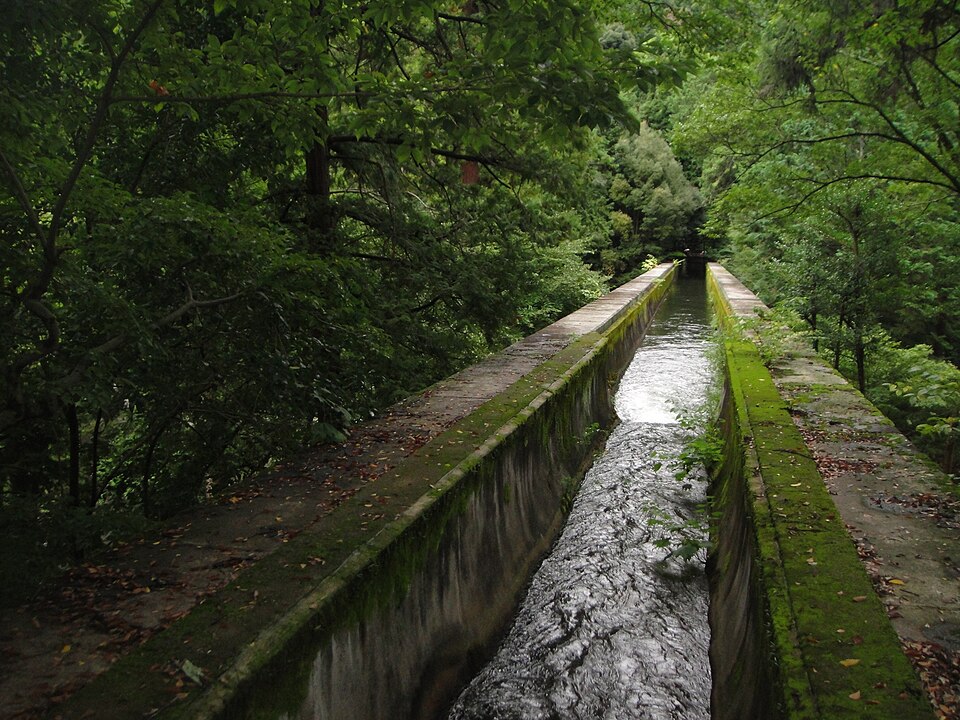
Walking east through the temple grounds, you suddenly encounter a red brick arch bridge—the Suirokaku, an aqueduct bridge for the Lake Biwa Canal. Completed in 1890, this structure spans approximately 93 meters in length and 14 meters in height. Its design, reminiscent of ancient Roman aqueducts, was inspired by European water engineering techniques referenced by designer Tanabe Sakurō.
The seemingly mismatched combination of a brick modern structure within a Zen temple’s grounds actually creates a charm unique to Nanzen-ji. The reddish-brown of the bricks pairs beautifully with the surrounding greenery, and in autumn, the red of the foliage creates photogenic scenery. Standing within the arches and looking upward, you feel as though you’ve stepped into a gateway to another world.
The Suirokaku still functions as an active aqueduct, with Lake Biwa’s water flowing across it to this day. Currently designated a National Historic Site, it holds an important position as part of Kyoto’s modern industrial heritage. Popular photography angles include shooting the row of arches from a diagonal angle and peering through the archway from inside. It is also frequently used as a filming location for television dramas.
4. Tenju-an—A Hidden Gem for Autumn Foliage with Two Gardens
Located just south of the Sanmon gate, Tenju-an is the memorial sub-temple of Nanzen-ji’s founding priest Mukan Fumon. Built in 1339 by Kokan Shiren and reconstructed in 1602 by Hosokawa Yūsai, it is a relatively small sub-temple, yet it is regarded as the finest spot for autumn foliage within the entire Nanzen-ji complex.
Tenju-an features two distinctly different gardens. The front garden before the main hall is a karesansui garden, where diamond-shaped stepping stones, white sand, and trimmed azaleas create geometric beauty. The south garden by the study, on the other hand, is a pond-strolling garden where maples encircle the pond, and their reflections on the water’s surface—known as “upside-down autumn leaves”—are beloved by photography enthusiasts. Moving between these two gardens allows you to experience the contrasting beauty of Zen “stillness” and the “movement” of Japanese garden design in one visit.
Peak foliage typically occurs from mid to late November. In some years, special evening illuminations are held, creating breathtaking scenes of foliage glowing in the darkness with reflections on the pond. Compared to the Sanmon and Hōjō, fewer visitors come here, making it a relatively peaceful hidden spot to enjoy autumn colors.
5. Nanzen-in—The Birthplace of Nanzen-ji
Beyond the Suirokaku lies Nanzen-in, the birthplace of Nanzen-ji. This was originally the site of Emperor Kameyama’s imperial villa “Zenrin-ji-dono,” which was converted into the temple. Nanzen-in is thus the very origin of Nanzen-ji itself, making it arguably the most historically significant location within the grounds.
The garden of Nanzen-in is a pond-strolling garden traditionally attributed to Emperor Kameyama himself, and it represents a precious cultural heritage preserving the garden style of the late Kamakura period. Designated both a National Historic Site and Place of Scenic Beauty, this two-tiered garden with upper and lower ponds is enveloped by deep groves, creating an atmosphere of profound tranquility. A heart-shaped island in a dragon-shaped pond, a small waterfall feeding the pond, moss-covered rocks and deep greenery—this is a space of complete silence that makes you forget the outside world entirely.
Nanzen-in attracts fewer visitors than the Sanmon or Hōjō, making it the best spot for those seeking to savor the atmosphere of a Zen temple away from the crowds. Early mornings and rainy days offer particularly special ambiance, when the only sound is raindrops falling on moss—a space where you can truly experience the Zen concept of “mu” (emptiness). A separate admission of ¥400 is required, but as a place where you can touch the essence of Nanzen-ji, it is well worth the visit.
Nearby Attractions
Eikan-dō (Zenrin-ji)—The Temple of Autumn Leaves
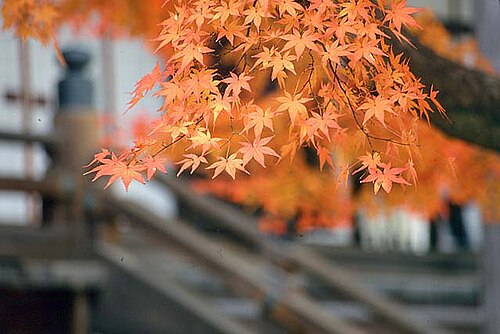
About a 5-minute walk north of Nanzen-ji, Eikan-dō (official name: Zenrin-ji) is known by its nickname “Momiji no Eikan-dō” (Eikan-dō of the Maples) as one of Kyoto’s premier autumn foliage destinations. With approximately 3,000 maple trees planted throughout the grounds, the entire complex is wrapped in a brocade of color from mid to late November. The view of autumn foliage from the Tahōtō pagoda is considered one of Kyoto’s most beautiful autumn scenes.
The temple’s principal image, the “Mikaeri Amida” (Backward-Glancing Amida), is also a must-see. This unusual statue of Amida Buddha turns its face to look back over its left shoulder, said to represent “the compassion of waiting for all people.” Visiting both Nanzen-ji and Eikan-dō allows you to compare temples from different Zen and Pure Land sects, deepening your understanding of Kyoto’s Buddhist culture.
Philosopher’s Path—Kyoto’s Scenic Walking Trail
Continuing north from Nanzen-ji through Eikan-dō, the “Philosopher’s Path” is one of Kyoto’s most beloved walking trails. This approximately 2-kilometer path runs alongside a branch of the Lake Biwa Canal and takes its name from the philosopher Nishida Kitarō, who would walk here lost in contemplation. In spring, about 450 Somei Yoshino cherry trees create a cherry blossom tunnel, while in autumn, gradations of fall color reflect on the water’s surface.
Charming cafés and boutiques are scattered along the path, offering pleasant resting spots during your stroll. Ginkaku-ji (Silver Pavilion) lies at the northern end, and the route from Nanzen-ji → Eikan-dō → Philosopher’s Path → Ginkaku-ji is a classic Higashiyama sightseeing course beloved by visitors. The entire walk takes approximately 1.5 to 2 hours.
Keage Incline—Cherry Blossom Avenue and Industrial Heritage
Just steps from Keage Station, the nearest station to Nanzen-ji, the Keage Incline is the remains of an inclined railway that transported boats on rail carts up and down a slope. Completed in 1891 as part of the Lake Biwa Canal system, it operated until 1948. The approximately 582-meter track bed is now lined with Somei Yoshino cherry trees on both sides, making it a popular cherry blossom viewing spot.
In spring, cherry blossoms completely cover the abandoned railway tracks, and the combination of retro atmosphere and beautiful blossoms makes it an incredibly photogenic spot. It’s the perfect place to visit before or after your Nanzen-ji pilgrimage, as you can walk along the tracks and enjoy both Meiji-era industrial heritage and natural beauty. It is designated a National Historic Site.
Access
By Train
- Kyoto Municipal Subway Tōzai Line: About 10-minute walk from Keage Station (most recommended)
- From JR Kyoto Station: Take the Karasuma Line to Karasuma-Oike Station, transfer to the Tōzai Line to Keage Station (about 15 minutes)
- Keihan Railway: Transfer to the Tōzai Line at Sanjō Station → Keage Station (about 5 minutes)
By Bus
- Kyoto City Bus Route 5, get off at “Nanzen-ji / Eikan-dō-michi,” about 10-minute walk
- About 35 minutes from JR Kyoto Station on City Bus Route 5
- *During autumn foliage season, roads are heavily congested; taking the subway is strongly recommended
By Car
- About 15 minutes from Kyoto-Higashi IC on the Meishin Expressway
- Use private parking lots near Nanzen-ji (no dedicated temple parking available)
- Roads around the temple are extremely congested during foliage season; public transportation is recommended
Recommended Access Route
The most recommended route is via Keage Station on the Tōzai Line. From Keage Station, you can reach Nanzen-ji by passing through “Nejiri Manpo,” a brick tunnel that is itself a notable Meiji-era industrial heritage site. The bricks are laid in a spiral pattern—an engineering technique designed to distribute the weight of the incline railway tracks running above the tunnel, making it fascinating from a civil engineering perspective as well.
Summary
As the supreme-ranked “Gozan no Jō” among Japan’s Zen temples, Nanzen-ji has created a one-of-a-kind space over nearly 800 years since its founding by Emperor Kameyama, where Zen spirituality, art, and architecture converge. The magnificent view from the Sanmon gate immortalized by Ishikawa Goemon, the National Treasure Hōjō with its masterful dry landscape garden, and the unexpected harmony of the Meiji-era brick Suirokaku with a Zen temple—each visit reveals new discoveries in this profoundly rich temple.
Combined with Eikan-dō, Ginkaku-ji, and the Philosopher’s Path for a Higashiyama walking tour, Nanzen-ji is an essential destination. The grounds transform with every season, offering a special experience filled with Zen tranquility and Japanese beauty whenever you visit.