- Introduction
- Overview of Nezu Shrine
- History of Nezu Shrine
- Period 1 — The Founding (Emperor Keiko to the Nara Period)
- Period 2 — Medieval Prosperity (Heian to Muromachi Periods)
- Period 3 — Early Edo Period and Ties to the Tokugawa Shoguns (17th Century)
- Period 4 — Genroku-Era Prosperity and Faith of Edo Commoners (18th – 19th Centuries)
- Period 5 — Modern Era: Nezu Among Literary Giants, and Into the Present
- Highlights and Recommended Spots
- 1. Karamon and Romon Gates — Nationally Treasured Edo Architecture
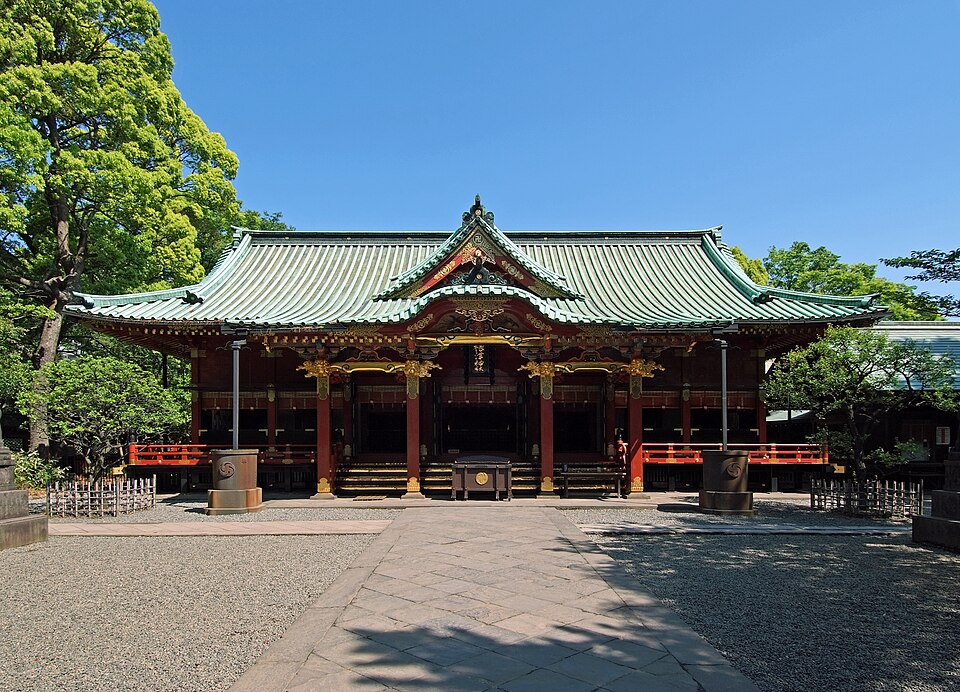
- 2. Honden and Haiden — The Pinnacle of Genroku-Era Architecture
- 3. Azalea Garden — A Floral Paradise of 100 Varieties and 3,000 Bushes
- 4. Senbon Torii (Otome Inari & Komagome Inari) — Vermilion Tunnel and Shitamachi Matchmaking
- 5. Sacred Grove and Natural Surroundings — A Green Sanctuary in the Heart of the City
- Nearby Sightseeing Spots
- Access Information
- Conclusion
- Frequently Asked Questions
Introduction
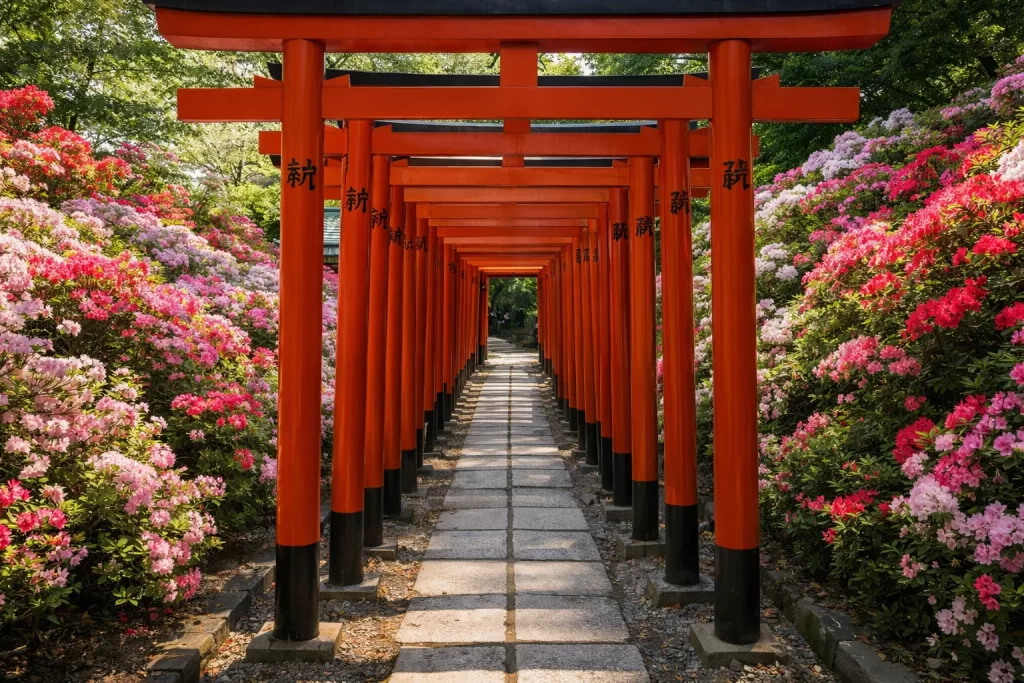
Step into Bunkyo Ward in Tokyo’s shitamachi (old downtown) district, and a serene quietude instantly separates you from the bustle of the city. As you begin walking along the approach to Nezu Shrine, a tunnel of vivid vermilion torii gates known as the “Senbon Torii” (Thousand Torii Gates) catches your eye. While Kyoto’s Fushimi Inari Shrine is famous for its torii corridors, few people know that Tokyo has an equally impressive one. This striking scene, weaving through the Azalea Garden of Nezu Shrine, stands out as a unique spectacle within Bunkyo Ward, an area rich in vestiges of the Edo period.
Nezu Shrine is believed to have been founded approximately 1,900 years ago by Yamato Takeru no Mikoto, making it one of Tokyo’s most historically significant shrines. In 1703 (Genroku 16), the fifth Tokugawa shogun, Tsunayoshi, commissioned the construction of the current shrine buildings, and all seven structures from that era survive to this day. The Karamon Gate, Romon Gate, Haiden (worship hall), Honden (main hall), Sukibei (lattice fence), West Gate, and East Gate are all designated as Important Cultural Properties of Japan. No other site in Tokyo preserves such a comprehensive ensemble of Edo-period shrine architecture. The shrine draws approximately 2 million visitors annually, and during the Bunkyo Azalea Festival from April to May, roughly 3,000 azalea bushes of about 100 varieties burst into bloom, painting the grounds in shades of red, pink, white, and purple.
This article takes an in-depth look at the approximately 1,900-year history of Nezu Shrine from its founding to the present day. We cover the shrine’s deep ties to the Tokugawa shogunate, the architectural highlights of its Edo-period buildings, the grounds beloved by the literary master Natsume Soseki, and the spectacular spring Azalea Festival. We also provide access information and nearby sightseeing spots to help you plan your Tokyo excursion.

Overview of Nezu Shrine
Nezu Shrine is located in Nezu 1-chome, Bunkyo Ward, Tokyo, and is counted among the Tokyo Jusha (Ten Shrines of Tokyo). While its official name is “Nezu Jinja,” locals have long affectionately called it “Nezu Gongen.” The shrine enshrines three principal deities: Takehaya Susanoo no Mikoto, Oyamakui no Mikoto, and Honda Wake no Mikoto, and is known for blessings in matchmaking, warding off evil, and business prosperity. Among the other Tokyo Jusha, Yasukuni Shrine and Meiji Jingu are also well known as representative shrines of the city.
| Official Name | Nezu Shrine (Nezu Jinja) |
|---|---|
| Address | 1-28-9 Nezu, Bunkyo-ku, Tokyo |
| Principal Deities | Takehaya Susanoo no Mikoto, Oyamakui no Mikoto, Honda Wake no Mikoto |
| Shrine Rank | Former Metropolitan Shrine / Tokyo Jusha (Ten Shrines of Tokyo) |
| Founded | During the reign of Emperor Keiko (approx. 1,900 years ago) |
| Visiting Hours | 6:00 – 17:00 (extended hours during the Azalea Festival) |
| Admission | Free (Azalea Garden admission: 200 yen for adults, 100 yen for children) |
| Closed | Open year-round |
| Phone | 03-3822-0753 |
*Please check the official Nezu Shrine website for the latest visiting hours and fees.
Nezu Shrine is located in the Nezu area of Bunkyo Ward, about a 10-minute walk from the Akamon (Red Gate) of the University of Tokyo. It is approximately a 5-minute walk from Nezu Station on the Tokyo Metro Chiyoda Line and about a 10-minute walk from Todaimae Station on the Namboku Line, making it very accessible. The shrine grounds cover approximately 16,000 square meters. While not vast, the compound features a densely arranged collection of authentic Edo-period shrine architecture including the Karamon Gate, Romon Gate, Haiden, Honden, and Sukibei, making it compact yet remarkably rewarding to explore.
A particularly noteworthy fact about Nezu Shrine is its seven nationally designated Important Cultural Properties — an extremely rare concentration of surviving Edo-period architecture among Tokyo’s shrines. The Azalea Garden within the grounds contains approximately 3,000 azalea bushes of about 100 varieties, and the annual Bunkyo Azalea Festival held from mid-April to early May attracts around 300,000 visitors. Annual visitors exceed 2 million even in regular times, and approximately 300,000 people visit for hatsumode (New Year’s prayers) during the first three days of January, making it one of the most prominent shrines in eastern Tokyo. Among other major shrines in the city, Meiji Jingu (which receives the highest number of New Year visitors in Japan) and shrines near the Imperial Palace are also well known, but Nezu Shrine stands out for its depth of quality rather than sheer scale.
History of Nezu Shrine
Period 1 — The Founding (Emperor Keiko to the Nara Period)
The origins of Nezu Shrine date back approximately 1,900 years. During the reign of the 12th Emperor Keiko, Yamato Takeru no Mikoto is said to have enshrined Susanoo no Mikoto in the Sendagi area (near present-day Sendagi, Bunkyo Ward) during his eastern military campaign, marking the beginning of Nezu Shrine. Yamato Takeru is a legendary hero of Japanese mythology who embarked on a long series of campaigns, from subduing the Kumaso in Kyushu to pacifying the Emishi in the eastern provinces, before tragically perishing on his journey. The tradition that he established a shrine in gratitude to the deity who guarded his military exploits along this route speaks eloquently to the profound historical depth of Nezu Shrine.
The original founding site in Sendagi is located approximately 500 meters northwest of the current Nezu Shrine. Historical records about the precise location and scale of the original shrine are scarce, and details remain unclear. However, one theory suggests that the place name “Nezu” derives from the Ainu word “netsu,” meaning “a cape on a marshland,” indicating that this area has been deeply connected to people’s daily life and religious practices since ancient times.
Entering the Nara period, the Nezu shrine grew in status as the tutelary shrine for the broader Bunkyo area. Although few historical documents from this era survive, the shrine is recorded in the Engishiki Jinmyocho (a Heian-period register of shrines) as a shrine in Toshima District, Musashi Province, confirming that it held an official rank recognized by the imperial court. As a shrine with records spanning over a millennium, Nezu Shrine had already put down deep roots in the land of Tokyo.
The founding tradition involving Yamato Takeru is not merely mythological embellishment; it is an important indicator of how far back the connections between this land and the imperial house and warrior clans extend. The deep reverence that the Tokugawa shoguns later showed for this shrine is thought to have been grounded in this ancient historical authority.
Period 2 — Medieval Prosperity (Heian to Muromachi Periods)
From the late Heian period through the Kamakura period, Nezu Shrine developed through deep ties with the warrior clans of the Kanto region. When Minamoto no Yoritomo, head of the Minamoto clan, established the shogunate in Kamakura, warrior-class worship shifted toward Hachiman (the god of war). However, because Nezu Shrine enshrined Susanoo no Mikoto, it continued to be revered as a shrine for warding off evil and praying for victory among the warrior class.
During the Kamakura period, the Nezu area came under the sphere of influence of powerful warrior bands in Musashi Province, and the shrine buildings are believed to have been renovated and expanded. At the same time, temple and shrine development progressed in the neighboring Yanaka and Ueno areas, and Nezu began functioning as a religious and cultural hub in northeastern Edo (Tokyo). It was around this time that the popular name “Nezu Gongen” became widespread, strengthening the shrine’s identity as the local tutelary deity.
During the Muromachi period, the upheavals of the Warring States era, exemplified by the Onin War, spread to the provinces, and Kanto’s shrines and temples were not spared from the flames of war. Records indicate that Nezu Shrine suffered damage including the burning and deterioration of its buildings during the conflicts of the 15th and 16th centuries. Nevertheless, the faith of the local people never ceased, and devotion to “Nezu Gongen” formed a foundation that bridged the transition to the Edo period.
The survival of Nezu Shrine through the medieval period can be attributed not only to the steadfast faith of local residents but also to the area’s strategically important position within the geography of Edo. Located at the southern foot of Ueno Hill and northeast of Shinobazu Pond, this area came to be regarded as a shrine protecting the “kimon” (demon gate, the inauspicious northeast direction) as seen from Edo Castle, a role that would later lead to the patronage of the Tokugawa shoguns.
Period 3 — Early Edo Period and Ties to the Tokugawa Shoguns (17th Century)
The greatest turning point in the history of Nezu Shrine came in the early Edo period. When Tokugawa Ieyasu established the shogunate in Edo in 1603, the shrine’s role as a guardian of the kimon (northeast) of Edo Castle came into focus, and alongside Ueno’s Kan’eiji Temple and the Yushima Seido Confucian temple, Nezu Shrine came under the patronage of the Tokugawa shogunate.
Particularly significant was the connection to the fifth shogun, Tokugawa Tsunayoshi. Tsunayoshi had a firstborn son, Tokumatsu, and it is said that a priest of Nezu Shrine prayed for Tokumatsu’s recovery from illness when he was young. However, Tokumatsu died in 1680 (Enpo 8) at the age of just five, and Tsunayoshi suffered the tragedy of losing his heir. Despite this, Tsunayoshi never forgot his devotion to Nezu Shrine. In 1689 (Genroku 2), he designated his nephew Tsunatoyo (later the sixth shogun, Ienobu) as his successor and began developing an expansive sacred precinct on the Nezu land where Tsunatoyo’s residence had been.
In 1702 (Genroku 15), when it was decided that Tsunatoyo would move to the Nishinomaru (the heir’s residence within Edo Castle), Tsunayoshi ordered a grand reconstruction of Nezu Shrine to commemorate the occasion. Construction proceeded over approximately two years, and the current shrine buildings were completed in 1703 (Genroku 16). The construction cost alone is said to have exceeded 7,000 ryo in gold, making it a monumental national undertaking. The completed complex consists of seven structures — the Karamon Gate, Romon Gate, Haiden, Honden, Sukibei, West Gate, and East Gate — all magnificent buildings that represent the finest craftsmanship of the Edo period.
Period 4 — Genroku-Era Prosperity and Faith of Edo Commoners (18th – 19th Centuries)
After the completion of its current buildings in 1703 (Genroku 16), Nezu Shrine continued to attract the devotion of the people of Edo and Tokyo for more than 200 years. The Genroku era was a time when “Genroku culture” flourished under the rule of Tokugawa Tsunayoshi. Townspeople’s culture thrived, kabuki theater, ukiyo-e woodblock prints, and haikai poetry developed significantly, and pilgrimages to temples and shrines (a form of “religious sightseeing”) became a major trend.
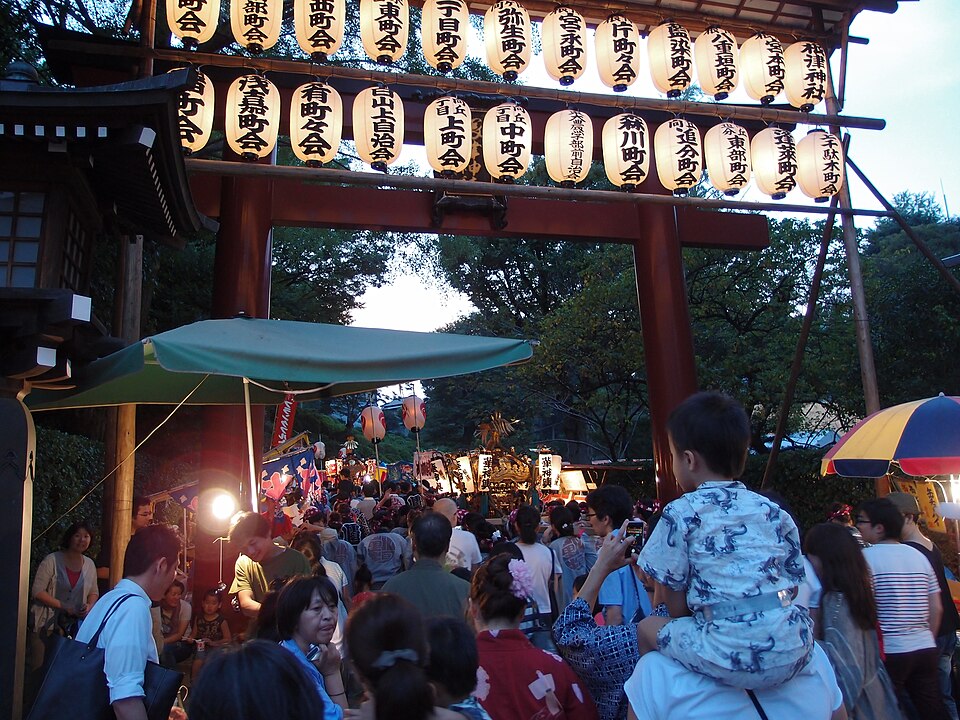
The “Nezu Gongen Festival” of Nezu Shrine was counted among the three great festivals of Edo and was a spectacular event. The processions of festival floats (dashi) and portable shrine (mikoshi) parades drew not only residents of the Nezu area but also throngs of Edo commoners from far and wide. The shrine grounds were lined with teahouses and stalls, and the festive atmosphere that colored both the shrine’s approach and the entire Nezu neighborhood is depicted in ukiyo-e prints by Katsushika Hokusai and Utagawa Hiroshige.
As the city of Edo expanded, the area around Nezu Shrine grew increasingly lively. In the latter half of the 18th century, the “Nezu pleasure quarter” was established northeast of the shrine (later relocated to Asakusa), and the Nezu neighborhood became one of Edo’s most bustling districts as a hub of culture and commerce. The scenery of Nezu from this era also served as a prototype for the cultural atmosphere around the University of Tokyo as depicted in Natsume Soseki’s novel “Sanshiro.”
After the Meiji Restoration in 1868, Nezu Shrine changed its name from “Nezu Gongen” to “Nezu Jinja” and was ranked as a former metropolitan shrine (managed by the Tokyo prefectural government). While the Meiji government’s decree separating Shinto and Buddhism (Shinbutsu Bunri) led to the removal of Buddhist elements from the grounds, the shrine buildings themselves were preserved without alteration, allowing the Genroku-era appearance to be passed down to the present day.
Period 5 — Modern Era: Nezu Among Literary Giants, and Into the Present
From the late Meiji period through the Taisho and Showa eras, the area around Nezu Shrine developed its own unique identity as a “cultural neighborhood” where writers and intellectuals gathered. The most iconic figure was the literary master Natsume Soseki. From 1903 (Meiji 36), Soseki lived for four years near Sendagi, close to Nezu Shrine (near the present-day Soseki Sanbo Memorial Museum). In his masterpiece “Sanshiro” (1908), the protagonist visits “Nezu Gongen” (Nezu Shrine), and the scenery of Nezu during the Meiji era is vividly portrayed.
Additionally, the literary community known as the “Dangozaka neighborhood” — including Mori Ogai (who lived in Sendagi near Nezu), Masaoka Shiki, and others — walked the triangle of Nezu, Yanaka, and Hongo, nurturing the cultural soil of this area. Nezu Shrine served as a walking path and place of contemplation for these writers, and the shrine grounds carry the memory of modern Japanese literature within them.
During the wartime period of the Showa era, while the Tokyo firebombing raids of March 1945 caused damage to the Nezu area, the shrine buildings miraculously escaped destruction. As postwar reconstruction progressed, the seven shrine buildings were designated as national Important Cultural Properties in 1955 (Showa 30), officially recognizing their value as Edo-period architectural heritage.
Today, Nezu Shrine is widely known as a landmark of Bunkyo Ward with its charming shitamachi atmosphere and as the venue for the Bunkyo Azalea Festival. Since the 2000s, information about the shrine has spread domestically and internationally through the internet and social media, and the combination of the Senbon Torii gates and azaleas has become popular among foreign tourists as a “hidden scenic gem in Tokyo.” In 2023, annual visitors exceeded 2 million, and the historic “Nezu Gongen” of Edo is once again drawing attention as a new-era Tokyo tourist destination.
Highlights and Recommended Spots
Despite its compact size, the grounds of Nezu Shrine are packed with highlights. Here are five must-see spots, from Edo-period architectural beauty to seasonal flowers.
1. Karamon and Romon Gates — Nationally Treasured Edo Architecture
The first structure to greet visitors at Nezu Shrine is the Romon (two-story gate). Built in 1703 (Genroku 16), the Romon stands approximately 8 meters tall, with vivid contrast between its vermilion-lacquered pillars and white plaster walls. On the upper level hangs a plaque inscribed with “Nezu Jinja.” The roof features the irimoya-zukuri (hipped-gable) style, with elegantly curving eaves that beautifully convey the aesthetic of early Edo-period shrine architecture.
Passing through the Romon, you are greeted by the Karamon (Chinese-style gate). The Karamon is a prestigious gate marking the entrance to the approach to the main hall, featuring a grand structure with a “karahafu” (undulating cusped gable) roof derived from continental Chinese design. The front is adorned with exquisite carvings, with a dragon on the left side and a phoenix on the right, both masterfully executed. The carvings on the Karamon are particularly highly regarded as exemplifying the finest sculptural techniques of the early Edo period, and the closer you look at the details, the more new discoveries you will make.
Both the Romon and Karamon are designated as national Important Cultural Properties. Viewing them not just from the front but also from the sides and rear reveals different aspects of their beauty. The sight of the vermilion Romon glowing golden in the morning sunlight during an early visit is especially stunning. Visiting on a quiet weekday morning allows you to savor the atmosphere of old Edo in peaceful solitude. For photography, stepping back slightly from the front of the Romon provides the best angle to capture the entire structure.
2. Honden and Haiden — The Pinnacle of Genroku-Era Architecture
The Honden (main hall) and Haiden (worship hall) behind the Karamon form the central structures of Nezu Shrine. Built in 1703 (Genroku 16), the Honden was constructed in the “gongen-zukuri” style, which connects the Honden, Heiden (hall of offerings), and Haiden through a “stone corridor” (ishi-no-ma) into an integrated architectural complex. This style is characteristic of Edo-period shrine architecture, as seen at Nikko Toshogu and Kunouzan Toshogu.
The Honden of Nezu Shrine is one of the largest surviving Edo-period main hall structures in Tokyo. The roof is covered with hinoki cypress bark (hiwadabuki), and the moss-covered surface blends with the green of ancient trees, evoking a profound sense of the passage of time. While the interior of the Honden is generally closed to the public, visitors can catch a glimpse of the gilded inner sanctum through the lattice of the Haiden. Praying in this solemn atmosphere, you may feel the shrine’s 1,900 years of history seeping into your very being.
The Haiden stands facing the Honden and is the building where visitors offer their prayers. The front of the Haiden features elaborately carved panels from the Genroku era. The vividly painted dragon and floral motifs have maintained their beauty for over 300 years, eloquently testifying to the skill and dedication to materials of the master carpenters of the time. After paying your respects, take a moment to carefully observe the fine details of the carvings.
Behind the Honden, a Sukibei (lattice fence) encircles the sanctuary, with the Honden, Haiden, and Sukibei forming one complete sacred precinct. The Sukibei is a fence featuring an openwork lattice pattern distinctive to Edo-period shrine and temple architecture. All three structures — the Honden, Haiden, and Sukibei — are nationally designated Important Cultural Properties and form the most important core of Nezu Shrine’s seven designated buildings.
3. Azalea Garden — A Floral Paradise of 100 Varieties and 3,000 Bushes
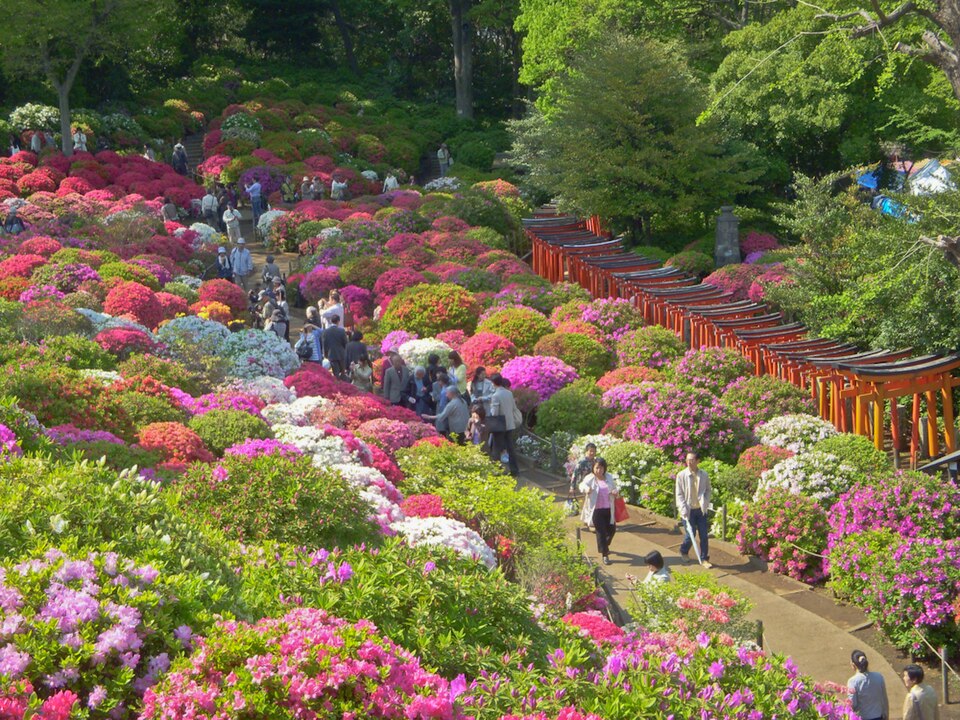
The time of year when Nezu Shrine attracts the most visitors is when the “Tsutsuji-en” (Azalea Garden) spreads across the hillside on the south side of the grounds. Approximately 3,000 azalea bushes of about 100 varieties are planted on the roughly 6,000-square-meter slope, and during the Bunkyo Azalea Festival held annually from mid-April to early May, flowers in shades of red, pink, white, purple, and orange bloom simultaneously, covering the entire grounds in a carpet of blossoms.
The greatest highlight of the Azalea Garden is its combination with the “Senbon Torii” gates. Along the upper section of the slope, vermilion torii gates line up in a tunnel-like formation along the approach to the Inari sub-shrine, and the sight of azaleas blooming in full glory at the base of these gates creates an overwhelming feast of color. The view when you pass through the torii tunnel and look back to survey the entire Azalea Garden is truly breathtaking and is widely known both in Japan and abroad as an Instagram-worthy spot.
During the Azalea Festival, admission to the Azalea Garden is 200 yen for adults and 100 yen for children. Weekends during the festival period tend to be very crowded, so visiting on a weekday morning is recommended if possible. Since peak bloom times vary slightly from year to year, checking the latest information on the Bunkyo Ward Tourism Association website or social media before your visit is advisable. After the azaleas finish blooming, the garden is closed, but the green-covered hillside has its own refreshing beauty.
4. Senbon Torii (Otome Inari & Komagome Inari) — Vermilion Tunnel and Shitamachi Matchmaking
The tunnel of vermilion torii gates that winds its way up through the Azalea Garden of Nezu Shrine is called the “Senbon Torii” (Thousand Torii Gates). The actual number is around one hundred and several dozen, but the continuous row of gates curving along the hillside creates an impact that fully justifies the name “a thousand.”
At the end of the Senbon Torii stand two Inari sub-shrines. “Otome Inari Shrine” is located at the upper section of the Azalea Garden, and “Komagome Inari Shrine” sits on the north side of the grounds. Otome Inari Shrine is known for its blessings of en-musubi (matchmaking) and is particularly popular among young women who come to pray for good romantic fortune. In the late afternoon when the vermilion gates are lit by the setting sun, the atmosphere becomes even more mystical, offering beautiful photo opportunities quite different from daytime shots.
Komagome Inari Shrine was originally an Inari shrine in the village of Komagome that was later relocated within the grounds of Nezu Shrine. Tucked away in a secluded corner of the grounds, its shrine building offers a peaceful quietude away from the bustle of the Senbon Torii, retaining a rustic shitamachi atmosphere where local residents quietly come to pray. When visiting Nezu Shrine, be sure to visit both Inari shrines. It is said that paying respects at both brings threefold blessings of matchmaking, business prosperity, and bountiful harvests.
5. Sacred Grove and Natural Surroundings — A Green Sanctuary in the Heart of the City
The appeal of Nezu Shrine extends beyond its architecture and flowers. The “shaso” (sacred grove) — the forest surrounding the shrine — is also an important presence that soothes visitors. From the left side past the Romon Gate to behind the Honden, large ancient trees such as zelkova, camphor, and chinquapin spread their canopy overhead, and simply walking through the dappled sunlight brings a sense of calm to the heart.
The “forest of Nezu Gongen” that Natsume Soseki described in “Sanshiro” is directly reflected in the current sacred grove. Realizing that the same trees Soseki gazed upon more than a hundred years ago still stand in the shrine grounds stirs the literary imagination. Bunkyo Ward was once known as the “neighborhood of literary masters” where many writers resided, and the grounds of Nezu Shrine serve as a repository of such literary memories.
Along the shrine’s approach, temizuya (purification fountains) are discreetly placed. Nezu Shrine’s temizuya features the traditional style of water flowing from a dragon’s mouth. Since the COVID-19 pandemic, it has been renovated to a flowing-water system for infection prevention. The ritual of cleansing your hands and mouth before worship is the first step in experiencing Japanese shrine culture. The sight of foreign tourists trying their hand at the temizu ritual has become an everyday scene at Nezu Shrine in recent years. The shrine’s natural surroundings change expression with each season — azaleas in spring, lush green foliage in early summer, golden leaves in autumn, and tranquil silence in winter — offering new discoveries no matter how many times you visit.
Nearby Sightseeing Spots
Yanaka & Sendagi Area — Shitamachi Strolling in “Yanesen”
The “Yanesen” area within walking distance of Nezu Shrine — comprising the three shitamachi neighborhoods of Yanaka, Nezu, and Sendagi — is popular as a walking district where the atmosphere of the Meiji, Taisho, and Showa eras lingers strongly. Walking northwest from Nezu Shrine, you enter the narrow lanes of the Yanaka Ginza shopping street. Lined with shops exuding Showa-era retro charm, Yanaka Ginza is famous for its street-food delights such as croquettes, yakitori, and more, and draws large crowds on weekends.
Walking further, you reach Yanaka Cemetery. Established during the Meiji era, this cemetery contains the graves of numerous historical figures including Shibusawa Eiichi, Tokugawa Yoshinobu, and Yokoyama Taikan, and is also known as a cherry blossom viewing spot. Strolling through the cemetery while absorbing the weight of history is a cultural experience unique to Yanaka. Few places in Tokyo maintain such authentic shitamachi charm while being moderately developed for tourism, making it especially recommended for travelers who want to taste “the real Tokyo.” It offers a tranquil atmosphere quite different from large-scale commercial tourist areas like Ameyoko.
Ueno Area — Tokyo’s Largest Cultural Zone
About a 15-minute walk southwest of Nezu Shrine, or one metro stop away, Ueno is one of Tokyo’s premier cultural and tourism hubs. Within Ueno Park, you’ll find the Tokyo National Museum, the National Museum of Western Art (a UNESCO World Heritage site), the National Museum of Nature and Science, the Tokyo Metropolitan Art Museum, and Ueno Zoo — Japan’s greatest concentration of museums and art galleries. After appreciating the beauty of Edo architecture at Nezu Shrine, delving deeper into Japanese art and history at Ueno’s museums is the ideal way to spend a day along the “cultural road” from Bunkyo Ward to Ueno.
At Shinobazu Pond in Ueno Park, lotus flowers bloom magnificently in summer. The combination of Bentendo Temple surrounding the pond and the lotus blossoms is a Tokyo summer tradition dating back to the Edo period. The route from Nezu Shrine to Ueno Park via Sendagi and Dangozaka is also an enjoyable shitamachi walking course that lets you fully appreciate the charms of Bunkyo Ward. Additionally, Ameyoko Shopping Street is within walking distance of Ueno, where you can enjoy shopping and dining in a lively market atmosphere.
Yushima Tenmangu (Yushima Tenjin) — The God of Learning and Plum Blossom Haven
About a 15-minute walk south of Nezu Shrine, or a 2-minute walk from Yushima Station on the Tokyo Metro Chiyoda Line, Yushima Tenmangu (Yushima Tenjin) is a shrine dedicated to Sugawara no Michizane, the deity of learning. It is famous for being packed with students and their parents during exam season praying for success, with hundreds of thousands of visitors each year.
The highlight of Yushima Tenjin is the plum grove that reaches full bloom from February to March. The grounds contain approximately 300 plum trees, and the “Yushima Tenjin Plum Festival,” mainly featuring elegant white plum blossoms, is held annually from mid-February to early March. Combining Nezu Shrine’s azaleas (April-May) with Yushima Tenjin’s plum blossoms (February-March) completes a flower tour of Bunkyo Ward from spring through early summer. Yushima Tenjin has also been revered since the Edo period as one of “Edo’s Three Tenjin Shrines,” and together with Nezu Shrine, it offers an enjoyable “Edo shrine-hopping” experience. Yasukuni Shrine, while not within walking distance, is also in the central Tokyo area, making it ideal for a full day of shrine touring in Tokyo.
Access Information
The most convenient way to reach Nezu Shrine is by Tokyo Metro. Here are the main access routes.
From Nezu Station on the Tokyo Metro Chiyoda Line: About a 5-minute walk from Exit 1. This is the most straightforward route — upon exiting the ticket gates and reaching ground level, you will see signs directing you to Nezu Shrine. The path from the station to the shrine is flat, making it easy even with heavy luggage.
From Todaimae Station on the Tokyo Metro Namboku Line: About a 10-minute walk from Exit 1. This route passes by the Akamon (Red Gate) of the University of Tokyo, allowing you to enjoy the campus scenery along the way.
From Sendagi Station on the Tokyo Metro Chiyoda Line: About a 7-minute walk from Exit 2. This is convenient if you are combining your visit with a stroll through the Yanaka-Sendagi area.
From JR Ueno Station or Nippori Station: About a 20-minute walk from Ueno Station, or about 25 minutes walking through Ueno Park and via Yanaka Cemetery. About a 20-minute walk from Nippori Station via Yanaka Ginza. These routes are especially recommended if you want to combine your visit with a shitamachi walking tour.
By car: There is no parking lot on the shrine grounds. You will need to use nearby coin-operated parking lots. During the Azalea Festival, surrounding roads become congested, so public transportation is strongly recommended.
Nezu Shrine is located at 1-28-9 Nezu, Bunkyo-ku, Tokyo. The grounds are accessible 24 hours, but the Haiden and shrine office are open from 6:00 to 17:00 (extended hours during the Azalea Festival). Goshuin (shrine seal) reception hours are from 9:00 to 16:00.
Conclusion
Nezu Shrine is one of Tokyo’s foremost shrines, where approximately 1,900 years of history, the beauty of Edo architecture refined under the patronage of the Tokugawa shoguns, and the azaleas that color the grounds each spring come together as one. The shrine grounds, with seven nationally designated Important Cultural Properties still standing, are like a time capsule preserving the atmosphere of the Edo period, making you momentarily forget that you are in the middle of a modern metropolis.
Combined with a shitamachi stroll through Yanaka and Sendagi, it makes for an unforgettable day experiencing the “authentic face” of Tokyo. Whether you are a history enthusiast, an architecture lover, someone seeking the beauty of flowers, or a person with literary sensibilities, Nezu Shrine is sure to offer something meaningful. When you visit Tokyo, be sure to add Nezu Shrine to your itinerary.