
🕓 2023/4/12
#Gourmet
About Osaka’s Gourmet Food
Osaka’s gourmet scene is characterized by a diverse range of dishes born from a rich history and cultural background, and the city is known as “the city of eating till you drop” (kuidaore no machi). The culture of flour-based dishes and fried foods has flourished here, and there are numerous specialty restaurants where you can enjoy these cuisines.
The “takoyaki,” “okonomiyaki,” and “kushikatsu” introduced below are must-try delicacies when visiting Osaka.
For example, “Odoridako” in Dotonbori offers unique takoyaki made with a whole baby octopus. Meanwhile, “Okonomiyaki Yukari” is popular for its okonomiyaki made with carefully selected ingredients and sauce. Additionally, “Yaekatsu” in Shinsekai is a renowned kushikatsu restaurant with over 70 years of history, where you can enjoy perfectly crispy deep-fried skewers.
Top 3 Must-Try Gourmet Foods in Osaka
Takoyaki
● The Appeal of Takoyaki
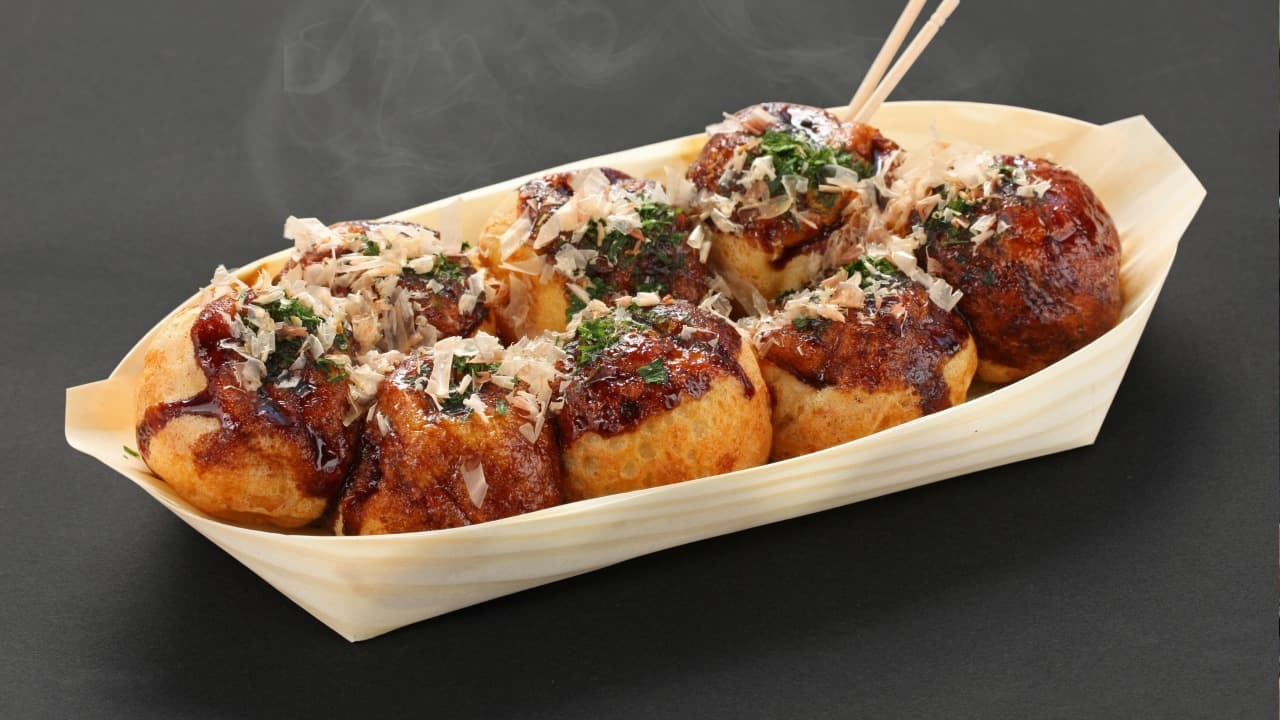
Takoyaki is beloved by many as Osaka’s quintessential soul food. Osaka has a deeply rooted culture of flour-based dishes, and takoyaki spread as part of this tradition. The greatest charm of takoyaki lies in its unique texture. The outside is crispy with a fragrant seared surface, while the inside is creamy and soft. Furthermore, the ease of being able to casually purchase and eat takoyaki from street stalls and shops is another part of its appeal.
Born in Osaka in the 1930s, takoyaki has become an integral part of the city’s food culture. Tourists and locals alike enjoy it as a snack or light meal. As one of Osaka’s representative flour-based dishes alongside okonomiyaki and yakisoba, you can find takoyaki shops on virtually every corner of the city.
● The History of Takoyaki
The history of takoyaki is closely tied to Osaka’s food culture. Takoyaki was first created in Osaka in the 1930s. Its inventor was Tomekichi Endo, the founder of Aizuya. The original takoyaki he created was called “radio-yaki.” Radio-yaki was the prototype of today’s takoyaki and consisted of wheat flour batter filled with beef and cooked on a griddle.
Later, Tomekichi Endo perfected the current form of takoyaki by replacing the beef filling with octopus. Octopus was chosen because it was readily available in Osaka and its texture paired well with the cooked batter. This change propelled takoyaki to immense popularity, and it quickly spread throughout the streets of Osaka.
● Where to Eat Takoyaki!
- Restaurant: Odoridako
- Appeal:
“Odoridako” is the only takoyaki specialty shop in Osaka that uses a whole baby octopus (iidako) in its signature “Odoridako” takoyaki. Unlike regular takoyaki, the combination of the head’s soft texture and the crispy grilled legs creates a unique experience where every bite offers a different flavor.
Additionally, Odoridako’s unique menu items are also a major attraction. The takoyaki served at its multiple locations, including the Dotonbori branch, Shinsaibashi PARCO branch, and Seven Park Amami branch, each offer exclusive limited-edition menu items. - Access: 344m from Nihonbashi Station
- Address: 1-7-24 Dotonbori, Chuo-ku, Osaka-shi, Osaka 542-0071
- Google Maps: https://maps.app.goo.gl/CKCHxC9AyRQwudYs8
Okonomiyaki
● The Appeal of Okonomiyaki
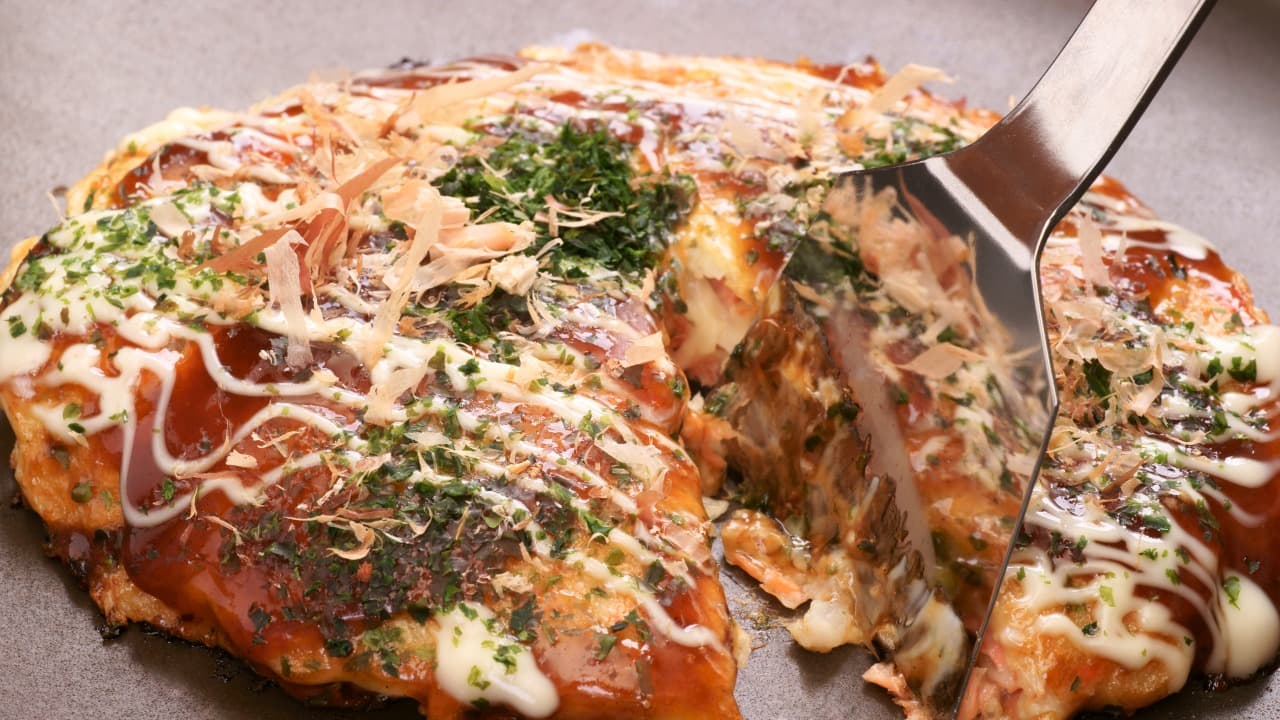
Okonomiyaki is one of Osaka’s signature gourmet dishes, and its appeal is multifaceted. First and foremost, the greatest charm of okonomiyaki lies in its customizability. The basic ingredients are flour, water, cabbage, and egg, but you can freely choose from a wide variety of toppings and fillings to add. As the name “okonomi” (meaning “as you like it”) suggests, the fun of creating your own original okonomiyaki with your favorite ingredients is the secret to its popularity.
The texture is also a major draw. Cooking on a hot iron griddle creates a crispy exterior and a fluffy interior. Moreover, the special sauce, mayonnaise, green seaweed flakes, and bonito flakes drizzled on top create an exquisite flavor accent, allowing you to enjoy different tastes with every bite. The blending of these toppings creates depth and richness in the flavor, bringing out a deliciousness unlike any other. In Osaka, numerous okonomiyaki specialty shops exist, each competing with their own unique recipes and cooking methods.
● The History of Okonomiyaki
The history of okonomiyaki is closely intertwined with Osaka’s food culture. Its origins are said to date back to the Edo period. At that time, dishes called “monjayaki” and “issen yoshoku” — made by dissolving wheat flour in water and grilling it — were popular among the common people of Edo and Osaka. These dishes later became the prototype for okonomiyaki.
In particular, from the Taisho era to the early Showa period, and during the postwar food shortage, okonomiyaki gained popularity among ordinary people. During this time, okonomiyaki evolved closer to its current form, with the addition of various ingredients such as cabbage, pork, and seafood.
● Where to Eat Okonomiyaki!
- Restaurant: Okonomiyaki Yukari
- Appeal:
Okonomiyaki Yukari is a must-visit okonomiyaki specialty shop when in Osaka. The reason it has been beloved in Osaka’s Umeda area for over half a century lies in its carefully selected ingredients, sauce, and diverse menu.The standard menu items at Okonomiyaki Yukari are the mixed grill (mix-yaki) and pork-egg (butatama). These dishes are packed with meticulous attention to the base batter, ingredients, and the sauce that defines the flavor. Furthermore, one of their signature dishes is the “Yukari-yaki,” which features an extra-large headed shrimp peeking out of the top. It is visually striking, and the taste is equally exceptional.
- Address: 2-11-12 Sennichimae, Chuo-ku, Osaka-shi, Osaka 542-0074
- Access: 3-minute walk from Namba Station on the Midosuji Subway Line
- Google Maps: https://maps.app.goo.gl/9mT74eE8uNxH4jFh7
Kushikatsu
● The Appeal of Kushikatsu
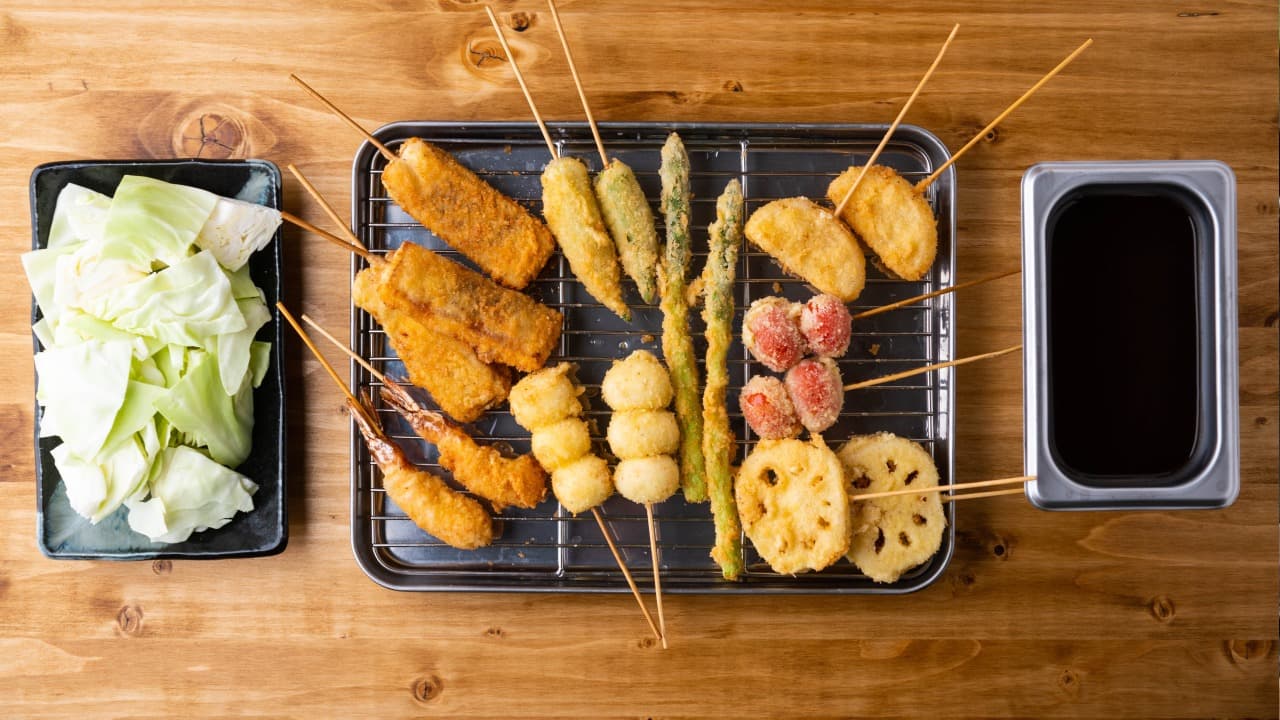
Kushikatsu is one of Osaka’s representative gourmet dishes, and its appeal is multifaceted. One of the key attractions of kushikatsu is its convenience and the wide variety of ingredients available. With options including pork, chicken, shrimp, squid, and vegetables, every skewer offers a crispy exterior and a juicy interior.
Kushikatsu becomes even more delicious when dipped in a special sauce. Kushikatsu restaurants prepare their own secret sauce, which is an essential element that enhances the flavor of the skewers. This sauce has a sweet and savory taste based on Worcestershire sauce that pairs perfectly with fried food. There is also a famous rule of “no double-dipping,” which is a unique part of the kushikatsu dining experience.
● The History of Kushikatsu
The history of kushikatsu is deeply connected to Osaka’s working-class culture. Its origins date back to the late Taisho and early Showa periods, when it was born in areas like Shinsekai and Janjan Yokocho, where laborers gathered. At that time, Osaka was undergoing industrialization, and many workers were looking for affordable and filling meals after work. Kushikatsu emerged to meet that demand.
The place most famous as the birthplace of kushikatsu is “Yaekatsu” in Shinsekai. This restaurant was established in 1937 and served skewered and deep-fried pork cut into small pieces to satisfy the appetites of workers. This became the prototype for kushikatsu, and many other shops subsequently adopted this style.
● Where to Eat Kushikatsu!
- Restaurant: Yaekatsu
- Appeal:
Located in the vibrant Shinsekai area of Osaka, “Yaekatsu Honten” is a legendary kushikatsu restaurant that has been beloved for over 70 years. It attracts not only locals but also many tourists. Here is a detailed look at what makes this restaurant so special.The restaurant’s commitment to quality and taste truly shines. The kushikatsu batter incorporates two types of yam, and the skewers are fried in temperature-sensitive iron pots to achieve a perfectly crispy exterior and a light, crunchy texture. By using iron pots instead of fryers, they achieve a more even and fragrant finish, and being able to watch the artisans’ craft up close is also a major attraction.
- Access: 256m from Shin-Imamiyaekimae Station
- Address: 3-4-13 Ebisuhigashi, Naniwa-ku, Osaka-shi, Osaka 556-0002
- Google Maps: https://maps.app.goo.gl/WbtvDjUZkA29a5S3A