What is Sake?
Sake is a uniquely Japanese alcoholic beverage made from rice, water, and koji mold. Unlike wine, which ferments the sugars already present in grapes, sake relies on a process called “multiple parallel fermentation” — koji mold converts rice starch into sugar while yeast simultaneously ferments that sugar into alcohol. This rare technique produces alcohol levels of 15–20%, the highest of any brewed beverage in the world.
One of sake’s defining qualities is how dramatically its character shifts with temperature. Served chilled, a daiginjo reveals bright, fruity aromas; warmed to 40°C, a junmai unfolds rich umami. The same bottle can taste like two entirely different drinks depending on how it’s served. This versatility has made sake inseparable from Japanese life — it appears at New Year’s celebrations, Shinto ceremonies, wedding rituals, and everyday meals alike.
History of Sake
Ancient Origins: From Chewed Rice to Court Breweries
Sake’s origins reach back to the Yayoi period, when rice cultivation took root in Japan. The earliest form was likely “kuchikami-zake” — rice chewed and spat out so that enzymes in saliva could trigger fermentation. By the Nara period (710–794), brewing techniques imported from China had been refined, and the imperial court established a dedicated sake-brewing office called the Miki no Tsukasa. Sake was both an offering to the gods and a centerpiece of court ceremony.
Medieval Monasteries: The Birth of Modern Technique
From the Kamakura through Muromachi periods, Buddhist monasteries became the leading centers of sake innovation. Monks developed the “moto” (yeast starter) method and pioneered hi-ire — heat pasteurization to prevent spoilage — more than three centuries before Pasteur’s discovery in France. Nara’s Shoryaku-ji temple is recognized as the birthplace of refined clear sake, and many foundations of modern brewing trace directly to this era.

Edo Period: Sake for the People
Under the long peace of the Edo period, sake became accessible to ordinary citizens. Breweries in Itami and Nada scaled up production, and ships carried “kudari-zake” down to Edo (Tokyo), fueling a booming drinking culture. The practice of winter brewing (kan-zukuri) was established during this era — the cold season naturally suppressed harmful bacteria, leading to more stable and consistent sake.
Modern Era: Science Meets Tradition
The Meiji government recognized sake tax as a vital revenue source and founded research institutes to bring scientific rigor to brewing. Ginjo-style techniques were refined throughout the 20th century. Today, roughly 1,400 breweries operate across Japan, each drawing on local water, climate, and rice to produce distinctive regional sake. Since “washoku” (Japanese cuisine) was added to UNESCO’s Intangible Cultural Heritage list in 2013, international interest in sake has surged.
Types of Sake
Sake is classified primarily by rice polishing ratio (how much of the grain’s outer layers are milled away) and whether a small amount of distilled alcohol is added. A lower polishing number means more rice has been removed, generally yielding a more aromatic and refined sake.
Junmai
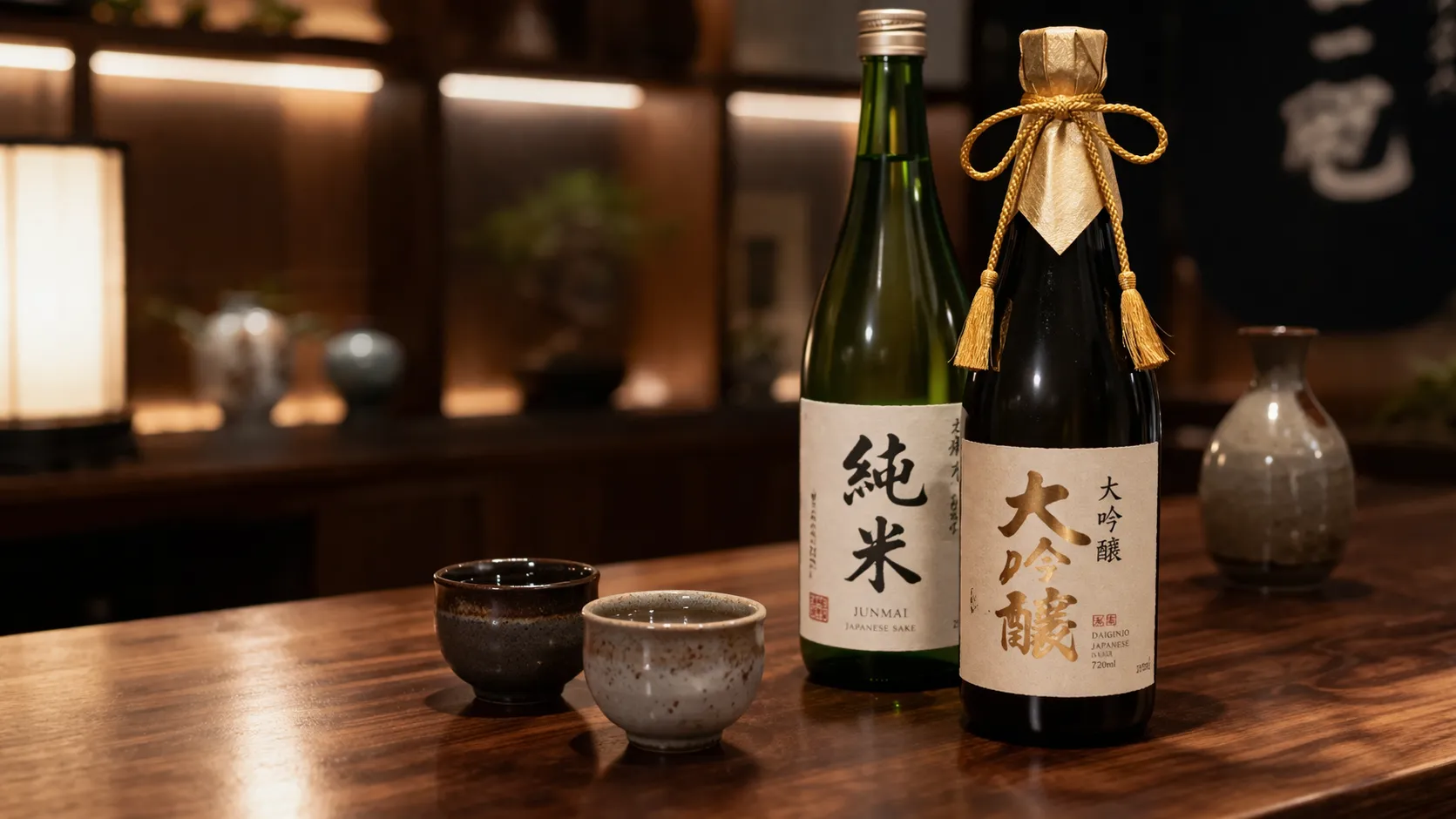
Made with only rice, koji, and water — no added alcohol. Junmai tends to have a full body with pronounced umami and rice-driven flavor. It holds up well when warmed and pairs naturally with a wide range of dishes.
Ginjo and Daiginjo
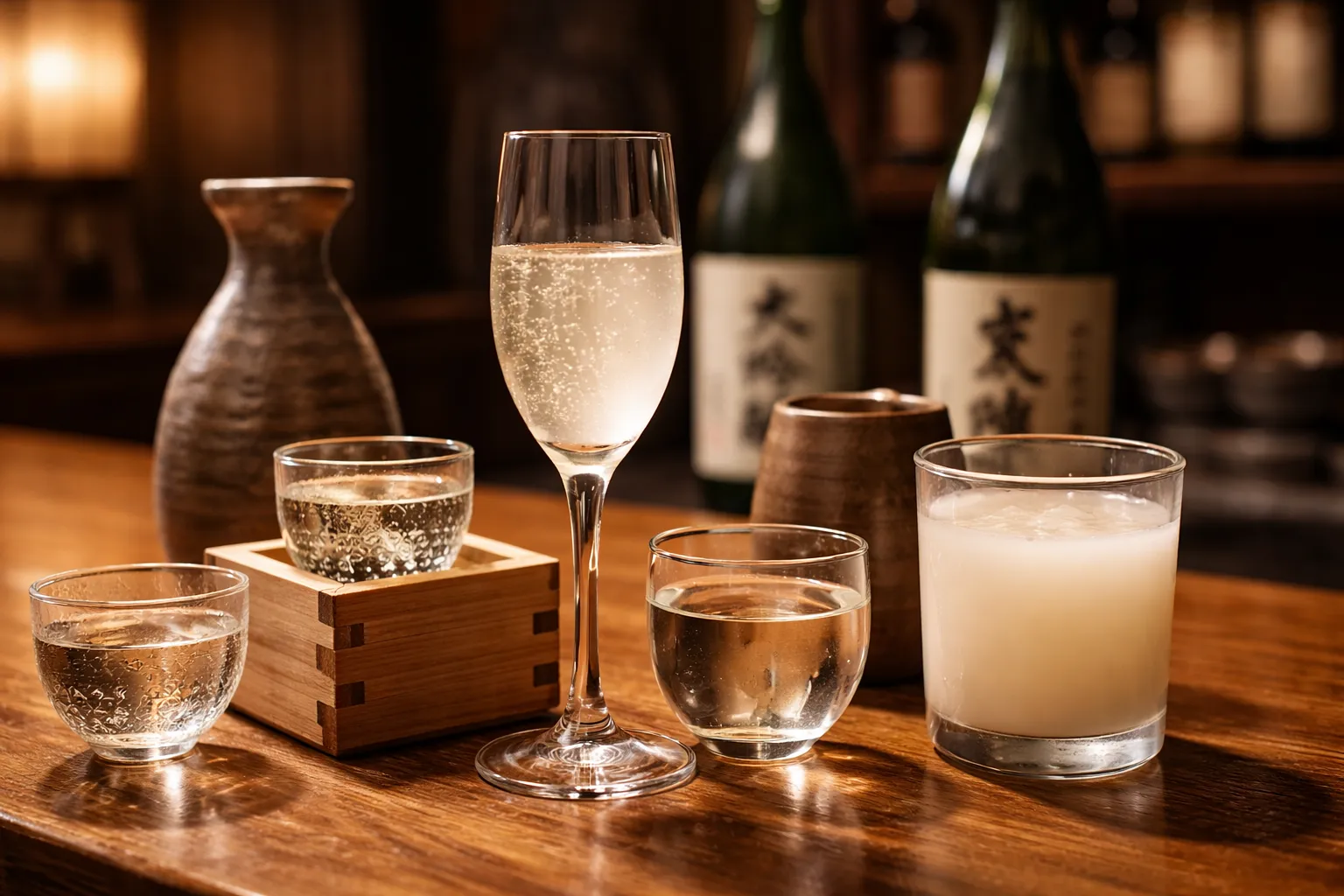
Ginjo uses rice polished to 60% or less; daiginjo to 50% or less. Both are fermented slowly at low temperatures, producing signature fruity and floral aromas often compared to apple, pear, or banana. Served chilled, these aromas shine. When the label also says “junmai” (junmai ginjo, junmai daiginjo), it means no alcohol has been added — combining ginjo fragrance with the depth of pure rice brewing.
Honjozo
Rice polished to 70% or less, with a small addition of brewed alcohol that lightens the body and sharpens the finish. Honjozo is often easy-drinking and affordable — a solid everyday sake.
Beyond the Core Categories
Sake that falls outside the above “tokutei meisho-shu” (special designation) classifications is called “futsuu-shu” (ordinary sake) and accounts for roughly 60% of domestic consumption. Other styles include nama-zake (unpasteurized, fresh and lively), nigori-zake (cloudy, with a creamy texture), koshu (aged sake, with caramel and sherry-like notes), and sparkling sake — a growing trend that appeals to wine drinkers and newcomers alike.
How Sake is Made
Sake production is a chain of exacting steps, each one shaping the final flavor.
Rice Milling and Washing
Special sake rice varieties are milled to remove the protein-rich outer layers, leaving the starchy core. After milling, the rice is washed and soaked — some breweries time the soaking down to the second, because the water absorbed at this stage directly affects koji growth later.
Koji Making
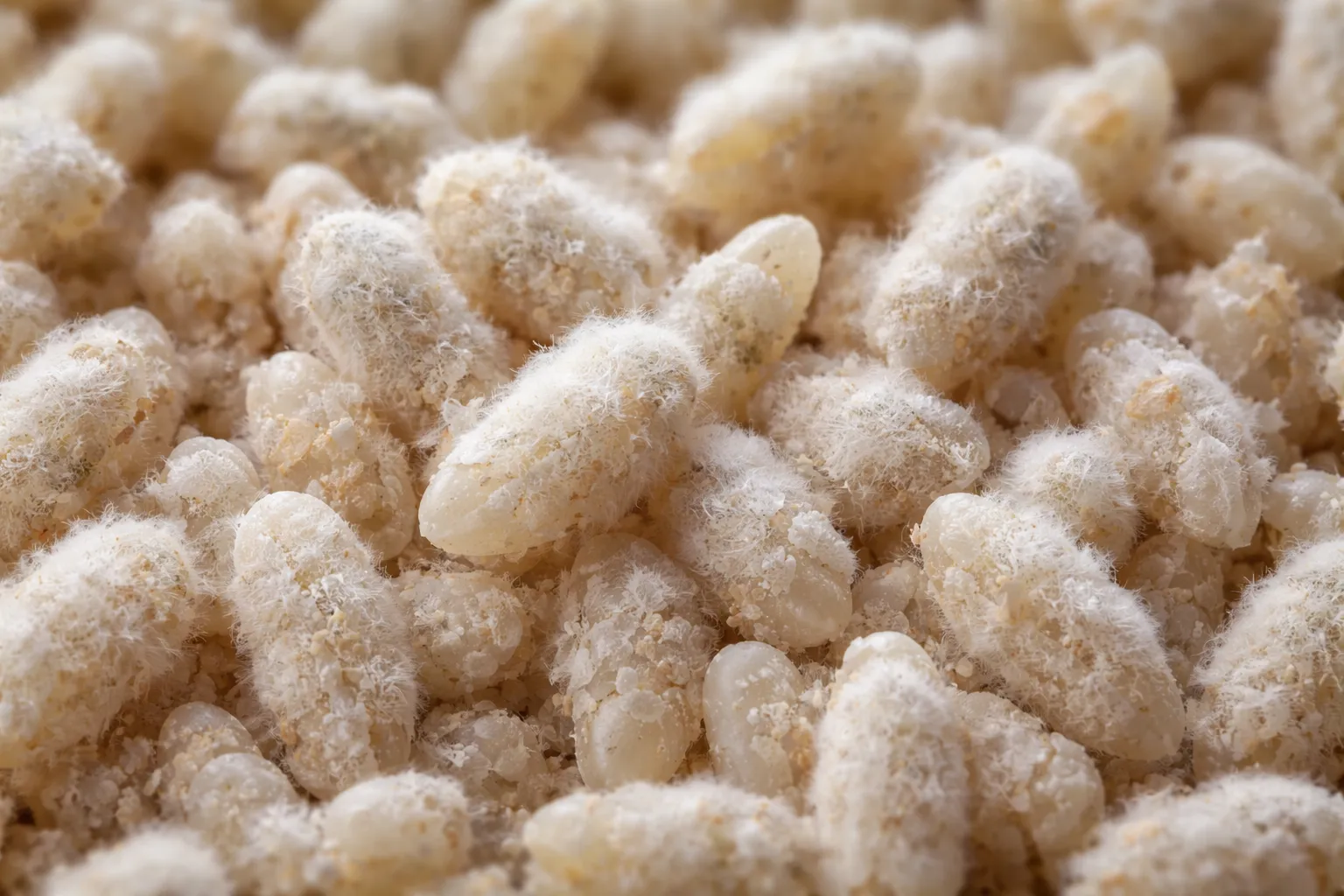
Steamed rice is inoculated with Aspergillus oryzae mold spores and incubated for roughly 48 hours under controlled temperature and humidity. The koji enzymes break rice starch into fermentable sugars. An old saying — “first koji, second moto, third brewing” — reflects how foundational this step is to the sake’s character.
Fermentation
Koji, steamed rice, water, and yeast are combined to create the moromi (mash). Ingredients are added in three stages over four days — a method called “sandan-jikomi” — to keep the yeast healthy. Over the next 20–30 days, parallel saccharification and fermentation proceed simultaneously. The toji (master brewer) monitors temperature daily, steering the sake toward the intended profile.
Pressing, Pasteurization, and Aging
The finished moromi is pressed to separate the clear liquid from the lees (sake kasu). The first run, called “arabashiri,” is prized for its raw, lively character. Most sake then undergoes hi-ire (pasteurization at around 65°C) to halt enzyme activity and stabilize flavor. Finally, the sake rests in tanks or bottles for several months to a year, mellowing before release.
Ways to Enjoy Sake
Temperature Changes Everything
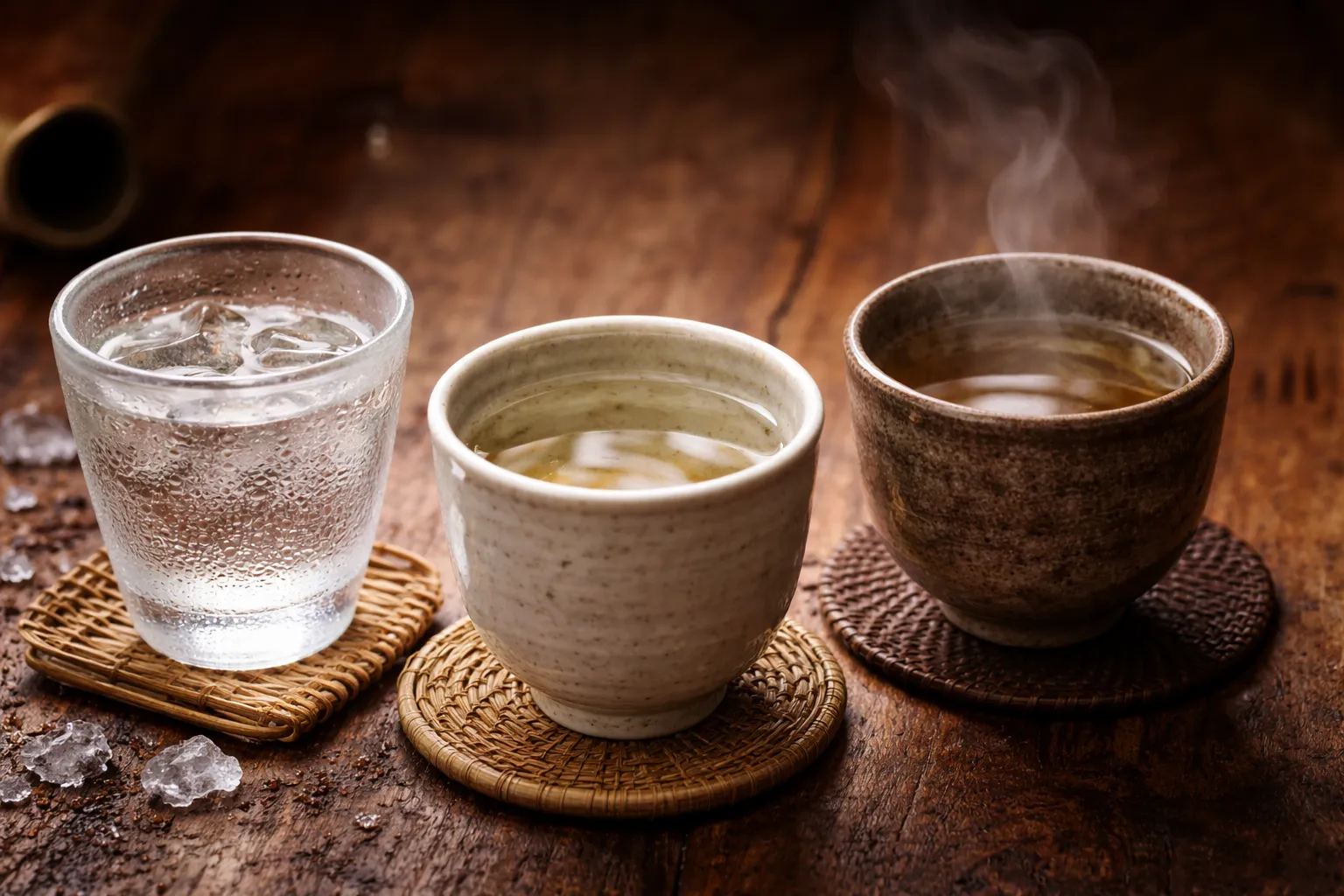
At 5–10°C (“reishu”), ginjo aromas come alive. At room temperature (“hiya”), rice flavors are direct and unadorned. At 40°C (“nuru-kan”), umami blooms and the texture turns silky. At 50°C (“atsu-kan”), the warmth spreads through the body with bold, comforting intensity. Experimenting with temperature is one of sake’s greatest pleasures.
Food Pairing
Sake’s natural affinity is with Japanese food, but it reaches further. The umami richness of a junmai stands up to grilled fish and tofu dishes, while a fragrant ginjo can complement lighter fare like ceviche or fresh spring rolls. A practical rule of thumb: pair sake with food from the same region — Niigata’s crisp, dry sake alongside local seafood, for instance.
Choosing a Cup
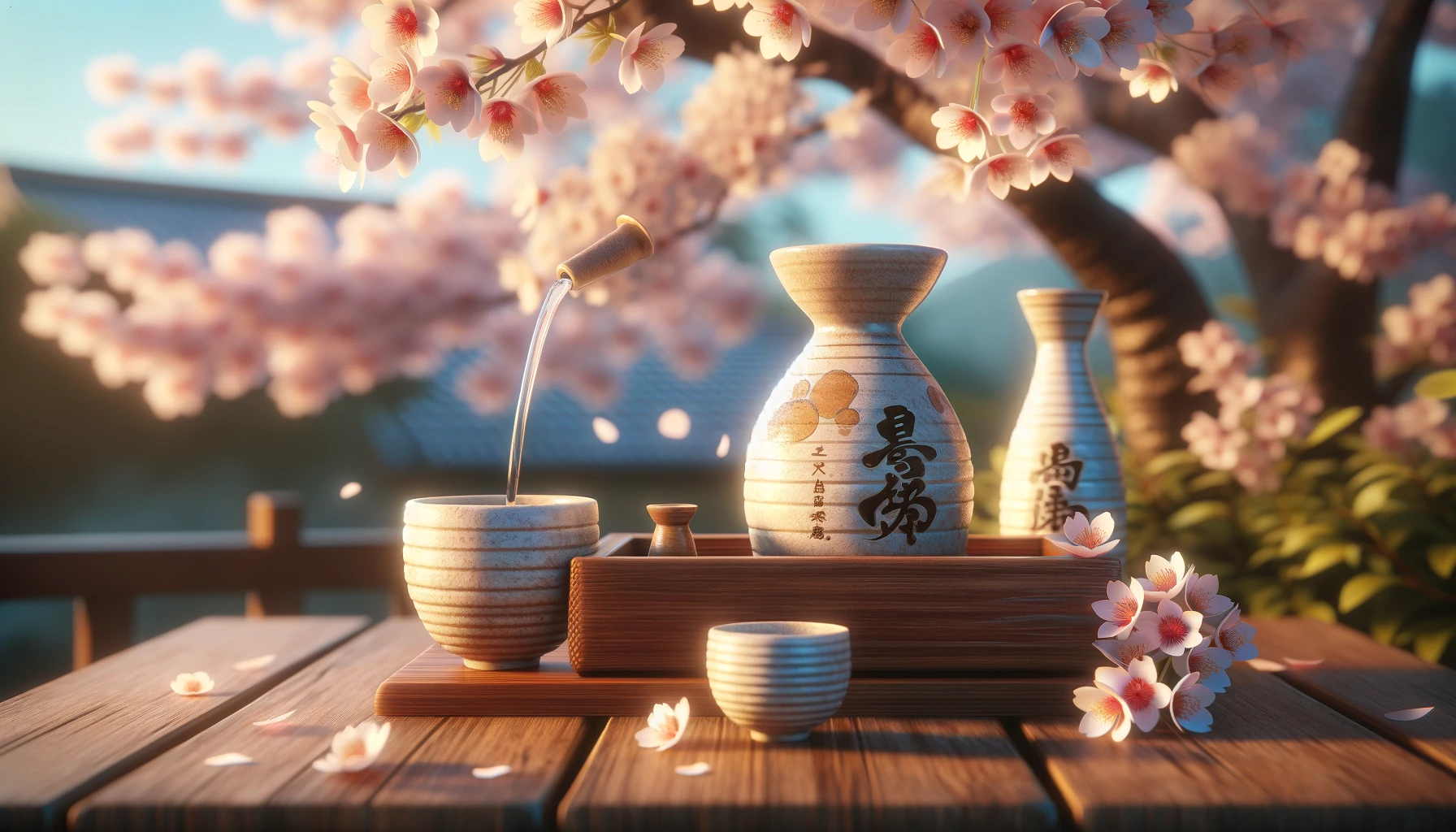
Wide-mouthed wine glasses amplify ginjo aromatics. Small ceramic ochoko concentrate the warmth of heated sake. A flat sakazuki adds ceremony to a toast. Part of the fun of visiting a brewery is finding a vessel that suits your favorite style.
Where to Experience Sake
Brewery Visits
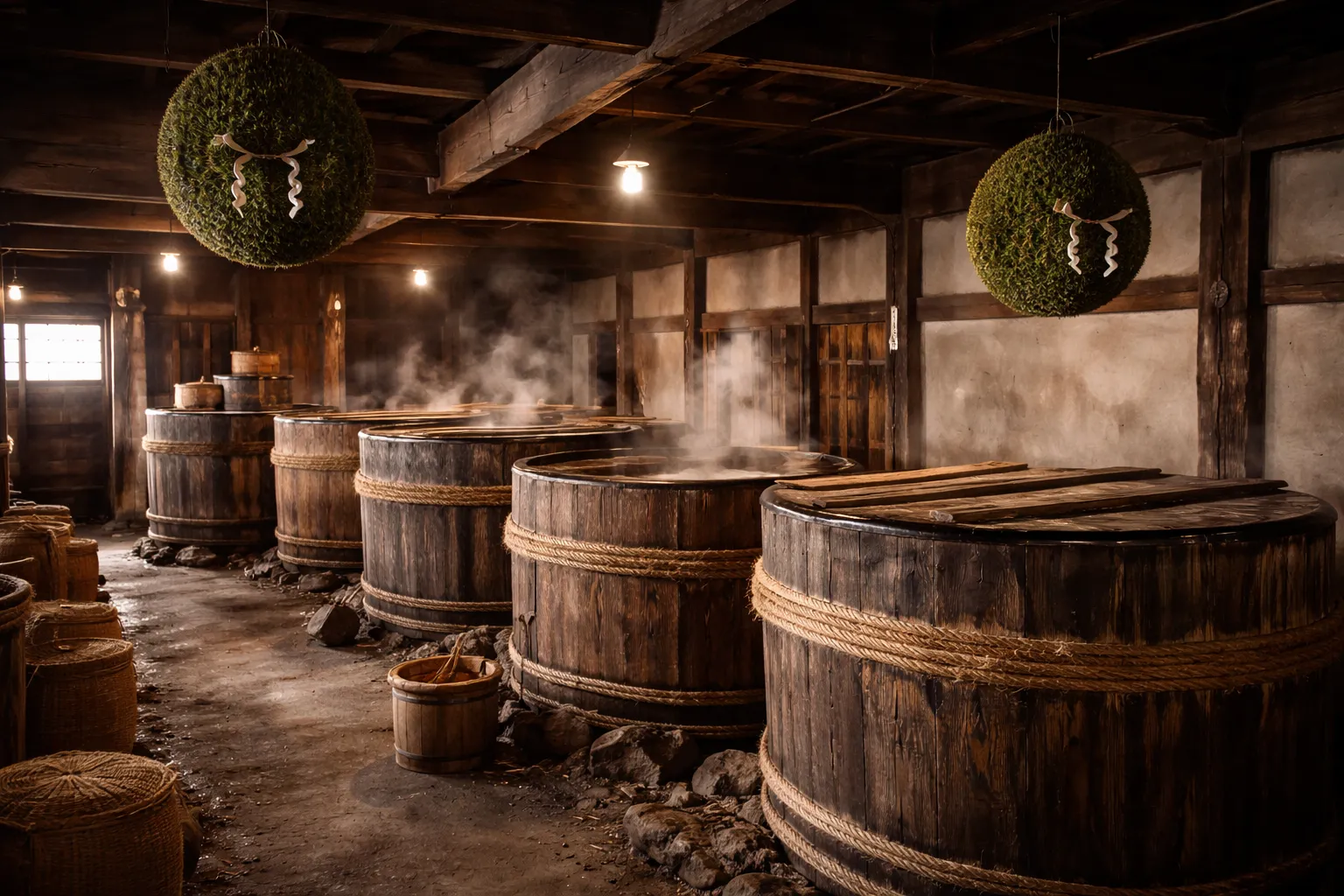
There is no better way to understand sake than stepping inside a brewery. Across Japan, many kura (breweries) welcome visitors for tours and tastings. Walking among the brewing tanks, breathing in the scent of fermenting moromi, and hearing the toji describe their craft brings a bottle of sake to life in a way no tasting note can. Winter — the heart of brewing season — is the most atmospheric time to visit.
Sake Bars and Kaku-uchi
Specialized sake bars in cities like Tokyo and Osaka employ certified sake sommeliers (kikizake-shi) who can guide newcomers and connoisseurs alike. For a more casual experience, look for “kaku-uchi” — standing bars inside liquor shops where locals gather to drink by the glass, often at remarkably fair prices.
Sake Festivals
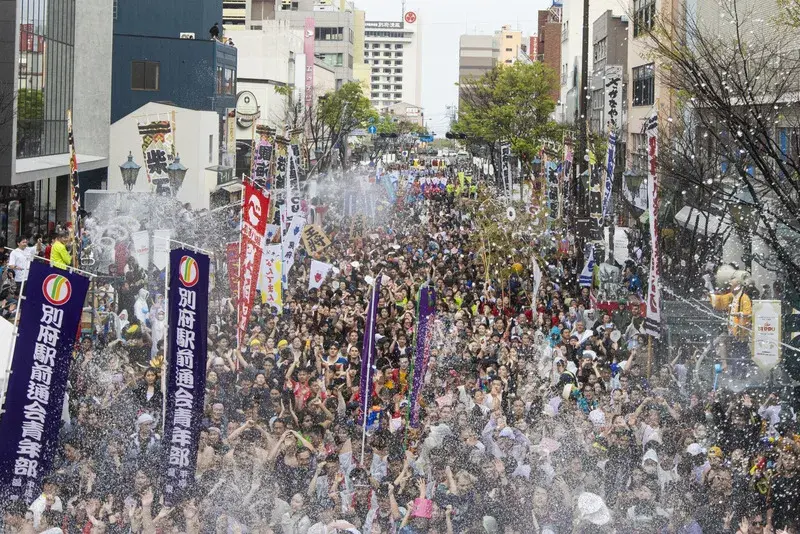
Annual events across Japan offer the chance to sample dozens or even hundreds of sakes in a single session. They’re also a rare opportunity to meet brewers face-to-face and hear the stories behind the labels — an ideal way for beginners to discover what styles they enjoy.
Summary
From a bowl of chewed rice in the Yayoi period to the pristine daiginjo poured in today’s Michelin-starred restaurants, sake has evolved continuously for over two millennia. Its depth comes not from complexity of ingredients — just rice, water, and koji — but from the extraordinary care at every stage of production and the interplay of temperature, vessel, and cuisine at the moment of drinking. Visiting a brewery, learning a region’s water and rice, and sharing a glass with the people who made it: that is the fullest way to experience sake, and through it, Japan itself.