Introduction
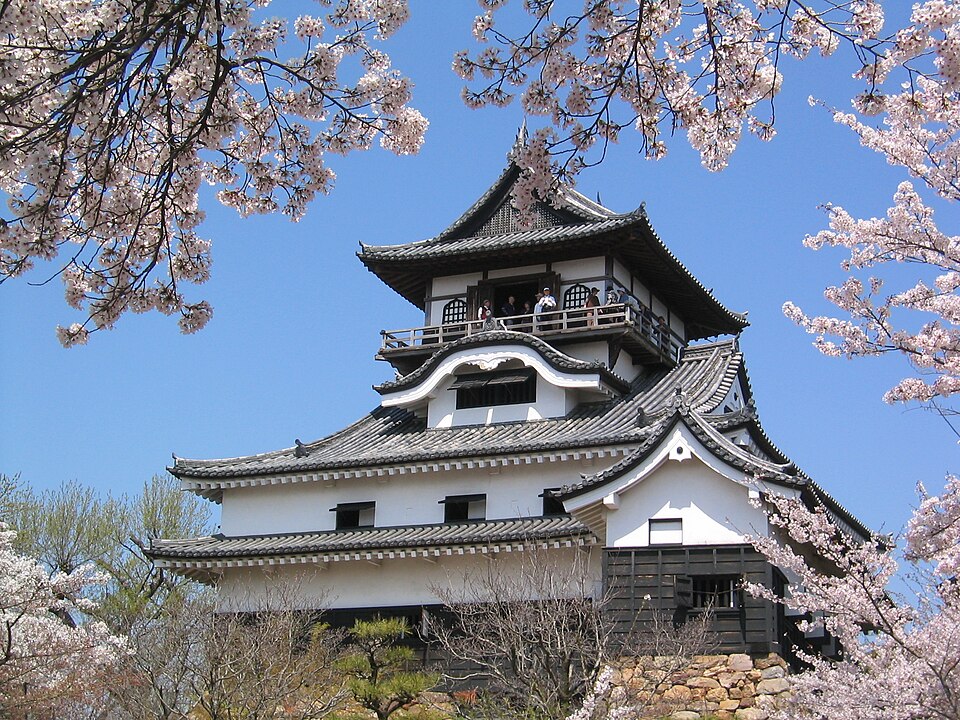
Standing proudly along the Kiso River in Inuyama City, Aichi Prefecture, Inuyama Castle is renowned as the castle with the oldest surviving keep (tenshu) in Japan. Built in 1537 by Oda Nobuyasu, an uncle of Oda Nobunaga, this castle has survived countless wars over its roughly 490-year history, miraculously preserving its original form almost entirely to this day.
As one of only five castles designated as National Treasures, its appearance perched atop the cliffs above the Kiso River has earned it the nickname “Hakutei-jo” (White Emperor Castle). This name was reportedly given by the Edo-period Confucian scholar Ogyu Sorai, who likened it to Baidicheng (White Emperor City) along China’s Yangtze River. The panoramic view from the top-floor gallery (mawarien) of the keep — the majestic flow of the Kiso River and the vast Nobi Plain — ranks among the most spectacular vistas of any castle in Japan.
This article provides a detailed guide to Inuyama Castle, from its history and highlights to access information. Enjoy the story of this celebrated castle nestled along the Kiso River and discover the charm of its original surviving keep.
Overview of Inuyama Castle
| Official Name | Inuyama Castle (Inuyama-jo) |
|---|---|
| Alternate Name | Hakutei-jo (White Emperor Castle) |
| Location | 65-2 Inuyama Kitakoken, Inuyama City, Aichi Prefecture |
| Castle Type | Hilltop castle (hirayama-jiro) |
| Year Built | 1537 (Tenbun 6) |
| Keep | Original surviving keep (3 stories, 4 floors, 2 basement levels; National Treasure) |
| Opening Hours | 9:00–17:00 (last entry at 16:30) |
| Admission | Adults: 550 yen |
| Closed | December 29–31 |
Inuyama Castle is a hilltop castle built on a hill approximately 88 meters above sea level on the southern bank of the Kiso River. The Kiso River serves as a natural moat, while the castle town spreads out to the south — a strategically advantageous location for both offense and defense. The keep stands approximately 19 meters tall and, while not the largest among surviving original keeps, its three-story, four-floor structure with two basement levels is more complex than it appears, representing the pinnacle of castle architecture.
Until 2004, Inuyama Castle held the unique distinction of being the only privately owned castle in Japan. The Naruse family served as castle lords since the Edo period, managing the keep as private property even after the Meiji era. It is thanks to this family’s dedicated efforts that the Inuyama Castle keep has survived to this day. In 2004, management was transferred to the Inuyama Castle Hakutei Bunko Foundation, and the castle is now administered by Inuyama City.

History of Inuyama Castle
Construction by the Oda Clan and the Turmoil of the Sengoku Period (16th Century)
Inuyama Castle was built in 1537 by Oda Nobuyasu, an uncle of Oda Nobunaga, who relocated the fortifications from Kinoshita Castle to this site. However, whether the surviving keep dates back to this era remains a subject of debate among researchers. What is certain is that Inuyama Castle was established as a military stronghold in the midst of the Sengoku (Warring States) period.
Protected by the natural fortress of the Kiso River, Inuyama Castle served as the “northern gateway of Owari,” occupying an extremely important strategic position. Located near the border with Mino Province (present-day Gifu Prefecture), it commanded the vital transportation route connecting Owari and Mino. As a result, Inuyama Castle became the scene of fierce battles for control throughout the Sengoku period.
In 1564, Oda Nobunaga himself captured Inuyama Castle and subsequently entrusted it to his retainer Ikeda Tsuneoki. During the Battle of Komaki and Nagakute in 1584, Ikeda Tsuneoki — fighting for Toyotomi Hideyoshi — entered Inuyama Castle and faced off against the allied forces of Tokugawa Ieyasu and Oda Nobukatsu. In this way, Inuyama Castle can be considered a key witness to Sengoku history, connected to all three of Japan’s great unifiers: Nobunaga, Hideyoshi, and Ieyasu.
The Edo Period — Seat of the Naruse Family (17th–19th Century)
After the Battle of Sekigahara (1600), Inuyama Castle was granted to Ogasawara Yoshitsugu, a senior retainer of Tokugawa Ieyasu. Then in 1617, Naruse Masanari, a senior retainer of the Owari Domain, became the castle lord. The Naruse family would go on to serve as lords of Inuyama Castle for nine generations until the Meiji Restoration.
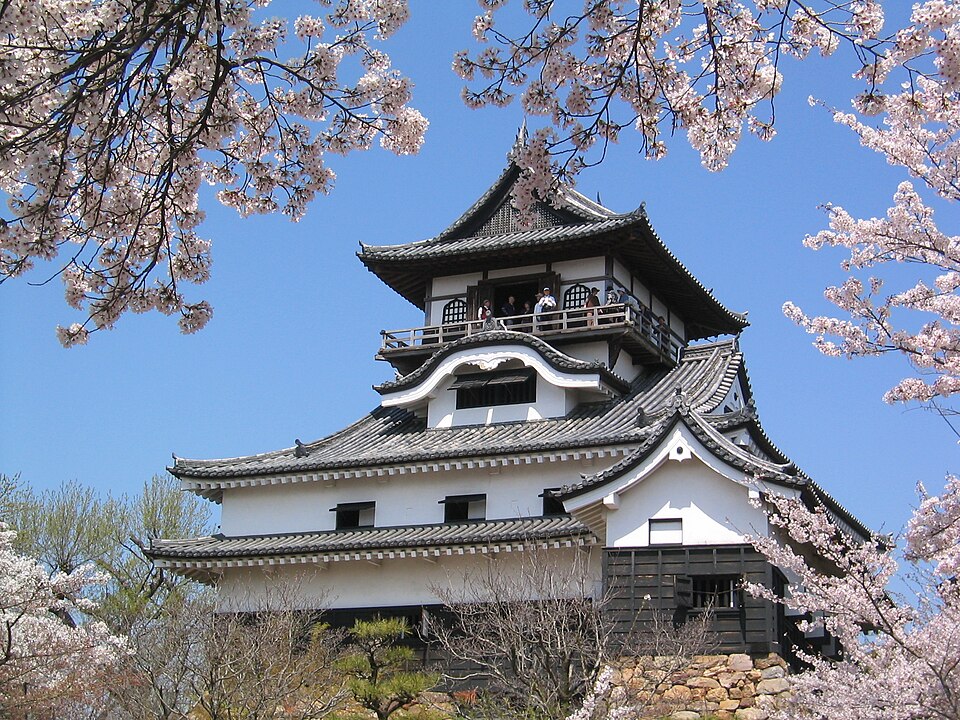
Major renovations to the keep are believed to have taken place after the Naruse family took possession, and the current appearance of the keep is thought to date from this period. In particular, the karahafu (cusped gable) on the top floor of the keep was added by Naruse Masanari and has become an iconic feature of Inuyama Castle. The Naruse family also invested heavily in developing the castle town, and Inuyama flourished as a prosperous castle town.
During the Edo period, Inuyama Castle enjoyed a peaceful era as a branch castle of the Owari Domain. However, in 1891 (Meiji 24), part of the keep was damaged by the Nobi Earthquake. This massive earthquake, estimated at magnitude 8.0, was an inland direct-hit earthquake that caused catastrophic damage across the Tokai region, including severe damage to the Inuyama Castle keep.
A Privately Owned National Treasure — Inuyama Castle in the Modern Era (20th–21st Century)
In 1891, following the abolition of feudal domains, Aichi Prefecture transferred ownership of the Inuyama Castle keep to the Naruse family. This marked the beginning of Japan’s only “privately owned National Treasure castle.” The transfer, which was conditional on restoring the earthquake-damaged keep, ultimately made a major contribution to the preservation of Inuyama Castle. The Naruse family invested their personal fortune in repairs, and the castle was designated a National Treasure in 1935 (re-designated under the current law in 1952).
Inuyama Castle was spared from air raids during World War II, and the keep survived intact. The Naruse family continued to manage it privately after the war, but the burden of maintenance costs grew heavy. In 2004, the Inuyama Castle Hakutei Bunko Foundation was established, and management of the castle was transferred. Today, Inuyama City handles operations, and approximately 500,000 tourists visit annually.
In 2017, one of the shachihoko (mythical dolphin-like roof ornaments) on the top floor of the keep was damaged by lightning, but repairs were completed the following year. Having survived earthquakes, lightning, and wars over approximately 490 years of history, the resilience of Inuyama Castle can truly be called miraculous.
Highlights and Recommended Spots
Here is a curated selection of must-see spots when visiting Inuyama Castle. From the interior of the keep to the castle town, there is plenty to explore.
Inside the National Treasure Keep
The interior of the Inuyama Castle keep is filled with the atmosphere unique to an original surviving keep. Climbing the steep staircases, you will find the thick beams, pillars, and wooden walls from the time of construction still intact, allowing you to feel roughly 490 years of history firsthand. Each floor, from the two basement levels to the fourth floor, features a different structural layout, adding to the fascination.
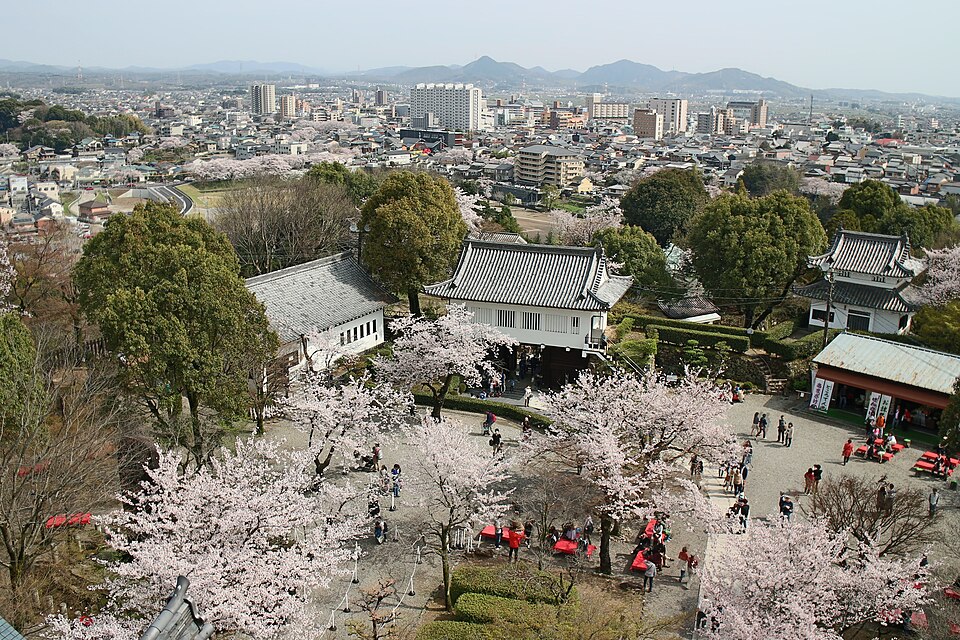
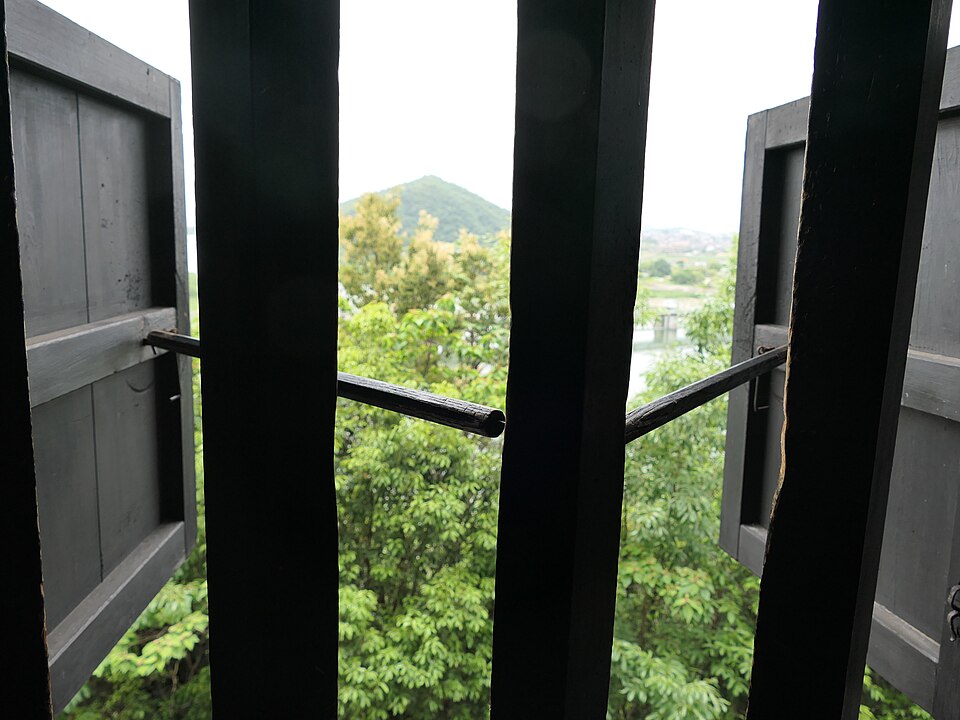
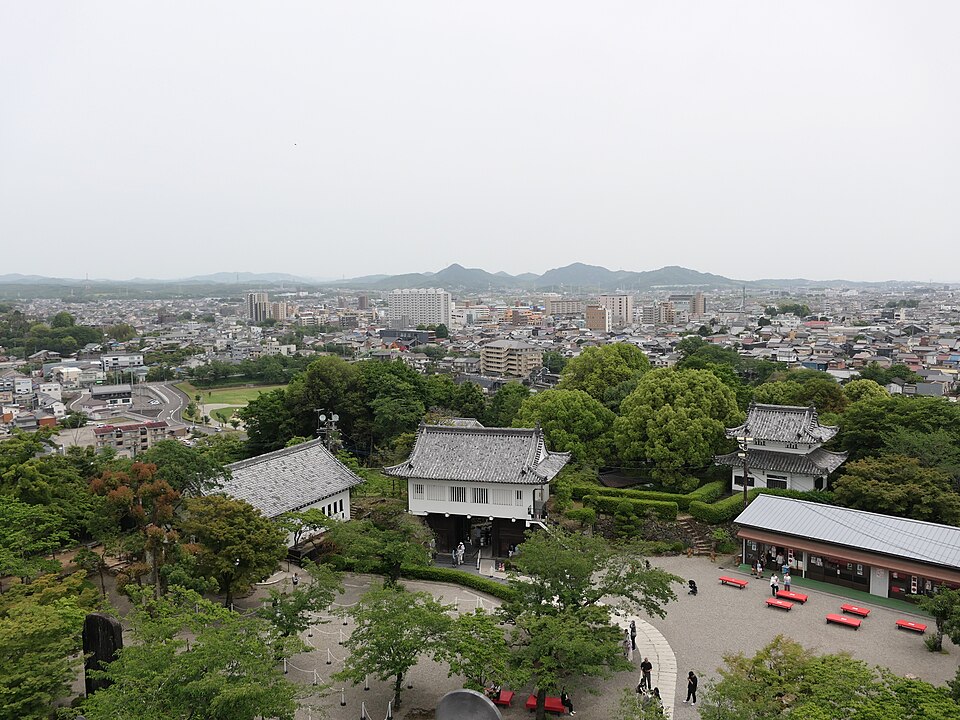
Of particular note is the mawarien, an outdoor gallery on the top floor. The railings are low and it can be thrilling for those who are afraid of heights, but the views from here are superb. To the north, the majestic flow of the Kiso River; to the east, the mountain range of Kakamigahara; to the south, the vast Nobi Plain — and on a clear day, you can see all the way to the skyscrapers of Nagoya.
The Kiso River and Inuyama Castle in Harmony
What best accentuates the beauty of Inuyama Castle is its harmony with the Kiso River. The Kiso River flows along the northern side of the castle with a width of approximately 100 meters. The reflection of the keep on the river surface creates a scene of painterly beauty. Views from the Inuyama Bridge and from the opposite bank in Kakamigahara City are especially popular photography spots.
The “Kiso River Ukai” (cormorant fishing) held annually from June 1 to October 15 is a beloved summer tradition at Inuyama Castle. This is a luxurious experience where you can enjoy cormorant fishing — a practice with over 1,300 years of history — set against the backdrop of Inuyama Castle. The silhouette of the castle against the river illuminated by bonfire light is a quintessential scene of the Japanese summer.
The Castle Town of Inuyama
Honmachi Street, which developed as the castle town of Inuyama Castle, is a charming thoroughfare that retains its original Edo-period town layout. In recent years, old machiya townhouses have been converted into cafes and boutiques, and the area has become popular as a food-tasting and strolling destination. Local specialties such as Inuyama Genkotsu Ame (hard candy), gohei-mochi (grilled rice cake), and Koi-machi Dango (love-town dumplings) offer a delightful variety of street food.
- Honmachi Street — The main street of the castle town; a go-to spot for street food and cafe-hopping
- Donden-kan — A facility exhibiting the festival floats (yama) of the Inuyama Festival
- Castle and Town Museum — Introduces the history of Inuyama Castle and its castle town
- Karakuri Exhibition Hall — See the mechanical puppet dolls of the Inuyama Festival up close
Inuyama Festival (UNESCO Intangible Cultural Heritage)
Held on the first Saturday and Sunday of April each year, the Inuyama Festival is a traditional celebration that has continued since 1635. Thirteen festival floats (yama) parade through the castle town while karakuri (mechanical puppet) performances are offered atop the floats. In 2016, the festival was registered as part of UNESCO’s Intangible Cultural Heritage “Yama, Hoko, and Yatai Float Festivals.” At night, 365 lanterns are lit on each float, creating an enchanting night float (yo-yama) procession. The sight of Inuyama Castle together with the festival floats is a spectacle unique to Inuyama.
Nearby Attractions
Atsuta Shrine
About 40 minutes by car or one hour by Meitetsu train from Inuyama Castle, Atsuta Shrine is a prestigious shrine that enshrines Kusanagi no Tsurugi, one of the Three Imperial Regalia of Japan. Visiting it together with Inuyama Castle allows you to experience the depth of Aichi Prefecture’s history and culture.
Nagoya Castle
About 30 minutes by train from Inuyama Castle, Nagoya Castle is a grand fortress built by Tokugawa Ieyasu. The stunning wall paintings of the reconstructed Honmaru Palace are a must-see. Comparing the rugged mountain-castle character of Inuyama Castle with the power-projecting flatland castle of Nagoya Castle makes for an interesting experience.
Access Information
By Train
The castle is about a 15-minute walk from Inuyama-Yuen Station or about a 20-minute walk from Inuyama Station on the Meitetsu Inuyama Line. From Nagoya Station (Meitetsu Nagoya Station), the journey takes only about 25 minutes on the Meitetsu Inuyama Line, making it an easy and convenient day trip from Nagoya.
By Car
The castle is about 25 minutes from the Komaki Interchange on the Meishin Expressway. Paid parking lots are available near Inuyama Castle (Parking Lots No. 1–3, with a total capacity of approximately 200 vehicles). During cherry blossom season and the Inuyama Festival, the area becomes very crowded, so using public transportation is recommended.
Conclusion
Inuyama Castle is a National Treasure that has preserved approximately 490 years of history as the oldest surviving castle keep in Japan. The sight of “Hakutei-jo” (White Emperor Castle) standing atop the cliffs of the Kiso River can be considered the essence of Japanese castle beauty. The grand panoramic view of the Kiso River and the Nobi Plain from the top-floor gallery provides an emotional experience that only an original surviving keep can offer.
Be sure to experience the full charm of Inuyama Castle — including street food in the castle town and cormorant fishing on the Kiso River. When it comes to understanding Japanese castle culture, Inuyama Castle is an absolute must-visit. Combined with visits to other National Treasure castles such as Himeji Castle and Matsumoto Castle, you will gain an even deeper appreciation for the richness of Japanese castles.