- Introduction
- Overview of the Kumano Sanzan
- History of the Kumano Sanzan
- Period 1 — From Primordial Mountain Worship to the Age of Founding
- Period 2 — The Pilgrimage Boom of the Cloistered Rule Era and the “Ant Procession to Kumano”
- Period 3 — Warrior Society and the Rise of Kumano Shugendo (Kamakura–Muromachi Periods)
- Period 4 — Popular Devotion in the Edo Period and the Revival of “Kumano Pilgrimage”
- Period 5 — The Separation of Shinto and Buddhism in the Meiji Era and World Heritage Inscription
- Highlights and Recommended Spots
- 1. Kumano Hongu Taisha — Head Shrine of 3,000 Kumano Shrines Nationwide
- 2. Kumano Nachi Taisha and Nachi Falls — Japan’s Tallest Sacred Waterfall
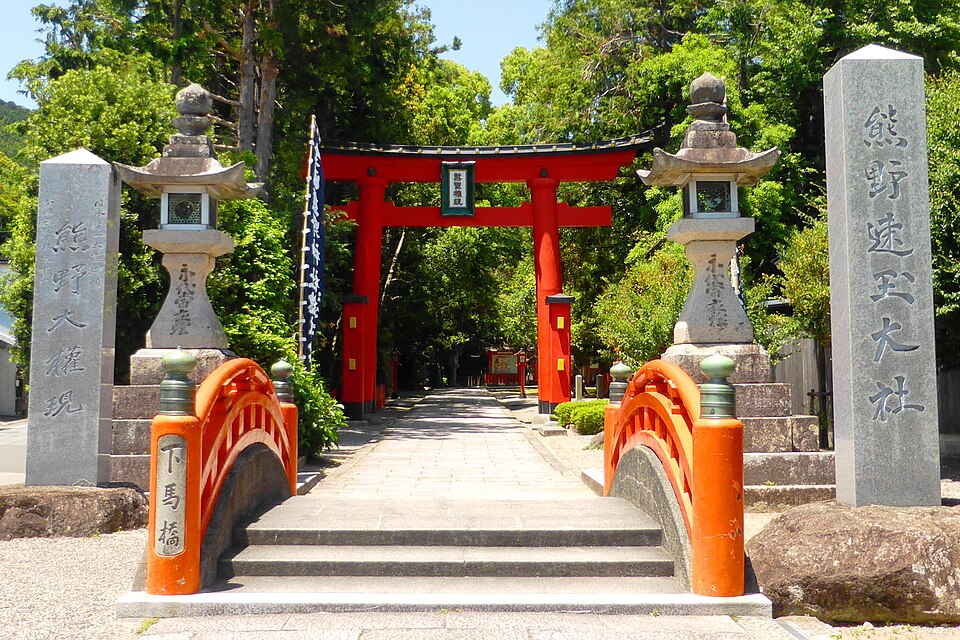
- 3. Kumano Hayatama Taisha — The Sacred Nagi Tree and the Overwhelming Sanctity of Mount Kamikura
- 4. The Kumano Kodo (Nakahechi Route) — Walking a World Heritage Pilgrimage Trail
- 5. Kumano Sanzan “Goshuin” Pilgrimage and Nachi Black Candy — The Culture of Kumano Souvenirs
- Nearby Attractions
- Access Information
- Conclusion
- Frequently Asked Questions
Introduction
Deep within the forests of the Kii Mountains lies a path once walked by ancient pilgrims at the risk of their lives — the Kumano Kodo. At the end of this sacred trail await the “Kumano Sanzan,” the Three Grand Shrines of Kumano. Collectively referring to Kumano Hongu Taisha, Kumano Hayatama Taisha, and Kumano Nachi Taisha, the moment you set foot in this realm, the crisp air and dense primeval forests envelop all five senses. This is the most vivid remaining sanctuary of Japan’s ancient nature worship and syncretic Shinto-Buddhist culture.
Devotion to the Kumano Sanzan dates back to before the Nara period. From the Heian period onward, the pilgrimage attracted people of all classes — emperors and aristocrats initially, and later samurai and commoners from the Kamakura period on. The phenomenon became so widespread that it was described as “the ant procession to Kumano” (ari no Kumano mode), and Kumano became deeply imprinted in the Japanese psyche as “the gateway to the Pure Land (the afterlife).” Today, approximately one million visitors come to the Kumano Sanzan annually, and since its inscription as a UNESCO World Cultural Heritage Site in 2004 as part of the “Sacred Sites and Pilgrimage Routes in the Kii Mountain Range,” pilgrims from around the world walk the Kumano Kodo.
Nachi Falls (133 meters high, the tallest single-drop waterfall in Japan), the majestic shrine buildings of Kumano Hongu Taisha, and the vermilion-lacquered halls and sacred trees of Hayatama Taisha — each of the three shrines possesses a distinct character, offering depths that cannot be fully captured in a single visit. The famous symbol of the Kumano Sanzan, the Yatagarasu (three-legged crow), is said to have guided Emperor Jimmu from Kumano to the Yamato Province. It remains in use today as the emblem of the Japan Football Association.
This article provides a detailed account of the Kumano Sanzan’s history from its founding to the present day, while thoroughly introducing the highlights of each shrine, Nachi Falls, and the allure of the Kumano Kodo. Read on for essential information to know before visiting this World Heritage Site, including access details and nearby attractions.

Overview of the Kumano Sanzan
The Kumano Sanzan is the collective name for three shrines located in the Kumano region of southern Wakayama Prefecture: Kumano Hongu Taisha, Kumano Hayatama Taisha, and Kumano Nachi Taisha. All three are situated deep in the Kii Mountains or along the coast, forming a group of shrines characterized by a profound sense of unity with nature.
| Name | Kumano Hongu Taisha | Kumano Hayatama Taisha | Kumano Nachi Taisha |
|---|---|---|---|
| Address | 1110 Hongu, Hongumachi, Tanabe City, Wakayama | 1 Shingu, Shingu City, Wakayama | 1 Nachisan, Nachikatsuura Town, Higashimuro District, Wakayama |
| Principal Deity | Ketsumimiko no Okami | Kumano Hayatama no Okami / Kumano Fusumi no Okami | Kumano Fusumi no Okami |
| Common Name | Hongu-san | Shingu-san | Nachi-san |
| Visiting Hours | 6:00–18:00 (varies by season) | 6:00–18:00 | 6:00–17:00 |
| Admission | Free (Treasure Hall: 300 yen) | Free (Sacred Treasure Hall: check in advance) | Free (Seiganto-ji Temple: separate fee) |
| Closed | Open year-round | Open year-round | Open year-round |
| World Heritage | Inscribed in 2004 as part of “Sacred Sites and Pilgrimage Routes in the Kii Mountain Range” | ||
*Please check each shrine’s official website for the latest information.
A defining feature of the Kumano Sanzan is that it is a sacred site where Shinto, Buddhism, and mountain worship merged in a practice known as “Shinbutsu Shugo” (the syncretism of gods and buddhas). The Kumano deities were regarded as manifestations of Buddhist deities who had flown from India (the Honji Suijaku doctrine): the principal deity of Kumano Hongu Taisha corresponds to Amida Nyorai (Amitabha), Kumano Hayatama Taisha to Yakushi Nyorai (Bhaisajyaguru), and Kumano Nachi Taisha to Senju Kannon (Thousand-Armed Avalokitesvara). This syncretic worldview gave Kumano its character as a “universal sacred site” open to people of all sects, religions, and social classes.
The Kumano Sanzan by the numbers: the total distance between the three shrines (from Shingu to Hongu) is approximately 30 kilometers in a straight line, or 60–80 kilometers via the ancient pilgrimage trails. The total length of the UNESCO-registered Kumano Kodo stretches approximately 307 kilometers. Nachi Falls boasts a drop of 133 meters and a flow rate of approximately 0.68 tons per second, making it the tallest waterfall in Japan. The sacred Nagi tree at Kumano Hayatama Taisha is the largest of its kind in all of Japan, estimated to be approximately 1,000 years old and standing about 20 meters tall.

History of the Kumano Sanzan
Period 1 — From Primordial Mountain Worship to the Age of Founding
The origins of worship at Kumano predate any written records. The name “Kumano” is thought to derive from “kuma,” meaning “a secluded place,” or “kumano,” meaning “a dark field.” Surrounded by rugged mountains and deep forests, this land was regarded by ancient peoples as a sacred domain where divine spirits dwelled and as the entrance to “Yomi no Kuni” (the land of the dead) where the souls of the deceased journeyed.
Each of the three shrines has its own “Divine Arrival” (gorairin) legend describing how the Kumano deities revealed themselves to humanity. According to Kumano Hongu Taisha’s tradition, the shrine was founded as Kumano Ni Imasu Jinja during the reign of Emperor Sujin (around the 2nd century). At Kumano Hayatama Taisha, a deity is said to have descended upon Gotobiki Rock (a massive natural boulder) on Mount Kamikura, after which the sacred presence was transferred to a “new shrine” (Nii-miya). Kumano Nachi Taisha traces its origins to the veneration of Nachi Falls itself as a divine body. The thunderous roar and immense volume of water made the falls an object of awe and worship as a manifestation of divine power.
The Nihon Shoki (Chronicles of Japan, 720 CE) records the legend of Emperor Jimmu’s eastern expedition, in which he sailed north along the Kumano coast, landed at Kumano, and was guided by the Yatagarasu (three-legged crow). This legend establishes Kumano’s status as the “sacred land of the founding of Yamato (Japan).” Kumano also features prominently in the myths of Izanami (the underworld) and Izanagi, depicting it as a place of special significance within Japanese mythology.
Following the introduction of Buddhism to Japan (6th century), the Honji Suijaku doctrine — which identified the Kumano deities as manifestations of Buddhist deities from India — gained widespread acceptance. Once the principal Kumano deities were regarded as incarnations of Amida Nyorai and Senju Kannon, Kumano became a sacred site that overlapped with the Buddhist “Pure Land,” drawing worshippers who sought both salvation in the afterlife and worldly benefits. This syncretic worldview laid the foundation for the massive pilgrimage boom that followed.
Period 2 — The Pilgrimage Boom of the Cloistered Rule Era and the “Ant Procession to Kumano”
Faith in Kumano exploded during the late Heian period (11th–12th centuries), the era of “cloistered rule” (insei). Beginning with Retired Emperor Shirakawa (reigned 1072–1086), retired emperors undertook repeated pilgrimages to Kumano. Records show that Retired Emperor Shirakawa made the pilgrimage 9 times in his lifetime, Retired Emperor Toba 21 times, and Retired Emperor Go-Shirakawa an astonishing 34 times — a frequency that is almost unimaginable by modern standards.
The retired emperors’ pilgrimages were accompanied by processions of hundreds to a thousand people, including aristocrats, warriors, monks, and court ladies. The journey itself was considered a form of ascetic practice, with worshippers stopping to pray at waypoints called “oji” along the Kumano Kodo. Approximately 90 such waypoints, collectively known as the “Kujuku Oji” (Ninety-Nine Oji), were established, transforming the Kumano Kodo from a mere road into a “moving sacred site.”
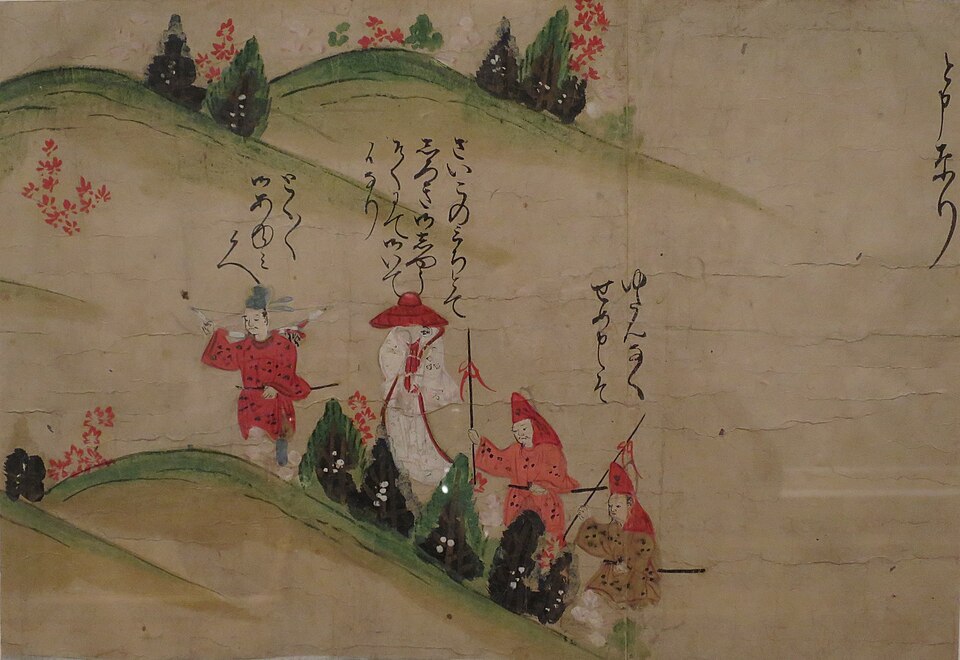
Contemporary records describe the fervor of the cloistered rule-era pilgrimages as “the ant procession to Kumano,” likening the sheer number of pilgrims to a trail of ants. Inspired by the imperial pilgrimages, aristocrats, warriors, and commoners followed in droves. The pilgrimage boom reached the scale of a social phenomenon, particularly during the time of Retired Emperor Go-Shirakawa (late 12th century). Many women also made the pilgrimage, as Kumano — unlike many other sacred mountains with their “no women allowed” policies — was open to female worshippers. This inclusiveness is one of Kumano’s most distinctive characteristics.
The pilgrimage boom of the cloistered rule era greatly spurred the construction and renovation of the Kumano Sanzan’s shrine buildings and the Kumano Kodo. Shrine buildings were rebuilt with imperial donations, and lodgings and teahouses were established along the ancient trails. Furthermore, itinerant nuns known as “Kumano Bikuni” traveled the country preaching the Kumano faith, spreading the Kumano Sanzan’s reputation nationwide. During this era, Kumano worship took root across Japan, and branch shrines called “Kumano Jinja” were established throughout the country through a process called “kanjo” (ritual invitation of deities).
Period 3 — Warrior Society and the Rise of Kumano Shugendo (Kamakura–Muromachi Periods)
After the establishment of the Kamakura Shogunate (1185), pilgrimages to Kumano expanded to the warrior class. Although Minamoto no Yoritomo himself did not make a Kumano pilgrimage, the practice of praying to the Kumano deities for the protection of the warrior government took root among samurai. Legends connecting Yoshitsune to Nachi Falls survive, as do records of military commanders making victory prayers at Kumano.
From the Kamakura through Muromachi periods, the “Kumano Shugen” practitioners who managed the Kumano Sanzan grew significantly in influence. Shugendo is a uniquely Japanese religious practice that seeks spiritual power through rigorous mountain asceticism, blending elements of Buddhism, Shinto, and Taoism. The Kumano shugenja (mountain ascetics) served as “sendatsu” (guides) for pilgrims and were responsible for the administration and missionary work of the Kumano Sanzan. Their travels throughout the country to spread the Kumano faith led to the establishment of Kumano branch shrines in many regions.
The upheavals of the Sengoku (Warring States) period, beginning with the Onin War (1467), dealt severe blows to the Kumano Sanzan. Declining pilgrim numbers, loss of income due to the collapse of the estate system, and fire damage to shrine buildings during warfare all combined to bring the Kumano Sanzan into an era of great hardship. The burning of Enryaku-ji Temple on Mount Hiei by Oda Nobunaga in 1571 sent shockwaves through the entire syncretic Shinto-Buddhist culture. The activities of shugenja in Kumano were also severely curtailed.
Yet even during this difficult era, the core of Kumano’s faith endured. Toyotomi Hideyoshi donated shrine lands to Kumano Hongu Taisha and Kumano Hayatama Taisha in 1591, and Tokugawa Ieyasu confirmed the Kumano Sanzan’s shrine territories in 1601. With the resumption of protection by the ruling warriors, the Kumano Sanzan gradually began showing signs of recovery.
Period 4 — Popular Devotion in the Edo Period and the Revival of “Kumano Pilgrimage”
During the Edo period (1603–1868), the Kumano Sanzan transformed dramatically from an aristocratic and warrior sanctuary to a place of worship for common people. The arrival of an era of peace and improvements in transportation networks made travel and pilgrimage accessible to commoners, and “Kumano mode” (the Kumano pilgrimage) became a dream journey for ordinary citizens alongside the Ise pilgrimage.
In the Edo period, the standard route became “first complete the Ise pilgrimage, then proceed to the Kumano Sanzan.” This circuit around the Kii Peninsula required several weeks to several months for the round trip, but many commoners undertook it as a once-in-a-lifetime dream. The “Nakahechi” route — passing through Fujishiro-zaka, Kirime, Yukawa, Hongu, Shingu, and Nachi — was the most traveled route during the Edo period, with pilgrim lodges and teahouses flourishing along the way.
During this era, the activities of the “Kumano Bikuni” (Kumano nuns) revived once again. These itinerant nuns distributed talismans from the Kumano Sanzan while traveling the country, using illustrated scrolls called “Kumano Mandala” to tell the stories of the Kumano deities’ miracles. This oral missionary work expanded the base of Kumano worship throughout Japan and fueled the boom in establishing Kumano shrines (approximately 3,000 nationwide).
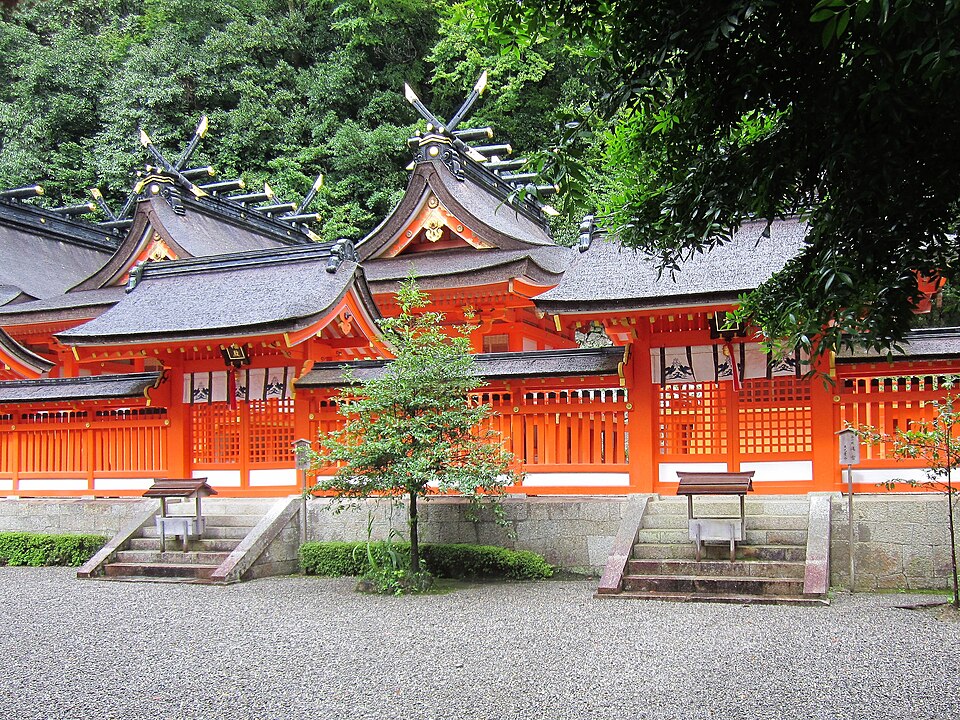
The shrine buildings of the Kumano Sanzan were also improved during the Edo period. The current buildings of Kumano Hayatama Taisha were reconstructed in the late Edo period (1810), and their magnificent appearance — 15 halls adorned in vermilion lacquer — has been preserved to the present day. The Nachisan area around Kumano Nachi Taisha was also developed, and the landscape combining Nyoirin-do (later Seiganto-ji Temple) with the shrine was completed. The scene of Seiganto-ji and Nachi Taisha standing side by side, with the three-story pagoda framing Nachi Falls in the background, represents the culmination of syncretic Shinto-Buddhist culture from this era.

Period 5 — The Separation of Shinto and Buddhism in the Meiji Era and World Heritage Inscription
The Shinbutsu Bunri (Separation of Shinto and Buddhism) edict of the Meiji Restoration (1868) brought profound changes to the Kumano Sanzan. Shrines and temples that had been inseparably intertwined were forcibly separated, dismantling the syncretic worldview that had been cultivated over centuries. At Kumano Hongu Taisha, adjacent Buddhist halls such as the Shojoden and Wakamiya were demolished, and the site was reorganized into a purely Shinto form. At Kumano Nachi Taisha, Nyoirin-do (Seiganto-ji Temple) was separated into an independent institution, resulting in the present arrangement where shrine and temple stand side by side as distinct organizations.
Furthermore, in August 1889, the Great Kii Flood (also known as the Totsukawa Flood) struck, dealing a catastrophic blow to Kumano Hongu Taisha. The swollen Kumano River engulfed the shrine grounds, washing away most of the buildings. The shrine was subsequently rebuilt on its current elevated site (relocated from Oyunohara), while the original location — Oyunohara — is now maintained as an open field featuring Japan’s largest torii gate. Standing approximately 34 meters tall and erected in 1994, this massive torii rising from the surrounding rice paddies commands an overwhelming presence.
During the rapid economic growth period (1960s–70s), pilgrim numbers temporarily declined. However, from the 1990s onward, growing interest in “spirituality,” “healing,” and “power spots” revived attention to Kumano. Then in 2004, the Kumano Sanzan and Kumano Kodo were inscribed as a UNESCO World Cultural Heritage Site under the title “Sacred Sites and Pilgrimage Routes in the Kii Mountain Range.” This led to a significant increase in visitors, with approximately one million people from Japan and abroad now visiting annually.
Today, the Kumano Kodo is twinned with Spain’s “Camino de Santiago” pilgrimage route (since 2014), drawing attention as the world’s only “dual registration” pilgrimage route linking two World Heritage trails. From hikers navigating the Kumano Kodo with smartphones to dedicated pilgrims on spiritual journeys, the Kumano Sanzan welcomes modern visitors in many different ways.

Highlights and Recommended Spots
Each of the Kumano Sanzan shrines possesses its own distinctive appeal, and only by visiting all three can one truly experience the essence of the Kumano pilgrimage. Here is a detailed introduction to five must-visit spots, including the three shrines, Nachi Falls, and the Kumano Kodo.
1. Kumano Hongu Taisha — Head Shrine of 3,000 Kumano Shrines Nationwide
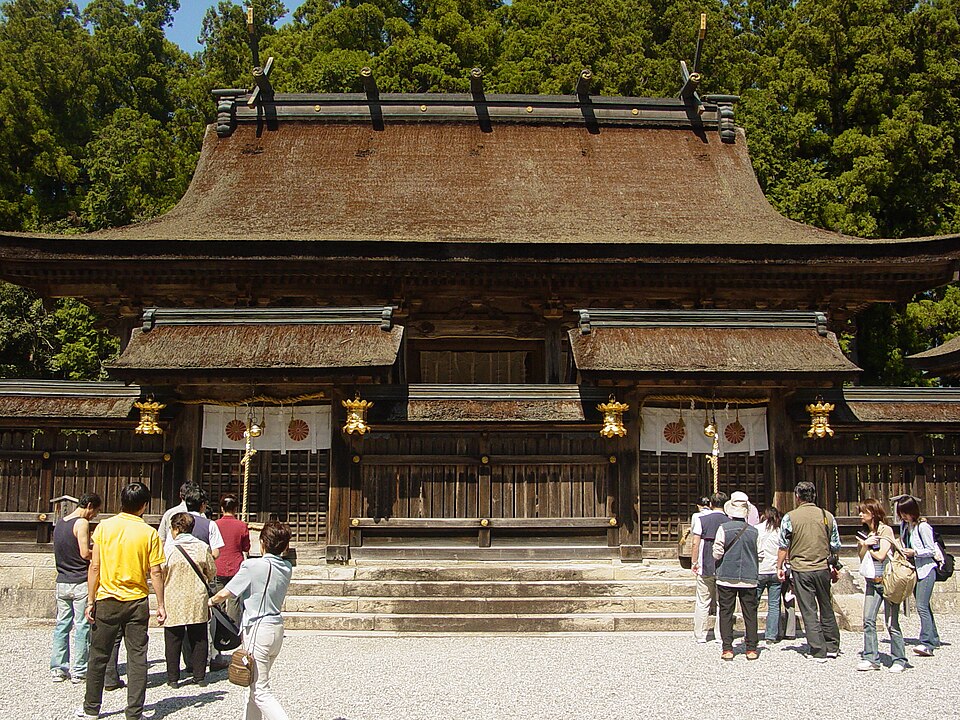
Located at the terminus of the Kumano Kodo, Kumano Hongu Taisha is the central shrine of the Kumano Sanzan. Its principal deity is Ketsumimiko no Okami, also interpreted as another name for Susanoo no Mikoto. As the “hongu” (head shrine) designation indicates, it holds the highest rank as the head of approximately 3,000 Kumano shrines throughout Japan.
The current shrine buildings were rebuilt on their present hilltop location after the great flood of 1889, comprising three main halls. The quiet grounds, surrounded by tall cryptomeria trees, are steeped in a solemn atmosphere befitting a mountain sanctuary. Various annual festivals are held at Hongu Taisha throughout the year, with the Grand Festival in April and the Setsubun Festival in February drawing especially large numbers of worshippers.
The former shrine grounds at “Oyunohara” are located in the Kumano River floodplain, about a 10-minute walk from Hongu Taisha. Here stands Japan’s largest torii gate (34 meters tall, 42 meters wide) rising from the middle of rice paddies. This sacred site, where 108 shrine buildings once stood, was submerged in the great flood of 1889. Today, only stone foundations and a small sub-shrine remain, but the experience of walking toward the massive torii possesses a solemnity found nowhere else.
The symbol of Kumano Hongu Taisha — the Yatagarasu (three-legged crow) — is also used as the emblem of the Japan Football Association. Revered as the divine messenger that guided Emperor Jimmu to the Yamato Province (present-day Nara), the Yatagarasu features prominently in the design of amulets and goshuin (shrine stamps). The “Yatagarasu amulet” available at Hongu Taisha is highly popular, attracting visitors from across the country.
2. Kumano Nachi Taisha and Nachi Falls — Japan’s Tallest Sacred Waterfall
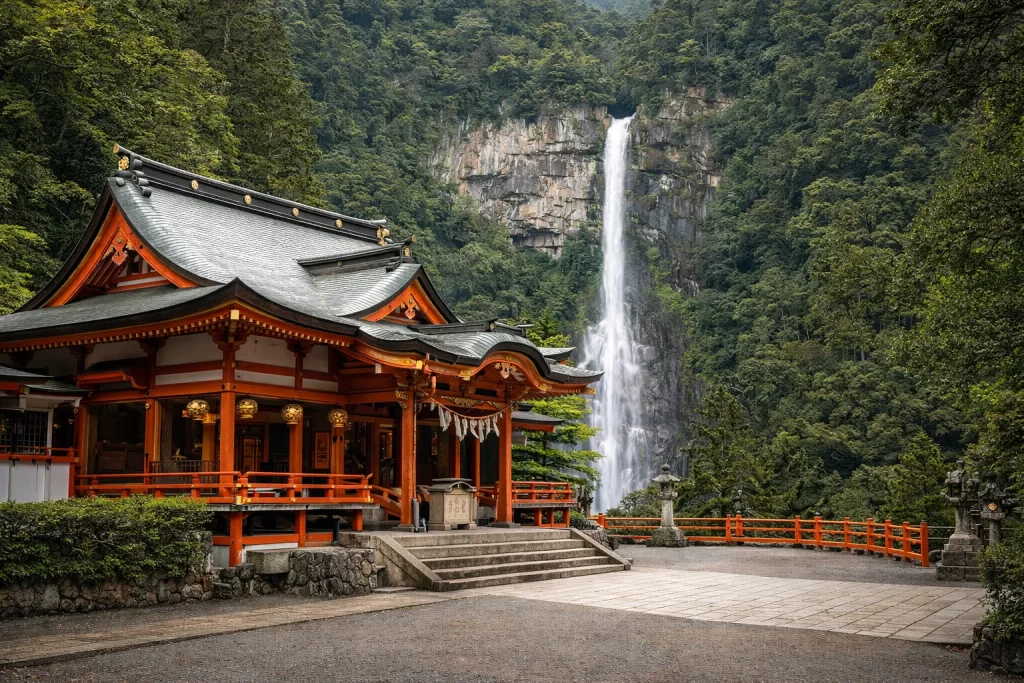
Of the Kumano Sanzan, the most visually striking scene is created by the combination of Kumano Nachi Taisha and Nachi Falls (Hiro Shrine). With Kumano Fusumi no Okami as its principal deity, Nachi Taisha sits on the mountainside of Nachisan. Together with the adjacent Seiganto-ji Temple’s three-story pagoda and Nachi Falls, it forms one of Japan’s most iconic landscapes.
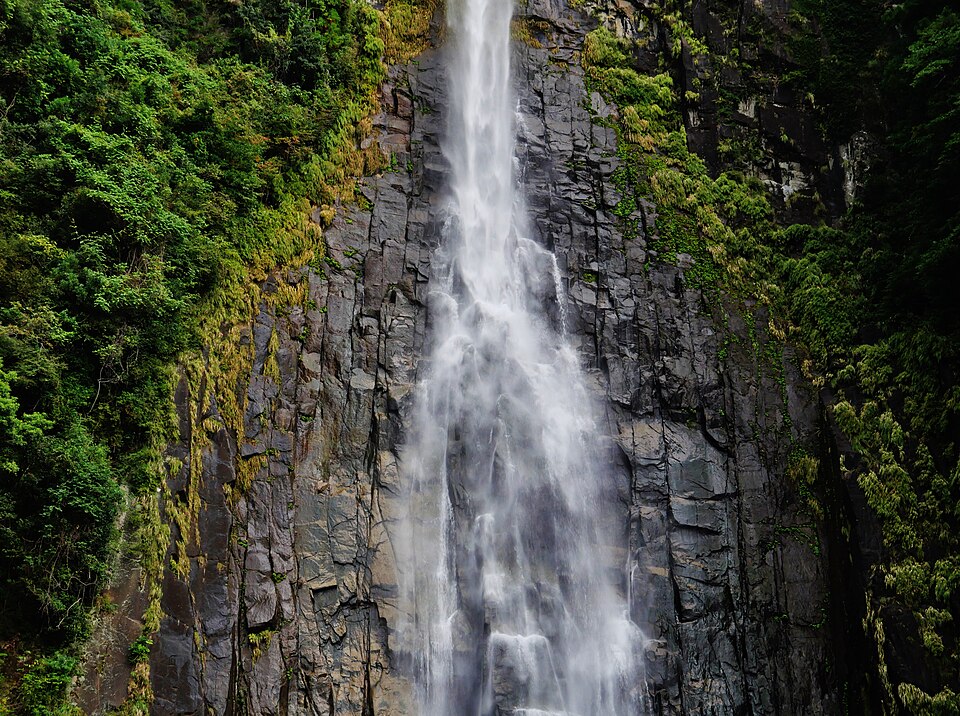
Nachi Falls stands at 133 meters (the tallest single drop in Japan), with a plunge pool 10 meters deep and a flow rate of approximately 0.68 tons per second. Since ancient times, worshippers have performed misogi (purification rituals) by entering the plunge pool, and to this day, the flowing water can be drunk as sacred water. Standing before the falls, you are enveloped by thunderous sound, spray, and negative ions, and you feel as though the life force of nature is entering your very body. The worship platform at Hiro Shrine, which offers a direct view of the falls, is the spiritual center of Nachi Falls worship.
The main hall of Nachi Taisha consists of five buildings in a row, and the contrast between the vermilion-lacquered structures and the deep forest behind them is spectacular. Within the grounds stands a camphor tree over 800 years old, whose hollow trunk visitors can walk through (known as “tainai-kuguri,” or “passing through the womb”). The shrine office also displays an impressive large “ema” (votive tablet) of Nachi, standing about one meter tall and serving as a popular photo spot for visitors.
The three-story pagoda of Seiganto-ji Temple (the first temple on the Saigoku 33-Temple Pilgrimage), adjacent to Nachi Taisha, is the classic composition seen in postcards and travel magazines when framed with Nachi Falls in the background. From the top floor of the pagoda (420 yen to ascend), visitors can enjoy a breathtaking panorama of both Nachi Falls and the Pacific Ocean. By visiting all three — Nachi Taisha, Seiganto-ji, and Nachi Falls — together, you can experience Shinbutsu Shugo, Japan’s unique syncretic religious culture, as a living spatial reality.
3. Kumano Hayatama Taisha — The Sacred Nagi Tree and the Overwhelming Sanctity of Mount Kamikura
Known as the “Shingu” (New Shrine) of the Kumano Sanzan, Kumano Hayatama Taisha is located in the center of Shingu City, the eastern starting point of the World Heritage Kumano Kodo. Its principal deities are Kumano Hayatama no Okami and Kumano Fusumi no Okami, and its founding legend tells of a deity descending upon Mount Kamikura before being transferred to the “new shrine.”
The most noteworthy feature within the grounds of Hayatama Taisha is the sacred Nagi tree, designated as a National Natural Monument. Standing approximately 20 meters tall with a trunk circumference of about 6 meters and an estimated age of 1,000 years, this Nagi tree stands at the heart of the grounds as the symbol of Kumano Hayatama Taisha. Because “nagi” is a homophone for “calm seas” in Japanese, the tree is associated with maritime safety, and because its leaves are resistant to tearing lengthwise, it is also revered as a tree of good matchmaking. Amulets brought home by Kumano pilgrims often contain a Nagi leaf sealed inside, making it a quintessential Kumano souvenir.
Kamikura Shrine (on Mount Kamikura), located about a 15-minute walk from Hayatama Taisha, is a subsidiary shrine and the birthplace of Kumano worship. Climbing 538 steep stone steps (said to have been donated by Minamoto no Yoritomo during the Kamakura period), you encounter Gotobiki Rock, a massive boulder standing 12 meters high. “Gotobiki” means “toad” in the local dialect, and a small shrine has been built atop this toad-shaped stone. The breathtaking view from the clifftop — looking down on the city of Shingu and the Kumano Sea — allows visitors to feel the primal power at the root of Kumano’s faith.
The “Oto Matsuri” (Fire Festival), held annually on February 6, is the grand festival of Kamikura Shrine and is counted among Japan’s three most unusual festivals. Men in white ritual garments carry torches as they race down the 538 stone steps en masse, creating an overwhelming spectacle of a river of fire cascading down the mountain. This festival is recognized as having cultural value comparable to a UNESCO Intangible Cultural Heritage.
4. The Kumano Kodo (Nakahechi Route) — Walking a World Heritage Pilgrimage Trail
The Kumano Kodo, developed as a pilgrimage route to the Kumano Sanzan, continues to attract hikers and pilgrims from around the world as a walkable World Heritage trail. Among several routes, the most popular is the “Nakahechi” (Central Route), a roughly 65-kilometer path from Tanabe City to Kumano Hongu Taisha.
The most popular section of the Nakahechi is the stretch from Hossinmon-oji to Kumano Hongu Taisha (approximately 7 kilometers). By taking a bus to Hossinmon-oji and walking the stone-paved path to Hongu over about two hours, even beginners can enjoy the full atmosphere of the Kumano Kodo. Tunnels of cryptomeria trees, oji ruins dotted along the ancient road, and hilltop vistas opening to panoramic views — each becomes a highlight of the journey.
For those seeking a more authentic Kumano Kodo experience, the “full route walk” from Tanabe City to Hongu over several days is recommended. This journey, staying at pilgrim lodges and guesthouses along the way, recreates the experience of medieval pilgrims in the modern age and offers a deep understanding of Japan’s pilgrimage culture. Takijiri-oji, known as the entrance to the Nakahechi, marks the threshold into the “sacred realm of Kumano.”
The Kumano Kodo can be walked year-round, but the best seasons are spring (March–May) and autumn (October–November). Summer brings high temperatures and humidity with a risk of heatstroke, and the rainy season (June) makes the trail surface slippery. Hiking boots, rain gear, and ample water and trail food are essential. Please remember that the Kumano Kodo is not merely a tourist attraction but an active pilgrimage route still in use today, and walk with respect for its nature and history.
5. Kumano Sanzan “Goshuin” Pilgrimage and Nachi Black Candy — The Culture of Kumano Souvenirs
In recent years, “goshuin collecting” (collecting shrine and temple stamps) and experiencing local specialty foods have become increasingly popular among travelers visiting the Kumano Sanzan. The “Kumano Sanzan Goshuin Pilgrimage” — collecting goshuin from all three shrines: Kumano Hongu Taisha, Kumano Hayatama Taisha, and Kumano Nachi Taisha — is extremely popular as a pilgrimage memento. Each shrine’s goshuin features distinctive designs incorporating the Yatagarasu motif, and dedicated goshuin books are also available for purchase.
To complete the Kumano Sanzan goshuin pilgrimage in a single day, you need to start early in the morning. A realistic route is to receive your goshuin at Nachi Taisha, Hiro Shrine, and Seiganto-ji in the morning, visit Hayatama Taisha for your stamp in the early afternoon, and reach Hongu Taisha before late afternoon. However, as goshuin reception hours are limited at each location, be sure to confirm them in advance.
Notable Kumano foods and souvenirs include “mehari-zushi” (large rice balls wrapped in pickled mustard greens), “sanma-zushi” (pressed Pacific saury sushi), and “Nachi black candy” (a confection made with black sugar from Nachisan). In Nachikatsuura Town, you can enjoy fresh tuna (Katsuura Port is one of Japan’s leading tuna landing ports), and the “hon-maguro don” (premium tuna rice bowl) is a dish many travelers come back for. A popular itinerary after walking the Kumano Kodo is to refresh at a hot spring (Yunomine Onsen or Kawayu Onsen) — the classic “walk then soak” route.

Nearby Attractions
When visiting the Kumano Sanzan, you can also enjoy nearby nature and historical spots. Here are three destinations where you can experience the rich nature and culture of the Kumano region.
1. Ise Grand Shrine — Japan’s Supreme Sacred Site Alongside the Kumano Pilgrimage
Located approximately 200 kilometers north of Kumano in Ise City, Mie Prefecture, Ise Grand Shrine is Japan’s most sacred shrine, dedicated to Amaterasu Omikami, the ancestral deity of the Imperial Family. During the Edo period, the standard practice was to “complete the Ise pilgrimage first, then proceed to Kumano,” and there was a tradition of visiting both sacred sites together. Even today, a 2-night to 4-night itinerary combining “Ise pilgrimage + Kumano pilgrimage” remains popular. By visiting both the Inner and Outer Shrines of Ise and the Kumano Sanzan, you can gain a three-dimensional appreciation of the depth of Japan’s Shinto culture.
2. Izumo Taisha — The Matchmaking Deity Connected to Kumano’s Faith
Located in Shimane Prefecture, Izumo Taisha is a prestigious shrine dedicated to Okuninushi no Mikoto, the god of matchmaking. Although not geographically adjacent to the Kumano Sanzan, the deities of Izumo and Kumano are deeply connected in Japanese mythology. The myths of Izanagi and Izanami (connected to Kumano) and the story of Okuninushi ceding the land before settling in Izumo show that Kumano and Izumo play complementary roles within Japan’s mythological framework. An itinerary combining both as “sacred sites of mythology” has become popular for travelers touring western Japan.
3. Kongobu-ji Temple on Mount Koya — A Sacred Site Linked to the Kumano Sanzan via the “Kohechi”
Located in Koya Town, Wakayama Prefecture, Kongobu-ji Temple on Mount Koya is the head temple of Shingon Esoteric Buddhism, founded by the great monk Kukai (Kobo Daishi). Mount Koya and the Kumano Sanzan are directly connected by the “Kohechi” (Small Route), one of the Kumano Kodo routes (approximately 70 kilometers from Mount Koya to Kumano Hongu), and pilgrimages linking both sacred sites on foot are still undertaken today. The fact that sacred sites of different religious traditions — Esoteric Buddhism (Mount Koya) and Shinto/Shugendo (Kumano) — exist within the same mountain range and that people have traveled between them since antiquity demonstrates the layered richness and inclusiveness of Japan’s religious culture. Viewing Mount Koya and Kumano together as the “Two Great Sacred Sites of the Kii Mountains” highlights the profound spiritual heritage of Wakayama.
Access Information
The Kumano Sanzan is located in a secluded area at the border of Mie, Nara, and Wakayama Prefectures, and reaching it requires some travel time. Below are route options for both public transportation and car.
Access to Kumano Hongu Taisha (Public Transportation)
From JR Shingu Station, take the Kumano Kotsu bus bound for “Hongu Taisha-mae” (approximately 1 hour 40 minutes, fare approximately 1,500 yen). Alternatively, express highway buses on the “Kumano/Hongu Line” operate from Osaka, Nagoya, and Kyoto, arriving at Hongu Taisha-mae from Osaka (Hankyu Sanbangai) in approximately 3 hours 30 minutes. As many highway buses require reservations, advance confirmation is recommended.
Access to Kumano Hayatama Taisha (Public Transportation)
From JR Kisei Line, Shingu Station: approximately 15–20 minutes on foot, or about 5 minutes by taxi. By train, Shingu Station is approximately 3 hours from Osaka (Tennoji) via the Limited Express Kuroshio, or approximately 3 hours from Nagoya via the Limited Express Nanki.
Access to Kumano Nachi Taisha (Public Transportation)
From JR Kisei Line, Kii-Katsuura Station, take the Kumano Kotsu bus bound for “Nachisan” (approximately 30 minutes). Kii-Katsuura Station is about 15 minutes by train from Shingu Station. From Osaka, it is approximately 3 hours 30 minutes via the Limited Express Kuroshio (to Kii-Katsuura Station).
Access by Car
From Osaka: via the Hanwa Expressway, Yuasa-Gobo Road, and National Route 42 to Shingu — approximately 3 hours 30 minutes to 4 hours. From Nagoya: via the Ise Expressway, Kumano-Owase Road, and National Route 42 to Shingu — approximately 3 hours 30 minutes. A car is the most convenient way to efficiently visit all three shrines, and following the order of Hongu → Hayatama → Nachi allows you to complete the pilgrimage in one day (approximately 8–10 hours including travel time).
Best Season to Visit
Spring (March–May) for fresh greenery and autumn (October–November) for autumn foliage are especially recommended. Nachi Falls reaches its maximum water volume during the rainy season (June), presenting a powerful spectacle, though this season is not ideal for walking the ancient trails. Summer (July–August) requires preparation for heat and insects, but the mountain coolness is exceptional.
Conclusion
The Kumano Sanzan is a miraculous sacred site where Japan’s most ancient nature worship has continued to evolve and endure to the present day. The thunderous roar of Nachi Falls, the overwhelming scale of the great torii at Oyunohara, the primordial power of Gotobiki Rock on Mount Kamikura — the Kumano Sanzan leaves a powerful impression on all five senses and the spirit of every visitor.
More than 770 years after the pilgrimage boom of the Heian period, described as “the ant procession to Kumano,” pilgrims from around the world still gather on the Kumano Kodo. While its value as a World Heritage Site is internationally recognized, the truly compelling reason for Kumano’s allure may be that it allows visitors to viscerally experience the universal themes of “life, death, and rebirth.” We encourage you to walk through the forests of Kumano, feel the spray of the waterfalls, and stand before the deities that ancient pilgrims prayed to for centuries. For other sacred sites where divine power is felt within nature, consider also visiting Itsukushima Shrine (Hiroshima) and Fushimi Inari Taisha (Kyoto) to gain a deeper appreciation of the rich diversity of Japan’s sacred site culture.