
🕓 2025/12/2
#Sake
A Journey Through the Breweries, Sake Shops & Bars of the Kurashiki Bikan Historical Quarter
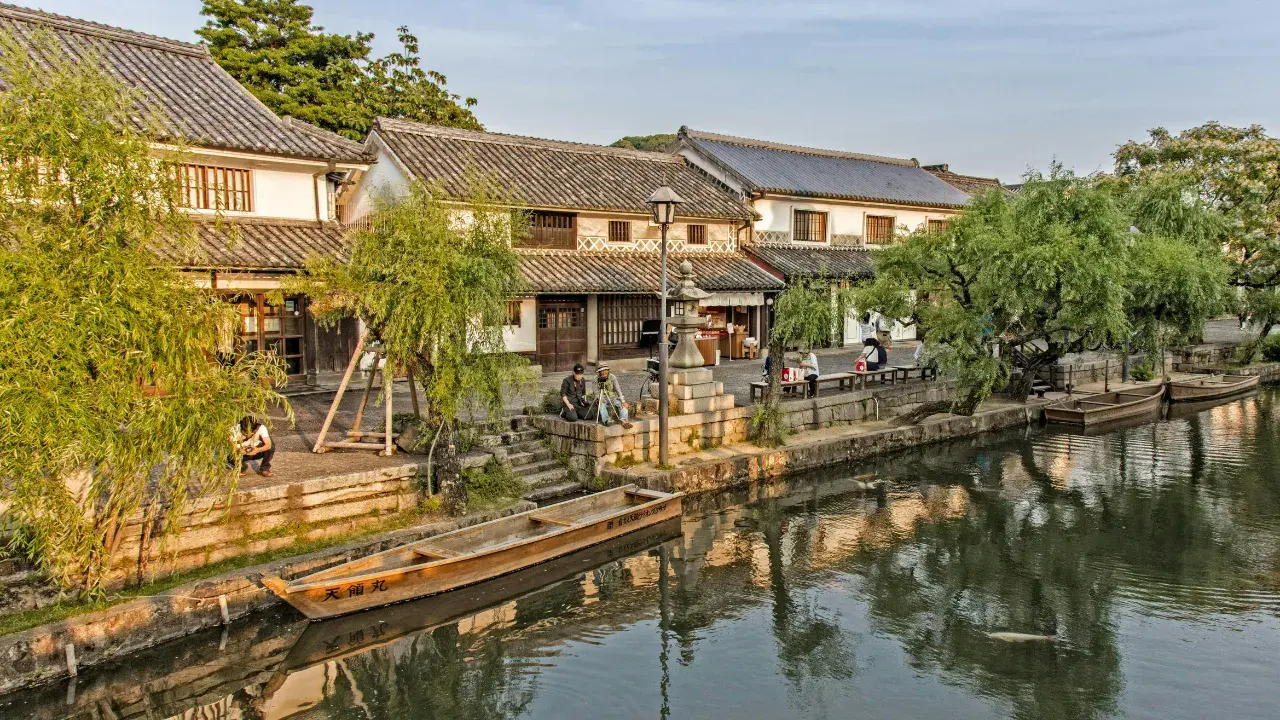
Table of Contents
- Why Sake in the Kurashiki Bikan Historical Quarter?
- Top 3 Spots to Quench Your Thirst Between Strolls
- Okayama’s Bounty x Local Sake in Renovated Townhouses
- Sake-Infused “Adult Desserts”
- [Souvenirs] 3 Okayama Sake Bottles Worth Taking Home
- Model Course: Kurashiki “Tipsy” Half-Day Plan
Introduction
The Bikan Historical Quarter, with its white-walled storehouses and willow-lined Kurashiki River, is photogenic enough just to walk through. But did you know that this town is also something of a “sacred ground” for sake enthusiasts?
Selecting and comparing local sake made with Omachi — an Okayama-born sake rice often called “the ancestor of all sake rice” — at stylish renovated townhouse bars and historic sake shops.
Rather than getting heavily intoxicated, it is about savoring little by little amid beautiful scenery and discovering your own personal favorite bottle. Let us guide you on such a “Kurashiki tipsy stroll” for grown-ups.
- Why Sake in the Kurashiki Bikan Historical Quarter?
- Top 3 Spots to Quench Your Thirst Between Strolls
- Okayama’s Bounty x Local Sake in Renovated Townhouses
- Sake-Infused “Adult Desserts”
- [Souvenirs] 3 Okayama Sake Bottles Worth Taking Home
- Model Course: Kurashiki “Tipsy” Half-Day Plan
- Conclusion
- Frequently Asked Questions
Why Sake in the Kurashiki Bikan Historical Quarter?
It’s Delicious Because This Is the “Sacred Ground” of the Legendary Sake Rice “Omachi”
The number one reason Okayama’s sake is supported by sake fans nationwide is, without a doubt, the existence of the sake rice “Omachi.”
Omachi is a sake-brewing rice (shuzo kotekimai) discovered in 1859 in the Omachi district of present-day Naka-ku, Okayama City. It is an “ultra-long-selling sake rice” that has been brewed with for over 100 years, and is known as a rare heritage variety that continues to be cultivated in its original form to this day.
Since many of the premium sake rice varieties used nationwide, such as Yamada Nishiki and Gohyakumangoku, are descended from Omachi, it is often referred to as “the ancestor of sake rice.”
There was a time when production volumes plummeted due to the difficulty of cultivation, earning it the title of “phantom sake rice.” However, in recent years it has regained attention, revived through the efforts of rice farmers and breweries. Currently, the vast majority of production (reportedly over 90%) comes from Okayama Prefecture, making Okayama the true “kingdom of Omachi.”
The Flavor Profile of Sake Brewed with Omachi
If you had to describe Omachi in one phrase, it would be:
“A sake rice that dissolves softly and easily yields rich, full-bodied umami”
That is the image it evokes.
Smooth on the palate, with umami that slowly and gently unfolds on the tongue
Rich rice sweetness and depth, tending toward a full-bodied flavor
Despite its rich umami, it has clean finish, enjoyable from chilled to warm sake
With these characteristics, it is irresistible for those who love the “rich-and-flavorful” type of sake.
What makes Omachi fascinating is how dramatically its character changes depending on each brewery’s techniques and rice polishing ratio. From aromatic ginjo types to robust junmai sake perfect for warm serving, a wide range of styles can be produced.
Those who deeply love sake made with Omachi have come to be called “Omachists.” When they spot “Omachi” on a label, they simply cannot resist picking it up — such dedicated fans exist across the country, and comparing bottles by region and rice polishing ratio has become a standard way to enjoy it.
In and around the Kurashiki Bikan Historical Quarter, you will find breweries that produce sake using Omachi, as well as sake shops and bars specializing in local brews centered on Omachi. Because this is a town where you can do “Omachi tastings,” it becomes a truly special travel destination for sake lovers.
Top 3 Spots to Quench Your Thirst Between Strolls
The Kurashiki Bikan Historical Quarter has several spots where you can casually enjoy a “quick sip” even during the daytime. Between art galleries and walking tours, take a moment to quench your thirst and peek into the world of local sake.
(1) Tachi-nomidokoro Kakehashi | A New Spot Inside LOGIN Kurashiki
A relatively new sake bar called “Tachi-nomidokoro Kakehashi” (Standing Bar Kakehashi) opened in spring 2024 inside the mixed-use facility “LOGIN Kurashiki.”
The subdued exterior blends into the white-walled townscape, and the counter-centered interior with its wood-based design creates a comfortably casual and welcoming atmosphere.
The concept is:
“To be a bridge connecting people and regions through food”
True to this mission, the counter is lined with Okayama sake, centered on the Bitchu area. The lineup changes with the seasons, giving you a reason to return.
Highlights
Tasting Sets for “Finding Your Favorite”
The popular tasting sets let you try small amounts of several staff-recommended Okayama local sake. Tell them your preferences — dry, fruity, etc. — and they will create a combination of different styles for you, making it welcoming even for sake beginners.Small Plates Made with Okayama Ingredients
Featuring Okayama specialties like yellow chives, local vegetables, and small fish, the snack menu is well-stocked. More suited for a “pre-game” or “second stop” than a full meal.Solo Traveler Friendly
The bright, open counter sees many solo visitors. The staff can share tips about Kurashiki and Okayama attractions, making it a great stop for gathering travel information.
*Business hours and regular holidays may vary. Please check “LOGIN Kurashiki” or the shop’s official social media for the latest information.
(2) Jizake Hanbai Gaisha Dotemori | A Historic Sake Shop Where You “Treasure Hunt” for Your Bottle
Walking along the Kurashiki River, you will notice a white-walled building atop a stone wall, with a large noren curtain boldly printed with “Jizake” (Local Sake). This is “Jizake Hanbai Gaisha Dotemori,” a sake shop long beloved by locals.
Founded in 1926 (Taisho 15), this venerable shop has sake, shochu, wine, and craft beer from across Okayama Prefecture packed tightly inside.
Highlights
Shelves Lined with Okayama Local Sake
The focus is on sake from Okayama Prefecture breweries. With a local-oriented lineup and price range rather than tourist pricing, it covers everything from everyday bottles to gift-worthy selections.Original Labels Worth Checking
The ultra-dry sake “Jijibaba,” the white peach liqueur “Momokou,” the muscat wine “Budojo” — Dotemori’s original, playfully named labels are a delight. With unique label designs, they make perfect gifts for sake lovers.Conversation with the Owner Is Part of the Feast
“What food do you want to pair it with?” “Do you prefer dry or sweet?” — The owner’s willingness to explore alongside you through such conversations is a charm in itself. It truly feels like a “treasure hunt” to discover your own special bottle.
*Whether in-store tasting or standing-drink (kakuuchi) is available may vary by timing and situation. Please ask the staff directly if interested.
(3) Kikuchi Shuzo “Sanzen” | The Music-Brewed Standout Using Omachi
Kikuchi Shuzo, a brewery founded in 1878 (Meiji 11) in the Tamashima district of Kurashiki, produces “Sanzen,” a brand with an impressive track record at the National New Sake Competition, international contests, and warm sake competitions.
As a label commonly found at sake shops and restaurants around the Kurashiki Bikan Historical Quarter, we want to introduce it as “one bottle you should definitely try in a glass when in Kurashiki.”
Featured Bottle: Sanzen Tokubetsu Junmai Omachi
Type: Tokubetsu Junmai
Rice: 100% Okayama-grown Omachi
Rice Polishing Ratio: 65%
Alcohol Content: Approx. 15.5%
A full, sweet aroma with gentle fruit notes reminiscent of ripe banana. On the palate, soft sweetness and rich acidity spread lightly, followed by the plump umami characteristic of Omachi that lingers warmly.
Delicious chilled, but when served at room temperature to lukewarm, the acidity and umami become even more prominent — the kind of food sake you will want to bring home for daily enjoyment.
The Unique “Music Brewing” Approach
Kikuchi Shuzo is also known for its “Music Brewing” technique, which incorporates classical music into the brewing process. Their junmai daiginjo “Kura Rhythm,” which transmits vibrations from Mozart’s music to the fermentation tanks, is often chosen as a gift for its compelling story.
If you spot “Sanzen” at a restaurant or sake shop in the Bikan Historical Quarter, be sure to try a glass.
Okayama’s Bounty x Local Sake in Renovated Townhouses
As the sun sets and the illuminated Kurashiki River takes on a dreamy appearance quite different from daytime, why not take your time in a restaurant renovated from a historic townhouse or kominka (traditional house), savoring Okayama’s finest ingredients alongside local sake.
(1) Kominka Bar Kyu Honfuji-tei | Italian Cuisine and Sake with a Garden View
“Kominka Bar Kyu Honfuji-tei,” within walking distance from Kurashiki Station and near the Bikan Historical Quarter, is an Italian bar in a renovated traditional house said to be over 60 years old. Seating is arranged around a courtyard, and dining while gazing at the illuminated garden creates an atmosphere that is simply superb.
The appeal lies in casually enjoying authentic Italian fare like house-made fresh pasta and Neapolitan pizza. They also carry local sake alongside wine, offering the chance to try “sake x Italian” pairings.
Recommended Ways to Enjoy
Shrimp & Mushroom Ahijo x Omachi Local Sake
Pairing a rich Omachi sake with garlic and olive oil ahijo creates a harmonious union of oil and umami. Dip baguette into the oil and take a sip of sake in between — you won’t be able to stop with either your chopsticks or your glass.Choose Your Seat for the Occasion
For a date, the window seats overlooking the courtyard are recommended. For groups or girls’ night out, the slightly secluded table seats under the exposed beams of the old house offer a space to lose track of time in conversation.
(2) Mingei Chaya Shinsui | A “Grown-Up Izakaya” Beckoned by Red Lanterns
Originally opened in 1919 as a kappo ryokan (a high-end Japanese inn), “Mingei Chaya Shinsui” has since transformed into an izakaya (Japanese pub) style. Tucked quietly in a corner of the Bikan Historical Quarter, it is a grown-up izakaya where locals and tourists naturally mingle.
Inside, the warm wooden interior is subtly adorned with mingei (folk craft) items and antique objects, evoking a nostalgic atmosphere. Sitting at the counter, you can enjoy watching the dishes come together before your eyes while sipping your drink.
Okayama-Style Appetizers and Local Sake
The menu changes with the seasons, but at the time of visit, offerings included:
Ohitashi and ae-mono (dressed salads) using yellow chives
Deep-fried gara-ebi (glass shrimp)
Daily specials using Seto Inland Sea seafood
Among others, distinctly Okayama-style appetizers were on the menu.
Pairing the crisp, dry junmai sake with yellow chives brings out the vegetable’s sweetness against the sake’s acidity in perfect harmony. The glass shrimp, fried crispy shell and all, becomes “the ultimate snack” when paired with a light junmai or tokubetsu junmai.
Reviews often note:
“Hard to believe this is right in the middle of a tourist area — such a relaxed atmosphere”
“Looking forward to the seasonal menu each time”
Such praise is common, and it has earned repeat visitors who say “if I could only choose one place in Kurashiki at night, it’d be here.”
(3) Jizake to Kyodo Ryori Sawaraya | Pure Bliss, Drinking from Bizen Pottery
As if condensing the image of “Okayama means sawara (Spanish mackerel)” into a single restaurant, “Jizake to Kyodo Ryori Sawaraya” sits near the Kurashiki River. With its well-tended small garden, it offers a peaceful setting to spend a relaxed evening.
Experience Points
Signature Dish: Straw-Seared Sawara
Seared in an instant over high-heat straw fire, the sawara is fragrant on the outside and rare inside. The refined sweetness of the fish fat fills your mouth — different from bonito tataki. This is the restaurant’s celebrated signature dish.“Deep Dive into Sawara” with a Full Course
Sashimi, straw-searing, rare cutlet, shabu-shabu… A single course lets you explore the many expressions of sawara — something only a specialty restaurant can offer. If you want to thoroughly enjoy Okayama’s signature fish, booking the sawara course in advance is recommended.30+ Local Sake Varieties x Bizen Pottery Vessels
The sake selection features over 30 varieties centered on Okayama breweries. Sake cups and tokkuri (sake flasks) are often crafted from local Bizen-yaki pottery or Kurashiki glass, and there is a saying that “sake tastes mellower when drunk from Bizen pottery.”
Sake-Infused “Adult Desserts”
For those who think “I’m not a big drinker, but I want to enjoy the atmosphere,” sweets that subtly incorporate sake are the perfect choice. Here are some adult dessert spots worth visiting during your sweets tour.
Ohte Manju Cafe | A “Treat Yourself” Set of Famous Confections x Sake
“Ohte Manju” is Okayama’s signature confection. The “Ohte Manju Cafe” in the Kurashiki Bikan Historical Quarter offers a cafe-style experience of this beloved sweet.
In a relaxing space with views of the white-walled townscape, you can enjoy pairings of the famous confection with various beverages.
Menu Highlights
Freshly Steamed Ohte Manju Set
A popular menu item pairing freshly steamed Ohte Manju with a drink of your choice — coffee, latte, brown rice tea, and even sake. The combination of sweet bean paste and sake is surprisingly compatible, giving it an “adult Japanese sweets” feel.Ohte Manju Soft Serve
Soft-serve ice cream incorporating the manju’s skin and bean paste offers an elegant, not-too-sweet flavor. Grab one to-go and enjoy it while strolling along the Kurashiki River.Summer Limited: Ohte Manju Shaved Ice
During summer, a shaved ice featuring manju-derived syrup and toppings may appear. The perfect cool-down for hot-weather outings.
*Business hours are “12:00-17:00 (L.O. 16:30),” closed Monday-Wednesday (subject to change). Please check the official website for the latest information.
Gelato Ginroku | Indulging in Local Fruits
“Ginroku,” a gelato specialty shop, opened in the Bikan Historical Quarter on March 1, 2025. The owner is a fruit enthusiast who spent 10 years helping out at an acquaintance’s grape farm.
In the shop’s renovated kominka interior, making use of the traditional earthen floor (doma), you can savor gelato generously made with Okayama-grown fruits.
The showcase displays 6-14 flavors depending on the day. During our visit, these included:
Muscat Bailey A x Milk
Chocolate x Okayama Banana
Rich Uji Matcha x Sachinoka Strawberry
Among others, gelato starring distinctly Okayama fruits was on display.
Flavors come only in “double” (two-flavor combinations), and the offerings change by season — white peach, muscat, fig, watermelon, persimmon, mugwort, and more.
After enjoying sake, resetting your palate with a fruit gelato — it makes a perfect finale for a “tipsy stroll.”
*Currently open mainly on weekends, 11:30-15:00 (until sold out). Hours may change; check the official Instagram (@ginroku.kurashiki) for the latest updates.
[Souvenirs] 3 Okayama Sake Bottles Worth Taking Home
To keep the lingering afterglow of your Kurashiki trip alive even after returning home, here are three tried-and-true bottles. Each one is packed with Okayama character, and they also make great gifts for sake lovers.
(1) Sanzen Tokubetsu Junmai Omachi | A Well-Balanced Showcase of Omachi’s Charm
“Sanzen,” produced by Kikuchi Shuzo in Kurashiki’s Tamashima district, is a brand known for its extensive use of Omachi. Among its lineup, “Sanzen Tokubetsu Junmai Omachi” combines the full-bodied character of Omachi with a well-balanced drinkability.
Flavor Profile
Full, sweet aroma
Gentle fruit notes reminiscent of ripe banana
Soft sweetness balanced by defining acidity
Lingering rice umami in the aftertaste
Delicious chilled, it becomes an even more versatile “all-rounder” when served at room temperature to lukewarm, as the acidity and umami intensify. It pairs well with Japanese cuisine in general, as well as butter-sauced fish or cheese — “the kind of food sake that’s reassuring to have at home.”
Specs (Sanzen Tokubetsu Junmai Omachi)
Type: Tokubetsu Junmai
Rice: 100% Okayama-grown Omachi
Rice Polishing Ratio: 65%
Alcohol: 15.5%
(2) Gozenshu GOZENSHU 9 NINE | Modern Acidity from Bodaimoto Brewing
Gozenshu, produced by Tsuji Honten brewery in Maniwa City, Okayama, is known for reviving the ancient yeast starter “bodaimoto.” Among its lineup, “GOZENSHU 9 NINE Regular Bottle” is popular as “a junmai sake you can enjoy like white wine,” where the character of Omachi meets bodaimoto.
Served well-chilled in a wine glass, its lively acidity and Omachi-derived umami stand out, pairing beautifully with Western-style appetizers like carpaccio and marinated dishes.
Specs (GOZENSHU 9 NINE Regular Bottle)
Type: Junmai
Rice: Okayama-grown Omachi
Rice Polishing Ratio: 65%
Alcohol: 15%
SMV: +5 (slightly dry)
Acidity: 1.4
The pairing of matured bodaimoto acidity x Omachi’s rich umami makes it a great match for richly flavored dishes like fatty fish, eel, and hard cheese.
(3) Taiten Shiragiku Junmai Shiragiku-mai | A “Classic Food Sake” for Savoring Rice Umami
“Taiten Shiragiku,” brewed by Shiragiku Shuzo in Nariwa-cho, Takahashi City. Among their lineup, “Taiten Shiragiku Junmai Shiragiku-mai” uses 100% of the brewery’s namesake sake rice “Shiragiku” and is highly regarded as a food sake.
Shiragiku-mai is a sake rice said to be descended from Omachi, with characteristics of:
Soft and fluffy mouthfeel
Rich rice umami
The result is a calm, composed junmai sake that makes you want to sip slowly alongside your meal.
Specs (Taiten Shiragiku Junmai Shiragiku-mai)
Type: Junmai
Rice: 100% Okayama-grown Shiragiku-mai
Rice Polishing Ratio: 65%
Alcohol: 16-17%
SMV: +4 (clean, slightly dry)
Acidity: 1.8
Enjoyable chilled, but served at room temperature to lukewarm, the rice umami and body become even richer. Pairs exceptionally well with “everyday home cooking staples” like simmered dishes, grilled fish, and nikujaga (meat and potato stew).
Model Course: Kurashiki “Tipsy” Half-Day Plan
Finally, here is a leisurely “tipsy half-day model course” visiting the spots introduced above.
15:00 Art Appreciation at the Ohara Museum of Art
Known as Japan’s first full-scale museum of Western art, enjoy a leisurely viewing of masterpiece paintings and crafts from Japan and abroad at the Ohara Museum of Art. Switch on your senses, then head out for a town stroll.
16:30 “Pre-Game” at Kakehashi or Dotemori
At “Tachi-nomidokoro Kakehashi,” enjoy a tasting flight of local sake brewed with Omachi
At “Jizake Hanbai Gaisha Dotemori,” browse potential souvenir bottles and consult with the owner
Visit just one or bar-hop between the two. This is the perfect time for “a quick sip and gathering information.” Be sure to check each venue’s official hours.
17:30 Evening Stroll Along the Kurashiki River
The white walls and willow trees bathed in golden-hour light are a reward reserved for this time of day alone. If you have time, a river boat cruise offers a view of the townscape from the water’s surface — highly recommended.
18:30 Dinner at Shinsui or Kyu Honfuji-tei
For a cozy “izakaya evening,” enjoy Okayama-style appetizers like yellow chive dishes and glass shrimp paired with local sake at “Mingei Chaya Shinsui.”
For an anniversary or date, head to “Kominka Bar Kyu Honfuji-tei” for Italian x sake pairings with a garden view.
Choose the right spot based on your mood and company (both are popular, so dinner reservations are recommended).
20:30 A Night Breeze Walk Back to Your Inn
The Bikan Historical Quarter, having regained its quietude as foot traffic fades, is exceptional in its own way. Walking over the cobblestones with a pleasant warmth lingering from the evening’s sake — that too is a precious scene of your journey.
Conclusion
White-walled townscapes, the quiet flow of the Kurashiki River, and Okayama’s fine sake led by Omachi. The Kurashiki Bikan Historical Quarter is a place that gives you moments of gentle relaxation — not just through “sightseeing,” but through the intersection of scenery, sake, and encounters with people.
Tilting your glass a little at each stop, lending an ear to the stories of breweries and sake shops. Pausing for sweets or gelato in between, then taking home a favorite bottle as a souvenir — this kind of enjoyment is uniquely possible in “Kurashiki, the sake town.”
On your next day off, why not walk leisurely through the Kurashiki Bikan Historical Quarter, searching not for a drink to get drunk, but for “the one glass that puts you in good spirits.” Your new “favorite bottle” is surely waiting to be discovered.